“You Can’t Hang All 190 Million Of Us.”
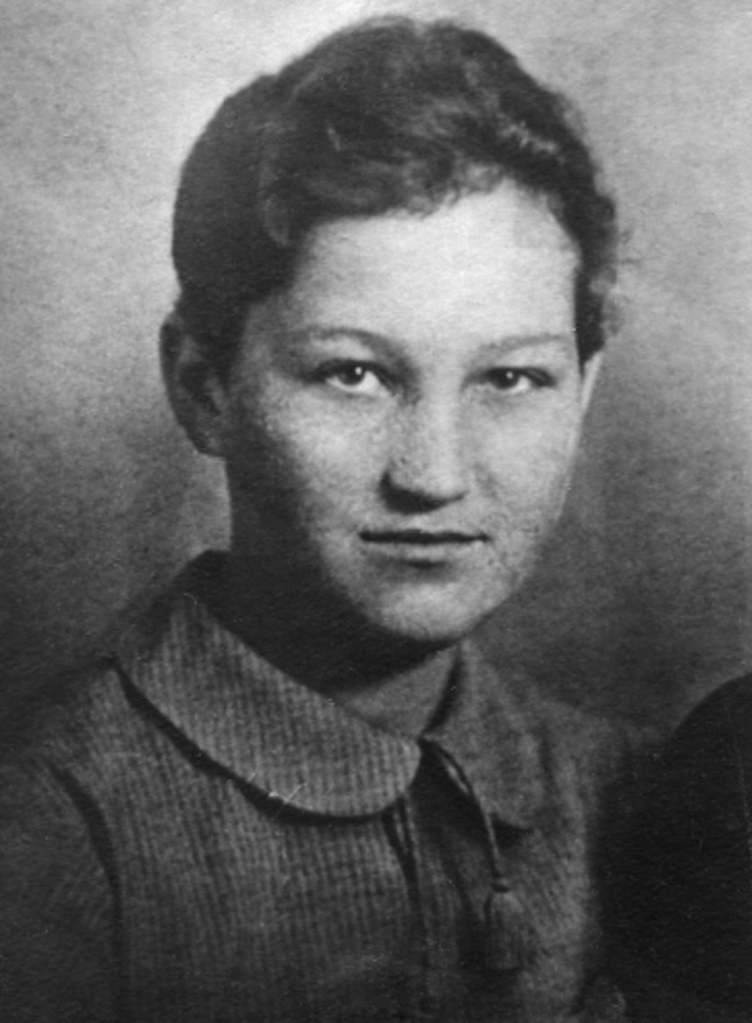
In the village of Petrischchevo, the Nazis deal with partisans by hanging an 18-year-old Soviet girl, Zoya Kosmodemyanskaya. “She set fire to houses,” reads the placard round her neck, as she is led to execution. Her last words to the German executioner, however, are defiant, “You can’t hang all 190 million of us.” Zoya Kosmodemyanskaya, a 18-year-old schoolgirl from Moscow, voluntarily joined a partisan detachment in 1941, when Nazi forces invaded Russia and mounted an offensive in the direction of Moscow. The brutality of the Nazis accelerated with murder, violence and terror, and on the night of the 27 November 1941, Zoya, together with two comrades, set fire to a German stable near Moscow. Nazi officers quickly caught one of them — Wassilij Klubkow. Under interrogation he betrayed Zoya. The Nazis arrested her immediately and brutally tortured her in order to get some information on the partisan detachment. Rape, torture, and mutilation could not break her, so they hanged her in public in Petrishchevo near Moscow on the 29th November 1941. Just before she was pushed off the platform with a loop about her neck she shouted to the Nazis: ‘You can’t hang all 190 million of us.’ Zoya met her death with amazing courage and demonstrated a strong streak of defiance. Her words became a pithy saying. After the war Zoya became the symbol of Soviet resistance to Nazi occupation and she was posthumously decorated a Hero of the Soviet Union as was her brother, Shura, for his service in the Red Army tank corps.
Kosmodemyanskaya joined the Komsomol in 1938. In October 1941, still a high school student in Moscow, she volunteered for a partisan unit. During the course of her army service, she idealized Tatiana Solomakha, a Red Army soldier who was tortured and killed during the course of the Russian Civil War. She was assigned to the partisan unit 9903 (Staff of the Western Front). At the village of Obukhovo near Naro-Fominsk, Kosmodemyanskaya and other partisans crossed the front line and entered territory occupied by the Germans. They mined roads and cut communication lines.
On November 27, 1941, Kosmodemyanskaya received an assignment to burn the village of Petrishchevo, where a German cavalry regiment was stationed. Together with fellow partisans Boris Krainov and Vasily Klubkov, she set fire to three houses in the village. The partisans believed that one of the houses was being used as a German communications center and that occupying forces were using others for accommodation. The writer A. Zhovtis has disputed these claims, arguing that officially Petrishchevo was not a point of permanent deployment of German troops. However, the villagers said that virtually all the houses of the village were used for accommodation by the German troops transported along the main roads near the village.
After the first attempt at arson, Krainov did not wait for Kosmodemyanskaya and Klubkov at the agreed meeting place and left, returning to his own. Later, Klubkov was also captured by the Germans. Kosmodemyanskaya, having missed her comrades and left alone, decided to return to Petrishchevo and continue the arson campaign. However, the German military authorities in the village had by then organized a gathering of local residents, forming a militia in order to avoid further arson. After being arrested, Kosmodemyanskaya was stripped, beaten, interrogated and tortured with 200 lashes and her body burnt, but refused to give any information. The following morning she was marched to the center of the village with a board around her neck bearing the inscription ‘Houseburner’ and hanged. The Germans left her body hanging on the gallows for several weeks. One of her breasts was cut off by a drunk German near Christmas Eve, and her body desecrated by Germans or collaborators.
Joseph Stalin learned of the incident. He proclaimed: “Here is the people’s heroine”, which started a propaganda campaign honoring Kosmodemyanskaya. Stalin ordered that the soldiers and officers of the 197th Infantry Division (Wehrmacht), which participated in the execution, should not be taken prisoner. In February, she was identified and was awarded the order of Hero of the Soviet Union.
After a week in Berlin to attend to diplomatic affairs and high-profile funerals, Adolf Hitler steps off his command train “Amerika” at Rastenburg in East Prussia early on 29 November 1941 and soon learns very unpleasant news. For the first time in the war, the Wehrmacht is retreating from a major objective. The commander of Army Group South, Field Marshal Gerd von Rundstedt, has authorized General Ewald von Kleist to order a planned withdrawal from Rostov-on-Don. General Franz Halder, chief of operations at OKH, has to lamely admit in his war diary:
“The reports on Rostov confirm the picture obtained yesterday. The numerically weak forces of First Panzer Army had to give way before the concentric attack launched in very great strength from the south (here apparently main effort), west, and north. On the morning of 29 November, SS Adolf Hitler was taken back into the new defense position west of Rostov, the withdrawal of Sixteenth Motorized Division is still in progress.”
In his evening update, Halder notes the “violence with which the enemy pressed on behind our forces” and concedes that “one wonders whether we might not have to withdraw further still.” In Berlin, Propaganda Minister Joseph Goebbels is forced to announce for the first time that the Germans are retreating in Russia. However, Goebbels reassures the press of the Reich’s allies that it is only a “temporary pause” in operations — which does not appear to be the case.
While Goebbels maintains an air of nonchalance, Hitler at the gloomy Wolfsschanze is furious about the retreat from Rostov and orders it to stop. However, Army Group South commander Field Marshal Gerd von Rundstedt knows a trap when he sees one and refuses to countermand his orders to Kleist. SS General Sepp Dietrich, in command of the 1st SS Panzer Division Leibstandarte SS Adolf Hitler (LSSAH) holding Rostov, is an old friend of “Adi” (as he always calls Hitler) and eventually calms Hitler down by explaining that the retreat was necessary. In fact, the retreat from Rostov is necessary under the circumstances, as the German advance to it has become an indefensible projection into Soviet territory that could be easily encircled. Kleist’s and Rundstedt’s decision to retreat ultimately preserve the Wehrmacht’s position in southern Russia better than anywhere else on the front. This retreat from Rostov is the main reason that Rundstedt later is relieved of his command, but Hitler eventually realizes the wisdom of the move. He will re-employ von Rundstedt and, later, promote von Kleist to Field Marshal. Hitler often shows respect toward generals who stand up to him for the right reasons, though they may suffer in the short run. This ultimately becomes one of those instances.
To the northwest of Moscow, things are a bit brighter for the Germans, but only a little bit. Seventh Panzer Division has held a small bridgehead across the Moscow-Volga canal at Yakhroma. However, the combat is so fierce that panzers cannot survive in the bridgehead, so the Germans abandon it and redirect their effort west to Krasnaya Polyana. 45 men were killed in the unsuccessful attempt to cross the Moskva-Volga canal. German Third Panzer Army and Fourth Army make small gains, but a breakthrough eludes them. The fierce Soviet resistance is led by fresh Soviet Siberian units. On the Soviet side, General Zhukov reassures Stalin that the German offensive has stalled in this area. Stalin then turns over First Shock, Twentieth, and Tenth Armies to Zhukov for a counterattack.
Depleted by continuous savage fighting and extreme weather conditions in below-freezing temperatures, German forces of Heeresgruppe Mitte (Army Group Middle) in positions less than 50 miles (80 kilometers) from Moscow suspend all offensive operations. The Heer has finally, just short of the prize, reached the end of its resources.
While the Germans continue grinding away, it is obvious to them as well that the attack on Moscow has stalled for the time being. Army Group Center commander Field Marshal Feder von Bock telephones Halder and unloads his deepening doubts about the situation. As Halder records in his diary:
“Concerning the allegation that the Army Group lacks definite objectives (Goering’s unconsidered opinion), the Army Group knows exactly what it is after. However, if the current attack on Moscow from the north is unsuccessful, he fears the operation will become another Verdun, i.e., a brutish, chest-to-chest battle of attrition (soulless frontal confrontation).”
The situation around Moscow, Halder concludes, does not permit the capture of the Soviet capital at this time:
“In any event, it can be stated even now that at most Army Group Center will be able to push the northern wing to the Moscow line, while Guderian may clear the enemy out of the Oka salient northwest of Tula, to gain the area for winter quarters.”
So, from this point forward, the best that can be achieved is a slightly better positioning in order to wait for spring in order to resume the offensive.
Soviet destroyer Slavny, destroyer Stoiki, troop ship Iosif Stalin, and other vessels, escorted by 5 minesweepers, 4 torpedo boats, and 7 submarine chasers, departed Kronstadt, Russia for Hanko, Finland to evacuate troops. German aircraft discovered the force, attacked, and sank icebreaker ship Oktyabr.
The British Royal Air Force’s No. 151 Wing, which had been conducting successful combat missions in Northern Russia, handed over its Hurricane fighters to Lieutenant Colonel Boris Safonov’s Soviet 72nd Air Regiment before sailing back home.
Obergruppenfuhrer (General) Reinhard Heydrich, Protector of Bohemia and Moravia, sends out invitations to the Wannsee conference on the Jewish question. It is originally scheduled for 9 December but is postponed due to the Japanese attack on Pearl Harbor. The conference takes place on 20 January 1942 in the Wannsee Villa overlooking the Wannsee lake in southwestern Berlin and will lead to the Holocaust.
The second mass shooting of the Ninth Fort massacres occurred. A total of 4,934 German Jews were killed in the two days of shootings.
Two German soldiers of the occupying forces were killed and several other persons were injured in the bombing of another Paris restau- rant, it was announced by the Reich military authorities tonight.
Operation Crusader: Italian Ariete Division overran the New Zealand 21st Battalion at Point 175 in Libya. The British Eighth Army and German Afrika Korps have been locked in a death grip south of Tobruk. The main objective of the British Operation Crusader, the relief of Tobruk, has been achieved. However, the corridor to the port is narrow and the Germans remain determined to cut it. In the morning, the German 15th Panzer Division moves forward to attack the corridor. Italian units also move forward during the day, and during the afternoon, the Ariete Division defeats the 21st Battalion of New Zealanders at a key height, Point 175. As one of the New Zealand unit’s officers, Lieutenant-Colonel Howard Kippenberger, later notes:
“About 5:30 p.m. damned Italian Motorized Division (Ariete) turned up. They passed with five tanks leading, twenty following, and a huge column of transport and guns, and rolled straight over our infantry on Pt. 175.”
The German attack is hampered by trouble at the 21st Panzer Division, which was supposed to participate in the attack. However, the British capture General Johann von Ravenstein, their commander who is leading from the field while on a reconnaissance. He becomes the first German general captured by the Allied forces during World War II. However, otherwise, things are looking up for the Germans, and General Erwin Rommel’s decision to gamble on a wild counterattack without logistical supply lines appears on the verge of paying off.
German Major General Johann von Ravenstein, commander of the 21st Panzer Division, is captured by New Zealand troops near Tobruk on his way to a staff meeting at Afrikakorps headquarters. He is the first German general captured during World War II.
Operation Uzice ended in the retreat of the Yugoslav Partisans and Chetniks and the breakup of the short-lived Republic of Užice.
Using the term “economic illiteracy” to describe the attitudes of the British and French public after the first World War, Sir Norman Angell, British economist, asserted last night that the “major errors of the last twenty years” could have been avoided if the public had had a better idea of economic problems such as reparations.
The German 4th Motor Torpedo Boat Flotilla attacked Allied convoy FN.564 off the coast of East Anglia, England, United Kingdom, sinking British tanker Asperity and freighters Empire Newcomen and Cormarsh.
German submarine U-43 sank British ship Thornliebank 240 miles north of the Azores islands at 0411 hours, killing all 75 aboard. The navigator of U-43 was injured by showering debris.
British Royal Navy Force B (cruiser HMS Ajax, cruiser HMS Neptune, destroyer HMS Kimberly, and destroyer HMS Kingston) under the command of Rear Admiral Bernard Rawlings arrived in Malta.
British aircraft from Malta sank Italian tanker Berbera and damaged Italian tanker Volturno at Navarino (now Pylos), Greece.
U-43, commanded by Kapitänleutnant Wolfgang Lüth, sank British steamer Thornliebank (5569grt), from convoy OS.12, in 41-50N, 29-48W. At 0411 hours on 29 November 1941 U-43 fired a spread of two stern torpedoes at a ship of convoy OS.12 about 240 miles north-northwest of the Azores. The Thornliebank (Master Sydney Letton) was hit by both torpedoes and blew up in a great explosion. The master, 69 crew members and ten gunners were lost. Debris from the ship fell around the surfaced U-boat and injured the Obersteuermann slightly at the upper arm. The next day, the Germans found an 10cm shell without fuse, which had been blown from the torpedoed ship onto the conning tower over a distance of about 1200 meters. The 5,569 ton Thornliebank was carrying general cargo and munitions and was bound for the Middle East.
Heavy cruiser HMS Kent departed the Faroes — Iceland patrol for Scapa Flow where she arrived on the 30th.
Destroyer HMS Chiddingfold departed Scapa Flow at 1000 to meet Floating Dock XIV on passage up the east coast in tow of steamer Empire Larch and escorted by trawlers Scalby Wyke and Preston North End. Destroyer Chiddingfold arrived back at Scapa Flow on the 30th.
Destroyer HMS Inglefield departed Scapa Flow at 1400 for Scrabster to embark Rear Admiral Destroyers Home Fleet and his staff for passage to Scapa Flow. The destroyer arrived back at 1730.
Destroyer HMS Forester departed Londonderry at 1718 for Scapa Flow, where she arrived at 1130/30th.
The German 4th Motor Torpedo Boat Flotilla attacked convoy FN 564 northwest of Cromer. Motor torpedo boat S.51 sank British steamer Cormarsh (2848grt) a half mile north of 58 A Buoy, 53-16N, 1-04E. The entire crew was rescued. Motor torpedo boat S.52 sank British steamer Empire Newcomen (2840grt) five miles south of Dudgeon Light. Ten crewmen were lost on the steamer. Motor torpedo boat S.64 sank British tanker Asperity (699grt) in 53-11N, 1-07E. Ten crewmen were missing on the tanker. MGB.86 and MGB.89 engaged the German ships and MGB.89 was damaged.
Italian steamers Iseo (2366grt) and Capo Faro (3476grt) escorted by torpedo boat Procione departed Brindisi for Benghazi. On the 30th, steamer Capo Faro was sunk and steamer Iseo was damaged by Malta aircraft in 37-28N, 19-20E. Torpedo boat Procione escorted steamer Iseo to Argostoli. Steamer Sebastiano Venier (6311grt) departed Taranto with destroyer Da Verazzano. Steamer Adriatico, unescorted, departed Argostoli for Benghazi. At 0330 on 1 December, after being sighted by Malta aircraft, the steamer was sunk by Force K fifty six miles north of Benghazi. Tanker Volturno with torpedo boats Aretusa and Pegaso departed Navarino for Benghazi. On the 29th, tanker Volturno was damaged by Malta based aircraft and was forced to return to port. Steamer Iridio Mantovani (10,540grt) with destroyer Da Mosta departed Trapani for Tripoli. On 1 December, submarine HMS Thunderbolt sighted Mantovani which was badly damaged by Malta aircraft. Destroyer Da Mosta was rescuing survivors when Force K arrived and sank the destroyer in 33-50N, 12-50E, sixty miles north, northwest of Tripoli. Force K also scuttled the wreck of the steamer. These movements were covered by light cruisers Aosta, Montecuccoli, and Attendolo with destroyers Aviere, Camicia Nera, and Geniere. The cruisers were unsuccessfully attacked seventy miles south of Taranto by Submarine HMS Uproar. This group joined the Venier convoy on the 30th. On 1 December, the cruisers were again successfully attacked, this time by submarine HMS Upholder. Steamer Venier arrived at Benghazi on 2 December. Battleship Duilo, light cruiser Garibaldi, and destroyers Granatiere, Alpino, Bersagliere, Fucliere, Corazziere, and Carabiniere departed Taranto for support. However, the Duilo group is held up by engine problems on cruiser Garibaldi and heavy weather.
Italian tanker Berbera (2093grt), which had arrived at Navarino on the 24th to avoid British forces, was sunk by British bombing at Navarino.
Light cruiser HMS Galatea departed Suez.
British whaler Egeland (153grt) was lost when she ran aground on the Palestine coast.
French sloop Commandant Duboc departed Gibraltar to return to the UK.
Submarine HMS Clyde departed Gibraltar to patrol in the area 35-50N, 3-20W.
President Roosevelt’s special fact-finding board, acting as a mediation body in the nation-wide railroad dispute, conferred separately tonight with carrier and union representatives as a prelude to resumption of direct negotiations. Declaring that a nation-wide railroad strike would be “unjustifiable” and must not be permitted, because the welfare of the nation was at stake, Wayne L. Morse, chairman of President Roosevelt’s Emergency Fact-Finding Board, won agreement of rail management and labor representatives late today to new mediation efforts through tonight, Sunday and part of Monday to compromise their wage dispute. Morse asked immediate resumption of negotiations in an effort to avert a crippling nation-wide railroad strike on December 7th.
President Roosevelt said tonight it was always possible that “our boys in the military and naval academies may be fighting for the defense of American institutions” by next Thanksgiving. Then he conferred with Secretary Hull by telephone, and considered rushing back to Washington because of the latest turn in the Japanese situation. Mr. Roosevelt made his ominous statement about the possibility of fighting at a dinner at the Warm Springs foundation for infantile paralysis victims. Returning to the “little White House” on Pine Mountain, he found a call from Hull awaiting him, and reached the opinion that he might have to leave here tomorrow afternoon, and arrive in Washington Monday morning, in view of a statement by Japanese Premier Hideki Tojo. Because of tense Japanese-American relations President Roosevelt announced tonight that he might have to return to Washington tomorrow. The announcement was prompted by a statement attributed to Premier Tojo that Japan must take steps to wipe out United States and British “exploitation” in the Far East.
House leaders predicted tonight passage next week of the Labor Committee bill to curb strikes in defense industries. This is a “middle-of-the-road” measure. It provides for a sixty-day “cooling-off” period, mediation and plant seizures if necessary. The prediction by the leaders came in the face of an intensified drive by organized labor against anti-strike legislation in any form and in the face of protests by some of the members that none of the several bills thus far presented went far enough. The Administration has given its “blessing” to the House Labor Committee bill and there is a wide feeling among House members that their constituents want some type of restriction on defense strikes enacted without delay. The House committee bill as reported omits the compulsory arbitration provision which was endorsed at the meeting of legislative leaders with President Roosevelt Monday night. The leadership, however, regards it as adequate.
An open investigation into charges, privately circulated in Congressional circles, that millions of dollars have been paid or promised to “defense brokers” to obtain contracts from the government, was ordered today to begin Wednesday by Representative May of Kentucky, chairman of the House Military Affairs Committee.
Louis (Lepke) Buchalter, one of the most powerful racketeers in the country’s criminal annals, and his two henchmen, Emanuel (Mendy) Weiss and Louis Capone, were convicted in Kings County Court (New York) at 2:45 AM today of charges of first degree murder, carrying a mandatory penalty of death in the electric chair.
A total of $16,600,000,000 in taxes during the fiscal year 1941 was collected by all units of government in the United States, it was estimated by the division of industrial economics of the National Industrial Conference Board in a press release yesterday.
TU 4.1.2 (Commander Fred D. Kirtland), accompanied by salvage vessel USS Redwing (ARS-4) and oiler USS Sapelo (AO-11), assumes escort for convoy HX.162 (see 1 December).
TU 4.1.4 (Captain Alan G. Kirk) assumes escort duty for convoy ONS.39; the convoy will not be attacked by U-boats during its passage. ONS.39, however, will encounter considerable stormy weather that causes varying degrees of topside damage to destroyers USS Plunkett (DD-431), USS Livermore (DD-429), USS Decatur (DD-341) and USS Cole (DD-155).
Destroyer USS Woolsey (DD-437), screening convoy HX.161, despite having been hampered by propulsion problems the previous days, depth charges suspicious contact without result.
Richard Rodgers and Lorenz Hart’s musical “Pal Joey,” starring Gene Kelly and Vivienne Segal, closes at the St. James Theatre in New York City after 374 performances
“Chattanooga Choo Choo” by Glenn Miller and his Orchestra with vocals by Tex Beneke and The Four Modernaires reaches Number 1 on the Billboard Pop Singles chart in the U.S. This song, which debuted on the charts on 13 September 1941, was charted for 23 weeks, was Number 1 for 9 weeks and was ranked Number 2 for the year 1941.
The Army–Navy Game was played at Philadelphia Municipal Stadium before 98,497 spectators. Navy rallied in the second half to defeat Army, 14-6.
Bruce Smith of the University of Minnesota won the Heisman Trophy.
The Winnipeg Blue Bombers edged the Ottawa Rough Riders 18–16 to win the 29th Grey Cup of Canadian football.
Communication Intelligence Summary, 29 November 1941:
General. -Traffic volume above normal, The traffic to South China still very high. Automatic transmissions was attempted on the Tokyo-Takao (Formosa) circuit but was a failure and traffic sent by hand. A good share of today’s traffic is made up of messages of an intelligence nature. Tokyo Intelligence sent eleven messages during the day to Major Commanders both ashore and afloat, while the radio intelligence activity at Tokyo sent four long messages to the Major Commanders. In addition to the stations normally reporting to Tokyo, radio Yokosuka sent in reports. This station had not previously been seen to submit reports. The Direction Finder Net controlled directly by Tokyo was up during the night with much activity. One message for Jaluit Radio Direction Finder Station included Commander Submarines for information. The Navy Minister originated his usual two AlNavs and the Naval General Staff addressed Commanders Second Fleet Third Fleet, Combined Ail Force and the South China Units. The unit which has been addressed as the “103rd Air Group” originated one dispatch today whose address was composed entirely of enciphered calls. It is apparent that he has no Navy call list. One address was “JUITIKOUKUUKANTAI” “11th AIR FLEET“. Since this has appeared before it is evident that the use of KANTAI is intentional making the existence of an air fleet positive. Its composition is unknown.
Combined Fleet: -The arrival of Air Squadron Seven in Takao area is confirmed. The presence of Cruiser Division Four in that area is not confirmed nor denied. The dispatches today indicate that the following units are under the immediate command of CinC. Second Fleet: CARDIV THREE, DESRON TWO, SUBRON FIVE, DESRON FOUR, SUBRON SIX, THIRD FLEET CRUDIV FIVE, FRENCH INDO CHINA FORCE, CRUDIV SEVEN
Associated with Third Fleet are two Battleships but their assignment is not yet definite. Aside from messages which were addressed to Third Fleet, China and South China Fleets, Combined Air Force and the Naval General Staff, Commander in Chief Second Fleet was mainly occupied with the units listed above. Only one message from Commander in Chief Combined Fleet was seen. This was addressed to YOKOSUKA, Combined Air Force, CRUDIV Four and BUMILAFF. The HIEI sent one message to Chief of Staff Third Fleet.
Third Fleet. -Commander in Chief Third Fleet sent one message to Comdesron Five, Number Two Base Force, Number One Base Force, Defense Division One and Comdesron Two and Four. He held extensive communications with the Commander in Chief Second Fleet and BAKO. Two more units of Third Fleet made movement reports.
Fourth Fleet. -Relatively inactive today. Sent one message to Commander in Chief Second Fleet, Commander in Chief Third Fleet and Combined Air Force. He is still in TRUK area.
Submarines. -Traffic for Commander Submarine Force was routed through SAIPAN today. He was at CHICHI JIMA yesterday.
South China. -CRUDIV Seven now in SAMA made a movement report but direction was not indicated. The French Indo China Force Commander addressed several messages to Second and Third Fleets as well as TOKYO. The Commander in Chief China Fleet was active in addressing the South China Naval Bases and the South China Fleets, all for information to Commander in Chief Second Fleet.
British troopship Karoa departed Rangoon with 115 military personnel for Calcutta. The troopship was given cover by heavy cruiser HMS Exeter and arrived on 2 December.
U.S. Chief of Naval Operations Admiral Harold Stark directed that defense recommendations made by Major Alfred R. Pefley was to be implemented immediately, consisting mostly of the construction of defensive gun positions on various Pacific islands.
U.S. Marine Corps Major Walter L. J. Bayler arrived at Wake Island with a detachment of Marines from Marine Aircraft Group 21 to set up air base communication facilities.
Secretary of State Cordell Hull warns the British Ambassador Lord Halifax Britain of an impending Japanese attack. Viscount Halifax, the British Ambassador, and Secretary of State Hull conferred for nearly an hour this morning on the Pacific crisis under circumstances that suggested that it was more than a routine meeting.
Alertly waiting for Tokyo’s next move in the acute Japanese-United States crisis, President Rooseevlt warned other nations today that this country is united behind his foreign policy of opposition to aggression anywhere on earth.
The Australian Minister to the U.S., Richard G. Casey, sends a message to the Australian government reporting that a Japanese task force of five divisions is assembled for a southward advance.
River gunboats USS Luzon (PR-7) and USS Oahu (PR-6) (Rear Admiral William A. Glassford, Commander Yangtze Patrol, in Luzon) depart Shanghai for Manila. Oahu (PR-6) is the sister ship of river gunboat Panay (PR-5), which had been bombed and sunk by Japanese naval aircraft near Nanking, China, on 12 December 1937.
Japan is “bluffing” and in the event of war with the United States and Britain would go down to defeat in a year, Professor Pierre Laurin, who arrived here recently from Indo-China, where he taught for several years at the University of Hanoi, declared last week.
The Japanese have increased their air strength in Southern Indo-China in the past fortnight from fewer than 100 to more than 200 planes, informed sources said tonight. They asserted the Japanese were rushing preparation of naval facilities in southern waters, especially at Kompongsom Bay on the southern coast of Cambodia.
A liaison conference among the Japanese Service Chiefs and Cabinet of the Japanese Government decides that the final proposal from the U.S. is unacceptable. Their alternative is war. The Japanese government has set today, 29 November 1941, as the deadline for a decision on how to move forward with the United States, either diplomatically or militarily. The Cabinet meets with senior statesmen at the Liaison Conference in the Imperial Palace and the end result is a decision to terminate diplomatic relations with the United States. It will be left to the Army and Navy to decide when this diplomatic note should be delivered to the Americans so that it will not interfere with their offensive plans. There will be no formal declaration of war, the somewhat ambiguous diplomatic note will suffice. The conclusions of the Liaison Conference are to be ratified at the largely ceremonial Imperial Conference scheduled for 1 December.
Premier Tojo said American and British exploitation of Asiatic peoples must be purged with vengeance. “Nothing can be permitted to interfere with this sphere because this sphere was decreed by Providence.” Premier Hideki Tojo solemnly and publicly declared tonight the determination of Japan to purge British and American influence from East Asia “with a vengeance for the honor and pride of mankind.” It was understood the cabinet had formulated Japan’s reply to the Washington notes outlining United States policies. While its contents were not disclosed here, it was reported to contain no reason for optimism. As the Japanese cabinet met in special session for a second day to consider the United States note outlining America’s policies in the Orient, Tojo broadcast this message to the people of Japan, China and Manchukuo: “The fact that Chiang Kai-shek is dancing to the tune of Britain, America and communism at the expense of able-bodied and promising young men in his resistance against Japan, Is only due to the desire of Britain and the United States to fish in troubled waters of East Asia by pitting East Asiatic peoples against one another and to grasp hegemony in East Asia.”
The Tokyo radio declared tonight the United States has rejected Japanese efforts toward friendly relations and now “the people of Japan must now make up their minds in self-defense.” “Japan has been patient with the United States to the utmost limit,” said the broadcast, heard here by N.B.C. “She has given the United States every possible opportunity to cooperate and live on a friendly basis with the great Japanese nation, but the United States and its leaders have consistently refused to seize these opportunities. No one knows today where the way may lead for the two nations. Japan has sacred rights which cannot be over-stepped and by-passed by whatever formal declarations there may be. We are now in the very last act of this drama, and let the whole Japanese nation stand like one man behind Its leaders for the highest and ultimate proof in her history.”
Japanese ambassador in Germany Hiroshi Oshima reported that, on the previous day, Joachim von Ribbentrop had verbally promised a German declaration of war on the United States should Japan and the U.S. enter a state of war.
Dow Jones Industrial Average: 114.23 (-0.43)
Born:
Bill Freehan, MLB catcher (World Series champions-Tigers, 1968; All-Star, 1964–1973, 1975; Detroit Tigers), in Detroit, Michigan (d. 2021).
Rosey Davis, NFL defensive end (New York Giants), in Jackson, Mississippi.
Denny Doherty, Canadian musician, singer, songwriter (The Mamas & The Papas — “I Saw Her Again”; “California Dreamin’”), in Halifax, Nova Scotia, Canada (d. 2007).
(Myrna Joy) “Jody” Miller, American Grammy Award-winning pop and country music singer (“He Walks Like A Man”: “Queen of the House”), in Phoenix, Arizona (d. 2022).
Ronald D. Coleman, American politician (Rep-D-Texas, 1983-97), in El Paso, Texas.
Died:
Zoya Kosmodemyanskaya, 18, Soviet partisan and posthumous recipient of the Hero of the Soviet Union award (hanged by the Germans).
Naval Construction:
The U.S. Navy SC-497-class (110-foot wooden hull) submarine chaser USS PC-644 (later SC-644) is laid down by the Peterson Boat Works (Sturgeon Bay, Wisconsin, U.S.A.).
The Kriegsmarine (German Navy) Type VIIC U-boats U-735 and U-736 are laid down by F Schichau GmbH, Danzig (werk 1532 and 1533).
The U.S. Navy Fletcher-class destroyer USS Ammen (DD-527) is laid down by the Bethlehem Shipbuilding Corp., (San Francisco, California, U.S.A.).
The U.S. Navy Tangier-class seaplane tender USS Chandeleur (AV-10) is launched by Western Pipe & Steel Co. (San Francisco, California, U.S.A.).
The Kriegsmarine (German Navy) Type XIV U-boat U-462 is launched by Deutsche Werke AG, Kiel (werk 293).
The Royal Navy “Q”-class (Flotilla leader) destroyer HMS Quilliam (G 09) is launched by Hawthorn Leslie & Co. (Hebburn-on-Tyne, U.K.).
The U.S. Navy Benson-class destroyer USS Woodworth (DD-460) is launched by the Bethlehem Shipbuilding Corp., (San Francisco, California, U.S.A.).
The Royal Navy Fairmile B-class motor launch HMS ML 310 is commissioned.
The Royal Navy Fairmile B-class motor launch HMS ML 311 is commissioned.
The Royal Navy MMS I-class motor minesweeper HMS MMS 51 (J 551) is commissioned. Her first commanding officer is T/Lieutenant Francis Nixon, RNR.
The Kriegsmarine (German Navy) Type VIIC U-boat U-255 is commissioned. Her first commanding officer is Kapitänleutnant Reinhart Reche.
The Kriegsmarine (German Navy) Type VIIC U-boat U-379 is commissioned. Her first commanding officer is Kapitänleutnant Paul-Hugo Kettner.
8…

