The British House of Commons voted confidence in the government of Prime Minister James Callaghan, on the issue of nationalizing Britain’s shipbuilding and aircraft industries, by a margin of one vote, 311 to 310. Two other bills, regarding treatment of private patients in government, and giving labor wider jurisdiction over cargo away from ports, passed by only three votes, 310 to 307. The votes showed that Prime Minister James Callaghan’s legislative position had suffered from recent election losses, and the narrow margin of his victory — in the one case, by only one vote — raised the possibility of a major constitutional clash with the House of Lords. The votes represented the first test of the mood of the House of Commons since three elections to fill vacant seats last week, two of which were won by the Conservatives in normally pro‐Labor districts. The Conservative Party leader, Margaret Thatcher, voted tonight but allowed members of her “shadow Cabinet” to do most of the talking in the debate. Yet tonight’s votes — in recent weeks, the Government has been winning major tests by a margin of 20 or more — has clearly strengthened her desire to step up pressure on the Government to call for a general election.
Rep. Dante B. Fascell (D-Florida) and Sen. Claiborne Pell (D-Rhode Island), co-chairmen of the U.S. Commission on Security and Cooperation in Europe, said in Brussels that Moscow has violated the spirit of the 1975 Helsinki accord by refusing to let them into the Soviet Union to discuss how the agreement is being observed. They are to visit West European countries and Yugoslavia over the next few weeks.
Soviet scientists completed an initial survey on digging a canal with nuclear explosives. The canal would be used to draw off water from the Pechora River in the northern part of the country and divert it toward the Volga River. Work, due to start before 1980, would mark the beginning of a vast program to divert water from the north of the country and Siberia toward the Volga basin and the arid zones of Central Asia. This initial canal would be about 60 miles long, linking the Pechora to the Kama River, one of the Volga’s major tributaries. The Soviet Union first tested the use of nuclear explosions for this kind of work last spring.
China’s new leaders assured Albania that they would continue to support the Balkan state that was once Peking’s only ally in Europe. The Communist Party newspaper People’s Daily printed a message saying that China would give the country “mutual support, fight shoulder-to-shoulder and advance hand-in-hand with you.”
The archbishop of Madrid denied a request by rightists to hold an outdoor memorial funeral Mass in Madrid for the late Spanish leader Francisco Franco November 20, the first anniversary of his death. The action by Bishop Vicente Enrique y Tarancon was seen as a victory for the reformist government of King Juan Carlos which has been criticized by Francoist conservatives. The government is holding the official commemoration at Franco’s tomb, 60 miles north of Madrid, and the king is expected to attend.
Gunmen ambushed four officers of Maze Prison in a warehouse near Belfast today, wounding one of them seriously. A civilian security guard was also shot and seriously wounded as the gunmen tied. More than 1,500 political prisoners are held in Maze Prison at Long Kesh, 15 miles south of Belfast. British troops later found the escape car abandoned in the Twinbrook district of West Belfast, a stronghold of the Provisional I.R.A. Authorities said that the four prison officers, wearing civilian clothes, had been walking among the shelves of the wholesale grocery warehouse at Dunmarry, a village five miles south of Belfast, When several armed men who had followed them inside opened fire, One officer was hit several times in the legs and chest. The three others managed to dive for cover. As the gunmen fled, a security guard at the warehouse slammed the gate shut and refused to open it. He was pistol-whipped until he opened the gate and then was shot in the back as the raiders ran out.
She no longer looks the youthful firebrand and impassioned orator she did seven years ago, at the age of 20, when a largely Catholic district of Belfast sent her to the British Parliament to argue its cause. But despite the loss of her legislative seat in 1974, and much of her political following, Bernadette Devlin McAliskey clearly retains all her political fire. She began her American speaking tour of nine cities with a press conference in New York City and an attack on Northern Ireland’s women’s peace movement -“desperate enough to advance peace at any price”-and ended it with a partial defense of the Provisional Wing of the Irish Republican Army, whose gunmen many blame for the violence convulsing Northern Ireland. “Those who are in favor of British imperialism in Ireland and the violence of the British army have no right to criticize the Provisionals,” she declared. Mrs. McAliskey said the way to bring peace to Northern Ireland, where she works as a Socialist political activist, was to withdraw all British troops immediately.
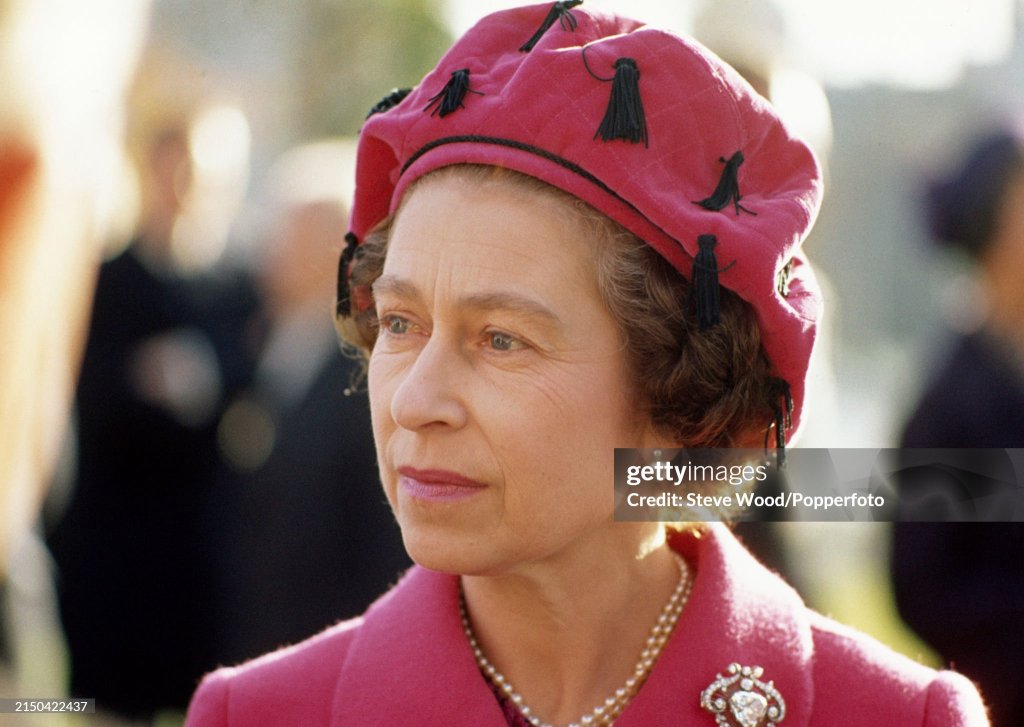
Queen Elizabeth and her husband, Prince Philip, lunched with their hosts, Grand Duke Jean and his wife, Josephine-Charlotte, on the first day of the queen’s three-day state visit to the Grand Duchy of Luxembourg. Thousands of Luxembourgers waving union jacks and shouting, “Vive la reine,” gave a warm welcome to the first visit ever of a British monarch to the tiny nation.
Greek President Konstantine Tsatsos in a ceremony in Athens presented visiting U.S. Senator Edward M. Kennedy (D-Massachusetts) with the insigne of a knight commander in the Order of the Phoenix for “valiant services to the cause of peace, freedom and justice.” Kennedy arrived earlier for a four-day visit as a guest of Premier Konstantine Karamanlis.
Israeli officials are predicting a year of renewed diplomatic activity aimed at finding a peace settlement that may result in conflict between Israel and the United States. Before the American election, Prime Minister Yitzhak Rabin was telling audiences that 1977 would augur a year of tough diplomatic bargaining regardless of whether President Ford or Jimmy Carter was elected. Mr. Rabin told a student forum the other day that this feeling was based, in part, on the fact that since the 1967 war “neither the Republicans nor the Democrats have accepted our interpretation of what we call secure borders and we have yet to see what will happen with the Palestinian issue.” Some Foreign Ministry officials are pointing to a number of developments, mostly in the Arab nations, that they feel will lead to an end of the current diplomatic lull. These include the recent improvement in relations between Syria and Egypt, which the Israelis feel may result in concerted anti‐Israeli moves on the diplomatic front. In addition, the Israelis expect new attacks to be mounted in the United Nations General Assembly.
More than 100,000 workers, almost half of Israel’s labor force, were on strike, threatening to strike or working “by the book.” The latest group involved are civil servants who announced they will strike in 15 days if the government refuses immediate pay increases. The wage disputes come against a background of continuing inflation, expected to reach 30% this year.
The Syrian Army today made final preparations in this area 10 miles east of Beirut for its expected entry into the Lebanese capital as the first and most powerful contingent of the Arab force that is supposed to re‐establish peace throughout the country. Syrian officers in this area in which the Syrian Army inflicted heavy casualties a month ago on forces of the coalition of leftists, Moslems and Palestinians declined to say exactly when their troops and tanks would enter Beirut. But one officer, acknowledging that the Syrian forces must pass the rightist Christian stronghold of Kahale, a mile and a half west of Aleih on the main Damascus‐Beirut highway, told reporters that the Syrians would not hesitate to fire on any Christians who used force to block the advance. The Christians and Syrians were allies in the fighting in this area a month ago. Syria, now dominating the Arab deterrent force, is apparently trying to assume a neutral role between the two sides in the 18‐month civil war.
Prime Minister Indira Gandhi of India said proposed constitutional changes giving her broad new powers would create “harmony” in government and speed progress. The upper house of Parliament is debating the changes already approved by the lower house. Passage, considered certain, will reduce the power of the judiciary.
Wall posters in Shanghai said that radicals there had planned a revolt against the Peking government last month and then abandoned the plot. The plans, the posters charged, involved distribution of guns and ammunition to 30,000 members of the militia two days after the arrests of four leading leftists. But, the posters said, the plans were dropped after three Shanghai radicals returned from Peking, apparently convinced that their scheduled rebellion was hopeless. The revolt, according to the posters, was planned by supporters of Chiang Ching, the widow of Chairman Mao Zedong, and three other radicals who had been arrested in Peking, probably on October 7, on charges of seeking to usurp power. The plans for a revolt, the posters charged, had proceeded to the point where two days after the arrests the radicals’ supporters in Shanghai mobilized 30,000 members of the militia and distributed guns and ammunition to them in preparation for resistance against the Peking authorities.
Japan said it will refuse to recognize a 200-mile fishing zone to be set up by the United States starting March 1. Shinichiro Asao of the Japanese Foreign Ministry said at U.S.-Japanese fishery talks in Tokyo that his country opposes the limits until an international law establishes such a zone. The U.S. delegation has in effect rejected Japan’s demand that it be allowed to catch as much fish in U.S. waters in the future as it has in the past.
President Ferdinand E. Marcos of the Philippines ordered the dismissal of 327 men from the military in one of the biggest mass firings since martial law was proclaimed four years ago. A total of 19 officers and 308 enlisted men were discharged for misconduct, including mistreatment of political detainees and firing of weapons while under the influence of alcohol. A total of 1,604 military personnel have been weeded out since martial law began. President Marcos said in a statement: “Every member of the military organization must try to identify with the people. The misconduct of any man in uniform gives the military a bad name and helps undermine the people’s confidence.”
Canadian destroyers seized three Cuban fishing boats today for violating Canada’s 12‐mile fishing limit, officials at the Fisheries Department reported. They said that two of the vessels, the trawler Playa Giron and its mother ship, Oceano Antarctico, were brought into this port by the destroyer Algonquin and the Chebucto, a Fisheries Department patrol boat. The Cuban trawler Playa Colorado attempted to outrun the destroyers, the officials said, but it was intercepted and brought into Halifax. At one point, the captains of the Playa Giron and Oceano Antarctico refused to turn about, saying they were awaiting instructions from Havana. The captains complied, the officials added, when they were warned that, if necessary, armed boarding parties would be used.
Fierce fighting involving tanks and warplanes was reported in southern Angola by thousands of black refugees fleeing across the border into Namibia (South-West Africa). Refugees were quoted as saying that government troops, backed by Cuban military forces, had launched an offensive against the rebel National Union for the Total Independence of Angola. A South African government official said that at least 3,000 more refugees had crossed the border in the last few days, bringing the total this year to about 8,000.
The Briton who chairman of the deadlocked conference on Rhodesia was summoned to London tonight to report to Foreign Secretary Anthony Crosland. The chairman, Ivor Richard, British delegate to the United Nations, is to return tomorrow after reporting on the state of the conference and how he sees the course of the negotiations, his spokesman said. It would be absurd to attempt to deny that the conference bad reached “a stage where there are difficulties,” he said in reply to questions. After yesterday’s talks both white and black delegations said they remained far apart on the issue of a date for the proclamation of Rhodesia’s independence under the black majority’s control. But a British spokesman gave assurances today that to his knowledge there had been no indication by either side that it was not prepared to remain beyond a set time in the absence of progress. The four nationalist leaders — Robert Mugabe, Joshua Nkomo, Bishop Abel Muzorewa and the Rev. Ndabaningi Sithole — are demanding that independence be granted within 12 months. The white delegation, headed by Foreign Minister P. K. van der Byl in the absence of Prime Minister Ian D. Smith, who has returned home, insists on a delay of 23 months.
Pollster George W. Gallup Jr. said the foreign policy debate with Jimmy Carter combined with the steady barrage of bleak economic news in October probably cost President Ford the election. Gallup said Ford had staged an amazing resurgence after the campaign began in earnest in mid-September, coming from 17 percentage points behind Carter to nearly even by the time of the second debate. But that debate stopped his phenomenal upward momentum and he never recovered, Gallup told a news conference in Washington. He said he could not attribute the loss of momentum specifically to Ford’s comment during the debate that Eastern Europe was not under Soviet domination. Also, he said, Carter’s Playboy interview had no lasting impact.
The U.S. Supreme Court refused today to block the payment of Medicaid funds for elective abortions, at least for the time being. The Court’s action means that a new Federal statute that bars the use of Federal funds for abortions unless abortion is necessary to save the life of the mother will not go into effect for many months, if at all. A Federal District Court in Brooklyn ruled last month that the statute was unconstitutional and ordered that Federal reimbursement for the costs of abortions continue on the same basis as reimbursements for the costs of pregnancy and childbirth‐related services. Technically, what the Court did today was to deny a request by Senator James L. Buckley of New York and others for a stay blocking enforcement of the District Court order pending appeal.
The Conference of Mayors urged President-elect Carter to set a national tone of concern for the country’s cities. As first priority for a new national urban investment policy, the conference recommended easy access for mayors to the White House to make the federal bureaucracy responsive.
Federal investigators have been told that President Park Chung Hee and other senior South Korean officials conceived, organized and directed an illegal effort to influence congressional policy. Federal sources said that the latest information represented the first such allegations from Koreans with first-hand knowledge of the inner operations of the Seoul government.
The Utah Supreme Court issued a stay of execution for convicted killer Gary Mark Gilmore, despite two requests from Gilmore that he be shot by a firing squad as scheduled next Monday. The court did not specify the length of the delay, which was requested by two court-appointed attorneys, Craig Snyder and Michael Esplin, who defended Gilmore and were fired by him after the trial. Gilmore, 35, was convicted last month of slaying a Provo motel clerk. Meanwhile, U.S. Supreme Court Justice Lewis F. Powell Jr. has delayed indefinitely the execution of Ernest Benjamin Smith, who had been scheduled to go to the electric chair on November 22 for the murder of a Dallas grocery clerk during a robbery.
Evidence for criminal charges against 10 to 20 former and present officials of the F.B.I. has reportedly been found by Justice Department prosecutors. Government sources said the F.B.I. officers had approved or were aware of illegal wiretaps, bugs, burglaries and mail openings by bureau agents in recent years, and also of an aborted plot by F.B.I. agents in New York City to kidnap a woman they believed linked to the Weather Underground terrorist group. The prosecutors, the sources said, have prepared a long memorandum outlining the case against the bureau officials. The case has emerged from hours of grand jury testimony and examination of bureau documents over the last five months by a special panel in the criminal section of the civil rights division. Although there are still some gaps in the evidence, one source said, the memorandum will be presented later this week to Attorney General Edward H. Levi by Justice Department lawyers, who are expected to recommend that he permit them to seek indictments against some or all of those named in the memorandum.
The CIA sought dismissal of a suit to compel it to provide more information on a missing Russian history professor at the University of Colorado. CIA counsel told U.S. District Judge Richard P. Matsch in Denver that the agency already had complied with the provisions of the Freedom of Information Act in supplying two heavily censored memos on the missing man, Thomas Riha. The CIA presented affidavits indicating that additional disclosures would jeopardize intelligence sources and threaten national security. Matsch did not indicate when he would rule. Riha disappeared mysteriously more than seven years ago amid speculation that he was either a CIA operative or a double agent.
A Mississippi River pilot said today that, if state officials had not ignored evidence two years ago indicating that the crew of the George Prince drank while on duty, a fatal collision between the ferry and a tanker might have been avoided. The September 20 crash of the 664‐foot tanker Frosta and the 120‐foot ferry killed at least 78 persons. There were 18 survivors. A 1974 collision between the George. Prince and the tugboat Atcheson produced no fatalities, but the tug’s pilot, Leroy Cannon, said an investigation produced enough evidence to indicate the crew was drinking liquor on the state-owned ferry. “Had they paid heed to some of this stuff that came out in my investigation, I’m pretty sure this [second accident] could have been avoided,” he said.
With outdoor work on the trans‐Alaska oil pipeline drawing to a close for the winter, builders said today that the 800‐mile, pipeline was about 97 percent complete. Construction on pump stations and the terminal at Valdez, the Alaskan port to which fuel will be piped from northern oil fields, is not that far along. But the Alyeska Pipeline Service Company, which is building the line, said work to be finished next year will not delay its scheduled opening in mid‐1977. Peter Demay, Alyeska vice president, said four construction segments were almost mechanically complete and all “non-mainline” work on them has ended for the winter. About 21.7 miles of pipe remain to be installed, he said. He added that the project over, all, including pipeline, pump stations and terminal, is 88 percent complete.
The nation’s Roman Catholic bishops were asked to approve a pastoral letter setting strict rules on sexual behavior for Catholics. The 36-page document, which is expected to stir angry criticism among some Catholics, was presented to the 250 members of the National Conference of Catholic Bishops beginning their four-day annual meeting in Washington. A final vote on amendments and the code itself is scheduled for Thursday. The pastoral letter rejects the view that “marriages can deteriorate to such an extent that the marital union is destroyed and the spouses are no longer obliged to keep their promise of lifelong fidelity. The covenant between a man and woman,” the document says, “is as indissoluble and irrevocable as God’s love for his people and Christ’s love for His church.
A Roman Catholic Archbishop today defended the church’s stand on abortion but told his fellow prelates they must expand their concern to the “sanctity’” and dignity of human life at all stages.” Archbishop Joseph L. Bernardin of Cincinnati, president of the National Conference of Catholic Bishops that began a four‐day session today, told the meeting that if “we bishops are to be known as men of one issue, let the issue be human life and all that is necessary to protect and enhance it.” The reference to “men of one issue” clearly was directed at criticism, both inside and outside the church, that the American hierarchy focuses too narrowly on the abortion issue. Archbishop Bernardin said there was need to be committed to the continuing struggle against racism, poverty, unemployment, inadequate health care and housing and by joining the fight, for the rights of farm workers, immigrants and aliens.
New York City Mayor Abraham D. Beame described as “disgraceful” a paint attack on a Russian violinist by two youths during a Carnegie Hall concert. “I do not condone the oppression of Jews in the Soviet Union,” Beame said, but added that the “shameful incident” did not “advance the cause of Soviet Jewry.” Witnesses said a young man threw a paint bomb that burst as violinist Vladimir Spivakov was playing and it spattered his clothing, his Stradivarius violin and a few members of the audience. Police arrested Martin Laub, 19, and Paul Shatz, 16. Police said they claimed to be members of the Jewish Defense League.
A young man who had been in a coma since May, 1975, is dead, ending a lawsuit by the state of Florida to declare him a trespasser at the University of Florida Health Center in Gainesville. James Ray Bates Jr., 19, of Ocala, went into a coma after being injured in an auto accident. He died Sunday. Doctors said they could do nothing to help him, but his parents insisted he remain in the hospital. Mr. and Mrs. James Ray Bates Sr. had also filed a $5 million damage suit against the state, but it was dismissed.
Gold prices soared as much as $5 an ounce in Europe, and the dollar and the pound fell sharply in heavy trading in currency markets. Dealers attributed the gold-buying rush to an apparent belief that President-elect Carter would seek substantial growth in the American economy to cut unemployment and that consequent spending might touch off increased world inflation.
Country-western singer Tammy Wynette was admitted to a hospital in London for treatment for acute bronchitis. A hospital spokesman said she would remain there for several days although her condition was “fine.” But when country-western singer George Jones heard the news in Nashville, he announced he was flying to her side. Miss Wynette, 34, divorced Jones last year (after first divorcing Alabama building contractor E. F. Byrd) to marry Nashville real estate salesman J. Michael Tomlin, whom she now is divorcing. “I want to be with her,” Jones said. “I want to help her. She has some concert engagements to fulfill. I’ll do them for her.”
NFL Monday Night Football:
The Cincinnati Bengals defeated the Los Angeles Rams, 20–12. Boobie Clark scored on a nine-yard run one play after Ken Riley recovered a fumble at the Rams’ 9, to start a game-winning 20-point Bengals’ third quarter. Ken Anderson completed six of nine passes in that period for 105 yards and touchdowns to Bob Trumpy and Clark. Cincinnati’s defense turned back two Los Angeles fourth-quarter scoring drives with an interception and a fumble recovery both at their goal line.
Los Angeles Rams 12, Cincinnati Bengals 20
Stock prices fell across the board. The Dow Jones industrial average dropped by 9.39 to 933.68, bringing the loss in the indicator in the four sessions since the election of Jimmy Carter to 33.24 points. Credit market prices dropped in both the government and corporate sectors.
Dow Jones Industrial Average: 933.68 (-9.39, -1.00%)
Born:
Jaroslav Bednář, Czech NHL right wing (Los Angeles Kings, Florida Panthers), in Prague, Czechoslovakia.
Víctor Álvarez, Mexican MLB pitcher (Los Angeles Dodgers), in Culiacan, Mexico.
Carlos Casimiro, Dominican MLB designated hitter and pinch hitter (Baltimore Orioles), in San Pedro de Macoris, Dominican Republic.
Eric Harland, American jazz drummer and composer (Charles Lloyd Quartet; Dave Holland’s Prism; Joshua Redman; Taylor Eigsti Trio), in Houston, Texas.
Brett Lee, Australian national cricket team bowler; 1999 to 2012; in Wollongong, New South Wales, Australia.
Died:
Carlos Fonseca Amador, 40, founder (in 1969) and leader of the Sandinista National Liberation Front, was killed by Nicaraguan Army troops after being captured near the city of Waslala. Less than three years after Fonseca’s death, the Sandinistas would succeed in toppling the government of Anastasio Somoza Debayle.
Gottfried von Cramm, 67, German tennis player, 1934 and 1936 French Open winner, finalist in Wimbledon three consecutive times, 1935 to 1937, was killed in an automobile accident in Egypt. Cramm was being driven home to Cairo from Alexandria when his car collided with an oncoming truck.
James Woodford, 83, English sculptor.
Clara G. McMillan, 82, U.S. Representative for South Carolina from 1939 to 1941

