The Last Gasp of Diplomacy
The Japanese government has made its preparations for war by 5 November 1941. The plans have been drawn up, the difficulties such as developing torpedoes to accommodate the shallow waters of Pearl Harbor have been overcome, and the Emperor has signed off on the overall plan.
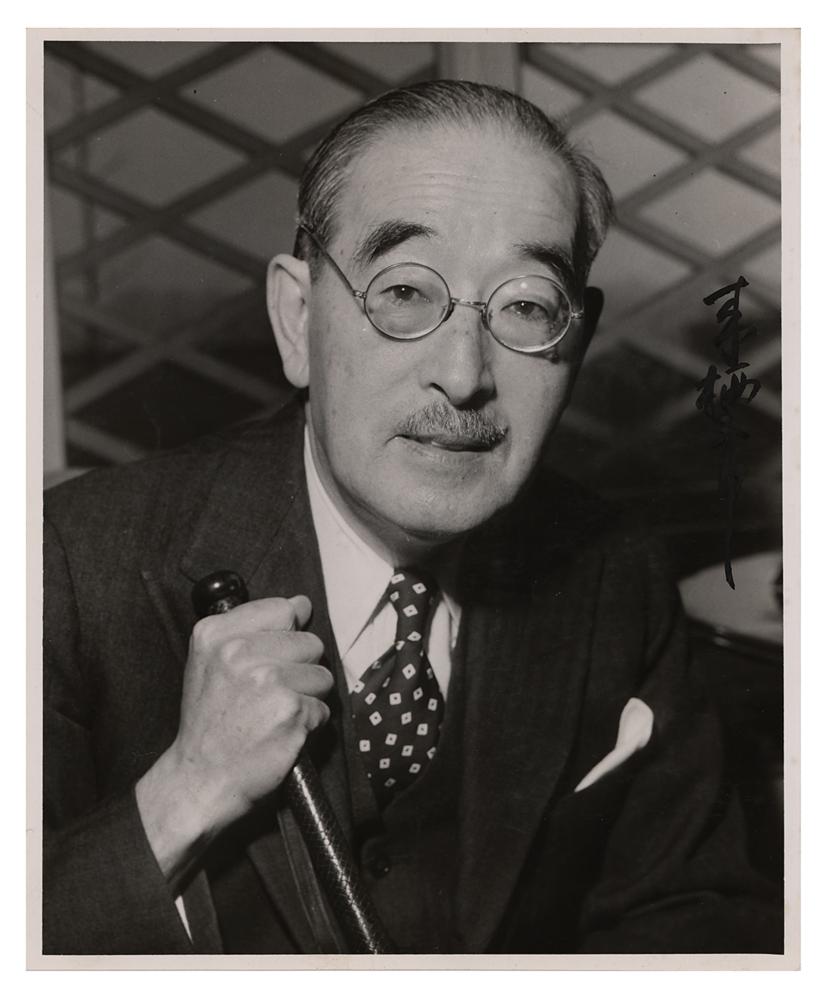
Now that they are fully prepared, though, there is a moment of hesitation by the Japanese. Everyone realizes the enormity of what is about to transpire. The government holds an Imperial Conference in the morning. Emperor Hirohito is not warlike, so the government gives peace one last chance. The Foreign Office sends Saburō Kurusu, a well-traveled professional diplomat whose only moment of celebrity was signing the Tripartite Pact on Japan’s behalf in Berlin on 27 September 1940, to Washington as a “special envoy.”
Kurusu will not have much time — the trip to the United States capital will take ten days, and the Japanese task forces will have to depart roughly a week later to get in position on time. The main issue of contention between the two powers is Japan’s invasion of China. However, maybe he can accomplish something that Ambassador Kichisaburō Nomura cannot.
The Japanese prepare two proposals for the Americans, to be handed to the United States Secretary of State Cordell Hull as soon as possible in sequence. In Proposal A, Japan promises to withdraw from China and French Indochina (Vietnam), which is what the Americans want. However, this depends upon Chinese Nationalist leader Chiang Kai-shek signing a peace treaty that would permit the Imperial Japanese forces to remain in parts of China indefinitely. In addition, the Japanese would agree to free trade principles which are important to the Americans, and basically cast aside its obligations under the Tripartite Pact. The Japanese are willing to abandon China… sort of.
Proposal B is intended as a last resort should the Americans reject Proposal A. It provides that Japan would immediately withdraw all troops from French Indochina and also negotiate a final peace treaty with China — as long as the United States did not interfere. Japan and the United States then together would acquire the Netherlands Indies (Indonesia) and the two nations thereafter would become trading partners and, presumably, allies.
As Kurusu journeys to Washington, however, Japanese war preparations are to continue in secret. Today, Navy Chief of Staff Admiral Yamamoto distributes copies of Top-Secret Order No. 1 to all commanders of the Japanese Combined Fleet. This order that is drafted by both the Imperial Army and Navy sets forth the invasion plans that will cover the entire Pacific basin. It provides in part:
“[A]nticipating that war with the United States, Great Britain, and the Netherlands will begin in the early part of December, for self-preservation and self-defense, the Empire has decided to complete the various preparations for war.”
The order provides that the fleet is to get into attack positions. Submarines are to depart on 20 November and the Carrier Striking Force is to depart the next day for Hawaii.
While the Japanese carry their preparations out with extreme secrecy, the Americans are much more closely attuned to Japanese intentions than the Japanese know. They have been reading Japanese diplomatic ciphers for months in the “Magic” program but have done little with the information so received. United States Secretary of State Hull knows that something important is in the offing due to Japanese instructions to Ambassador Nomura that a resolution must be reached by 25 November. Hull drops a few broad hints to allies, and Congress decides to stay in session indefinitely rather than take its customary holiday breaks. The Magic team in Hawaii, led by Joseph Rochefort, begins detecting changes in Japanese naval communications, though they are not certain what to make of it. Rochefort also notes the recall of Japanese merchant ships. Two Japanese marine staff officers also leave Pearl Harbor. Various Americans, such as Ambassador Joseph Grew in Tokyo, are getting uneasy as they notice things start to change, but little out of the ordinary is done to prepare for war.
Arndt Pekurinen, the founder and chairman of the Finnish Anti-militarist League, is executed near the front-line in Uhtua after he has for three times refused to wear a uniform and carry a rifle. Pekurinen was a principled pacifist, and it was largely thanks to him that in 1930s there became available a non-military alternative for the conscription. Back then Pekurinen had refused to perform military service, and was sentenced for jail. His case attracted international interest, and because of this pressure a law was made to accommodate conscientious objectors. But this law applied only for peace time. When the Winter War began, Pekurinen went again to jail. In 1941 Pekurinen was ordered from jail to front, where he rather chose to die before a firing squad than carry a rifle. Whatever one thinks of Pekurinen’s ideals, one has to feel certain respect for his commitment for them. There are only very few people who are ready to die for their ideals, esp. when the ideals run counter the main stream of the times.
Soviet submarine ShCh-324 was lost in the Baltic Sea off Tallinn, Estonia; she had presumably hit a mine. All 38 aboard were killed.
Soviet submarine ShCh-214 sank Italian tanker Torcello in the Black Sea.
RAF Bomber Command, Day of 5 November 1941
3 Stirlings on cloud-cover raids to the Ruhr turned back.
RAF Bomber Command, Night of 5/6 November 1941
Minor Operations
22 Hampdens and 2 Manchesters to Cherbourg, 11 Hampdens on shipping patrols in the Frisians and in the Hamburg area, 24 Hampdens minelaying in Kiel Bay. 3 Hampdens from the shipping operations and 1 minelaying aircraft were lost.
The search for the German raider reported by the British RFA oiler Olwen the previous day continued. Vice Admiral Algernon U. Willis, the Commander in Chief South Atlantic, informed British ships of the unsuccessful efforts by two light cruisers and three destroyers involved in the search the previous day.
Battleship HMS King George V, aircraft carrier HMS Victorious, heavy cruisers HMS Kent and HMS Berwick, and destroyers HMS Somali, HMS Punjabi, HMS Ashanti, HMS Matabele, HMS Oribi, and HMS Offa departed Hvalfjord at 1800. Light cruiser HMS Edinburgh (CS.18), heavy cruiser HMS Suffolk, and light cruiser HMS Sheffield departed Hvalfjord at 1800 on patrol. American heavy cruisers USS Wichita and USS Tuscaloosa departed Hvalfjord on patrol in response to a rumor that German heavy cruiser Admiral Scheer was breaking out of Norwegian waters. American battleships USS Idaho and USS Mississippi and destroyers USS Gwin, USS Meredith, and USS Monssen of Destroyer Division 22 departed Hvalfjord on patrol. When intelligence indicated the German ship had returned to harbor, the allied warships ordered to return to Hvalfjord just before midnight. The Commander in Chief, Home Fleet, arrived back at Hvalfjord on the 6th. Light cruiser Edinburgh, heavy cruiser Suffolk, and light cruiser Sheffield arrived at Hvalfjord on the 6th. American heavy cruisers Wichita and Tuscaloosa arrived at Hvalfjord on the 6th. American battleships Idaho and Mississippi and destroyers Meredith, Grayson, and Monsson arrived at Hvalfjord on the 7th.
Light cruiser HMS Arethusa, after refitting, departed Rosyth and arrived at Scapa Flow later that day.
Destroyer HMS Chiddingfold departed Scapa Flow at 1000 with Vice Admiral Sir Bruce Fraser, Third Sea Lord, and Sir Stanley Goodall, Direction of Naval Construction, for passage to Scrabster. The destroyer arrived back at 1330.
Destroyer HMS Montrose embarked Vice Admiral, Second in Command Home Fleet and his staff and departed Rosyth for Scapa Flow at 1600. The destroyer arrived at Scapa Flow at 0800 the next day and disembarked her passengers alongside battleship HMS Duke of York. Vice Admiral, Second in Command Home Fleet, hoisted his flag in battleship Duke of York at 0900/6th.
Destroyers HMS Onslow, HMS Impulsive, and HMS Antelope departed Scapa Flow at 1730 for Londonderry. The destroyers arrived at Londonderry on the 6th for refueling. Following refueling, the destroyers departed at 1700 to meet battleship HMS Rodney in 55-40N, 17-45W and relieve escorting destroyers HMS Highlander, HMS Havelock, and HMS Harvester. The battleship was met in 55N, 12W at 1200/7th and the H class destroyers were relieved. The Rodney force then proceeded to Loch Ewe to fuel. The British force arrived at Loch Ewe at 0815/8th. Following refueling, the ships departed at 1600 to carry out patrol on the Iceland — Faroes passage.
British steamer Glencree (481grt) was damaged fifteen miles southwest of Bishops Light by German bombing and gunfire.
German motor steamer Kurt Sandkamp (250grt) was sunk by British bombing in the Ems.
Italian steamer Anna Zippitelli (1019grt) was sunk by British bombing in 31-49N, 18-25W, west of Benghazi.
Italian steamer Torcello (3336grt) was sunk by Russian submarine ShCh-214 in the Black Sea.
Australian sloop HMAS Yarra joined the Suez Escort Force, relieving sloop HMS Falmouth, which returned to the East Indies Station.
British steamers City of Lincoln and Dunedin Star departed Gibraltar for Capetown and Panama, respectively.
Today in Washington, President Roosevelt announced the creation of a United States-Canada Joint Defense Production Committee to coordinate manufacture of armaments, and received the report of the President’s Emergency Board recommending $270,000,000 in wage increases for railroad workers. His callers included Democratic leaders from Congress, and Secretary Hull, Price Administrator Leon Henderson, and Sumner Welles, Under-Secretary of State, with the Polish Ambassador.
The Senate considered Neutrality Act revision and recessed at 5:13 PM until 11 AM tomorrow. The education and labor subcommittee heard Paul V. McNutt recommend post-war economic planning; the Privileges and Elections Committee continued hearings on the fitness of Senator Langer.
The House received the Maas resolution for the creation of a joint congressional committee on priorities and adjourned at 12:52 PM until noon tomorrow.
Administration leaders in Congress told President Roosevelt today that they thought both houses would authorize him within the next few days to arm American merchant ships and send them anywhere in the world. The Senate went into its ninth day of debate on revision of the Neutrality Act to remove the restrictions on American shipping. The Congressional leaders, who visited the White House this morning, reported that the President expressed a desire for quick adoption of the legislation and suggested that pending amendments on the labor situation be postponed. House leaders will plan procedure for the debate in that chamber tomorrow, when Speaker Sam Rayburn and the majority leader, Representative McCormack, return to the capital. President Roosevelt was said to have supported a tentative plan for a full day’s debate on the measure in the House rather than to seek approval on a conference report, with debate limited to one hour.
Administration leaders have decided to hold Congress in session indefinitely because of the crisis in Japanese-American relations, informed sources said today. The decision came as a surprise, inasmuch as some house leaders had talked previously of knocking off legislative work for the balance of the year, as soon as neutrality and price control measures were out of the way. Influential Democratic legislators, who asked their names be withheld, said under present plans there would be nothing more than three-day recesses for either the senate or house in the near future. This disclosure was made as the Japanese government announced Saburo Kurusu, former Japanese ambassador to Germany, was flying to Washington as a special envoy In an effort to work out an understanding with the United States
In Detroit, Michigan, the British ambassador in America, Lord Halifax, was pelted with eggs and tomatoes by women protesters last night as he completed a two-day tour of Detroit’s arms production centers. Only one well-aimed egg actually hit the envoy. One hour later he visited the Henry Ford hospital to have an eye infection treated. The women were protesting against the possible entry of America into the war, though the identity of the group is not known. The American Mothers and The Mothers of the USA both blamed each other.
Losses sustained thus far by the Navy in the Battle of the Atlantic will make no change in orders to “shoot on sight,” Secretary Knox stated today at his first press conference since disclosure of the sinking of the destroyer Reuben James and torpedoing of the tanker USS Salinas. “There is no change in the situation,” he said. “The orders remain the same. The work is going on.” Replies to other questions were couched in the same general phrases, but observers got the impression that the Navy has understood from the start the risks involved in its assignment to protect American “defensive waters,” and that it realizes that Nazi submarines have evolved new tactics which make eradication hazardous.
Harry L. Hopkins, President Roosevelt’s confidant and constant companion, was taken directly to Naval Hospital today from the special Presidential train and is there tonight. When the train arrived from Hyde Park early this morning a White House automobile was driven to the President’s private car, in which Mr. Hopkins always travels when making a trip with Mr. Roosevelt. Accompanied by one of the President’s medical-attendants, Mr. Hopkins went immediately to the hospital. The hospital said “no comment” to all questions as to Mr. Hopkins’s condition, and indeed refused to say whether he actually was there. The Navy Department adopted the same attitude.
British redcoats appeared in Congress today for the first time since 1814. They were worn this time by toy soldiers, but Senator Wheeler of Montana said that they were here with diabolical purpose and demanded to know why. Opposing the Administration’s proposals to send American merchant vessels into British ports, Mr. Wheeler interrupted his five-hour speech in the Senate to produce a small box full of brightly painted Christmas soldiers which he held up before the packed galleries. “These British redcoats,” he said, “are coming over here to be played with by your children while they are asking American soldiers to go over there and fight for the British.” It was ridiculous for the United States to be considering sending ships to British ports and curtailing our own consumption of strategic raw materials like lead, brass, steel and tungsten when Grea. Britain was exporting to this country toy soldiers and guns which were made out of these materials, Wheeler asserted.
Threat of a railroad strike grew more serious tonight despite a presidential board’s recommendation that 1,250,000 employees of the nation’s carriers be granted temporary wage increases and that 900,000 of them be given vacations with pay. Chiefs of five operating brotherhoods stated at Chicago the recommendations, falling short of demands, were “most disappointing” and said they could not recommend them to the rank and file of union membership. However, no strike can be started for 30 days, under the law. Although railroad bonds advanced on the New York market, spokesmen for carriers also expressed disappointment at the board’s recommendations.
Striking shipyard welders voted at a mass meeting tonight to return to work tomorrow morning under a proposal from Sidney Hillman, co-director of the Office of Production Management. An announcement from the United Welders of America, which called the strike, said the vote in the meeting accepted terms outlined by Hillman and Karl V. Morris, president of the United, after conferences in Washington, under which the striking welders are to resume work pending mediation.
Oiler USS Laramie (AO-16) is rammed by Panamanian freighter Montrose, Tunugdliark Fjord, Narsarssuak, Greenland, but suffers no damage in the accidental encounter caused by stormy weather.
Search for German raider reported by British RFA oiler Olwen the previous day continues; Commander-in-Chief South Atlantic (Vice Admiral Algernon U. Willis, RN) informs British ships of the unsuccessful efforts by the five U.S. ships (two light cruisers and three destroyers) involved in the search the previous day (see 6 November).
The Noël Coward play “Blithe” Spirit made its Broadway debut at the Morosco Theatre.
Cordell Hull had learned, via Magic intercepts of Japanese messages to Kichisaburō Nomura, that 25 November 1941 was Japan’s final deadline for the decision on war.
Marshall and Stark send a six-point memorandum to FDR outlining the position taken by the Joint Board on November 3. FDR is specifically informed that there would be insufficient B-17’s in the Philippines to serve as a “positive threat” to the Japanese until mid-December and that it would be February or March before air power in the Commonwealth was sufficient to be a “deciding factor in deterring Japan”. This memorandum further sets out that a Japanese attack on British or Dutch possessions or a threatening Japanese assault on Siam would lead to an American declaration of war. (This memorandum was delivered to Kimmel on November 24, 1941, though whether a copy was sent to Hart is unknown.)
Passengers preparing to leave for Tokyo today aboard the Japanese liner Taiyo Maru were subjected to one of the most exhaustive customs inspections ever carried out in Honolulu. The 450 passengers passed through the receiving desk and every bag and parcel was opened and inspected closely. Many passengers were then taken to tents for a body search for concealed articles.
Rear Admiral Francis W. Rockwell relieves Captain Herbert J. Ray as Commandant, Sixteenth Naval District and Commander, Philippine Naval Coastal Frontier. Ray had been acting in that capacity due to the illness of Rear Admiral Harold M. Bemis.
Joseph Rochefort’s cryptanalytic team in U.S. Territory of Hawaii detected improvements in security of Japanese naval communications and the recall of some of the merchant ships back to home waters.
Hopes of maintaining peace in the Pacific rose in Tokyo with a bound yesterday when the Japanese Government announced that it had dispatched Saburo Kurusu, one of Japan’s most experienced, diplomats, to Washington to assist Ambassador Kichisaburo Noure.
At a conference with Emperor Showa (Hirohito), Japanese leaders decided to go to war with the United States, United Kingdom, and the Netherlands in early December 1941 should diplomatic relations with the U.S. did not improve by 1 December.
Isoroku Yamamoto issued Top Secret Order No. 1 to the Japanese Combined Fleet, detailing the plan for the attack on Pearl Harbor. Japan’s commanders today ordered the Imperial Japanese Navy to prepare for a surprise attack on the U.S. fleet at Pearl Harbor in Hawaii. The secret move follows the Japanese decision this autumn to carry out a simultaneous attack on Malaya and Philippines to get to the oilfields of the Dutch East Indies. Some commanders were reluctant to attack the Philippines, which are U.S. territory, and bring the USA into the war, and a pre-emptive strike was seen as essential to hamper U.S. defense efforts. The idea of attacking Pearl Harbor was not new, but it took the determination of the Japanese C-in-C, Admiral Isoroku Yamamoto, to sell it to his colleagues. He studied English at Harvard and was a naval attaché in Washington, and knows the potential power of the USA. He believes that only a surprise air attack will guarantee success. However, Japan’s leaders agree that before any attack there should be one last attempt at a negotiated deal on Japan’s role in Far East. If this fails, Japan and the USA will be at war before Christmas.
Japanese naval staff officers Suzuki and Maejima leave Pearl Harbor.
Japanese passenger steamer Kehi Maru (4523grt) was sunk on a Soviet mine in the Sea of Japan 75 miles off Korea in 40-40N, 131E. Of eighty crewmen and four hundred and thirty passengers, 131 were killed, and 379 survived.
Dow Jones Industrial Average: 119.85 (+0.98)
Born:
Art Garfunkel, American folk-pop singer (Simon and Garfunkel — “The Sound of Silence”, “Mrs. Robinson”, “Bridge over Troubled Water”) and actor, in Queens, New York, New York.
Patricia Harty, American actress (“Occasional Wife”, “Blondie”), in Washington, District of Columbia.
Bill Schlesinger, MLB pinch hitter (Boston Red Sox), in Cincinnati, Ohio (d. 2023).
Died:
Arndt Pekurinen, 36, Finnish pacifist, executed without a trial for refusal to follow orders.
Naval Construction:
The U.S. Navy SC-497-class (110-foot wooden hull) submarine chaser USS PC-668 (later SC-668) is laid down by the Daytona Beach Boat Works Inc. (Daytona Beach, Florida, U.S.A.).
The Royal Navy Vosper 72-foot motor torpedo boat HMS MTB 277 is laid down by Annapolis Yacht Yard Inc. (Annapolis, Maryland, U.S.A.). She is transferred to the Royal Indian Navy on completion and commissions as the HMIS MTB 277.
The Royal Navy “S”-class destroyer HMS Shark (G 03) is laid down by the Scotts Shipbuilding & Engineering Co. (Greenock, Scotland). She is transferred to the Royal Norwegian Navy before completion and commissions as HNoMS Svenner (G 03).
The Kriegsmarine (German Navy) Type VIIC U-boats U-307 and U-308 are laid down by Flender Werke AG, Lübeck (werk 307 and 308)
The U.S. Navy Fletcher-class destroyer USS Conway (DD-507) is laid down by the Bath Iron Works (Bath, Maine, U.S.A.).
The Royal Navy MMS I-class motor minesweeper HMS MMS 117 (J 617) is launched by J.S. Doig Ltd. (Grimsby, England, U.K.).
The Royal Navy MMS I-class motor minesweeper HMS MMS 140 (J 640) is launched by Frank Curtis (Par, England, U.K.).
The U.S. Navy 77-foot Elco patrol motor torpedo boat USS PT-66 is launched by the Electric Launch Company Ltd. (Elco), (Bayonne, New Jersey, U.S.A.).
The Royal Navy “U”-class (Third Group) submarine HMS Unison (P 43) is launched by Vickers Armstrong (Barrow-in-Furness, U.K.). She is later transferred on loan to the Soviet Union on 26 June 1944, commissioning as the V-3.
The Kriegsmarine (German Navy) Type VIIC U-boat U-380 is launched by Howaldtswerke AG, Kiel (werk 11).
The Royal Navy Hunt-class (Type III) escort destroyer HMS Bolebroke (L 65) is launched by Swan Hunter and Wigham Richardson Ltd. (Wallsend-on-Tyne, U.K.); completed by Wallsend. She is transferred to the Royal Hellenic (Greek) Navy before completion and commissions as RHS Pindos.
The Royal Navy “Q”-class destroyer HMS Quentin (G 78) is launched by J.S. White & Co. (Cowes, U.K.).
The Nihon Kaigun (Imperial Japanese Navy) Yūgumo-class destroyer HIJMS Makigumo (巻雲, “Cirrus Clouds”) is launched by the Fujinagata Shipyards, Osaka, Japan.
The Royal Navy “U”-class (Third Group) submarine HMS Unbending (P 37) is commissioned. Her first commanding officer is Lieutenant Henry Winter, RN.
The Kriegsmarine (German Navy) Type IXC U-boat U-172 is commissioned. Her first commanding officer is Kapitänleutnant Carl Emmermann.
The Kriegsmarine (German Navy) Type VIIC U-boat U-457 is commissioned. Her first commanding officer is Korvettenkapitän Karl Brandenburg.
The Kriegsmarine (German Navy) Type VIIC U-boat U-658 is commissioned. Her first commanding officer is Kapitänleutnant Hans Senkel.

