BATTLEAXE DEFEATED
Hitler issued the final order for Operation BARBAROSSA to begin on June 22 at 3:00 a.m.
Five days to BARBAROSSA.
Heydrich meets with the newly appointed commanders of the Einsatzgruppen and Sonderkommandos in Berlin to give them special oral instructions for their operations during the invasion. A briefing session, attended by the commanders of Einsatzgruppe, Einsatzkommando, and Sonderkommando units, took place in SS-Obergruppenführer and General der Polizei Reinhard Heydrich’s office in Berlin. At this time, Heydrich set out in detail the policy that was to guide the Einsatzgruppen in carrying out their assignments, among them the implementation of the Fuhrer’s order to liquidate the Jews.
Heydrich sets out in detail the policies to be followed by the Einsatzgruppen (“Task Forces”). These policies will include following the advancing army troops and serving as mobile execution squads of Jews and other undesired locals such as communist functionaries.
There is to be no judicial proceeding, no discussion — the intended victims are to be taken to places outside of town and shot without ceremony. Einsatzgruppen are composed of members of the SS, Gestapo, Criminal Police, and State Security Service. The colloquial name for Einsatzgruppen is “death squads.”
The Luftwaffe engages in reconnaissance flights over the Soviet Union, largely without being spotted. The photos are of historical interest for showing undamaged locations that soon will become famous for being destroyed by combat. Yesterday the photographed Kharkiv, today Zapolyarny in the far north.
Soviet Marshal Josef Stalin received a report signed by Pavel M. Fitin, chief of the NKGB Foreign Intelligence, asserting that “all preparations by Germany for an armed attack on the Soviet Union have been completed, and the blow can be expected at any time.” The source was an intelligence officer in Reichsmarschall Hermann W. Göring’s Air Ministry. However, at this point, Stalin has a stack of warnings of an invasion in his filing cabinet. As with the others, Stalin files it.
General Heinrichs, the Finnish Chief of Staff, orders a general mobilization. Finland began to secretly mobilize its military for Operation SILVER FOX, the Finnish invasion of the Soviet Union in concert with the German Operation BARBAROSSA. Finland today ordered general mobilization of its armed forces, effective in three days’ time. Notices on street corners order all reservists up to the age of 44 to report for duty. Tension is running high here as rumors that Hitler is preparing to march on the Soviet Union sweep the city. There is no doubt that if the Germans do attack Russia the Finns will fight alongside them. The bitter memories of the “Winter War” in which the Russians crushed Finland despite its gallant defense run too deep for any other course; there are reports that the 10,000 German troops who arrives in Finland recently, ostensibly on their way to northern Norway, are still in Finland preparing for a joint thrust with the Finns at Leningrad. The Finnish army, with its knowledge of the country and ability to use the terrain, would also be able to hold the Russian army in the north while the Germans launched a Blitzkrieg towards Moscow. Many in Britain will be sad to see the Finns allying with Hitler, but hatred of Russia outweighs all other considerations.
Finland announced its withdrawal from the League of Nations.
The Swedish government, which leans toward the Allied cause but is surrounded by Axis territory, permits the German 163rd (Erwin Engelbrecht) Infantry Division to use the rail line from Narvik to Helsinki so that it may be used in the Continuation War. This decision is extremely controversial within Sweden for violating neutrality and leads to the “Midsummer Crisis.” The division is not yet ready to move, however; that will take place from 25 June through 12 July.
Soviet deportations of 7,000 women, children, and elderly people conclude in Latvia. They are taken to Siberia on freight cars. Everybody is woken before or at dawn without warning, given an hour to pack, and everything that they leave behind is seized by the state.
The New York Times reports: “The Russian-German situation is worsening rapidly, according to usually well-informed diplomatic and military sources in Ankara, Turkey this evening and there is a growing belief in some quarters that the present secret negotiations between Berlin and Moscow are only a German diplomatic feint before an actual attack and Blitzkrieg.”
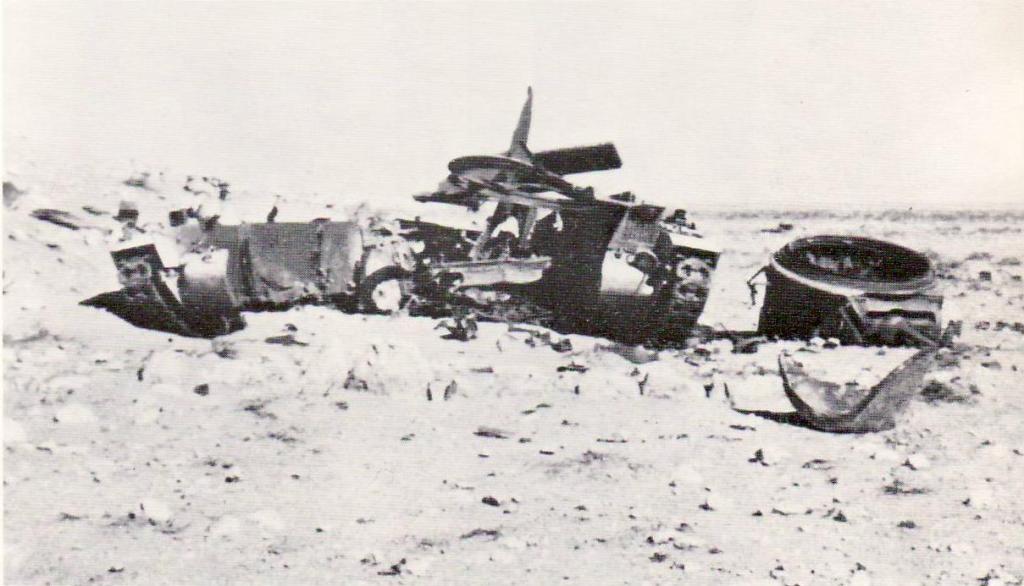
The British called off the failed Operation BATTLEAXE after taking 1,000 casualties and losing almost 100 tanks.
Major General Erwin Rommel attempted to move his tanks forces together early in the day to threaten the now weakened British armor guarding the inland flank. After some confusion the whole British force began to withdraw. General Archibald P. Wavell informed British Prime Minister Winston Churchill of the failure of Operation BATTLEAXE.
A German counterattack launched at 0430 hours broke through the Allied lines in Libya, threatening to cut off the Allied forces attacking Halfaya Pass. In the afternoon, the Allied leadership decided to call off the Operation BATTLEAXE offensive. The British 7th Armoured Division tanks formed a rearguard against pursuing German tanks until 1600 hours to allow Allied troops to fall back. The failure of the operation, especially in regards to the heavy losses in tank strength, would soon cost Wavell his position as the British commander-in-chief in the region.
At Fort Capuzzo, the British have planned a resumption of their offensive, but the Germans have been very active. This activity spooks the British commander, General Frank Messervy, who cancels the attack. The confusion on the British side reaches a fever pitch, and Middle East Commander General Archibald Wavell hurriedly boards a plane to fly from Cairo to the command post of front commander General Noel Beresford-Peirse at Sidi Barrani.
Meanwhile, General Rommel is reading the British wireless messages in real-time and knows that Wavell himself now is involved. As he writes later:
“It sounded suspiciously as though the British commander no longer felt himself capable of handling the situation. It being now obvious that in their present bewildered state the British would not start anything for the time being, I decided to pull the net tight by going on to Halfaya.”
Rommel repeatedly uses words like “bewildered” and “complained bitterly” to describe the tone of the British intercepts, which he obviously reads with great delight. One can almost hear him laughing at the image of Wavell rushing to the airport to fly to the scene of the end of his career.
This is one of Rommel’s truly great operations, though little-remembered amongst his other successes. He demonstrates true talent as a counter-puncher, turning a well-played defensive battle into an opportunity to push the enemy back. Rommel reorients his counter-offensive on the fly to take account of the changed circumstances. He directs the 5th Light Division and 15th Panzer Division in a concentric attack, the former from the southwest and the latter from the northwest, on Halfaya, to destroy the fleeing British troops. The panzers reunite with their trapped comrades in Halfaya Pass without difficulty and only fail to encircle the main body of British tanks and infantry because they are headed east so fast.
At 10:00, the Germans brush aside the remaining tanks of the 4th Armoured Brigade, which was ruined by previous ill-fated attacks on German positions protected by hidden anti-tank guns. The local British commanders agree by 10:45 on a general retreat, and the British spend the rest of the day abandoning all of their remaining gains and retreating back into Egypt.
At Halfaya Pass in the evening the Germans advanced upon the British forcing them to retire, firing as they left. Within 15 minutes the 2nd RTR had only five tanks left and they were unable to hold the rapid advance of the Germans. With the enemy occupation of Sidi Suleiman the action ended.
A grim faced Commander-in-Chief flew in from the Western Desert today and dictated a cable to London which began: “I regret to report the failure of ‘BATTLEAXE’.” General Wavell’s first major counter-offensive has ended in defeat, with 91 British tanks destroyed against German losses of 25. On London, Churchill — who had sent a fast convoy of reinforcement tanks under the code name “Tiger” and had high hopes for BATTLEAXE — took the news calmly. He has already decided to replace Wavell.
Wavell, too, had been optimistic, although he had grave doubts about the mechanical capacity of many of his tanks. He had not allowed for Rommel’s intelligence which forewarned of the attack; or the devastating use by the Afrika Korps of the 88mm “ack ack” gun as an anti-tank weapon. With armoured support, Indian troops fought hard to take the Halfaya Pass; but a hastily improvised Panzer counter-attack was the decisive factor.
Churchill was obsessed for the past month oversupplying the Middle East Command with tanks from England, and, instead of the great victory he desired and frankly expected, all that effort now is wasted. He blames the reversals on ineffective commanders and supposed slackers in the British army. The real reason for the British problems in North Africa, though, is simply that the German forces are too effective at this stage of the war.
June 17, 1941, marks the last remnant of Operation BATTLEAXE, which has been a disaster for the British. The Allies have suffered 122 killed, 588 wounded and 259 missing men, while the Germans have 93 killed, 350 wounded and 235 missing. The British also lose 98 tanks (3 light, 30 cruisers, and 65 Matildas), while the Germans lose about 50 tanks total. The Germans recover the field of battle and thus get both their own wrecked tanks to salvage and also the British tanks for study and possible repair. The outcome in the air is similar, with the RAF losing 33 fighters and 3 bombers against total Luftwaffe losses of ten planes.
Luftwaffe ace Hans-Joachim Marseille shoots down two Hawker Hurricanes over Halfaya Pass while flying escort for Junkers Ju 87 Stuka dive-bombers. They are his victories 12 and 13.
Operation BATTLEAXE has been as futile as Operation BREVITY in mid-May despite the concentration of massive British armored forces brought by the TIGER Convoy. The Germans advance to Sidi Suleiman and then pause. Not only have the British not gained any ground, in fact, but they also wind up 30 miles further east than they started.
The Battle of Kissoué ended in Allied victory after fierce fighting in the hills south of Damascus. The British win, but it is only a stepping-stone to more important objectives.
Concerned that the French counter-attack may swing westward and cut off 7 Division in the mountains of Lebanon, Lt-Gen Lavarack orders 21 Brigade (Brig Stevens) to halt the coastal advance and detach a battalion to reinforce Jezzine. On the Eastern axis 2nd Bn Queens attack from Deraa and drive French forces out of El Quneitra. An initial thrust by Free French Senegalese against Ezraa is repulsed but a second attempt drives out the French forces and take 160 prisoners. In the central sector the French again attack Jezzine but are driven off by elements of 25 Aust Bde. 70 weary and hungry Vichy Senegalese troops are taken prisoner. 2/2 Pioneer and 2/25 Bns under Brig Berryman attack Merdjayoun but are driven back by fierce French resistance.
British Gentforce under Major-General Paul Legentilhomme (now wounded and replaced by the commander of the 5th Indian Infantry Brigade, Brigadier Wilfrid Lewis Lloyd) now plans to advance further. It will use the two main roads from the south — passing through Quneitra and Kissoué — to attack Damascus. However, there is a slight problem — the Vichy French have retaken Quneitra (Kuneitra) on one of the two roads. However, the British 16th Infantry Division can bypass the town without too much trouble.
The British, despite the setback at Quneitra, decide that offense is the best defense and decide to attack north to Damascus anyway. So, the British plan to send the 5th Indian Brigade north from Aartouz along the Quneeitra road early on the 18th.
The battle in front of Damascus saps British strength elsewhere. Lieutenant-General Lavarack sends part of the Australian 21st Brigade from Sidon on the coast to reinforce Jezzine. They managed to blunt a Vichy French attack there along with the Australian 25th Brigade. In the east, Free French Senegalese troops take Ezraa after a hard battle, with the Vichy French losing 160 prisoners and the Senegalese losing 70 prisoners. At Merdjayoun, an Australian attack is stopped by the determined Vichy French resistance.
RAF bombers attack a French destroyer carrying ammunition which has evaded the blockade and made it to Beirut. The ship is further damaged.
The British still feel in control of the campaign, but a sense of wonder infuses General Henry Maitland Wilson’s headquarters in Jerusalem. The Vichy French were not supposed to resist, and defectors consistently reported that morale in Syria and Lebanon were terrible. However, the troops on the ground have been fighting fiercely over villages and towns that have no meaning. Why all this resistance from an army that was an ally only one year before?
Some answers come from the prisoner of war camps. Interrogations show that the Vichy French actually have excellent morale. However, it comes from a curious source: sheer pride. The French POWs claim that they are tired of being disparaged by both sides for their supposed lack of military prowess. In particular, they resent being lumped in with the Italians as ineffective (the French handily stopped the bulk of the Italian army along the Riviera coast in 1940). By resisting the British, they are proving something to the world — and to themselves.
The British order Habforce from Baghdad back into Syria, creating a long round-trip for the weary soldiers.
The 173 Tunnelling Company, Royal Engineers is ordered to Malta to dig underground facilities. The government on the island has decided that the surface is becoming too hazardous and wants to build a headquarters, storage area and operating theater in the mountains. An air raid in the early morning hours damages Iz-Zebbieh, Hal Far, Luqa, Ta Qali, and Rabat.
Italian King Vittorio Emmanuel signed tonight a decree law freezing American credits, investments and property in Italy as a reprisal to a similar move by President Roosevelt in what Italians call economic warfare preliminary to United States entry into the war itself. American investments in Italy, estimated by the authoritative Fascist editor Virginio Gayda at $145,000,000, must be registered by July 7.
The Guards Armoured Division was established by the British Army with Major General Sir Oliver Leese in command.
The Icelandic Althing elected Sveinn Björnsson as elected Regent of Iceland. While the Iceland military is occupied by the British (and soon the Americans), in other regards it continues to function independently.
RAF Air Chief Marshal Sir Philip Joubert, the new commander of Coastal Command, for the first time reveals that the RAF is using radio-location (RDF, or radar) to guide its planes. He reveals that Robert Watson-Watt developed the system.
RAF Bomber Command, Day of 17 June 1941
23 Blenheims on a large Circus operation to a power-station near Bethune which was accurately bombed. No Blenheims were lost but 10 of the escorting fighters were shot down.
RAF Bomber Command, Night of 17/18 June 1941
Cologne
43 Hampdens and 33 Whitleys; thick haze obscured targets. 1 Whitley lost. Cologne reports only light bombing: 17 high-explosive bombs, 100 incendiaries, 11 people injured, 39 buildings damaged.
Düsseldorf
57 Wellingtons; none lost. Thick haze.
Duisburg
26 Wellingtons; none lost. Thick haze. Minor Operations: 11 aircraft to Hannover, 8 each to Boulogne and Rotterdam, 4 minelaying in Frisians, 8 O.T.U. sorties. No losses.
Total effort for the night: 198 sorties, 1 aircraft (05 percent) lost.
U-43, commanded by Kapitänleutnant Wolfgang Lüth, sank British steamer Cathrine (2727grt) in 49-30N, 16W. At 0315 hours on 17 June 1941 the unescorted Cathrine (Master Johannes Teng), a straggler from station #123 in convoy SL.76, was hit by two torpedoes from U-43 about 600 miles west of Cape Clear. The ship immediately broke in two and disappeared within two minutes. The survivors had no time to launch the lifeboats and clung to wreckage, rafts and an upturned boat after jumping overboard. The U-boat approached to hailing distance some 15 minutes after the ship sank and the Germans reportedly asked the survivors whether they were all right but none of the men replied because they found the question quite absurd, so the U-boat left without questioning them further. Four of the fourteen men clinging to the upturned lifeboat lost their grip and drowned during the day, before the remaining survivors managed to right the boat with the help of a sea anchor and baled it out. At about sunrise on 20 June, U-204 (Kell) spotted this lifeboat and shortly thereafter a raft from the same vessel in approx. 48°45N/23°15W. The survivors later stated that they asked the Germans for water but were told: We have no water for Britishers. The U-boat then left without having asked the usual questions about the name of the vessel, its port of departure or cargo. Subsequently seven of the ten occupants of the lifeboat died from starvation and exposure. During the last eight days there was no food on board and only a small quantity or rain water to sustain them. One day, a convoy passed about half a mile away, but they were much too weak to attract attention of the ships or the aircraft overhead. On 19 July, only three men were still alive when the boat was found by the British steam trawler Boreas 35 miles west of Valentia Bay, Co. Kerry. They were landed at Valentia and admitted to a hospital to recover from their ordeal. The master, 21 crew members and two gunners were lost. The 2,727-ton Cathrine was carrying manganese ore.
Light cruiser HMS Kenya arrived at Scapa Flow from Iceland Faroes passage and covering minelay SN.66. Light cruiser HMS Aurora also arrived at Scapa Flow after covering SN.66.
Heavy cruiser HMS Suffolk and destroyer HMS Active departed Iceland for the Denmark Straits patrol.
Light cruiser HMS Hermione arrived at Iceland from Denmark Straits patrol, refueled, and was sailed for Scapa Flow. Light cruiser Hermione arrived at Scapa Flow on the 18th.
Destroyer HMS Lance departed Scapa Flow at 1100 to join Western Approaches following working up. The destroyer arrived at Greenock at 0700/18th.
Destroyer HMS Winchester arrived at Scapa Flow at 1630 to work up following repairs prior to join Nore Command.
Submarine HMS P.33 departed the Clyde for Gibraltar arriving on the 28th.
Minelayer HMS Plover, escorted by patrol sloop HMS Guillemot, laid minefield BS.58 off the east coast of England. Minesweepers HMS Elgin, HMS Sutton, and HMS Albury of the 4th Minesweeping Flotilla accompanied the minelay.
British steamer Jim (833grt) was damaged by German bombing off T.2 Buoy, Tyne. The steamer returned to the Tyne on the 18th.
Admiral King transferred his flag to light cruiser HMS Naiad from light cruiser HMS Phoebe off Syria. Light cruiser Phoebe and destroyers HMS Griffin and HMS Defender arrived at Alexandria on the 18th.
Minelayer HMS Abdiel departed Alexandria for Famagusta with Fleet Air Arm torpedoes and a small quantity of stores.
The flag of Rear Admiral Cruiser Squadron 7 was transferred from damaged light cruiser HMS Orion to light cruiser HMS Ajax.
A British Buffalo of 805 Squadron failed to return from a patrol over British ships northwest of Sidi Barrani. LT K.L. Keith was taken prisoner, but died of wounds on the 26th.
Ocean boarding vessel HMS Marsdale arrived at Gibraltar from Western Patrol.
Dutch submarine HNLMS O.24 unsuccessfully attacked a tanker off La Spezia.
The German commerce raider Atlantis, disguised as the Dutch motor-ship Brastagi, sank by gunfire the 4,762-ton British freighter Tottenham in the shipping lanes off the west coast of Africa in 7-38S, 19-12W. The Trafalgar was bound for Capetown, South Africa and Alexandria, Egypt with a cargo of supplies for the British army in Palestine including aircraft, aircraft spares, ammunition, tractors, trucks and cars. 29 of the crew were taken prisoner. Seventeen crewmen landed at Trinidad on 2 July.
Armed merchant cruiser HMS Pretoria Castle captured Vichy steamer Desirade (9645grt) east of the Antilles.
Petty Officer G.H. Fynn and Petty Officer S.G. Blatchford in a Walrus of 773 Squadron were lost when they failed to return to Bermuda after dummy attacks at sea.
In Washington today, President Roosevelt said at his press conference that consideration was being given to keeping the National Guard in Federal service longer than the specified year ending in September. His callers included Senator Byrnes and William O. Dawson, Ambassador to Uruguay.
The Senate was in recess. The Defense Investigation Committee heard officials of the Aluminum Company of America testify. The Interstate Commerce Committee heard broadcasting officials oppose new FCC rules; the Commerce Committee approved a bill relaxing load limits for coastwise cargo vessels.
The House received a bill to bar sympathizers of subversive groups from radio operators’ jobs in the merchant marine and adjourned at 4:55 PM until noon tomorrow. The Rivers and Harbors Committee heard Secretary Stimson and A. A. Berle Jr., Assistant Secretary of State, testify in favor of the St. Lawrence Seaway. The Naval Affairs Committee continued hearings on a glider training program.
President Roosevelt has ordered all 24 German consulates in the USA to shut by 15 July and all consular staff to be expelled. Diplomats in the embassy in Washington are not affected. Although US-German relations are deteriorating generally, the administration complains that the consulates are not being shut down for that reason but because they were being used for espionage and fifth-column activities “wholly outside the scope of their legitimate duties.” The reason why the administration did not take this step sooner is that it is bound to lead the Germans to close U.S. consulates, which are useful listening posts inside Europe.
President Roosevelt disclosed at his press conference today that activities of the German consulates, all of which in the United States and its possessions are to be shut under this country’s order of yesterday, were of a subversive character.
A major reorganization of the Army Air Corps to provide a greater degree of autonomy and to answer a growing popular demand for a separate air service is being planned by the War Department. The steps now contemplated, which are in the process of study, will start, if finally approved, a new era in the history of military aviation in this country, in the opinion of some who are familiar with the planned reorganization. The changes are of even greater importance to our national defense than the somewhat comparable establishment of a separate armored force in the Army last year. Present plans call for a greater degree of autonomy for the Army’s flying units within the framework of the War Department. They do not contemplate the establishment of a third service having equal rank with the Army and Navy. In part the contemplated changes are intended to satisfy the popular demand for a separate air service expressed recently by many Congressional demands for more speedy air development and formulated legislatively by Senator McCarran, who introduced yesterday a bill providing for a separate air force under a secretary of military aviation.
The United States must proceed on the theory that the war will last a long time, Secretary Stimson and Adolf A. Berle Jr., Assistant Secretary of State, told the Rivers and Harbors Committee of the House today in advocating immediate legislation approving the agreement with Canada for development of the St. Lawrence seaway.”I think we face the possibility of a long war, a very strong possibility,” Mr. Stimson said. Mr. Berle declared that the State Department “has no information which would lead to the belief that the present conflict will come to a speedy end.” Both were replying to questions: from committee members, who inquired if the development of power from the Niagara River as a part of the St. Lawrence seaway could. come soon enough to aid the defense program. The United States, both officials stressed, should prepare for any eventuality. They emphasized that in the period of one year since the present defense program was started it had been revised upward. twice and in some phases revised upward several additional times.
Executives of America’s two largest broadcasting networks accused the federal communications commission today of attempting to dominate the radio chains through regulations which would prove “disastrous” to the industry. The charges were made by Niles Trammell, president of the National Broadcasting Co.; William S. Paley, president of the Columbia Broadcasting system, and John J. Burns, C.B.S. general counsel. They appeared before the senate interstate commerce committee at a hearing on a resolution by Senator White, Maine Republican, to postpone enforcement of the F.C.C.’s new regulations pending a congressional investigation.
Pickets barred the gates of the Piper Aircraft Corp. yesterday to all but office and engineering employees after the strike-bound plant at Lock Haven, Pa., had been opened to those who desired to return to work. A.F.L. machinists called the strike Monday in a demand for wage increases in the face of opposition from Victor S. Gauthier, an A.F.L. organizer, who said the walkout was unauthorized. The company holds no defense contracts, but employs 1,300 persons on the production of light planes used in government civilian pilot training.
Spokesmen for the American Federation of Labor and the Congress of Industrial Organizations criticized today the revised Vinson bill for dealing with strikes. They said it would nullify the Norris-La Guardia anti-injunction act, fasten compulsory arbitration, on workers and deprive employes of the right to strike.
The United States District Court for the Western District of New York decided a case with a very unusual name: United States v. 11 1/4 Dozen Packages of Articles Labeled in Part Mrs. Moffat’s Shoo-Fly Powders for Drunkenness.
First flight is made of The Brewster SB2A Buccaneer, U.S. single-engine mid-wing monoplane scout/bomber aircraft. It is an abysmal failure. It is designed for the U.S. Navy, but many are sent to Great Britain. The Buccaneer is found not suitable for combat and is assigned mundane tasks such as target towing and training. On lists of terrible designs, the Brewster Buccaneer places pretty highly for its underpowered engine and lack of maneuverability.
Major League Baseball:
At Fenway, the Red Sox and Tigers split a pair, with the Red Sox outslugging Detroit in game 1, 14-8. Ted Williams hits his 13th homer of the year in the opener. Rudy York hits a 2nd inning grand slam, off Joe Dobson, but Boston overcomes that with an 8-run 8th. York hits a solo homer in a 4-run 6th inning of game 2, connecting off Charlie Wagner, as Detroit wins, 8–5.
Jimmy Wasdell’s tenth-inning home run off General Bill Lee with two mates aboard finally overcame a series of bad breaks against the Dodgers to give them a 7–6 triumph over the Cubs today, their first at Wrigley Field this year.
Art Johnson, young southpaw up from Hartford, Connecticut, lasted just long enough to get one man out today as the Reds reached him for four runs on four hits in the first inning and went on to defeat the Boston Braves, 5–3.
Joe DiMaggio of the New York Yankees extends his hitting streak to 30 games in a row in a game against the Chicago White Sox. This breaks the team record held by Roger Peckinpaugh and Earl Coombs. DiMaggio is credited with a hit in his 30th consecutive game when an easy grounder to short bounces up and hits Luke Appling on the shoulder. Chicago beats the Yankees 8–7.
A wild pitch by Phil Marchildon permitting Gerald Walker to score from third base in the eighth inning shattered a 2–2 tie and gave Cleveland an uphill 3–2 victory over the Athletics at Shibe Park, tonight.
The Giants downed the Pirates, 6–3. The Giants get two runs in the first and three more in the third, two of them on a wild pitch by Truett Sewell, then hang on to win. Carl Hubbell goes the distance for the victory.
The Cardinals routed the Phillies by 11–3 today in a continuation of their drive toward a pennant, but for all practical purposes the game could have ended after the first inning. The Cardinals scored four runs before the first out was recorded in the opening frame.
Detroit Tigers 6, Boston Red Sox 14
Detroit Tigers 8, Boston Red Sox 5
Brooklyn Dodgers 7, Chicago Cubs 6
Boston Braves 3, Cincinnati Reds 5
Chicago White Sox 8, New York Yankees 7
Cleveland Indians 3, Philadelphia Athletics 2
New York Giants 6, Pittsburgh Pirates 3
Philadelphia Phillies 3, St. Louis Cardinals 11
Before a distinguished audience that included high American, Canadian and British officials at a dinner in his honor at the Waldorf-Astoria Hotel last night. Prime Minister W.L. Mackenzie King of Canada declared that his country is throwing her entire resources into a “total effort” in, support of Great Britain for the sake of “the common cause of freedom” in North America as well as in all other parts of the world.
United States and Canada set up Joint Economic Committees. This is “to study and to report to their respective governments on the possibilities of (1) effecting a more economic, more efficient, and more coordinated utilization of the combined resources of the two countries in the production of defense requirements (to the extent that this is not now being done) and (2) reducing the probable post-war economic dislocation consequent upon the changes which the economy in each country is presently undergoing”
Destroyer HMCS St Clair is heavily damaged in a collision with the oiler Clam soon after joining the Newfoundland Escort Force. St Clair is diverted to St. John’s for repairs that will last until 2nd December 1941. It is highly unlikely that Clam and St Clair were engaged in underway refueling at the time of the collision. Clam was used for ‘afloat tankage’ and for shuttling fuel to St. John’s from Halifax. Fueling was done alongside the oilers while they lay either at a berth or at mooring buoys. This was also the RN practice at Greenock.
Using the little-known back-door route to escape Europe, Jewish refugees aboard Japanese ship Hikawa Maru have arrived in Vancouver, Canada. The group includes many families with children.
RAAF Hudson aircraft depart Townsville for Dutch possessions Rabaul and Kavieng. Their mission is to make secret recon flights over Kapingamarangi Atoll, the southernmost point in the Japanese mandated the Caroline Islands. Rabaul itself will become the main Japanese headquarters in the Southern Pacific after the Japanese capture it in 1942.
From all appearances the Japanese authorities in Shanghai, although moving cautiously, are likely to make a supreme issue of the assassination today of Chikaynki Akagi, special deputy commissioner to the Shanghai municipal police. Commissioner Akagi was killed on a road outside the International Setttlement when gunmen fired at his car. Two gunmen were arrested and handed over to the Japanese gendarmes.
The closing of all German consulates in the United States came like a bombshell in Japanese official quarters, and Foreign Minister Yosuke Matsuoka immediately presented the latest available details to a Cabinet session yesterday.
The Japanese accepted failure today in their long negotiations for vastly increased supplies of strategic raw materials from the Indies and promised moreover that the Netherland refusal would make “no change in normal relations.” It thus appeared not only that Japan for the present was abandoning efforts at economic penetration, but that the effect would be to block German efforts to obtain some Indies commodities through Japan. A joint communique issued after a last conference, in which the Netherland Governor General, Tjarda van Starkenborgh Stachouwer, declined to reconsider, stated: “Both the Netherland and Japanese delegations greatly regret that economic negotiations between them have unfortunately come to no satisfactory result. It is needless, however, to add that discontinuing the present negotiations will lead to no change in normal relations between the Netherlands Indies and Japan.”
The Japanese begin assembling copies of secret charts for Panama from Italian officials. These charts show the location of guns, equipment, and buildings in the Canal Zone. The Japanese, however, are unsure how to get the charts from Panama to Tokyo without the Americans finding out because baggage in the area is being routinely opened and searched.
Dow Jones Industrial Average: 123.12 (+1.17)
Born:
Lowell Caylor, NFL defensive back (NFL Champions-Browns, 1964; Cleveland Browns), in Dayton, Ohio.
Sanford Levinson, legal scholar, in Hendersonville, North Carolina.
Died:
Johan Wagenaar, 78, Dutch composer (Cyrano de Bergerac).
Naval Construction:
The Royal Navy Round Table-class minesweeping trawler HMS Sir Gareth (T 227) is laid down by Hall, Russell & Co. Ltd. (Aberdeen, Scotland).
The Royal Navy Bangor-class (VTE Reciprocating-engined) minesweeper HMS Lockeport (J 100) is laid down by North Vancouver Ship Repairs Ltd. (Vancouver, British Columbia, Canada). She is transferred to the Royal Canadian Navy on completion, commissioning as the HMCS Lockeport (J 100).
The U.S. Navy 77-foot Elco patrol motor torpedo boat USS PT-50 is laid down by the Electric Launch Company Ltd. (Elco), (Bayonne, New Jersey, U.S.A.).
The Regia Marina (Royal Italian Navy) Ciclone-class torpedo boats Tifone and Uragano are laid down by Cantieri Riuniti dell’Adriatico (Trieste, Italy).
The Royal Navy LCT (Mk 2)-class landing crafts, tank HMS LCT 102 and HMS LCT 103 are laid down by Harland & Wolff (Belfast, Northern Ireland).
The Royal Navy British Power Boat 63-foot-class motor anti-submarine boat HMS MA/SB 26 is commissioned.
The Royal Navy Dance-class ASW trawler HMS Polka (T 139) is commissioned. Her first commanding officer is T/Lieutenant Kenneth Cranston Donaldson, RNVR.
The Royal Navy Bangor-class (Reciprocating-engined) minesweeper HMS Blyth (J 15) is commissioned. Her first commanding officer is Commander (retired) Grenville Mathias Temple, DSO, RN.
Les Forces Navales Françaises Libres (The Free French Navy) Flower-class corvette FS Alysse (K 100) is commissioned. Her first commanding officer is Jacques Marie Maurice Pépin Lehalleur, FFN.
The Royal Canadian Navy Flower-class corvette HMCS Rosthern (K 169) is commissioned. Her first commanding officer is Lieutenant Walter Russell, RCNR.
The Marynarka Wojenna (Polish Navy) Hunt-class (Type II) escort destroyer ORP Kujawiak (L 72) is commissioned. Her first commanding officer is Kpt.mar. (Lieutenant Commander) Ludwik Lichodziejewski, ORP.
 History Diaries