Hitler starts to prepare for the period after BARBAROSSA, ordering his generals to plan for an assault on Gibraltar and operations in Turkey and Iran. Hitler issues Führer Directive 32:
The Führer and Supreme Commander of the Armed Forces
Führer Headquarters, 11th June 1941.
9 draft copies
Directive No. 32
Preparations for the period after BARBAROSSA
A. After the destruction of the Soviet Armed Forces, Germany and Italy will be military masters of the European Continent — with the temporary exception of the Iberian Peninsula. No serious threat to Europe by land will then remain. The defense of this area, and foreseeable future offensive action, will require considerably smaller military forces than have been needed hitherto.
The main efforts of the armaments industry can be diverted to the Navy and Airforce.
Closer cooperation between Germany and France should and will tie down additional English forces, will eliminate the threat from the rear in the North African theatre of war, will further restrict the movements of the British Fleet in the western Mediterranean, and will protect the southwestern flank of the European theatre, including the Atlantic seaboard of North and West Africa, from Anglo-Saxon attack.
In the near future Spain will have to face the question whether she is prepared to cooperate in driving the British from Gibraltar or not.
The possibility of exerting strong pressure on Turkey and Iran improves the prospect of making direct or indirect use of these countries in the struggle against England.
B. This situation, which will be created by the victorious conclusion of the campaign in the East, can confront the Armed Forces with the following strategic tasks for the late autumn of 1941 and the winter of 1941-42:
The newly conquered territories in the East must be organized, made secure, and, in full cooperation with the Armed Forces, exploited economically.
The strength of the security forces required in Russia can only be forecast with certainty at a later date. In all probability, however, about sixty Divisions and one Air Fleet will be sufficient, with allied and friendly forces, for our further duties in the East.
The struggle against the British positions in the Mediterranean Sea area and in western Asia will be continued by converging attacks launched from Libya through Egypt, from Bulgaria through Turkey, and in certain circumstances also from Transcaucasia through Iran.
(a) In North Africa it is important that Tobruk should be eliminated and conditions thereby established for the continuation of the German-Italian attack on the Suez Canal.
This attack should be planned for about November on the understanding that the German Afrika Corps will be by then brought to the highest possible efficiency in personnel and equipment and with adequate reserves of all kinds under its own hand (by the conversion of 5th Light Division into a full Armored Division), so that it is not necessary to move further large German formations to North Africa.
The preparations for the attack require that the tempo of transport be quickened by all means available, including the employment of ports in French North Africa and, when possible, the new sea route from southern Greece.
It will be the duty of the Navy, in cooperation with the Italian Navy, to arrange for the necessary tonnage by chartering French and neutral shipping.
The possibility of moving German motor torpedo boats to the Mediterranean Sea will be examined.
The Italian Navy will be afforded all support in improving unloading facilities in North African ports.
Commander In Chief Airforce will transfer to the Afrika Corps sufficient air units and antiaircraft artillery for the operation, as these become superfluous in the East. He will also reinforce Italian protection of seaborne convoys by the use of German air formations.
In order to coordinate the handling of transport, the Supply And Transport Office Of The Armed Forces Overseas has been established, which will work on the lines laid down by the High Command Of The Armed Forces, in cooperation with the German General At Italian Armed Forces Headquarters, and with Commander Armed Forces Southeast.
(b) In view of the expected British reinforcement of the Near and Middle East, especially for the defense of the Suez Canal, a German operation from Bulgaria through Turkey will be planned, with the aim of attacking the British position on the Suez Canal from the east also.
To this end plans must be made to assemble in Bulgaria as soon as possible sufficient forces to render Turkey politically amenable or to overpower her resistance.
(c) If the collapse of the Soviet Union has created the necessary conditions, preparations will be made for the dispatch of a motorized expeditionary force from Transcaucasia against Iraq, in conjunction with operations mentioned in paragraph (b) above.
(d) Exploitation Of The Arab Freedom Movement. The situation of the English in the Middle East will be rendered more precarious, in the event of major German operations, if more British forces are tied down at the right moment by civil commotion or revolt. All military, political, and propaganda measures to this end must be closely coordinated during the preparatory period. As central agency abroad I nominate Special Staff F, which is to take part in all plans and actions in the Arab area, whose Headquarters are to be in the area of the Commander Armed Forces Southeast. The most competent available experts and agents will be made available to it.
The Chief Of The High Command Of The Armed Forces will specify the duties of Special Staff F, in agreement with the Foreign Minister where political questions are involved.
Closing of the western entrance to the Mediterranean Sea by the elimination of Gibraltar:
Preparations for Undertaking FELIX, already planned, will be resumed to the fullest extent even during the course of operations in the East. It may be assumed that unoccupied French territory may also be used, if not for German troop movements, then at least for the movement of supplies. The cooperation of French naval and air forces is also within the bounds of possibility.
After the capture of Gibraltar only such forces will be moved to Spanish Morocco as are necessary to protect the Straits.
The defense of the seaboard of North and West Africa, the elimination of English possessions in West Africa, and the recovery of the areas controlled by de Gaulle, will be the tasks of the French who will be granted such reinforcements as the situation requires. The use of West African bases by the Navy and Air force, and possibly also the occupation of the Atlantic Islands, will be facilitated by our control of the Straits.
In addition to these contemplated operations against the British position in the Mediterranean Sea area, the Siege of England must be resumed with the utmost intensity by the Navy and Air force after the conclusion of the campaign in the East.
All weapons and equipment required for this purpose will be given priority in the general armaments program. At the same time German air defenses will be strengthened to the maximum. Preparations for the invasion of England will serve the double purpose of tying down English forces at home and of bringing about a final English collapse through a landing in England.
C. The time at which the operations planned in the Mediterranean Sea area and the Near East can be undertaken cannot yet be foreseen. The strongest operational effect would be achieved by a simultaneous attack on Gibraltar, Egypt, and Palestine.
Whether this will, in fact, be possible depends upon a number of factors which cannot, at the moment, be foreseen, but chiefly on the power of the Airforce to provide the forces necessary for the simultaneous support of these three operations.
D. I request Commanders In Chief to begin the planning and organization of these operations as outlined above, and to keep me informed of the results so that I may issue final Directives before the campaign in the East is over.
[signed]
WARLIMONT (OKW)
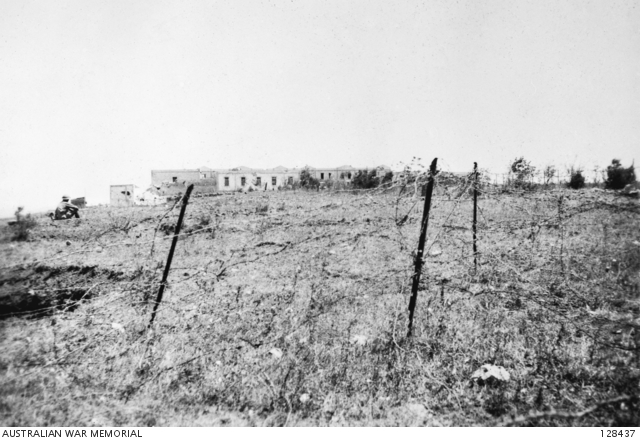
The Australian 21st Brigade continues marching north from Tyre toward Sidon as part of Operation Exporter on 11 June 1941. Further inland, the Australian 25th Brigade takes Merdjayoun (Merjayun). The Australians, feeling confident, leave only a skeleton force to hold Merdjayoun and send the bulk of the 25th Brigade north to attack Jezzine.
Free French 1st Infantry Brigade and 2nd Infantry Brigade attack Kissoue south of Damascus. The Vichy French, however, are massing large forces to block the Commonwealth troops’ advances.
A French Dewoitine D.520 shoots down a British Curtiss Tomahawk. It is the only Tomahawk that the RAF loses during the campaign.
Journalist Alan Moorehead talks to captured Vichy French soldiers and gets a surprise: their morale is excellent. He reports that the French say that they are resisting the British invasion fiercely because they are professional soldiers and the attack was unprovoked. Another factor is that Germany essentially is holding their relatives in metropolitan France hostage. There also is an element of simple Gallic pride, as the French soldiers feel that the British look down on them (“like the Italians”) for losing France to Hitler.
In other words, the French are resisting not just for pragmatic reasons, but for pride. However, the silver lining is that, once the defending French soldiers prove their point about their ability to resist, they eventually will give in to the inevitable and surrender. There is some hard fighting left before that can happen, though.
The Wehrmacht High Command announced: “German aerial combat formations operating out of newly-won bases in the Mediterranean, have successfully attacked the British fuel tank depots and port installations of Haifa, where they have caused a number of explosions and fires.”
The Indian 15th Punjab Regiment of the Indian 3rd Battalion completes the capture of Assab, which essentially just means checking the town for any Italian stragglers. The entire Red Sea now is clear of Axis influence, and soon American freighters will be able to cross it to deliver supplies to British forces in Egypt (Operation CHRONOMETER).
British troops under General O’Moore Creagh prepare for the upcoming Operation BATTLEAXE, scheduled to begin on 15 June. On the other side, newly appointed commander of the 15th Panzer Division General Walter Neumann-Silkow is more worried about his supply situation than the enemy, as his panzers are running low on petrol.
Major General Douglas Wimberley took over command of British 51st Highland Division from Sir Neil Ritchie who moved to a staff appointment in British Eighth Army. Major-General Neil Ritchie is sent to the Middle East Command to join the staff of the British Eighth Army in Cairo. His replacement in charge of the British 51st Highland Division is Major General Douglas Neil Wimberley. Wimberley institutes strenuous training routines for future operations — the division is seen as having gotten a bit slack after almost two years of home defense in anticipation of a German invasion that never came.
German heavy cruiser Lützow departed Kiel, Germany for Norway, escorted by light cruisers Emden and Leipzig and six destroyers.
Admiral Jean Francois Darlan urged the French to conquer their illusions and consent to sacrifices: “For France not to fulfill loyally the armistice conditions and thereby give the conqueror reason to denounce her would be tantamount to suicide for France and the empire…“
The second great raid on the Jews of Amsterdam is carried out.
Antonescu meets with Hitler in Munich and agrees to full cooperation of their two armies against Russia. Hitler’s promises of massive armaments to Romania will not materialize until almost the end of the war.
Soviet Red Army units from the Transbaikal are transferred westwards but are not put on alert. Soviet General Georgi Zhukov continues quietly building up forces in the European portion of the Soviet Union. He orders the transfer of some Red Army units from Transbaikal to the Kyiv region. However, Zhukov remains bound by Premier Joseph Stalin’s wishes to do nothing to provoke the Germans.
Sir Stafford Cripps, Britain’s ambassador to Moscow, returns to London for consultations. Cripps is England’s point man for the Soviet Union because he is a committed Socialist with decidedly Marxist leanings and works well with the Russians. Cripps’ departure in the face of all the warnings he has been receiving about a prospective attack by Germany leaves Soviet Premier Joseph Stalin very suspicious about what Winston Churchill is planning.
German Luftwaffe night raids were conducted on targets in England.
The Luftwaffe drops leaflets over East Anglia, as it did during the summer of 1940, and sends planes across Great Britain.
These tout German successes in the Atlantic and they warn, with some credibility, that further resistance to the Reich will mean starvation throughout the British Isles.
RAF Fighter Command sends fighters on Rhubarb and Roadstead operations. RAF 11 Group (12 planes of RAF No. 74 Squadron and 12 of No. 609 Squadron escort five Blenheim bombers of 16 Group) conducts a Roadstead operation that targets a tanker defended by flak-ships off Dunkirk. The pilots report scoring a hit on the tanker, but there is no verification from German records. Luftwaffe Oblt. Johannes Seifert of 3./JG 26 downs a Hurricane from RAF No 248 Squadron during daylight action.
The Royal Air Force bombed the Ruhr and Rhineland for the first of 20 consecutive nights. After dark, British bombers conducted the first of 20 consecutive nightly raids on the Ruhr and Rhineland industrial areas in Germany. Several German port cities such as Hamburg and Bremen were also hit.
RAF Bomber Command, Day of 11 June 1941
Bremerhaven
25 Blenheims to Bremerhaven and north-west Germany but 19 turned back. 1 aircraft sank a trawler and 1 aircraft bombed Ijmuiden docks. 1 aircraft lost.
RAF Bomber Command, Night of 11/12 June 1941
Düsseldorf
92 Wellingtons and 6 Stirlings; haze prevented accurate bombing. 6 Wellingtons lost.
Duisburg
80 aircraft — 36 Whitleys, 35 Hampdens, 9 Halifaxes. 8/10ths cloud over target but good bombing reported. 1 Whitley lost. There are no reports from the two main targets but Cologne reports bombs from aircraft which were either mistaking Cologne for the correct target or using it as an alternative. The main railway station was hit by 7 bombs and much damage was caused. Dock areas, a wagon works and 173 houses were also damaged. 14 people were killed and 36 injured. Because of its position just outside the main defenses and industrial haze of the Ruhr, Cologne was always likely to be attacked in this way.
Boulogne
24 Wellingtons and 5 Whitleys; 1 of each type lost.
Minor Operations: 2 Wellingtons to Rotterdam, 20 Hampdens minelaying in Kiel Bay and the Frisians, 12 O.T.U. sorties. 1 minelaying Hampden lost.
Total effort for the night 241 sorties, 10 aircraft (4.1 percent) lost.
The RAF attacks Benghazi and sinks Italian naval trawlers Mario Bianco and Cirene.
At Malta, the Luftwaffe drops bombs between Ta Qali and Mosta, as well as eight east of Valletta. A much larger attack of an estimated 22 Axis aircraft is spotted 30 miles north of the island but turns back when the RAF scrambles fighters.
Vichy-French planes bomb Tel Aviv, killing 20 Jews.
The Kriegsmarine makes a rare fleet maneuver (the Royal Navy, by comparison, keeps its ships constantly in motion). This is Operation SOMMERREISE (SUMMER JOURNEY). German heavy cruiser Lutzow, light cruisers Emden and Leipzig, and destroyers Lody, Z.23, Z.24, Eckholdt, and Galster departed the Baltic. The plan is for Lutzow to break out into the Atlantic and be joined there by sister ship Admiral Scheer. On the 12th, light cruisers Emden and Leipzig were detached to Oslofjord. Heavy cruiser Lutzow and the five destroyers passed out of the Skagerrak. The heavy cruiser was torpedoed by a British torpedo plane off Lindesnes on the 13th. Destroyer Eckholdt took the heavy cruiser in tow and the other destroyers screened the withdrawal. The heavy cruiser was able to proceed under her own power an hour later. The German ships returned to Germany. Destroyer Z.24 was near missed by British bombing. The heavy cruiser repaired at Kiel from 14 June to January 1942.
The Fleet at Scapa Flow came to one hour’s notice at 0430 on receipt of report of German heavy cruiser Lutzow in the Skagerrak approaching the North Sea.
Convoy OB.334 departed Liverpool, escorted by corvette HMS Polyanthus and anti-submarine trawler HMS Ayrshire. The convoy was joined on the 12th by destroyer HMS Beagle and corvettes HMS Gladiolus, HMS Nigella, and HMS Orchis, catapult ship HMS Maplin, minesweepers HMS Seagull and HMS Sharpshooter, and anti-submarine trawlers HMS Lady Madeleine and HMS St Loman. The destroyer, the catapult ship, corvettes Gladiolus and Nigella, and the minesweepers were detached on the 17th. The convoy was joined on the 17th by destroyer HMS Burnham and HMS Churchill, armed merchant cruiser HMS Aurania, and corvettes HMS Dianthus and HMCS Spikenard. Destroyer HMS Chesterfield was with the convoy on the 19th. The armed merchant cruiser, destroyer Burnham, and corvettes Dianthus, Orchis, and Spikenard were detached on the 20th. Battleship HMS Revenge and armed merchant cruisers HMS Bulolo and HMS California joined on the 20th. The convoy arrived at Halifax on the 25th.
Sub Lt T P D’Donovan and Sub Lt H. Morris were killed when their Fulmar of 800 Squadron collided with a Martlet of 881 Squadron off Lee. The Martlet’s pilot, Lt J A Rooper was also killed.
During night take off at Arbroath, Sub Lt (A) S.H.Bunch was killed when his Sea Hurricane hit a Swordfish, flown by sub Lt R P Cross. He was not injured.
Light cruiser HMS Manchester, escorted by destroyers HMS Inglefield and HMS Icarus, arrived in Iceland and sailed that day on patrol with destroyers Inglefield, Icarus, and HMS Achates. Destroyer HMS Active departed Scapa Flow to join this force and arrived in Iceland at 1915/13th.
Heavy cruiser HMS Suffolk departed Scapa Flow for Hvalfjord, arriving on the 13th.
Destroyer HMS Hambledon departed Scapa Flow at 2100 to escort steamers Amsterdam and Lady of Mann from Aberdeen. The ships were met at 0400/12th off Aberdeen and steamer Amsterdam was escorted to Lerwick where they arrived at 1600.Steamer Lady of Mann was detached en route to Scapa Flow when off Duncansby Head. Destroyer Hambledon escorting steamer Amsterdam departed Lerwick at 0500/13th and met steamer Lady of Mann from Scapa Flow off Duncansby Head. The two steamers were taken to Aberdeen. Destroyer Hambledon arrived back at Scapa Flow after this duty at 2200/13th.
Submarine HMS H.32 grounded in the Clyde. The submarine was repaired at Ardrossan.
U-79, commanded by Kapitänleutnant Wolfgang Kaufmann, sank Norwegian steamer Havtor (1524grt) in 63-63-35N, 28-05W. At 2051 hours on 11 June 1941 the unescorted Havtor (Master Kjell Bugge) was torpedoed by U-79. The ship did not sink fast, so the master had time to dump the secret papers overboard and organize assistance for the 9 injured before they abandoned ship in a lifeboat. But they had to leave one seriously wounded man, who had tried to get out through the porthole and was found there unconscious. He had gotten so stuck it was impossible to get him lose. At 0033 hours on 12 June, the U-boat shelled and sank the vessel after the crew had left the ship. The lifeboat set sail for Iceland, was spotted 5 miles off Reykjanes and picked up by the motor fishing vessel Pilot. Able seaman Ole Normann Lorentzen was awarded St. Olavsmedaljen and Krigsmedaljen posthumously. He had been on board Hird during the Dunkirk evacuation in 1940, had been torpedoed on that ship in September 1940 and survived also the sinking of his next ship, the Beduin in March 1941. The 1,524-ton Havtor was carrying ballast and was headed for Pictou, Nova Scotia.
British steamer Baron Carnegie (3178grt) was badly damaged by German bombing in 51-55N, 5-34W. Nine crewmen were killed and sixteen crewmen were missing. The steamer sank in tow of British steamer Seine (1358grt) in 52-04N, 5-01W.
British steamer Moorwood (2056grt) was sunk by German bombing abeam 19 C Buoy, north of Whitby. The entire crew was rescued.
British steamer Westburn (2842grt) was damaged by German bombing three miles north of Skinningrove off Hartlepool. The steamer arrived at Hartlepool on the 11th in tow.
Destroyer HMS Nubian was sailed from Alexandria to Port Said escorted by sloop HMS Auckland. Destroyer Nubian arrived at Port Said on the 12th and was passed through the Canal. Sloop Auckland returned to Alexandria.
A British Fulmar of 800X Squadron ditched off Delimara Point Malta returning from a patrol over Sicily. Petty Officer A.W. Sabey and Lt J.S. Manning were rescued after dawn.
A Buffalo of 805 Squadron flew into the ground at Dekheila. Sub Lt J.B. Musson RNVR, was killed.
Submarine HMS Taku sank German munitions transport Tilly L. M. Russ (1600grt) on the 11th in Benghazi Harbor.
A convoy of steamers Silvio Scaroni (1367-tons, Cadamosto (1010grt), and Aosto (494grt) departed Tripoli on the 9th for Benghazi, escorted by torpedo boats Pallade and Polluce. The next day, submarine Taku sank Italian steamer Silvio Scaroni 70 miles 283° from Benghazi in 32-27N, 18-42E. The submarine was counterattacked by torpedo boats Pallade and Polluce, and arrived at Benghazi on the 10th.
Submarine HMS Torbay sank by ramming a caique, carrying German troops and stores, fifteen miles south of Mitylene.
Today in Washington, President Roosevelt signed the bill expanding the powers of the Reconstruction Finance Corporation. His callers included Admiral Land, chairman of the Maritime Commission, concerning the taking over of foreign ships in United States ports; Secretary of the Interior Ickes and Attorney General Jackson.
The Senate considered antistrike amendments to the Selective Service Act, received the President’s reports on lend-lease operations and recessed at 5:28 PM until noon tomorrow. The Interstate Commerce Committee continued hearings on the Federal Communications Commission’s report. The Agricultural Committee approved a resolution of the investigation of the parity price system.
The House received the President’s report on lease-lend operations, passed the bill to restrict movements of persons to and from the United States, considered the relief appropriation bill, received the Ramsay bill banning Communists and Bundists from labor unions or Federal employment, passed the bill including cotton under the Crop Insurance Act and adjourned at 5:23 PM until noon tomorrow.
A Military Affairs subcommittee continued investigation of awarding of Army base contracts; the Ways and Means Committee continued consideration of the new tax bill; the Immigration Committee heard opposition to a bill to bar entry to certain refugee aliens.
President Roosevelt agrees to occupy Iceland with US troops. While there is no danger of combat in Iceland, this will free up 25,000 British troops who have been unopposed, though not invited, by the Icelandic government. Iceland is critically important to the Allies for protection of their cross-Atlantic convoys, as both ship and air patrols emanating from there cover a large area that U-boats are using with great success.
The United States sent a note to Portugal reserving the right to act in self-defense should the Azores and Cape Verde Islands be threatened by belligerent powers.
Rear Admiral Emory S. Land, chairman of the Maritime Commission, conferred today with President Roosevelt upon details connected with taking over foreign ships in American ports.
The House Ways and Means Committee was reported authoritatively today to be considering a ban on the filing of separate returns by husbands and wives. The committee is exploring various methods of raising $3,500,000,000 of new revenue. By filing separate returns husbands and wives can avoid higher surtax brackets. The committee also was reported to have decided virtually to keep the normal income tax at 4 percent, the present level, and to raise additional income tax revenue through a new set of surtaxes.
Senate action on a measure authorizing President Roosevelt to take over for the government strike-bound defense plants without reliance on his constitutional powers as Commander in Chief of the armed forces was delayed again today as the upper body considered administering an extra slap at striking labor for impeding the rearmament program. Passage tomorrow of the Connally amendment to the Selective Service Act, which would empower the President to commandeer plants where actual or threatened work stoppages or lockouts were interfering with the defense program, was considered a certainty tonight. The majority in its favor is expected to be overwhelming, inasmuch as Administration leaders were exerting every effort to amass a big vote as an indirect mark of support for the President in taking over the North American Aviation Company plant at Inglewood, California. The Senate spent practically all of today considering an amendment offered by Senator Harry F. Byrd, Democrat, of Virginia, embodying a pointed, but extra-legal, rebuke to strikes in defense industries. Even the author conceded that the effect of the amendment would be only psychological. Senate leaders intimated that they expected passage of the Byrd proposal as well, particularly after it was changed to provide denunciation of those strikes called without resort to, or in defiance of, mediation and arbitration.
Termination of the Bohn Aluminum Corp. strike in Detroit, resumption of normal production in the North American Aviation plant in Inglewood, and removal of a strike threat at the Consolidated Aircraft factory at San Diego, brightened the defense situation yesterday. The day also brought a statement from Secretary of the Navy Knox that subversive elements in labor unions would be “proceeded against as enemies of the country.” Knox spoke at a meeting of aviation company representatives at Washington. Referring to the army’s action in taking over the North American plant, Knox said that the government had not challenged collective bargaining or union activity “but does have a determinative challenge to those who use those things as a cloak to attack American freedom and liberty.”
C.I.O.-U.A.W. union officials charged today that eight of their members had been barred from jobs at the North American Aviation plant and that three others at North American and two at the Vultee Aircraft Co. had been discharged. The eight, all members of the negotiating committee at North American, were named as Elmer Freitag, president of local 683; William P. Goodman, William J. Backman Jr., William J. Pupos, Robert M. Mallary, Ervin J. Smith, David Simpson and Walter T. Witchan. They filed charges today with the regional labor relations board office declaring they were forcibly taken from their jobs and that “restraint and coercion” were employed to keep them from working.
Army-controlled, the giant North American Aviation plant neared full production today on its strike-interrupted output of warplanes as rival C.I.O. factions argued over which should attempt settlement of the labor controversy which brought troops into the factory.
A telegram protecting the use of United States troops to “destroy the right to strike” at the California plant of the North American Aviation Company was sent yesterday to the C.I.O. local involved in the strike by the New York Newspaper Guild, a C.I.O. affiliate.
Scattered strikes of all kinds in private industries working on ordnance and materiel contracts for the War Department caused a loss of 2,370,716 man-days of labor between January 1 and June 10. These figures were obtained today from authoritative quarters which keep a daily telegraphic check on the strike situations as they affect military production.
The House passed and sent to the Senate today a bill to control the movement of all persons entering or leaving the United States.
The St. Lawrence waterway project, which has been under fire in Congress as an unnecessary diversion of men, materials and money from essential defense tasks, won the approval today of Office of Production Management “as part of the all-out/defense effort.”
A charge that the Communist party sanctions strikes, sabotage and violence in an attempt to spread unrest and disorder in preparation for the forcible overthrow of capitalism was made yesterday by a former party member, appearing as a witness at the departmental trial of John Kenneth Ackley, suspended New York City College registrar.
The President of Fordham University, Rev. Robert I. Gannon, gives a commencement address at the school entitled “What Will Replace It.” The “it” is civilization, and Gannon says in part:
“we believe that democracy will rise again, but not until the authority of God is recognized again in public and in private life. Apparently, then, it has fallen our lot to see the end of a civilization.”
He notes that whatever the ways of the world, religion will always be there for people. The theme of the address mirrors a growing pessimism in some quarters about the state of the world in 1941.
“Health Lecturer” Russell James is arrested in Minneapolis for practicing healing without a license. He sells a health food product made out of powdered bananas and whey (which does sound pretty healthy). The Hennepin County District Court deliberates for three hours, then finds him not guilty.
Brazilian steamer Ozorio rescues the last eleven survivors from the US freighter SS Robin Moor (Captain E. W. Meyers). The Robin Moor was sunk in the South Atlantic on 21 May by U-69 (Kapitänleutnant Jost Metzler) while carrying contraband aircraft parts bound for the British in the Middle East. The sinking has become a major diplomatic incident, but not sufficiently for the United States to declare war.
USS Arizona (BB-39) departed Pearl Harbor, US Territory of Hawaii for Long Beach, California, United States.
Major League Baseball:
The Brooklyn Dodgers bowed to the Pittsburgh Pirates, 8–1. This setback, coupled with the Cardinals’ triumph over the Phillies, dropped the second-place Dodgers two games behind the team they’ll have to play four times in St. Louis, beginning tomorrow night. Rip Sewell was the chief instrument of humiliation for the Brooklyn boys. He had the Dodgers shut out with four singles until the ninth, when singles by Pete Reiser and Cookie Lavagetto, a pass to Babe Phelps and Dolph Camilli’s long fly brought the lone run for the losers. Al Lopez, once a well-loved Dodger, and Vince DiMaggio led the Pirate offensive with a home run each, while a Brooklyn error contributed much to the further humiliation of the Dodgers.
Dick Merriwell Errickson, a winner only once in seven previous starts, held the Reds to three hits today while pitching the Braves to a 2–0 shutout in an hour and 19 minutes, shortest National League game here this season. Meanwhile, Boston broke the world champions’ five-game winning streak by clouting Bucky Walters for eight hits, including Babe Dahlgren’s double, the only extra-base blow of the game. Dahlgren led the attack by connecting safely on three of his four trips. He scored once and drove in Lloyd Waner with the first run. The Braves scored both tallies in the first inning. Walters set the stage when, with one out, he issued his only pass, to Lloyd Waner, who stole second. Dahlgren doubled and went to third when Lonnie Frey bobbled Max West’s grounder. Carvel Rowell then singled in Dahlgren.
Hal Trosky’s three-run homer paced the Indians to their sixth straight victory today — a 6–4 verdict over the Senators — but the contest cost the services of Roy Weatherly, a mainstay of Cleveland’s batting attack, for several days. The little center fielder, a .302 hitter, was struck on the head by Ken Chase’s first pitch in the fourth inning and knocked unconscious for several minutes. Examination at Lakeside Hospital revealed no fracture, but he will rest for a few days.
Buck Newsom made his 13th start of the season a memorable one today by limiting the Athletics to six singles for a 5–2 victory, the seventh straight triumph for the Tigers over Philadelphia this year. Newsom, who pitched his only other complete game this season against the Yankees May 5, was backed by a 10-hit attack concentrated on Jack Knott for five runs in the first two innings. Rookie Pat Mullin connected for his third homer of the year with one aboard in the second.
The Giants and the Cubs battled furiously for five hours at the Polo Grounds yesterday and at the end of it all had made no more progress than a man stuck in a revolving door. The Chicagoans took the first game of the double-header, 3–2, but the New Yorkers snatched the second one, 8–7. Since the Reds were losing up in Boston, the minions of Colonel Bill Terry found themselves in a tie with Cincinnati for third place while Jimmy Wilson’s operatives were crowded out of the first division. This was a strange twin bill that held the majority of a gathering of 11,287 until well beyond dinner time. Cliff Melton limited the Bruins to seven hits in the first game while the Giants pummeled Claude Passeau for eleven. But the difference here was that Passeau himself was thoughtful enough to insert a home run for the winning margin.
Don Padgett’s double, scoring Terry Moore in the tenth inning, gave the Cardinals a 3–2 victory over the Phillies tonight. Rookie pitcher Howard Krist, who relieved Mort Cooper in the fifth, was credited with the victory. He held the Phillies to one hit and got three himself. Krist scored the tying run in the sixth inning when he beat out a slow roller, moved to second and third on successive bunts by Steve Mesner and Moore and went home on Johnny Hopp’s fly. He kept the Phils well shackled in the five and two-thirds innings he worked, giving a single to Johnny Rizzo in the ninth and three bases on balls. His mates collected thirteen safeties off Walter Beck, who went the route.
The scheduled game between the New York Yankees and the White Sox at Chicago was postponed due to rain. The game will be made up as part of a doubleheader on July 13.
The scheduled game between the Boston Red Sox and the Browns at St. Louis was postponed due to rain. The game will be made up as part of a doubleheader on August 20.
Pittsburgh Pirates 8, Brooklyn Dodgers 1
Cincinnati Reds 0, Boston Braves 2
Washington Senators 4, Cleveland Indians 6
Philadelphia Athletics 2, Detroit Tigers 5
Chicago Cubs 3, New York Giants 2
Chicago Cubs 7, New York Giants 8
St. Louis Cardinals 3, Philadelphia Phillies 2
Convoy BA.3 departed Karachi, escorted by armed merchant cruiser HMS Antenor. The convoy arrived at Aden on the 20th.
The Japanese and Soviets, who recently reached an agreement regarding the border in Manchuria, expand their economic relations.
At a Japanese liaison conference between the army and navy, Naval Chief of Staff Nagano Osami astounded his colleagues by vehemently calling for the Southward Advance. …He and the navy’s powerful “First Committee” simply were anxious to move before the American navy’s huge “two-ocean” building program was completed. At an army/navy conference, the new chief of the Imperial Japanese Naval General Staff, Admiral Osami Nagano, comes out forcefully as a supporter of Nanshin-ron. This is the southeastern expansion of the Empire of Japan at the expense of the current colonial powers there. While Nanshin-ron has been official Japanese national policy since the promulgation of the Toa shin Shitsujo (New Order in East Asia) in1936 at the “Five Ministers Conference,” everybody knows this means war with Great Britain, the Netherlands East Indies, the Vichy French in Indochina, and the native powers in the region such as Thailand and Burma. Nagano wants to expand to the southeast before the United States completes its “two-ocean” construction plans.
Nagano, however, remains opposed to war with the United States if it can possibly be avoided. He takes a very dim view of Admiral Yamamoto’s plans to attack Pearl Harbor. However, almost everyone else in the top tier of the Japanese military prefers to strike the United States while it remains relatively weak in the Pacific.
Japan’s final decision regarding the deadlocked trade negotiations with the Netherlands Indies was made at a four-hour conference of the supreme leaders of the government yesterday, and though the nature of the decision remained unrevealed, the press and the government radio agreed it was in favor of withdrawing the Japanese delegation in conformity with the recommendations of the departmental heads of various ministries.
While the Germans have conquered The Netherlands, the Dutch East Indies remain a powerful force in the Pacific. Not only do the Dutch there possess a strong navy, but they also control raw materials that the Japanese need. Today, however, the Japanese accept defeat in their attempts to lock up more oil and other supplies. This is another skirmish in a trade battle that has broken out across the globe, with the Axis and Allies vying to “lock-up” sources of supply of strategic commodities such as oil and tungsten.
Dow Jones Industrial Average: 122.18 (+0.29)
Born:
Bill Fairband, AFL linebacker (Oakland Raiders), in Los Gatos, California.
Died:
Daniel Carter Beard, 91, American author, social reformer and founder of the Boy Scouts of America.
Naval Construction:
The U.S. Navy YMS-1-class auxiliary motor minesweeper USS YMS-96 is laid down by Colberg Boat Works (Stockton, California, U.S.A.).
The Royal Navy Assurance-class rescue tug HMS Jaunty (W 30) is launched by Cochrane & Sons Shipbuilders Ltd. (Selby, U.K.).
The Royal Navy LCT (Mk 2)-class landing craft, tank HMS LCT 143 is launched by Stockton Construction (Thornaby, U.K.).
The U.S. Navy Accentor-class coastal minesweeper USS Chachalaca (AMc-41) is launched by the Bristol Yacht Building Co. (South Bristol, Maine, U.S.A.)
The Royal Navy Flower-class corvette HMS Eglantine (K 197) is launched by Harland & Wolff Ltd. (Belfast, Northern Ireland). She is transferred to the Sjøforsvaret (Royal Norwegian Navy) on completion and commissions as the HNoMS Eglantine (K 197).
The Royal Navy “P”-class destroyer HMS Paladin (G 69) is launched by the John Brown Shipbuilding & Engineering Company Ltd. (Clydebank, Scotland).
The Royal Navy Fairmile B-class motor launch HMS ML 261 is commissioned.
The U.S. Navy net tender USS Aloe (YN-1; later AN-6), lead ship of her class of 30, is commissioned. Her first commanding officer is Lieutenant (j.g.) Harry R. Shawk, USNR.
The Royal Navy Isles-class minesweeping trawler HMS Flotta (T 171) is commissioned. Her first commanding officer is T/Lieutenant George Laurence McArthur, RANVR.
The Royal Navy MMS I-class motor minesweeper HMS MMS 21 (J 521) is commissioned. Her first commanding officer is J. I. Hartnall, RNVR.
The Sjøforsvaret (Royal Norwegian Navy) Thornycroft 75-foot motor torpedo boat HNoMS MTB 54 is commissioned.
The U.S. Navy 77-foot Elco patrol motor torpedo boat USS PT-25 is commissioned.
The Kriegsmarine (German Navy) Type IXC U-boat U-130 is commissioned. Her first commanding officer is Korvettenkapitän Ernst Kals.

