British intelligence intercepted Japanese Ambassador Ōshima’s coded message which included considerable details of Germany’s plan to attack the USSR. However, due to a lack of either translators or interest, the report was not delivered to the Joint Intelligence Committee for eight days. In any event, it would just add to the pile of warnings from numerous sources that Soviet Premier Joseph Stalin has been ignoring.
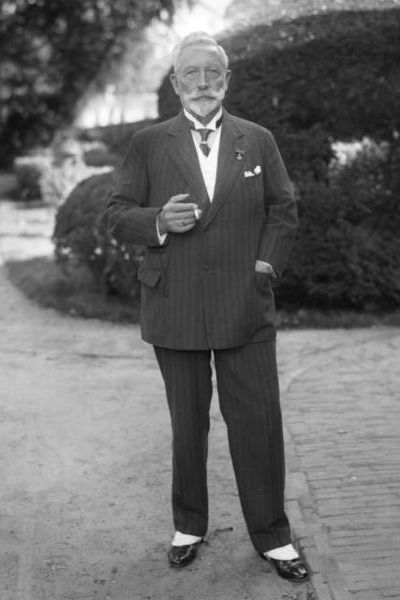
Former German Emperor and King of Prussia Kaiser Wilhelm II died in Doorn, Netherlands of a pulmonary embolism. He was 82. Wilhelm II, the former Kaiser of the German Empire and King of Prussia passes away at his home in Doorn. He has not set foot in Germany since 10 November 1918, vowing not to return until the restoration of the monarchy, and has lived at Doorn since 15 May 1920.
The Dutch government in the past has protected Wilhelm II from prosecution by the Allies by refusing to extradite him as required by Article 227 of the Treaty of Versailles. While a lukewarm supporter of Hitler and his NSDAP party in the 1920s, Wilhelm II soured on them as the 1930s wore on due to their persecution of the Jews. As he stated in December 1938:
“For a few months I was inclined to believe in National Socialism. I thought of it as a necessary fever. And I was gratified to see that there were, associated with it for a time, some of the wisest and most outstanding Germans. But these, one by one, he [Hitler] has got rid of or even killed… He has left nothing but a bunch of shirted gangsters!”
That said, Hitler has used Wilhelm for propaganda purposes at times, including publishing a brief, perfunctory telegram congratulating Hitler on his victory over The Netherlands in 1940. For his part, Hitler for many years has taken a dim view of Wilhelm II, calling him an “idiot” and other disparaging terms.
Hitler makes no plans to attend the funeral and is furious when he learns that the local Wehrmacht commander has provided an honor guard for the funeral procession. Wilhelm is buried in a mausoleum on the grounds of his Doorn home.
Fighting broke out between Greek and German soldiers at Levadia, about 60 miles northwest of Athens, when inhabitants seized a supply train, the British news agency Reuters tonight reported from Cairo. German police fired on the Greeks who were unloading the train despite threats and many persons were killed and wounded, Reuters said it had been reliably informed. After the incident, the German local commander issued a warning that anyone approaching warehouses or goods trains would be shot. Emergency measures in Athens, the report said, had resulted in court-martial and death sentences for hundreds of citizens.
The Royal Navy sets off another supply mission to Malta. Operation Rocket features aircraft carriers HMS Ark Royal and Furious being escorted by battleship Renown and many other vessels. The plan is to deliver 43 Hawker Hurricane Is to the beleaguered island.
Invasion jitters continue on Malta. Building on lessons learned on Crete, the British emphasize killing or capturing the German paratroopers (fallschirmjäger) upon descent or immediately thereafter, before they can defend themselves. British troops have occupied the island of Gozo, normally left unguarded. Otherwise, it is a quiet day on Malta, with just one Luftwaffe fighter sweep that results in no damage or bombs dropped.
The pro-British government in Iraq on 4 June 1941 is now firmly installed. Regent Prince Abdullah is in charge. The British continue mopping up, solidifying their control over Mosul and negotiating surrenders where necessary.
The Japanese Ambassador in Baghdad, Miyazaki, sends his counterpart in Ankara, Turkey a cable reporting the British takeover in Iraq. The Turkish ambassador, Kurihara, sends Tokyo a blunt message:
“Unless some direct and summary measures are taken by Germany and Italy in following up this recent incident, it is feared that the whole Arabian movement will be severely hampered in its development. At this time, when it is thought that the Iraqi oil field pipeline and the railroad line connecting this city with Basra has been destroyed, British interests chiefly lie in the Habbaniyah base which serves as a point in air and land transport from Trans-Jordan. Inasmuch as there are large oil reserves maintained in underground reservoirs and other subterranean facilities, please do your very utmost to have the German and Italian authorities bomb this base immediately.”
The Germans and Italians, however, no longer have any airplanes with the ability to bomb targets in Iraq.
Nigerian 23rd Infantry Brigade, advancing south from Addis Ababa, begins crossing the Omo at Abalti in Galla-Sidamo.
Gideon Force is disbanded. Orde Wingate is reduced in rank to that of major. He leaves for Cairo, Egypt. The reduction in rank may be related to friction he has had with higher British authorities regarding decorations and back pay for his men. Wingate is very put out by his peremptory treatment — he is not even given leave to say goodbye to his comrade in the jungle, Emperor Haile Selassie — and he determines to write an angry report about his experiences and the British officers who have obstructed his efforts on behalf of Abyssinian freedom. At this time, Wingate already may be infected with malaria, though he does not yet show symptoms.The Republic of Croatia orders all Jews to wear a star with the letter Z.
The Republic of Croatia orders all Jews to wear a star with the letter Z. The Reich prohibits Jews from using beaches and swimming pools.
Lieutenant Commander R.C. Robison, RAN is awarded the DSC for “bravery and enterprise” while serving on destroyer HMAS Stuart during the battle of Cape Matapan (when the Italian Navy suffered a serious defeat).
British cruiser HMS London and destroyer HMS Brilliant intercepted German tanker Esso Hamburg 750 miles southwest of Cape Verde islands based on Ultra intercepts; Esso Hamburg’s entire crew of 87 survived the attack and the tanker was scuttled.
Also from Ultra intercepts, British armed merchant cruiser HMS Esperance Bay and aircraft from HMS Victorious spotted German supply ship Gonzenheim 380 miles northeast of the Azores; battleship HMS Nelson and cruiser HMS Neptune approached to board but not before Gonzenheim was scuttled; all 63 aboard survived and picked up by Neptune.
The German ability to supply U-boats and surface craft in the Atlantic to extend their operations is severely damaged. These sinkings and seizures cut the remaining number of Kriegsmarine supply ships almost in half.
The British ocean liner Zealandic struck a sunken wreck off Cromer while trying to evade a Luftwaffe attack and ran aground. Zealandic was then torpedoed by German E-boats before she could be salvaged.
Finally, ocean boarding vessel HMS Marsdale captured German tanker Gedania also off the Azores; Gedania would later be pressed into British service as Empire Garden.
British dredger Robert Hughes hit a mine, which was laid by U-69 on 27 May 1941, and sank in Lagos Harbor, Nigeria; 14 were killed, 17 survived.
Dutch minelayer HNLMS Van Meerlant hit a mine and sank in the Thames Estuary in southern England, United Kingdom, killing 3.
Four Luftwaffe Heinkel He 111s of III./KG 27 bomb the Bristol area during the night, around 02:30 on the 4th. The targets are airfields and aircraft factories at Cheltenham and Bristol. The Germans bomb some buildings and destroy a Gloster plane on the ground. The Luftwaffe loses a Junkers Ju 88C in a separate intruder mission when it flies into a hill at Skelder Moor near Whitby just after midnight — all three crew perish.
After dark, the Luftwaffe attacks the Midlands and Medway areas. These attacks do not cause much damage, the bombs falling on the undeveloped ground.
RAF Fighter Command conducts Roadstead operations over occupied France.
There is fighter action over Folkestone. Feldwebel Janke and Fw. Helmut Jürgens of IV./JG 51 record claims.
Unteroffizier Heinrich Rühl of 1./JG 53 goes missing in Bf 109 F-2 “Black 3” (W.Nr. 6707) near Dover following aerial combat with Spitfire fighters (he apparently collides with a Spitfire). Rühl has five victories. This is Rühl’s second time in the Channel, the first having been on 2 September 1940. In the earlier instance, Rühl was picked up by a Dornier Do-18 rescue plane, but this time he is not found.
The British Home Security Situation Report noted that, for the week ending at 0600 hours on 4 June 1941, about 178 were killed by German bombing in Britain, and 185 were seriously injured.
RAF Bomber Command, Day of 4 June 1941
54 Blenheims on coastal sweeps and airfield raids from Norway to Belgium. A 500-ton ship was claimed hit by 4 bombs. 2 aircraft lost.
After dark, the Luftwaffe mounts a surprise raid on Alexandria. There are 170 killed and 200 injured.
Martin Maryland bombers of the RAF based on Malta bomb and sink Italian freighters Beatrice C and Montello off the coast of Tunisia. Some sources list this incident as having occurred on 3 June.
U-101, commanded by Kapitänleutnant Ernst Mengersen, sank British steamer Trecarrell (5271grt) in 47-10N, 31W. At 0503 hours on 4 June 1941 the Trecarrell (Master Gordon George Barrett), dispersed on 1 June from convoy OB.327 in 52°42N/22°18W, was hit in the stern by one G7e torpedo from U-101 west of Cape Race. The ship had been chased for about eleven hours and missed by a first G7e torpedo at 0405 hours. Four crew members were lost. After the survivors abandoned ship in three lifeboats and one raft, a coup de grâce hit the stern of the ship at 0524 hours. She developed a heavy list to port, but remained afloat so the U-boat opened fire with the deck gun at 0555 hours. They scored a hit with the first shot, but one man of the gun crew was thrown overboard by the recoil so they were forced to cease fire. MtrOGfr Horst Jackl was wearing a life jacket but the search for him was futile. At 0640 hours the U-boat dived to fire another coup de grâce, got too close and rammed the floating steamer, bending its bow to starboard. After so many unlucky events, the commander decided to leave the sinking steamer behind. The master, 38 crew members and four gunners were picked up by the British steam merchant Cornerbrook and landed at Halifax. The 5,271-ton Trecarrell was carrying ballast and was headed for Father Point, New Brunswick.
Light cruiser HMS Nigeria arrived at Scapa Flow after refitting at Rosyth.
Dutch minelayer HNLMS Van Meerlant was sunk by mining in the Thames Estuary. T/Sub Lt N. Moore RNVR, T/Sub Lt R.C. Palmer RNVR, and T/LT (E) R.R.G. Perrett RNR, were lost in the ship. T/LT R.H. Church RNR, was wounded in the minelayer.
Anti-aircraft ship HMS Alynbank departed Scapa Flow at 0615 to join convoy WN.35 in Pentland Firth and escort it southeastward. On meeting convoy EC.28, the ship transferred to that convoy and remained in company through the day. On the 5th, ship Alynbank transferred to convoy WN.36 west of the Orkneys. The convoy was attacked during the evening of 5 June and a steamer was set afire and a trawler was damaged. British steamer Queensbury (3911grt) was sunk by German bombing in 56-50N, 2-07W from convoy WN.36. Ten crewmen and one gunner were lost on the steamer. The convoy and ship Alynbank arrived at Methil at 0900/6th.
Aircraft carrier HMS Argus and Greek troopship Nea Hellas, escorted locally by destroyers HMS Foxhound, HMS Foresight, and HMS Fury departed Gibraltar for the UK. Corvettes HMS Geranium and HMS Jonquil were to escort the ships during daylight on the 5th, but a forecast of bad weather which would make the escorts inefficient forced the ships to return to Gibraltar, arriving on the 5th.
German tanker Esso Hamburg (9849grt) was scuttled when she was intercepted by heavy cruiser HMS London and destroyer HMS Brilliant in 7-35N, 31-25W. The entire crew of eighty seven officers and ratings were rescued.
German supply ship Gonzenheim (4104grt) was first located by armed merchant cruiser HMS Esperance Bay, but the cruiser was not fast enough to intercept. The ship was next sighted by an aircraft from aircraft carrier HMS Victorious in 43-32N, 23-56W. Battleship HMS Nelson, from convoy SL.75, intercepted the supply ship and ordered light cruiser HMS Neptune to board. The supply ship scuttled herself in 43-29N, 24-04W. Light cruiser Neptune, which had been detached from convoy WS.8X, rescued sixty three survivors from the German ship and took them to Gibraltar.
German tanker Gedania (8923grt) was captured in the North Atlantic in 43-38N, 28-15W by Ocean boarding vessel HMS Marsdale. The tanker was carrying forty eight torpedoes to replenish U-boats. The tanker was taken for British use and renamed Empire Garden.
British dredger Robert Hughes (2879grt) was sunk a mine laid by U-69 on 27 May at the mouth of the Lagos River, Nigeria. On 4 June 1941 the Robert Hughes (Master D. Jones) struck a mine laid on 29 May by U-69 in the entrance to Lagos Harbor and sank. 14 crew members were lost. The master and 16 crew members were rescued by harbor craft.
Convoy OG.64 departed Liverpool, escorted by anti-submarine trawlers HMS Canna, HMS Lady Shirley, HMS Laertes, and HMS Lord Irwin. On the 5th, the convoy was joined by destroyers HMS Roxborough, HMS Salisbury, and HMS Skate, sloop HMS Folkestone, ocean boarding vessel HMS Hilary, and corvettes HMS Anemone, HMS Clarkia, and HMS Veronica. The ocean boarding vessel departed the convoy that night. The destroyers and corvettes were detached on the 8th. On the 12th, corvettes HMS Coreopsis and HMS Fleur de Lys and Dutch submarine HNLMS O.21 joined the convoy. Corvettes Coreopsis and Fleur de Lys were detached on the 13th. Destroyers HMS Avonvale, HMS Eridge, and HMS Farndale, arriving from the Irish Sea Force, and HMS Wrestler, which departed Gibraltar on the 13th, joined the convoy on the 17th. Anti-submarine trawler HMS Lady Shirley was detached and arrived at Gibraltar on the 16th, and arrived at Gibraltar on the 18th with sloop HMS Folkestone, the four destroyers, submarine O.21, deperming vessels HMS Springtide and HMS Springdale, minesweepers HMS Corbrae and HMS Lord Irwin, anti-submarine trawler Laertes, naval trawler Canna, and whalers Gos 7, Kos 10, Kos 11, and Kos 12.
Convoy HG.64 departed Gibraltar escorted by sloop HMS Bideford, corvettes HMS Coreopsis and HMS Fleur de Lys, Dutch submarine HNLMS O.21, and anti-submarine trawler HMS Stella Carina. Two motor launches departed with the convoy for local escort. Corvette HMS Woodruff joined on the 5th and was detached the next day for Bathurst. The anti-submarine trawler was detached on the 10th. Corvettes Coreopsis and Fleur de Lys were detached on the 12th to convoy OG.64. On the 14th, ocean boarding vessels HMS Lady Somers and HMS Malvernian joined the convoy. Destroyers HMS Skate and HMS Walker and corvettes HMS Hydrangea and HMS Wallflower joined the convoy on the 15th. Convoy HG.64 arrived at Liverpool on the 19th.
In Washington, President Roosevelt talked with Ambassador Winant. His other callers included Supreme Court Justice Murphy, Secretary Morgenthau, Assistant Secretary of State Berle and Dr. E. N. Van Kleffens, Foreign Minister of the Netherlands.
The Senate was in recess. The Defense Investigation Committee heard Stacy May of the Office of Production Management; the Naval Affairs Committee heard Secretary Frank Knox, and approved bills to ban photographing and sketching at naval establishments and to provide civilian guards at such stations.
The House adjourned at 1:08 PM in respect to the late Representative M. Michael Edelstein of New York, until noon tomorrow. Earlier it had approved bills authorizing $50,000,000 for small boat bases and $31,115,000 for naval shore establishments.
Ambassador Winant who again had a long conference with President Roosevelt today, is making a detailed report to him on British mistakes in the war so that the full force of United States aid program will be directed into proper channels and insure final victory for the democracies, it was learned tonight.
U.S. Secretary of the Interior Ickes indicated today he would call for wider use of existing oil tanker facilities to combat a threatened oil shortage in the east which may lead to “gasless Sundays” and lower temperatures in homes next winter.
Plans to step up production of finished 100-octane aviation gasoline to 50,000 barrels daily in the next eighteen months, to meet mounting military demands of the United States and British air forces, were reported today by the Office of Production Management.
The Ways and Means Committee rejected today the Treasury’s proposals for a revised excess profits tax law, voting to retain the present two methods of computing tax liability. The vote was reported as 19 to 5, with some of the votes in the form of proxies. The resolution adopted read: “It is the sense of the committee to retain the present optional plan of computing excess profit taxes with such revisions as the committee may see fit to make.” In announcing the action, Representative Doughton, chairman, declined to amplify it or to comment on what revisions might be in prospect. The Treasury had proposed to eliminate from the law the basis of average earnings over the base period 1936-1939, and to retain only the method based upon invested capital.
Chief of Staff of the United States Army George Marshall sends a memo to General Richardson regarding the development of a unit that comes to be composed by men called the Tuskegee Airmen. Marshall writes:
“Dr. Patterson, head of Tuskegee Institute, has been doing a very fine thing in assisting the Air Corps in the development of a negro aviation unit. He has been under heavy attack from the Chicago and Harlem elements, and for a time it appeared that they would succeed in emasculating the Tuskegee Air program for national defense.”
Marshall suggests crafting “a definite program of publicity” to support the program.
A cryptic remark by the army’s construction quartermaster stirred conjecture among members of congress tonight that the United States Army will be increased to 2,800,000 men, double the existing goal of 1,418,000. Brigadier General Brehon Somervell, testifying before a house military sub-committee, said he had received instructions in the last 24 hours to rush the awarding of contracts for construction work totaling “about $1,000,000,000.” He declined to go into details. However, the general’s remarks were immediately interpreted by some legislators conversant with army matters as meaning the war department had decided to increase the “land forces to at least 2,800,000 men,” and that it probably would accomplish part of that increase by holding the National Guard in federal service beyond the originally scheduled year.
The Office of Production Management has asked the steel industry to make plans for expanding productive capacity by 10,000,000 tons, it was learned in official quarters today.
The Office of Production Management was reported today to be ready to recommend daylight saving time for the entire country to conserve electricity needed for national defense production. The OPM has been asked to report to, Congress on a pending bill which would establish daylight saving time throughout the country, and it is understood that many officials of the defense organization feel that such a step would be desirable.
Reductions in long distance telephone rates, estimated to save the public $14,000,000 annually and effective July 10, were announced today by the federal communications commission. The commission said $12,500,000 of the reduction would be in long distance rates of the American Telephone & Telegraph Co., and the other $1,475,000 in interstate rates of the 21 associated companies in the Bell system. The reduction is approximately 14 percent to users of long distance telephones.
V. P. Goodman, chairman the C.I.O. United Automobile Workers union at the North American Aviation plant in Inglewood, California, said tonight 9,000 production workers would strike at 3 AM tomorrow. Goodman declared the strike would close the huge plant, engaged in manufacturing warplanes for the United States and Great Britain.
Huge stocks of food for Army, Navy and civilian use were tied up yesterday by a strike of 1,450 A.F. of L. warehouse workers. Employer spokesmen and government officials in first-hand touch with the situation said millions of dollars worth of war materials and foodstuffs for Great Britain were stored in the strike-bound warehouses, but the union denied that any British supplies were involved.
The request of the National Defense Mediation Board that 12,000 striking loggers in the State of Washington return to work at higher wages, pending a study of pay rates and working conditions, was turned down today by O.M. Orton, president of the International Woodworkers of America (C.I.O.).
The U.S. Naval Aircraft Factory in Philadelphia, Pennsylvania reported that development of airborne television had progressed to the point that signals transmitted by this means could be used to alter the course of the transmitting aircraft.
The funeral of baseball legend Lou Gehrig takes place at Christ Episcopal Church of Riverdale. His remains are cremated and he is buried at Kensico Cemetery in Valhalla, New York.
“Power Dive,” directed by James P. Hogan and starring Richard Arlen, Don Castle and Jean Parker, premieres. A typically short 1940s film (67 minutes) from Pine-Thomas Productions (as Picture Corporation of America), the film features a revolutionary new airplane made of plastic. The film is in the public domain due to the failure of the original copyright holder to renew the film’s copyright.
Major League Baseball:
Art Johnson, rookie southpaw, dropped the Cardinals down into second place today by holding them to nine scattered hits as the Braves belted Harry Gumbert for a 4–2 victory. It was Gumbert’s first setback in five starts since St. Louis obtained him from the Giants. Boston scored twice in the first Inning after filling the bases on a single and two errors. Sebby Sisti tallied the first counter on Eddie Miller’s fly to left and Johnny Cooney romped in from third when Carvel Rowell connected safely. Rowell scored from third in the fourth inning as Phil Masi drove into a double play, and the Braves collected their final run in the seventh when Max West drove in Cooney from second base. The Braves pounded Gumbert for eleven hits, three by Rowell, who tripled with none on and two out in the sixth and was stranded as Masi grounded out.
The White Sox celebrated “Connie Mack night” by beating his Athletics, 6–1, behind the five-hit pitching of Thornton Lee tonight. A crowd of 32,659 turned out for the pre-game ceremony honoring Philadelphia’s 78-year-old baseball patriarch. Mack received a watch and a gold plaque, gifts from the Chicago club. But the Sox, now only one game behind front-running Cleveland, pulled no punches after the game started. Lee, never in trouble, hung up his seventh victory of the season. The Athletics’ lone run came on Bob Johnson’s eleventh home run in the sixth inning. Lee yielded no more. than one hit in any single inning, walked two batters and struck out five. Dario Lodigiani, one of six former Athletics with the White Sox, doubled in the second inning, went to third on an infield out and scored on Myril Hoag’s long fly to center. The Sox added two more in the third, Lee opening with a single. Don Kolloway sacrificed him to second and Appling flied out, but Joe Kuhel doubled Lee home. Kuhel then went home on Taft Wright’s single.
Browns gained seventh place in the American League by one percentage point in defeating the Senators today, 7 to 4. The victory was St. Louis’s second in a row over Washington, which dropped into the cellar. For the first six innings it was a nip-and-tuck struggle. A four-run seventh inning brought the Browns from behind and into a substantial lead. To start that inning George McQuinn walked, but Chet Laabs popped to Jim Bloodworth. Roy Cullenbine hit to George Archie for what might have been turned into a double play, but both runners were safe as Archie tossed too late to second. Harlond Clift then singled to left, scoring McQuinn with the tying run. Joe Grace was passed intentionally, after which Johnny Berardino tripled to left, cleaning the bases.
The scheduled game between the Pittsburgh Pirates and the Giants at New York was postponed due to rain. The game will be made up as part of a doubleheader on June 6.
The scheduled game between the Chicago Cubs and the Dodgers at Brooklyn was postponed due to rain. The game will be made up as part of a doubleheader on June 6.
The scheduled game between the Cincinnati Reds and the Phillies at Philadelphia was postponed due to rain. The game will be made up as part of a doubleheader on August 20.
The scheduled game between the New York Yankees and the Tigers at Detroit was postponed due to rain. The game will be made up as part of a doubleheader on July 19.
The scheduled game between the Boston Red Sox and the Indians at Cleveland was postponed due to rain. The game will be made up as part of a doubleheader on August 24.
St. Louis Cardinals 2, Boston Braves 4
Philadelphia Athletics 1, Chicago White Sox 6
Washington Senators 4, St. Louis Browns 7
A new battle, aiming at the annihilation of some 70,000 Chinese who are said to have escaped from the Chungyuan battle, now is under way in the Chungtiao range, according to a statement issued today by imperial headquarters in Tokyo. The Chungyuan battle, in which Generalissimo Chiang Kai-shek’s crack troops, under General Wel Li-huang, are said to have been defeated before they could start a contemplated Spring offensive of their own, is described in the headquarters statement as unprecedented in the annals of the campaign in China or in any war in the world. According to this statement, the Chinese lost 50,000 killed and left on the battlefield 25,000 prisoners, 150 field and mountain guns and trench mortars, 420 machine guns, some 11,000 rifles and revolvers and 600,000 rounds of ammunition.
The Japanese losses are put at only 554 officers and men killed. An unprecedented aspect of the battle, the statement says, is the fact that many high Chinese officers were killed, including two army corps commanders, ten division commanders and chiefs of army staffs and others. The results of this battle, the statement announces, assure a “remarkable improvement” in peace and order in North China through Japanese occupation of the center of the guerrilla warfare conducted by both the central government and its Communist partisans.
The Japanese follow through on past threats to interrupt British efforts to supply the Nationalist Chinese government in Chungking. The Imperial Japanese Navy sends bombers based at Hanoi in French Indochina to bomb bridges along the Burma Road.
In New York, Admiral Kichisaburo Nomura, Japanese Ambassador to the United States, expressed last night his “firm conviction” that the war must be kept from spreading to the Pacific. Admitting that Japanese-American relations are difficult at the moment, Admiral Nomura maintained his confidence that it would still be possible to work out a peaceful solution.
Dow Jones Industrial Average: 117.68 (+0.3)
Born:
Bob Hohn, NFL cornerback (Pittsburgh Steelers), in Beatrice, Nebraska (d. 2003).
George Jinda, Hungarian-American smooth jazz and world music percussionist (Special EFX), in Budapest, Hungary (d. 2002).
Died:
Morris Michael Edelstein, 53, Polish-born American Congressional Representative.
Wilhelm II, 82, Emperor of Germany from 1888 to 1918, of a pulmonary embolism.
Naval Construction:
The Royal Navy rescue tug HMS Nimble (W 123), lead ship of her class of 2, is laid down by Fleming & Ferguson Ltd. (Paisley, Scotland).
The U.S. Navy YMS-1-class auxiliary motor minesweeper USS YMS-113 is laid down by the San Diego Marine Construction Co. (San Diego, California, U.S.A.).
The U.S. Navy Accentor-class coastal minesweeper USS Ideal (AMc-85) is laid down by the Warren Boat Yard Inc. (Warren, Rhode Island, U.S.A.).
The Royal Navy Hill-class ASW trawler HMS Yestor (T 222) is laid down by Cook, Welton & Gemmill (Beverley, U.K.); completed by Holmes.
The U.S. Navy 80-foot Elco patrol motor torpedo boat USS PT-47 is laid down by the Electric Launch Company Ltd. (Elco), (Bayonne, New Jersey, U.S.A.).
The Kriegsmarine (German Navy) Type VIIC U-boat U-710 is laid down by H C Stülcken Sohn, Hamburg (werk 774).
The Royal Navy Hunt-class (Type III) escort destroyer HMS Penylan (L 89) is laid down by Vickers Armstrong (Barrow-in-Furness, U.K.).
The Royal Navy LCT (Mk 2)-class landing craft, tank HMS LCT 114 is launched by Lobnitz & Co. Ltd. (Renfrew, Scotland).
The Kriegsmarine (German Navy) Type VIIC U-boats U-404 and U-405 are launched by Danziger Werft AG, Danzig (werk 105 and 106).
The U.S. Navy transport ship USS Munargo (AP-20) is commissioned. Her first commanding officer is Commander Harold F. Ely, USN. She later becomes the U.S. Army Hospital Ship Thistle.
The Royal Navy Isles-class minesweeping trawler HMS Brora (T 99) is commissioned. Her first commanding officer is T/Lieutenant Leonard Anderson Enevoldson, RNVR.

