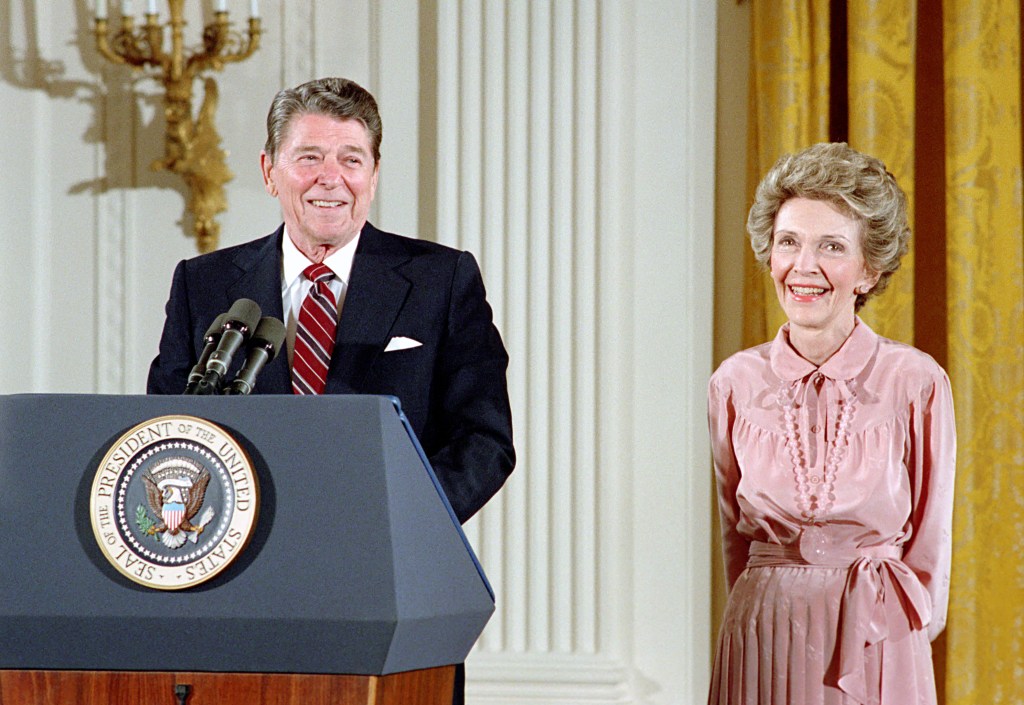
The Reagan Administration’s decision to abandon its adherence to the second strategic arms limitation treaty is drawing increasingly sharp criticism in Western Europe. In the six days since President Reagan announced that the Administration would no longer feel bound by the limits set in the treaty, agreed to in 1979 but never ratified, European diplomats, politicians and commentators have expressed growing alarm at his stand. They say it illustrates a tendency by Washington to act independently of its allies and show disdain for opinion on this side of the Atlantic. “We’re losing the battle for European opinion,” one senior American envoy said. Some of the sharpest comments have been expressed in conservative newspapers that normally find something positive to say about American initiatives. The reaction began in the aftermath of Mr. Reagan’s failure to gain support for his decision from any European Government at a conference last week of NATO foreign ministers in Halifax, Nova Scotia. The concern in Europe also comes when Mikhail S. Gorbachev, the Soviet leader, has been making insistent -and, some American diplomats here say, intriguing — arms control suggestions that seem at least partly crafted to draw Western European support.
Senator Edward M. Kennedy said in the first televised session of the Senate today that President Reagan’s decision to stop observing the limits of the 1979 arms treaty was the worst mistake of his presidency. For the United States to repudiate the treaty now will hurt it more than the Soviet Union, Senator Kennedy said, because the Russians would have had to dismantle 600 additional missile launchers and five additional submarines under the treaty.
The Reagan Administration, which has said it will no longer be bound by the 1979 strategic arms treaty, is divided over how long the United States should be strictly bound by the 1972 antiballistic missile treaty, Administration officials said today. Pentagon and State Department officials are deeply split over the issue. A State Department spokesman said there had been no change in the United States position that antimissile research will be consistent with a “restrictive” interpretation of the ABM treaty. But since that policy was set last year, it has been openly questioned by civilian Defense Department officials, who maintain that it inhibits the Strategic Defense Initiative, the American antimissile research program popularly known as “Star Wars.”
President Andrei A. Gromyko told a group of visiting British lawmakers today that President Reagan’s plan to break out of the 1979 treaty on strategic arms limitation was a “major blunder” that could wreck the accord. At the same time, Mr. Gromyko called on Britain to encourage the United States toward negotiation with the Soviet Union on arms issues. His remarks, quoted by a Laborite legislator, Martin Flannery, followed Mr. Reagan’s decision to be no longer guided by the terms of the 1979 treaty, which ended a second series of strategic arms talks, or SALT II.
Soviet officials in charge of cleaning up the Chernobyl nuclear-disaster site plan to restart two of the power plant’s four reactors in the fall, a Communist Party official said. Alexander Domanyuk, party official in the nearby town of Pripyat, said on Soviet television that the commission investigating the April 26 accident in the plant’s No. 4 reactor wants to get reactors No. 1 and No. 2 going in October.
Italy has taken control of a U.S. Coast Guard navigation station on the Italian island of Lampedusa, Italian officials confirmed. The station was the target of a Libyan attack after the U.S. air raid on Libya last month. Coast Guardsmen will continue operating the equipment but under the command of the Italian air force, Rome sources said. Italy cited technical reasons for the change, but U.S. and Italian sources said the island’s residents felt that they would be safer from Libyan attack if the station were under Italian control.
Rumania has told the United States in recent weeks that it will allow more than 1,000 people to emigrate, the State Department said today. The announcement came on the eve of President Reagan’s annual decision on whether to extend trade benefits to Rumania for another year. Officials said that based in part on the stepped-up emigration, and the release from prison of fundamentalist Protestants, the State Department has recommended that Mr. Reagan extend for another year the lower import tariffs that obtain under what is called most-favored-nation treatment, the arrangement for trade with most countries. Crackdown on Evangelicals Several members of Congress, angered at a crackdown on Christian evangelical groups, have called for revoking the trade benefits.
Yelena G. Bonner flew reluctantly back to the Soviet Union today, declaring that she was returning only because she wanted to be with her husband, the physicist Andrei D. Sakharov. “I have not the slightest desire to return,” she said at the airport here shortly before leaving on an Alitalia flight for Moscow. “I think anyone in a sound mental state would not want to return from freedom to prison. I am returning there only to be reunited with my husband.” Both Miss Bonner and Dr. Sakharov live in banishment in Gorky, a city of more than a million people, 250 miles from Moscow. In December, the Soviet authorities let her go abroad for medical treatment, and she underwent coronary bypass surgery and treatment for eye problems in the United States. A condition of her being granted a passport was that she would refrain from public statements. But after a few months, she began to accuse the Soviet Union of human rights abuses and of mistreating Dr. Sakharov. In a statement on Saturday, she compared Soviet physicians to the Nazi death camp physician, Josef Mengele.
Several major Western European gas companies today announced a multibillion-dollar agreement to bring natural gas from Norway’s North Sea fields. The transaction would make Norway the main supplier of natural gas for Western Europe well into the next century. It would sharply reduce the region’s reliance on supplies from the Soviet Union, a move favored by the United States.. The agreement between Statoil, Norway’s state-owned energy concern, and six gas companies led by West Germany’s Ruhrgas A.G. is expected to lead to Western Europe’s biggest gas deal ever. Its total value, including everything from pipeline construction to actual gas purchases, is estimated by industry experts at more than $64 billion.
The Justice Department announced today that it had agreed to meet with lawyers for Kurt Waldheim as the department considers whether to bar Mr. Waldheim from entering the United States because of what he did while serving in the German Army in World War II. Reagan Administraton officials said Attorney General Edwin Meese 3d could make a decision on Mr. Waldheim’s status as early as this week. Earlier today, Administration officials said it appeared that the head of the department’s criminal division, Stephen S. Trott, would recommend to Mr. Meese that Mr. Waldheim be denied entry to the United States. Their statements were later withdrawn, and the department said it would meet the request of Mr. Waldheim’s lawyers for a meeting.
District court authorities in the Yugoslav city of Zagreb formally delivered a sentence of death to convicted war criminal Andrija Artukovic and served notice that his 15-day period for filing an appeal has begun. Artukovic, interior minister of the Nazi puppet state of Croatia during World War II, was extradited from the United States in February. The case may be appealed first to the Supreme Court of the present republic of Croatia. If that plea is rejected, Artukovic is entitled to appeal to the Yugoslav Supreme Court in Belgrade.
Fire swept through a convent in the center of Dublin, killing six elderly Roman Catholic nuns sleeping on the top floor of the 150-year-old building. Authorities were trying to establish the cause of the blaze, at the Loreto convent in St. Stephen’s Green, where the nuns run the Loreto day school, one of Ireland’s most prestigious girls’ schools. The victims were retired teachers between the ages of 60 and 83. Fifteen other nuns escaped or were rescued.
Major differences appear to be developing between Prime Minister Shimon Peres and Foreign Minister Yitzhak Shamir over how to deal with the growing scandal in Israel’s domestic intelligence service, Government sources said today. The differences have potentially serious political implications. Under the national unity Government’s coalition agreement, Mr. Peres, the leader of the Labor Party, is expected to switch jobs in October with Mr. Shamir, who leads the Likud bloc. However, according to Israeli press reports, there are increasing indications that any commission of inquiry might find Mr. Shamir to have been part of an extensive intelligence cover-up of the slayings of two captured Palestinian terrorists in April 1984.
Shiite and Sunni militias in Beirut fought street battles today in what the police called a spillover from the war for control of the Palestinian neighborhoods. West Beirut shook with the force of exploding artillery shells in the struggle between Shiites of Nabih Berri’s Amal militia and members of the February 6 Sunni faction, which is allied with the largely Sunni Palestinians. Amal forces pushed into the Tariq Jedida neighborhood, a Sunni stronghold, pounding a six-story apartment building in which Shaker Berjawi, the February 6 leader, lives. The militia is named for the date in 1984 of a Shiite-Druse attempt to wrest control of West Beirut from the Lebanese Army. Syria has been trying to stop the 15-day-old battle for the Palestinian neighborhoods.
Afghanistan’s new leader, Najibullah, admitted that predecessor Communist regimes had oppressed the people and violated human rights, but he said he is trying to make amends. The former secret police chief, installed as Communist Party leader four weeks ago, commented in a Kabul speech to tribal leaders. He noted that many Afghans have been forced to flee but said they can now come home safely. Najibullah promised that an elected parliament he plans will guarantee the rights of all Afghans. However, he did not mention reconciliation with Muslim guerrillas, who are fighting the Soviet-backed regime.
Nearly 1,000 Sikh militants have been arrested in the Punjab in two days of largely peaceful protests marking the second anniversary of an army raid on the Golden Temple, the Sikhs’ holiest shrine, the Indian authorities reported today. Meanwhile, the state government withdrew all paramilitary policemen from the Golden Temple, where they have been since April 30, when a second raid on the shrine was conducted to flush out terrorist suspects there. The extremists had threatened to send “commando squads” and get thousands of Sikhs to march on the Golden Temple to force their demand for the removal of the troops. Last week, some of the troops left, and the others left today. Meanwhile, indefinite curfews were ordered at two townships after the slaying of a Hindu politician and the eruption of sectarian clashes, the Press Trust of India news agency said.
Ten South Korean students were sentenced to jail terms of one year to three years today for occupying the United States Cultural Center in Kwangju in December, court officials said. During the brief sit-in, the students denounced the United States’ trade protectionism and its support for President Chun Doo Hwan. They were convicted of violence and attempted arson. The 10 were overpowered by the police at the request of American officials after they refused to leave to leave and threatened to start fires. On Sunday night, in the latest in a long series of anti-American protests, about 50 students threw stones and gasoline bombs at a Seoul branch of the Koram Bank, a joint venture between the Bank of America and 17 South Korean concerns.
Japanese Prime Minister Yasuhiro Nakasone, ignoring opposition objections, dissolved the House of Representatives today, paving the way for elections in both houses of Parliament on July 6. The main objective of the ruling Liberal Democratic Party in the coming election is to regain a stable majority in the lower house, which it lost in the general election in 1983, when it collected 250 seats in the 511-seat lower house and was forced to form a coalition Government.
Mexican drug traffickers have deposited billions of dollars in United States banks and other financial institutions in recent years, a significant part of their illicit profits, according to public documents and American law enforcement officials. Documents in one case now being tried in San Antonio show that 40 banks, ranging from tiny Texas border banks to some of the nation’s largest, were used to hide profits by a Mexican ring reported to have imported some $125 million of marijuana into the United States. Financial institutions are generally not prohibited from accepting criminal-related funds provided all large cash transactions are reported to the Federal Government. Officials Criticize Banks Federal law enforcement officials said few United States banks knowingly handle transactions linked to drugs or other illegal activities. But the officials criticized banks for too easily accepting what turn out to be drug-related deposits.
The Salvadoran leftist guerrilla front will accept a Government offer to reopen peace talks this summer, a leading rebel political official said today. The official, Guillermo Manuel Ungo, president of the National Revolutionary Movement, said the guerrillas would make a formal statement within a few days announcing their agreement to the new talks. But he cautioned against excessive expectations for the talks, which have were broken off more than a year ago.
One of Washington’s strongest allies in Latin America, President Leon Febres Cordero of Ecuador, suffered a major political defeat in a referendum here Sunday, according to voting results announced today. The vote, which was formally related to a proposed constitutional reform, had been regarded by both Government and opposition as a crucial test of the popularity of the 55-year-old President, an aggressive former businessman who until now had maintained that his electoral victory in 1984 gave him a mandate for conservative economic policies and a pro-United States foreign policy. These policies, which included a strong stance against terrorists and narcotics traffickers, have been enthusiastically applauded by the United States, with President Reagan himself decribing Mr. Febres Cordero as “an articulate champion of free enterprise and democratic ideals.” Although discontent with the Government has been growing in recent months, officials were stunned by the margin of their defeat, with 58 percent of voters saying no, 26 percent saying yes and the balance of the ballots spoiled.
Secretary of State George P. Shultz said today that “Western interests — moral, strategic, economic and political — will suffer” if apartheid in South Africa is not soon ended peacefully. “Apartheid is wrong,” he said. “It robs the blacks of South Africa of their fundamental human rights. It drains the country of its human potential, and it threatens the security and economic prospects of an entire subcontinent. “Apartheid is wrong,” he said. “It robs the blacks of South Africa of their fundamental human rights. It drains the country of its human potential, and it threatens the security and economic prospects of an entire subcontinent. “Our people in government have demonstrated that we oppose apartheid. Apartheid must go, and it must yield to a nonracial system based on the consent of all the governed. It must go soon.”
When they meet students on the campuses of American universities, white opposition figures in South Africa say, they encounter a debate that offers no easy agreement and, more often, a mutual bewilderment. If they are opposed to apartheid, American students are said to ask them, how can they also oppose the divestment of foreign holdings in South Africa as a means of pressing this country’s Government into racial change? The automatic linkage of opposition to apartheid and support for divestment does not carry over to South Africa, where the debate on the value of withdrawing investments transcends racial lines. Helen Suzman of the white opposition Progressive Federal Party asserted in a recent interview at her Johannesburg home that in the United States “a simplistic equation has been evolved that unless you are pro-sanctions, you are a racist.”
Ronald W. Pelton took the stand at his espionage trial today and acknowledged telling the Federal Bureau of Investigation that he may have jeopardized lives when he compromised a project to eavesdrop on the Soviet Union. But Mr. Pelton denied telling F.B.I. agents that he had compromised four other projects that he is accused of disclosing to Soviet agents while he was working for the National Security Agency. Mr. Pelton was the first witness called by the defense after the prosecution rested its case today. His appearance was intended to bolster the defense argument that his constitutional rights were violated by two F.B.I. agents who he said used coercion and deception to elicit damaging admissions. He Talks of Statements Mr. Pelton testified only about the statements he gave the F.B.I. in two interviews shortly before his arrest last year, material that has been used as the bulk of the prosecution’s case.
President Reagan places a call to Judge William W. Wilkins, Jr., U.S. District Court for the District of South Carolina.
President Reagan places a call to General Paul X. Kelley, Commandant of the Marine Corps.
Secretary of State George P. Shultz, in January, questioned the “appropriateness” of an investment proposal backed by Michael K. Deaver, involving Japan and Puerto Rico. Mr. Shultz expressed his concern in a cable to Mike Mansfield, United States Ambassador to Japan, and said that the State Department “will independently apprise Michael K. Deaver and Associates” of its views. An Administration official said the cable reflected Mr. Shultz’s frustration on being told that Mr. Deaver was in Tokyo to facilitate an international agreement, without the knowledge of either the State Department or the White House. No one has said that this violates any laws, but the incident also reflected the confusion on the part of the embassy in Tokyo in seeking to determine whether or not Mr. Deaver, who is a close friend of President Reagan, was really speaking for the President.
Rep. Dan Rostenkowski (D-Illinois), chairman of the House Ways and Means Committee, said he would plead guilty to drunken driving charges after his arrest while returning from a high school reunion Rostenkowski had refused a breath test after he was stopped by police early Sunday in Burlington, Wisconsin police said. “The police acted professionally at all times,” the congressman said. He said he considered “driving under the influence a very serious offense. “Fortunately, in this instance, no one was hurt,” he said. He is scheduled to appear in court June 16.
Seeking to halt a practice costing $100 million a year, Senator Pete Wilson (R-California) said he will introduce legislation to abolish congressional newsletters when the Senate begins debate on a supplemental appropriations bill in a few weeks. Such newsletters “all too often are nothing more than political advertisements cloaked under the false pretext of providing news to constituents” and add little to information already reported by the media, Wilson said.
The Supreme Court, rejecting a Justice Department appeal, ruled unanimously today that thousands of mentally ill New Yorkers had a right to sue the Government for illegally using a “clandestine” policy to deny them disability benefits. The Court said it would be “unfair” to uphold the Government’s argument that most of those who lost Social Security disability benefits had forfeited any right to court relief by failing to comply with statutory appeal deadlines and administrative procedures. The decision upheld lower Federal court rulings that the Social Security Administration must reopen the cases of 10,000 to 15,000 mentally ill New Yorkers whose disability benefits were cut off or whose applications were rejected between 1980 and 1983. Many of those who will now be entitled to seek retroactive benefits under the correct legal standard are among New York City’s homeless people, Frederick A. O. Schwarz Jr., the city’s Corporation Counsel, said today.
Cable TV operators enjoy rights cited in the First amendment, under a unanimous, narrow ruling by the Supreme Court. The Justices deferred a decision on whether a city may limit access to all or part of its territory to a single cable company.
The Senate broadcast its floor debate on television to the general public for the first time. The legislators hailed the event as a step that could alter the character of the Senate and the nation’s politics.
Dallas attorney Lawrence B. Gibbs was picked by President Reagan to head the Internal Revenue Service. If his nomination is confirmed by the Senate, Gibbs would succeed Roscoe L. Egger Jr. who resigned. Gibbs, a partner in a Dallas law firm since 1976, worked at the IRS from 1972 until 1975 first as deputy chief counsel and acting chief counsel and later an assistant commissioner.
The Customs Service, scheduled to start testing workers for drug use this week, has called off part of the plan, the unscheduled, random testing of employees, a spokesman said. Robert Tobias, president of the National Treasury Employees Union, which represents about 4,000 customs workers, said the decision to halt the random testing was a “major victory for all federal employees.” Last week, the union charged the plan was an “unwarranted invasion of privacy” and filed suit to halt the drug tests. However, Customs Service spokesman Dennis Murphy said testing for new applicants continues, as well as voluntary testing of management positions and testing for some other employees.
Thousands of long-distance telephone callers encountered recorded apologies and delays in getting operators of up to a minute on the first business day of the nationwide strike against American Telephone & Telegraph Co. The company also was forced to shut down about half of its factory production of telecommunications and computer equipment in 17 states. No new formal negotiations were scheduled, but federal mediator director Kay McMurray met separately with officials of AT&T and the Communications Workers of America.
Stephen M. Bingham testified today at his trial on murder charges stemming from a prison uprising that he never gave a gun or ammunition to George Jackson while Mr. Jackson was in prison, or saw Mr. Jackson with a gun. The courtroom was packed as Mr. Bingham, for the first time, publicly told the story they had been waiting 15 years to hear. He is charged with one count of conspiring with Mr. Jackson and others to help them escape from San Quentin Prison on August 21, 1971, and with two counts of murder in connection with the deaths of two prison guards that day. M. Gerald Schwartzbach, a defense attorney, asked the defendant, “On August 21, 1971, or at any other time, did you give George Jackson a gun?” “No, I did not,” Bingham answered.
In a primary election with national implications, California Republicans will decide Tuesday who will challenge Senator Alan Cranston when he seeks a fourth term in November. An opinion poll released today indicated that two of the 13 candidates in the crowded Republican race appear to have emerged decisively in recent days from the rest of the pack: Representative Ed Zschau, a relative moderate whose campaign has been financed largely by heads of many of the state’s largest corporations, and Bruce Herschensohn, a onetime speechwriter for President Nixon who until recently was a conservative commentator for a Los Angeles television station. Mervin Field, the director of the California Poll who conducted the survey, said the race between the two men was “very, very close” and was likely to be decided by a last-minute shift of support from other candidates. He suggested that a mailing over the weekend to millions of voters by Mr. Zschau could have an important impact on the contest, in which only a plurality of the vote is required for nomination.
A special inspection found Pan Am World Airways to be violating a number of aircraft maintenance regulations, according to officials at the Federal Aviation Administration. Steve Hayes, an agency spokesman, said auditors found “discrepancies in a number of areas,” including delayed record-keeping, bookkeeping discrepancies and outdated operations manuals. Jeff Kriendler, Pan Am’s vice president for corporate communications, said, “Although there were clearly discrepancies pointed out by the F.A.A., none of them compromised safety.” He said the findings were presented late last week to C. Edward Acker, the chairman and chief executive of New York-based Pan Am, and other senior officials of the company.
The Consumer Product Safety Commission today moved to recall 1.6 million crib toys sold by Johnson & Johnson and said the toys are a strangulation hazard. A complaint authorized in a 3 to 1 vote said that two babies had strangled on the toys or on string used to tie them across cribs. The toys, Soft Triplets, Piglet Crib Gym and Triplets Marching Band, consist of three soft figures holding hands in a line held together by elastic.
A supporter of radical politician Lyndon H. LaRouche Jr. agreed to drop criminal charges against television talk show host Phil Donahue during a hearing in Queens, New York. “We have no present intention of pursuing this,” a Donahue spokeswoman said. The two men came to blows after a bout of name-calling May 11 at LaGuardia Airport, where William Ferguson was handing out literature supporting nuclear power. Ferguson, 24, is from Ridgefield Park, New Jersey.
The four-month court battle over the will of the late J. Seward Johnson ended yesterday in an out-of-court settlement that will require his widow to pay out $160 million of the $500 million estate. The agreement was put together in a week of marathon negotiations behind the scenes by lawyers for all the parties. It came four days after the end of arguments in a trial in which Mr. Johnson’s children by two previous marriages and an oceanographic foundation contended that Mr. Johnson had been ill and incompetent when he was “terrorized” into signing a will that left the entire estate to his widow. Contrasting Portraits During the bitter battle in Manhattan Surrogate’s Court, the children’s attorneys portrayed Mr. Johnson’s widow, Barbara Piasecka Johnson, as a shrew who screamed insults at her disoriented husband and ordered him about like a small child. Mrs. Johnson’s attorneys portrayed her stepchildren as greedy and cruel and the Johnsons as a loving couple. Under the settlement, about $160 million will go to Johnson’s children and the oceanographic institute, Harbor Branch. About $80 million of that money will go for taxes, with the children’s lawyers receiving about $10 million. The widow, Barbara Piesecka Johnson, will keep $300 million, one of her lawyers said.
Penny E. Harrington, the only woman serving as the Police Chief in a major American city, resigned today, a few hours before the release of an investigative report that characterized her administration as a failure. She was in office 17 months. A special investigating commission, headed by Sidney I. Lezak, a former United States Attorney, said Chief Harrington had shown “defects of leadership” that “cost her the confidence” of her command. It also said that Chief Harrington’s husband, Patrolman Gary Harrington, had improperly associated with and given information to a man under investigation for narcotics law violations. It recommended a 25-day suspension for him.
The moon originated in a catastrophic collision between the earth and another planet the size of Mars, according to a theory that just a few years ago seemed fantastic. Three theories competed as the 1960’s Apollo lunar landings began, but the flow of chemical and seismological data seemed to support none of the three. Now astronomers increasingly favor a fourth idea, the giant impact theory.
The NYC transit system issues a new brass with steel bullseye token.
Major League Baseball:
The Pittsburgh Pirates stopped the Braves in Atlanta, 9–2. Rick Reuschel gave up three hits in five and one-third innings and drove in two runs with one of his two hits, and R. J. Reynolds lent his offensive support for Pittsburgh. Reuschel (4–4) has not lost to Atlanta since April 1979, winning seven consecutive decisions over the Braves. Reynolds had two hits in four times at bat, walked once, stole two bases, scored three runs and drove in another.
Reliever Steve Crawford rescued Dennis (Oil Can) Boyd from a seventh inning jam and Jim Rice drove in two runs tonight, helping the Boston Red Sox to a 3–1 victory over the Cleveland Indians. The Red Sox reached Neal Heaton (2–5) for single runs in the first, second and seventh innings on the way to their third consecutive victory, and 13th triumph in 15 games. Boyd (7–3), while earning a career-best fifth straight victory, allowed nine hits. Mel Hall hit a home run in the sixth for Cleveland. Wade Boggs, who was named American League player of the week with a .609 batting average, went 1 for 4 tonight, dropping his major-league leading average 3 points to .396.
The Yankees mixed an evening of horrendous defense with an electrifying comeback tonight. In the end, they were left with an 8–7 loss to the California Angels when Brian Downing lined a single just inside the third-base line off Dave Righetti, scoring Doug DeCinces with the deciding run. The Yankees made three errors that accounted for five unearned runs, including one in the ninth. The defeat left them three and a half games behind Boston in the American League East, their largest deficit of the season. The Yankees, down by 6–1 after six innings, staged an impressive rally. They scored one run in the seventh, three in the eighth and added what appeared to be the winning run when Rickey Henderson’s double scored Ken Griffey from first base off T. R. Bryden. Griffey helped ignite the comeback earlier with a pinch-hit home run to open the eighth. But Dave Righetti, now 4–3, could not save the game after relieving Bob Shirley, who pitched six and two-thirds innings of scoreless relief when Ed Whitson was removed with one out in the second. Righetti courted trouble quickly, walking Dick Schofield. Bob Boone then hit a sharp roller behind second base, which Willie Randolph gloved and threw into the Yankee dugout for his second error of the night. With runners at second and third, Righetti intentionally walked the pinch- hitter George Hendrick. Rick Burleson, hitting for Ruppert Jones, lined a sacrifice fly to left to tie the game, with Schofield scoring, and Righetti walked Wally Joyner on a 3–2 pitch to load the bases. Downing followed and laced a 2-and-2 pitch just inside the bag at third, bringing in DeCinces and negating a wonderful rally.
The Rangers blanked the White Sox, 1–0. Charlie Hough (4–2) allowed only three hits over eight and one-third innings and Pete O’Brien doubled home a first-inning run for Texas. Chicago lost for the eighth time in its last nine games.
The Cubs edged the Reds, 8–6. Ryne Sandberg hit a three-run homer and Rick Sutcliffe scattered five hits over six and two-thirds innings to lead Chicago. Sutcliffe (4–6) gave up five earned runs, struck out three and walked five in earning his third consecutive victory. Lee Smith pitched the final one and one-third innings to record his eighth save.
The Cardinals rolled over the Astros, 9–2. John Tudor pitched a four-hitter, and Ozzie Smith equaled his career high with four hits to lead St. Louis. Every starting player on the Cardinals, including Tudor, scored.
The Brewers downed the Royals, 7–2. Rick Manning came off the bench to hit a two-run homer and Ted Higuera scattered nine hits as Milwaukee snapped Kansas City’s four-game winning streak. Higuera (7–4) pitched his sixth complete game.
Thanks primarily to Dwight Gooden and George Foster, those Mets followers who feared an imminent collapse following two weekend losses to San Francisco can stop holding their collective breath and uncross their fingers. With Gooden pitching a routine four-hitter and Foster producing a not-so-routine two home runs and four runs batted in, the Mets defeated the San Diego Padres, 11–2, last night for their first victory since last Friday night. The triumph averted what would have been the Mets’ first three-game losing streak since the first week of the season. In gaining his second victory in his last two starts and his seventh season victory against two defeats, Gooden shut out the Padres on two hits through the first six innings. By the time Kevin McReynolds hit his 11th home run in the seventh inning, the Mets already had scored seven runs. Danny Heep, playing for the injured Darryl Strawberry, and Foster produced three of the first four runs on consecutive-pitch home runs against LaMarr Hoyt in the fourth inning. Heep hit his third home run after Gary Carter led off with a double, and Foster followed with his eighth home run. Then in the fifth, Keith Hernandez and Heep stroked singles before Foster hit his ninth home run, a 410-foot shot that cleared the San Diego bullpen in left field.
Oakland draws 7 walks in a 7-run first inning against Detroit and ultimately wins, 7–1. Dave Kingman’s two-run double opened the scoring for Oakland in the inning.The A’s Chris Codiroli (4–6) pitched three-hit ball over seven innings to get the victory, and Bill Mooneyham finished up.
Ron Roenicke had a home run among his four hits, John Russell drove in three runs and Mike Schmidt hit a two-run homer as Philadelphia won its seventh in a row, routing the Dodgers, 13–2. The Phillies got 21 hits. Shane Rawley (7–4) allowed two runs and five hits in seven innings.
The Blue Jays beat the Twins, 3–1. Jim Clancy pitched six no-hit innings and George Bell hit a two-run homer to lead Toronto. Clancy (6–3) had a no-hitter going when Kent Hrbek led off the seventh with a sharp line drive.
Pittsburgh Pirates 9, Atlanta Braves 2
Cleveland Indians 1, Boston Red Sox 3
New York Yankees 7, California Angels 8
Texas Rangers 1, Chicago White Sox 0
Chicago Cubs 8, Cincinnati Reds 6
St. Louis Cardinals 9, Houston Astros 2
Kansas City Royals 2, Milwaukee Brewers 7
San Diego Padres 2, New York Mets 11
Detroit Tigers 1, Oakland Athletics 7
Los Angeles Dodgers 2, Philadelphia Phillies 13
Minnesota Twins 1, Toronto Blue Jays 3
Stock prices declined for the second consecutive session as Wall Street, after ignoring weakness in the bond markets of late, decided once again to move in tandem with the credit markets. Yesterday’s action in the equities market, however, was a classic example of how bond prices can sometimes have an impact in a roundabout way. Traders said the credit markets first caused a decline in the value of stock index futures, and this in turn dragged down the price of stocks late in the session. The Dow Jones industrial average, which fell 5.64 points on Friday, lost another 14.76 points, to 1,861.95, yesterday. The blue-chip index was about 9 points higher midway through the volatile session, which ended with several big brokerage firms unloading stocks in favor of the heavily discounted index futures.
Dow Jones Industrial Average: 1861.95 (-14.76)
Born:
Chris Martin, MLB pitcher (World Series champions-Braves, 2021; Colorado Rockies, New York Yankees, Texas Rangers, Atlanta Braves, Chicago Cubs, Los Angeles Dodgers, Boston Red Sox), in Arlington, Texas.
Curtis Lofton, NFL linebacker (Atlanta Falcons, New Orleans Saints, Oakland Raiders), in Kingfisher, Oklahoma.
Will Davis, NFL defensive end (Arizona Cardinals), in Washington, District of Columbia.
(Zsuzsanna) “ZZ” Ward, American blues-rock and R&B singer-songwriter (“Put the Gun Down”), in Abington, Pennsylvania.
Died:
Aurel Joliat, 84, Canadian ice hockey player.
Daniel Sternefeld, 80, Belgian conductor and composer (Elegie).

