“They shall grow not old, as we that are left grow old:
Age shall not weary them, nor the years condemn.
At the going down of the sun and in the morning,
We will remember them.”
London observes a somber Remembrance Day. The twenty-second anniversary of Armistice Day yesterday found most of the world bowed in grief at the shrines of the dead of the First World War.
Operation JUDGMENT: At 2300 hours, 21 Fleet Air Arm Swordfish TSR aircraft of British carrier HMS Illustrious flew over Taranto Italy, where the Italian fleet was harbored. They were flown by 16 crews from carrier HMS Illustrious (No. 815 and No. 819 Squadrons) and five crews from HMS Eagle (No. 813 and No. 824 Squadrons), launched from Illustrious. Eleven aircraft attacked with torpedoes, sinking the Italian battleship Conte di Cavour, and damaging battleships Littorio and Caio Duilio. 10 aircraft attacked the inner harbor, causing minor damage on shore facilities. 2 aircraft were shot down (2 killed, 2 captured). The attack continues into the early hours of the 12th.
They attack the main southern Italian (Regia Marina) naval base at Taranto. The attack is technically risky because the aerial torpedoes could accidentally hit the shallow (12 meters) bottom when 23 m is considered the minimum necessary — but they don’t.
Three battleships at anchor are bombed and torpedoed by RAF No. 815 Squadron beginning at 22:58:
— Conte di Cavour (sunk in very shallow water, 27 killed, 100+ wounded)
— Caio Duilio (beached)
— Littorio (three torpedo strikes, 32 dead, beached))
The British lose two planes. Littorio, the newest ship, is repaired in five months, Caio Duilio in six/seven months, Conte di Cavour is never fully repaired. The Italians also lose two aircraft on the ground and sustain damage to cruiser Trento, destroyer Libeccio (unexploded bombs hit them) and destroyer Pessagno.
The attack alters the balance of naval power in the Mediterranean. However, the change is subtle, and the remaining Italian fleet remains formidable. Two of the battleships sunk are old and likely would have remained in harbor anyway. The newer Littorio, meanwhile, is back in action fairly quickly. The underlying problem with the Regia Marina is not the number of capital ships that it has, but its unwillingness or inability to use them as aggressively as the Royal Navy does.
The attack originally was the idea of Admiral Sir Dudley Pound, the commander of the Mediterranean Fleet in 1938. When Pound handed off to Cunningham in mid-1939, he also bequeathed upon his successor the training and preparation for this attack.
Operation Judgment is just part of the overall Operation MB 8 currently being carried out in the Mediterranean. It involves the supply of Malta, the transfer of ships from Gibraltar to the Mediterranean Fleet, attacks on Italian bases throughout the Mediterranean, and other measures designed to improve the British position in the region. This attack on Taranto, though, is the climax of the larger operation.
The influence of the Taranto attack reverberates around the world. The Imperial Japanese Navy studies the attack closely and uses lessons from it during planning for the later attack on Pearl Harbor. The real effect of the Battle of Taranto, though, is the basic lesson that naval aviation based upon squadrons centered on aircraft carriers can have devastating power. It is a major step beyond the battleships that have dominated naval planning for the past 50 years. The U.S. Navy also benefits from this object lesson in the long run.
General Ubaldo Soddu, new commander-in-chief of the Italian campaign against Greece, was reported here tonight to be hastily withdrawing the main Italian forces from the Epirus sectors of the front in order to reorganize them for a new drive. These reports said retreating, isolated Italian columns fast becoming a “lost army” now were fighting their way back through difficult terrain in an effort to reach their own lines.
The Greeks continue pushing the Italians back to the Kalamas River along the coast. Elsewhere, the Italians have taken up defensive positions except at Elea in the Negrades sector, where they make some small tactical gains. In the central Pindos sector, the Greek 1st Infantry Division continues attacking.
The Greeks, meanwhile, are bringing up reinforcements for a counter-offensive without too much hindrance from the Regia Aeronautica. The RAF sends night raids against Italian supply ports at Valona and Durazzo in Albania.
Poland’s General Sikorski and Edouard Benes of Czechoslovakia sign an agreement in London calling for post-war union between the two nations. Neither man will be involved in his country’s post-war government and the agreement is a nullity.
German guards violently break up a patriotic demonstration by students at the Arc de Triomphe in Paris. Thousands of Paris students lay a wreath at the Grave of the Unknown Soldier.Many participants are arrested and sent to prison. This is an extremely dangerous thing to do, as a similar protest a year earlier in Prague — on International Student’s Day — induced vicious repression by the SS.
Jean Moulin, the uncooperative prefect of the Eure-et-Loir District, is sacked by the Vichy authorities.
The Spanish Ministry of the Navy submits a report to Franco indicating that the Germans must capture the Suez Canal before an operation against Gibraltar would be feasible.
Huge fires burning out the heart of Bucharest and new earth shocks spread fresh terror in earth quake-devastated Rumania tonight and made vastly more dangerous the national task of succoring thousands of injured and homeless. German and Rumanian soldiers, Iron Guardists, police and voluntary workers combined forces to dig wherever possible in the flaming ruins for victims, living and dead. From 1,000 to 2,000 persons were killed when the heaviest shocks in the recorded history of Rumania shook this Nazi-dominated country early Sunday. There was no way of counting the injured and’ homeless and the new shocks only added to the work of rehabilitation and the toll of the dead and injured.
Soviet Foreign Minister Molotov boards a train to take him to Berlin for his high-stakes meeting with Hitler and Ribbentrop.
The Luftwaffe sends fighter-bombers (Jabos) against London in two large waves during the day. Some of the Jabos get through, but the RAF forces most of them to drop their bombs early over random areas. Junkers Ju 87 Stukas also attack shipping off Kent, but have little success; seaplane attacks during the day, though, have great success (described below).
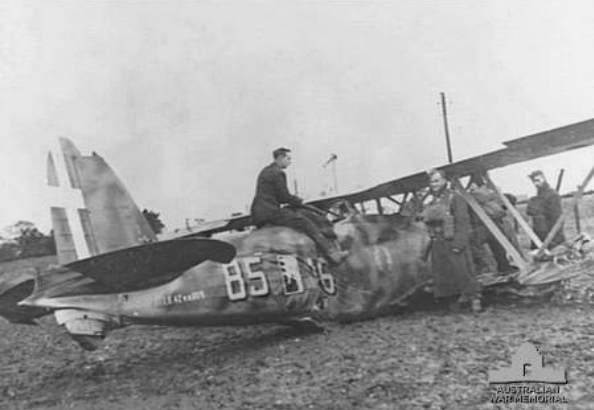
The Italian bomber fleet (Corpo Aereo Italiano, or CAI) based in Belgium sends a dozen Fiat BR 20M bombers and 42 Fiat CR 42 fighters across the Channel toward Harwich at 13:30. Three RAF Hawker Hurricane squadrons (Nos. 17, 46 and 257) shoot down three of the bombers and three fighters, and damaging two other bombers, at no cost of their own and deflect the attack. The Luftwaffe raids London with only about two dozen planes during the night due to poor weather.
Winston Churchill, never a big fan of Italian war prowess, finds the CAI’s incompetence amusing, saying later: “[The Italian planes] might have found better employment defending the fleet at Taranto.”
The Italian Regia Aeronautica forms the first Focke-Wulf 87 Stuka dive-bomber squadron.
Seven RAF Coastal Command Lockheed Hudson Mk. IIIs arrive at RAF Aldergrove, Northern Ireland, having flown direct from Gander, Newfoundland, in 10.5 hours. This marks the beginning of Hudson deliveries by air when all Hudson’s are flown across the Atlantic. They left in the early hours of Sunday morning flown by BOAC civilian air crews under the command of Captain D. Bennett.
Top Luftwaffe ace Walter Oesau becomes Gruppenkommandeur of III./JG 3, he is replaced at III,/JG 51 by Hptm. Richard Leppla.
Illustrating how personal the air war can get, leading ace Kommodore Major Werner Mölders of JG 51 gets distraught when a friend, Oblt. Georg Claus with 18 victories, is shot down over the Thames Estuary. He personally goes back and searches for the downed pilot with his wingman, Lt. Eberle, but can’t find him.
No. 640 Squadron RAF recorded the first Beaufighter “kill” when a German Ju 88A aircraft was shot down with the aid of the A.I.IV radar.
RAF Bomber Command dispatches 6 Blenheims during the day. 3 bombed at St-Brieuc airfield and Lorient. No losses. RAF Bomber Command attacks Lorient and various Luftwaffe airfields along the coast. The weather over the Continent is judged to be too poor for night attacks.
It is a big day for aerial attacks on shipping. Aside from the RAF success at Taranto, the Luftwaffe also uses its seaplanes to sink a number of ships. While largely forgotten to the general public, the Heinkel He 115 seaplane was a fearsome Luftwaffe weapon during the war’s early years.
FLEET AIR ARM ATTACK ON TARANTO: OPERATION JUDGMENT
At Taranto on this date were the following units of the Italian Navy.
Battleships — Littorio, Veneto, Cesare, Cavour, and Duilo (Doria was refitting).
Heavy cruisers of 1st and 3rd Cruiser Squadrons — Zara, Fiume, Pola, Gorizia, Bolzano, Trento, and Trieste.
Light cruisers of 8th Cruiser Squadron — Garibaldi and Abruzzi.
Destroyer Division 7 — Freccia, Strale, Dardo, and Saetta.
Destroyer Division 8 — Folgore, Baleno, Fulmine, and Lampo.
Destroyer Division 9 — Alfieri, Gioberti, Carducci, and Oriani.
Destroyer Division 10 — Maestrale, Libeccio, Grecale, and Scirocco.
Destroyer Division 11 — Camicia Nera and Geniere.
Destroyer Division 12 — Lanciere, Carabinieri, Corazziere, and Ascari.
Destroyer Division 13 — Granatiere, Alpino, Bersagliere, and Fucliere.
Destroyer Division 16 — Da Recco, Usodimare, and Pessagno.
The Mediterranean Fleet detached at 1800 aircraft carrier HMS Illustrious, heavy cruisers HMS Berwick and HMS York, light cruisers HMS Gloucester and HMS Glasgow, and destroyers HMS Hyperion, HMS Havock, HMS Hasty, and HMS Ilex for operation JUDGMENT, the carrier air strike on the Italian Fleet at Taranto.
Three aircraft from 813 Squadron, nine from 815 Squadron (Lt Cdr N. W. Williamson), six from 819 Squadron (Lt Cdr J. W. Hale), three from 824 Squadron from Aircraft carrier Illustrious attacked the Italian Fleet at anchor in Taranto Harbor.
Lt Cdr N. W. Williamson and Lt N. J. Scarlett of 815 Squadron were shot down and taken prisoner. Lt G. W. L. A. Bayly and Lt H. J. Slaughter of the 813 Squadron were killed.
Italian battleship Cavour was sunk and Littorio and Duilo were damaged.
Heavy cruiser Trento was struck by a dud bomb.
Destroyers Libeccio and Pessagno were damaged by near misses and Fulmine and Lanciere were attacked but not damaged.
Light cruisers HMS Orion, HMS Ajax, and HMAS Sydney with destroyers HMS Nubian and HMS Mohawk were detached at 1310 to operate in the Otranto Strait. Twelve miles 315° from Saseno they encountered an Italian convoy of merchant ships Antonio Locatelli (5691grt), Capo Vado (4391grt), Catalani (2429grt), and Premuda (4427grt) escorted by torpedo boat Fabrizi and armed merchant cruiser Ramb III.
All the Italian merchant ships were sunk in the engagement. Torpedo boat Fabrizi was badly damaged by gunfire in an engagement with destroyer HMS Mohawk.
Armed merchant cruiser Ramb III fired nineteen salvoes and then disengaged undamaged.
Italian motor torpedo boats north of Valona, Cruiser Squadron 7, consisting of light cruisers Attendolo, Eugenio, and Aosta, the 15th Destroyer Division from Brindisi, Cruiser Squadron 8, consisting of light cruisers Abruzzi and Garibaldi, with the 7th and 8th Destroyer Divisions from Taranto hastened to intercept the British forces in Otranto Straits but was unable to make contact.
The U-31, commanded by Korvettenkapitän Wilfried Prellberg, was sunk in Jadebusen, Germany by bombs from British Bristol Blenheim aircraft during a raid by RAF Bomber Command. All of the ship’s complement of 58 died. During its career under two commanders the U-31 sank 11 merchant ships sunk for a total of 27,751 tons, 2 auxiliary warships and damaged 1 warship.
Destroyer HMS Vega, escorting convoy FS.332, was mined off Sunk Head Buoy. She was taken in tow by British tug HMS St Mellons and taken to Harwich. Destroyer HMS Vega was taken to the Humber on the 17th for repair. She departed the Humber on 2 July 1941 by British tug HMS Stalwart for Sheerness arriving on 3 July. Destroyer HMS Vega was repairing until 14 November 1942.
Destroyer HMS Somali (D.6) departed Scapa Flow at midnight 11/12 November for boiler cleaning and repairs at Rosyth. The destroyer arrived at Rosyth at 1130/12th.
Anti-aircraft cruiser HMS Curacoa arrived at Scapa Flow at 1030 after escorting convoy EN.22 to Pentland Firth.
British steamer Balmore (1925grt) was sunk by German bombing in 52‑00N, 17‑00W. The entire crew of the British steamer was lost.
British steamer Skarv (158grt) was sunk by a mine in Bristol Channel.
British steamer Ardmore (1023grt) was lost cause unknown on a voyage from Cork to Fishguard.
British liner Empress of Japan, attacked by the Luftwaffe on the 10th, makes port with light damage. German radio claims to have sunk her.
German bombers attacked convoys FN.332 and FS.333.
Norwegian steamer Ravnanger (3371grt) was sunk by German bombing one to one and half miles northeast of No. 20 Buoy, Middlesborough, in Tees Bay. One crewman was lost on the Norwegian steamer.
British steamers Corsea (2764grt), Corduff (2345grt), and Colonel Crompton (1495grt) in a convoy were damaged by German bombing in Barrow Deep off Middlesborough.
Escorting escort vessel HMS Vivien (Lt Cdr F. H. Beattie) shot down one Junkers bomber, sloop HMS Londonderry (Cdr J. S. Dalison) shot down another Junkers bomber, tug HMS St Mellons (T/Lt H. L. Forster DSC RNR) shot down a Messerschmidt.
British steamer Pitwines (932grt) was damaged by German bombing north east of Yarmouth.
British steamer Grit (501grt) was damaged by mine two hundred yards southwest, south of Margate Buoy.
Minesweeping trawler HMS Stella Orion (417grt, Skipper W. J. Barlow RNR) was lost on a mine in the Thames Estuary, two cables 262° northwest of Shingles Buoy. There were no casualties on the trawler.
British trawler Iwate (314grt) was damaged by German bombing thirty five miles south by west of Old Head of Kinsale.
Destroyers HMS Wishart and HMS Wrestler departed Gibraltar to rendezvous with aircraft carrier HMS Argus and light cruiser HMS Despatch arriving from England.
Destroyers HMS Duncan and HMS Forester departed Gibraltar to meet battlecruiser HMS Renown returning to Gibraltar from escort duties in the Atlantic.
A Swordfish of 819 Squadron from aircraft carrier HMS Illustrious forced landed near light cruiser HMS Gloucester at 1400. The crew of Sub Lt A. F. Keith, Lt G. R- M. Going, TAG H. Phillips was picked up by Gloucester’s whaler and was transferred back to the carrier in the light cruiser’s Walrus aircraft. This crash was later found to be due to contaminated fuel.
French large destroyers Guepard and Valmy arrived at Beirut.
Convoy FN.332 departed Southend, escorted by destroyer HMS Vivien and sloop HMS Londonderry. The convoy arrived at Methil on the 14th.
Convoy FS.333 departed Methil, escorted by destroyers HMS Eglinton and HMS Watchman. The convoy arrived off Southend on the 13th.
German bombers attacked convoys FN.332 and FS.333.
German bombers attacked convoy EN.23/WN 34 at 1352, 1745, 1751, 1802, and 1834 hours.
Convoy WN.34 was being covered by anti-aircraft ship HMS Alynbank which also provided cover to convoy EN.23.
British steamer Trebartha (4597grt) in convoy EN.23 was sunk by German bombing four miles southeast of Aberdeen. Four crewmen were lost on the British steamer.
British steamer Creemuir (3997grt) in convoy EN.23 was sunk at 1751 by German bombing ten miles southeast of Aberdeen. Twenty six crewmen and the naval gunner were lost with the steamer.
British steamer Harlaw (1141grt) in convoy WN.34 was damaged by German bombing off Aberdeen.
Convoy OB.242 departed Liverpool escorted by destroyers HMS Wanderer, HMS Warwick, and Wild Swan and corvettes HMS Cyclamen and HMS Hibiscus. Destroyers Wanderer and Wild Swan and corvette Cyclamen were detached that day. On the 12th, destroyer HMS Clare joined the convoy and remained with it until 14 November when she was detached with destroyer Warwick. The corvettes HMS Gardenia and HMS Nasturtium were with the convoy only on the 13th.
Convoy HX.85, which had originally departed on the 1st and was recalled on the 5th, departed Sydney CB, escorted by Canadian auxiliary patrol vessel HMCS Elk. The convoy was given ocean escort by Battleship HMS Rodney and armed merchant cruiser HMS Rajputana, which were detached on the 21st. On 22 November, destroyers HMS Malcolm and HMS Sabre and anti-submarine trawler HMS Vizalma joined. The trawler was detached later that day. Corvette HMS Heliotrope joined on the 23rd. Corvette HMS Clarkia joined on the 25th. The convoy arrived at Liverpool on the 25th.
Solid faith in the survival of democracy, the “new order of the ages,” was expressed today by President Roosevelt in an Armistice Day speech in which he stated that the people under the “iron heels” of dictators “will themselves rebel.” Speaking in the amphitheatre of the Arlington National Cemetery, before several thousand persons who gathered to see the annual ceremony conducted by the American Legion, Mr. Roosevelt solemnly but forcefully reviewed in brief the political and cultural development of man from Roman days until the present time. Recognizing the new challenge made to democracy, which he compared with the World War of 1914-1918, he said: “I, for one, do not believe that the era of democracy in human affairs can or will be snuffed out in our lifetime. I, for one, do not believe that mere force will be successful in sterilizing the seeds which had taken such firm root an a harbinger of better lives for mankind. I, for one, do not believe that the world will revert either to a modern form of ancient slavery or to controls vested in modern feudalism or modern emperors or modern dictators or modern oligarchs in these days. The very people under their iron heels will, themselves, rebel.
Ambassador Joseph P. Kennedy said in a formal statement tonight that an interview with him published by The Boston Globe and distributed nationally Saturday night “creates a different impression entirely than I would want to set forth.” Kennedy said that he had received Louis M. Lyons of The Boston Globe and Ralph Coglan, editor of The St. Louis Post-Dispatch, for an off-the-record conversation. The interview, as reported by Lyons, quoted Kennedy as saying that “democracy Is finished in England” and may be finished in the United States, and that the presence of “labor men in the British government “means national socialism is coming out of it.” This incident, reflecting Kennedy’s true pessimism about Great Britain, will soon result in his replacement by the Roosevelt administration.
The Armistice Day Blizzard occurred in the Midwestern United States, causing a total of 145 deaths. A pre-winter storm including tornadoes, blizzards and near zero temperatures raged eastward across the nation Monday night. It had killed at least 22 persons (final tally 145), injured hundreds, and caused millions of dollars damage. Estimates of damage mounted steadily as new reports of storm wreckage were received. Illinois, lashed by gales, blizzards, and tornadoes, was one of the hardest hit states. Four persons were killed in Chicago, where damage was estimated at more than $1,000,000 from a severe windstorm. The event will come to be known as the Armistice Day Storm and had earlier caused damage in the Pacific Northwest, including the destruction of the Tacoma Narrows suspension bridge.
Freighter William B. Davock, 4468 tons, is caught in the blizzard on Lake Michigan and sinks. All 32-33 crewmen aboard perish. A 2014/15 investigation by the Michigan Shipwreck Research Association finds that the cause of the wreck was a broken rudder that jammed against the propeller, stripping it and rendering the ship helpless in the face of the wind and sea.
Several other vessels also are damaged or run aground, for a total of about 59 deaths. Two ships go down very near each other. Canadian 2227 ton freighter Novadoc runs aground near Pentwater, Michigan and is lost, with all crew saved 36 hours later when a tugboat, the Three Brothers II, goes out and rigs a breeches buoy to the freighter. Canadian 4285 ton lumber freighter Anna C. Minch breaks in two during the storm about one and a half miles south of Pentwood. All 24 crew perish.
Administration leaders delayed plans today for adjourning Congress until next week because of the death of Senator Key Pittman of Nevada, chairman of the Foreign Relations Committee.
John L. Lewis will have complete control of the annual convention of the Congress of Industrial Organizations through the committees which he will announce when the convention opens in Atlantic City next Monday. A copy of the names of the various committees revealed today that they consist predominantly of officers and employees of the United Mine Workers and of left-wing or Communist-dominated unions. Adherents of Sidney Hillman’s Amalgamated Clothing Workers of America and the right-wing unions, which are determined to press for certain resolutions and reforms, are in the minority on the committees.
A poison, believed to have been a deadly roach powder baked into pancakes, killed 11 men today and sickened 52 others who had eaten at a social service center for transients and itinerant workers. Dr. Robert Kooser, house resident physician at St. Francis hospital where many of the victims were taken, said all who had eaten the pancakes were made ill and that the condition of “a good many” was serious. Detective Inspector Walter Monaghan declared police seeking a former cook at the center had located the man in Philadelphia and that he was being returned to Pittsburgh for questioning. The cook was dismissed several weeks ago, Asked why police wanted to question the man, Monaghan replied: “Because of some threats that he made.”
The U.S. Army took delivery of its first Jeep. The origin of the name is still a mystery. Some say it is from the Army designation GP (General Purpose) but others prefer the reference to a character from the Popeye cartoon strip known as Eugene the Jeep. The character could walk through walls, climb trees, fly and go just about anywhere it wanted, and it is thought that soldiers at the time were so impressed with the new vehicle’s versatility that they named it after the Jeep.
Willys-Overland’s chief engineer Delmar Roos delivers the Quad prototype jeep to the US military at Camp Holabird. The Willys Jeep is a minor modification of the original American Bantam Jeep prototype delivered to Camp Holabird on 21 September 1940. While Willys is credited by almost everyone with designing the Jeep, in fact, it is an American Bantam design subcontracted out to freelance designer Karl Probst. Willys is involved only because the Army, which likes the Bantam design, does not think that Bantam is a big enough company to handle the military’s needs. Accordingly, the Army has asked Willy and Ford Motor Company essentially to replicate Bantam’s Jeep. Willys, for its part, only gets the fame as the “designer of the Jeep” because, with this delivery, it beats Ford’s delivery of its own replica by ten days.
Brooklyn’s Larry MacPhail still needs a starting pitcher to make his Dodgers a threat to the Reds. He gets Kirby Higbe from the Phils for $100,000, pitcher Vito Tamulis, and Bill Crouch.
The German commerce raider Atlantis, claiming to be the British auxiliary cruiser HMS Antenor, stopped and sank the 7,528 ton British freighter Automedon by demolition charges in the the Sunda Strait in the eastern Indian Ocean. The Automedon was bound for Singapore from Abadan and was carrying a cargo of military and technical goods for the Allied war effort, that included aircraft, cars, machinery spares, medicines, service uniforms, bicycles, cameras, microscopes, steel, copper sheet, textiles, whiskey, beer, cigarettes and one hundred and twenty bags of mail.
The Automedon was also carrying Top-Secret documents and fifteen bags of Government mail and because all but one of the officers had been killed during its capture, these documents had failed to be thrown overboard and were captured. They included notes of the military defenses of Singapore, details of Naval and Royal Air Force deployment and strength in the Far East, Port defense layouts, Merchant Navy decoding tables and cipher pages, Royal Navy fleet orders, and many other top-secret documents prepared by the British War Cabinet. Eighty-seven people including twenty survivors of the sinking of the British freighter Anglo-Saxon and three passengers were taken prisoner.
The documents and the cargo of high-octane aircraft fuel of the captured Norwegian tanker Ole Jacob would be sent to Japan. Because of this action the Japanese Government granted the Germans the use of Muag Island, a small island in the Mariana Islands, as a rest-refitting-replenishment area for raiders and blockade runners. The documents would greatly aid the Japanese Malayan-Singapore Campaign a year later. While all this may seem a bit esoteric and perhaps irrelevant, in fact, the incident is seen by many as playing a huge factor in the Japanese decision to attack the British (and Americans) on 7 December 1941. The material taken shows how weak the British position is in the Far East and how easy it would be to conquer the region.
Wars are full of coincidences, and today two widely separate incidents occur which dramatically influence the events of 7 December 1941: this capture of the Automedon and its secret documents, and the Royal Navy attack on Taranto. In fact, if this decision does influence the Japanese decision to attack it is of far greater importance than the Taranto attack. Demonstrating how important this is, the Japanese bestow upon Captain Rogge an ornate katana (sword) on 27 April 1943, one of only three ever given to a member of the Wehrmacht (the others are given to Hermann Goering and Erwin Rommel).
A dispatch from the Kunming correspondent of the British-owned China Mail said today that the Japanese military mission at Hanoi was reported to have demanded the right to land Japanese troops at Saigon, French Indo-China.
Continuing the commemoration of Japan’s twenty-sixth centenary, the Emperor and Empress today gave a banquet for 54,000 persons.
Born:
Barbara Boxer, American politician (Rep-D-California, 1983-1992, Senator-D-California, 1993-2017), in New York, New York.
John Bahler, American session vocalist (Ron Hicklin Singers), arranger, composer, producer (The Love Generation), and conductor (Lawrence Welk Orchestra), in New York, New York.
John Lomakoski, NFL tackle (Detroit Lions), in Washington, Michigan (d. 1999)
Died:
Hàn Mặc Tử, 28, Vietnamese poet (leprosy).
Naval Construction:
The Royal Indian Navy Basset-class minesweeping trawler HMIS Agra (T 254) is laid down by the Hooghly Docking & Engineering Company, Ltd. (Calcutta, India).
The Kriegsmarine (German Navy) Type IXC U-boat U-159 is laid down by AG Weser, Bremen (werk 1009).
The U.S. Navy Gleaves-class destroyer USS Ludlow (DD-438) is launched by the Bath Iron Works (Bath, Maine, U.S.A.).
The Royal Navy harbour defence motor launch HMS HDML 1030 is commissioned.
The Royal Canadian Navy auxiliary tanker HMCS Sunbeam (Z 42) is commissioned.
The Royal Navy British Power Boat 70-foot type motor anti-submarine boat HMS MA/SB 60, originally ordered for France, is commissioned.
The Royal Navy ocean boarding vessel HMS Maron (F 87) is commissioned. Her first commanding officer is Commander (retired) John Hamilton Blair, DSC, RD, RNR.
The U.S. Navy minesweeper USS Raven (AM-55), lead ship of her class of 2, is commissioned. Her first commanding officer is Lieutenant Commander Joe Warren Stryker, USN.
 History Diaries