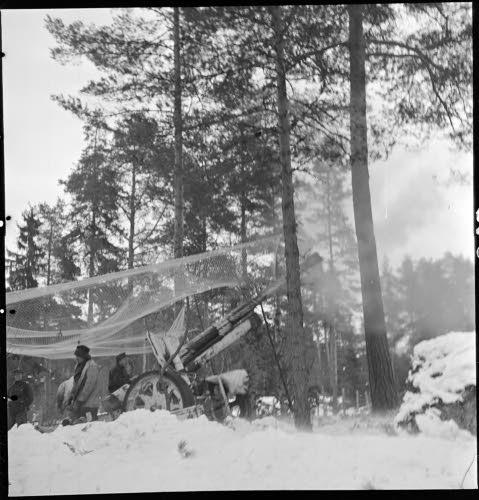
Soviet 7th Army continues attacking toward Viipuri.
The Finnish General Headquarters and the staff of the Army of the Isthmus were following the fighting in Viipurinlahti Bay with growing concern as the situation as the Finnish situation was steadily deteriorating.
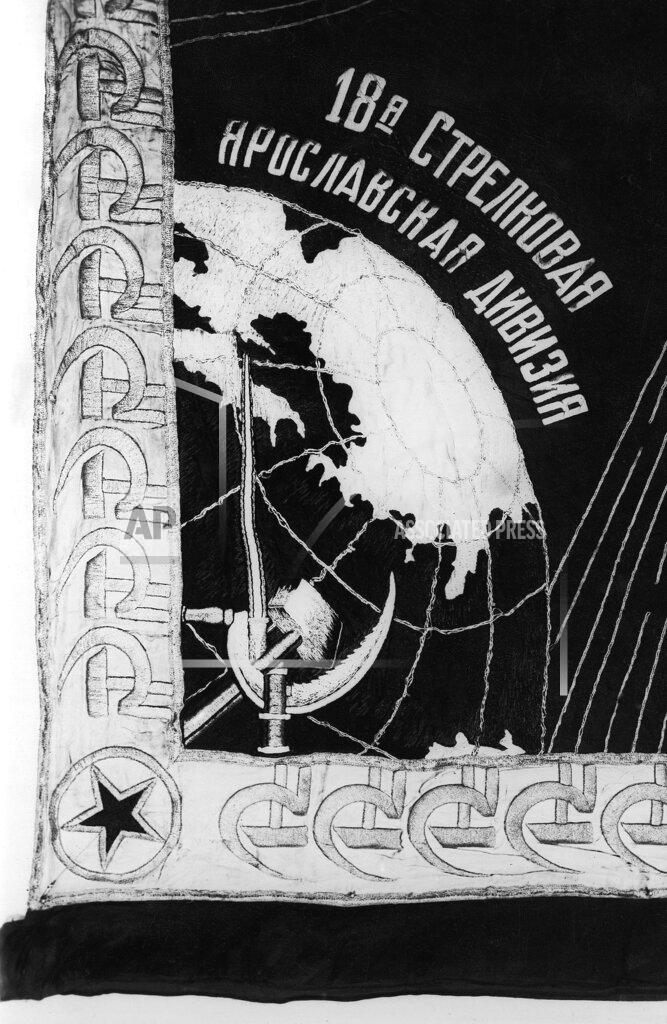
The Soviets begin attacks on Viipuri, Finland’s second city. There is hand-to-hand fighting in the suburbs of Viipuri; Soviet troops capture the railway station.
Two days after the offered peace ultimatum expired, Soviet forces launched a major offensive against the Finns. The Soviet 86th Motorized Rifle Division begins pushing across the frozen Gulf of Viipuri to outflank the city. The 86th Motorized Rifle Division pushes across the frozen Gulf of Viipuri, taking the short route to the mainland. They take the island of Uuras in Viipurinlahti Bay and consolidate the beachhead on the western shore.
The Soviet troops on the Vuoksi attacked with almost three divisions in an offensive across a broad front in the Vuosalmi and Kaskiselkä sectors. The defending Finns successfully halted the offensive with the support of artillery fire.
The Finland’s Commander in Chief Carl Mannerheim removed Major-General Kurt M. Wallenius from command of the Coastal Group, replacing him with Jaeger Lieutenant-General Lennart Oesch. Finnish General Wallenius was dishonorably discharged for getting drunk during this key moment in the defense. The Soviets have consolidated their bridgehead there, and Wallenius is said to be drinking heavily. Mannerheim vows never to re-employ Wallenius and removes him from the Defence Forces officer list.
In Kuhmo, the Finns have taken part of the great ‘motti’ at Luelahti.
Detachment Alfthan is on the way to Lavajärvi, having been ordered today to destroy the Soviet troops which have advanced into the area.
Finland’s General Headquarters in Mikkeli ordered the staff of the Army of the Isthmus to plan for a major withdrawal to the Virolahti-Kivijärvi-Saimaa-Hiitola line.
The home front is once again pounded by enemy bombers: today it’s the turn of Lappeenranta and Lahti; in Lahti an enemy vehicle depot is destroyed.
The Finns claim to have brought down 28 Soviet planes over the weekend.
Finland’s Foreign Minister Väinö Tanner telephoned Sweden’s Foreign Minister Christian Günther once again to propose a defensive alliance with Sweden. Although Finland was ready to open peace talks if the Soviet Union would drop its demand for cession of Viipuri and Sortavala, Tanner explained to the Parliamentary Foreign Affairs Committee why the government has postponed acceptance of the Soviet Union’s peace terms. However, Foreign Minister Günther does not consider this a realistic option.
A bomb exploded in the Luleå offices of the Swedish communist newspaper Norrskensflamman, killing five.
The son of Theodore Roosevelt, Kermit Roosevelt, who said he was still an American citizen, asserted today that he was happy and proud at the honor of being selected as commanding officer of the British contingent of the International Expeditionary Force which is leaving here soon for Finland.
[Ed: Too late.]
Adolf Hitler decided that the invasion of Norway would take place prior to the invasion of France. The date for the invasion of Norway and Denmark is set as March 17th but this will be altered to early April.
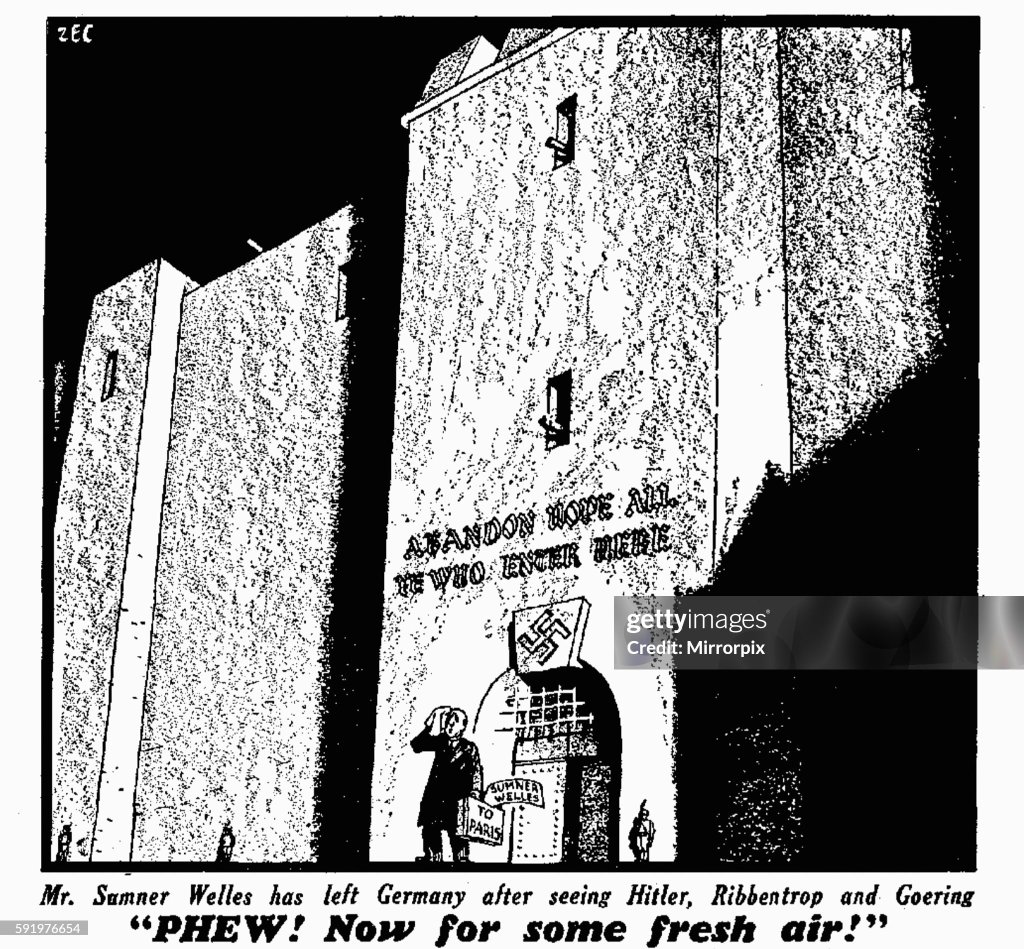
Adolf Hitler told Sumner Welles at a conference that any European peace must be based substantially on Germany’s acquisitions and recognition of Germany’s “natural” spheres of interest in Central Europe. Welles, President Roosevelt’s special envoy to Europe, listened almost all the time during a conference with Hitler of nearly an hour and a half, it was said. Well informed German sources said that because German-American relations formed such an important part of the conversations the respective Ambassadorial posts in Berlin and Washington may be reoccupied. German quarters said that “Welles made an excellent impression on Hitler.”
Hitler’s’ tone was stern, informants said, in picturing an intensified war for which Germany was fully prepared, and indicating a belief that no basis for peace existed because Britain meant to crush the German nation and people. He was represented as having told Welles that Germany was fighting to provide a stable basis for peace in Europe and to release the world from “imperialistic grip” of Britain. He added, informants said, that the United States apparently failed to understand this. A considerable part of Hitler’s statement consisted of an attack on Britain, it was said, and he paid comparatively little attention to France.
Reliable sources said Welles intended to raise the question of American-German relations but that Hitler took the initiative early in the talk, asking Welles a number of pointed questions regarding the United States attitude and its alleged sympathies. Hitler was reported to have said that in his view the United States was not following a strictly neutral course, and as the result Germany found herself In a position where she must be wary of all democracies.”
Sumner Welles met Hermann Göring at Carinhall. Like Hitler, Göring blamed the war on Britain and France. Welles found Göring to be as cold and ruthless as the other Nazi leaders but thought he was at least capable of taking a broader view of international relations. Welles then departs for Paris by train, stopping in Basel.
Grand Admiral Erich Raeder, chief of the German naval forces, disclosed yesterday in a radio broadcast from Berlin that Germany would wage uncompromising warfare against all British shipping on the ground that Britain no longer had vessels engaged in peaceful commercial tasks under the protection of international law.
The Reich Government today expressed its regrets to the Belgian Ambassador to Berlin, Vicomte Jacques D’Avignon, for shooting down a Belgian plane over Belgian territory yesterday. It was a mistake, they said.
Italy sent a note to Britain protesting the British blockade of German coal shipments to Italy.
Forty thousand Romans were in St. Peter’s Basilica this morning to hear Pope Plus celebrate a mass for their special benefit. They heard him deliver a sermon that ended with a fervent invocation to the Lord to restore “honor and concord among nations.”
The British public has now invested £100 million in National Savings since the war broke out.
The official newspaper Pradva devotes three columns today to a review of the first six months of the European war, following the familiar line that Great Britain and France are to blame and now are trying to extend the theatre of hostilities in all directions because they are powerless on the Western Front.
RAF, Luftwaffe, and French fighters again engaged over France.
RAF bombers overfly Berlin again. The Germans notice and anti-aircraft guns and fighters intervene, but all of the British planes return to base.
RAF sorties over the seaplane bases on the Friesian Islands are met with anti-aircraft fire.
Some Luftwaffe fighters overfly Belgium and shoot down one Belgian fighter while damaging two others.
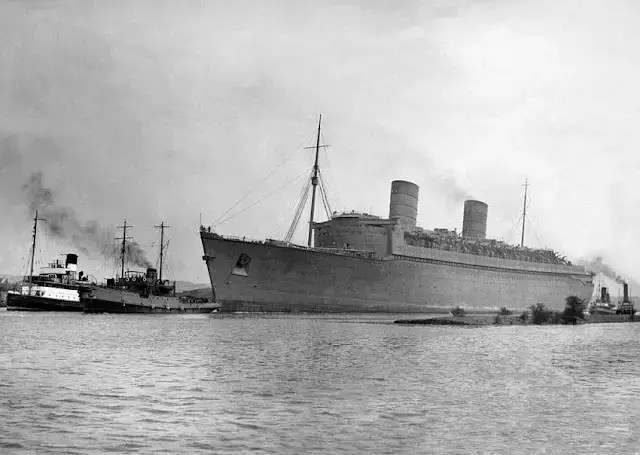
The Luftwaffe takes First Lord of the Admiralty Winston Churchill’s bait and bombs Southampton, the wrong destination he previously leaked to the press for the new liner Queen Elizabeth. Not so good for the people of Southampton, perhaps, but the Queen Elizabeth is safely on her way to New York.
The Royal Navy heavy cruiser HMS York (90), commanded by Captain Reginald H. Portal, intercepted the 3,359-ton German passenger ship Arucas 50 miles southeast of Iceland in the northern Atlantic Ocean (63°20′N 14°42′W). Before the German ship could be captured she was scuttled by her own crew. Three of Arucas’s crew died in the process. The remaining 39 men were rescued by HMS York and delivered to Kirkwall, Scotland on 10 March 1940.
German U-boat U-29, commanded by Kapitänleutnant Otto Schuhart, laid mines yesterday in the Bristol Channel. The British steam merchant Cato struck one of these mines and sank in the Bristol Channel south of Nash Point, Glamorgan (51°24′N 3°33′W) with the loss of 13 of her 15 crew. The two survivors were rescued by HMT Akita. Cato was carrying 400 tons of general cargo to Bristol.
The Admiralty-requisitioned British cargo ship Carron was scuttled as a blockship in Water Sound, Scapa Flow.
As the large passenger liner Queen Elizabeth sailed for New York, British agents released false information regarding the final destination being Southampton in southern England, United Kingdom. German intelligence apparently picked up this information as Luftwaffe aircraft appeared to bomb Southampton on this date, the date when Queen Elizabeth was falsely said to arrive.
Convoy OA.103GF departs Southend.
Convoy OB.103 departs Liverpool.
The War at Sea, Sunday, 3 March 1940 (naval-history.net)
The last German ship of the February Vigo group, steamer ARUCAS (3359grt), scuttled herself in 63 20N, 14 15W when she was intercepted by heavy cruiser YORK in 63 08N, 14 42W. The crew was rescued, but three died. YORK arrived at Kirkwall to land the 39 survivors on the 10th.
Minelayer TEVIOTBANK and destroyers ESK, EXPRESS, ICARUS, and IMPULSIVE of the 20th Destroyer Flotilla laid mines in Operation IE-1 in the channels through the German mine fields in the Heligoland Bight. The ships arrived back in the Humber on the 3rd. Operation IE 2 was postponed.
Convoy ON.17 of three British, sixteen Norwegian, twelve Swedish, five Danish, two Finnish and two Estonian ships departed Methil at 1700 escorted by destroyers NUBIAN, DELIGHT (SO), DIANA, ILEX, and GURKHA, with anti-aircraft support provided by anti-aircraft cruiser CALCUTTA. Destroyer COSSACK was assigned to the convoy, but was held back as unseaworthy for repairs to leaking seams. GURKHA arrived at Scapa Flow from Rosyth on the 2nd as her replacement. On the 4th abreast of Scapa Flow, DIANA and submarine NARWHAL escorting fleet auxiliary GREENAWN (784grt) were detached, with DIANA and GREENAWN arriving at Scapa Flow on the 5th and NARWHAL on the 6th after being delayed by gales. Light cruisers EDINBURGH and ARETHUSA, which departed Rosyth on the 3rd, gave this convoy, as well as ON.17 A and HN.17, close support. ON.17 arrived at Bergen on the 7th without event.
Convoy MT.22 departed Methil, escorted by trawlers of the 1st Anti-submarine Group and sloops BLACK SWAN and GRIMSBY. Destroyer IMPERIAL travelled in the convoy en route to the Tyne for repairs. The convoy arrived in the Tyne later that day.
Convoy FN.110 departed Southend, escorted by destroyer VIVIEN and sloops PELICAN and FLEETWOOD, as far as the Tyne, and arrived in the Tyne on the 5th. Destroyer JAVELIN carried on to Methil.
Convoy FS.111 departed the Tyne escorted by sloops BLACK SWAN, GRIMSBY, and destroyer JERVIS, and arrived at Southend on the 5th.
Destroyers BRAZEN and WOLSEY with cable ship ROYAL SCOT departed Rosyth for operations east of May Island. ROYAL SCOT then proceeded to Leith and BRAZEN to Rosyth, arriving on the 5th.
Armed merchant cruiser CIRCASSIA departed the Clyde on Northern Patrol.
Armed merchant cruiser MALOJA departed Liverpool for the Clyde.
Battlecruiser RENOWN departed Plymouth for the Clyde escorted by destroyers ACASTA, KIMBERLEY, and FIREDRAKE. Air support was provided from the morning of the 4th. The ships arrived in the Clyde at 1230/4th, and ACASTA, after refueling, returned to Plymouth.
Destroyers KHARTOUM and KINGSTON departed Greenock for repairs to weather damage to their hulls and refitting at Falmouth. During the evening of the 4th at 1903, WSW of Trevose Head in 50-31.21N, 5-24.4W, they attacked a submarine contact, assessed later as probably a wreck. After searching for another U-boat reported late on the 4th, KHARTOUM and KINGSTON arrived at Falmouth.
Destroyers JERVIS, JUNO, and JUPITER arrived at Rosyth for escort duty with convoy ON.17 A.
Submarine URSULA arrived at Blyth after patrol.
Submarine TRUANT arrived at Rosyth after patrol.
Lt B E H Stranack, Lt (A) J D Stern and Naval Airman J W White of 816 Squadron were killed at Campbeltown when their Swordfish landed and collided with two stationary aircraft, a total of five aircraft being destroyed.
U-29 laid mines off Newport. Two merchant ships were lost on this minefield, starting with steamer CATO (710grt) on the 3rd in 51 24N, 03 33W; of a fifteen-man crew, thirteen were lost. The two survivors were rescued by auxiliary minesweeper AKITA (FY610).
French light cruiser LA GALISSONIERE, escorted by destroyers RAILLEUSE and FORBIN, departed Oran. The destroyers were detached on the 6th at Gibraltar and the cruiser proceeded to Brest. RAILLEUSE and FORBIN then joined light cruiser PRIMAGUET, arriving from Brest, and escorted her to Toulon, which they reached on the 8th.
Light cruiser DAUNTLESS departed Singapore.
Light cruiser DURBAN arrived at Penang.
President Roosevelt begins his eighth year in the White House tomorrow, with his third-term plans the nation’s biggest political question mark and many of his vital policies under fire in and out of Congress. He will start the day by attending church services, just as he did on March 4, 1933, when he asked divine guidance in leading the country out of one of the most devastating economic upheavals in history. Accompanying him will be his wife, Eleanor; his mother, Mrs. Sarah Delano Roosevelt; his old headmaster at Groton School, Dr. Endicott Peabody, and legislative leaders.
A few hours after President Roosevelt’s return from his cruise, official circles were informed that he had personally obtained direct assurances from three countries near the Panama Canal that they would allow American military planes to use their airfields whenever necessary for wartime defense of the vital Atlantic-Pacific waterway. Colombia and Panama were two of these countries and Costa Rica was mentioned as the other. It was known that in the course of the eighteen-day trip through the Canal and along the Pacific coast of Central America Mr. Roosevelt conferred with President Augusto S. Boyd of Panama, who is understood to have told him that Panama regarded its interests as identical with those of the United States concerning defense of the Canal. But official circles here were informed after Mr. Roosevelt’s return that he had seen ranking representatives of two other nations.
President Roosevelt emphasized the importance to national defense of a “rational development” of waterways in a statement to the National Rivers and Harbors Congress, which was made public today in connection with an official call for the congress to meet here on March 14 and 15. The congress will consider waterway improvements as an adjunct to national defense, along with flood control, reclamation, irrigation, conservation and other important waterway problems.
The Senate’s party leaders, Senators Alben W. Barkley of Kentucky and Charles L. McNary of Oregon, debated the New Deal tonight on the eve of its seventh anniversary. They spoke over the American Forum of the Air on the Mutual Broadcasting System. Senator Barkley declared the country had come a long way under the Roosevelt Administration from the depths of the depression in 1933. Senator McNary asserted that instead of fulfilling its promises, the New Deal had “clamped down” more tightly upon the American people “the hardships of a temporary depression as a permanent way of living.”
Mid-city Shenandoah, Pennsylvania, sank slowly today, toppling homes and cracking business buildings, as abandoned anthracite mine workings below the town collapsed after a 24-hour rain. City authorities estimated damage at $1,000,000. Residents awakened by a rumbling that warned of the cave-in, fled from a 16-block area that settled slowly and steadily. Police Chief Frank Alinsky said no one was reported killed or injured, but property damage was heavy. Seven hours after the subsidence was first detected many buildings had settled 18 inches and widening cracks streaked across factories and sturdier brick structures. Many homes were split in two. Gas and water mains were broken. Street pavements caved in. Women sobbed hysterically among the hundreds of spectators who looked on from safe areas outside the section police roped off. After the confusion of the first scare, police said residents of the area might go back to their homes or carry out possessions — “if they wanted to.” The affected section includes almost a quarter of the town of 21 000 population.
Artie Shaw and His Orchestra (with an arrangement by William Grant Still) record “Frenesi” for Victor Records. Alberto Domínguez had composed “Frenesi for his marimba band – it means “frenzy” in Spanish. “Frenesi” will hit number one on the Billboard pop chart on December 21, 1940, and stay there for 13 weeks.
The Boston Bees sell Debs Garms to the Pirates. Garms, unaware of the trade, arrives in Boston’s spring training camp with his wife and children on March 5. Garms will get only 358 at bats for the Bucs but, nevertheless, will lead the National League in hitting with a .355 average. Unlike the American League’s 400 at bats, the National League rules state that a player must appear in at least a hundred games: Garms will play in 103. Ford Frick, National League prexy, will clarify this in September when it is clear that Garms will not reach the 400 at bats. (Pirate teammate Virgil Davis will be the nominal runner-up at .326, but play just 99 games). Garms will drop to .264 in 1941 and he will be out of baseball in 1942.
Canadian experts who have been looking into the effect of war activities on the Dominion labor market have reached the conclusion that by midsummer mass unemployment will be at an end. War work is absorbing almost all of the jobless who are able and willing to work.
The American cargo ship Timber Rush ran aground 85 nautical miles (157 km) south of Acapulco, Mexico and was wrecked. Her crew survived.
Kao Tsung-wu and Tao Hsi-sheung, former followers of Wang Ching-wei, who recently exposed Mr. Wang’s secret agreement with Japan, have released further alleged evidence of his moves in “selling out China.” They published nine more secret agreements between Liang Hongchih of the present Nanking regime and other puppet governments with Japan, all of which have been approved by Mr. Wang, who is scheduled to head a puppet government at Nanking. The agreements provide for a virtual Japanese monopoly of all Chinese national defense resources-mining, railways, aviation, telegraphs, telephone, water and electric supply, and municipal reconstruction in Central China.
The methods proposed for control and development are described as anti-foreign, fraudulent, and rapacious, and military as well as economic in nature. The agreements apparently are what the Japanese referred to in the secret agreement between Mr. Wang and Japan as “accomplished facts” and form concrete programs “for establishing the zone of strongest Chinese-Japanese economic solidarity on the lower Yangtze River,” as mentioned in the same document.
Among other things, the agreements provide that Central Chinese mineral resources will be exploited to counteract the Chungking government’s long-term resistance plans. With the assistance of the Nanking and Tokyo governments, the Central China Iron and Mining Company would control and exploit all mineral deposits now discovered, as well as future discoveries.
The Nanking government also would not recognize any company other than the Central China Railway Company, which would receive a monopoly of the reconstruction and operation of railways and motor services in Central China. This company would have $50,000,000 capital, including $10,000,000 from the Nanking government. The Central China Aviation Corporation would be established, with $6,000,000 capital, to unify Chinese aviation enterprises, with the head office in Peiping.
To link communications between Japan, Manchukuo and China, the Central China Telecommunications. Corporation would be formed, with capital of $15,000,000, including a $5,000,000 property subscription by the Nanking government. The Central China Water and Electricity Company will be formed. to exploit those services. In addition to monopoly Japan promises these companies special privileges such as tax exemption, subsidies, issue permission to debentures, special land expropriation rights and exclusive communication facilities. The capital for all the proposed. monopoly companies totals $106,000,000, of which the Nanking and Tokyo governments would contribute the major portion.
Born:
Germán Castro Caycedo, journalist and writer, in Zipaquirá, Colombia (d. 2021).
Owen Spencer-Thomas, television and radio journalist, in Braughing, Hertfordshire, England, United Kingdom.