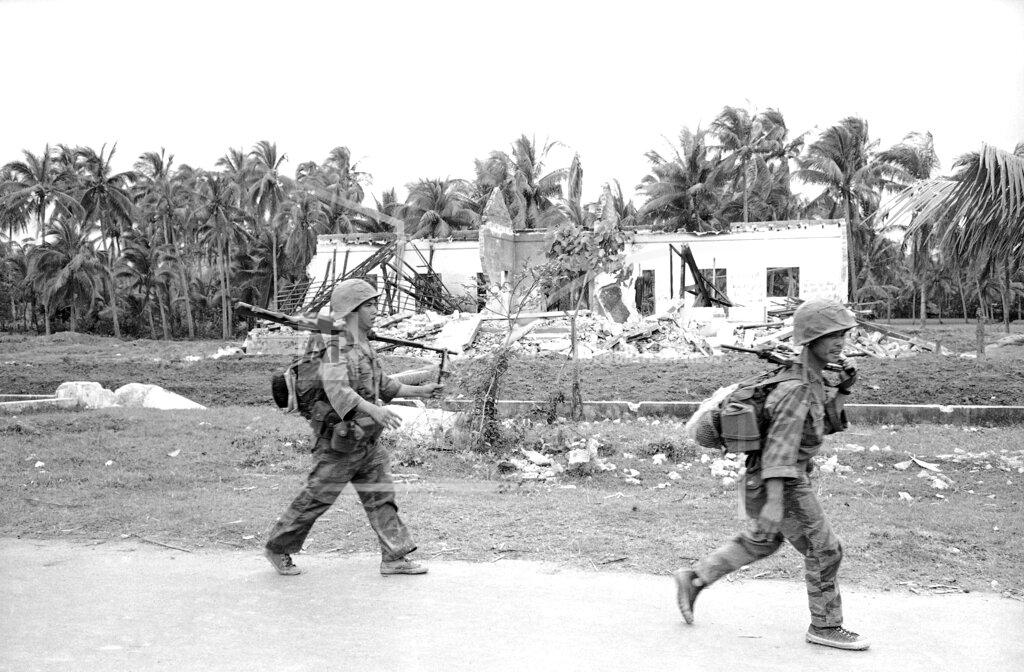
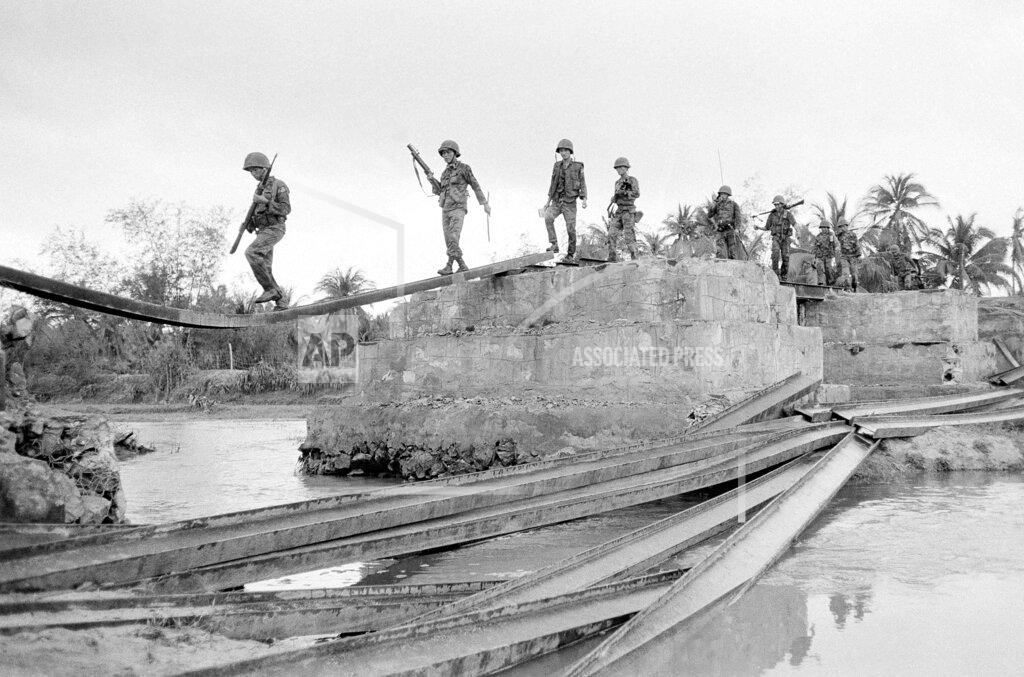
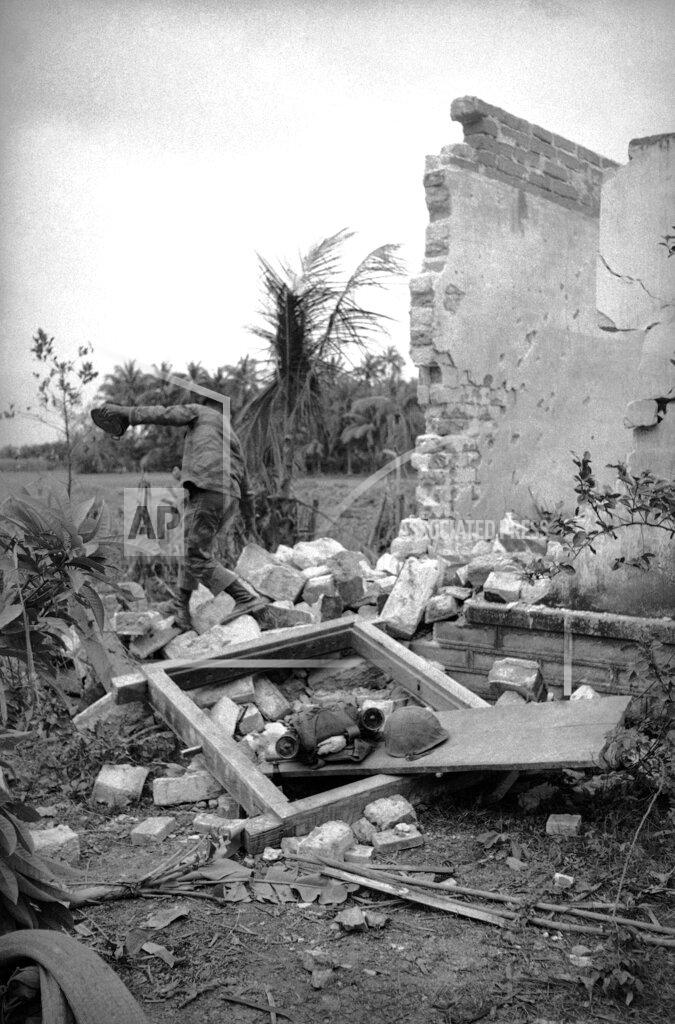
Over 30 U.S. Air Force jets strike targets along the Hồ Chí Minh Trail. This route, which has supplied the Việt Cộng, has been raided sporadically through the winter. United States Navy and Air Force pilots have alternated in an effort, approved by the Laotian Government headed by Prince Souvanna Phouma, to stem the flow of recruits and supplies from North Vietnam by way of Laotian territory held by the pro-Communist Pathet Lao. Now that such raids are being reported, the U.S. State Department feels compelled to announce that they are authorized by the powers granted to President Johnson in the August 1964 Tonkin Gulf Resolution.
The jet squadrons took off today with heavy loads of explosives from the air base at Đà Nẵng, 380 miles northeast of Saigon. Their bombs were gone on their return. United States authorities declined to disclose the objectives but said no new strike had been made against North Vietnam. It was not even made plain whether all the raiders returned. Compared with other operations in the Vietnamese war, the secrecy shrouding the Laotian phase has always been much more tightly maintained. Reconnaissance photographs of yesterday’s attacks on the Quảng Khê naval base and Xom Bang munitions depot by more than 160 United States and South Vietnamese planes showed heavy damage.
Six barracks and a dock were reported destroyed at Quảng Khê, about 65 miles inside North Vietnam, and other barracks outside the town were burned. Still under assessment was the toll at Xom Bang, 10 miles north of the border. Six of the raiders were shot down. The pilots of one Vietnamese and four United States planes were rescued. The pilot of a fifth American plane was missing.
An American pilot who flew in yesterday’s bombing attack against North Vietnam denied today reports from Hanoi that civilian targets had been hit. Captain William Leitch, a 40-year-old United States Air Force adviser from Victorville, California, said: “The target at Quảng Khê was well defined, close to an inlet. It was clearly a military installation, not a residential area.” Captain Leitch and the South Vietnamese pilots he advises were honored tonight at a dinner given by Air Vice Air Vice Marshal Nguyễn Cao Kỳ in the Vietnamese Officers Club at the Saigon airport. Expansive and obviously proud of his young pilots, Marshal Kỳ presented each of them, including Captain Leitch, with the Vietnamese Medal of Bravery with Palm for the missions yesterday.
The bombing raids by the United States against North Vietnam were not a “war”, according to a U.S. State Department release. The bombing “does not bring about the existence of a state of war, which is a legal characterization rather than an actual description,” a spokesman wrote. Instead, there was “armed aggression from the north against the Republic of Viet Nam” and “Pursuant to South Viet Nam’s request and consultations between our two governments, the Republic of Viet Nam and the United States are engaged in collective defense against that armed aggression.”
American-piloted B-57 bombers flew four sorties today against Việt Cộng positions in the Mekong River delta east of Saigon. The attacks were aimed at Việt Cộng units entrenched in Phước Tuy Province, an area where South Vietnamese troops have been engaged in a continuing “search-and-destroy” mission.
Major General Nguyễn Văn Thiệu replaced Lieutenant General Nguyễn Khánh, ousted strong man, today as the top officer of the nation’s 25-man Armed Forces Council, but he has only a fraction of the power General Khánh wielded.
[Ed: For now…]
The world responds again over the next few days to the new role of the United States in the Vietnam War. Inevitably, Communists criticize this role strongly; Premier Fidel Castro promises that Cuba will aid North Vietnam. On 4 March 2,000 students, led by Asians, attack the U.S. Embassy in Moscow (because the Russian police disperse them, the Chinese allow an anti-Soviet demonstration at the Soviet Embassy in Peking on 6 March).
In Moscow, the conference of 19 Communist parties condemned Tuesday’s raids on North Vietnam as “barbarous,” but there was no threat of a countermove.
However, the Soviet Union, although it issues the expected warnings, remains largely aloof. Meanwhile, Prime Minister Lester Pearson of Canada expresses concern about the risk of escalation, but says that Canada understands the U.S. position; Canadian members of the ICC file a minority report on the raids of 5-6 February, blaming them on North Vietnam for its support of the Việt Cộng. In Britain, however, there is mounting pressure against the government’s support for U.S. policies. In New York City, Women Strike for Peace demonstrates outside the United Nations to urge an end to the war.
Communist China asserted today that the United States had demanded that North Vietnam hand over territory south of the 19th Parallel. It did not say how or when the alleged demand was made.
Premier Fidel Castro regretted on television tonight that Cuba was not closer to North Vietnam “so we could send antiaircraft weapons and war planes with pilots and all” there.
South Vietnam’s former strongman, Lieutenant General Nguyễn Khánh, conferred for an hour today with Adlai E. Stevenson, permanent United States representative, on the increasingly critical situation in South Vietnam.
President de Gaulle and the French Cabinet expressed serious and mounting concern today over the intensification of United States air strikes against North Vietnam, according to Minister of Information Alain Peyrefitte.
There were protests against the American bombing of North Vietnam today in New York, San Francisco, Sydney, Australia, and Oslo, Norway.
The Chinese Communist party warned the leaders of the Soviet Union today that they would suffer the same fate as former Premier Nikita S. Khrushchev if they persisted in their present policies. Peking accused the Kremling of adhering to what it termed the ousted Premier’s policies of suppression of revolution and capitulation to the interests of the Western powers. It attacked the principles of Soviet foreign and domestic programs. Jenmin Jih Pao, the party organ, published its strongest denunciation yet of Premier Aleksei N. Kosygin and Leonid I. Brezhnev, first secretary of the Soviet Communist party, as 19 pro-Soviet Communist parties met in Moscow to discuss the restoration of unity of the international movement. The paper made it clear that the Chinese party did not intend to suspend the ideological debate with Moscow, despite the crisis over Vietnam. The party is boycotting the Moscow meeting.
Britain promised today a big reduction in her armed forces and suggested that her 51,000-man ground force in West Germany might be affected. In a warning to the House of Commons on the economic burden of maintaining British forces around the world, Denis Healey, the Defense Secretary, said the real problem lay in Germany. He charged that Bonn was doing little to relieve “the strain of this commitment on our balance of payments” and said Prime Minister Harold Wilson would make this a major point in his forthcoming talks with German officials. Mr. Wilson leaves Saturday with Michael Stewart, the Foreign Secretary, for Berlin and then two full days of talks in Bonn. Mr. Healey, opening a two-day defense debate, said that Britain’s “old imperial responsibility” had passed away. “We cannot be permanent policemen for the whole of Africa and Asia,” he said, “the days of Pax Britannica are over now.”
The United States, seemingly modifying its Middle East arms policy. has agreed to discuss with Israel the possibility of supplying American weapons to offset Soviet arms shipments to Arab states. High-ranking Israeli officials, possibly including Foreign Minister Golda Meir, are expected here shortly, according to diplomatic sources, to discuss the purchase of American arms. The discussions will be an outgrowth of talks that Ambassador at Large W. Averell Harriman had during the last week with Israeli officials in Tel Aviv.
Since Mr. Harriman’s departure from Israel on Monday, some State Department and White House advisers have remained behind in Tel Aviv “to continue the talks, which will lay the basis for the higher-level discussions here within the next few weeks. Ostensibly the Harriman mission was prompted by the diplomatic and military confusion brought about by West Germany’s termination of its $80 million arms deal with Israel. But the talks went far beyond the immediate problems created by Bonn’s action and included the more complicated issue of how to provide Israel with an assured supply of modern arms in the coming years. According to diplomatic sources, there was at least a tacit acceptance by Mr. Harriman of a contention by Israel that the cut-off of the West German arms shipments pointed up Israel’s need to find new sources of weapons to maintain a military balance with the Arab states.
The Soviet Union recentralized the management of its defense industries today by removing them from the control of regional industrial councils established by Nikita S. Khrushchev eight years ago.
The American manager of a Shell Oil refinery in eastern Borneo was ordered replaced by Indonesian authorities amid indications today that the Shell Oil fields and those of the American-owned Stanvac Oil Company soon would be nationalized.
Arthur Bottomley, Britain’s Secretary of State for Commonwealth Relations, ended a 10-day visit to Rhodesia today with a denunciation of any unilateral declaration of independence by the self-governing colony. At the same time, he rejected any idea of British military intervention in the colony on behalf of the country’s Africans, who form an overwhelming majority of the population. The country’s white-controlled Government is seeking independence under a Constitution that would preserve white dominance.
President Mohammad Ayub Khan of Pakistan is an important and popular visitor in Communist China. That has been clear from the moment of his arrival yesterday in the Great Tiananmen Square. He received a welcome as demonstrative and as warm as experienced observers here have ever seen. President Ayub began his first full day in Peking with a tour of some of the city’s glories old and new. He started with the Museum of the Revolution and, with Liu Shao-chi, the chief of state, as his guide, traced the course of the Communist rise to power in China. President Ayub wrote of the exhibition in the visitor’s book: “It did my soul good to see how a dedicated people struggled under a wise and dedicated leadership to find salvation.”
The Congo accused her fellow members of the Organization of African Unity today of having lost sight of their fight against colonialism to meddle in Congolese affairs.
Galo Plaza Lasso, the United Nations mediator for Cyprus, gave a first-hand report today to the Secretary General, U Thant, on the latest efforts to work out a settlement acceptable to the island’s Greek and Turkish communities.
The escape from a Montreal jail last night of an inmate accused as a drug smuggler has set off a new political bombardment of Prime Minister Lester B. Pearson’s Liberal Government.
The United Nations cash reserves are so low that the organization may have to borrow money if it does not receive substantial contributions soon.
USSR performs a nuclear test at the Semipalatinsk Test Site in northeast Kazakhstan.
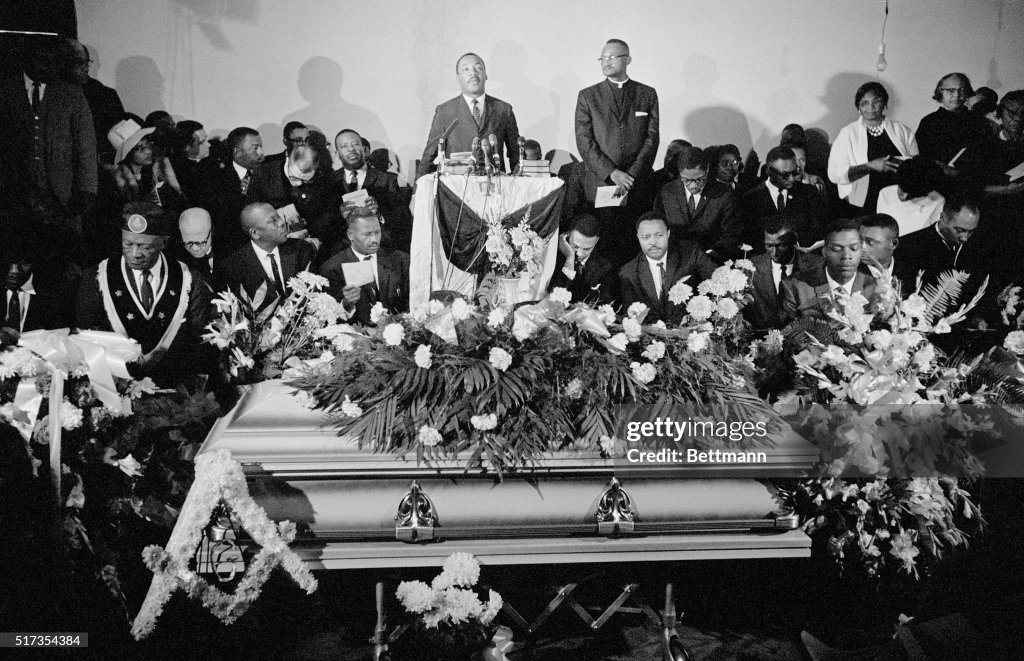
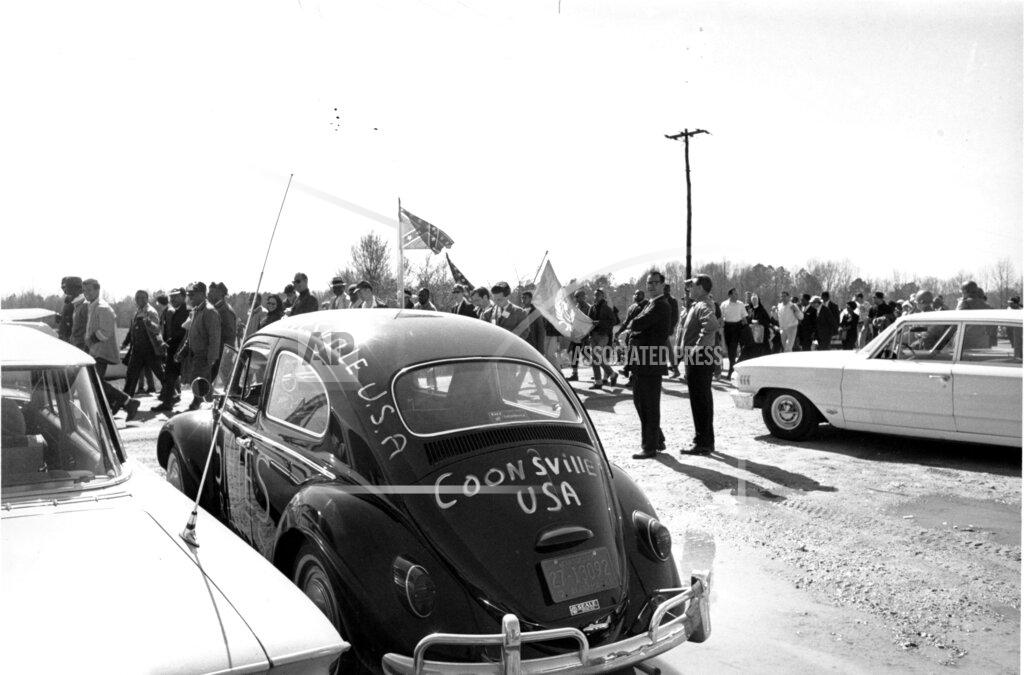
Dr. Martin Luther King eulogized Jimmie Lee Jackson, who succumbed to bullet wounds inflicted during a civil rights demonstration at Marion, Alabama, at funeral services and graveside rites. Jackson was proclaimed a martyr and buried in a country graveyard here today. About 4,000 Blacks attended two funeral services for him, the first at Selma this morning and the second at Marion this afternoon. More than 1,000 walked three miles in the rain to bury him on a pine hill. The Rev. Dr. Martin Luther King Jr. preached his funeral at Marion, Mr. Jackson’s hometown, taking the occasion to pledge increased determination in the Black’s struggle for equal rights. Dr. King told a crowd of hundreds where he thought the blame lay for the death of the 26-year-old Black. who was fatally injured as Alabama state troopers broke up a civil rights night march February 18 at Marion. Tonight the Rev. James Bevel. Alabama project director of the Southern Christian Leadership Conference, announced that a group of Blacks would walk the 50 miles from Selma to Montgomery next week, starting Sunday, to dramatize the drive for voting rights. He said Dr. King would lead the walk. “We are going to see the Governor,” he said.
“He was murdered by the indifference of every white minister of the gospel who has remained silent behind the safe security of his stained-glass windows,” Dr. King said. “He was murdered by the irresponsibility of every politician from governors on down who has fed his constituents the stale bread of hatred and the spoiled meat of racism. He was murdered by the timidity of a federal government that is willing to spend millions of dollars a day to defend freedom in Vietnam but cannot protect the rights of its citizens at home. He was murdered by the brutality of every sheriff who practices lawlessness in the name of the law. And he was murdered by the cowardice of every Black who passively accepts the evils of segregation and stands on the sidelines in the struggle for justice.”
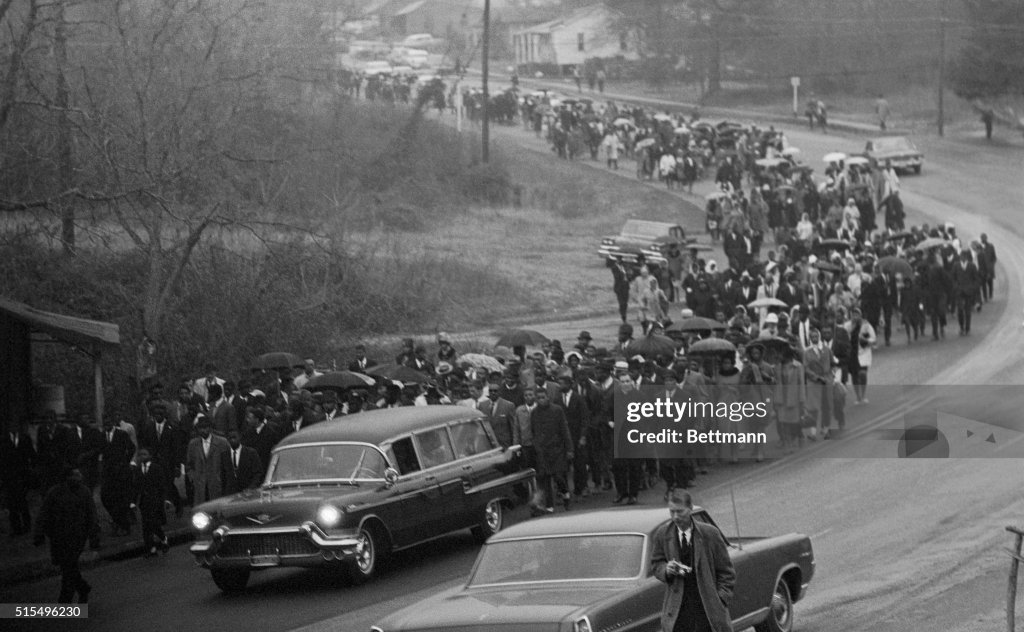
After the second funeral, more than 1,000 persons on foot and hundreds more in cars trailed the hearse down the wet highway to the place where Mr. Jackson was buried. The procession, stretching half a mile, went from Zion’s Chapel Methodist Church, across the street from the Perry County Courthouse, to the Heard Cemetery, a small tract in the woods beside State Highway 183. The cemetery is almost hidden from the road by pine trees and brush. Mr. Jackson died Friday of wounds Inflicted when state troopers broke up a night march. at Marion, a town of 3,800 persons at the northern edge of the Alabama Black Belt. He was shot and clubbed and he told a hospital nurse that the man who fired the shot was a trooper.
Wilbur Mills, the Chairman of the House Ways and Means Committee, “pulled a ‘legislative coup’ that would forever change the nation’s health care system” with the surprise recommendation that all three of the alternative proposals for health care should be combined. The result would be that the Social Security Amendments of 1965 would have the Democrats’ King-Anderson Bill as “Medicare Part A”, the Republicans’ “Bettercare” bill would become “Medicare Part B”, and the “Eldercare” bill would become Medicaid.
The U.S. House of Representatives voted 257–165 to approve the Appalachian Regional Development Act, the first of the War on Poverty bills, a month after the U.S. Senate had given 62–22 approval. President Lyndon Johnson would sign the one-billion-dollar measure, which provided $1,092,200,000 toward highway construction and other projects, on March 9. It was the first of the Great Society legislation to reach President Johnson’s desk this year. Administration forces in the House were firmly in command throughout three days of often bitter debate. Not a single comma was changed from the time the bill left the Senate last month. Twenty-five Republicans joined 232 Democrats in voting for passage. Voting against were 109 Republicans and 56 Democrats.
The Senate Rules Committee voted today not to recommend changes in the present filibuster rule. The action is expected to have little effect on the prospects for voting rights legislation this year. The committee action dashed the hopes of liberals for a rules change that would make it easier to shut off debate in the Senate. But informed Southern Senators were saying there was little likelihood they could or would mount a filibuster against voting rights legislation this year, with or without a rules change.
A Senate subcommittee suggested today that Congress consider a bill to legalize wiretapping and make it a crime to belong to such criminal societies as the Mafia. Meantime, President Johnson had lunch with Attorney General Nicholas deB. Katzenbach, Deputy Attorney General Ramsey Clark and J. Edgar Hoover, director of the Federal Bureau of Investigation, to discuss his special message to Congress on crime. Mr. Johnson sent his guests back to their offices to revise the working draft of the message, which may be ready for release sometime this week.
Prison-bound Billie Sol Estes, on trial for a third and probably last time, heard a jury pronounce him innocent of lying to the government about his debts.
Senate Republican leader Everett M Dirksen led a group of GOP senators in supporting legislation aimed at reversing the Supreme Court’s “one-man, one-vote” reapportionment rulings for state legislatures
Congress voted to repeal a requirement that one-fourth of bank deposit liabilities of the Federal Reserve System had to be matched by an equivalent amount of gold. The rule had been in effect for 52 years since the passage of the original Federal Reserve Act in 1913. President Johnson signed the bill into the law the next day. The requirement of gold backing for one-fourth of bank notes on deposit in the 12 Federal Reserve System would continue until March 18, 1968.
Representative L. Mendel Rivers, chairman of the House Armed Services Committee, introduced a $1 billion military pay-rise bill today.
Governor Paul B. Johnson Jr. drew a picture of Mississippi today as a potential pioneer in America’s efforts to cope with urbanization, though the state is generally regarded as typically rural.
Lincoln City, Oregon was created by the merger of five towns (Cutler City, Delake, Nelscott, Oceanlake and Taft). The name, suggested by a group of schoolchildren, was selected in a contest.
The U.S. performs a nuclear test at the Nevada Test Site.
Discovery of the anti-deuteron, the antimatter counterpart of a heavy-hydrogen nucleus, was reported today by an Atomic Energy Commission scientist.
Dow Jones Industrial Average: 900.76 (-1.15)
Born:
Tedros Adhanom Ghebreyesus, Ethiopian politician and the first African Director-General of the World Health Organization, in Asmara, Eritrea.
A. J. Sager, MLB pitcher (San Diego Padres, Colorado Rockies, Detroit Tigers), in Columbus, Ohio.
Bert Heffernan, MLB catcher (Seattle Mariners), in Centereach, New York.
Ruben Rodriguez, NFL punter (Seattle Seahawks, Denver Broncos, New York Giants), in Visalia, California.
Dragan Stojković, Serbian footballer and football manager; in Niš, Yugoslavia.
Died:
Renato Biasutti, 76, Italian geographer and physical anthropologist who wrote The Races and People of the World, classifying homo sapiens into “five subspecies, sixteen primary races, and fifty-two secondary races.”
Carlo Gatti, 88, Italian musicologist (Verdi).


[Ed: How fitting. It’s a Volkswagen.]