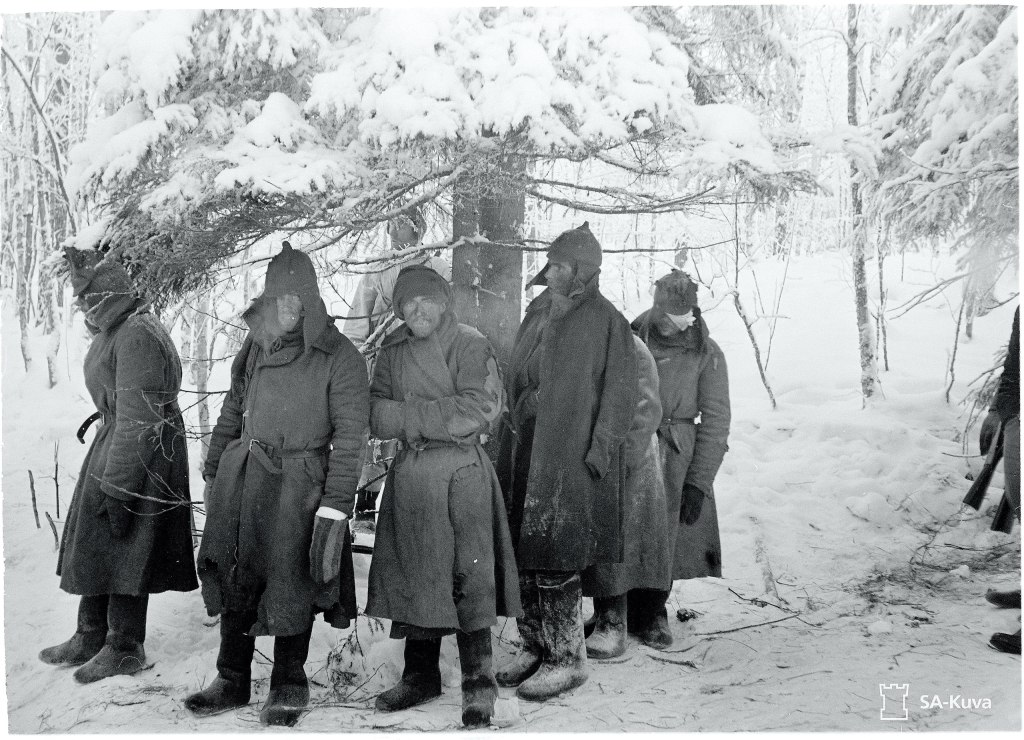
Soviet troops continued to assert pressure on Finnish defensive positions on the Karelian Isthmus. Soviet forces continue their assault on the 3rd Division’s main defensive position. Soviet 7th Army and 13th Army continue ‘demonstration operations’ against the Mannerheim Line. Soviet shelling, aerial bombing and small unit combined arms infantry and armor attacks continue on the Karelian Isthmus, designed to wear down the Finnish defenders rather than penetrate the fortified defensive line.
The Soviets send a special assault squad against the Millionaire bunker, which captures it. The Soviets affix a 50 kg explosive to the roof and blow a hole in the roof and wall. The squad then retreats back to Soviet lines, suffering 75% killed in action. The Finns then recapture the bunker temporarily.
On the Eastern Isthmus, a patrol of seven Soviet paratroopers lands on the frozen Lake Pyhäjärvi and is wiped out.
Further North, above Lake Lagoda, Finnish 9th division continues to surround Soviet 54th division near Kuhmo. In a rare example of reinforcing the trapped Red Army units, a Siberian ski battalion under Colonel Vyatsheslav Dmitrievitsh Dolin is sent in to help 54th division. The Soviet 54th Division, surrounded in Kuhmo, is attempting to break out by attacking in a number of areas.
At the Viipuri Bay, Soviet troops attempted to launch an offensive, but were disrupted by Finnish aircraft.
The Soviet Air Force continues its bombing raids as part of the general offensive on the Isthmus.
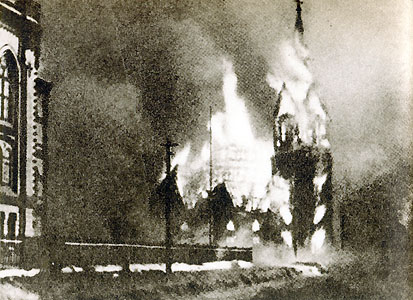
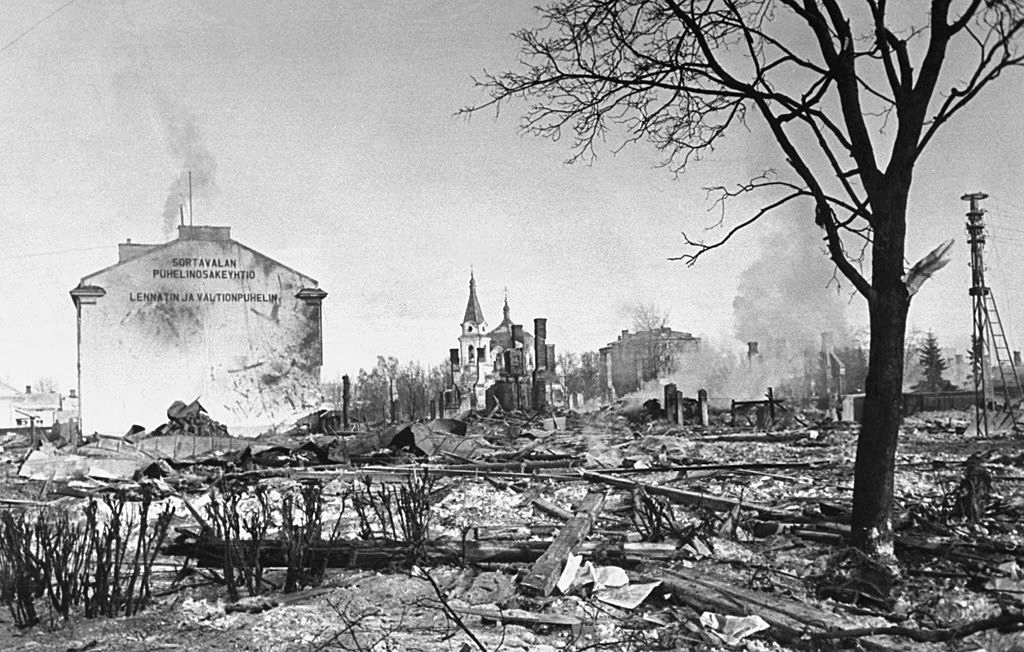
In Ladoga Karelia, 92 Soviet aircraft attack Sortavala in five waves, killing 15 people and injuring 44 others; the Lutheran church is among the buildings destroyed in the attack.
At Pori, enemy bombers hit a bomb splinter shelter, killing 11 women and 3 men. Altogether 21 people are killed in the raid.
Over Lake Saimaa, Lieutenant Fritz Rasmussen, a Danish volunteer pilot, is killed when enemy aircraft shoot down his Fokker FR-81 while he is on a defensive flight near Rauha on the shores of Lake Saimaa.
The Holmenkollen skiing stadium in Oslo puts on a benefit event in aid of Finland. The main attractions are the oft-crowned Olympic speed-skating champion and World Champion Clas Thunberg and the ski-jumpers Lauri Valonen and Niilo Toppila.
Brazilian President Getulio Vargas announces that Brazil is to send Finland a gift of 10,000 sacks of coffee.
The Finnish Government presents its opening position for peace talks in response to the terms of negotiation presented by the Soviet Union. The response is communicated to the Soviet Union via the Swedish Foreign Ministry.
The Soviet Ambassador in Stockholm, Madame Alexandra Kollontai, indicates that the Soviet Union cannot give up its demand for bases in Finland.
The British War Cabinet rejects a plan for a naval blockade of the Soviet Union.
Representatives from Yugoslavia, Greece, Rumania, and Turkey meet in Belgrade. The Balkan Entente Conference begins and includes a proclamation by the neutral states of Yugoslavia, Greece, Rumania and Turkey declaring a common interest in maintaining peace in southeastern Europe and the renewal of the pact.
In Prague, Nazi authorities changed the name of Wilson railway station (named for Woodrow Wilson) to “Main station”, and Masaryk station to “Prague-Hibernia station”.
The French Embassy in London delivered to the Foreign Office today a diplomatic document purporting to be an authentic neutral report of German atrocities in Poland. It is impossible to confirm any of the information in this document, but it is a sample of reports now being circulated in Europe.
The document is said to be the report of two neutral secret service men who have just returned from Germany. While in Munich, they had an opportunity to discuss Polish conditions with members of the Gestapo [secret police], who are reported to have said that since the start of the war in Poland, about 5,000,000 Poles have died of starvation or exposure, were killed in battle or were shot by firing squads.
This figure is out of all proportion to all other diplomatic reports received here, but French officials went through the motions of delivering it to the Foreign Office. Quoting the two secret service men, the document, dated January 25, says: “Chancellor Hitler is practicing in Poland a systematic policy of extermination toward the Polish population. The people were purposely expelled from their homes and they are dying of cold and exposure all along the roads.”
Once more the British have rejected a proposal that they join France in constructing an undersea tunnel linking England and the Continent between Dover and Calais. In other days the plan was opposed for fear invading armies might pour through it. Now, with France and Britain in the closest alliance, it is rejected on the ground that it would not be worth the cost.
The first scrap week sponsored by the Ministry of Supply started today in Great Britain.
Seven men on raft rescued with aid of an RAF Coastal Command aircraft.
The unescorted British steam tanker Creofield was torpedoed and sunk by the U-59, commanded by Kapitänleutnant Harald Jürst, at 0624 hours east of Lowestoft off the eastern coast of England (52° 33’N, 2° 25’E). Creofield (Master Charles Fred Carlin) was hit amidships by one G7a torpedo from U-59, exploded and sank. All of the ship’s complement of 16 died. The 838-ton Creofield was carrying creosote and was bound for Middlesbrough, England.
The unescorted British steam merchant Portelet was torpedoed in the stern and sunk by the U-59 less than one mile southwest by west of Smith´s Knoll Lightship (52° 40’N, 2° 13’E) at 2040 hours. Of the ship’s complement, 2 died and 9 survivors were picked up by the Finnish steam merchant Oscar Midling. The 1,064-ton Portelet was carrying ballast and was bound for Sunderland, England.
The British cargo ship Kavak from convoy HX.90 was torpedoed and sunk in the Atlantic Ocean west of Ireland by U-101 ( Kriegsmarine) with the loss of 25 of her 41 crew.
The British tanker British Councillor in Convoy AN 8442 struck a mine and was damaged in the North Sea off Withernsea, Yorkshire (53°48′N 2°25′E). The crew was rescued by HMS Gallant, HMS Griffin (H31) and HMS Whitley (all Royal Navy), which took on 43 survivors. The British tug Yorkshireman was dispatched to tow British Councillor into port, but the tanker sank the next day.
The Spanish coaster Teresa ran aground at Azemmour, Morocco and was wrecked.
U.S. passenger liner Manhattan is stopped by French auxiliary patrol vessel Vaillant about 25 miles southeast of Cape St. Vincent, Portugal, and ordered to proceed to Gibraltar for examination (see 3-4 February).
Convoy OA.84 departs Southend.
Convoy OB.84 departs Liverpool.
The War at Sea, Friday, 2 February (naval-history.net)
Destroyers FAULKNOR, FEARLESS, FURY, FOXHOUND, FAME, FORTUNE, FORESIGHT, FIREDRAKE, DELIGHT, DARING and DIANA departed Greenock for an anti-submarine sweep towards the Mull of Kintyre, before joining Canadian troop convoy TC 3 in the Western Approaches. DELIGHT was diverted after sailing to escort convoy ON.10 and was replaced by destroyers KINGSTON and KELVIN. The convoy of five liners had been escorted across the Atlantic by battleship VALIANT, which had completed working up the Caribbean, and supported in the Western Approaches by battlecruiser HOOD. The convoy was met at 1000/5th. Light cruiser ENTERPRISE had already been detached and arrived back at Halifax on the 4th. Convoy TC 3, battleships VALIANT and MALAYA and destroyers FAULKNOR, FEARLESS, FORESIGHT, FIREDRAKE, FOXHOUND, FORTUNE, FAME, FURY, DIANA, DARING, KELVIN, KINGSTON and HUNTER arrived in the Clyde without event on the 7th.
Light cruiser MANCHESTER departed Scapa Flow, and armed merchant cruisers CORFU and WORCESTERSHIRE from the Clyde, all for Northern Patrol
Heavy cruiser DEVONSHIRE and armed merchant cruiser ANDANIA arrived in the Clyde, and armed merchant cruiser PATROCLUS at Liverpool, all from Northern Patrol.
Light cruiser SOUTHAMPTON arrived at Scapa Flow, and departed the same day for North Cape in Operation WR to intercept German merchant ships attempting to return to Germany. She was ordered to return to Scapa Flow at daylight on the 6th if no contact had been made.
Destroyer ILEX departed Liverpool for Rosyth after refitting.
Destroyers BOREAS and BRAZEN departed Rosyth for anti-submarine operations off Kinnaird Head.
Destroyers VISCOUNT and WREN attacked a submarine contact south of the Scilly Island in 49 25N, 06 22W.
Anti-submarine trawler KINGSTON CHRYSOBERYL (448grt) attacked a submarine contact off Owers Light Vessel in 50-36N, 0-40W.
Submarine SHARK arrived at Sheerness to refit, and completed on 26 March.
Submarine L.23 arrived at Blyth after patrol.
Submarine THISTLE arrived at Rosyth after patrol.
Convoy OA.84 departed Southend escorted by destroyer VERITY from the 2nd to 4th, and also destroyer ANTELOPE from the 2nd to 5th, when she joined HXF.18. Convoy SA.28 of two steamers departed Southampton on the 2nd and travelled with OA.82 until the 3rd, when it detached without escort and arrived at Brest on the 4th.
Convoy OB.84 departed Liverpool, escorted by destroyer VANOC and sloop DEPTFORD from the 2nd to 3rd. DEPTFORD then joined HXF.18 and OB.84 dispersed on the 5th.
Convoy FN.85 departed Southend, escorted by destroyer VIVIEN and sloop PELICAN, and arrived in the Tyne on the 3rd.
Convoy FS.85 departed the Tyne, escorted by destroyer WESTMINISTER and sloop STORK, and with submarines UNITY and H.34 in company. Destroyer VEGA replaced WESTMINSTER shortly after sailing, and on the 3rd, He111’s of German KG26 (X Air Corps) attacked the convoy, but were driven off by VEGA. The convoy arrived at Southend on the 4th.
Note: German X Air Corps flew He111’s of KG26, Ju88’s of KG30, and two reconnaissance squadrons flying He59’s or Do17’s.
Convoys MT.2 and MT.3 departed the Methil. Weather had delayed sailing and the number of ships was too large for one convoy. Destroyers ESCAPADE and JACKAL escorted the convoys, which arrived in the Tyne on the 3rd.
U-59 sank steamers CREOFIELD (838grt) in 52 33N, 02 25E, PORTELET (1064grt) in 52 40N, 02 13E, and attacked a third three to four miles SW by W from Smith’s Knoll, but she escaped damage. PORTELET lost two crew killed, with eleven survivors, nine of them rescued by Finish steamer OSCAR MIDLING.
Tanker BRITISH COUNCILLOR (7048grt) struck a mine laid by U-26 (Seekrieg) off Withernsea in 53 48N, 00 34E. Destroyers GALLANT and GRIFFIN stood by and took off the survivors. Forty-three survivors were picked up by destroyer WHITLEY. Tug YORKSHIREMAN was dispatched to assist, but the tanker sank on the 3rd.
Armed merchant cruiser VOLTAIRE arrived at Gibraltar from Portsmouth, sailed the same day for Malta and arriving, was in a collision with Danish steamer JENNY (843grt).
Having previously arrived from Halifax, French steamers LEOPOLD LD (5267grt, carrying 47 aircraft for shipment to France), OREGON (7706grt, carrying 34) and SAN PEDRO (5947grt, carrying 26) left New York, escorted by heavy cruisers DUPLEIX and FOCH (Force X) for Bermuda, departing there at 0800/5th. Meanwhile, on the 4th, large destroyer MAILLE BREZE sailed from Algiers and on the 6th VAUTOUR and ALBATROS from Oran, arriving at Casablanca on the 6th and 7th respectively. The destroyers then left on the 11th to meet the convoy in 31-30N, 19W. Destroyers FORTUNE, SIMOUN and BASQUE departed Casablanca on the 12th also to meet the convoy. Late on the 15th, MAILLE BREZE, FORTUNE, and BASQUE were detached to Casablanca with the merchant ships, arriving at 1000/16th. The other warships, DUPLEIX, FOCH, VAUTOUR, ALBATROS and SIMOUN, proceeded to the Mediterranean with SIMOUN later detaching to Casablanca and the other ships to Oran, arriving on the 16th. The cruisers carried on to Toulon reaching there on the 18th, while MAILLE BREZE arrived there on the 23rd after escorting a steamer from Casablanca.
In Washington, the Senate confirmed the nomination of Lewis Compton to be Assistant Secretary of the Navy and adjourned at 12:14 PM until Tuesday noon.
The House passed the Agriculture Appropriation Bill for the fiscal year 1941 and adjourned at 11:05 PM until Monday noon. During the day House committees pressed hearings on Labor Board procedure, Wagner Labor Act amendments, extension of the reciprocal trade agreement program and on un-American activities.
The Congressional economy drive rolled over President Roosevelt himself tonight when the House passed and sent to the Senate the $722,000,000 Agricultural Department Appropriation Bill, $66,900,000 below the “bedrock” estimates in the budget message of January 4. By repeated votes during the afternoon and night, in which it sustained the major reductions recommended by its Appropriations Committee, the House ignore the President’s demand for a full measure of the budgeted funds for his farm-aid program, as repeated by him today at Hyde Park and read upon the floor in the attempts to write in higher amounts.
Moreover, it resisted in a fashion hardly precedented in the past seven years the urgings of one of the strongest pressure groups with which Congress has to deal, the organized farmers. The day’s results were turned in by an unshakable combination of a virtually solid Republican contingent and a group of Democrats, including many from metropolitan districts.
Nevertheless, this part of the economy effort has yet to stand a test in the Senate, where farm advocates tonight were already planning the strategy by which they hoped to increase the bill. The amount in the measure as sent to the Senate tonight was in addition to $112,000,000 permanent appropriations, which. are automatic under existing law. The actual reductions recommended by the Appropriations Committee, and for which the House voted, totaled $106,900,000, but because of a point of order made by Representative John Taber of New York, one of the economy bloc, $40,000,000 was added to the bill a few minutes before the final vote.
The item was in connection with the rural electrification program and provided the $40,000,000 be borrowed by the REA from the Reconstruction Finance Corporation. Mr. Taber made the point that the provisions for the loan from the RFC was legislation on an appropriation bill and, under the House rules, out or order. The chairman sustained the point of order, but the advance of $40,000,000 to the REA stood, and under the bill’s language as finally passed, the amount is to come directly out of the Treasury. The total as approved by the House for the 1941 farm program and expenses of the Department of Agriculture was nearly $600,000,000 under the appropriations voted for the current year.
President Roosevelt took up the cudgels for the Congressional farm bloc today with the declaration that any substantial reduction of his $900,000,000 budget estimates for agricultural relief would be at the expense of the national economy and the farmer in particular. Mr. Roosevelt’s first move to spike the head-on economy drive in the House followed a warning by Secretary Wallace that political repercussions were bound to follow the action Tuesday by the House Appropriations Committee in slashing farm relief estimates. The bill was cut $154,530,263 by the committee to $634,374,256. For farm aid there will be another $112,000,000 which is not in the bill. About $100,000,000 of this is a 30 percent allocation of customs receipts for disposal of surplus farm products.
Receiving reporters in the small study of his home here, the President brought up the subject of farm appropriations without prompting. He described reductions made by the Appropriations Committee as perfectly terrific and referred newspaper men to a typewritten sheet on his desk. This sheet, he said, presented excerpts from his budget messages and gave his complete views on the necessity of adequate farm appropriations.
Emphasizing that he stood firmly on the statements he sent to Congress in the budget message, he slowly read to reporters from the message as follows: “I have carefully checked the individual estimates under these broad categories and I am satisfied that no lower figures can be attained except at the expense of impairing the efficiency with which laws are administered or of working undue hardship upon individuals or economic groups. I refuse to accept the responsibility of adopting either alternative.”
Indicating that he was reading disconnected excerpts from the message, the President continued: “We must not only guard the gains we have made but we must press on to obtain full employment for those who have been displaced. by machines as well as for the 5,000,000 net additions to the labor force since 1929. We must therefore avoid the danger of too drastic or too sudden a curtailment of government support. I do not believe that a majority of the people feel that the agricultural program should be reduced. below the figure of $900,000,000 because this figure, in itself a large reduction below the current year, will be barely sufficient to carry out soil protection and surplus removal operations.” The President made no effort to defend his agricultural fund recommendations by item, but made it clear that he believed his statements in the budget message spoke for themselves.
Vice-President Garner and Senator Walter F. George opened a campaign today. designed to force a test of New Deal strength in Georgia, where Governor E. L. Rivers and a proNew Deal State organization hold. control despite the fact that Senator George defeated an Administration “purge” at the election in 1938. The Vice president agreed to enter his name in a preferential primary to choose delegates to the Democratic National Convention. He did so in a letter to Senator George. A preferential primary is not required in Georgia by law, however, but is held only at the discretion of the controlling State organization.
Preferential primaries have been held in other Presidential election years, but Senator George saw the possibility of an effort directed from Washington, to circumvent a primary test, and have the State Central Committee name a delegation instructed to support a New Deal candidate. Senator Russell of Georgia expressed the hope that a compromise could be found and a primary held to choose an uninstructed delegation.
Not four horsemen of destruction, but nine ride today’s world, former President Herbert Hoover said last night in outlining the role the United States must play if catastrophe is to be averted. The immediate need before the peace, he said, is food for Finland and Poland. In the first long-range estimate by any one familiar with the problem, he listed $30,000,000 worth of supplies as necessary to preserve the two from famine and pestilence.
While calling for continued maintenance of neutrality in the European war, the executive council of the American Federation of Labor at its session in Miami today urged that the United States extend “the fullest possible assistance” to Finland in resisting Soviet aggression.
Frank Sinatra performs at the Lyric Theater in Indianapolis, Indiana, his first as featured singer with the Tommy Dorsey Orchestra
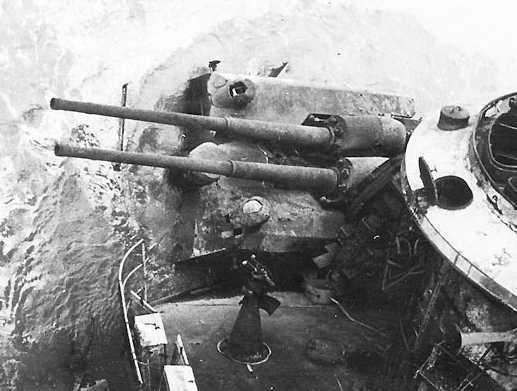
The U.S. Navy light cruiser USS Helena (CL-50), at Montevideo, Uruguay, on her shakedown cruise, sent a party to inspect the wreck of The German pocket battleship SMS Admiral Graf Spee.
The Inter-American Neutrality Committee meeting at Rio de Janeiro has recommended that the twenty-one. American republics adopt legislation to automatically intern any belligerent vessel that puts into an American port after violating the Western Hemisphere neutrality zone, diplomatic sources said tonight.
Battle of South Kwangsi: Japanese forces capture Pinyang and Szelung and attacking Wuning.
The Japanese announced today that they were pressing major offensives in Suiyuan and Kwangsi Provinces. Domei, Japanese news agency, quoted the Japanese Army headquarters at Canton as saying the Kwangsi drive was a “decisive campaign on an unprecedented scale.” It was declared that Japanese columns had turned the left wing of a Chinese army estimated at more than 300,000 men massed in the mountains northeast of Nanning, Japanese base in Kwangsi. That army is now encircled, Domei said, and faces “annihilation.” Reporting Japanese gains in Suiyuan, the news agency said mechanized columns had occupied Wuchen, about eleven miles north of Wuyuan, their first major objective.
Twenty-seven Japanese bombing planes, renewing raids that have drawn sharp protests from the French Government, dived again today at the French-operated Hanoi-Kunming Railway, killing or wounding 100 persons as they blasted a northbound passenger train fifty miles inside Chinese territory. Ten of those killed or hurt in the raid, which wrecked a bridge, destroyed the train and disrupted traffic on the line, were reported to be westerners. Many Frenchmen work on the rail line.
The foreign community in Tientsin does not expect satisfactory relief from the present food shortage, despite the announcement that five truckloads are permitted to pass the Japanese barriers daily. This quantity is insufficient to support a fifth of the population of the British concession alone, not counting the French concession. The situation is further complicated by the fact that about 3,000 poor White Russians, hitherto in the habit of purchasing their food outside the concessions, can no longer do so. Formalities for the entrance of the five truckloads daily are not yet completed. The Japanese insist permits for the food be handled in a manner similar to the restricted entry of coal, namely that the Japanese military supervise the purchase and loading of all supplies.
Dow Jones Industrial Average: 145.33 (+0.10)
Born:
David Jason, English actor (Only Fool and Horses, Open All Hours), in Edmonton, London, England, United Kingdom.
Alan Caddy, English musician (The Tornados), in Chelsea, London, United Kingdom (d. 2000).
Wayne Fontes, AFL defensive back and NFL head coach (AFL: New York Titans; NFL Coach of the Year, 1991; Detroit Lions, 1988-1996), in New Bedford, Massachusetts.
Ronnie Bull, NFL halfback and fullback (Chicago Bears, Phildelphia Eagles), in Kingsville, Texas.
Thomas M. Disch, American sci-fi author (“Genocides”, “102 H-Bombs”), in Des Moines, Iowa (d. 2008).
Died:
Vsevolod Meyerhold [Karl Kasimir Theodor], 65, Russian theatrical director and actor (“Houligan”), executed during the Great Purge.
Yefim Yevdokimov, 59, Soviet politician and member of the Cheka (executed).
Naval Construction:
The Royal Canadian Navy Flower-class corvette HMCS Matapedia (K 112) is laid down by the Morton Engineering and Dry Dock Co. (Quebec City, Quebec, Canada).


 History Diaries