[Ed: Someone needed to ram that stick up his ass. I said what I said. Not Sorry.]
Three U.S. airmen were wounded by Việt Cộng ground fire during a defoliation operation north of Saigon. Otherwise Red forces were observing a truce they declared for Tết, the lunar new year holiday this week.
A growing sense of frustration and pessimism in the Administration and in the Congress on the issue of South Vietnam was said today to account for President Johnson’s dispatch of another high-level mission to Saigon. The delegation, led by McGeorge Bundy, the President’s special assistant for national security affairs, departed by plane this evening. Mr. Bundy is carrying a long list of questions reflecting anxiety in the National Security Council and calls from Congress for more candid explanations of objectives and tactics. Mr. Bundy will try to assess the chances for establishing a viable government satisfactory to the many rival factions in Saigon. He will review new military recommendations by Ambassador Maxwell D. Taylor and will appraise the Ambassador’s role in the light of bitter controversies with several South Vietnamese leaders.
The President’s envoy will also gather material to prepare him for a new round of diplomatic maneuvering with Moscow on the Vietnam issue. The Soviet Premier, Aleksei N. Kosygin, is expected to visit North Vietnam in the next two weeks in an apparent effort to re-establish Soviet influence in Southeast Asia through offers of military and diplomatic assistance. The White House has not said much formally about the Bundy mission, for which President Johnson has held a series of preparatory meetings. Elsewhere in the Administration, officials readily listed the questions that perplex them and betrayed a growing uneasiness about their ability to save South Vietnam from collapse.
The frustration here expresses itself in annoyance not only with the rival political and military factions in South Vietnam but also with the Administration’s stance in recent weeks. There is widespread criticism of Ambassador Taylor’s intervention in December and January to avert the military coup d’état that came last week and of his estrangement from Lieutenant General Nguyễn Khánh, who re-emerged as strongman. There have also been complaints in the middle echelons of the State and Defense Departments and in Congress that President Johnson and his principal advisers failed to provide forceful leadership during the current period of political tension in South Vietnam. As a result there is in many quarters of the Administration and Congress an increasingly apparent uneasiness about the situation and the Administration’s response.
There was hope, therefore, that Mr. Bundy’s first visit to Saigon would result in more direction and cohesion, at least in Washington. He is expected to return next weekend not with new solutions but with some candid and authoritative assessments. The Administration expects to face once again some difficult decisions about Vietnam. The first involves the extent to which it can take sides among the military and civilian politicians who have been unable for two years to create an effective government. Interference tends to make powerful enemies; a lack of interference tends to result in drift and instability.
Then there is the question of Ambassador Taylor’s tenure. The former Chairman of the Joint Chiefs of Staff has been relatively immune from political attack at home, but his forceful manner has alienated important figures in Saigon. One official remarked, “The Ambassador has spent a good deal of energy recently pouring cement around himself.” The White House has been reasserting its “full confidence” in the Ambassador in the face of speculation that he would be named to succeed John A. McCone as Director of Central Intelligence. State Department officials said they foresaw no imminent move to recall Mr. Taylor, but they also noted that the Deputy Ambassador in Saigon, U. Alexis Johnson, had been expected to take charge of the embassy some time this year.
Other decisions will arise from Ambassador Taylor’s suggestions for new military measures in defense of South Vietnam against the Việt Cộng guerrillas, His recommendations remain secret but are thought to involve additional forays into North Vietnam, which is training and supplying the guerrillas and, according to the United States, has been sending increasing numbers of troops to aid them. Finally, a new challenge is awaited following Premier Kosygin’s trip to Hanoi. He is expected to try to woo the Government of Hồ Chí Minh away. from close association with Communist China by offering moral and material support, possibly including advanced surface-to-air missiles that Peking cannot provide.
Administration analysts suspect a larger purpose in the. Soviet leader’s visit. They believe Moscow may try to persuade Hanoi to let it take the lead in efforts to negotiate an American withdrawal from Vietnam. Direct contact with Washington looking toward diplomatic gain without wider military conflict is another thing Peking cannot offer the North Vietnamese. Washington has always been careful to leave the door open to eventual negotiations, and the Soviet move is expected to present some difficult diplomatic choices.
The Soviet Union appeared today to be preparing to bolster the air defenses of North Vietnam against possible attacks by the United States. Diplomatic analysts said that there were strong indications that such a program, together with expanded economic aid, would result from the forthcoming visit to Hanoi by Premeier Kosygin.
Troops defending Vientiane following an attempted coup d’état by rightist army officers clashed today with a force advancing from the east, Laotian military sources said. The sources said the brief clash at Ban Tha Naleng, 10 miles east of here, was between troops of the Vientiane military commander, General Kouprasith Abhay, and forces of General Khamkao Khamkong from Paksane.
The attacking force withdrew and prepared new positions. The coup, which was regarded as being directed at the army rather than the Government of Prince Souvanna Phouma, was reported to have fizzled 15 hours after it started. Earlier reports said General Khamkao Khamkong’s men were apparently advancing on Vientiane and there were fears he might be attempting to join rebel officers under Colonel Bounleut Sykosy. Vientiane’s eastern defenses were strongly reinforced.
For a time the colonel, who led three companies in an attempt to seize the capital Sunday night, defied an ultimatum from military leaders to withdraw from the city. Later he agreed to withdraw 15 miles. Colonel Bounleut Sykosy, a former military attaché in Washington, served as cabinet chief for General Phoumi Nosayan, Military sources said the attempted coup was aimed at regaining power for the rightwing leader and protecting him from being downgraded as a result of a reshuffle of the high command.
The United States has replaced the nine planes destroyed at an airport in Laos last month, the State Department said today. The incident, which resulted in the destruction of a sizable portion of the Laotian air force, has been ruled an accident. Officials said that a machine gun on one of the craft apparently fired accidentally, setting off gasoline and munitions explosions that destroyed the other planes.
Cambodia protested today against what was termed aggression by South Vietnamese forces January 26 against the Cambodian village of Chambak, in Kompong Cham Province. Cambodia charged that two militiamen were killed and four wounded.
French Foreign Minister Maurice Couve de Murville will visit Washington this month for talks with Secretary of State Dean Rusk and, probably, President Johnson. The Foreign Minister will leave Paris February 17 for discussions that French sources hope will improve relations between the two governments in the field of foreign policy. But French and United States diplomats conceded that there was little prospect of harmonizing policies in the two areas where they are furthest apart: nuclear strategy and the West’s attitude toward Southeast Asia. President de Gaulle’s Government has been encouraged by the reduction of United States pressure for the establishment of a mixed-manned nuclear fleet linked to the North Atlantic Treaty Organization.
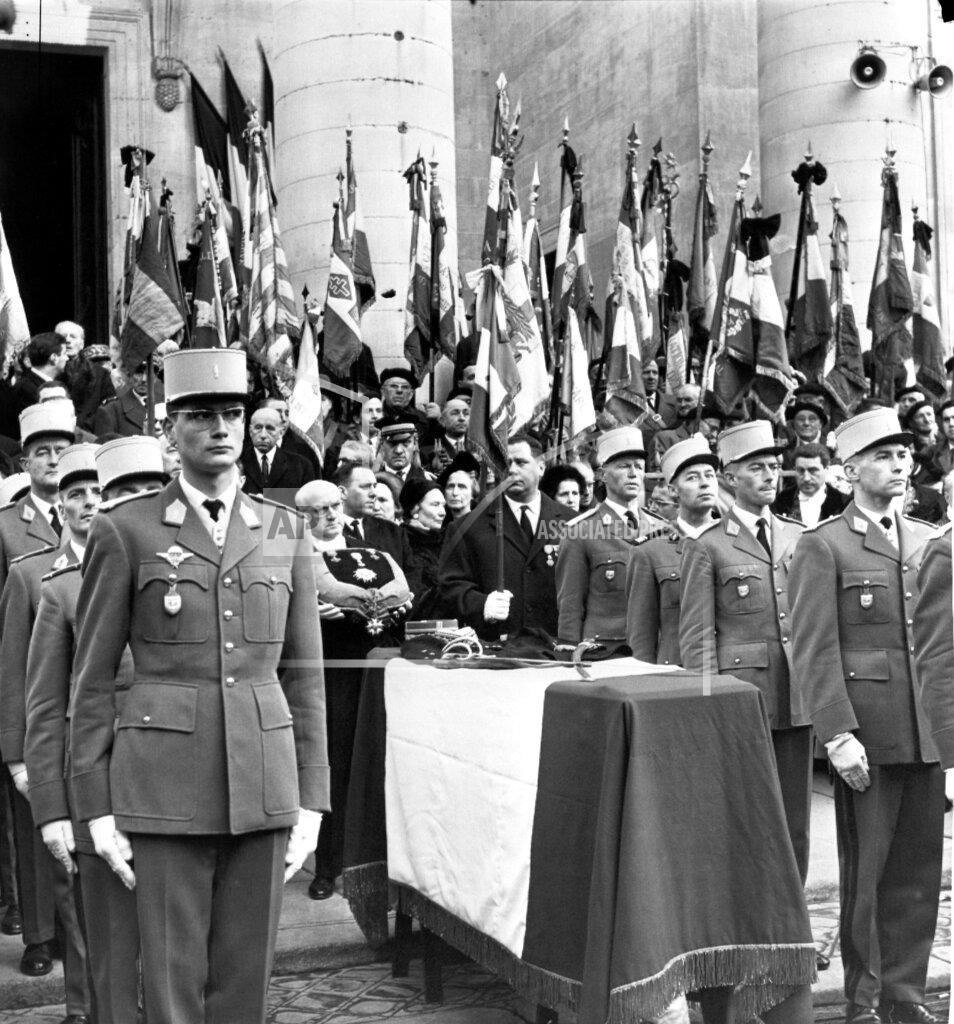
An Anti-Gaullist crowd of 10,000 staged a demonstration outside the church where services were conducted for Gen. Maxime Weygand who was refused a military funeral at an Army Shrine.
Twenty-one miners were killed today by a gas explosion in a coal pit near Lens, in the northeastern corner of France. There were no survivors.
British Prime Minister Harold Wilson, in a rowdy session of the House of Commons, disclosed today major plans to tighten Britain’s economy and make it more competitive and productive. Prime Minister Harold Wilson announced to the House of Commons that the Cabinet had voted to cancel three expensive defense projects. Two were for aircraft capable of vertical takeoffs and landings (VTOL): the Armstrong Whitworth AW.681 was a large military transport plane, and the Hawker Siddeley P.1154 was a supersonic fighter aircraft. The third, the British Aircraft Corporation TSR-2 was a high-speed attack and reconnaissance jet. Wilson said that the cost of the research and development for the TSR-2 alone had already reached 750,000,000 British pounds, more than eight times the original forecast, and that each of the 150 planned TSR-2s would cost four million pounds apiece.
A vote on a Conservative Party motion of no confidence in the government of Prime Minister Wilson, made in the House of Commons and intended to remove Wilson from office, failed by 17 votes. Voting along party lines, the parties disapproved the censure motion, a resolution describing Wilson’s decisions in his first 100 days as premier as “hasty and ill-considered”, with 289 Conservative members voting in favor, and 306 Labour members against. The nine MPs from the Liberal Party abstained.
Portuguese Shock troopers charged student demonstrators in the heart of Lisbon today, causing panic among shoppers and shopkeepers. Several hundred university students gathered on the Rua de Santa Justa in the downtown shopping area and screamed “Liberty!” in protest against a trial of four students that opened here today. The defendants were accused of membership in the Communist party, which is outlawed. They have denied the charge. Steel-helmeted policemen armed with submachine guns, rifles, and tear-gas guns broke up the demonstration, striking heavily with rifle butts and batons at students or passersby who did not move out of the way fast enough.
Australia is expected to commit combat troops to service in Malaysian Borneo soon, reliable Australian sources in Canberra said tonight. The move would probably involve Australians in fighting with the Indonesians, who have been making raids into the Malaysian state of Sarawak and who are reported to be building up their strength along the Sarawak border for bigger attacks. Malaysian and British troops have been engaged in guerrilla warfare against Indonesian forces since the Malaysian Federation was formed in 1963. President Sukarno of Indonesia strongly opposes the federation of former British territories, contending it is a device to perpetuate colonialism.
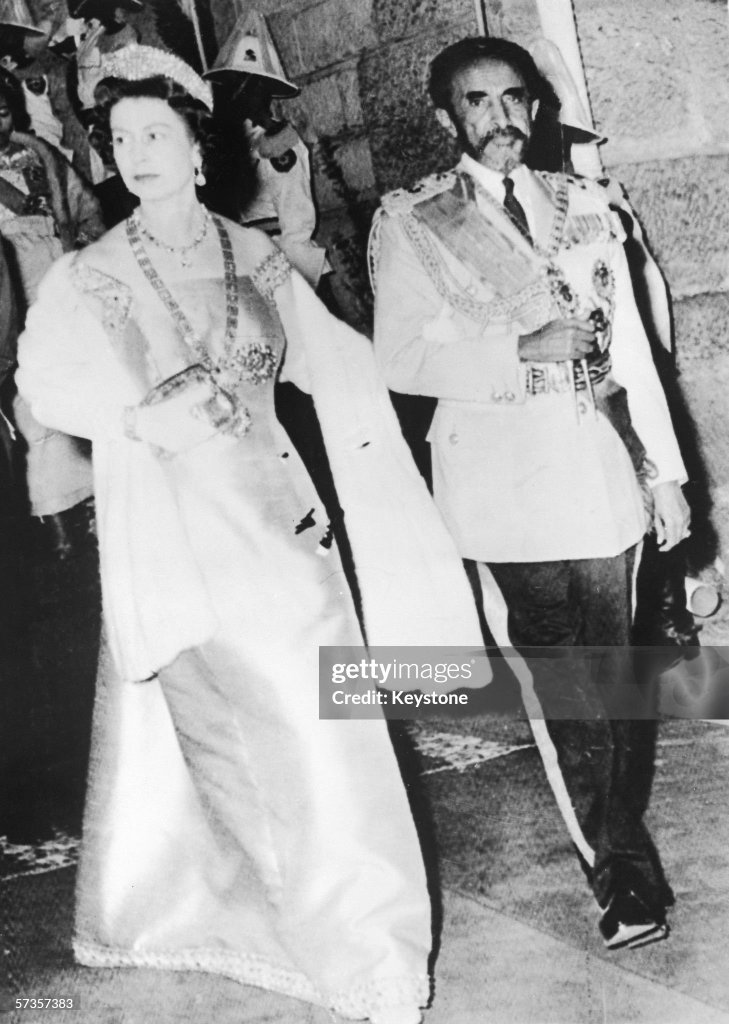
Queen Elizabeth and the Duke of Edinburgh, on the second day of their visit to Ethiopia, were guests of honor today at a garden party at the British Embassy. They met people from Commonwealth countries who live here, including citizens of Malawi and Tanzania, which were formerly Nyasaland and Tanganyika and Zanzibar.
The United Nations Secretary General appealed today to all United Nations members to cut the costs of special meetings. U Thant reported to the General Assembly that the growing number of special meetings, especially those away from headquarters, had produced a “disquieting” prospect for the future. Secretary General Thant said that even in 1964 there would have been a shortage of personnel and funds for some of the outside meetings if the opening of the General Assembly had not been delayed. The session, scheduled to open in September, was put off to December 1.
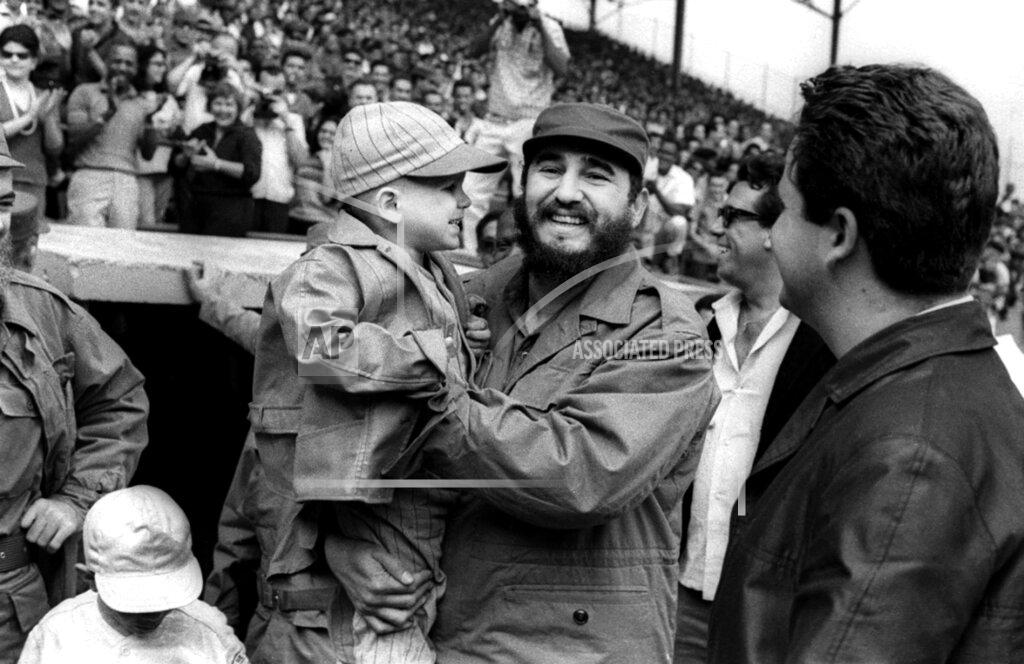
Four captured anti-Castro guerrillas said on Cuban television they had received U.S. and Puerto Rican aid in their operation and were surprised by the ‘hostile reception’ they received from Cuban peasants. A captured anti-Castro guerrilla leader, Eloy Gutierrez Menoyo, said on Cuban radio and television tonight that he had used Puerto Rico as a way station to Cuba. One of his aides said that they had been trained by the American CIA.
West Germany’s ambassador, Georg Federer rushed home from Cairo to tell his government there is no hope the United Arab Republic will withdraw its invitation to East German Communist boss Walter Ulbricht for a visit.
The United Arab Republic is not planning to recognize East Germany, authoritative Egyptians said tonight.
Prince Abdel Rahman bin Yahyia, deputy premier of the rebel royalist regime in Yemen, charged today that Egyptian forces were preparing a new offensive against the royalists.
Communist China is reorganizing its armed forces to turn out soldiers better equipped to use advanced weapons, according to analysts of Chinese affairs.
The chief rabbi of the Sephardic community of Britain appealed to Spain today to accord full legal status to Judaism.
Frol R. Kozlov, who once was regarded as Nikita S. Khrushchev’s heir apparent, was given a state funeral in Red Square today by practically the entire Soviet leadership. Former Premier Khrushchev was not among the mourners.
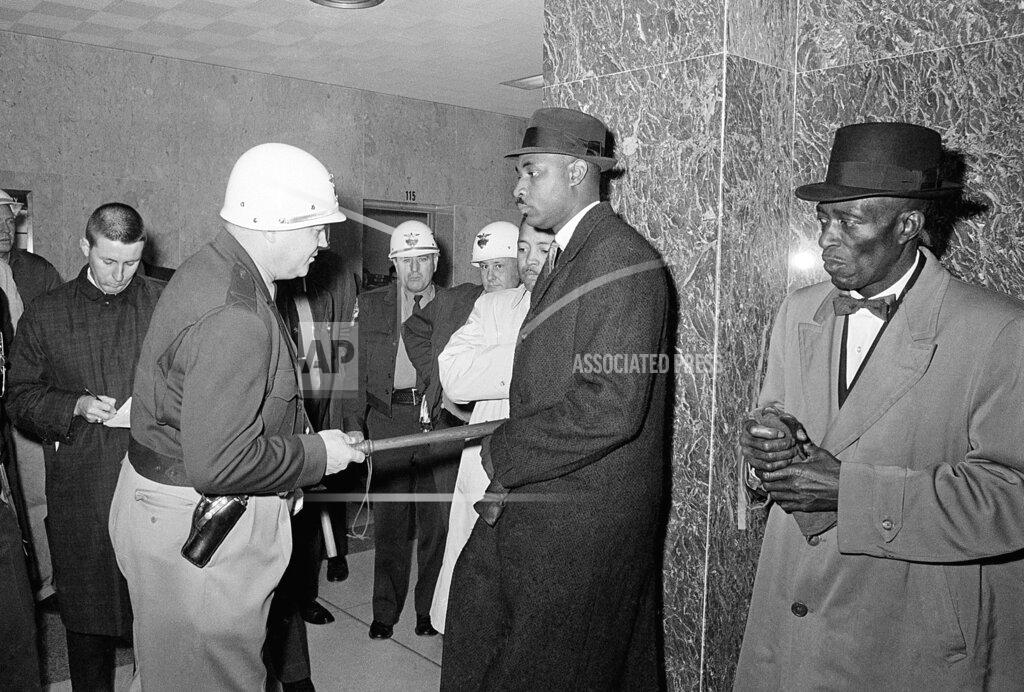
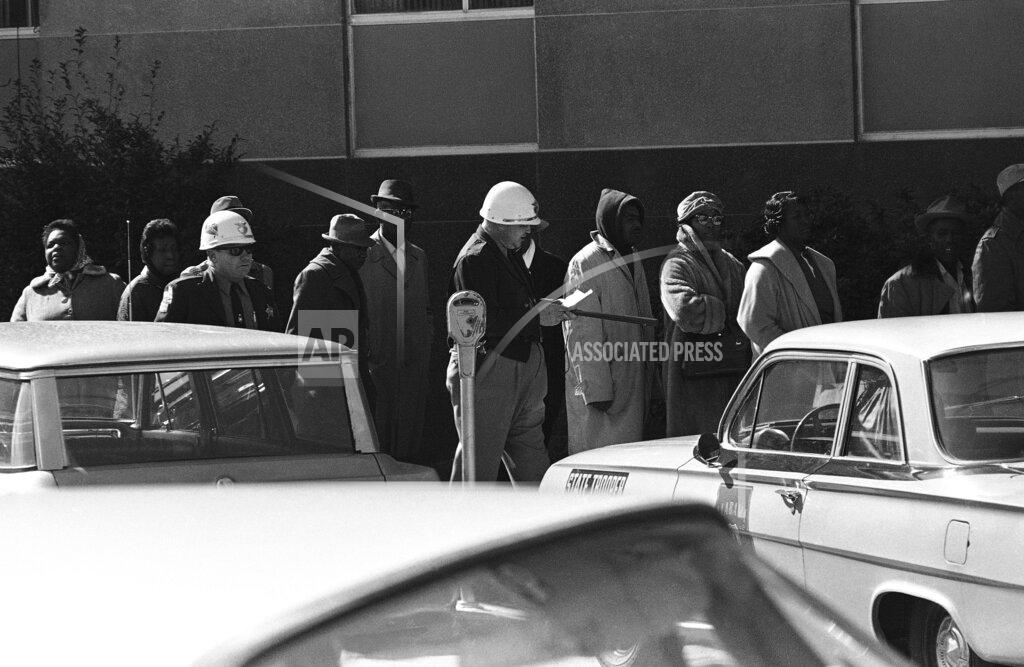
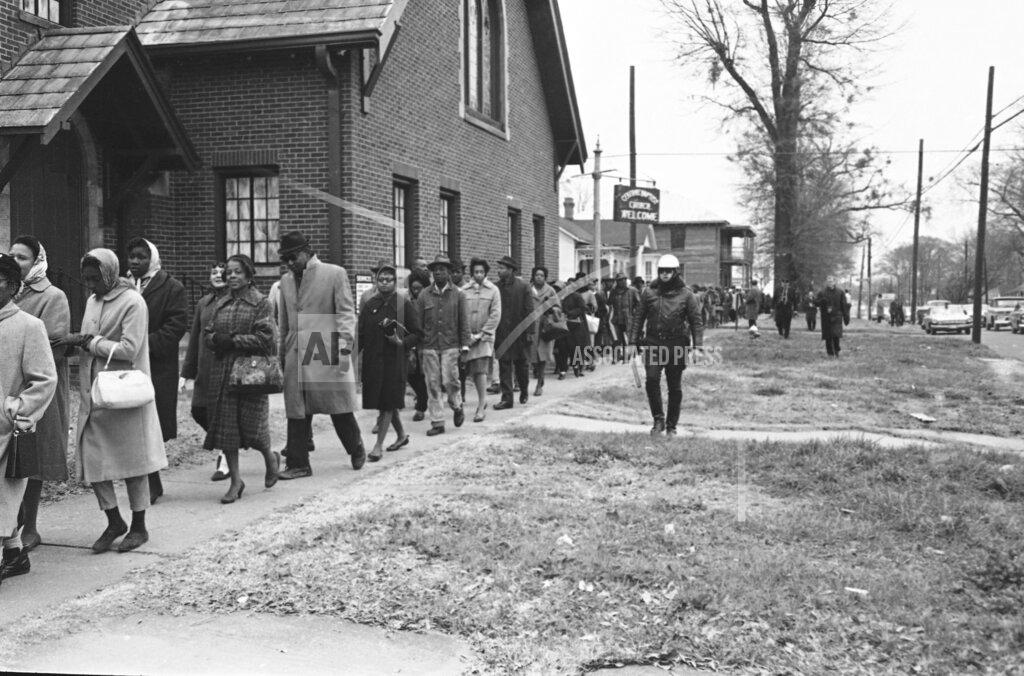
Police in Selma, Alabama, jailed an additional 520 African-American protesters, bringing the total number of people to 1,288. While the Rev. Dr. Martin Luther King Jr. lay on his jailhouse bunk reading the Bible today, about 520 of his followers were arrested in scattered clashes with the authorities. Black high-school students were picked up by the hundreds when some of them broke ranks during a march and started running through the alleys to get to the Dallas County Courthouse. Only a few minutes before, Sheriff James G. Clark arrested about 120 Black adults on contempt-of-court charges as they stood in line outside the courthouse, where they had sought an audience with the County Board of Registrars.
It was the second consecutive day of mass arrests in Dr. King’s campaign to speed the registration of Black voters in the Alabama Black Belt. Dr. King and more than 770 others were taken into custody yesterday. The arrests had the effect of rejuvenating the Black community just as the campaign seemed to be on the verge of dying. An aide of Dr. King said the civil rights leader now expected to be in Selma for “some time to come.”
Of those arrested yesterday, all but Dr. King and a few others were released during the night. Despite a bitter cold wave, most of them were back at the Browns Chapel Methodist Church early today ready to demonstrate again. Sheriff Clark, shivering in his Eisenhower jacket, started the day by coming to the church and taking away John Love, the local head of the Student Nonviolent Coordinating Committee. Mr. Love — a young New York Black who wears sneakers, tailored dungarees, a red jacket and one earring — was charged with contributing to the delinquency of minors in connection with yesterday’s school boycott..
The Rev. Andrew Young. program director of the Southern Christian Leadership Conference, of which Dr. King is president, called a news conference in a back room of the church to explain where the movement was going. “Selma, a brutal city in the past, suddenly has become calm,” he said, referring to a new city administration that has striven for impartial law enforcement. “Actually, this is just a sophisticated source of oppression. They put on a nice, polite image but keep you enslaved.” Mr. Young said that if Dr. King left Selma now local Blacks would be intimidated because of the demonstrations. Therefore, he said, the campaign will continue, but because of the complexity of the situation, decisions on how to proceed will be made on a day-to-day basis.
A few minutes later, the adults marched to the courthouse in small groups so as not to be arrested, as some were yesterday, for parading without a permit. They were led by Hosea Williams, one of Dr. King’s assistants. Sheriff Clark met leaders of the group just inside the door and told them the Board of Registrars was closed. It is scheduled to be open only two days this month. When Mr. Williams refused to leave, the sheriff prodded him with his billy club as the group backed out the door and stood in line along the sidewalk. The sheriff came out and marched up and down the line, reading an order from Circuit Judge James A. Hare that court was in session and no demonstrations would be permitted. The marchers refused to disperse and the sheriff arrested them on charges of contempt and hauled them away in yellow school buses.
Lester G. Maddox of Atlanta, depicted as a man who has grossed $130,000 selling segregationist souvenirs, swore in Federal court today that he would die before serving an integrationist at his restaurant. Mr. Maddox, on trial for contempt of court, said, however, he would serve a “Black segregationist.” He is under court order to serve all customers. A “Black segregationist,” Mr. Maddox said, is a Black who could convince him that he did not believe in integration or Federal interference with a man’s right to operate his own business.
Mr. Maddox said he would not only serve a “Black segregationist,” but also “would be glad to sit down at the table with him.” Federal District Judge Frank A. Hooper, who had ordered Mr. Maddox to serve all customers, was expected to take the contempt charge under advisement tomorrow after final arguments for both sides. Testimony ended today. The charges were brought by four Blacks who contend that Mr. Maddox struck and pushed them when they tried to be served at his restaurant.
President Johnson was reported ready to point American agriculture in a new direction in his farm message to Congress this week.
President Johnson donned a black tie tonight for a White House dinner honoring Vice President Humphrey, Speaker of the House John W. McCormack and Chief Justice Earl Warren.
Critics warned Tuesday that some aspects of President Johnson’s $1.25 billion school-aid bill face constitutional challenges on the question of separation of church and state. President Johnson’s $1.25 billion school-aid bill came under heavy attack today from a constitutional lawyer and the American Civil Liberties Union.
The Senate Rules Committee submitted evidence of flaws in the charge that there was a $25,000 payoff in the Bobby Baker case.
Congressional committees disclosed plans to investigate the possible intrusion of racketeers into financial institutions and the operation of some union-run welfare plans that seldom pay benefits. Charges that criminals have been gaining control of banks and may have been responsible for some recent bank failures were made today in both the House and Senate.
A former army private was arrested in his Chicago home after a federal grand jury accused him of delivering 15 U.S. passports to Soviet representatives in East Berlin.
President Johnson asked Congress today to restore “the historic right” of self-government to the District of Columbia.
Mrs. Lyndon B. Johnson announced today her first move in a project to make America more beautiful, beginning with the nation’s capital. She asked 20 Americans concerned by position, profession or inclination to meet with her and Secretary of the Interior Stewart L. Udall at the White House February 11. They will help form a Committee for a More Beautiful Capital. Mrs. Johnson hopes the group will inspire other American cities to save, increase and protect what the President called the nation’s “green legacy for tomorrow” in his State of the Union message.
The Atomic Energy Commission is considering an additional cutback in the production of enriched uranium for atomic weapons, commission officials disclosed today.
Scientists have found a mite living 309 miles from the South Pole, the closest that any living animal has been found to the pole.
The severest weather of the winter covered the East and sent temperatures to zero in the South with no relief expected before the weekend.
Missing salesman Lawrence Joseph Bader was spotted at the National Sporting Goods Show in Chicago, United States, by a former classmate almost 8 years after he had vanished. Bader had been missing since May 15, 1957, and had been declared legally dead in 1960, enabling his wife to collect $40,000 of life insurance. Shortly after his disappearance in 1957, he had become known in Omaha, Nebraska, as John Francis “Fritz” Johnson, had married again, and had become a sportscaster at the KETV television station. After multiple confirmations of his identity, Johnson still denied having any memory of being Lawrence Bader, and offered to have his fingerprints compared to Bader’s army record; the prints were a match and specialists concluded that he had suffered from amnesia for eight years. He died of cancer, in Omaha, on September 16, 1966.
The U.S. National Science Foundation announced that a team of scientists, led by Keith A.J. Wise of the Bishop Museum of Hawaii, had discovered living animals “in a miniature garden high above a desolate Antarctic icecap 309 miles from the South Pole.” The tiny mites, only one quarter of a millimeter (or 1/100 of an inch) in length, were discovered in soil in the Queen Maud Mountains.
Joe Orton’s play “Loot” premieres in Brighton.
Dow Jones Industrial Average: 903.77 (+0.09)
Born:
Harry Swayne, NFL tackle (NFL Champions, Super Bowl 32, 33-Broncos, 1997, 1998; Super Bowl 35-Ravens, 2000; Tampa Bay Buccaneers, San Diego Chargers, Denver Broncos, Baltimore Ravens, Miami Dolphins), in Philadelphia, Pennsylvania.
Kirby Jackson, NFL cornerback (Los Angeles Rams, Buffalo Bills), in Sturgis, Mississippi.
Mel Bratton, NFL running back (Denver Broncos), in Miami, Florida.
Paco Craig, NFL wide receiver (Detroit Lions), in Santa Maria, California.
Alan Dial, NFL running back (Philadelphia Eagles), in Anniston, Alabama.
Wayne Groulx, Canadian NHL centre (Quebec Nordiques), in Welland, Ontario, Canada.
Catherine Elizabeth “Cady” Huffman, Tony Award-winning American stage actress; in Santa Barbara, California.
Died:
G. N. Watson, 79, English mathematician best known for Watson’s lemma.
Richard P. Blackmur, 61, American critic, poet and publisher (“Good European”).
Richard Würz, 79, German composer, and music critic.



 History Diaries