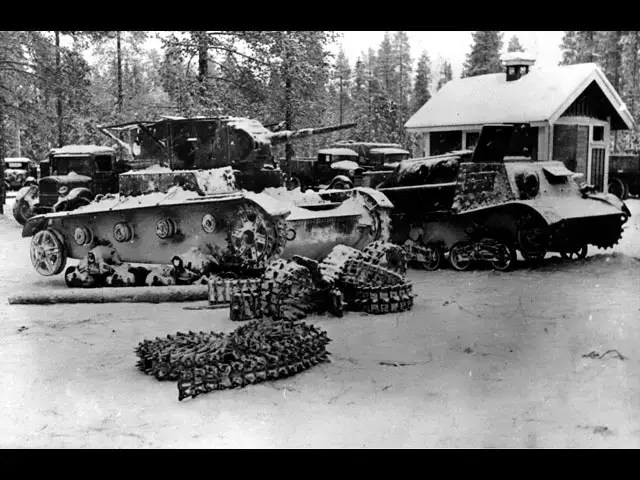
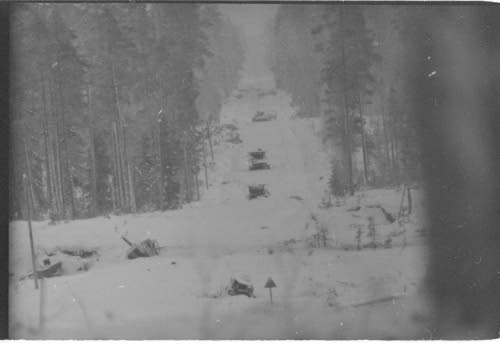
In the Winter War, the Battle of Raate Road began. Colonel Siilasvuo determines to smash the Russian 44th Division which has been trying to advance along the Raate road. The Finns decide that now is a good time to start finishing off the trapped Soviet relief column on the Ratte road. The Soviets could easily walk out through the woods — the Finns don’t have nearly enough men to surround them — but they remain passive. While this may seem unwise, they are forbidden to retreat by orders. Those disobeying such orders invariably are shot upon their return to the USSR. The men also largely are from the Ukraine and know nothing about the frozen lakes and forests of Finland.
The Finns for a change have numerical superiority. They deploy the 64th, 65th, and 27th Infantry Regiments, and the 22nd Light Unit, 1st Ranger Battalion and 15th Detached Battalion. The Soviets on the Ratte road only have 7 battalions, but they have extensive armor and artillery — which is virtually useless in the forest except as immobile shelter.
The Finns start attacking at 14:00. The 1st Ranger Battalion and the 1st Battlion 27th Infantry Regiment attack the Soviet 2nd Battalion, 146th Rifle Regiment (Captain Pastukhov). The Soviets hold their position (they have nowhere to go) and inflict heavy casualties on the Finns. Late in the day, the attack resumes, and this time the Finns do better. The Soviets sustain heavy casualties (211 killed or wounded) and Pastukhov has to withdraw down the road. The nearby 146th Rifle Regiment sends its 1st Battalion, which manages to restore the situation, but after they Pastukhov and his men are completely isolated and on their own, without supplies or reinforcement.
General Siilasvuo sends 1,000 skiers of the 1st Battalion of the 27th Infantry Regiment under Captain Eino Lassila 5 km down the ice road parallel to the Ratte road. After eating a hot meal, they then traverse three miles of forest and deep snow until, at 23:00, they finally are in position on a hill overlooking the stranded 3rd Battalion of the 122nd Artillery Regiment (Captain Revchuk) of the Soviet 44th Rifle Division on the road. The Soviets have insufficient sentries and their security arrangements are lacking, assuming the deep forests protect them.
The Finns attack a 500 m section with 6 Maxim machine guns and wipe out the 9th Battery to the last man. Many of the remaining Soviets flee into the woods. Captain Revchuk tries to fire the artillery himself with a few remaining men, then runs down the road toward the nearby 146th Rifle Regiment. He brings back two T-20 Komsomolets gun tractors, but is refused infantry support (the 146th is between two separate outfits being attacked). The Finns quickly destroy the two T-20s, and Revchuk and his remaining men flee back to the 146th Rifle Regiment.
In summary, the Finns have begun separating the different sections of the 20-km long Soviet convoy and destroying it in detail.
Soviet forces are probing the Mannerheim Line. Finnish forces repulsed the Soviet probing assault in the Taipale area of the Mannerheim Line.
In Ladoga Karelia, two battalions of the Finnish 13th Division launch an assault to the north of Ruhtinaanmäki.
Soviet troops capture Viitavaara on the River Aittojoki for the first time.
The numbering of some of the Finnish divisions is changed in order to confuse Soviet intelligence.
The enemy bombs the cities of Oulu in the north and Turku in the southwest. In Oulu, four people are killed and 16 buildings destroyed. Altogether 30 enemy aircraft are used in the attack on Turku. The Soviets burn down the historic castle there. Soviet warplanes bomb Jyväskylä, in central Finland.
The Finnish cargo ship Leo was bombed and sunk off Turku, Finland by Soviet aircraft. She was later raised and repaired.
The Swedish sports reporter Torsten Tegnér proposes a bandy match to raise funds for Finland.
Ten well-known Russian émigré writers, including Nobel Prize winner Ivan Bunin, issue a communiqué in Paris condemning the Soviet Union’s invasion of Finland.
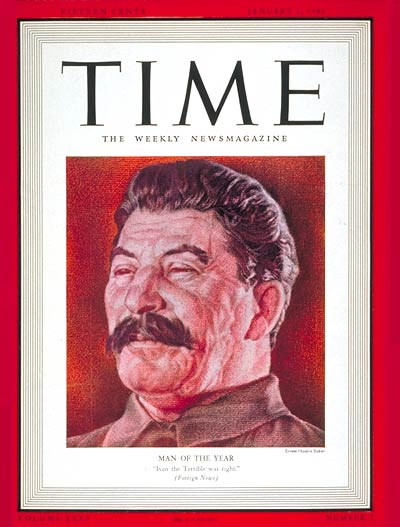
Joseph Stalin is named TIME Magazine’s ‘Man of the Year’.
The Kriegsmarine, acting pursuant to instructions from Adolf Hitler, orders U-boats to attack all Greek merchant ships in the zone surrounding the British Isles which was banned by the United States to its own ships and also merchant ships of every nationality in the limited area of the Bristol Channel.
Great Britain increased the age of conscription to 27 in the United Kingdom, thus adding two million potential conscripts for military service.
In Britain, fifty women resign from the Auxiliary Fire Service in protest at being told to scrub floors.
Harold Wilson, future 68th Prime Minister of the UK (23) weds poet Mary Baldwin (23) in the chapel of Mansfield College, Oxford, England.
Between the start of the European War on 1 September 1939 and this date, 15,600 British men registered themselves as conscientious objectors.
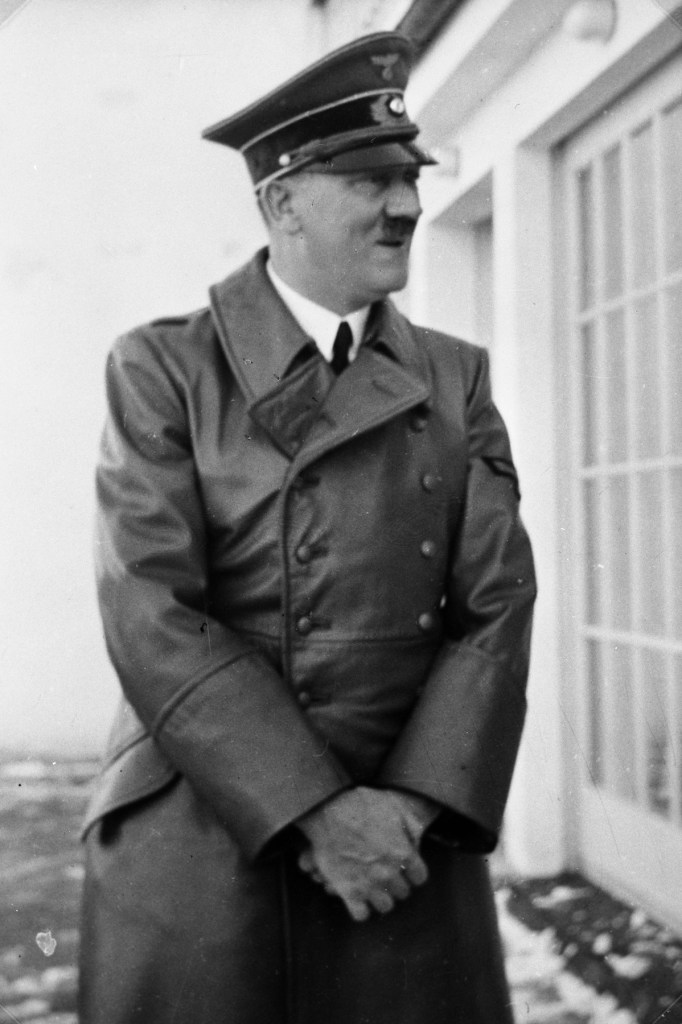
Unity Mitford, 25 year old daughter of Lord Redesdale and close friend of Adolf Hitler has left Germany for England in a special ambulance train arranged by the Führer, it was revealed in Berlin tonight. Miss Mitford is seriously ill from a revolver bullet wound in the head and is being escorted by her mother and her sister Deborah, according to reports published here. Lord Redesdale waited for his daughter’s arrival all day today at an English channel port, but she was not aboard when the boat arrived. The last leg of her journey probably will be by air. Miss Mitford was found wounded in a Munich, Germany, park early in September. She was reported to have been depressed by the outbreak of war between Britain and Germany.
This month, the Cliveden Group in England, led by Lady Astor, actively pressures the British government to declare war on the USSR for invading Finland. They believe the Communists, not Hitler, are Britain’s real enemies.
Also this month, the killing of mental patients by means of carbon monoxide gas is tried out in the jail at Brandenburg. By September 1941, more than 70,000 German mental patients will have been “euthanized” in hospitals at Grafeneck, Brandenburg, Bernburg, Hartheim, Sonnenstein, and Hadamar, using carbon monoxide provided by the I.G. Farben corporation.
Rail links with Spain are reestablished in France after having been closed for three and one half years due to the Spanish Civil War.
Generalissimo Franco officially denounces the Jews and Freemasons, quoting directly from “The Protocols of the Elders of Zion.”
During addresses to the nation, the Danish prime minister and foreign minister express doubts about the likelihood of continued Danish independence in 1940.
Following anti-Soviet demonstrations in Rome due to the Winter War, the Soviets recall their ambassador to Italy, and the Italians recall theirs from Moscow.
Heavy flooding strikes areas across Turkey. Flooding, after the major earthquake, causes about 32,000 deaths.
German aircraft bombed RAF Coastal Command at Sullom Voe in the Shetland Islands, Scotland, United Kingdom, damaging light cruiser HMS Coventry and ground facilities with the loss of one Ju 88 bomber. It is a key flying boat base which has Catalinas and Sunderlands. The RAF Coastal Command Gloster Gladiators flying out of RAF Shetland Fighter Flight at Sumburgh Aerodrome intercept them and shoots down a Junkers Ju 88.
Gunner LAC T. Gibbin became the first airman from RAF Waddington in Lincolnshire, England, United Kingdom to be killed in World War II when Spitfire fighters from No. 602 Squadron intercepted returning Hampden bombers and, mistaking them for German aircraft, shot down two of the bombers. The other seven crewmen were picked up by fishing boats.
Identification Friend or Foe (IFF) coding was introduced to identify Bomber, Coastal and Fighter Command aircraft for the RAF air defense system. VHF Radio Telephone installations were also in completed eight selected sectors.
The Lorraine was transferred to 2nd Battleship Division of 1st Squadron of the French Navy.
The Swedish cargo ship Lars Magnus Trozelli was torpedoed and sunk by U-58 in the North Sea (58° 14’N, 1° 36’W) with the loss of 7 of her 22 crew. At 10.58 hours the unescorted and neutral Lars Magnus Trozelli (Master G. Swerin) was hit by one G7e torpedo from U-58, broke in two and sank about 50 miles northeast of Frazerburgh. The master and 14 crew members were picked up the same day by the Norwegian steam merchant Ask.
U.S. freighter City of Flint, her odyssey almost at an end, is damaged in collision with British steamship Baron Blytheswood. Repairs to City of Flint will keep her at Narvik, Norway, for another six days.
German steamer Johann Schulte (5,254grt) lost her propeller and went aground at Buholmråsa near Trondheim. All 36 German sailors and two Norwegian pilots were rescued by the Norwegian steamer Dronning Maud.
The British fishing vessel Young Harry was sunk by a mine in the North Sea off Folkestone, Kent with the loss of all four hands.
The Turkish cargo ship Turkan foundered in the Black Sea with the loss of all 20 crew.
U.S. freighter Exeter is detained at Gibraltar by British authorities.
Convoy OA.64 departs Southend.
Convoy OB.64 departs Liverpool.
Convoy OG.13F departs Milford Haven for Gibraltar.
Convoy SL.16 departs Freetown for Liverpool.
The War at Sea, Monday, 1 January 1940 (naval-history.net)
A German air raid on Sullom Voe caused little damage to either port facilities or the ships in the harbour, at this time anti-aircraft cruiser COVENTRY as guard ship, destroyer AFRIDI to refuel, tanker WAR DIWAN (5551grt), and MANELA as a depot ship for sea planes. COVENTRY did suffer concussion from a near miss which unseated machinery.
Battleship REVENGE and destroyers MOHAWK, MASHONA, KHARTOUM and KINGSTON arrived at Plymouth. MASHONA went on to Chatham arriving on the 2nd for repairs, while the other three destroyers departed on the 3rd and arrived back at the Clyde on the 4th. REVENGE began a refit which completed on the 23rd.
Destroyer ILEX departed the Clyde for Liverpool for periodic docking.
Armed merchant cruiser MONTCLARE departed the Clyde on Northern Patrol.
Sloop HASTINGS collided with anti-submarine trawler BRADMAN (452grt) off Lowestoft at 2125, both reaching Sheerness at 1200/2nd with BRADMAN escorting HASTINGS.
Convoy HN.6 of four British, 17 Norwegian, eight Swedish, six Finnish and one Panamanian ship departed Bergen escorted by destroyers EXMOUTH, ECLIPSE, ENCOUNTER, and ESCAPADE. On the 3rd, U-58 sank Swedish steamer SVARTON. Seven ships in the convoy detached to the west coast of Britain and the rest reached Methil without further incident on the 4th.
Convoy OG.13F of 25 ships was formed from OB.63GF out of Milford Haven escorted by destroyers WANDERER and WITHERINGTON, and OA.63GF out of Southend escorted by sister ships WOLVERINE and WHITSHED. WANDERER and WITHERINGTON were with OG.13F from the 1st to 3rd, when WANDERER joined HG.13F. Sloop ABERDEEN and destroyer WATCHMAN escorted the convoy from 30 December to 7 January. En route, 11 steamers from OG.13 joined OG.13F, which arrived at Gibraltar on the 7th.
Convoy OA.64 departed Southend escorted by destroyers WITCH and WREN from the 1st to 3rd. Destroyers AMBUSCADE and VANESSA joined from the 3rd to 4th when the convoy dispersed.
Convoy OB.64 departed Liverpool escorted by destroyer VERSATILE and sloop DEPTFORD until the 4th.
U-58 sank Swedish steamer LARS MAGNUS TROZELLI (1951grt) in 58 14N, 01 38W; seven crew were lost and the survivors picked up by Norwegian steamer ASK (1541grt).
Convoy FN.62 departed Southend, escorted by sloops PELICAN, WESTON, and HASTINGS, and arrived in the Tyne on the 2nd.
Convoy FS.62 departed the Tyne, escorted by destroyer VIVIEN, sloops FLEETWOOD and BITTERN, and arrived at Southend on the 2nd.
Destroyer MONTROSE, escorting a convoy west of Hartland in 50 55N, 05 18W, attacked a submarine contact without success.
Convoy SA.24 departed Southampton with two steamers, escorted by sloops FOXGLOVE and ROSEMARY, and arrived at Brest on the 3rd.
American steamer CITY OF FLINT (4963grt) was damaged in collision with steamer BARON BLYTHSWOOD (3668grt) at Narvik, but was able to leave on the 7th for Baltimore.
German steamer JOHANN SCHULTE (5254grt) lost her propeller, went aground near Trondheim and her crew were rescued by a Norwegian steamer.
Rear Admiral S S Bonham-Carter hoisted his flag in battleship ROYAL SOVEREIGN at Devonport on the 1st and relieved Vice Admiral L E Holland as Admiral Halifax Force, 3rd Battle Squadron. At this time Halifax Force consisted of battleships RESOLUTION and REVENGE, light cruisers EMERALD and ENTERPRISE and armed merchant cruisers ASCANIA, ALAUNIA, AUSONIA and LACONIA. Of these, REVENGE and ENTERPRISE were refitting in Home Waters. After repairing at Devonport, ROYAL SOVEREIGN left on the 15th for Halifax and battleship MALAYA, which arrived shortly at Halifax, departed on the 14th for convoy duty with HX.16.
Heavy cruiser SUSSEX had departed Simonstown on 27 December, and transferred to Force I in the Indian Ocean to replace sister ship CORNWALL. She arrived at Mauritius on the 1st, proceeded to Colombo where she arrived on the 6th, and on the 15th left for patrol, from which she returned on the 18th. On the 25th, SUSSEX departed Colombo with aircraft carrier EAGLE and Australian light cruiser HMAS HOBART, reaching Trincomalee on the 26th. After that her movements were — departed Trincomalee on the 28th, arrived Colombo the same day, left on 1 February, arrived Aden on the 8th, went on patrol and returned to Aden on the 12th, stayed until the 18th, then left for Colombo, arriving on 25 February.
Convoy SL.15 departed Freetown, escorted by armed merchant cruiser SALOPIAN from the 1st to 16th, and on the 14th was joined by convoy SLF.15 along with its escorts, armed merchant cruiser PRETORIA CASTLE on the 14th and submarine CLYDE on the 15th. Destroyers VANOC, VERITY, VETERAN, and WINCHELSEA relieved the AMCs and submarine on the 16th and stayed until SL.15 arrived on the 19th.
German steamer TACOMA (8268grt) was interned at Montevideo by the Uruguayan authorities.
In the vanguard of the army of congressmen returning to the capital for the opening of the session on Wednesday was Vice President John N. Garner, who recently announced himself available as a candidate for the Democratic nomination for President. Mr. Garner parried all attempts to engage him in a political discussion. Official Washington is interested in the reception which President Roosevelt will give his second in command when the two meet at the White House, probably tomorrow or Wednesday morning. Garner’s announcement of his candidacy has been taken as a blow at the third term movement sponsored by radical Democrats. The two veteran politicians are expected to carry off the meeting in a jocose fashion. The Vice President is expected to maintain for some time his policy of not talking for publication. But as usual he will be busy in senate cloakroom discussions, working quietly with the regular Democrats who are opposed to the President’s New Deal.
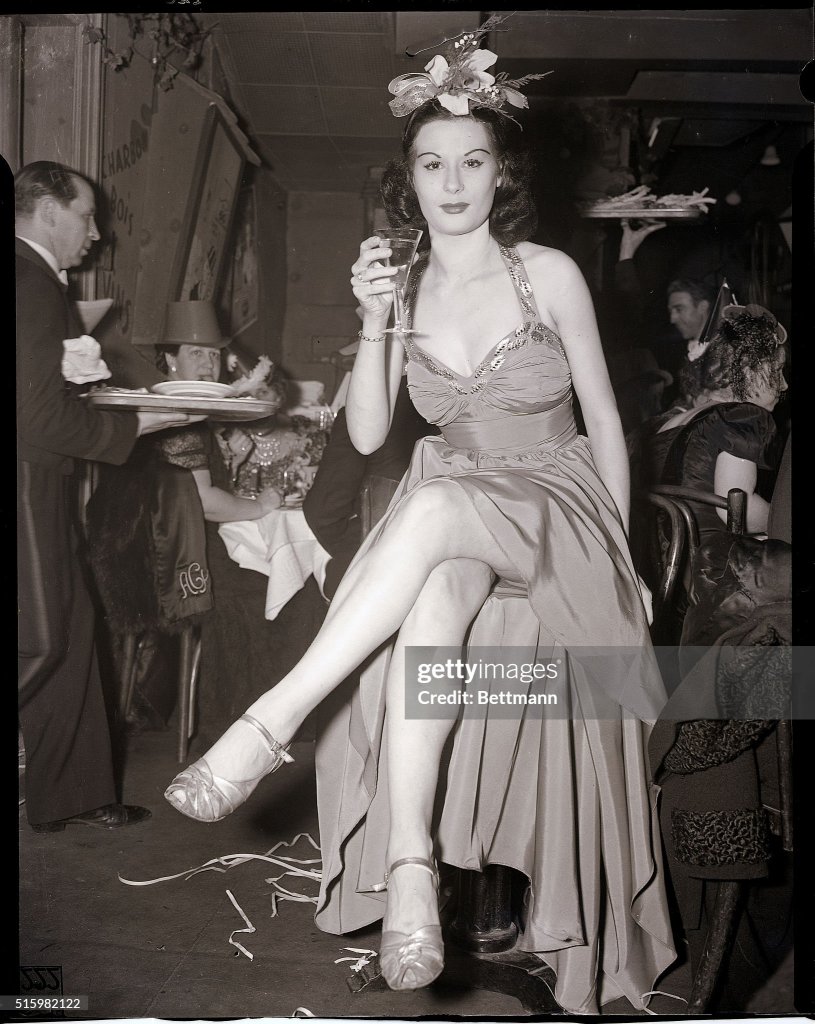
Nineteen-forty arrived frostily last night, welcomed by an estimated 1,250,000 New Yorkers between Times and Duffy Squares with a raucous demonstration that combined elements of the original Armistice Day, any Fourth of July and a pre-depression ticker-tape parade.
Attacking President Roosevelt’s government spending theory as fallacious and provocative of eventual national disaster, the National Economy league today raised the question: “Can the federal budget ever be balanced?” The league poses this question on the eve of the submission to congress of Mr. Roosevelt’s budget message in which the President for the eighth time will forecast a deficit. The budget must be balanced by a radical reduction of expenditures, says the league, which does not think, however, that such retrenchment will be achieved until the people become aroused to the danger and decree an end to deficit spending.
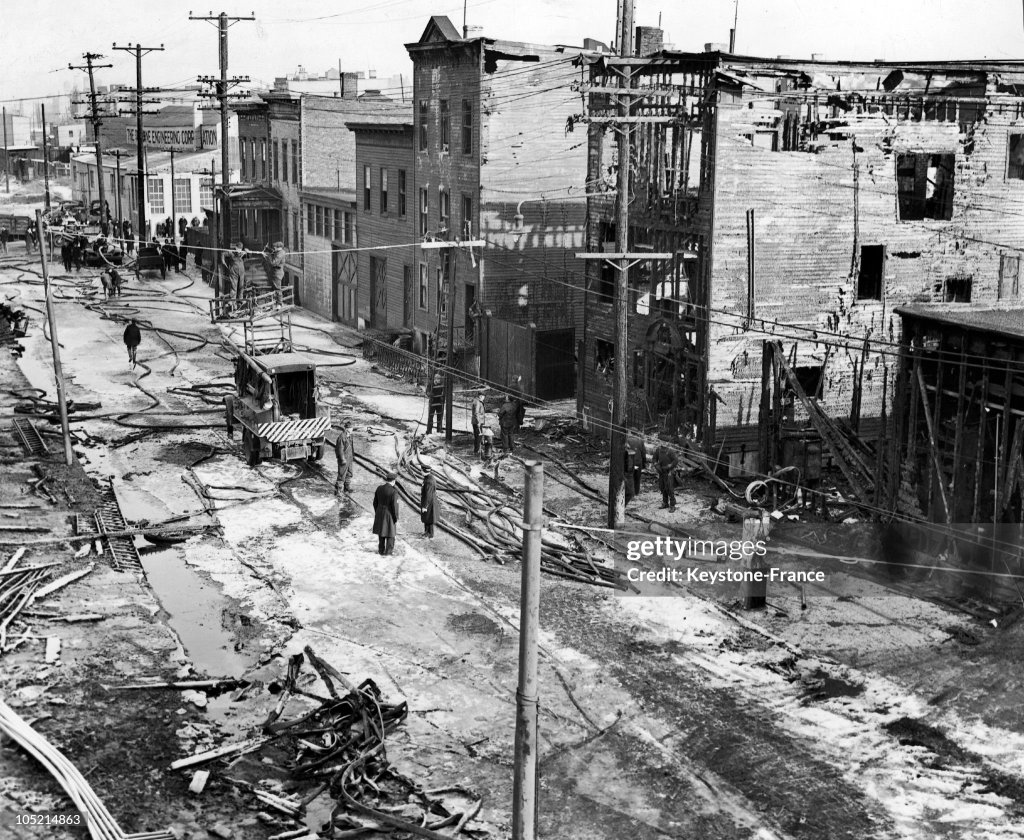
A huge fire devastates a city block in Hoboken, New Jersey. Three persons were injured slightly today in a fire which swept through a city block, destroying the home of Mayor Bernard N. McFeely, four other houses, a cabinet factory, a paper plate plant, and two office buildings. Fire officials estimated damage might amount to $500,000. Hoboken’s entire fire fighting force of nine companies, plus five companies from Jersey City, fought the flames in icy cold weather for three hours before the fire was under control.
The U.S. Tenth Naval District with headquarters at San Juan, Puerto Rico, is established, Commander Reuben L. Walker is first commandant.
During this year, the U.S. Committee of the National Academy of Sciences reported that operation of turbine wheels at temperatures up to 1,500°F might soon be possible because of U.S. and foreign development of high-temperature alloys
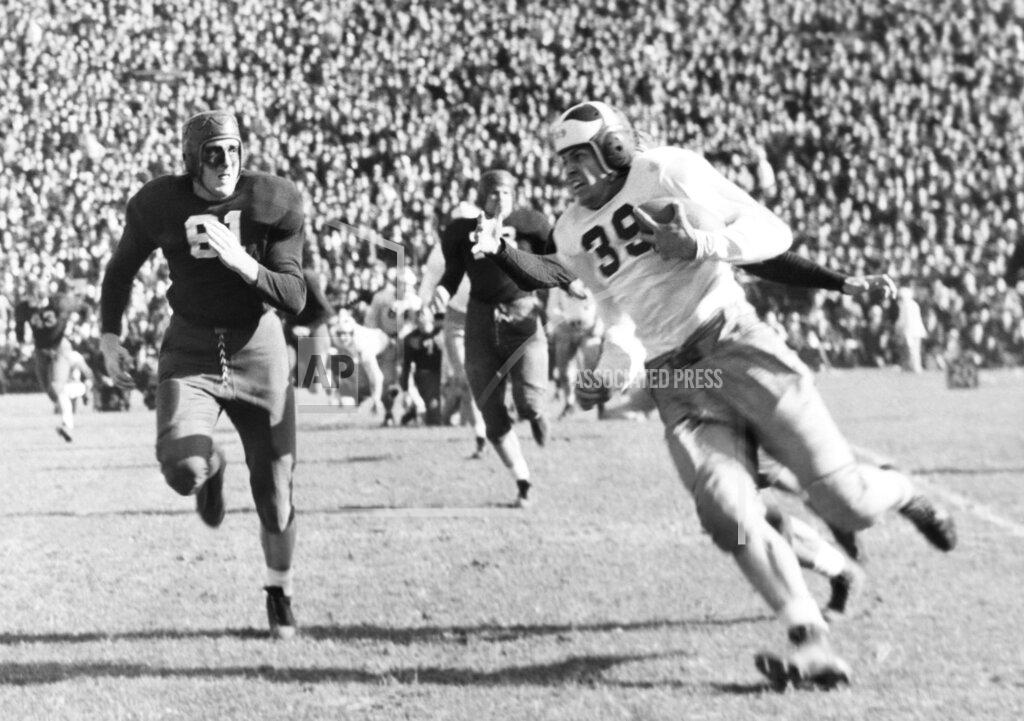
The USC Trojans shut out the Tennessee Volunteers 14–0 in the 26th Rose Bowl in Pasadena, California. Trojan backs Granny Lansdell and Ambrose Schindler rushed for 51 and 81 yards respectively, for a team total of 229 yards rushing. Schindler scored one touchdown and passed to Al Krueger — the hero from the previous year — for the other. Head coach Howard Jones earned his second straight Rose Bowl victory, and his fifth in as many appearances.
The Texas A&M Aggies edged the Tulane Green Wave 14–13 in the 1940 Sugar Bowl in Tulane, Louisiana. Texas A&M took lead in the a first quarter with a 1-yard touchdown run from running back John Kimbrough. He finished the game with 159 yards rushing on 25 carries. In the third quarter, Tulane’s Kellogg returned a punt 75 yards for touchdown, tying the game at 7–7. In the third quarter, Tulane’s Monnett Butler, former Oak Grove High School star, scored on a 2-yard touchdown run. The extra point attempt was blocked, giving Tulane a 13–7 lead. Kimbrough’s second rushing touchdown of the game rallied the Aggies to a 14–13 win.
The Catholic University Cardinals and the Arizona State Bulldogs played to a scoreless tie in the 6th Sun Bowl in El Paso, Texas. It was a “hard-fought but dull contest that provided little thrills” and one where neither team got within their opponents 5-yard line. Early in the game the Bulldogs were able to get inside the Cardinals’ 10, but a series of bad passes ended their chances of scoring. A 54-yard drive by the Bulldogs was the longest of the day, and ended when they fumbled on the Cardinals’ 48. Game play was impeded by “gale-like wind,” and only 16 yards were gained by passes. They were all thrown by Catholic’s quarterback Pete Sachon, who had 15 attempts and three completions. None of the seven attempted passes made by the Bulldogs’ quarterback Shamlen met their intended receiver as their “passing attack failed completely.” With less than two minutes left in the game, Arizona State missed a field goal from their own 42. Catholic took over the ball, but were stymied as “the desperate Bulldogs were pulling interceptions out of their hats.”
The Georgia Tech Yellow Jackets beat the Missouri Tigers 21–7 in the 1940 Orange Bowl in Miami, Florida. Paul Christman gave the Tigers a 7–0 lead on his touchdown plunge, but Howard Ector responded with a touchdown run of his own to culminate a 63-yard drive and tie the score at 7 at the end of one quarter. Rob Ison dashed for the second Jacket touchdown to make it 14–7. Earl Wheby made it 21–7 on his touchdown gallop of 34 yards as Georgia Tech won their first Orange Bowl.
The Clemson Tigers beat the Boston College Eagles 6–3 in the 1940 Cotton Bowl Classic in Dallas, Texas. Boston College took the lead on a 30-yard field goal by Alex Lukachik early in the second quarter, after four failed plays following a punt return to the Clemson 13. After both teams exchanged punts throughout most of the quarter, Clemson got it back at their 43. They drove 57 yards and it culminated with a touchdown by sophomore Charlie Timmons, but the extra point was missed. The remainder of the game was scoreless as Clemson won their first bowl game, and All-American back Banks McFadden was named the game’s most valuable player.
The Uruguayan government interned the German freighter Tacoma at Montevideo as an auxiliary war vessel. The Tacoma was given this designation because it was used to service the German pocket battleship SMS Admiral Graf Spee.
Chinese 1st War Area captures Hsincheng.
10,000 Japanese troops open attacks against 40th Army and 27th Army of Chinese 2nd War Area to relieve the Japanese 36th Infantry Division at Changtze and Tunliu in eastern Shanxi Province in China. They would be driven back by stiff Chinese resistance within the next two days.
Chinese 4th War Area mounts counterattacks against Japanese 21st Army around Wongyuan
The Japanese are building up forces in Paotou in preparation for attacks against Chinese 8th War Area around Wuyuan.
Chinese 9th War Area is cutting Japanese lines of communications and destroying facilities in Japanese-occupied areas.
Chinese forces are mopping up around Kunlunkuan after killing many troops of Japanese 5th Infantry Division, including brigade commander.
The Japanese navy reported today its planes had shot down 21 Chinese aircraft in a big-scale battle in South China and bombed the Haiphong-Kunming railroad near the border of French Indo-China. The railroad, built, owned, and operated by the French, is one of China’s lifelines for the import of materials. Damage to the line was reported slight, but Chinese were said in Hong Kong to consider the bombing significant, since it followed a Japanese request to discontinue transporting Chinese supplies. The Japanese said that in the battle over Liuchow, in central Kwangsi province, they lost only one plane while bringing down the 21 Chinese.
Reports from the Chinese provisional capital, Chungking, said Japanese air raids had caused more than 200 Chinese casualties Saturday at Ichang, 175 miles west of the central China city of Hankow.
Born:
Marlin McKeever, NFL linebacker and tight end (Pro Bowl 1966; Los Angeles Rams, Minnesota Vikings, Washngton Redskins, Philadelphia Eagles), in Cheyenne, Wyoming (d. 2006).
Ruly Carpenter, American baseball executive (principal owner and president Philadelphia Phillies 1972-1981), in Wilmington, Delaware (d. 2021).
László Sáry, Hungarian classical pianist and composer (12 Haiku; Flowers of Heaven), in Győrasszonyfa, Hungary.
Richard Orton, British modern classical and electronic music composer, performer, and educator (University of York, 1967-96), in England (d. 2013).
Emilio Del Giudice, theoretical physicist, in Naples, Italy (d. 2014).
Died:
Panuganti Lakshminarasimha Rao, 74, Indian writer and essayist.
Ferdo Šišić, 70, Croatian historian.
Naval Construction:
The Royal Navy “U”-class (Second Group) submarine HMS Umpire (N 82) is laid down by the Chatham Dockyard (Chatham, U.K.).
The Royal Navy Hunt-class (Type II) escort destroyer HMS Puckeridge (L 108) is laid down by J.S. White & Co. (Cowes, U.K.).
The Marine Nationale (French Navy) Agosta-class submarine Ouessant is commissioned.
The Marine Nationale (French Navy) Agosta-class submarine Sidi Ferruch is commissioned.
The Nihon Kaigun (Imperial Japanese Navy) Kagerō-class destroyer HIJMS Kuroshio (黒潮, “Black Current”) is commissioned.
 History Diaries