The three senior monks of the major Vietnamese Buddhist organization went on a 48-hour hunger strike today in their attempt to overthrow the Government of Premier Trần Văn Hương. They said they would devote themselves to “prayers for the early downfall of the traitorous and brutal” Hương Cabinet. With several hundred other monks and Buddhist nuns around them in a bivouac at the national Buddhist headquarters, they awaited a response to the formal opening yesterday of a renewed campaign to gain political power. Several thousand people gathered outside the compound, which is surrounded by barbed wire. The crowd seemed as much curious as fervent in religious or political devotion.
Inside, Thích Tâm Châu, political chairman of the Buddhist organization; Thích Trí Quang , newly named as “political adviser,” and Thich Tinh Khiết, the aged and feeble supreme priest, pledged themselves to fast as an initial gesture of challenge. The aim of the Buddhist leaders seems to be to convince their followers that they are waging a new religious war and that the government is persecuting Buddhism just as the totalitarian regime of President Ngô Đình Diệm did. Premier Hương and United States officials here contend that, deliberately or not, the continued Buddhist agitation is only serving the Communist ends of turmoil and instability. However, the Buddhist leaders condemn attempts to link them with the Việt Cộng insurgents and insist that they are taking every precaution against being exploited by the Communists.
The first responses to harsh Buddhist statements made yesterday were unyielding. Besides asking the Vietnamese chief of state, Phan Khắc Sửu, to dismiss the Hương Government, the Buddhist leaders had warned the United States Ambassador, Maxwell D. Taylor, that they would hold him responsible for whatever happened if Mr. Hương remained in office. An American spokesman confirmed receipt of the Buddhist letter but said there would probably be no reply since the warning seemed to be “propaganda rather than substance.” He noted that the letter had been made public at the same time as it was delivered to Mr. Taylor, or possibly even before. “The doors of the embassy are always open to any constructive discussion in which we can be useful,” the spokesman said.
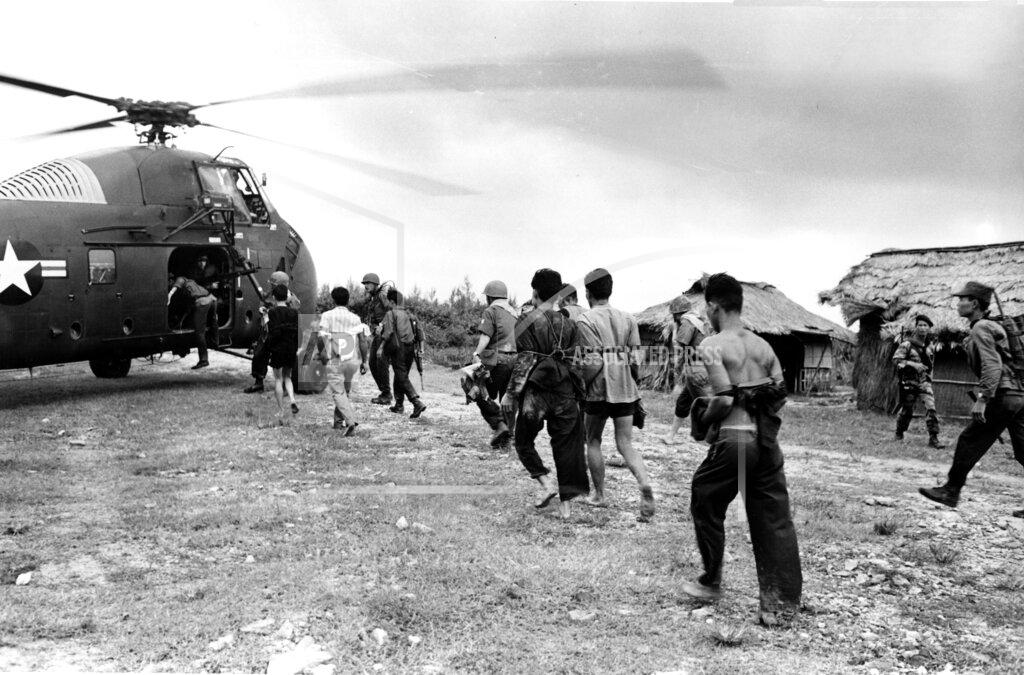
Combat experience in South Vietnam shows that a U.S. Army helicopter has a chance in 15,000 of being lost to ground fire on any mission. This and other statistics have just been disclosed by the Army as indications that the vulnerability reputation of the helicopter and of slow‐speed, fixed-wing aircraft is more myth than fact. “The loss rates incurred,” an Army general said, “are surprisingly light and indicate excellent battlefield survivability.”
The U.S. Army’s figures show that from January 1. 1962, through October 31, 1964, Army helicopters and light fixed‐wing aircraft transported more than a million passengers and lifted nearly 40,000 tons of cargo in South Vietnam. Fewer than 2 percent of the aircraft hit by ground fire were destroyed. The chances of being hit by ground fire at all on any single flight were only 1 in 370 for all Army helicopters and fixed‐wing craft and 1 in 350 for helicopters alone. The chances of being downed by ground fire on any flight were put at 1 in 8,400 for all aircraft and 1 in 6,400 for helicopters. The chances of being lost to ground fire on any one flight are 1 in 17,500 for all aircraft and 1 in 15,000 for helicopters. These records, the Army explained, were “achieved over hundreds of thousands of sorties, many of which were heliborne operations tranporting Vietnamese troops into areas of strong enemy activity.”
A bomb demolished a Saigon bar tonight. Two Americans and four Vietnamese, including a child, were slightly wounded. It was the first terrorist bomb in downtown Saigon in several months.
The Foreign Relations Committee of the United States House of Representatives stands firmly behind President Johnson’s policies in South Vietnam, Representative Cornelius E. Gallagher, Democrat of New Jersey, said as he concluded an inspection trip here and left for Japan and South Korea. “Our committee has by resolution authorized the President to take whatever action is in the best interest of the nation,” he declared.
A deliberate challenge to the Chinese Communists is seen in today’s Soviet announcement that a commission will meet March 1 in Moscow to plan a world Communist conference. The plan, published on the front page of Pravda, the Communist party newspaper, was interpreted as a further indication that the new leaders in the Kremlin had not been able to bring about a substantial improvement in relations with the Chinese Communists. The date of the full‐scale world Communist conference was not specified by Pravda. Before Nikita S. Khrushchev was deposed in October, Moscow was pressing for a preparatory meeting of 26 Communist parties to open December 15. The Chinese vigorously opposed that plan, and they were supported by many of the invited parties, which feared an irrevocable split in the movement.
After the removal of Mr. Khrushchev, the December meeting was called off, but last month the Soviet Ambassador to Peking, Stepan V. Chervonenko, delivered a message proposing a new date for the meeting. The Chinese coldly rebuffed the proposal. The announcement of the March 1 meeting was taken to mean that the position in which the Soviet leaders found themselves with respect to the Chinese Communists was essentially the same as that of Mr Khrushchev last August, when the Chinese said that Mr. Khrushchev’s plan for a December meeting was illegal and announeed that they would boycott it. A resulting exacerbation of relations between the Soviet leadership and foreign Communist parties was one of the contributing factors in the removal of Mr. Khrushchev. As soon as the new Soviet leaders took over, they told visiting foreign Communists that they had decided to postpone the December 15 meeting.
The Soviet Union’s leadership is believed to be looking forward to a period of recovery after a temporary retrenchment that followed the catastrophic crop failure of 1963. It is taking advantage of an expected upturn to allot a long‐delayed bigger slice of the economic pie to the Soviet consumer. These are conclusions reached by foreign analysts after an examination of the limited details of the Government’s economic plan and budget for 1965, made public at a three‐day session of the Supreme Soviet (parliament) this week. The plan represented a revision of the second part of the 1964-65 plan that was adopted last December when Nikita S. Khrushchev was still dictating economic policy. Although few statistics are available on the two‐year plan, it was generally thought by foreign observers that the growth rate in 1964, the year following the bad harvest, would be lower than the rate envisaged for 1965, when a certain recovery was expected.
Economics in East Germany is no longer just a method of organizing production. It has become the last real hope of making the East German nation viable and of justifying its existence. With a zeal that recognizes the size of the task, unorthodox economists and young plant managers are being called upon to put the East German house in order, to take over where the older politicians and ideologists have failed. Here, as elsewhere in Communist Europe, the old Marxist texts are being tossed away, but the peculiar problems of German partition are proving formidable obstacles. The New Economic System, as the East Germans call their project, will not be fully developed until 1966 or 1967, and no significant results are expected before 1970. Thoughtful officials here wonder whether the German Communists will have the political courage and foresight even then to tolerate the resulting sweeping shifts in political power.
New York City detectives and agents of the Federal Bureau of Investigation questioned scores of Cuban refugees and other persons yesterday in their search for the attackers who fired a bazooka shell at the United Nations headquarters on Friday. Deputy Inspector Thomas McGuire, who is in charge of the police investigation, said: “We have made no progress. We don’t have a single concrete thing to go on.” The police regard it as almost certain, however, that anti‐Castro exiles were responsible for the blast. Even so, they were inclined to doubt the boast of an organization calling itself the Black Front, which announced in Miami that the incident had been staged as “a Christmas present for the enslaved Cuban people.” The FBI and Miami officials said they had never heard of the Black Front.
The single high‐explosive shell was launched from the Long Island City waterfront as Major Ernesto “Che” Guevara, Cuba’s Minister of Industry, was addressing the United Nations General Assembly. It exploded in the East River about 200 yards short of its apparent target. Inspector McGuire declined to reveal whether fingerprints had been found on the three‐foot section of the bazooka from which the shot was fired, or whether other clues were found at the scene. And in one respect, at least, the investigation seemed to have taken a backward step. It was disclosed that an earlier report than the weapon bore identifying serial numbers was incorrect. The bazooka, a shoulder‐fired Army rocket launcher that fires a projectile 3½ inches in diameter, was taken later in the day to the Army Ordnance Depot at Picatinny, New Jersey, for further examination. Experts there said it appeared to be an M-28 model.
Germany and France yielded on major points yesterday in a final effort to settle the critical issue of wheat policy for the European Economic Community — the Common Market. It appeared early today that this issue, which seemed to threaten the existence of the Community just seven weeks ago, might be settled in another day or two. After almost 22 hours, the session was adjourned shortly before 8 o’clock this morning, until Monday. The major obstacle was Italian insistence on more benefits for Italy’s farmers, but there were plenty of other points also unresolved. The Community’s ruling council of Ministers met all day yesterday and through the night. The meetings were attended by 14 Cabinet ministers and 150 other officials representing the Community headquarters here and the six member Governments — West Germany, France, Italy, Belgium, the Netherlands and Luxembourg. The negotiations involve feed grains such as corn and barley, but wheat is the key item. High German prices and low French prices must be reconciled somewhere in the middle.
Frenchmen happily recovered today their electricity, their transport, their mail deliveries and all the other elements of daily living they had been deprived of for 24 hours by a massive public‐service strike. State and municipal‐run industries and services returned to normal this morning but the unions that had called out more than two million workers yesterday warned they were prepared to do the same again. The Communist‐led rail unions of the General Confederation of Labor called a twoday strike for next Friday and Saturday just when the Christmas holiday rush to ski and other resorts begins. At a meeting this morning other rail unions held back, saying that they would give a definite answer next week.
Greece’s bid for a record tourist year in 1964 collapsed under the impact of the Cyprus crisis, which has brought Greece and Turkey to the brink of war in the last 12 months. Official statistics showed that 618,700 foreigners had spent vacation in Greece by the end of October, when the season ended. This was 5,000 less than last year and far below earlier official estimates, which foresaw 775,000. The results were equally poor on the balance sheet. Foreign exchange spent by tourists here helps Greece defray the excess cost of imports over exports. Tourist revenue this year is expected to be about the same as that of 1963, or just below $100 million. This is $23 million short of official forecasts based on a steady 20 to 25 percent yearly growth since 1959. The United States is Greece’s largest single source of tourists. In 1963 two out of nine foreigners landing in Greece were Americans, a 36 percent increase over the year before. This trend was checked this year. Between January and the end of September, there were 115,300 American tourists, against 121,900 in the same 1963 period.
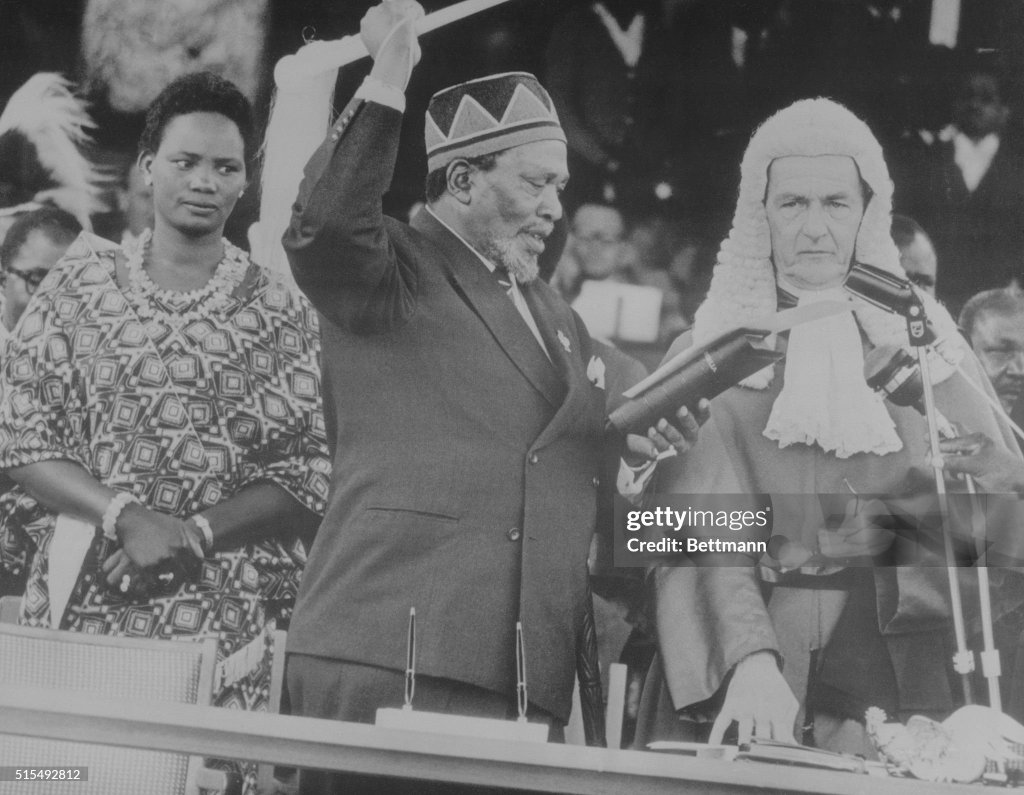
On the first anniversary of its independence from the United Kingdom, the Dominion of Kenya became a republic, with Prime Minister Jomo Kenyatta as its first President. Malcolm MacDonald ended his service as the first, and only, Governor-General of Kenya but would continue to serve in a diplomatic role as Britain’s High Commissioner and envoy to Kenya. Kenyatta would continue as President of Kenya until his death on August 22, 1978, and would be succeeded by Daniel Arap Moi. Kenya became a republic today amid a din of cheers, tribal drumming and cannonading fireworks. Eerie, high‐pitched ululations of masses of African women swelled in the night as the change took place in ceremonies on the edge of the capital city of Nairobi. Behind them came a steady “jin—jin,” the sound of beanfilled gourds, while chanting Luo dancers with white‐daubed faces snaked around bonfires. The firelight glinted off the tips of their upthrust spears and sparkled off great strands of cowrie shells looped around their necks. The change occurred at 12:01 AM, just a year from the granting of Kenya’s independence from colonial rule. Jomo Kenyatta, Kenya’s bearded former Prime Minister, was to be sworn in later today as Kenya’s first President.
A Soviet‐sponsored political training center for Kenyans — and ultimately other Africans — was opened on an isolated hill in Kamiti, Kenya today in memory of Patrice Lumumba, the first Premier of the Congo, who was murdered early in 1961. The institute also intends to help African nationalist organizations in other countries to train what are termed militant “cadres.” An atmosphere of mystery surrounded the ceremonies as Jomo Kenyatta opened the school in his first official act as President of the new Republic of Kenya. He had been sworn in only a few hours before, when Kenya abandoned the status of a dominion in the British Commonwealth. Moscow’s share of the costs was understood to amount to $84,000. The rest of the money was said to have come from “friends and organizations in African‐Asian and the Socialist countries.”
Congo’s Premier Tshombe arrived in Munich by air from Rome this afternoon for a two‐day visit to the Bavarian capital. He said his visit was “purely private.” On Tuesday Mr. Tshombe will fly to Bonn for talks with West German officials. Albert Bolela, the Congolese Ambassador in Bonn, said last night that Mr. Tshombe’s talks would center on details of a $2.5 million capital aid agreement already worked out by the two countries’ officials.
Four of the crew of the West German coaster Deutschland were killed when the ship sank in the Lower Elbe river after colliding with a Norwegian ship, the SS Vera.
Secretary of Defense Robert S. McNamara announced plans today to reorganize the two major elements of the Army’s Ready Reserve into a. single reserve force under the National Guard. All organized units of the Army Reserve would be eliminated under the plan. The size of the Army National Guard would be increased with transfers from the Army Reserve, although certain individual Guard units would be dropped as unnecessary. Details on how the plans affeet specific units will be worked out later, Defense Department officials said. Thus, the precise status of four New York State units was not known. They are the 27th and 42d National Guard Divisions and the 77th and 98th Army Reserve Divisions.
Instead of an Army Reserve, with an authorized strength of 300,000, and an Army National Guard, with an authorized strength of 400,000—neither of which levels has been maintained in recent years—the total paid drill strength of the Guard would be 550,000. At present, the paid drill strength of the Army Reserve is 264,000, that of the Guard 376,000. About 150,000 members of the Army Reserve would be given a chance to transfer to the Guard. Others would be placed on a list of reservists subject to annual training maneuvers, but without any weekly or bimonthly drill obligation during the year. National Guard members of units to be dropped would similarly be given a chance for transfer to active units.
The Secretary’s announcement, made at a news conference at the Pentagon, was immediately assailed by the Reserve Officers Association and in Congress, many of whose members are reservists. However, spokesmen for the National Guard Association gave it cautious endorsement. Although the White House had no official comment on the proposed changes, the Reserve Officers Association reported tonight that President Johnson, in an exchange of correspondence, had “implicitly endorsed” Mr. McNamara’s move. According to the association’s president, Rear Adm. Edgar H. Reeder, the association protested the plan in a letter delivered to the White House early this morning.
Members of Congress who are members of the Ready Reserves will be dropped from paid drill status and put on a standby basis, according to plans announced today by Secretary of Defense Robert S. McNamara. In addition, the Defense Secretary imposed new restrictions on overseas travel by members of Congress who use the facilities of the military services. The moves were understood to be aimed at reducing possible political influence on military programs through the reserve forces and to cut down alleged Government‐paid “junketeering,” although that is not the way the Defense Secretary explained them. The new strictures, announced at the same Pentagon news conference at which the Secretary made known the planned reorganization of the reserves, were expected to have considerable impact on the 9999th Air Force Reserve Squadron, commanded by Senator Barry Goldwater, who is a reserve major general.
Secretary of Defense Robert S. McNamara’s plan to eliminate Army Reserve units drew swift reaction yesterday from officers who appeared to think he was bypassing Congress. Colonel Harold Feichter, president of an Indiana Reserve group, said he would not say Mr. McNamara was wrong in his proposaT, according to The Associated Press, and then added: “But, frankly, we’re real disgusted with the way this guy McNamara is doing things. He shouldn’t do this without going through Congress.”
Senator Strom Thurmond, Republican of South Carolina, an Army Reserve major general, called the Secretary presumptuous. “I am particularly disturbed that his announcement contained no mention by him that Congressional action would be necesary to make a basic reorganization in an entity created by Congress,” he said. Mr. McNamara said during his news conference, however, that he would need Congressional approval to increase the size of the Army National Guard.
In each of the 50 state capitals and Washington, a group of electors ranging from three in Vermont, Wyoming, Nevada and the District of Columbia to 43 in New York will meet Monday and “vote by ballot” for the 36th President and the 38th Vice President of the United States. As required by the Constitution, the electors in each state will be equal to that state’s Representatives and Senators in Congress. Although it has no Congressmen, the District of Columbia has three electors, the minimum for a state. These 538 make up the Electoral College, the venerable vermiform appendix of the American political system.
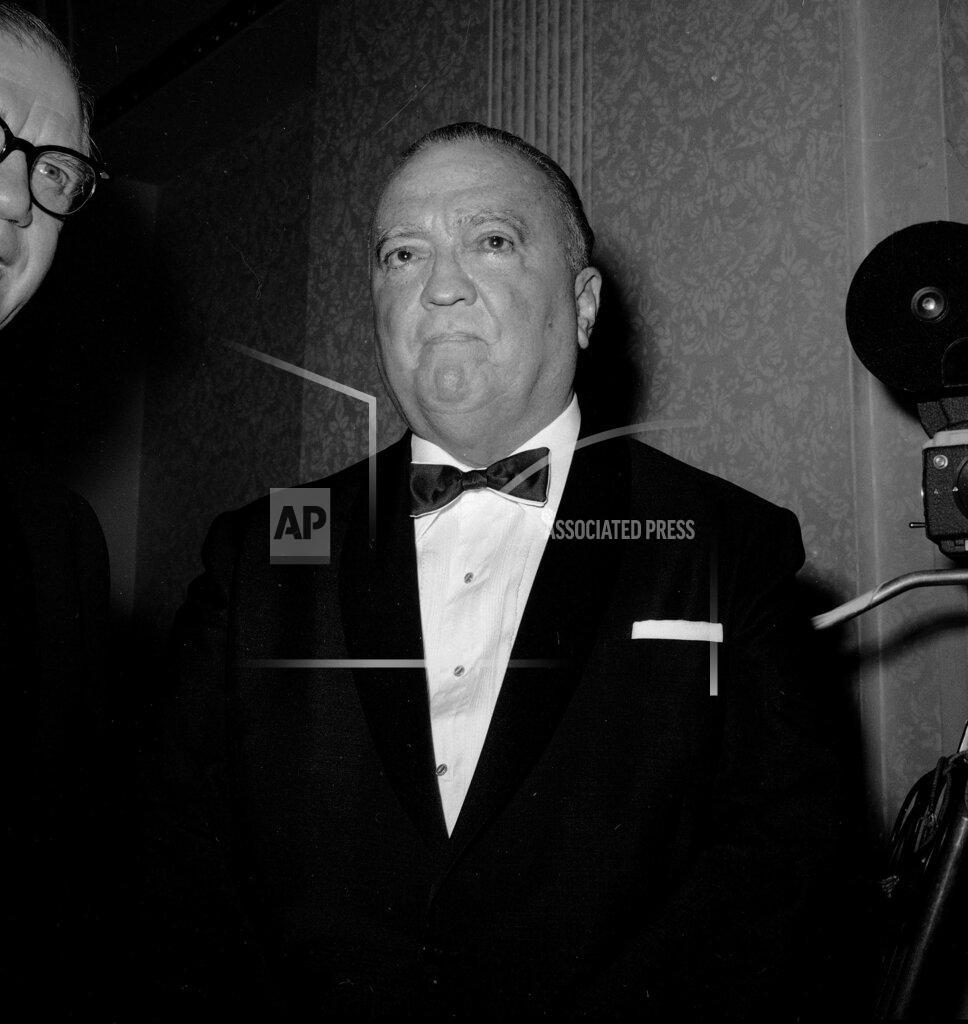
J. Edgar Hoover, director of the Federal Bureau of Investigation, called for a “constant vigil” last night against extremists who would use the civil rights movement to advance their power and prestige. These extremists, he said include Communists and the Ku Klux Klan as well as “dangerous opportunists and morally corrupt charlatans who would form an alliance with any organization.” Mr. Hoover voiced his warning in a speech at the annual dinner of the Pennsylvania Society at the Waldorf‐Astoria Hotel. The dinner was attended by Governor William W. Scranton of Pennsylvania.
He emphasized that the civil rights movement “is not, and has never been,” dominated by Communists because its leaders, both white and Black, “have recognized and rejected Communism as a menace to the freedom of all.” He warned, however, that the nation must be alert to imposters and zealots “who would shortcut the orderly processes of government and demand a mantle of special privilege under the law.” Mr. Hoover also urged alertness to the activities of the Klan “and other racist groups that would trample upon the rights‐of their fellow man.”
“These cowardly jackals,” he said, “who attack only the weak and the outnumbered, have earned the contempt of every genuine American. But here again, too often justice is not only blind, but deaf and dumb. We saw this recently in an area of Mississippi where nine men were brought to trial in state court following a series of racial bombings. None of the defendants offered a pretext of a defense against the charges: yet, all were given suspended sentences and released on probation. Such blindness and indifference to outrageous acts of violence encourage others to defy the law.”
The Rev. Dr. Martin Luther King Jr. arrived in Stockholm, Sweden today from Oslo and told reporters at the airport that a boycott against the state of Mississippi would “not be too difficult to carry through practically.” If such a boycott were established, he said: “We will seek to get at the large cotton mills which deliver the main product of the state, the department stores, and urge people not to purchase anything from Mississippi.” Dr. King, who received the Nobel Peace Prize in Oslo Thursday, will stay here two days. He was invited by a Christian parliamentary group, the Swedish Peace Council, and an Ecumenical Board.
Malcolm X gave an audience of Harlem Domestic Peace Corps members, friends and glowering opponents an outline yesterday of his militant program for “Afro‐Americans.” The Black Nationalist leader, Muslim and advocate of “nonviolence except in self‐defense” told the gathering of 200 that American Blacks should stay in this country but “migrate to Africa culturally, philosophically and spiritually.” Macolm spoke at the seventh session of the Domestic Peace Corps’ “Cultural Enrichment Series.”
The federal government believes that the nation’s electric power industry can, if it tries hard enough, cut the price of electricity 27 percent by 1980, barring sharp inflation. This is the gist of the voluminous National Power Survey released yesterday by the Federal Power Commission. Its 719 pages provide the first complete study of the industry, which it describes as the nation’s largest, and encompasses both public and private power. Industry reaction, although limited to a small segment at this point, was generally favorable. Many of the traditional battlelines between public and private power seemed to be broken, with the privately owned utilities backing the survey and, strangely enough, certain segments of the government‐owned side objecting strongly. Joseph C. Swidler, chairman of the F.P.C., said the basic finding of the National Power Survey was that each of the nation’s 3,600 power systems, large and small, could achieve savings in the costs of generation and transmission of electricity by moving away from “isolated or segmented operations and from existing [power] pools of limited scope, to participation in fully coordinated power networks covering broad areas of the country.”
Americans contributed more than $10 billion to a vast variety of philanthropic organizations last year, establishing a remarkable record of generosity and — in some cases — gullibility. With the approach of Christmas, the spirit of giving is now soaring to its annual peak, and charitable contributions are expected to be higher this year than ever. The major part of the money goes to reputable organizations, but questionable groups get almost 3 percent, or $300 million a year, and much more is wasted by well‐meaning incompetents.
The first group of 20 volunteers in the new VISTA (Volunteers In Service To America) program were welcomed at the White House by the President and Mrs. Johnson.
While the official name will remain the Harris County Domed Stadium, Judge Roy Hofheinz introduces his new ballpark in Houston as the “Astrodome” for the first time while displaying the team’s new logo of baseballs in orbit around a likeness of the new stadium.
NFL Football:
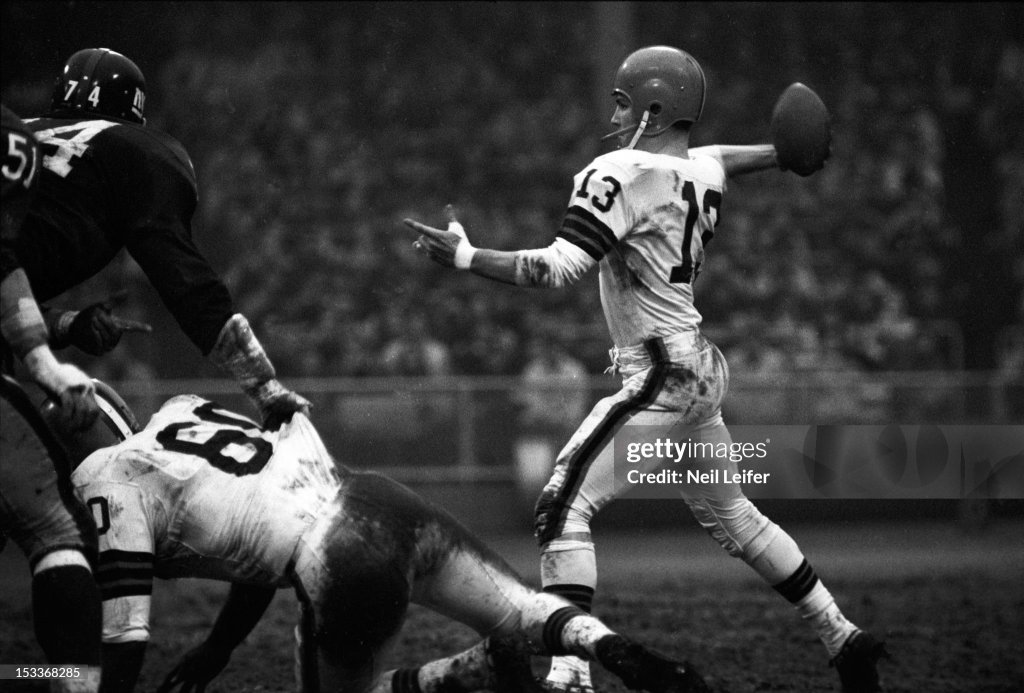
Cleveland Browns’ Frank Ryan sets a club record of 5 TD passes.
Cleveland Browns 52, New York Giants 20
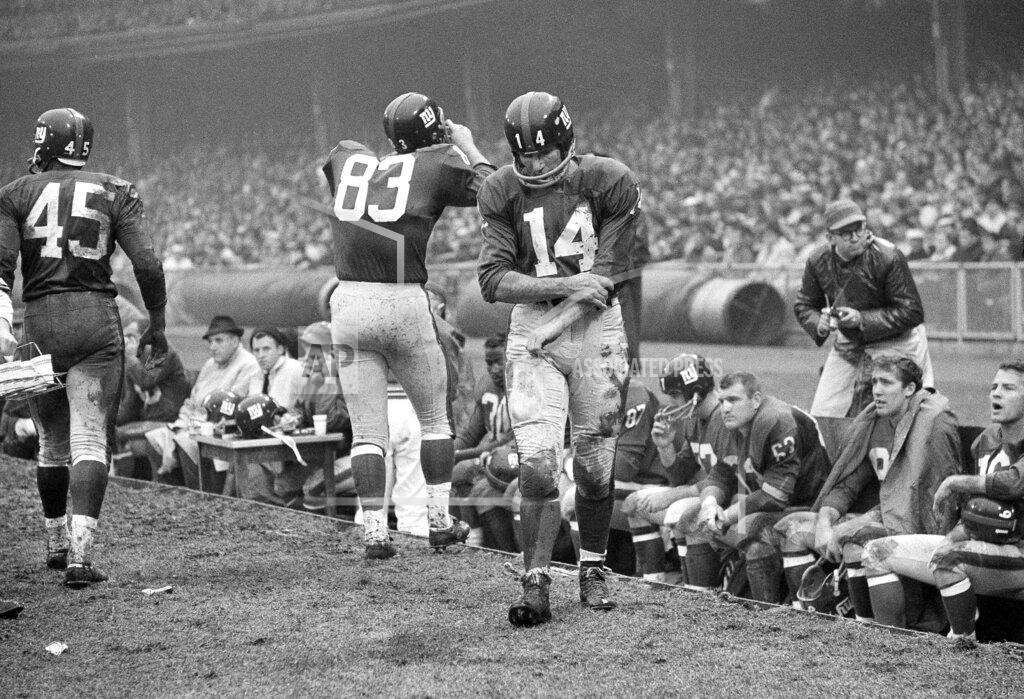
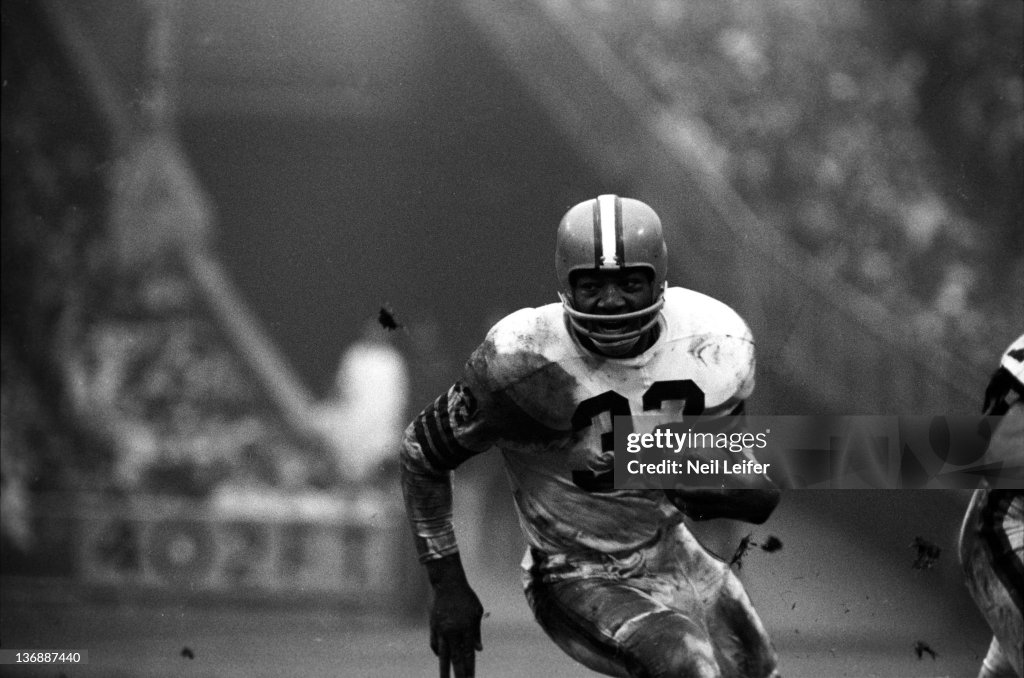
The Cleveland Browns used Paul Warfield, their swift new pass receiver, with maximum effectiveness against the New York Giants yesterday at Yankee Stadium and went on to win a game and a championship. It was a rout, the Browns scoring 52 points to 20 for the Giants. The victory sent Cleveland, the Eastern Conference title team, into the National Football League championship game against the Baltimore Colts of the Western Conference at Cleveland on December 27. Warfield, as expected, was more than the wounded Giant defense could handle. But someone had to throw him the ball and that someone was Frank Ryan, the Browns’ quarterback. Ryan, a brainy man about to acquire a doctorate in higher mathematics, has been a professional football player for seven years. Yesterday he had his finest game and it came at the right time, clinching the title for which Cleveland players, coaches and fans have been yearning. Ryan’s pin‐point passing to the inside and outside came out in the statistics to 12 completions of 13 attempts for 202 yards and five touchdowns. That is the kind of a day quarterbacks dream about and seldom achieve. Warfield, the split end, was Ryan’s man. Frank threw to the rookie from Ohio State five times and hit five times for 103 yards and one touchdown. The first three passes, totaling 91 yards, were the integral parts of Cleveland’s three second‐period touchdowns that broke the game open. The three touchdowns left the Browns with a 24–7 lead at halftime and the remaining 30 minutes sorely tested the resistance to pain among the Giants and the 63,007 spectators who filled the Stadium. The Browns, under full momentum with the prospect of earning $8,000 apiece if they can beat the Colts, rolled to three touchdowns in the third period and one in the fourth. The Giants scored twice in the fourth period on passes by Gary Wood, who followed Y. A. Tittle at quarterback. Tittle played the first half, with competence if not brilliance, and that was all for Y.A.
Born:
Haywood Jeffires, NFL wide receiver (Pro Bowl, 1991-1993; Houston Oilers, New Orleans Saints), in Greensboro, North Carolina.
Dave Smith, NFL tackle (Cincinnati Bengals), in Hammond, Indiana.
Alonzo Powell, MLB outfielder, pinch hitter, and first baseman (Montreal Expos, Seattle Mariners), in San Francisco, California.
Rockin’ Jeff [Jeff Aaron Brown], British rock musician (The Pasadenas – “Riding on a Train”), in England, United Kingdom.
Terry Brunk, American professional wrestler billed as “Sabu”; in Staten Island, New York, New York.
Died:
Sir William Rootes, 70, British auto manufacturer and co-founder of the University of Warwick
 History Diaries