Armistice Day was commemorated in Europe amid the new war’s clang of steel and strain of nerves, and in the United States in an atmosphere of uncertainty in which, however, President Roosevelt and other speakers could find material for counsels of courage and hope for our peace.
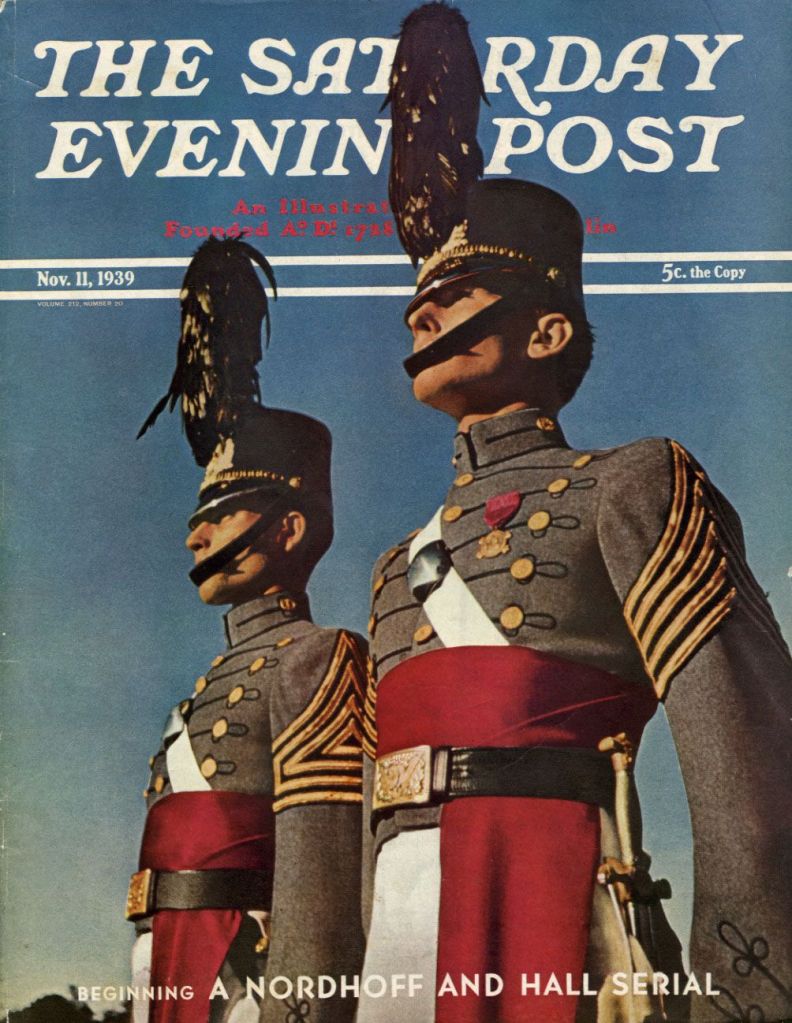
“We work for peace, we pray for peace and we arm for peace,” President Roosevelt said in an address carried from the White House to Virginia Military Institute at Lexington by telephone on the occasion of the institute’s 100th anniversary. Earlier in the day the President stood in silent tribute before the tomb of the Unknown Soldier in Arlington National Cemetery.
On this, the twenty-first anniversary of the end of the World War, commemorative exercises in Paris and London — exercises usually conducted in the solemn pomp of gold braid and banners — were curtailed while officers scanned the skies lest German planes should make a shambles out of crowds gathered to commemorate the defeat of Germany in 1918.
In Paris an early morning air raid warning sent many Parisians to shelter. The alarm was false. At 11 AM a small delegation from the Chamber of Deputies laid wreaths by the eternal flame that marks the resting place of France’s Unknown Soldier under the Arc de Triomphe. A few people stopped in the street to bare their heads in silence. That was all. The clattering mechanized equipment and rolling seventy-fives of other Armistice Day celebrations were missing. They had work to do at the front. In London wreaths were laid on the Cenotaph in the name of King George VI, but there was no ceremony. Police kept the crowd moving.
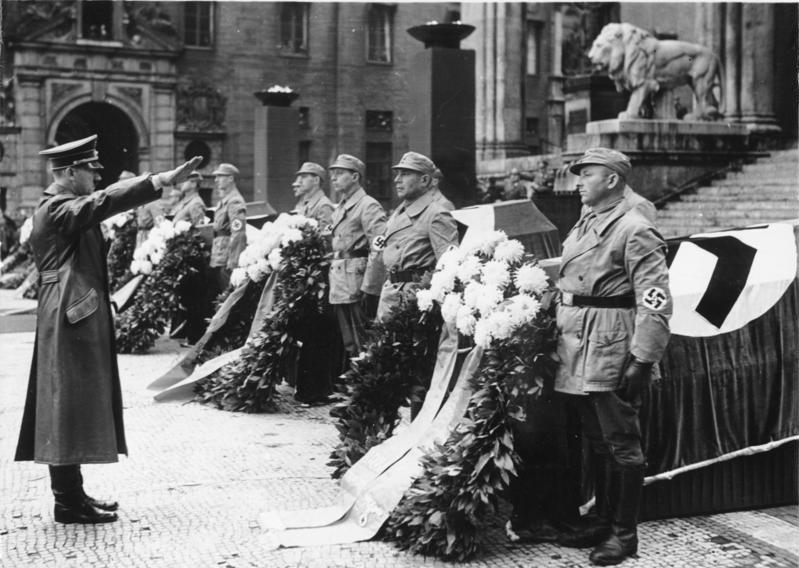
Adolf Hitler appeared unexpectedly in Munich at the funeral for the victims of the Bürgerbräukeller bombing. He stayed only a few minutes to hear Rudolf Hess deliver the eulogy and then left without speaking.
Johann Georg Elser, the prime suspect for planting the bomb at the Bürgerbräukeller in Munich, is subjected to daily beatings at the Munich Gestapo headquarters. Witnesses say he is virtually unable to communicate. The Gestapo, led by Hitler’s choice Arthur Nebe, head of Kripo (Criminal Police), also is pursuing ordinary police work, such as identifying where various parts of the bomb were purchased.
The Gestapo is blamed for the Dutch clash at Venlo. Witnesses say the German Secret Service shot a Netherlander and kidnapped five men.
The Reich foreign ministry repeats earlier assurances that the neutrality of Holland and Belgium will be respected. Germany is, of course, already planning to invade both nations.
There is limited activity by German patrols and artillery.
The New York Times reports:
“While all the world, and Belgium and the Netherlands in particular, are anxiously awaiting the zero hour that is to unleash the German offensive in the West so openly heralded by Chancellor Hitler himself, it was frankly admitted today by both official quarters and the press that the bulk of the German Army now is concentrated in the West ready to take the initiative. These troop concentrations, it was explained, are so large that the area of the Westwall, which is between twenty and thirty miles deep and 375 miles long, is no longer able to hold them, and they therefore stretch out “fan-shape” in all directions, which presumably means not only the rear but also north. and south of the Franco-German border covered by the Westwall.
“At the same time, insistent efforts in Netherland quarters to obtain new assurances that Germany will respect the neutrality of the Netherlands to allay the alarm gripping the lowlands have led only to inconclusive results. Official quarters merely pointed to previous declarations by Germany to respect the neutrality of the Netherlands, provided the other side respected it as well.
“But questions seeking to ascertain whether these declarations were still valid, in view of the German charges that the neutrals generally, and the Netherlands particularly, were lax in guarding their neutrality against British encroachment, were left unanswered on the ground that the German Government saw no reason to respond to every British attempt to draw it out, and that, for the rest, foreign press reports hinted at Allied demands on the Netherlands that were incompatible with their neutrality.
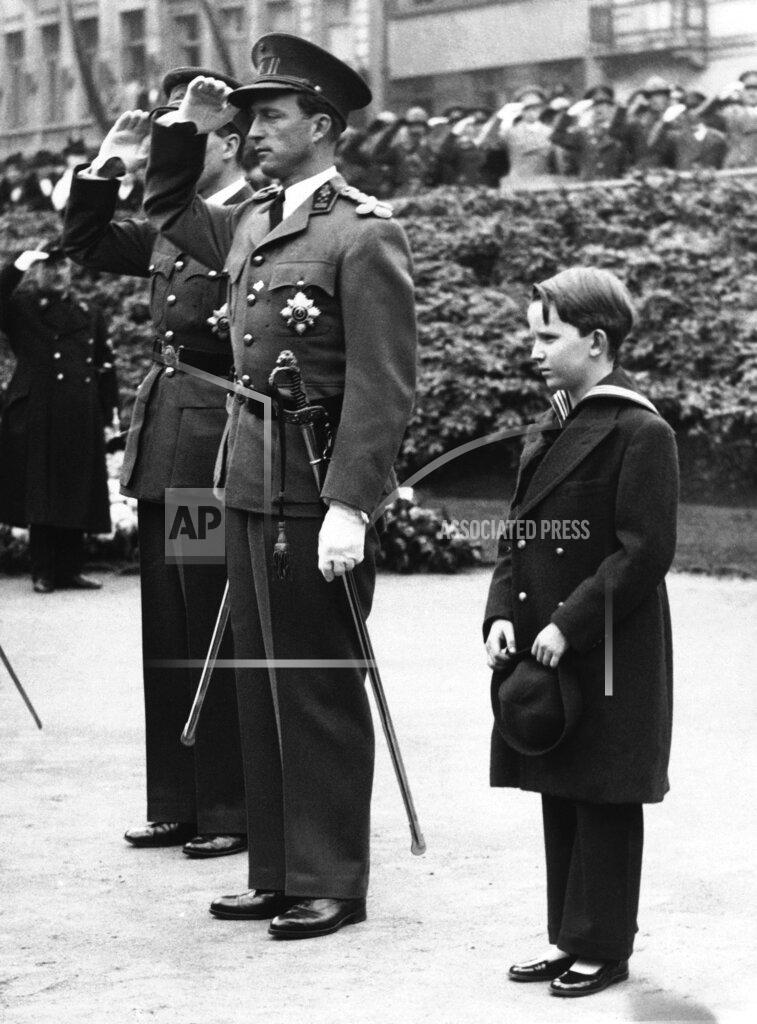
“As for the time of such an offensive, any prediction still would be wholly dependent on pure speculation, and the mere fact that the days around Armistice Day are generally assumed to bring a zero hour may be regarded as a valid military reason. not to start an action at that time, inasmuch as the element of surprise still is one of the most important factors in military success. Also, improbable as it sounds, there may be still another reason for delaying the final irretrievable decision. That reason is the still unfinished diplomatic business of peace mediation on the proposal made by King Leopold of the Belgians and Queen Wilhelmina of the Netherlands.
“Though official quarters hold that the real answers to this proposal already have been delivered in the speeches of Viscount Halifax, British Foreign Secretary, and Chancellor Hitler, nevertheless it is also admitted that the formal diplomatic answers still are outstanding. The British protestations in Lord Halifax’s speech, though delivered shortly after the proposal, really were drafted some time earlier, and therefore are in no wise a reply to it and this may have contributed to the delay.”
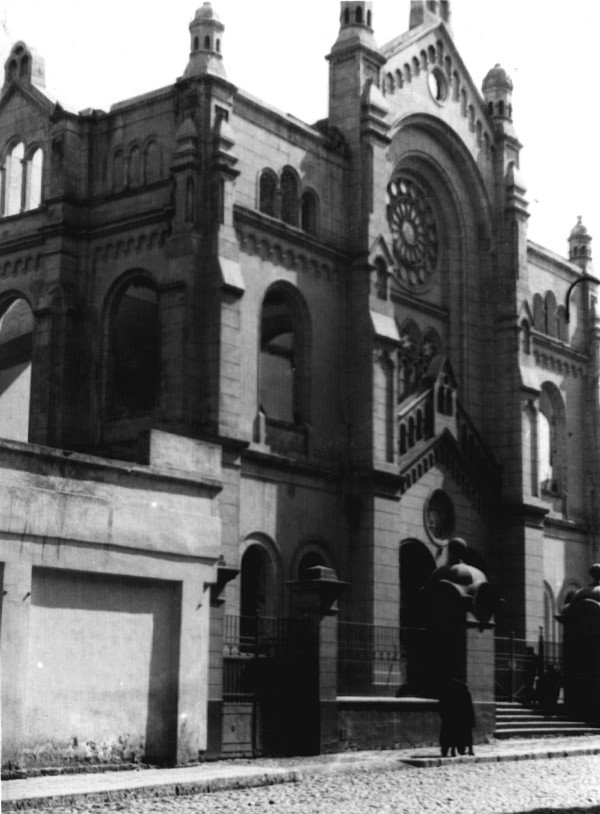
The Nazis burned down the Ezras Israel Synagogue in Łódź. Other synagogues destroyed by the Nazis in Łódź included the Great Synagogue, on November 14, 1939, and the Stara Synagogue, on November 15–16, 1939.
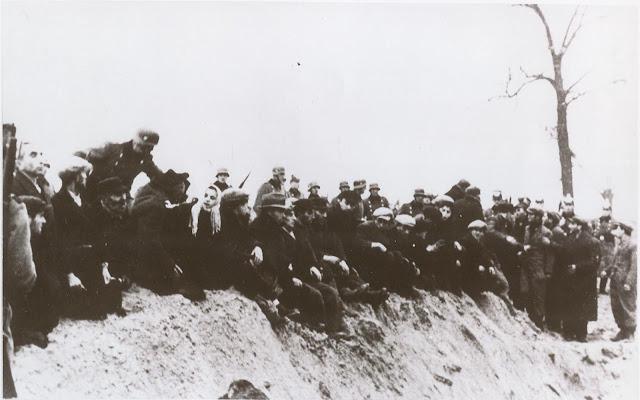
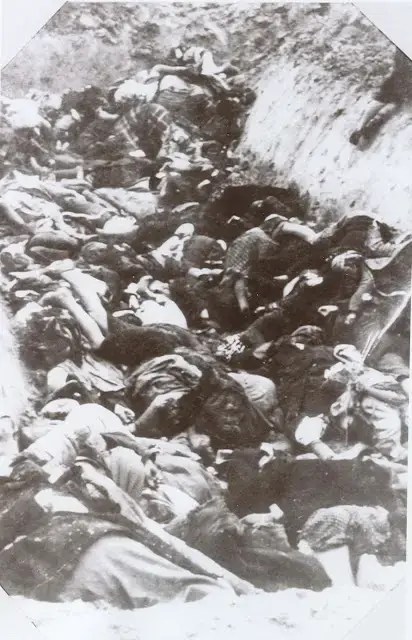
Ostrów Mazowiecka massacre: up to 600 Jews massacred by the German police in Ostrów Mazowiecka in German-occupied Poland. An arson attack against a formerly Jewish-inhabited building at 3 Maja Street occurred on 9 November by a man wearing a gas mask and using incendiary products. The fire spread throughout the town burning dozens of houses in the Jewish Quarter to the ground. Responding firefighters were prevented by German police from putting out the fire, until the flames began spreading to the houses occupied by ethnic Germans. The policemen told the Polish residents that the fire had been started by Jews, accusing the Jewish man Berej Tejtel of being the suspect and hanging his corpse from the town hall. Almost the entire Jewish population was detained and rounded up in the town jail and the cellars of Tejtel’s brewery.
The Police Major and Senior Police Commissioner were given orders by Friedrich-Wilhelm Krüger, then the SS-Oberst-Gruppenführer to kill all the Jews in Ostrów Mazowiecka. Two days after the fire had happened the detained Jews were marched to the highway, near Tejtel’s brewery, by Wehrmacht soldiers and Sicherheitsdienst agents. There they saw a number of graves that had been dug by German police forces. The policemen started by shooting the men first, and then the women and children. The police force killed according to residents up to 600 Jews, although German records state that 364 Jewish civilians were killed that day. A number of photographs by German soldiers depicting the massacre exist. The execution was carried out by the Fourth Police Battalion commanded by Police Colonel Brenner.
Survivor Henje Kozszuchowicz recalled that “After Hitler’s gangsters arrived in Ostrow Mazowiecka in 1939, their first activity was to hunt for Jews and drag them out of the houses – women with children in their hands. The Germans ordered all the Jews to the square at the brewery. After several hours, they were all driven outside of the town, on the Warszawa Highway, to the forest while threatening them with machine guns. The Germans ordered the Jews to dig a grave and then they shot all the Jews. Poles were ordered by the Germans to throw the bodies into the grave. A lot of Jews were still alive when they were tossed into the grave. The earth heaved. Among the unlucky ones was my father Moisze Berl Kozszuchowicz, who managed to run away when they took the Jews from the brewery.”
Czech student Jan Opletal wounded earlier during the Czech independence celebrations, died. His memorial four days later in Prague turned into an anti-Nazi protest and led to the Sonderaktion Prag on the 17th.
There are two main theories in France as to how tanks should be integrated into the armed forces: in discrete tank units, or as solo operatives supporting the infantry. French Colonel Charles De Gaulle advocates that French tanks be put together in armored divisions, as advocated by General Guderian. That appears to have worked well in Poland for the Wehrmacht, who have separate panzer divisions. The French general staff generally takes the other view.
King George VI of England and President Lebrun of France reply to Queen Wilhemina and King Leopold refusing to negotiate with Hitler.
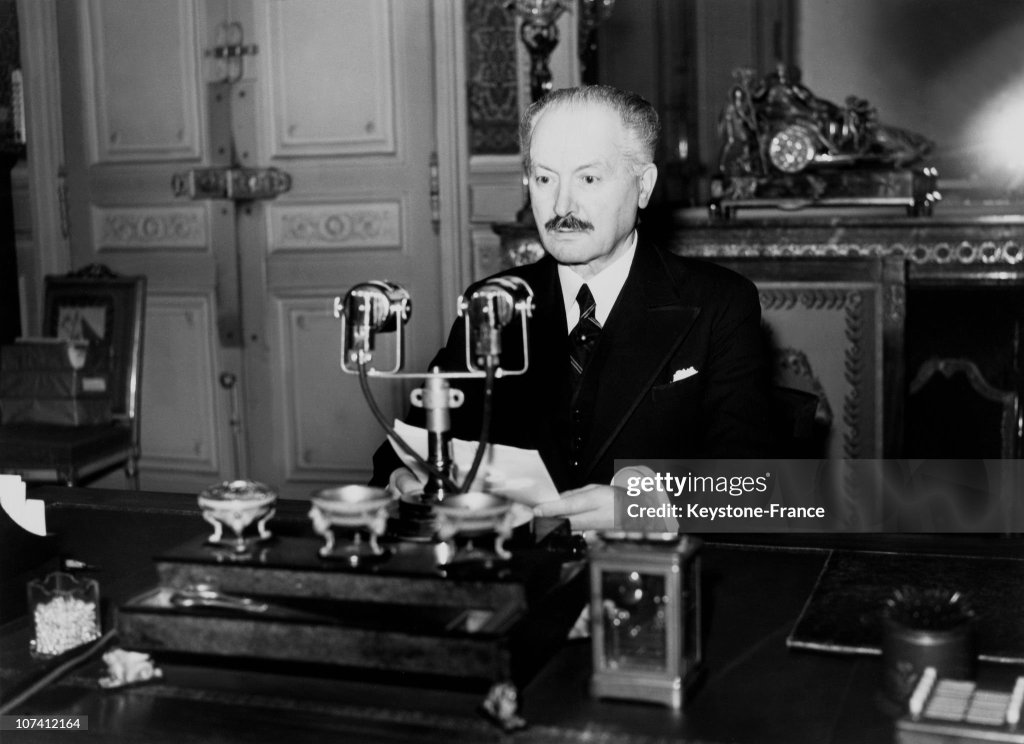
King George and the French President exchange Armistice Day messages.
British, French, Belgian, and German troops in the field marked the twenty-first anniversary of the Armistice that ended World War I. The day does not quite hold the same meaning to the Wehrmacht forces.
An interesting aspect of this particular Armistice Day is that the British government moves the two-minute period of silence to Sunday in order not to disrupt war production. This sets a precedent that is maintained, making Remembrance Days always fall on the closest Sundays.
Although Britain did not hold an official Armistice Day ceremony at the Whitehall Cenotaph this year, wreaths were laid on behalf of the King and Queen and people still came to leave flowers. There was no official two minutes’ silence at 11 a.m. either, but Britons publicly observed it anyway.
Very few white poppies — a symbol of pacificism — are sold for Armistice Day in Britain, unlike in previous years.
Britain tightens its air defenses. The people grumble at blackouts, but the army believes the precaution is necessary.
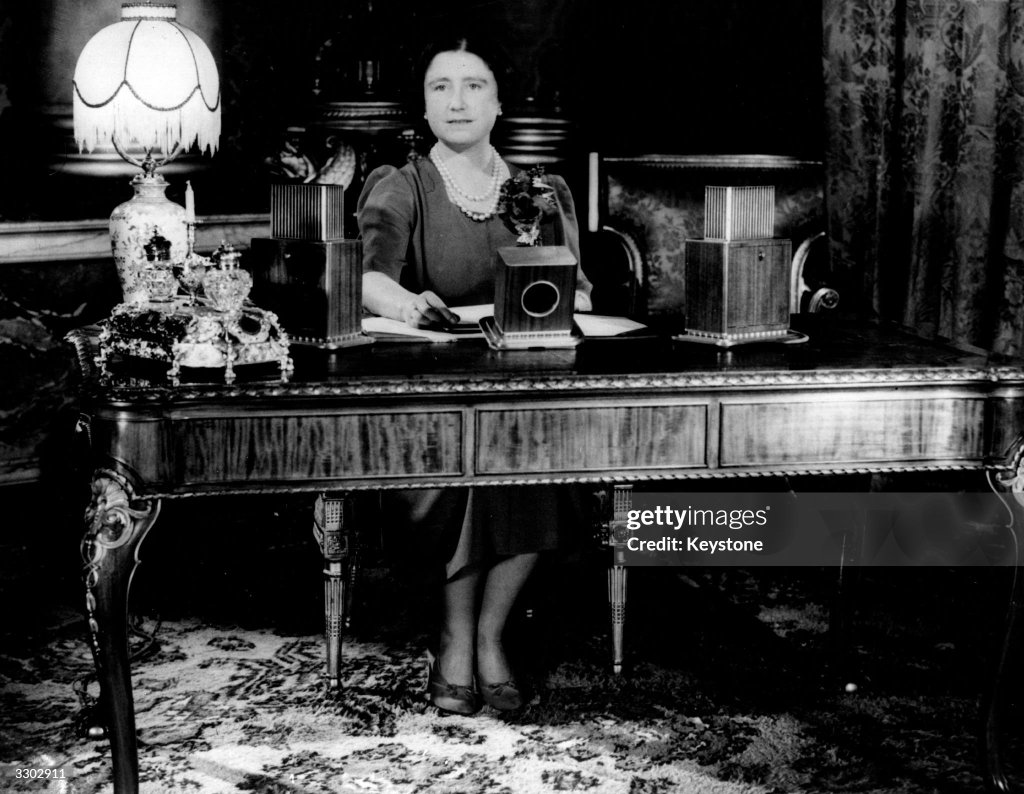
Queen Elizabeth made a broadcast to the women of the British Empire reminding them that in the war “we, no less than men, have real and vital work to do.” The Queen assures women that they are “keeping the Home Front, which will have dangers of its own, stable and strong.”
The RAF completes reconnaissance missions over southwest German cities such as Stuttgart, Mannheim, and Nuremberg. One aircraft is lost. The Luftwaffe did the same over northwest France and loses one aircraft over Dunkirk.
The British sign an agreement to charter much of the Finnish merchant fleet.
The Finnish situation appeared slightly less hopeful today. No intimation was received by the Soviet Foreign Office that the Finns desired another interview, and this evening an anti-Finnish announcement was broadcast in Moscow.
U.S. freighter Nishmaha is detained by British authorities at Gibraltar.
Convoy HG.8 departs from Port Said, and OG.6 forms at Gibraltar.
The War at Sea, Saturday, 11 November 1939 (naval-history.net)
On Northern Patrol were two cruisers were between the Orkneys and the Faroes, three cruisers and one AMC between the Faroes and Iceland, and one cruiser and two AMCs in the Denmark Strait. Light cruiser GLASGOW was en route to patrol in the Denmark Strait while light cruiser DIOMEDE was escorting Swedish steamer DROTTNINGHOLM (11, 055grt), which had been intercepted in the Faroes-Iceland patrol, towards Kirkwall. (In the Admiralty War Diary, the steamer is identified as above. In the Rosyth War Diary, she is identified as Danish steamer MARTIN GOLDSCHMIDT, 2095grt). DIOMEDE requested a trawler to take over, and armed boarding vessels NORTHERN ISLE and NORTHERN FOAM were dispatched. DIOMEDE lost track of the steamer before they arrived, but armed merchant cruiser CALIFORNIA located her late on the 11th. The trawlers could not make the rendezvous due to bad weather.
Armed merchant cruisers AURANIA and CHITRAL arrived in the Clyde after Northern Patrol duties.
Destroyer MAORI departed Scapa Flow to rendezvous with submarines TRIUMPH and TRIDENT 10 miles due north of the Butt of Lewis for escort. They arrived at Rosyth on the 12th.
Destroyer ZULU searched for a submarine reported NW of Holbourn Head in 58-37N, 3-32W.
Convoy FN.35 departed Southend, escorted by destroyer WOOLSTON and sloops PELICAN and HASTINGS. Destroyers JUNO and JUPITER were at sea as a fighting force for this convoy and for FS.35. Seven steamers became detached from FN.35 and Polish destroyers ORP GROM and ORP BURZA escorted them into the Humber. GROM afterwards returned to Harwich. The convoy arrived at Methil on the 13th, WOOLSTON and PELICAN at Rosyth mid-day, and HASTINGS which had lost touch, two hours later.
Convoy FS.35 departed Methil, escorted by destroyers WALLACE, WHITLEY and sloops STORK and STORK which attacked a submarine contact 9.9 miles off St Abbs Head. The convoy arrived at Southend on the 13th.
Trawler SOUTHWARD HO (204grt) reported a submarine five miles SE of the Tyne. Anti-submarine trawlers OLVINA (425grt) and CAPE COMORIN (504grt) carried out a search and during the night of the 11th/12th, CAPE COMORIN ran aground near the Tyne. She was refloated and repaired.
Destroyers KEITH and BOADICEA were on East Coast patrol. BOADICEA was detached to Harwich to refuel and KEITH was relieved by Polish destroyers ORP BURZA and ORP GROM on the 11th.
Destroyers IMOGEN, ICARUS and IMPULSIVE departed Scapa Flow on anti-submarine patrol and returned the next day.
The Humber Force, consisting of 2nd Cruiser Squadron, the 7th Destroyer Flotilla, and destroyers MASHONA, BEDOUIN, TARTAR, GURKHA of the 4th Flotilla, were placed under direct Admiralty control to counter a possible sea invasion of Holland thought to be due. Light cruisers GLASGOW, SOUTHAMPTON, AURORA, BELFAST, with MASHONA, TARTAR and GURKHA departed Rosyth on the 11th to join the Humber Force at Immingham. BEDOUIN was delayed three hours and arrived later. On the 12th, MASHONA, BEDOUIN and TARTAR were relieved by destroyers AFRIDI, MAORI and ZULU, with MASHONA departing Rosyth on the 14th, escorting submarine H.34 and tanker WAR PINDARI to Scapa Flow and Loch Ewe, respectively. BEDOUIN proceeded to Scapa Flow, while TARTAR escorted steamer MARYLYN (4555grt), departing Aberdeen on the 14th for Scapa Flow.
Patrol sloops KINGFISHER and WIDGEON departed Belfast and arrived in the Clyde later the same day.
Light cruiser EMERALD departed Portsmouth with another shipment of gold for Canada, called at Plymouth on the 12th, and arrived at Halifax on the 21st.
Destroyer WIVERN arrived at Chatham after boiler cleaning at Plymouth.
Aircraft carrier ARGUS and destroyer STURDY departed Devonport for Toulon where the carrier could conduct training exercises for new pilots. Destroyer GALLANT departed Portsmouth on the 13th and joined the ships. STURDY was to carry on and join the local defence destroyer flotilla on the China Station, but was retained in the Mediterranean as attendant destroyer for ARGUS. The three ships arrived at Gibraltar on the 17th with GALLANT leaving on the 17th and reaching Plymouth on the 21st.
Convoys OA.32G, which had departed the Thames on the 8th, and OB.32G, which had departed Liverpool, merged on the 11th as OG.6 with 43 ships. They were escorted by destroyers MACKAY, VIMY, WHIRLWIND, WREN and WAKEFUL from the 8th to 11th, and French destroyers TIGRE and PANTHÈRE from the 11th to 16th, when the convoy arrived at Gibraltar. Anti-submarine trawlers SPANIARD (455grt), TURCOMAN (455grt) and KELT (455grt) were with the convoy from the 11th to 16th.
Heavy cruisers SUSSEX and SHROPSHIRE departed Simonstown and Capetown respectively, to sweep towards St Helena. While departing, SUSSEX was in a minor collision with tanker ATHELPRINCE (8782grt) at Simonstown. The cruisers arrived back on the 23rd.
Battleship RAMILLIES and destroyer DELIGHT departed Port Said to relieve battleship MALAYA and destroyer DARING off Aden.
Light cruiser PENELOPE departed Alexandria on patrol, and arrived at Malta on the 25th.
The 1st Motor Torpedo Boat Flotilla left Malta on the 11th with base ship VULCAN (trawler, 623grt) for Bizerte and Ajaccio, en route to Portsmouth. The Flotilla consisted of the same units it had at the beginning of the war. Destroyer DAINTY followed the flotilla to escort.
MTB.3 and MTB.4 broke down and returned to Malta, were freighted in depot ship WOOLWICH, which departed Malta on the 21st, and later arrived at Portsmouth. DAINTY and seven MTBs reached Bizerte on the 15th and MTB.14, MTB.15, MTB.16, MTB.18 were sent on to Ajaccio.
On the 16th in heavy weather off Sardinia, MTB.6 broke down and was taken in tow by DAINTY. However, she was lost when the ring of the towing spar fractured and DAINTY rammed her. MTB.1 and MTB.19 remained with DAINTY and arrived at Ajaccio before noon on the 19th, after which DAINTY returned to Malta.
Liner FRANCONIA, carrying MTB.2, MTB.5, MTB.17, departed Malta on the 16th escorted by destroyer DUCHESS. The liner was damaged by heavy seas and forced to heave to, but was able to reach Marseilles on the 19th. On the 24th, the flotilla departed Marseilles, travelled up the Rhone River, and was then towed through the canals to the Seine. In the Seine, once again under their own power, they sailed through Paris and out to sea finally arriving at Portsmouth on 6 December. After refitting, the Flotilla was based at Felixstowe and became operational in January 1940.
Light cruiser NEPTUNE departed Freetown on patrol, met depot ship MAIDSTONE, and returned on the 16th to join aircraft carrier ARK ROYAL.
French submarine SIDI FERRUCH arrived at Port of Spain after patrol in the Caribbean.
A group of German steamers escaped from Vigo to attempt to return to Germany.
CORDOBA (4611grt) passed through the Denmark Strait on the 22nd, sighted an armed merchant cruiser but was not seen and arrived at Narvik on the 28th.
LAHNECK (1663grt) successfully passed through the Denmark Strait and arrived at Hamburg on 16 December.
LIVADIA (3094grt) passed through the Iceland-Faroes passage on the 16th, arrived in Honningsvaag on the 27th, and reached Hamburg on 9 December.
LUDOLF OLDENDORFF (1953grt) passing the Iceland-Faroes passage on the 24th was sighted and stopped by light cruiser SHEFFIELD. However, she was able to convince SHEFFIELD she was Danish steamer EDITH and in the confusion following the sinking of the RAWALPINDI, was not questioned further and arrived at Haugesand on 6 December.
PALOS (997grt) passed through the Denmark Strait on the 23rd, and arrived at Hamburg on the 29th.
SEBU (1894grt) passed through the Denmark Strait on the 24th, and arrived at Hamburg on 18 December.
TANGER (1742grt) passed the Iceland-Faroes Passage on the 20th, and arrived at Hamburg on 9 December.
Finally, the last ship of the group, KONSUL HENDRICK FISSER (4458grt) was captured attempting to pass the Iceland-Faroes Passage on the 23rd.
President Roosevelt led the nation in observance of Armistice Day by paying tribute to the Unknown Soldier at the tomb in Arlington National Cemetery at 11 o’clock this morning, twenty-one years after the guns ceased firing in the World War.
The need for “a new and better peace” was urged by President Roosevelt today in an address made by telephone from the White House to the Virginia Military Institute at Lexington, Virginia, on its one hundredth anniversary. It should be a peace, the President said, “which shall cause men at length to lay down weapons of hatred which have been used to divide them; and to forgo purposeless ambitions which have created fear — ambitions which in the long run serve no useful end.”
“I have sought — I still seek — in all simplicity, to try to find the road toward this peace,” he declared. “Pray and Arm for Peace” His remarks obviously were directed to the European war, although no explicit reference to it was made. As for the United States, he said, “We work for peace, we pray for peace and we arm for peace.” The President spoke feelingly of Robert E. Lee and Stonewall Jackson, who were so closely identified with the institute and Lexington, and he also referred to one of their staunchest opponents in the Civil War by stressing the aim of Massachusetts as set forth in her motto of seeking by the sword “quiet peace under liberty.”
“The only object of arms,” Mr. Roosevelt said in this connection, “is to bring about a condition in which quiet peace under liberty can endure,” and again, the type of peace he is seeking “must be the goal not only of men trained to arms, but of all of us everywhere whose dearest desire is a quiet peace under liberty.” In words addressed especially to the institute, he spoke of the need for citizens trained in the art of military defense, for “by no other means can we hope to maintain and perpetuate the democratic form of constitutional representative government.” Any idea that peace and freedom could be based on weakness, he declared, was an illusion.
Radical changes in the construction policy of the United States Navy are expected soon. They will involve the power of the government to cut the red tape that has for so many years hampered naval contract negotiations and vest in the government for the first time authority to grant long-time low-interest loans to private shipbuilding companies.
When it is deemed in the interest of national defense the Navy Department will be able, under the changes, to award contracts without competitive bidding. Under the loan plan the government might, on a contract calling for the building of a $50,000,000 battleship, make a loan of as much as $17,000,000, a third of the cost of the ship. The loan plan will apply to all classes of fighting and auxiliary ships.
These and other far-reaching changes are embodied in the Vinson $1,300,000,000 authorization bill to be introduced in the House the first day of the next session. That the bill will pass with little opposition in either Senate or House is the opinion expressed in Congressional quarters. It carries the endorsement of President Roosevelt, the Acting Secretary of the Navy and the Chief of Naval Operations. The majority for it in the House Naval Affairs Committee is overwhelming.
The bill would authorize construction of 127 ships, of which 95 would be combatant craft. Construction details are so far advanced that awarding of contracts can start without delay after the necessary legislation is enacted. Chairman Vinson, who is to pilot the authorization bill through the House, has declared that all of the ships may be in commission in less than four years and that this will mean a fleet of modern fighting craft of all classes able to provide protection against any other one fleet in the world and far superior to that of any other nation except Great Britain.
Official figures fix the strength of the United States Navy, on the completion of the new program, at 2,154,000 tons. This includes twenty-three battleships of a total tonnage of 764,300, of which fifteen will be modern under-age units of the dreadnaught type, and with a few exceptions all mounting sixteen-inch guns capable of an accurate range of more than twenty miles. Eight of these battleships are already under construction. at least 50 percent complete.
Some leaders favor avoidance of controversial issues at the next session of the U.S. Congress. A democratic truce through 1940 is urged. Influential Senate Democrats are discussing methods to delay until after the 1940 election some of the Congressional issues which might develop bitter controversy and bring new splits in party ranks.
Criticizing labor leaders for their failure to bring peace between the A.F. of L. and the C.I.O., Senator Norris called today for a Congressional showdown in the next session on efforts to amend the National Labor Relations Act.
Secretary Wallace, in an Armistice Day address to more than 5,000 Southeastern Negro educators and farmers here today, coupled denunciation of totalitarian government with a plea for better understanding among the races.
Vice President Garner’s campaign manager declared today that the Texan was in the “Presidential race to win.”
About forty changes in the revenue laws will be sought by the Chamber of Commerce of the United States at the next session of Congress.
The International Car Show opens in New York City. It is the first one televised for the few people who own (tiny) television sets.
Admiral Richard Byrd will bottle Antarctic air for study and will test temperature effects on the earth’s atmosphere.
Freedom of speech, thought and inquiry, if essential in time of peace, are all the more essential in periods of stress, it was said yesterday by United States Attorney General Frank W. Murphy.
As the last activity of a busy day, President Roosevelt asked the American people in a radio address tonight, to aid the annual roll call of the American Red Cross as a necessary gesture “in a world darkened by conflict and misery.” The three principal radio networks broadcast his appeal.
The students of Catholic colleges in the nation are overwhelmingly opposed to the United States entering the present European war, according to a nation-wide survey of Catholic student opinion on war by America, Catholic weekly, out yesterday.
The “progressive” trend of modern education, with its emphasis on a study of contemporary problems, was assailed yesterday afternoon as “superficial” in theory and “confusing” in practice by Dr. Mortimer J. Adler, Professor of the Philosophy of Law at the University of Chicago.
As the body of E. J. O’Hare was lowered into a grave in St. Louis today efforts were redoubled in Chicago to learn why his gang associates decreed his death. Two major possibilities were being scrutinized by investigators for the State’s Attorney, who are seeking a Capone gang killer as the assassin. One motive would have been a refusal by O’Hare to relinquish control of the Capone syndicate’s race-track interests, which he has held as regent during Capone’s imprisonment for income tax evasion, which will end on November 19.
[Ed: E. J. O’Hare has a son who will become important in a couple of years. Edward Henry O’Hare will be an aviator of some note in the Pacific War. He goes by “Butch.” You might have flown through the airport that bears his name. And yes, his father was ‘mobbed up’.]
Kate Smith first sings Irving Berlin’s “God Bless America.”
Selected College Football scores:
Arizona State 41, Northern Arizona 6
Arkansas 12, @ Rice 12
Auburn 10, Villanova 9
Baylor 20, Texas 0
Boston College 20, @ Detroit Mercy 13
Brigham Young 0, @ Utah State 0
Brown 14, @ Yale 14
Clemson 20, Wake Forest 7
Columbia 19, @ Navy 13
(5) Cornell 14, Colgate 12
Denver 13, Colorado State 6
(15) Duke 20, @ Virginia Military Institute 7
(12) Duquesne 7, @ North Carolina State 0
Fordham 13, Indiana 0
Furman 20, @ South Carolina 0
Georgetown 20, Maryland 0
Georgia 6, N Florida 2
Georgia Tech 13, (18) Kentucky 6
Gonzaga 23, @ Montana 0
Hampden-Sydney 14, Wofford 0
Harvard 15, Army 0
Holy Cross 14, Temple 0
Illinois 7, Wisconsin 0
Iowa 7, (3) Notre Dame 6
Manhattan 19, @ West Virginia 7
Marquette 21, Iowa State 2
Minnesota 20, @ (10) Michigan 7
(19) Mississippi 27, @ Southern Mississippi 7
Mississippi State 15, @ Louisiana State 12
Missouri 20, @ (17) New York University 7
Nebraska 7, Kansas 0
(8) North Carolina 32, N Davidson 0
(9) Ohio State 61, @ Chicago 0
(6) Oklahoma 13, @ Kansas State 10
Oregon State 19, @ Oregon 14
Penn State 10, @ Pennsylvania 0
Pittsburgh 6, Carnegie Mellon 0
Princeton 9, (14) Dartmouth 7
Purdue 3, @ Northwestern 0
Rhodes 13, Samford 6
Richmond 13, Virginia Tech 0
Saint Mary’s (CA) 40, Loyola Marymount 7
San Francisco 6, @ Hardin-Simmons 6
(16) Santa Clara 6, Michigan State 0
(4) Southern California 33, Stanford 0
(1) Tennessee 34, Citadel 0
(2) Texas A&M 6, (13) Southern Methodist 2
Texas Christian 16, Tulsa 0
Texas Tech 0, @ Centenary (LA) 0
Texas-El Paso 14, Arizona 6
(7) Tulane 13, (20) Alabama 0
Utah 34, Hawaii 19
Vanderbilt 25, Sewanee 7
Washburn 19, @ Grinnell 7
Washington 13, @ California 6
Washington (MO) 7, Oklahoma State 0
Washington State 21, Idaho 13
William & Mary 19, Randolph-Macon 6
Provincial police in Quebec, Canada announced today that eight persons, alleged to have been distributing pamphlets calling upon the Canadian people to demand peace, were being “detained pending instructions from the Quebec Attorney General.”
Born:
Claudia Boyarskikh, Soviet cross country skier (5 Olympic gold medals, 1964, 1968), in Verkhnyaya Pyshma, Russian SFSR, Soviet Union (d. 2009).
Denise Alexander, American actress (Mary McKinnon – “Another World”, Lesley Webber – “General Hospital”), in New York, New York.
Died:
Jan Opletal, 24, Czech student (died of gunshot wound sustained during the October 28 demonstrations in Prague).
Naval Construction:
The Kriegsmarine (German Navy) Type VIIC U-boat U-69 is laid down by F. Krupp Germaniawerft AG, Kiel (werk 603).
The Marine Nationale (French Navy) Élan-class aviso dragueur de mines (minesweeping sloop) La Curieuse is launched by Arsenal de Lorient (Lorient, France).
 History Diaries