The Saigon police announce they have uncovered a ring involving officials from the Nguyễn Khánh government that sold exemptions to Vietnamese youths called up for military service. The price for avoidance of duty in the United States advised armed forces, they said, ranged from the equivalent of $750 to $1,500. That would be too high for peasants but well within the means of wealthy families.
The police reported one man under arrest. They said they intend to press the investiga‐ tion despite the possibility of efforts in high places to sweep it under the rug. Draft boards speeded their work recently after a long lull. Teams of military and civilian policemen are stopping youths for checks of identity and draft registration cards and sometimes are inducting them on the spot. All branches of the armed services need more men. While the United States has built up its supporting forces to more than 21,000 men, many Vietnamese units are at only half their authorized strength. One goal is to bring the regular army up to 215,000 by December 31.
The war went on even in flooded central Vietnam, where United States and Vietnamese relief and rescue teams struggled through Việt Cộng sniper fire and foul weather to alleviate the disaster. A United States military spokesman, cautioning that the figures might be exaggerated, said floods rushing through mountain valleys in the last few days were reported to have drowned 1,100 civilians and driven 150,000 from their homes.
On Veterans Day, NBC-TV shows a film (provided by a Japanese agency) that gives the North Vietnamese version of events; among other film clips, it shows the first U.S. POW, Lieutenant Everett Alvarez. The film was shown on the “Huntley‐Brinkley Report.” The National Broadcasting Company said it had been taken by North Vietnamese photographers and some Japanese photographers and was obtained from a Japanese agency. On August 4 United States air strikes were carried out against North Vietnamese bases in retaliation for attacks on American destroyers in the Gulf of Tonkin. Lieutenant Alvarez, 26 years old, of San Jose, California, was shot down and captured. The film showed North Vietnamese boats, soldiers and shore batteries firing on the American planes.
Pope Paul VI has withdrawn from Archbishop Pierre Martin Ngô Đình Thục his administrative authority over the South Vietnamese Archdiocese of Huế. No new status was announced for the Archbishop, ail brother of the deposed South Vietnamese President, the late Ngô Đình Diệm. He apparently retains his personal title of Archbishop of Huế without control over the Archdiocese. He has not been allowed to return to his country since his family’s regime was overthrown. He has attended sessions of Ecumenical Council Vatican II in Rome and has spent part of his time at a villa on the Riviera at Nice.
In a ceremony marking Veterans Day today, the United States enlisted men’s mess in Saigon was dedicated to Specialist 4 James T. Davis of Livingston, Tennessee, the first of 221 Americans to die in combat in Vietnam. He was killed in a Việt Cộng ambush on December 22, 1961.
Prince Norodom Sihanouk exuberantly led Chinese Communist and Soviet guests today through an exhibition showing the strength of Cambodia’s economy. But for the rain he would have said a few kind words about the United States during his review. In a prepared text the Cambodian chief of state, who usually misses few opportunities to attack United States policy in Asia, included the United States as one of the ‘countries to which Cambodians owed “eternal gratitude” for economic aid. He was also ready to remind the Chinese and Russians that if Cambodia’s independent economy should collapse, she could align herself either with the United States or with the Communist bloc. His speech read: “If we do not find [a solution to a troublesome soft spot in the economy] our country will be forced either to align itself with the very rich United States so that they can meet the annual deficit of our national budget — as they have done for instance with Thailand — or open its doors to Communism, which has approved methods for cases of this kind.
The new Soviet leaders were reported tonight to have agreed to a postponement of a proposed international Communist meeting in December in favor of further discussions with the Chinese Communists. The discussions would probably be held in Peking. Communist China has strenuously opposed the December meeting, which was intended to prepare a world Communist conference next year on the ideological quarrel between the Soviet and Chinese parties.
The report that the Soviet leadership had agreed to a postponement of the meeting came from sources close to a visiting foreign Communist delegation. The sources said the preparatory meeting would be held next spring. They added that the outlook now was for another round of talks between the Chinese and Russians. The last such conference was held in Moscow in July, 1963. The reports about an agreement for talks in Peking could not be confirmed.
Chou En‐lai, the Chinese Communist Premier, was still in Moscow today, his activities surrounded by official secrecy. The report on the postponement of the December meeting was the first indication that some progress had been made in the talks between Mr. Chou and the Soviet leaders. A high‐ranking East European diplomat said, however, that he was not aware of any such agreement. “If it is true, it is a great step forward,” he added.
Secretary of State Dean Rusk said tonight that the admission of Communist China to the United Nations probably would not temper Peking’s “militant doctrine” and actions. The Secretary rejected suggestions by India and some United States allies in Europe that granting the Chinese Communists membership in the world organization would make them easier to deal with. Mr. Rusk reaffirmed the Administration’s position as the United States prepared for a new battle on the question in the United Nations General Assembly, which is expected to open its next session in December. In answer to questions, Mr. Rusk also said that “there is trouble ahead” between Communist China and the United States if Peking did not cease efforts to subvert the nations of Southeast Asia and drop its demand for possession of Taiwan, held by the Chinese Nationalists.
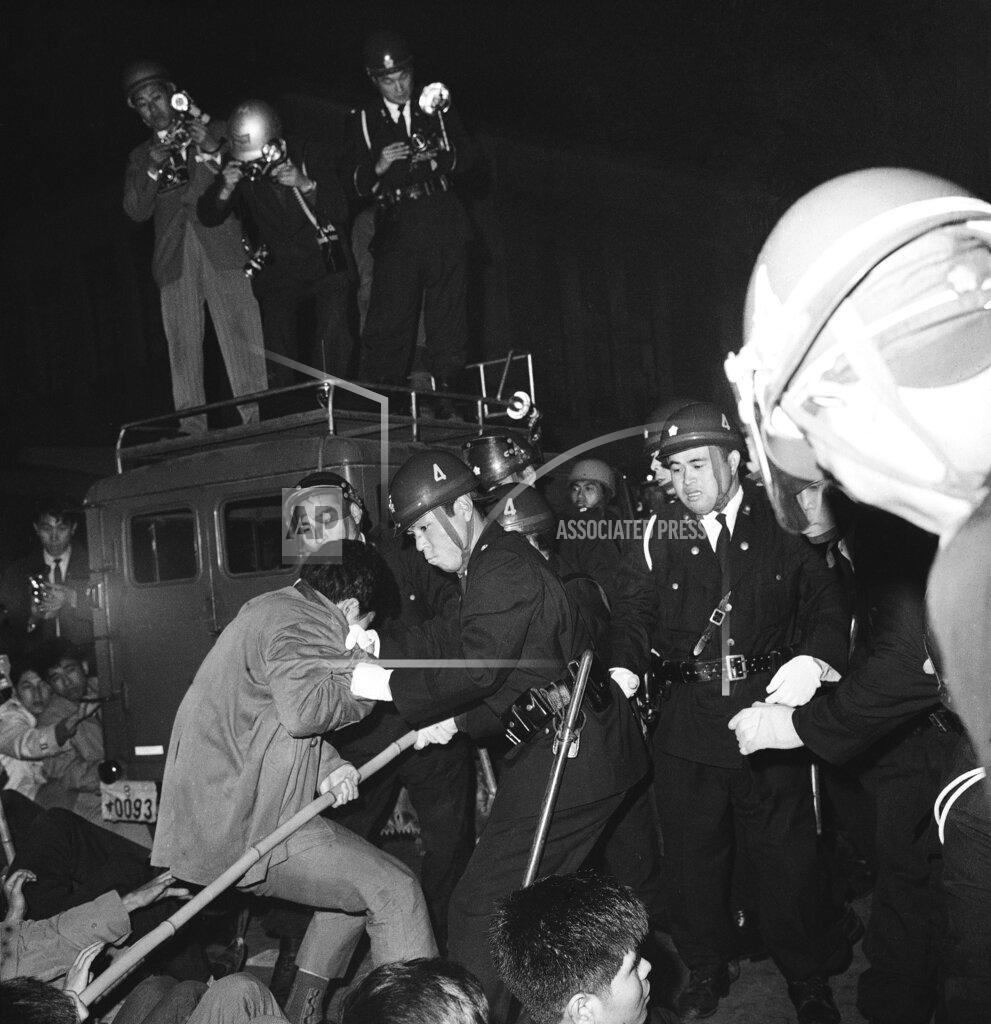
Steel‐helmeted policemen held off 2,000 leftist demonstrators near the United States naval base at Sasebo, Japan as the first nuclear‐powered submarine to visit Japan moored off Sasebo this morning. Several spirited scuffles occurred as a pro‐Communist group of 200 university students attempted to fight its way through six lines of riot police guarding the approaches to the navy area. The leaders in each. attempt to break through the police lines were arrested and hustled away in police vans while students and unionists shouted anti‐American slogans. More than 1,000 policemen stopped the demonstrators at a broad street intersection 200 yards from the main gate of the naval base. The bulk of the crowd, consisting of unionists controlled by the Socialist party, were content to sing, shout and squat on the rain‐drenched pavement until Communist‐leaning students arrived in their traditional snake dance.
A caucus of the ruling Christian Democratic Party in Bonn voted tonight for a delay in West German participation in the proposed nuclear‐armed allied fleet. The vote came after Dr. Konrad Adenauer had reported to Chancellor Ludwig Erhard on the talks he had in Paris Monday with President de Gaulle, who is strongly opposed to the creation of the United Statessponsored nuclear force. In urging a delay, the Christian Democratic caucus pointedly refrained from setting up any kind of timetable. Thus, a firm West German commitment to join the nuclear force next year appeared to have been shelved for the time being at least. New British expressions of interest in a modified nuclear fleet and the apparent willingness of the United States to accept a delay make it easier for Bonn to adopt its new attitude, observers here said. But the chief motive of the policy shift, they added, is a desire to reach some accommodation with France.
The chiefs of the West German and United States armed forces reached today what was described as “large areas of agreement” on NATO defense strategy. A Pentagon statement said the discussions between the military leaders centered on “the contribution of new weapons, including the Pershing missile system.” The Pershing is a two‐stage, nuclear‐tipped missile, capable of striking targets at distances up to 400 miles. It is replacing the older Redstone missile in West Germany. The United States Army sent one of its five Pershing missile battalions to West Germany earlier this year. The battalion has four Pershing launchers, manned by 635 men.
A surprise concession by France today appeared to assure that the long‐awaited Kennedy round of tariff‐cutting negotiations would start in Geneva next Monday as scheduled. The talks will be temporarily limited, however, to industrial products. France agreed that the European Common Market could begin discussions with the United States and other nations without waiting for a settlement of the ParisBonn dispute on grain prices. Monday is the deadline for all countries involved to deposit lists of the products they want to exclude from an across‐the‐board tariff cut as high as 50 percent.
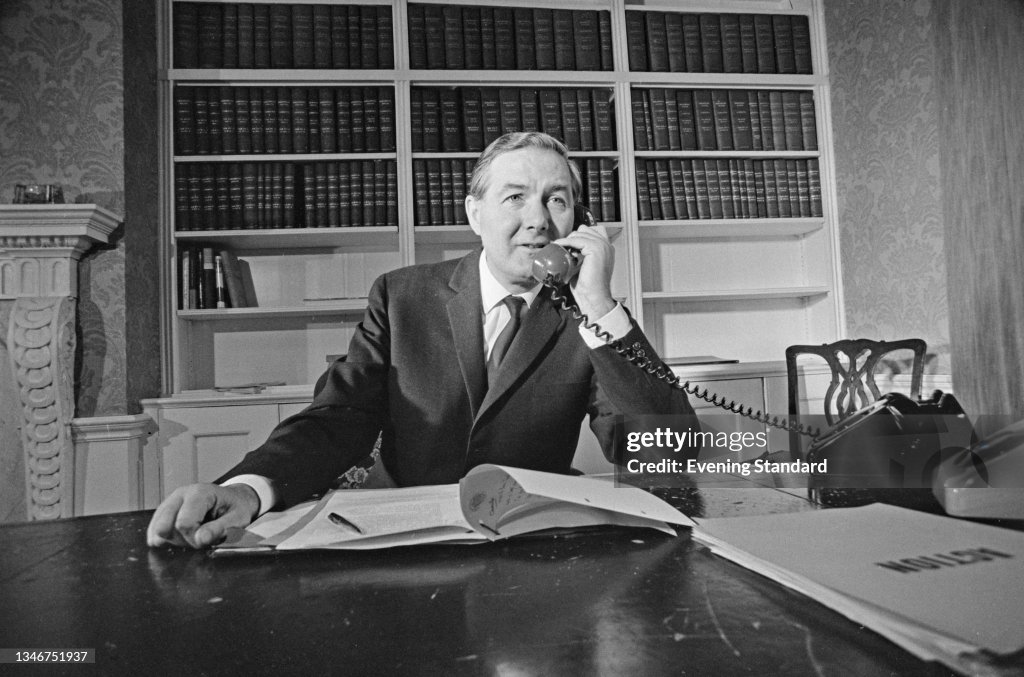
Britain’s new Labor Government, in office less than a month, acted today to raise taxes and widen welfare benefits as part of a program aimed at creating a “dynamic” economy. Chancellor of the Exchequer James Callaghan presented an emergency budget to the House of Commons charting the course of the economy. It was a deflationary budget, less severe than some had expected, aimed at reducing overall purchasing power in the nation. The “standard” income tax rate, paid by 7 million of the nation’s 21 million taxpayers, goes up from 38¾ to 41¼, cent.
Prospects improved suddenly today for action by the Ecumenical Council at its waning session on long‐pending declarations on Roman Catholic attitudes toward Jews and other non‐Christians and on religious liberty. After a long, unexplained delay behind the scenes at the Council, both declarations were reported to be ready for printing and distribution to the more than 2,500 prelates of the church attending the Council. They probably will be distributed early next week. This meant that theoretically both documents could come up for preliminary vote, final revision and definite approval before the end on November 21 of this third session of Ecumenical Council Vatican II. But such action would require, in the words of one informed source “goodwill all around.” There is still potent opposition to both documents.
The Soviet Union faces a problem of retraining 80,000 biology teachers who were educated in the doctrine of Trofim D. Lysenko, the controversial Marxist biologist. According to an article today in the youth newspaper Komsomolskaya Pravda, the Soviet educators will also have to rewrite biology textbooks and teaching aids, all of which are pervaded by Professor Lysenko’s views and ignore modern genetic advances. Komsomolskaya Pravda has been in the forefront of a mounting campaign against Professor Lysenko since the deposing of Nikita S. Khrushchev a month ago. The article, by N. Vorontsov, a Novosibirsk biologist and a Lysenko opponent, charged that the standard ninth‐grade textbook written by Y. A. Veselov said nothing about the role of chromosomes, the rod‐like bodies in the cell nucleus that carry hereditary factors.
The Kurds in Iraq, under the leadership of General Mullah Mustafa al‐Barzani, have asserted a de facto autonomy. Having failed in prolonged efforts to persuade Baghdad to give them what they deemed their national rights, the Kurds have taken those rights. According to delegates from Kurdistan. in northern Iraq, General al‐Barzani now has in operation a Kurdish autonomous government with an executive, which might be called a Cabinet, of 11 ministers. One of these is said to be Jelal Talabani, the military leader of the Kurdish Democratic party who had quarreled with the general last July and who was forced to go to Iran. Mr. Talabani contended that General al‐Barzani should not have arranged a cease‐fire with the Iraqi President, Abdel Salam Arif, last February. Mr. Talabani is said to have become reconciled with the general after the latter adopted last month a tougher political and military line. Several hundred representative Kurds elected a Parliament that met at Bushkin, a village near Rania, in northern Iraq.
The body of the Marcus Garvey, a proponent of African-American nationalism and founder of the Universal Negro Improvement Association (UNIA), was reinterred 24 years after his death, in a special ceremony held at his homeland of Jamaica. A crowd of thousands of admirers paid their final respects, and Garvey was proclaimed as the first National Hero of Jamaica.
More than 100 Belgians just liberated from the rebels stood in the shade of the airport here today waiting for a United States Air Force C‐130 to fly them to Leopoldville. Many were weeping for joy. But Mrs. Arthur Cordier, a slight woman with wispy white hair, was weeping from grief, unable, as she put it, to “repress the vision” of rebel Jeunesse units armed with spears and knives hacking to death her husband and her two sons, Jacques, 21 years old, and Jean, 17. The Jeunesse is the youth arm of the rebels’ “Congolese People’s Republic” in Stanleyville. The slaying took place in the Cordiers’ backyard here in Kindu more than two months ago. Mrs. Cordier had been made to witness it.
Reports of such atrocities are becoming almost commonplace as Premier Moise Tshombe’s mercenaries advance on Stanleyville. In Samba, 80 miles south of here, a Belgian was found executed in a similar fashion. Two others, badly mutilated, were saved by Maj. Michael Hoare’s mercenary column as it drove northward on Kindu. All of the killings have been charged to the Jeunesse. In contrast, the “Simbas” — soldiers of the rebel army — have acted with restraint and even cordiality toward European hostages. But they have exercised little or no control over the Jeunesse.
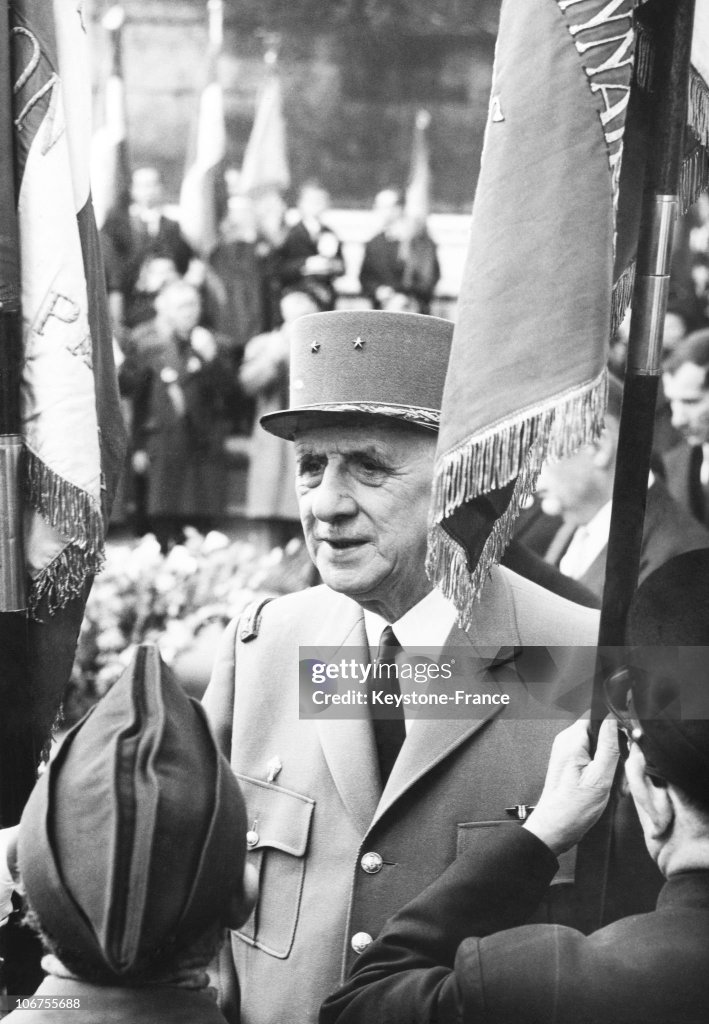
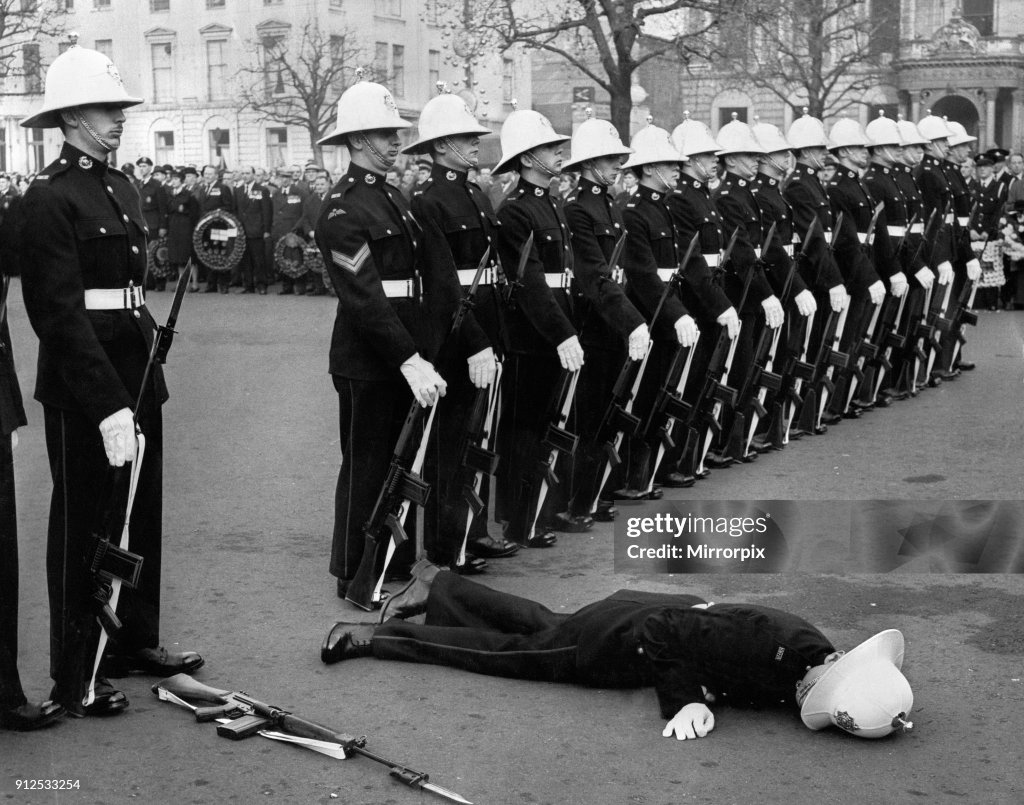
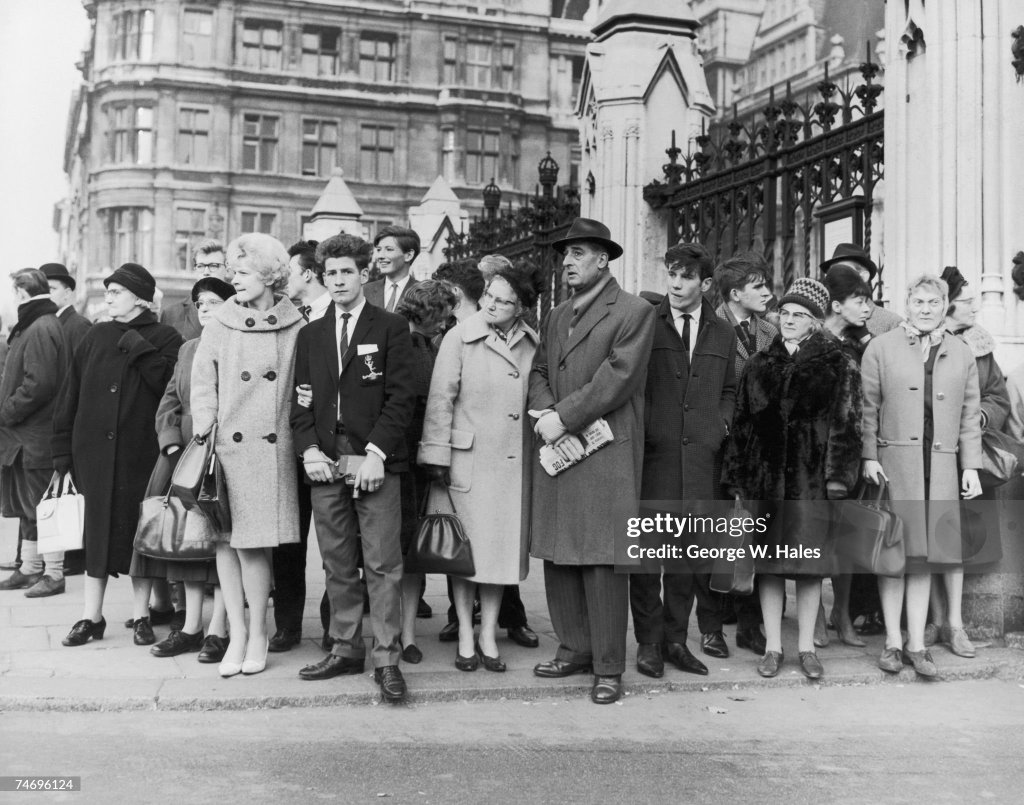
With parades and martial music, with taps, a minute of silence and then a rifle volley, the nation observed Veterans Day yesterday. Wreaths were laid by a few dignitaries and many veterans.
The Chairman of the House Ways and Means Committee cleared the way today for early consideration of the Administration’s plan for health insurance for the aged under Social Security. Representative Wilbur D. Mills, Democrat of Arkansas, said he was ready to bring the long-stalled measure up in committee immediately after Congress convened in January if President Johnson asked him to. His statement was made by telephone from Arkansas. Sources close to the President said today that the Administration had not yet decided whether to push first for health insurance or excise tax cuts. Public comments by Administration officials have left the impression that both would be at the “top of the list.”
Some Administration sources predict that Congress will pass some form of health insurance for the aged next year, even if it means bypassing Mr. Mills and his committee. These sources say the Democrats now have the votes in the House to force through a discharge petition that would bring the measure to the House floor. However, sources within the Administration consider it likely that some compromise will be worked out to win Mr. Mills’s approval.
Mr. Mills has long opposed the Administration plan of financing health insurance under the Social Security system. He has said that he fears that rising medical costs will ultimately jeopardize the actuarial soundness of the Social Security System. Mr. Mills has not abandoned his opposition to the plan. However, he has said that he hopes his committee can work out some compromise to make hospital and other medical services available under a “prepayment program” not linked to Social Security. “I am acutely aware of the fact that there is a problem here which must be met,” he told a civic club in Little Rock, Arkansas, this fall.
One compromise could be a separate payroll tax — not tied to Social Security — to finance hospital and other medical costs for elderly persons. The health insurance proposal has been the center of controversy for nearly 20 years. A plan to provide broad medical insurance under Social Security for persons of all ages was proposed in 1945 by former President Harry S. Truman. Two months ago, the Senate passed a bill combining health insurance for the aged with increases in Social Security cash, benefits. It marked the first time either house of Congress had endorsed any such proposal for medical care.
Another drive is shaping up in Congress to protect shoppers from deceptive or confusing packages and labels for food, drugs, cosmetics and other household items. The “truth in packaging” legislation, once again blocked in the adjournment rush last month, has been prepared for reintroduction and consideration early in the coming session. It will be largely the same bill originally sponsored by Senator Philip A. Hart, Democrat of Michigan, and nearly a dozen colleagues. Today the Senate Antitrust and Monopoly Subcommittee, which Mr. Hart heads, released a long report drawn from hearplied yesterday to an assertion ings held in April, 1963. Hearings on the same subject were conducted in 1961 and 1962. The report rejects arguments by opponents that prevailing law and self‐regulation are all that is needed.
Dean Burch, Republican National Chairman, and John Grenier, executive director of the National Committee, were in Jamaica yesterday to discuss with Senator Barry Goldwater their future as party leaders.A source at Republican headquarters in Washington said that Representative William E. Miller, the defeated Vice‐Presidential nominee, was taking part in the talks. Denison Kitchel, director of Mr. Goldwater’s Presidential campaign, was also at the Senator’s vacation headquarters at Montego Bay. Another source at the party headquarters said that Mr. Burch and Mr. Grenier had been “surprised” by the scope and intensity of the demands for a change in the party leadership, from both moderates and conservatives.
Meanwhile, Wayne J. Hood, a long‐time supporter of Mr. Goldwater, who was organization director at national headquarters in the campaign, indicated that the Goldwater forces might give up control of the party organization without a struggle. “There’s a feeling on the part of the Goldwater people that a change has to be made,” he said in a telephone interview from La Crosse, Wisconsin. “If it became apparent to Dean that it can’t be put together, he’ll be the first guy to say, ‘I’m going home.’”
A tax change that could save business as much as $200 million to $300 million a year is in an advanced stage of preparation in the Treasury Department. The new tax benefit for business will come in the form of a major revision and liberalization of the Treasury’s rules concerning depreciation on all business machinery and equipment. The. change would not require legislation. The depreciation rules were completely rewritten and liberalized two years ago, but many businessmen have been protesting that the rules are still too strict. Despite any difficulties, the Treasury is hoping to get its revision of the rules completed by December 1. This is because it feels that business needs at least one month’s notice before it can decide which of its equipment replacement and modernization programs to go ahead with next year.
The new Verrazano‐Narrows Bridge in New York glowed last evening like a cathedral altar at benediction. At twilight, with fog clinging to the huge cables of the bridge, 752 lights were suddenly turned on for the first time — and traced the graceful lines of the span that stretches over the Narrows between Brooklyn and Staten Island. The fog dimmed the scene, but did not diminish its beauty. Instead, it made it more rare, more intimate. The occasion, however, was not intended to be esthetic. Engineers wanted to know only if the lights worked.
Officials of six unions representing railroad shopcraft workers decided today to prepare for a national railroad strike on November 20 or 23. The six unions represent about 160,000 of the 443,000 nonoperating railroad employes. Most of their members are engaged in the repair and maintenance of railroad equipment. If they strike, other railroad workers are expected to refuse to cross their picket lines. The dispute, over wages, involves 187 railroads and terminal and switching companies. They handle more than 90 per cent of the railroad business of the nation. The only major railroads not involved, according to industry records, are the Southern Railway System and the Florida East Coast Railroad. The strike date will be set Friday at a meeting in Chicago of the executive council of the Railway Employes Department of the American Federation of Labor and Congress of Industrial Organizations.
Eight newspaper unions yesterday supported a proposal by the president of the printers union that labor contract negotiations be settled early and that the contracts take effect immediately on settlement. The proposal — termed “preactivity” — was recently advanced by Bertram A. Powers, president of Typographical Union No. 6. It was adopted yesterday by eight other unions at a meeting of the Newspaper Trade Council. All the newspaper unions except‐ the pressmen are members of the council. John J. Gaherin, president of the Publishers Association of New York City, said last week that the publishers had not said yes or no to the proposal, although they considered it an “unwarranted request.”
There has been no agreement under White House pressure to conceal the fact that a negotiated settlement is being sought in the $300,000 suit against Robert G. Baker, David Carliner, attorney for the plaintiffs in the case, said today. Neither, he added, has an out-of‐court settlement at $30,000 been concluded, as reported in the current issue of Newsweek magazine. He said, however, that discussions at a higher figure were under way. Mr. Baker, the central figure in a long Senate investigation earlier this year, denied two days ago that he had agreed to a $30,000 settlement. “Since there was no settlement, there was nothing to keep secret,” Mr. Carliner said. “Certainly, nothing was said to me about keeping quiet until the election was over.” Newsweek said this provision had been insisted upon by Mr. Baker’s attorney, Edward Bennett Williams, at the instigation of Abe Fortas, a Washington lawyer who is close to President Johnson, and Walter W. Jenkins, a former White House aide. It said the settlement had been reached on October 5.
A panel of the National Academy of Sciences recommended today that the Government undertake a ten‐year, $225‐million program for construction of large optical and radio telescopes. Such a program, the panel argued, is necessary if the United States is to maintain its “dominant position” in astronomical research. The group found that research was being hampered by a lack of observatories and warned that without a construction program “the promise of astronomy will remain unfulfilled and American astronomy will surely stagnate in this century.” The panel, established late in 1962 by the academy’s Committee on Science and Public Policy, was headed by Dr. A. E. Whitford of the University of California’s Lick Observatory.
An intercontinental B‐52 jet bomber, on a training flight from Moses Lake, Washington, crashed and burned in northeastern Montana last night, killing all seven crew members. The bodies were found today in smoldering, scattered wreckage in a sparsely settled area of rolling hills and dry gulches 25 miles south of Wolf Point. Flames from the wreckage started a prairie fire that burned 350 acres. About 40 ranchers used shovels, sacks and tractors, to extinguish it. One observer at the scene said the plane had gouged three 400-foot furrows in the earth before crashing into a small hill and disintegrating.
Murray Schisgal’s stage comedy “Luv”, directed by Miks Nichols and starring Alan Arkin and Eli Wallach, opens at the Booth Theatre, later transferring to the Broadhurst, and then the Helen Hayes, NYC; runs for 901 performances, winning 3 Tony Awards
Dow Jones Industrial Average: 873.59 (+2.95)
Born:
Calista Flockhart, American actress known for portraying Ally McBeal in the television show of the same name; in Freeport, Illinois.
Philip McKeon, American actor (Tommy-“Alice”, “Return to Horror High”), in Westbury, New York.
Roberto Hernandez, Puerto Rican MLB pitcher (All-Star, 1996, 1999; Chicago White Sox, San Francisco Giants, Tampa Bay Devil Rays, Kansas City Royals, Atlanta Braves, Philadelphia Phillies, New York Mets, Pittsburgh Pirates, Cleveland Indians, Los Angeles Dodgers), in Santurce, Puerto Rico.
Gene Profit, NFL defensive back (New England Patriots), in Baton Rouge, Louisiana.
Goran Lingmerth, Swedish NFL kicker (Cleveland Browns), in Nassjo, Sweden.
Randy Heath, Canadian NHL left wing (New York Rangers), in Vancouver, British Columbia, Canada.
Died:
H[enry] Beam Piper, 60, American sci-fi author (“Little Fuzzy”, “Lord Kalvan of Otherwhen”).
Emil Sick, 70, American beer brewer and Seattle baseball team owner.



 History Diaries