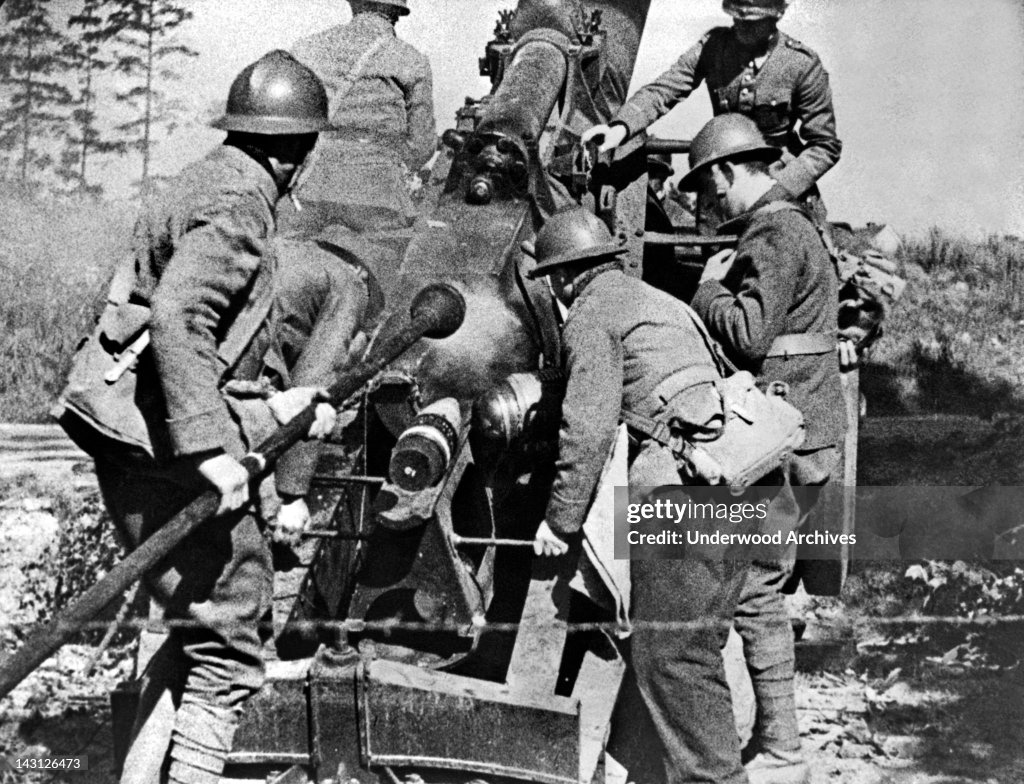
The Soviet–Lithuanian Mutual Assistance Treaty was signed.
In a national radio broadcast, French Prime Minister, Édouard Daladier formally rejected the German peace proposals, made by German Chancellor Adolf Hitler on October 6, 1939. He stated that France will continue to fight for a definite guarantee of security in Europe. Daladier gave a radio address rejecting Hitler’s latest peace propositions, saying that a settlement at this time “would only consecrate conquests by deceit or violence and would not prevent preparation for new ones.” Daladier vowed that arms would only be laid down “when we have certain guaranties of security which may not be put in doubt every six months.”
Admiral Erich Raeder mentions to Hitler for the first time the idea of invading Norway, stressing its strategic importance. Admiral Raeder urged Hitler to invade Norway to protect Germany’s vital iron ore traffic.
Hitler orders a General Government in Poland. This is popularly seen as a sham state that simply acts as another province of Germany.
The first deportation of Austrian and Czechoslovakian Jews into concentration camps in Poland took place.
German patrols are reportedly active and artillery exchanges take place on the Western Front. There is artillery action and German reconnaissance between the Moselle and Saar.
General von Bock, who had commanded Army Group North in Poland, re-locates his headquarters for the newly renamed Army Group B to Godesberg.
Hitler opens the winter relief fund campaign.
Nazis may accept a coup in Bessarabia. Washington hears Berlin will not resist Moscow’s taking part of Rumania.
Churchill argues in the British Cabinet for the mining of Norwegian coastal waters to interfere with German iron ore traffic. Winston Churchill speaks before the House of Commons and advocates mining the Norwegian coastal waters, which are a supply route for German iron ore from Narvik.
Air Minister Sir Kingsley Wood tells the House of Commons that there will be a doubling of aircraft production. The whole air power of the British Empire is being marshaled for war with the help of the Dominions, Sir Kingsley Wood informed the House of Commons today.
Two participants in the 4 September 1939 raid on Wilhelmshaven are to be awarded the Distinguished Flying Cross.
An RAAF No. 10 Squadron Short Sunderland aircraft based in the UK made a flight to Tunisia — the first act of active service from any Commonwealth squadron in the Second World War.
Recruitment into the British Women’s Land Army is suspended after 25,000 have enrolled.
Lithuania signed a 15-year Mutual Assistance Pact with the Soviet Union in Moscow. The agreement allowed the Soviets to station 20,000 men in military bases in Lithuania. In a secret protocol, Vilnius was restored to Lithuania which it was lost to Poland in 1922.
The Estonian government resigns. Uluots is appointed the new Prime Minister and Piip becomes the new Foreign Minister. The Estonian Cabinet resigned tonight. It is rumored the new Prime Minister will be Jueri Uluots, President of the Estonian Parliament, who went to Moscow to take part in the Soviet-Estonian negotiations. The new Foreign Minister, it is believed, will be Antonius Piip, who also was a member of the delegation to Moscow. Negotiations between the Soviet and Estonia have been satisfactorily concluded, it was announced here.
The Finns call up their reserves and begin the evacuation of some frontier districts, including Helsinki and Vyborg. The government orders a black-out in fear of air attacks. Civilians are evacuated from Helsinki and Viipuri (Vyborg) on a voluntary basis. The army begins maneuvers and begins bringing staffs up to full strength. Two divisions are deployed to the Karelian Isthmus. Finland’s fleet was mobilizing tonight at the port of Abo in readiness to transport troops and war materials to the nearby Aland Islands if they are threatened by Russia. One unidentified warship was known to have taken up what appeared to be an observation post. off the Aland Islands between Finland and Sweden.The Finnish Bourse at Helsingfors was closed until further notice.
Some 250,000 Finnish troops were kept in positions of strategic importance within maneuvering distance of the Russian frontier. Reports also were received here that part of the normally large body of Russian troops quartered in and around Leningrad had been diverted to Murmansk, Soviet Arctic port about fifty miles east of the northern Finnish frontier. Meanwhile, telephone communication with Estonia was cut off tonight without explanation.
To protect the civil population against possible dangers arising from the political situation, the Finnish Government today requested all inhabitants of Helsingfors and Vyborg, particularly women and children who are able to leave and whose work does not necessitate their remaining, to evacuate by Wednesday or Thursday. Should an emergency eventually arise, the government foreshadows an enforced evacuation of various rural districts in the western and northern parts of the country. This evening the first groups of evacuees, many thousand strong, left on special trains.
Although the government announced that there was no cause for apprehension, the first total blackout of Helsingfors and Vyborg was tried tonight for a half hour and carried out successfully. It is believed the first Finnish talks in Moscow will take place tomorrow. The Finnish delegate to the Kremlin, former Premier Juho Paasikivi, his military assistant, Colonel A. A. Paasanen, and a secretary are scheduled to arrive there tonight. During his train journey to the Russian frontier, Dr. Paasikivi received the good wishes of large crowds and ovations culminating in a demonstration at the border station at Terioki. All Finnish newspapers today express hope that the deliberations in Moscow will be brought to a successful result.
The highly successful Empire Air Training Scheme is established to train Australian, Canadian and New Zealand aircrew. This program would provide the training of aircrew throughout Commonwealth countries. By the end of the war the program was responsible for training approximately 88,000 aircrew which accounted for nearly half the pilots, navigators, bomb aimers, air gunners, wireless operators and flight engineers who served with the Royal Air Force (RAF), Royal Australian Air Force (RAAF), Royal Canadian Air Force (RCAF) and Royal New Zealand Air Force (RNZAF) during the war.
German armored ship Admiral Graf Spee stops and puts a prize crew on board the 8,196-ton British freighter Huntsman in the South Atlantic at 08°30’S, 05°15’W.
U.S. freighter Patrick Henry is detained by British authorities.
British authorities remove from freighter Black Gull (detained since 6 October) 293 sacks of American mail addressed to Rotterdam, Holland, and 10 to Antwerp, Belgium. This is among the first instances of the British removing mail addressed to neutral countries and opening and censoring sealed letter mail sent from the United States.
U.S. freighter Syros, detained by French authorities since 14 September, is released.
Norwegian freighter Brott, detained at Sivinemünde, Germany, since early October with a cargo of wood pulp/wood pulp products, is released by German authorities to proceed on her voyage to the United States.
The British fishing trawler Saltaire ran aground at Spurn Point, Yorkshire. Salvage attempts failed and she was declared a total loss.
The War at Sea, Tuesday, 10 October (naval-history.net)
Destroyer WALPOLE, en route to join convoy KJ.1B, blew a joint in the main pipe to her starboard high-pressure receiver, but was able to continue and arrived at Liverpool on the 17th, repairing until the 21st.
Destroyer KANDAHAR (Lt Cdr W G A Robson) was completed and after working up at Portland, joined the 5th Destroyer Flotilla with the Home Fleet on 3 November.
At 0100/10th, the GNEISENAU force arrived back at Kiel after accomplishing nothing, with destroyer FRIEDRICH ECKHOLDT arriving separately at Swinemünde. Upon receiving news of the German’s return at 1454, Admiral Forbes returned to port.
Battleships NELSON, RODNEY, battlecruiser HOOD, and destroyers FAULKNOR, BEDOUIN, PUNJABI, FURY, FORESTER and FIREDRAKE went directly to Loch Ewe, arriving on the 11th.
Destroyers FOXHOUND and FEARLESS departed Scapa Flow on the 10th to escort the fleet into Scapa Flow, which arrived on the 11th. The ships concerned were battlecruiser REPULSE, aircraft carrier FURIOUS, light cruisers AURORA, NEWCASTLE and destroyers ESKIMO, SOMALI, MASHONA, ASHANTI, FAME, FORESIGHT, MATABELE, STURDY, FOXHOUND and FEARLESS, plus the Humber Force, less light cruiser EDINBURGH which had been detached and went directly to Rosyth.
Light cruiser SHEFFIELD had detached from the main force late on the 9th to patrol in the Denmark Strait and arrived back at Loch Ewe on the 15th. Destroyer FAULKNOR was weather damaged and repaired in the Clyde until 2 November, while JANUS and JACKAL were in a minor collision at Kirkwall.
Light cruisers DIOMEDE and DRAGON left Scapa Flow on Northern Patrol duties.
The first attempt to conduct a U-boat group operation with a tactical commander on board (KKpt Werner Hartman, Commander of Submarine Flotilla 6, on U-37) was begun. Of the nine submarines designated, only three finally took part. (1) U-25 and U-34 could not complete repairs in time, (2) U-47 was detached for the operation against British units at Scapa Flow, and (3) U-42 departed Wilhelmshaven on 30 September, U-48 on the 4th, U-37 on the 5th, U-46 on the 8th, U-45 on the 10th, and U-40 on the 11th. However, U-42, U-45 and U-40 were lost before the operation could be mounted. Only U-37, U-46 and U-48 were left to attack convoy HG.3 on the 17th.
German pocket battleship ADMIRAL GRAF SPEE captured steamer HUNTSMAN (8196grt) in the South Atlantic in 08 30S, 05 15W. HUNTSMAN and German supply ship ALTMARK met on the 16th, her cargo was transferred, and crew taken off on the 17th, after which HUNTSMAN was scuttled in 16S, 17W.
Light cruiser CERES departed Gibraltar with turbine defects and arrived at Plymouth on the 13th for repairs completed on the 27th.
Light cruiser DAUNTLESS departed Gibraltar and arrived at Malta on the 13th, en route to the China Station.
Destroyers GRAFTON and GALLANT departed Alexandria for Gibraltar to escort battleship RAMILLIES, due to sail on the 15th for Alexandria.
Australian heavy cruisers HMAS AUSTRALIA and HMAS CANBERRA and light cruiser HMAS ADELAIDE searched the Gabo Island area for German ships until the 13th.
New Zealand light cruiser HMNZS ACHILLES arrived at Valapariso for two-day self-maintenance to correct engine room defects.
Forces disposed in the West Indies for patrol and escort duties were (1) Jamaica Force – British light cruiser ORION, the Australian HMAS PERTH and Canadian destroyer HMCS SAGUENAY, (2) Antilles Force – French training cruiser JEANNE D’ARC, sloop VILLE D’YS, submarine AGOSTA, (3) Oil Supply Protection Force – British sloops DUNDEE, PENZANCE and French submarine OUESSANT.
In Washington today, President Roosevelt had luncheon with Lord Beaverbrook, British publisher, received Karl Bruggmann, the new Minister of Switzerland, and conferred with Josephus Daniels, United States Ambassador to Mexico. At a press conference he said that he had received no official requests to act as a mediator for peace in the European war.
The Senate continued debate on the Neutrality Bill, rejecting a motion by Senator Tobey to recommit the measure, passed a bill providing for mileage and per diem expenses of members attending the second session of the Seventy-sixth Congress, witnessed the ceremony of swearing in A. B. Chandler, new Senator from Kentucky, and recessed at 5:08 PM until noon tomorrow.
The House passed the bill providing expenses of members attending the second session of the Seventy-sixth Congress, heard Representative Martin J. Kennedy urge greater cooperation between the United States Housing Authority and local housing authorities and adjourned at 1:21 PM until noon tomorrow.
Senate supporters of President Roosevelt’s wartime policies won a victory today on the first test on the neutrality resolution, defeating by 65 to 26 the Tobey motion to split the measure into two parts. Administration leaders immediately hailed the result as a “positive test on repeal of the arms embargo. They repeated their predictions that a final vote on the neutrality resolution would be reached by the end of next week, a forecast on which they had wavered yesterday when rumors spread through Washington that President Roosevelt or the head of some other neutral State might soon offer his offices as a mediator of the European war.
Success of the recommittal motion, offered last week by Senator Charles W. Tobey, Republican, of New Hampshire, would have put embargo repeal and the provision to set up a complete cash-and-carry commerce between the United States and warring nations each on its own footing. The Foreign Relations Committee would have been instructed to report the cash-and-carry sections back to the Senate for immediate debate, and to defer consideration of repeal of the embargo until disposition of the former.
After the Administration forces had won, backers of the plan to suspend debate pending possible. peace negotiations in Europe were reluctant to move toward another. Senator Edwin C. Johnson, Democrat, did not make his motion to recess the Senate for three days, as he had proposed to do yesterday. The Colorado Senator evidently preferred to wait for a settling down process. Senator Johnson is considered among those favorable to embargo repeal, but his desire is to suspend Senate debate in the hope, as discouraged by the President today. that this government might take up the suggestions to mediate emanating from Berlin.
Opponents of repeal insisted afterward that the vote of the Tobey motion should not be considered the ultimate test on the neutrality resolution. Many conceded frankly that, with a few exceptions, the vote indicated the true division, but as of today. They were banking, however, on a shift in sentiment before debate ends, and in this hope they looked both to this country and abroad, especially to the effects here of peace moves across the sea. The Administration forces, on the other hand, hoped to turn their victory into a rout, and to deliver a finished neutrality bill, that is, embargo repeal and cash and carry, to the House for final action by the end of next week.
“The Senate vote today ought to satisfy the country that further debate will accomplish nothing,” said Senator Pittman, chairman of the Foreign Relations Committee, after the vote. “You can’t lick a steamroller,” Senator Tobey shouted as he left the chamber. Senator Byrnes, Administration strategist, said that the defeat of the Tobey motion had taken “all the punch out of the debate,” and that a final vote would come much quicker than had been expected.
The United States is “devoting every ounce of energy and vigilance” to maintaining its neutral status and is joined by all other American republics in a determination to keep war away from the shores of this hemisphere, Cordell Hull, Secretary of State, assured 1,400 persons attending the world trade dinner held last night in conjunction with the twenty-sixth annual National Foreign Trade convention at the Hotel Commodore in New York. The twenty-one American republics, he added, were determined not to be engulfed in the catastrophe of war and were doing everything possible to preserve their neutrality. When he said “it is my firm belief we will succeed in this endeavor” there was prolonged applause. President Roosevelt in a message read to the convention said that all thoughtful persons must realize that economic nationalism is the most prolific breeder of wars.
Senator Bailey, chairman of the Committee on Commerce, warned that American shipping was endangered by the Neutrality Bill clause forbidding American vessels to engage in mercantile trade with belligerents. He said it would mean withdrawal of 130 ships from service. Nevertheless, he said, he would support the legislation as a measure to prevent war.
Herbert Hoover in a statement opposed outright repeal of the arms embargo and proposed a modified neutrality law to permit the shipment of “defense” weapons to all belligerents but to prohibit the sale of “terrorizing” arms.
Charging that its disagreement with the C.I.O.’s United Automobile Workers, which by tonight had affected 23,000 workers, was caused by the union’s “attempt to take control of production,” the Chrysler Corporation sent to the union tonight a letter declaring the union’s demands to be “camouflage.”
John L. Lewis demanded peace for America in opening the second C.I.O. convention today, but offered no peace to the A.F.L.
The U.S. government extends the food stamp program. Citrus fruits and pork are the next additions. The number of cities in which the Department of Agriculture’s food-stamp plan for distribution of farm surpluses is in operation will be increased from the present five to twenty-five by Christmas and 100 by June.
Department store sales increased 8 percent in September. Over the first nine months of 1939, sales are 4 percent higher than in 1938.
Ted Lyons pitches a 7th game win for the White Sox in their City Series with the Cubs. The loser is Earl Whitehill. It is Lyons second five-hit win as the series ends, as it started, under the lights at Comiskey.
India, where the demand for dominion status is growing, will be represented at the conference of Dominion Ministers to be held in London, along with delegates from Canada, Australia, South Africa and New Zealand.
The Norwegian cargo ship Marly foundered in a cyclone in the Indian Ocean (18°30′N 72°21′E) with the loss of all 46 crew.
Spectacular celebrations marked the observance of China’s national holiday today. The celebrations also were a manifestation of popular rejoicing over the Chinese victory in North Hunan. In Chungking 20,000 took part in a parade. Chinese successes at Changsha continue. Reports say the Chinese forces pushed on northward from the Singchiang River. Chinese artillery is shelling Yochow, the biggest city between Hankow and Changsha and the main Japanese base for operations south of Hankow. Hsiushui, on the Japanese left flank, was reported captured last night. The military spokesman at today’s press conference said Japanese losses in the North Hunan battles had been 40,000 and that the Chinese had lost 20,000. He said the Japanese had used 180,000 men in Hunan, Kiangsi, and Hupeh in the effort to capture Changsha.
He asserted the Chinese success was due largely to keeping the Japanese columns separated and severing communications so the Japanese ammunition and food gave out. He also gave credit to Chinese civilians who, he declared, had killed Japanese stragglers and helped Chinese wounded. Japanese planes bombed Tseliuching, a big Szechwan salt-producing center 120 miles west of Chungking today. A China National Aviation Corporation pilot who flew over the place following the bombing reported he could see no evidence of destruction. The raid kept many Chungking residents in dugouts all morning but failed to halt many holiday activities.
Vice Admiral Matome Ugaki was named the chief of staff of Admiral Shigetaro Shimada at Kure Naval District, Japan.
Complete disruption of the Japanese Foreign Office organization seemed inevitable this morning as officials declared they would resign in consequence of the rejection of their protest against the removal of trade diplomacy from control of the Foreign Office.
Dow Jones Industrial Average: 150.66 (+0.77)
Born:
Joe Pitts, American politician (Member of the U.S. House of Representatives from Pennsylvania), born in Lexington, Kentucky.
Mike McClellan, NFL defensive back (Philadelphia Eagles), in Stamford, Texas (d. 2010).
Naval Construction:
The Royal Canadian Navy examination vessel HMCS Andrée Dupré is commissioned.
The Вое́нно-морско́й флот СССР (ВМФ) (Soviet Navy) “L” (Leninec)-class (3rd group, Type XIII) submarine L-18 is commissioned.
The Вое́нно-морско́й флот СССР (ВМФ) (Soviet Navy) “M” (Malyutka)-class (3rd group, Type XII) submarine M-58 is commissioned.
The Royal Navy “K”-class destroyer HMS Kandahar (F 28) is commissioned. Her first commander was Commander William G. A. Robson, RN.
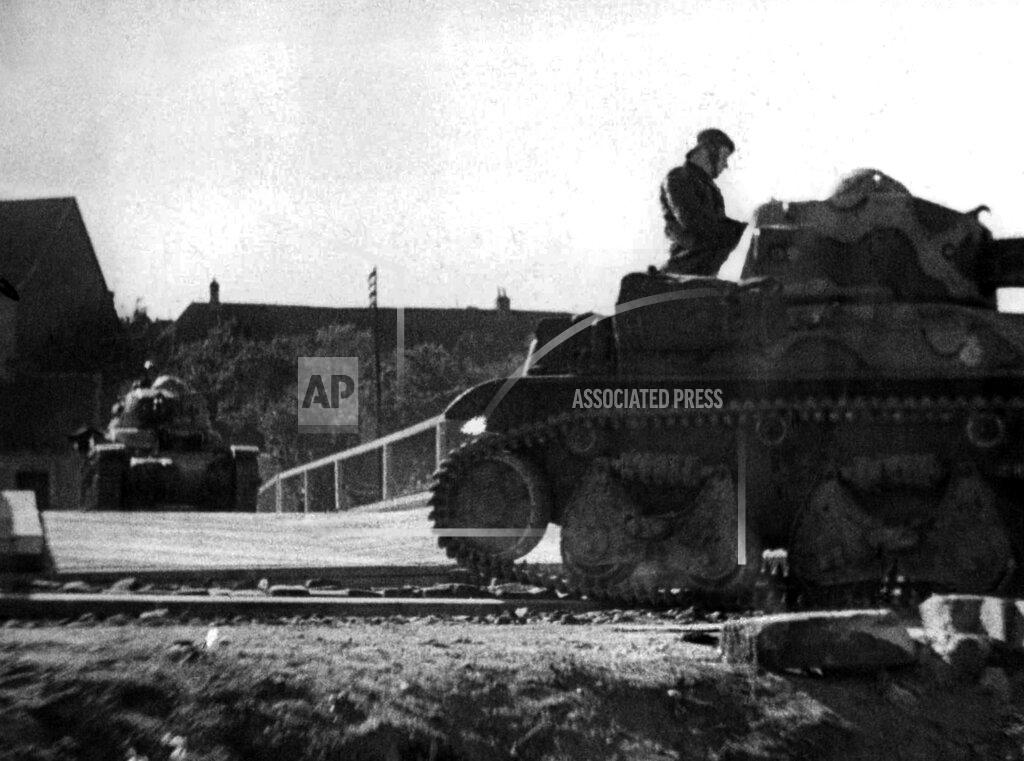
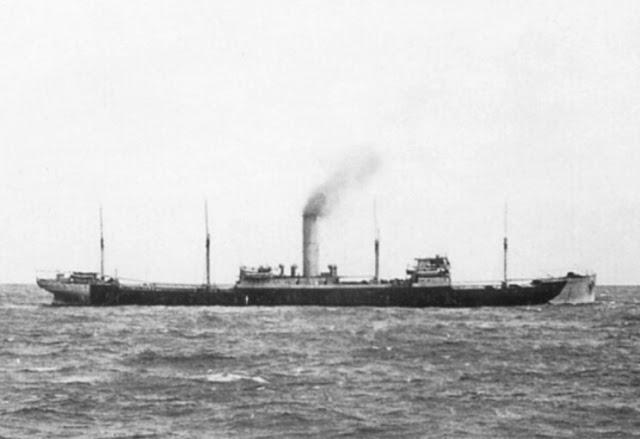
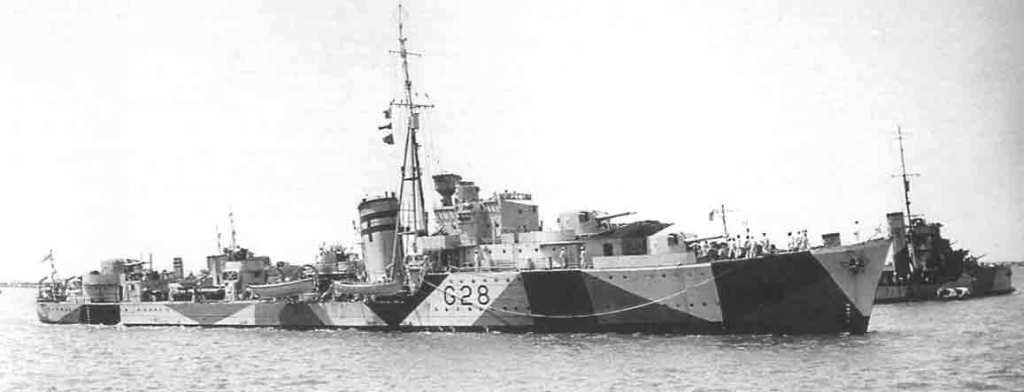
On 23 June 1940, the Italian submarine Torricelli was forced to the surface and sunk off Perim in gun-battle by the British destroyers HMS Kandahar, HMS Kingston, HMS Khartoum and the British sloop HMS Shoreham. Khartoum and Shoreham were hit by shells from the Torricelli. Khartoum was destroyed by fire a few hours after the battle.
Lost 20 December 1941.
On 19 December 1941, HMS Kandahar (Cdr. William Geoffrey Arthur Robson, DSO, DSC, RN) was part of British Force K, tasked to intercept an Italian convoy bound for Tripoli when she was irreparably damaged by a newly laid Italian mine whilst attempting to rescue the stricken cruiser Neptune. She was scuttled the next day by the destroyer Jaguar. 73 men went down with the ship.
Battle Honours: GREECE 1941 – CRETE 1941 – LIBYA 1941 – MEDITERRANEAN 1941 – MALTA CONVOYS 1941

