The High National Council of South Vietnam announced today that it would make public next week the Constitution that is to put a civilian government in place of Major General Nguyễn Khánh. Qualified sources said that the Constitution, which was completed yesterday by the council of 17 civilian members, would provide for a governing committee of six or seven. The committee chairman would serve as Acting Premier until elections are held, the sources added. The High National Council was created after Premier Khánh’s attempt August 16 to assume full governmental powers was thwarted by rioting throughout the country. Most of the members, who were selected by Major General Dương Văn Minh, South Vietnam’s acting chief of state, are elderly professional men who demonstrated their opposition to the regime of President Ngô Đình Diệm before he was overthrown and slain last November.
Because of the age and frailty of some of them, the council has been termed a “national museum” by some younger political and military figures. One council member, Trần Đình Nam, from central Vietnam, has been in a hospital and has not been replaced. Members of the council are known to have been deeply concerned that the military government would not step aside for civilian appointees. The involved procedures the council has developed are intended to remove as completely as possible any taint of dictatorship or military rule. In an apparent effort to allay misgivings, General Khánh wrote today to the council, saying, “I urgently ask you to choose someone to replace me.”
United States military sources reported today that 200 to 400 women carrying anti‐American and antiwar placards demonstrated yesterday in the delta town of Mỹ Tho. According to the United States sources, the demonstration was Vietcong inspired, and it resulted in the arrest of 200 persons. At least one placard assailed United States involvement in the war against Việt Cộng guerrillas. Others denounced the use of artillery and air strikes as resulting in civilian casualties and loss of property. The United States’ sources said there was about one such demonstration a week in the delta region, where powerful Việt Cộng units operate.
The Foreign Ministry assured the United States Embassy today that no date had yet been set for execution of a Việt Cộng terrorist whose death might cost the life of an American colonel kidnapped in Venezeula. The kidnappers of Lieutenant Colonel Michael Smolen were reported to have threatened to kill him if South Vietnam carried out its death sentence against Nguyễn Văn Trỗi, a young Việt Cộng terrorist. The terrorist was convicted of having plotted to kill Robert S. McNamara when the United States Defense Secretary visited South Vietnam last May. Colonel Smolen, the deputy chief of the United States Air Force mission in Caracas, was kidnapped near his home yesterday morning by two men, one armed with a submachine gun. Later several Caracas newspapers received anonymous telephone calls warning that the colonel would be killed if the South Vietnamese Government carried out its plan to execute the terrorist.
Reports that had appeared in Saigon newspapers had said the Việt Cộng terrorist would he executed in public next week. Police sources said the date was October 15. According to information reaching the United States Embassy, the anonymous caller in Caracas said Colonel Smolen would be shot within one hour after the Saigon execution. The State Department instructed the Embassy here to ascertain the facts of the proposed execution as a matter of urgency, according to qualified sources, and, if necessary, request that the South Vietnamese authorities postpone any action until the Caracas threat had been investigated. An Embassy official was formally received at the Foreign Ministry late this afternoon, the sources said, and was assured that no date “had or has been set” for the execution.
The Việt Cộng terrorist was convicted several weeks ago of having attempted to lay an explosive charge under a road bridge between downtown Saigon and the airport. The Vietnamese police apprehended him and another man May 9 as they were working under the bridge. Mr. McNamara was scheduled to arrive three days later on one of his visits to Saigon and was expected to drive over the bridge on the main route into town from the airport. Although the attempt was foiled when Mr. McNamara arrived, he was driven by another unannounced road from the airport. He and the then Ambassador Henry Cabot Lodge, both slipped bullet‐proof cloaks over their shoulders in the car. Trỗi attracted little attention here after his arrest. His trial went largely unnoticed.
Police ambushed a Communist unit inside Saigon last night, killing one man and capturing a second. It was the first such capital police action of the Vietnam war. The police, acting on a tip, deployed two companies on the southwest edge of the town in the Seventh Precinct. A squad of Việt Cộng, apparently on a propaganda and kidnapping mission, walked into the trap and was ordered to halt. The Việt Cộng replied by throwing grenades and a fight ensued during which one Communist was killed and one wounded, the wounded man was captured this morning.
The Saigon Government claims that 16,101 Communist soldiers or agents have deserted during the last 20 months under the amnesty program known as ‘Open Arms’ (Chiêu Hồi). (Some of these defectors will fight with the U.S. and ARVN forces and will become known as the Kit Carson Scouts.)
President Diosdado Macapagal of the Philippines said in a radio interview today that the South Vietnamese Government must win the support of its people to resist Communist infiltration effectively. He also hinted that his country might join South Vietnam and the United States in the fight against the Việt Cộng guerrillas if requested to do so.
In Cairo, a conference of nonaligned nations urges that a conference be called in Geneva to negotiate an end to the conflict in Vietnam.
Heads of state at the conference of 47 nonaligned nations signed tonight a strongly anti‐Western final declaration, which included a demand that the United States withdraw from the Guantanamo Bay base in Cuba. The declaration is to be formally made public at noon tomorrow, but most of its points already were known. They previously had been approved by the foreign ministers of the nonaligned countries, which have been in session here since Monday. The closing session ended just before midnight. Delegation members, showing fatigue, filed from the Cairo University auditorium to their hotels. Moderate nations such as India, supporting the Soviet Union’s peaceful coexistence policy, won victories over supporters of Communist China, led by Indonesia, on some important points in the final declaration. But the final resolution on this subject was reported to contain a wording approved by Indonesia. This is said to read: ”Peaceful coexistence cannot fully materialize through the world without the abolition of imperialism, colonialism and neo‐colonialism.”
Negotiations to open the strategic Kyrenia road and permit the Turks to carry out unimpeded replacement of their army contingent in Cyprus appeared close to collapse tonight. The Turkish Cypriot leadership was reliably reported to have refused to turn over exclusive control of the road to the United Nations peace‐keeping force. This had been provided in an agreement between U Thant, Secretary General of the world body, and the Turkish Government, without prior consultation with the Turkish Cypriots. Under the agreement, the Cyprus Government, which is controlled by the Greek Cypriots, would have permitted the rotation of the Turkish troops in exchange for the opening of the road and the barring of it to armed men of the Greek and Turkish communities. The road, which connects Nicosia with Kyrenia, on the northern coast, has been controlled by the Turkish Cypriot minority, backed up by the Turkish Army contingent, since communal fighting began last December. It is the only road in Turkish Cypriot hands. Dr. Fazil Kutchuk, Vice President of Cyprus and leader of the Turkish Cypriots, was authoritatively reported to have protested against the accord to Ankara and to have informed the Turkish Government that his community would not accept it.
The Polish Government has resorted anew to administrative measures against the Roman Catholic Church in a new flare‐up in the struggle between church and state, according to reliable reports available here. The church’s religious education program — both for the training of the clergy and for instruction of Catholic children — is the direct object of recent hostile official moves. But persons who closely follow the uneasy coexistence of the church and the Communist regime in Poland believe that disappointed hopes in Warsaw for a more acquiescent attitude on the part of the Polish hierarchy lies at the root of the trouble.
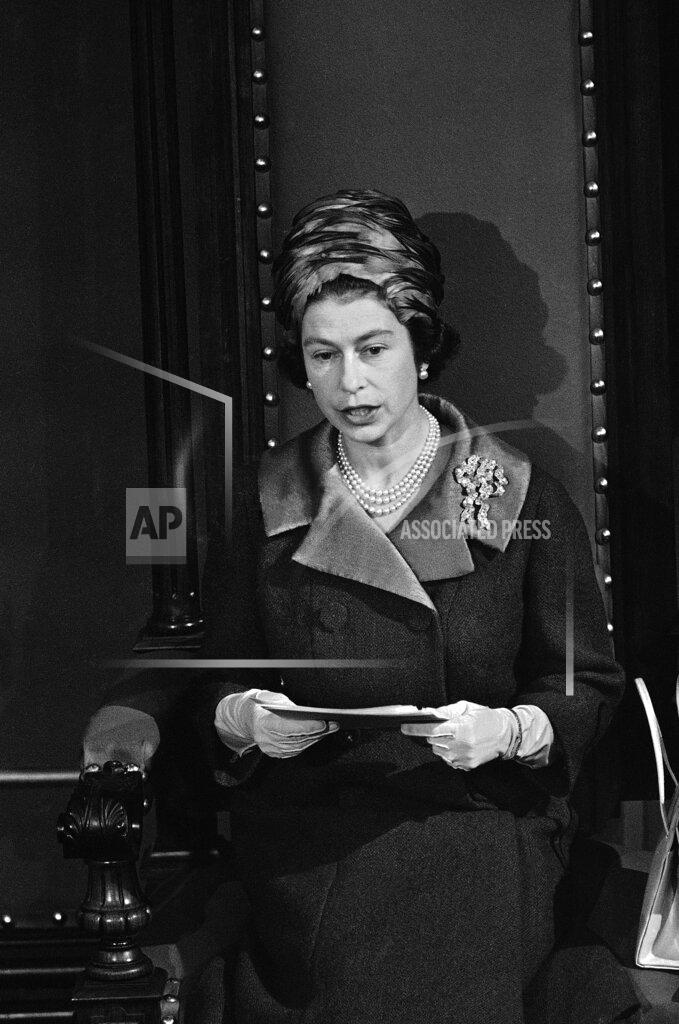
Queen Elizabeth II, greeted in Quebec by mild protest demonstrations, indicated sympathy in a speech to the provincial Legislature today for moderate French- Canadian demands for a changed role within the Canadian confederation. The protest demonstrations, fears of which had prompted the greatest security precautions ever given a visitor to Canada, were staged primarily by about 100 youths and were easily dispersed. Some cheers were raised among the sporadic boos that greeted the Queen, but the crowds were small. The Queen appeared smiling and assured despite the protests. In her address to the provincial Legislature, delivered mostly In French, the Queen called for Canadian unity and appeared to take sympathetic note of the moderate French-Canadian position, which calls for greater autonomy. “A dynamic state should not fear to reassess its political philosophy,” the Queen said. ”That an agreement worked out 100 years ago does not necessarily meet all the needs of the present should not be surprising.”
The Soviet representative, Nikolai T. Fedorenko, charged last week that the United States campaign to impose the penalty fixed by the Charter for the non‐payment of assessments constituted an attempt to “destroy” the United Nations. Premier Khrushchev had previously informed the Secretary General, U Thant, that the Soviet Union would leave the organization if this penalty — the loss of its vote in the General Assembly — was imposed. These threats remove any lingering doubt about the fact that the financial question Will be the most important issue before the 1964 session of the General Assembly. The session, which had been scheduled to begin September 15, was postponed until November 10 to provide more time for consultations on this problem. Meanwhile, the neutralist and Communist delegates have been passing the word that after the election President Johnson would accept a compromise settlement on financing which would avoid a confrontation with the Soviet Union.
From a bleak cape 15 miles west of Nemuro, Japan, on the island of Hokkaido, one can see Soviet-held territory and watch the hardy Hokkaido fishermen venture out to wrest their living from uncertain waters. The rocky, low‐lying islands a few miles offshore have been a source of contention between Japan and the Soviet Union since they were occupied by Soviet forces at the end of World War II. Local spokesmen say they are hopeful the islands may be returned to Japan soon. Nemuro, the northeasternmost city in Japan, is one of the country’s most important fishing ports. A drab, weather-beaten city of 45,000, it is sharing in Japan’s rapid economic upsurge, but at a rate a little below the general national level. Means of guaranteeing the safety of fishermen operating in waters off the Soviet‐held islands and steps to obtain the return of 50 Japanese captured and still held in Soviet territory are important issues in Nemuro.
President Johnson rested briefly at his Texas ranch today, preparing to carry his campaign into the buttress areas of Republican strategy in the Western states. The President, emboldened by heartening receptions this week in the Middle West and Lower Lakes regions, the Border States and the Deep South, will open a two‐day Western swing tomorrow with a bold move against Senator Barry Goldwater’s inner bastion at Phoenix, Arizona. The traveling White House revealed last night that Mr. Johnson would stop off in the Senator’s home city in the morning to attend church on his way to Long Beach and San Francisco, California. It will be a frankly political churchgoing, but the rationale behind it in the President’s mind, quite apart from the resulting show of strength in his Republican opponent’s stronghold, is to perform a favor for Arizona’s senior Senator, Carl Hayden, the President pro tem of the Senate.
Mrs. Lyndon B. Johnson’s Southern tour this week brought evidence of new Democratic unity and rising support for the President. More important, in the view of politicians and observers aboard the Lady Bird Special, the swing through eight states aroused enthusiasm for the campaign that had been sorely missing. The first whistle‐stop run by a President’s wife led to firm endorsements from some Democratic leaders who had previously expressed only tentative approval of the ticket. Thus committed, they now have a personal stake in the election’s outcome and greater incentive to work for a Johnson victory. New sources of active support, financial and otherwise, were tapped. Headquarters were established in those towns and cities along the route that had none.
Voters, who turned out to see the First Lady in far greater numbers than those who greeted Mr. Johnson on his own Southern whistle‐stop tour in 1860 as a Vice‐Presidential candidate, appeared to gain a sense of personal involvement. Mrs. Johnson, who employed a generally low‐key appeal, her decidedly Southern accent and ties of family and friendship, was obviously elated by the results. Her reaction was shared by Commerce Secretary Luther H. Hodges, the former Governor of North Carolina; Representative Hale Boggs of Louisiana, the House majority whip, and former Gov. Buford Ellington of Tennessee, all of whom accompanied her. The consensus among political observers who made the four-day trip from Washington to New Orleans and those who came aboard along the way was that Republican chances for carrying the eight states were fading.
Senator Barry Goldwater asserted today that “the moral fiber of the American people is beset by rot and decay.” He appeared to prescribe school prayer as one remedy and said that, if elected: “With your help and with God’s blessing, I pledge my every effort to a reconstruction of reverence and moral strength, those great pillars of human happiness in our land.” The Republican Presidential candidate made these remarks in a speech at the Morman Tabernacle in Salt Lake City this evening. Earlier he campaigned at Spokane, Washington, and Portland, Oregon. Mr. Goldwater began his speech with his gloomy assessment of American moral deficiency.
Observers in Florida give the Democrats an even chance of winning their first Presidential election in this key Southern state since 1948. Florida’s electoral votes, which now number 14, have gone to the Republican candidate in every Presidential election since Harry S. Truman defeated Thomas E. Dewey. In 1960, Floridians gave Richard M. Nixon 795,476 votes and John F. Kennedy 748,700. Publicly, both Democratic and Republican leaders are cheerful about the 1964 race.
President Johnson has the support of two of the three political blocs in his native Texas and that appears sufficient to carry the state. Senator Barry Goldwater says he must have the 25 electoral votes of Texas to be elected President November 3, but there is no indication that he can get them. He has been unable to convince enough conservative Democrats that they should join Republicans in supporting him. The major polls, surveys and independent political analysts in Texas agree, three weeks before the election, that if both the liberal Democratic followers of Senator Ralph W. Yarborough and the conservative Democratic organization of Governor John B. Connally Jr. get their voters to the polls President Johnson will win comfortably.
Senator Barry Goldwater is having trouble shaking the Democrats’ “trigger‐happy” charges growing out of his positions on the use of nuclear weapons. And this is hurting him in traditionally Republican Wisconsin. This is borne out by a survey of Wisconsin voters by the Associated Press, released this week. The voters indicate a greater fear of Mr. Goldwater’s attitudes toward foreign affairs than enthusiasm for President Johnson, according to the A. P. sampling. “The strong undercurrent of uneasiness over the Republican candidate seems to be centered on his views on the use of nuclear weapons rather than his position on civil rights or other domestic issues,” the wire service reported in releasing its sampling.
Spot checks of registration activity throughout the country indicate huge gains in the Black vote potential this year. These gains coincide with reports of higher Democratic registration totals, particularly in metropolitan areas. The Democrats are presumed to be the principal beneficiaries of increased Black registration. This is demonstrably so in Baltimore, for example, where an official record is made of the registrant’s color as well as his party declaration. In most other cities, party officials make estimates, or guesses, based on observations, impressions or incomplete data. When registration figures are fully processed, an informed person can look at totals from a ward he knows to be predominantly Black and draw his conclusions accordingly. Baltimore registered 27,575 Blacks this year. Of these, 25,730 declared themselves Democrats.
In Mississippi, the Freedom Democratic Party, which provided the only real contest at the Democratic National Convention, plans another challenge in January. The group that sought to unseat the regular Mississippi Democrats at the Atlantic City convention will attempt to have the state’s Senators and Representatives in Congress removed on the ground that they were chosen through a discriminatory voting procedure. Meantime, party leaders are working for the electon of President Johnson next month, even though they blame him for their failure to win full recognition at the convention. And they have under way several projects designed to give the new organization some political muscle in the future. One is an ambitious plan to solicit the support of poor whites who, along with the Blacks, can outvote every other faction on every level in the state.
Eddie Cantor, banjo‐eyed vaudevillian whose dancing feet and double‐takes brought him stardom in movies, radio and television, died of a coronary occlusion today at the age of 72. The comedian, famed for his charitable works, continued to be a show‐business figure a decade after giving up public appearances.
18th NHL All-Star Game, Maple Leaf Gardens, Toronto, Ontario, Canada: All-Stars beat Toronto, 3-2; MVP: Jean Béliveau, Montreal, Centre.
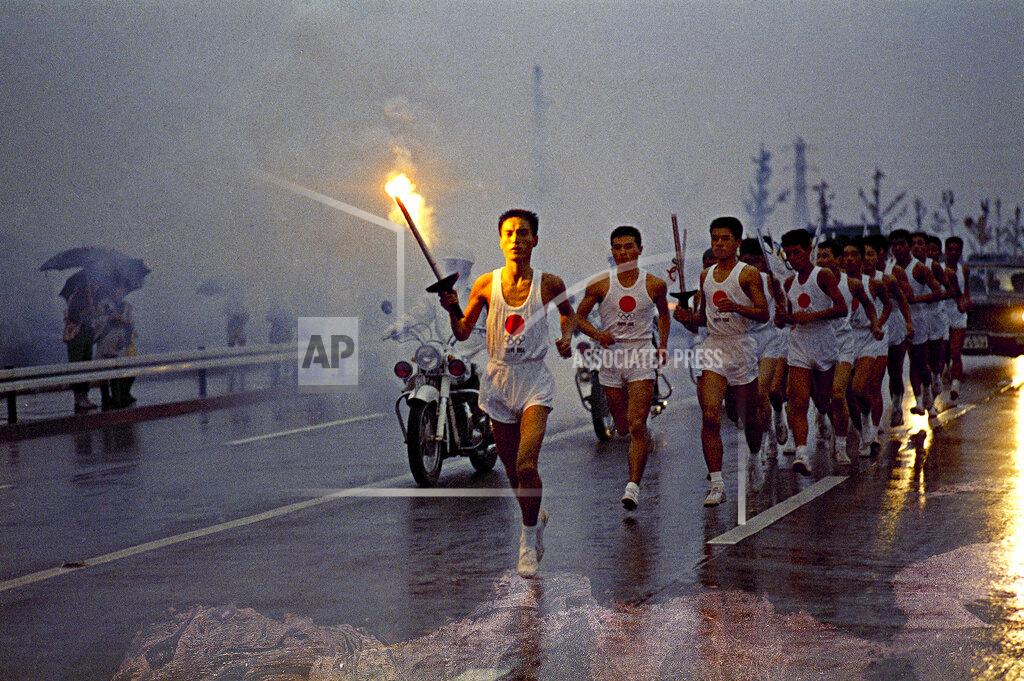
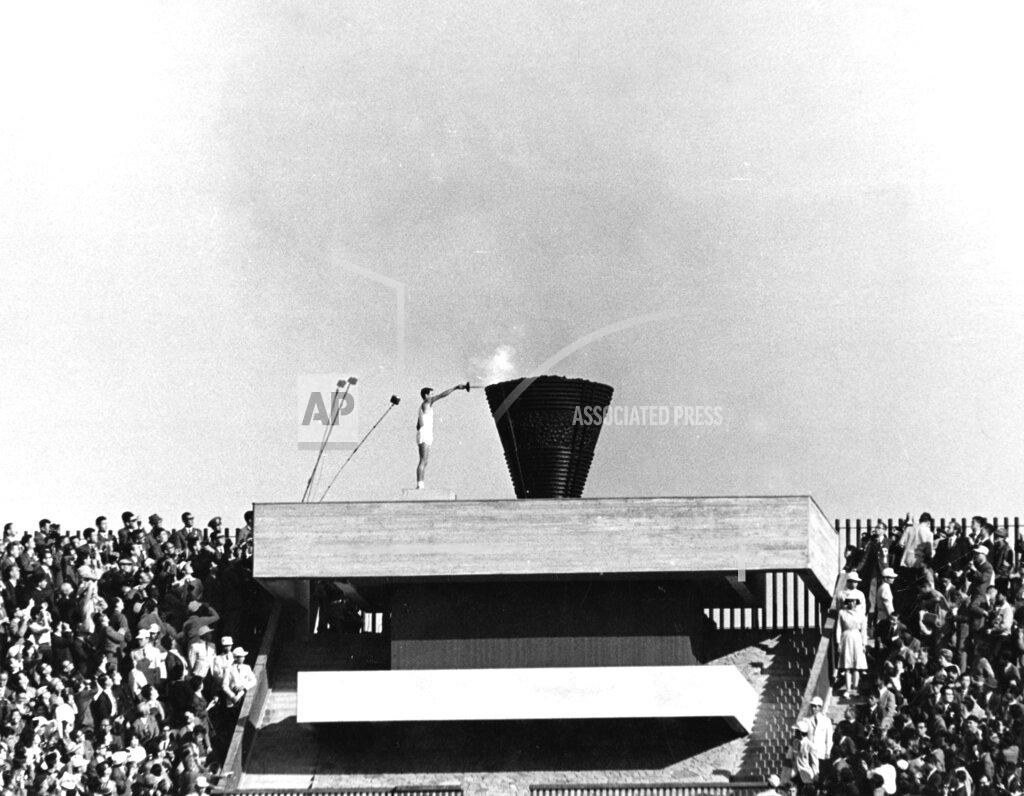
The 1964 Summer Olympics opened in Tokyo. Yoshinori Sakai, chosen to light the Olympic Flame, had been born near Hiroshima on August 6, 1945, the day an atomic bomb was dropped on that city. Japan’s Emperor Hirohito then declared the games open. Starting at 2:00 in the afternoon local time, Olympic teams from 94 nations marched into the National Stadium and live television coverage of the events could be seen in the United States with the aid of the recently launched Syncom 3 communications satellite, starting at 1:00 a.m Eastern time on NBC.
Live television coverage of this morning’s opening of the Olympic Games in Tokyo was of superlative quality, a triumph of electronic technology that was almost breathtaking in its implications for global communications. The pictures were relayed by Syncom 3, the satellite that hovers in fixed position 22,300 miles above the Pacific Ocean. They were in every way markedly superior to the previous international TV experiments by Telstar satellites over the Atlantic Ocean.
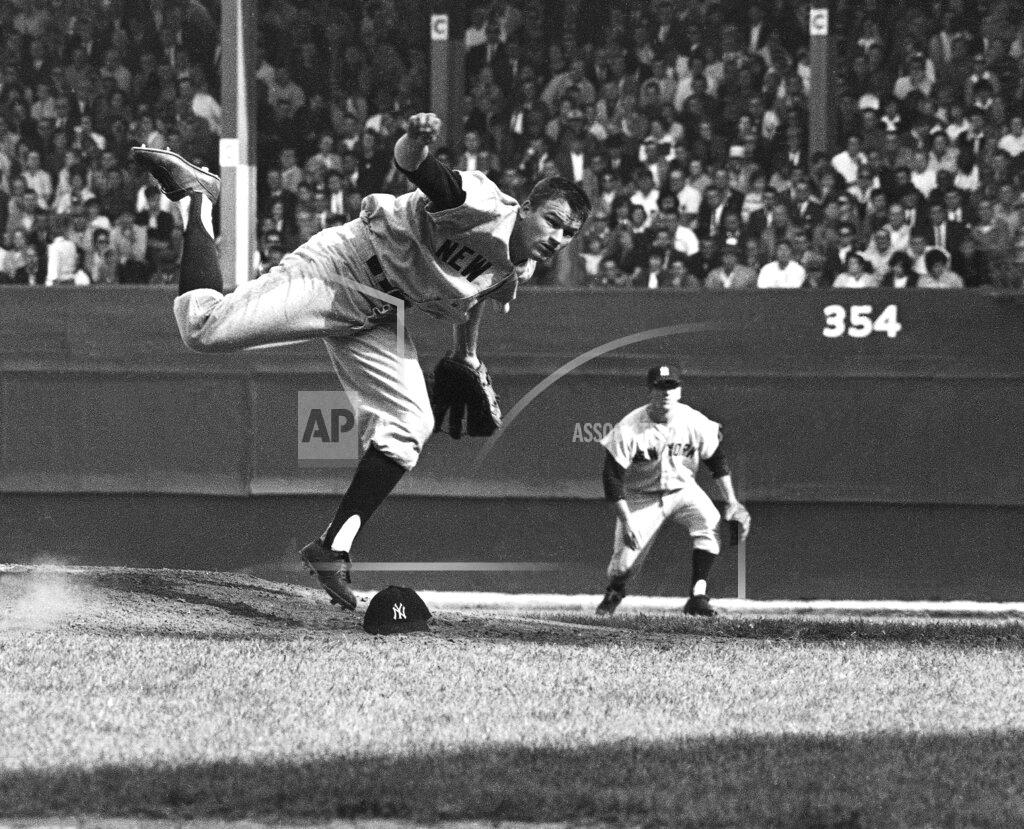
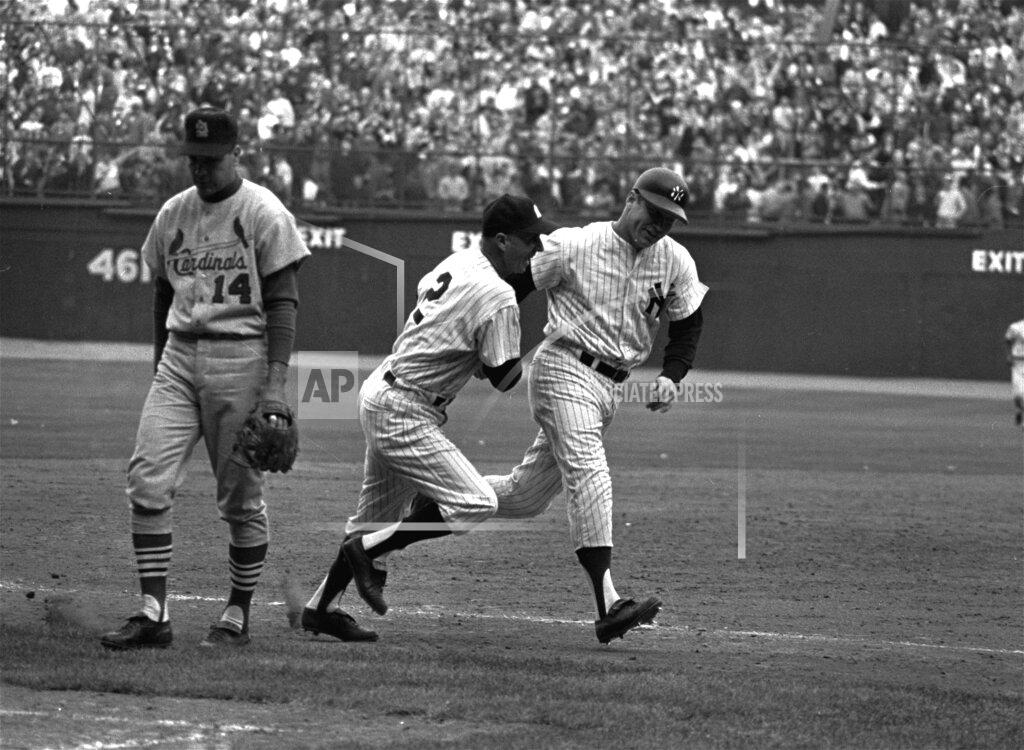
After Jim Bouton and Curt Simmons battle to a 1–1 tie through 8 innings, Mickey Mantle homers on Barney Schultz’s first pitch in the 9th, and the Yankees win game three, 2–1. Simmons and Bouton were both very effective. Simmons got 17 ground-ball outs. The Yankees scored a run in the second on Clete Boyer’s RBI double with two on, but Simmons’s RBI single tied the game in the fifth. Bouton stranded the go-ahead run four times and held the top five hitters in the Cardinal lineup to a 2 for 21 day. In the bottom of the ninth, Mickey Mantle reached deep for one of the last ounces of Yankees magic. With the game tied at one, Mantle, the leadoff hitter, told on-deck hitter Elston Howard to go back to the clubhouse because he was going to hit a home run. Mantle swung at the first pitch from Barney Schultz, a knuckleball that failed to move, and hit it into the right field stands to win the game for the Yankees. Schultz had been a mainstay of the Cardinals’ stretch run and Yankee scouting reports had advised that his knuckler was most vulnerable on the first pitch when he threw harder than usual to try for a strike. Mantle’s home run (his 16th Series home run) broke Babe Ruth’s record for most home runs hit in World Series play.
NFL Football:
Pittsburgh Steelers 23, Cleveland Browns 7
Pounding continually on the ground, the Pittsburgh Steelers beat the Cleveland Browns, 23–7, before a crowd of 80,530 tonight and dropped the Browns to second place in the Eastern Division race of the National Football League. John Henry Johnson, a plugging fullback who scampered like a halfback, scored three touchdowns and posted the best single game rushing effort this season in the N.F.L. Johnson tallied on dashes of 33 and 45 yards and plunged four yards for another score. He picked up 200 yards in 30 carries. This topped a 137‐yard effort by Tommy Mason of the Minnesota Vikings on Sept. 13. The mark was also a Steeler rushing record, topping his own record of 182 yards in 1960. The Steelers took a 10–0 lead in the first quarter and were never in trouble. Mike Clark kicked a 21‐yard field goal and Johnson burst up the middle for a 33‐yard touchdown. He dashed 45 yards in the second quarter, beating the Browns’ defensive secondary in a race to the corner flag. Except for an 18‐yard touchdown pass from Frank Ryan to Gary Collins in the second quarter, the Steeler defense stopped the Browns cold in the first half, yielding only five first downs. The Steelers used seven minutes on an 80‐yard touchdown drive in the third quarter, with Johnson piling into the end zone from the four‐yard line. The Steelers rushed for 354 yards while holding the Browns to 96.
AFL Football:
Oakland Raiders 13, New York Jets 35
The New York Jets, capitalizing on several breaks forced by their outstanding defense play, stormed to a 35‐13 victory over the Oakland Raiders in windswept Shea Stadium last night. A crowd of 32,376 paying fans watched the Jets keep alive their hopes in the Eastern Division of the American Football League by sending the Raiders to their fifth straight loss. Matt Snell, the bruising rookie fullback from Ohio State, bore the brunt of the Jets ground attack against the vulnerable Oakland line. Snell, a 6‐foot‐2‐inch, 220pounder from Locust Valley, Long Island, scored two touchdowns. Snell, who left the game in the final minute, made 26 carries and gained 168 yards—both figures single‐game marks for the club. The Jets ran their season mark to two victories, one loss, and one tie. Larry Grantham blocked a Mike Mercer punt midway through the opening quarter on the Oakland 14 and Gordy Holz picked up the ball and ran it to the 5. In one play Snell skirted his right end to start the scoring parade and Jim Turner made the first of his five conversions. Less than five minutes later, the Jet defenders forced another break. Clem Daniels of Oakland, the league’s leading rusher last year, fumbled on the Jet 44 when he was hit hard by Wahoo McDaniel, and Clyde Washington recovered. In eight plays Dick Wood directed his mates to the score, Bill Mathis plunging the final 2 yards. In the second period, Daniels again fumbled and Vern Torczon recovered for New York on the Oakland 28. Mark Smolinski capped a nine‐play drive by scoring from 6 yards out.
Born:
Maxi Gnauck, East German Olympic woman gymnast, 1980 Olympic gold medalist and winner of gold medals in three world championship events; in East Berlin, German Democratic Republic.
Kenny Battle, NBA shooting guard (Phoenix Suns, Denver Nuggets, Boston Celtics, Golden State Warriors), in Aurora, Illinois.
Eric Riley, NFL tight end (New York Jets), in Snoqualmie, Washington.
Sarah Lancashire, English actress (“Coronation Street”, “Happy Valley”), in Oldham, England, United Kingdom.
Quinton Flynn, American voice actor, in Cleveland, Ohio.
Died:
Eddie Cantor, 72, American comedian (“Eddie Cantor Comedy Theater”).
Russ Case, 52, American orchestra leader (“Julius La Rosa Show”).