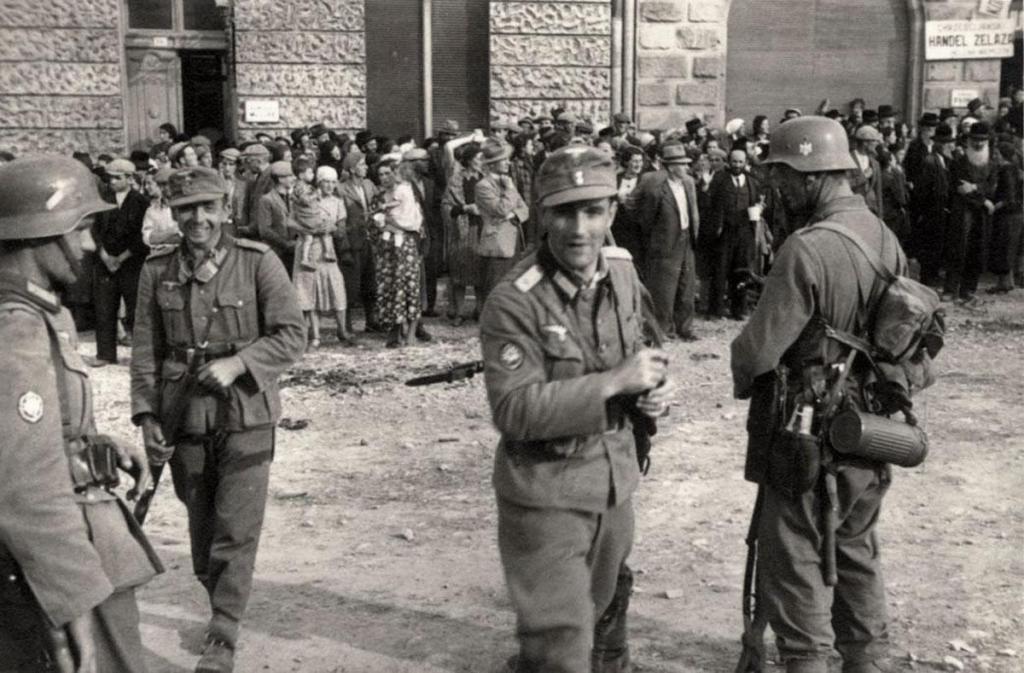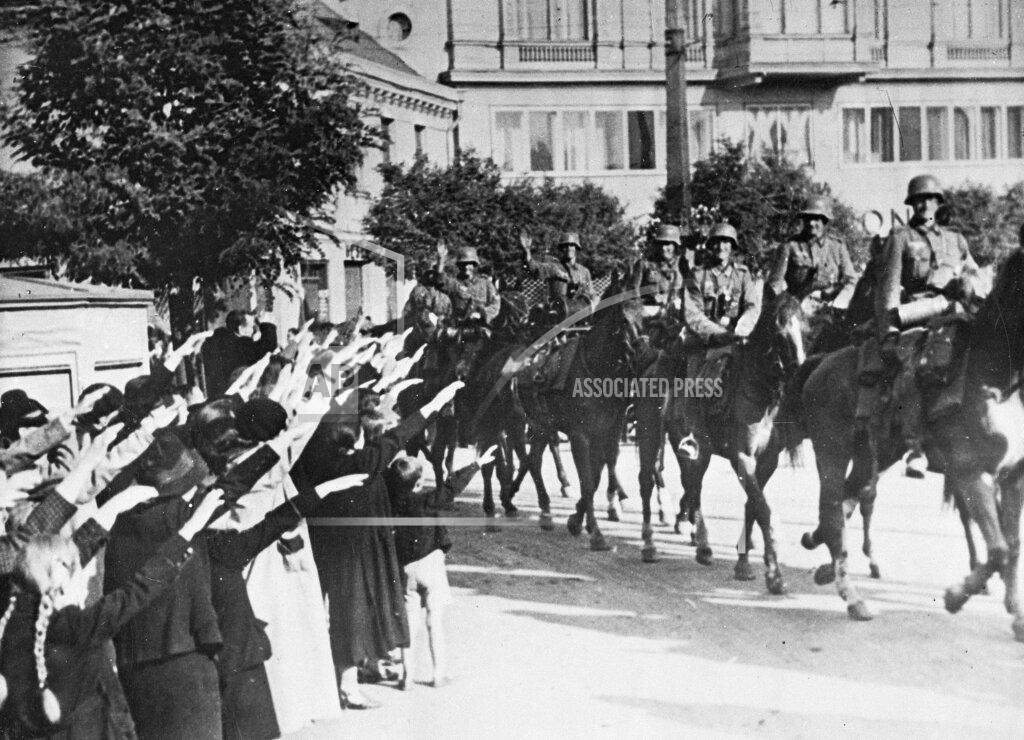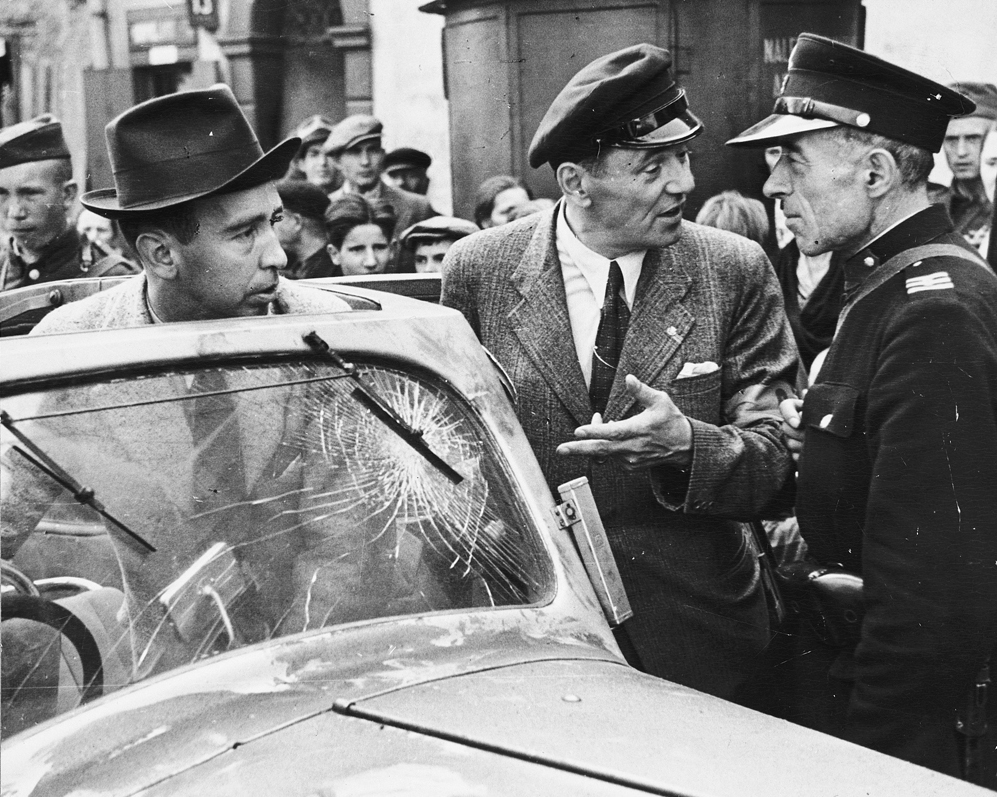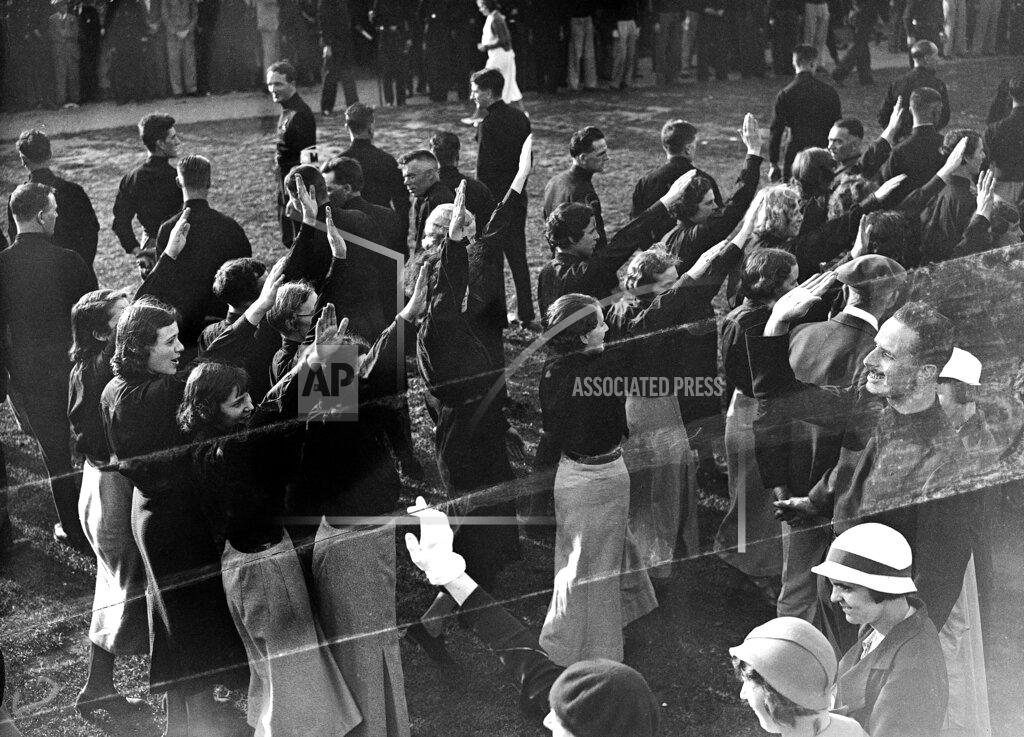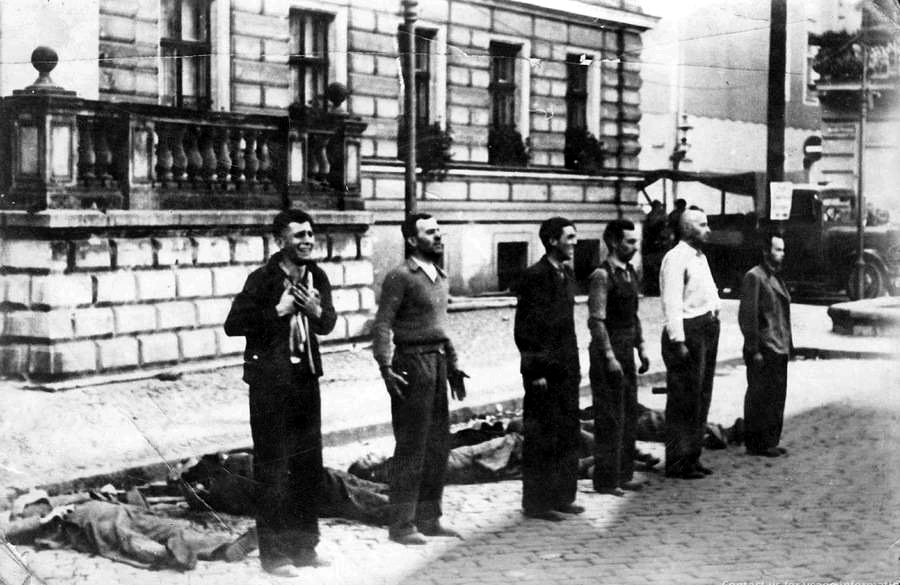
The German Army occupied Łódź. On Adolf Hitler’s orders, Łódź was renamed Litzmannstadt. It became part of the Reich District (Reichsgau) Wartheland, under the control of Arthur Greiser. Jakub Parol, a historian at the city’s Museum of the Independence Traditions, says “Greiser wanted to turn Wartheland into a perfect Nazi district and Lodz into a German town.” This is why Greiser recommended 35-year-old Werner Ventzki become the city’s mayor. Ventzki, a Hitler loyalist, had joined the NSDAP as early as 1931. He had a reputation for being a skilled orator. After the war, he even boasted that he could enthrall large crowds at public rallies. Werner Ventzki’s son, Jens-Jürgen, says his father was “mainly driven by the idea of turning Lodz into a German city.” This, according to Jakub Parol, in practice meant “subjugating the Polish population and killing Jews.”
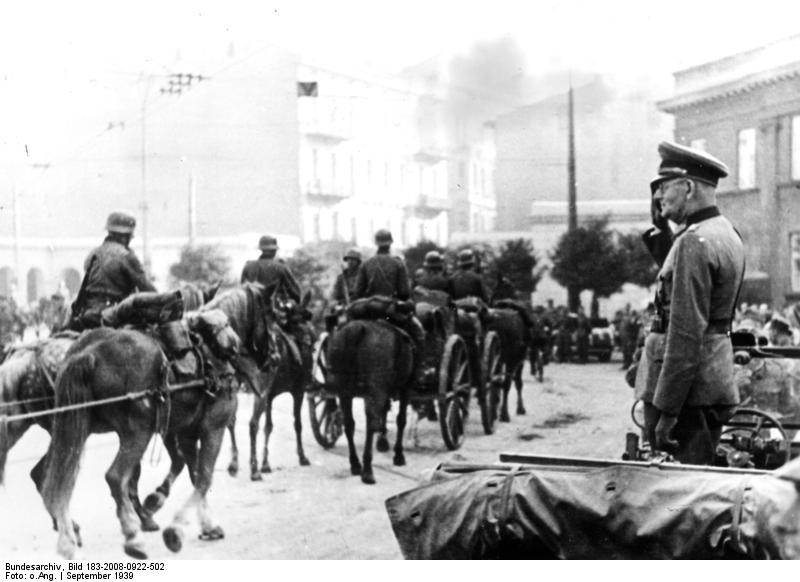
The Battles of the Bzura and Hel began. The Battle of the Bzura, also known as Battle of Kutno to the Germans, begins with a counter-attack by ten Polish divisions; it is to become the largest battle in the Poland campaign. The battles which follow will be the hardest fought of the campaign. Initially, the Poles gain some success. The German X Corps advanced rapidly and seized the various crossings over the Bzura. On the 9th the Eighth Army, seized Łowicz and Sochaczew on the river, northwest of Łódź. Also on the 9th the 30th Division reached Łęczyca. These advances, however, were made only after heavy fighting and they resulted in many casualties. By the morning of the 11th the Army was spread out on a broad front and forced to assume the defensive.
On the night of 9 September, the Polish Poznań Army commenced a counterattack from the south of the Bzura river, its target being the German forces from the 8th Army advancing between Łęczyca and Łowicz towards Stryków. `The commander of Poznań Army, Tadeusz Kutrzeba noticed that the German 8th Army, which was commanded by General Johannes Blaskowitz, was weakly secured from the north by only the 30th Infantry Division, which stretched over a 30 km defensive line while the rest of the army was advancing towards Warsaw. The main thrust of the Polish offensive were the units under General Edmund Knoll-Kownacki, which were known as the Knoll-Kownacki Operational Group (Polish 14th, 17th, 25th and 26th Infantry Divisions). The right wing of the offensive, in the area Łęczyce, included the Podolska Cavalry Brigade under Col. L. Strzelecki, and on the left, advancing from Łowicz to the area of Głowno, the Wielkopolska Cavalry Brigade under General Roman Abraham. These groups inflicted considerable losses on the German defenders from the 30th Infantry Division and the 24th Infantry Division, with some 1,500 German soldiers killed or wounded and an additional 3,000 lost as prisoners during the initial push. The cavalry brigades, supplemented with TKS and TK-3 reconnaissance tanks, moved to threaten the flanks and the rear of the advancing German units.
The German forces were thrown back approximately 20 km, and the Poles recaptured several towns, including Łęczyca and Piątek, and the village of Góra Świętej Małgorzaty. On 10 September, the Polish 17th Infantry Division met the German 17th Infantry Division at Małachowicze. The following day, Polish forces continued their attack and advanced on Modlna, Pludwiny, Osse and Głowno.
The Battle of Hel begins on land. The Hel Fortified Area, a system of Polish fortifications that had been constructed in the 1930s, was attacked by the German Luftwaffe from the first day of the invasion. The first air raid occurred at 13:30, 1 September 1939, targeting the Polish coastal batteries. More raids followed in succeeding days. In the first week of September, the Wehrmacht forced Polish Armia Pomorze units to retreat from the Danzig Corridor and, having captured Puck, on 9 September began assaulting the Polish forces on the Hel Peninsula. The advancing German forces included the 42nd Border Guard Regiment and the 5th Cavalry Regiment. Polish forces started a slow retreat toward the port of Hel on the Peninsula. On 10 September the Germans captured the village of Swarzewo, and on 11 September the town of Władysławowo near the base of the Peninsula. The Polish defenders fortified the next village, Chałupy, about a fifth of the way up the Peninsula. The Germans, having bottled up the Polish units on the Peninsula, did not launch major land operations until month’s end.
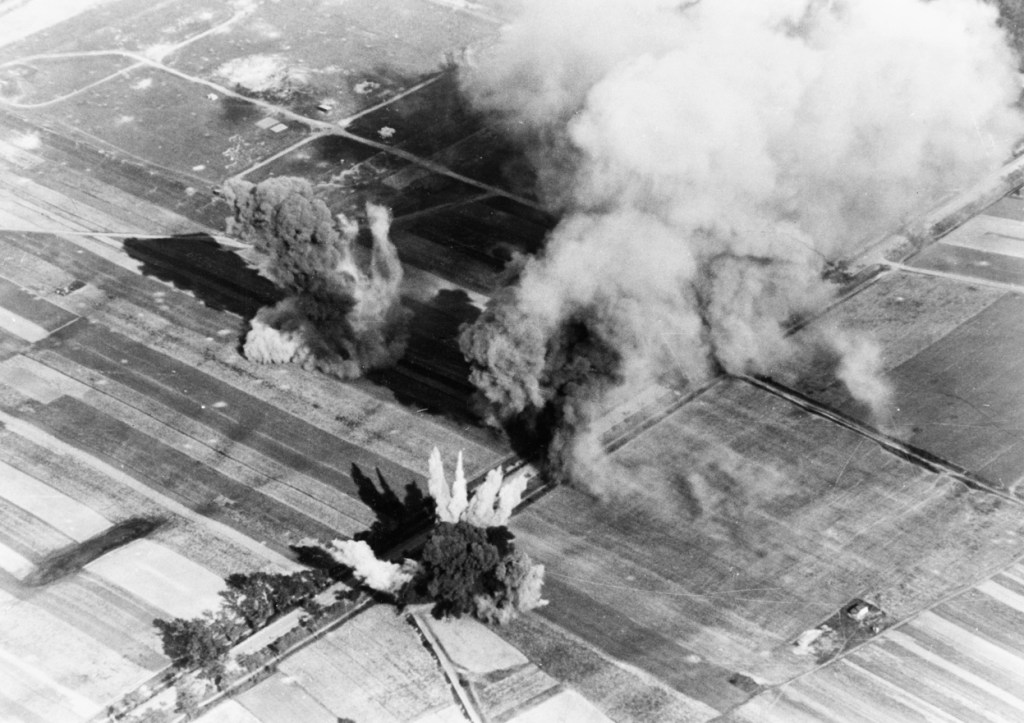
Elsewhere, German forces capture Radom. South of Radom, Stuka dive-bombers of Colonel Gunter Schwarzkopff’s St.G.77 finish off the great Polish attempt to cross the Vistula River, crushing the last pockets of resistance in conjunction with tanks; “Wherever they went”, reports one Stuka pilot after the action, “we came across throngs of Polish troops, against which our 110-lb fragmentation bombs were deadly. After that we went almost down to the deck firing our machine guns. The confusion was indescribable.”
At Warsaw, German attempts to enter the city are repulsed.
The Marynarka Wojenna (Polish Navy) river monitor ORP Nieuchwytny was scuttled to avoid capture. She was later raised, repaired and put into German service as Pionier.
Hitler issued Directive No. 3, Transfer of Forces from Poland to the West.
The Supreme Commander Of The Armed Forces.
Berlin. 9th September, 1939. 8 copies
Directive No. 3 For The Conduct Of The War
- Operations against the Polish Army and Air Force will continue with the necessary forces until it is safe to assume that the Poles are no longer capable of establishing a continuous front which can tie down German forces.
- Should it be clear that some part of the Eastern Army and of the Air Force are no longer necessary for the completion of this task and for the pacification of occupied territories, arrangements are to be made to transfer these forces to the west. As the Polish Air Force becomes progressively weaker, further air defence units may be made available for use against our western enemies.
- Even after the half hearted opening of hostilities by England, at sea and in the air, and by France, on the land and in the air, my personal approval must be obtained: (a) For any crossing of the German land frontier in the west. (b) For all flights beyond the western frontier of Germany, unless they are necessary to meet heavy enemy air attacks. (c) For air attacks against England. The Air Force is, however, free to operate in the German Bight and in the western mined areas, and in immediate support of naval action at sea. (d) For the Navy the instructions given in Directive No. 2 paragraphs 3a and b remain in force. No offensive action at sea is to be undertaken against France.
(Signed) Adolf Hitler.
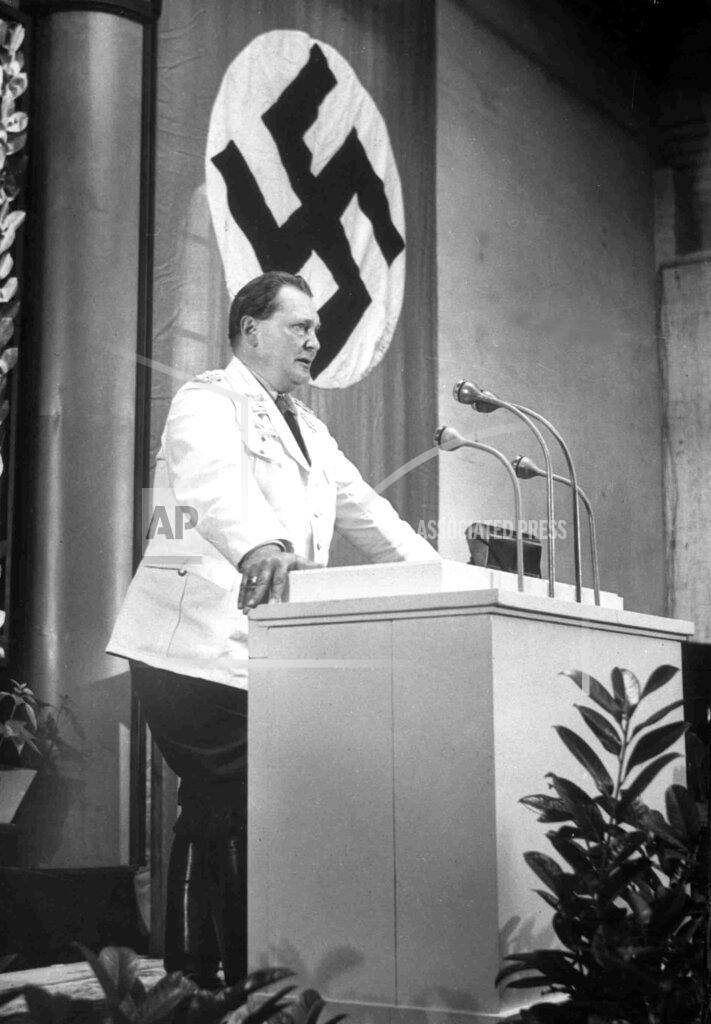
Hermann Göring, in a speech to Berlin munitions workers, threatens reprisals against Britain if the RAF bombs Germany and boasts that Berlin will never be subjected to enemy aerial attack. He says that “the Polish Army will never emerge again from the German embrace.” Ribbentrop invites the Soviets to advance to their new common frontier, the Narew, Vistula and San rivers (the Bug and Pissa would eventually replace the Vistula to avoid a divided Warsaw.
All Jewish men in the small Ruhr town of Gelsenkirchen are deported to the concentration camp at Sachsenhausen, near Berlin. The women and children are left to fend for themselves.
German Gestapo orders all misbehaving Polish citizens to be arrested and placed in Dachau Concentration Camp in southern Germany.
Closely censored and fragmentary press reports from the German-conquered portion of Poland indicate that the Nazis are using the totalitarian method of systematically subjugating conquered enemies that reached. its previous high point during the Spanish Civil War. These reports speak of the Gestapo, the German secret police, moving in immediately behind the troops and of wholesale arrests and plans for executions. This follows a pattern closely followed by the forces of Generalissimo Francisco Franco in Spain where civilian units moved in closely behind advancing troops and “cleaned up.”
It is nothing new for suspected spies and snipers to be arrested and executed behind the lines of troops moving forward. This was a practice followed during the last war. But in most cases those executed were either caught red-handed or had some evidence against them. In Spain, however, a stronger system was initiated: that of retaliation against many people for acts committed by a few active persons behind the lines, or the “eliminating” of large groups as a warning to others not to attempt action against the conquerors. Police technique also was perfected for quickly and systematically disarming all civilians behind the lines.”
French troops advance into the Warndt Forest across the German border and occupy 3 square miles of German territory. The action is widely viewed as having more propaganda than military purpose since the region, referred to by the French as “occupied Germany,” is deserted, heavily mined and booby-trapped.
British Expeditionary Forces (BEF) begins landing in France. The first troop transport convoy of the British Expeditionary Force sails from Southampton to Cherbourg.
The last of 13 RAF squadrons arrives in move begun on September 4th to strengthen the British Expeditionary Force.
The Sunday Pictorial in London said today that it had learned “authoritatively” that former Kaiser Wilhelm had told Chancellor Hitler: “You face a disaster that might prove far greater than in 1918.” The newspaper said the message had been conveyed by the ex-Kaiser’s aide-de-camp, Baron Moeller, to the German Foreign Ministry when Herr Hitler refused to see Baron Moeller.
Germany announces that the following terms will be used when describing submarine warfare trade warfare’ [Handelskrieg] to describe activity in accordance with Prize Law, and the siege of England’ [Belagerung Englands zur See] to describe unrestricted submarine warfare. English merchantmen which are clearly armed may be attacked by submarines without warning.
British submarine HMS Ursula fires the first British submarine torpedoes of the war when attacking German U-35. The U-boat escaped.
The Dutch cargo ship Mark struck a mine and sank in the North Sea 120 nautical miles (220 km) south west of Vorupør, Denmark (56°45′N 4°04′E). There were no casualties.
The U.S. freighter Wacosta, bound from Glasgow, Scotland, to New York, is stopped by and unidentified German submarine. The Wacosta is detained for three hours while the Germans examined her papers and searched her holds, but is permitted to proceed.
The U.S. steamship President Harding is detained by French authorities and various items of her cargo, including 135 tons of copper and 34 tons of petroleum products, seized as contraband. After the cargo was unloaded the ship is released.
In Moscow, Russia, Soviet Foreign Minister Vyacheslav Molotov informs the German ambassador that Soviet forces will be ready to attack Poland within a few days. Molotov prematurely congratulates the Germany for the “entry of German troops into Warsaw” and promises Soviet intervention “within the next few days.”
President Roosevelt ordered today an immediate reorganization of the White House executive offices as one step toward preparing the Federal Government for prompt emergency action “in order that the nation may not again be caught unaware” in a period of international crisis and to facilitate as well the normal operations of the government. As a surprising development of the new order from the President, White House sources invited the interpretation that, for the future, “those creatures of the imagination” popularly referred to as “the brains trust” were “out the window.”
In an executive order carrying into effect on Monday the overhauling of the executive offices of the President as authorized by Congress under Government Reorganization Plan No. 1. Mr. Roosevelt followed up the military and naval expansions which he ordered yesterday by directing the establishment within the White House, in the event of a national emergency or the threat of one, of “such office for emergency management as the President shall determine.” With this first official intimation that the President was planning the creation of a “war council” if and when the need should arise came an explanatory White House statement suggesting that Mr. Roosevelt did not regard the present situation as sufficiently grave to warrant a proclamation of a national emergency.
The statement, given out by the President’s secretary, Stephen T. Early, said: “In the time of national emergency, domestic or foreign, the job of the President is even more difficult. In such periods it has always been found necessary to establish administrative machinery in addition to that required for the normal work of the government. Set up in a time of stress, these special facilities sometimes have worked to cross purposes both within themselves and with the regular departments and agencies. In order that the nation may not again be caught unaware, adequate resources for management should be provided in advance of such periods of emergency. Although these management facilities need be brought into action only when an emergency or serious threat of emergency exists, they must function in an integral relationship to the regular management arms of the President.”
President Roosevelt canceled today a radio address on “Democratic Women’s Day,” scheduled for next Saturday, on the grounds that national unity must come before partisan considerations. In making known his decision in a letter dated September 7 to Mrs. Thomas F. McAllister, director of the Women’s Division of the Democratic National Committee, Mr. Roosevelt said that in these days of tension his remarks should be addressed to all citizens regardless of political affiliation.
U.S. life expectancy has grown by twelve years since the turn of the century. American babies born today are slated to live on the average about twelve years longer than those born at the turn of the century, according to figures released yesterday by statisticians of the Metropolitan Life Insurance Company.
While the drive to bring foreign exhibitors back to the World’s Fair in 1940 was advanced another notch yesterday by issuance of an official proclamation from President Roosevelt, formally inviting foreign nations to return, a setback was revealed in an announcement that the Venezuelan Pavilion will be dismantled in November — unless the Government of Venezuela changes its mind — and moved piece by piece to South America.
The President’s proclamation, which he signed in Washington before leaving for Hyde Park on Friday, was the “go-ahead” signal for which Fair authorities have been waiting in their efforts to get pledges of 1940 participation from the foreign exhibitors. Mr. Roosevelt had announced last Saturday that the invitation would be extended, thus bringing the first public statement from Fair officials that a second season was planned, but until his invitation was actually issued rules of diplomatic procedure made it impossible for any definite promises to be obtained.
A charge that the Soviet Government’s secret police and espionage service, the OGPU, operated three plants in Moscow and Berlin in the 1920’s for the counterfeiting of American and other foreign currency and the forging of passports of all nations was made today by Ben Gitlow before the House committee investigating un-American activities.
Cooperation of retailers throughout the country in protecting the public against “unwarranted price increases” resulting from European war developments is asked by President Roosevelt in a letter to the National Retail Dry Goods Association.
Secretary of Labor Frances Perkins undertook today for the second time to settle a collective bargaining dispute in the meatpacking industry, where a strike, she said, “would be serious and contrary to public interest.”
The Senate Labor Committee received today a statement in which it was asserted that a group of union officers had heard J. Warren Madden, chairman of the National Labor Relations Board, declare: “We cannot allow workers to lose a strike even though it does cause bloodshed.”
Preliminary work on the investigation of the National Labor Relations Board by a special House committee will begin on Monday, the committee stated today in announcing the appointment of a committee staff.
Responding to the first urgent request for relief from a belligerent nation in the European war, the American Red Cross announced today the appropriation of $50,000 to purchase hospital tents, drugs and blankets to be sent to Poland.
Six automobile loads of Philadelphia detectives, Federal agents and State motor police, divided into three parties, deployed through the Buckingham Valley section of Bucks County, Pennsylvania today, raided three farmhouses and rounded up four alleged members of a gang accused of robbing banks in Pennsylvania and New Jersey.
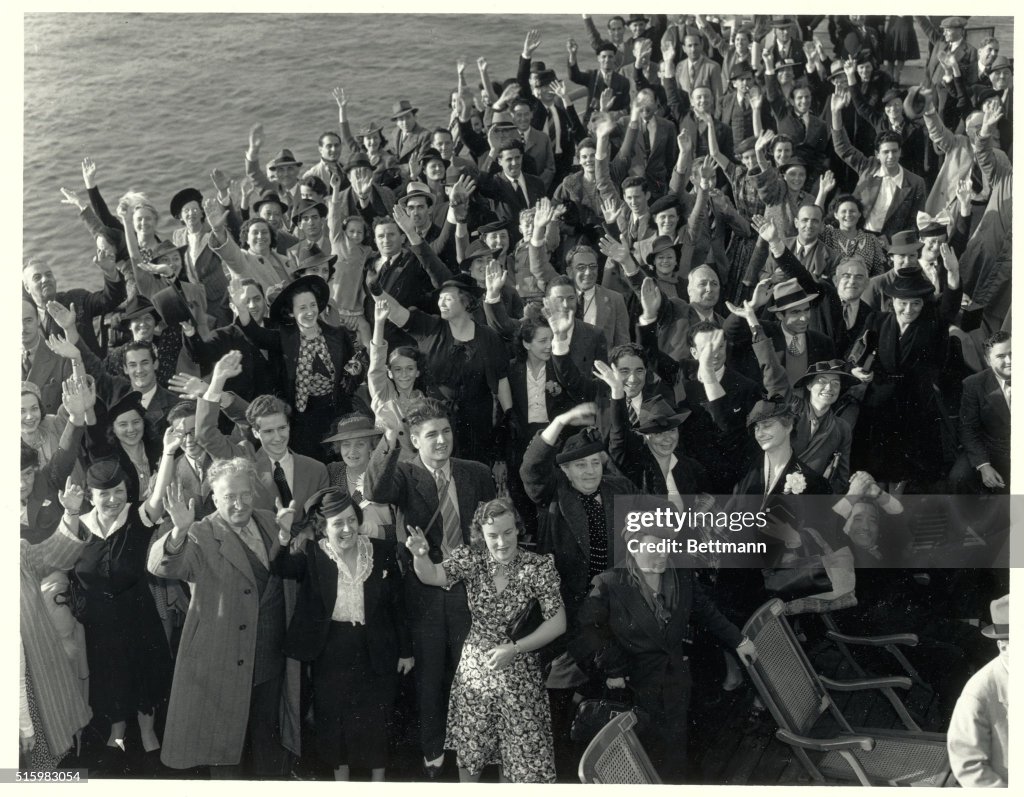
Having rushed across the Atlantic with her lights extinguished and her public rooms and cabins filled to overflowing, the French liner Ile de France, which left Havre on the morning war was declared, docked yesterday at West Forty-eighth Street in New York after lying at Quarantine all night. She carried 1,777 passengers, most of them returning Americans.
The national meeting of the American Chemical Society, in which 5,000 chemists and industrialists from all over the United States will participate, will open in Boston on Monday morning for five days of sessions.
In further pursuance of the Administration’s announced policy of augmenting the defenses at the Panama Canal, Secretary Woodring has ordered the Eighteenth Infantry Brigade to proceed to the Canal Zone.
The Glenn Miller and Ray Eberle version of “Over the Rainbow” topped the American pop charts as compiled by Your Hit Parade.
Patricia Donnelly of Michigan was crowned Miss America 1939.
After being rushed to the hospital, Jimmie Foxx is operated on for appendicitis, and will be out for the season. His 35 home runs will still win the American League title.
The New York Yankees downed the Washington Senators, 5–2, before a gathering of 7,401 at the Stadium, stretching their current winning streak to six games as they added to that lopsided margin by which they are advancing on their fourth straight American League flag. Steve Sundra (9–0) is the winning pitcher. Joe DiMaggio gets three hits, scoring twice and driving in another run.
The Philadelphia Athletics edged the Boston Red Sox, 2–1, as Lee Ross turned in one of his best pitching performances of the season, yielding just four singles. A single by the A’s’ Wally Moses in the bottom of the ninth wins it.
The Cleveland Indians beat the St. Louis Browns, 9–8, today after the losers had staged one of their best rallies of the year — seven runs in two innings. Three in the 6th and four in the seventh put the Browns up, 8–7, but Hugh Campbell doubled in the eighth to drive in two more for the Indians.
A spectacular squeeze play bunt down the third-base line by second baseman Roy Hughes sent in Merrill May with the deciding run today as the Philadelphia Phillies beat the Boston Bees, 2–1, in the series opener.
Forty-year-old Charley Root held the Cincinnati Reds to four hits today as the Chicago Cubs came from behind in the seventh inning to defeat the league leaders, 3–2, in the opener of a two-game series.
The St. Louis Cardinals gained a game on the Cincinnati Reds’ National League lead today by routing the Pittsburgh Pirates, 12–2. Bob Weilland scattered eleven hits and struck out seven to get the win.
The Brooklyn Dodgers shell Cliff Melton (11–13) for seven runs in the eighth inning to beat the New York Giants, 8–3. Hugh Casey (12–8) got the win for Brooklyn.
Canadian Parliament approved the William Lyon Mackenzie King government’s decision to declare war on Germany.
Argentina fights contraband rules and protests Britain attempting to use the country’s food and materials for war.
Brazil feels the effect of war on sea trade as few ships arrive.
The Japanese premier still holds hope for peace. He thinks Britain and France may withdraw when the Reich settles with Poles. It is impossible to predict how long the European war will last, in the opinion of Premier Nobuyuki Abe, although he agreed that there was a chance that Britain and France might call off the war if and when Germany settled the Polish question. “Germany attacked Poland, underrating the strength of Britain and France,” he said. “Britain and France opened the war reluctantly and it is quite conceivable that they will withdraw their forces when Germany has settled with Poland.”
Those statements were made by the Premier in a press interview at a country inn last night. He added strong warning against the people’s dreaming of a second war boom. and reminded them that Japan. would encounter economic difficulties because of the war. The Premier’s references to future relations with the Soviets were extremely cautious. They indicated that some influential circles still clung to the idea of accepting German Foreign Minister Joachim von Ribbentrop’s advice on effecting a rapprochement with the Soviets. “Some circles advocate that Japan should conclude a non-aggression pact or a military alliance with the Soviets,” he said. This requires consideration of its effects on the national spirit.
“We must be extremely careful. The anti-Comintern pact should be maintained. Herr von Ribbentrop says that Germany, Japan and the Soviets should go hand in hand. Japan, however, must face the settlement of the Russo-Japanese problem from her own independent position.” Premier Abe refused to endorse the opinion of those who said that foreign influences must be driven out of China. He said that Japan would make efforts to adjust relations with the United States, Britain and France.
The French cargo ship Asni was wrecked on Itu Aba Island, Spratly Islands.
Dow Jones Industrial Average: 150.91 (+0.87).
Born:
Ron McDole, AFL and NFL defensive end (AFL Champions-Bills, 1964, 1965; All-AFL, 1965, 1966, 1967; St. Louis Cardinals, Houston Oilers, Buffalo Bills, Washington Redskins), in Chester, Ohio.
Paul Hynes, AFL cornerback (Dallas Texans, New York Titans), in Sulphur, Louisiana (d. 2013).
Howard “Buck” McKeon, (Rep-R-California 1993-2015), in Los Angeles, California.
Reuven Rivlin, Israeli politician, 10th President of Israel, in Jerusalem, British Mandate of Palestine.
Harris Rosen, American businessman, investor and philanthropist, in Manhattan, New York, New York.
Naval Construction:
The Kriegsmarine (German Navy) Type VIIC U-boats U-93 and U-94 are laid down by F. Krupp Germaniawerft AG, Kiel (werk 598 and 599).
The Royal Navy “N”-class destroyer HMS Norseman (G 25) is laid down by Thornycroft (Southampton, U.K.). HMS Norseman was renamed HMS Nepal before commissioning in January 1942. Transferred to Australia before commissioning on 1 May 1942. Enters service as Royal Australian Navy destroyer HMAS Nepal (G 25).
The U.S. Navy Cimarron-class oiler USS Chemung (AO-30) is launched by the Bethlehem Steel Corp. (Sparrows Point, Maryland, U.S.A.).
The Sjøforsvaret (Royal Norwegian Navy) Sleipner-class destroyer HNoMS Tor is launched by the Horten Navy Yard (Oslo, Norway). Tor was fitting out at Fredrikstad and not yet commissioned in the Royal Norwegian Navy when Norway was invaded and occupied. She was captured by the Germans on 12 April 1940. She was commissioned by the Kriegsmarine on 13 June 1940 as Tiger.