President Johnson held his first meeting since the Gulf of Tonkin incident with his ambassador to South Vietnam, Maxwell D. Taylor and with national security advisers and raised the question of “whether anyone doubted Vietnam was worth the effort” of going to war; at the time, everyone present agreed that it was necessary to fight in order to protect the credibility of the United States worldwide. According to notes taken of the meeting, Taylor said that the U.S. “could not afford to let Hanoi win, in terms of our overall position in the area and in the world”. General Earle Wheeler, the new Chairman of the Joint Chiefs of Staff, said that the joint chiefs agreed “that if we should lose in South Vietnam, we would lose Southeast Asia”, after which “country after country on the periphery would give way and look toward Communist China as the rising power of the area.”
Mr. Taylor first gave his report to the President at a 75-minute morning conference attended by the Administration’s principal policymakers. Then he returned to the White House in the afternoon, at Mr. Johnson’s suggestion, to repeat it for Senate and House leaders of both parties. The President summed up Mr. Taylor’s briefings tonight by saying that the Ambassador had reported “continued progress” in the war against the Communist guerrillas despite the recent political crisis.
After reporting to Congress, Mr. Taylor himself said at a news conference after his morning meeting with the President that the military situation “remained essentially normal,” that he hoped that there would, be a full‐fledged Provisional Government in South Vietnam. by next November, and that the economic situation has been “relatively favorable” all along. The Ambassador, who played a major role in helping to resolve the crisis that followed Premier Nguyen Khanh’s attempt to establish one‐man rule, last month, said that Premier Khanh was “very definitely head of the Interim Government.” The Premier is engaged in the “very hard task” of producing a new provisional regime within two months, Mr. Taylor said. This regime, he said, will have full powers to move ahead, “taking as its ultimate goal a full representative constitutional government, recognizing, however, that that,will take perhaps a year.” But the Ambassador warned that “this task is not going to be easy because there are many minority groups to reconcile within South Vietnam,” he said.
General Khánh lifts press censorship and appoints two civilians to government posts to replace military men,but he announces he will hold onto the post of defense minister. Premier Nguyễn Khánh abolished the month‐old internal press censorship in South Vietnam today. He also named two civilians to high Government posts and moved to conciliate the generals he overthrew last January. He promised new posts to four leading generals of the junta that led the coup d’état against Ngô Đình Diệm last November, but whom General Khánh arrested when he seized power seven months ago. He charged they were plotting toward a neutralist settlement with the Việt Cộng. The civilians named to high posts were Dr. Nguyễn Lưu Viên as Interior Minister and Trần Văn Hương as prefect of Saigon. Both posts were vacated several days ago by military incumbents under pressure for greater civilian responsibility. Filling another post vacated by a general, General Khánh announced that he himself would serve as Defense Minister. He will also remain Premier in the transitional government. General Khánh announced the series of conciliatory gestures at a news conference. To underline the new civilian emphasis in his reorganized Government, he appeared in a civilian suit. “I am still a general,” he said, “but I am Premier of all the people first.”
He appeared first with Major General Dương Văn Minh and Lieutenant General Trần Thiện Khiêm, the former Defense Minister, his partners in the military “steering committee.” Later, he said that the transitional government would last no longer than two months. The four generals who will get new posts have been technically at liberty since May in the mountain resort of Đà Lạt, but their movement has been restricted. They are Major General Trần Văn Đôn, Major General Lê Văn Kim, Major General Tôn Thất Đính and Major General Mai Hữu Xuân. All are close associates of General Minh, and their status was a source of continuing friction between hiim and General Khánh during the latter’s seven‐month regime. Premier Khánh declined to say what jobs they would be given. “In principle there is no reason why they shouldn’t be given commands of troops,” he said, “but they will be employed according to their capacities and the demands of circumstances. ”
In the drive to restore popular confidence in the Government — shattered last month as rioting and religious strife erupted across South Vietnam — Premier Khánh charted in detail the course he said he expected the Government to follow in months to come. “Prosecution of the war against the Việt Cộng will go on,” he said. “The political crisis we are going through does not affect the war but will lead to greater stability.” A cheer went up among newsmen at the conference when the Premier announced the end of press censorship measures he decreed August 7. This was part of emergency regulations that tightened his rule and led to the rioting by students and Buddhists in late August. The riots brought about the present liberalizations and pledges of reform. The censorship affected newspapers in Saigon — of which there are about 40 — but not the foreign press. The new Interior Minister. Dr. Viên, is a widely respected physician who was active in the resistance against French Colonial rule. Mr. Hương, who will hold the politically important post of Mayor of Saigon, served as Saigon’s Mayor in a Government under the French shortly after World War II.
A U.S. Navy patrol plane crashed last night in the South China Sea with the loss of five of the thirteen U.S. crewmen. The eight survivors were rescued by the U. S. destroyer Maddox. A U. S. Navy spokesman at Sangley Point NAS in the Philippines discounted the possibility that the twin-engine P-2 Neptune aircraft had been shot down. A U. S. Navy spokesman in Saigon said the plane was on a routine anti-submarine patrol mission about 75 miles off the coast and 340 miles northeast of Saigon when it went down. In Washington, the Navy identified the five men lost. They were LCDR John C. Thomas, whose wife, Ruth, lives at the Marine Corps Air Station at Iwakuni, Japan; Aviation Structural Mechanic/1C Michael J. Ulicsni, son of Mr. and Mrs. John Ulicsni of Parkville, Minnesota; Aviation Machinist Mate/1C, Deloss W. Anderson, son of Mr. and Mrs. D. L. Anderson of Spokane, Washington; Aviation Ordnanceman/2C Donald F. Marit, husband of Mrs. Ruby Catherine Marit of Litchfield, Illinois; and Aviation Electrician’s Mate/2C Weslie D. Newborn, husband of Mrs. Pauline Newborn of San Diego, California.
Việt Cộng military activity has increased in the last week, possibly heralding the start of a push by the Communists to take advantage of South Vietnam’s political crisis. United States military authorities said today the Communists had staged 545 incidents, including two battalion-sized attacks. That compared with 440 in the preceding week.
Prince Norodom Cambodia’s head of state, said today that South Vietnam would like to strike Cambodia from the map. He was speaking at the opening of a cement factory built with Chinese Communist aid in the province of Kampot. Prince Sihanouk and the Chinese Ambassador in Cambodia made speeches stressing the friendly relations of their countries.
A Government military communiqué said today that 112 pro‐Communist Pathet Lao soldiers had surrendered since Saturday in an area north of here. Frequent surrenders of Pathet Lao men have occurred near Route 13, between Vientiane and Luang Prabang, since they were forced into the jungle after a Government victory in July. Two Pathet Lao soldiers were killed in a skirmish in the area Friday, the communiqué said.
The Soviet government warns Japan that it must expect some military retaliation if it allows U.S. bases there to be used for military action against North Vietnam.
Malaysia submitted a captured 52‐mm. mortar and an automatic rifle to the U.N. Security Council today. She acted to support her demand that the Council condemn Indonesia on the ground that Indonesia landed 30 paratroopers in South Malaya the night of September 1‐2. Dr. Ismail bin Dato Abdul Rahman, Malaysia’s Minister of Home Affairs, also presented a helmet, a camouflaged field uniform and other equipment as proof of the landing. Platon D. Morozov of the Soviet Union, Council President for September, compelled Dr. Rahman to remove them from the Council Chamber before going on with his indictment of Indonesia’s policy of “confrontation” against Malaysia. Sudjarwo Tjondronegoro, the Indonesian spokesman, did not deny the Malaysian charge.
The Cyprus Government has agreed to lift the food blockade imposed on Turkish Cypriot sections of the ports of Famagusta and Larnaca. A United Nations statement it “welcomes this decision by the government, which is an important step in the right direction, and hopes it will open the way to further easing of the economic restrictions now imposed in certain Turkish Cypriot areas.” Only two days ago the government of President Makarios declared that Famagusta and Larnaca would be put in the “restricted” category, together with Nicosia, Lefka, and the tiny beachhead area of Kokkina on the north coast, scene of last month’s Turkish air raids. In these areas, food supplies are strictly rationed.
Turkish Cypriot sources reported from Famagusta and Larnaca tonight that the revocation of the restrictions on food supplies had not yet had any effect. They said no food had entered either town. United Nations officials said this was perhaps due to the fact that the government’s orders had not yet reached the roadblocks. On Aug. 18 the Cyprus Government agreed to lift the blockade of food, fuel, and water imposed on Turkish Cypriots in Nicosia and Paphos.
Sakari S. Tuomioja, United Nations mediator in the Cyprus dispute, died tonight in a Helsinki hospital. He was 53 years old. Mr. Tuomioja had been unconscious since he suffered a stroke in Geneva on August 16.
The Organization of African Unity established today a 10‐nation commission, headed by Prime Minister Jomo Kenyatta of Kenya, to help restore peace in the Congo. Concluding their five‐day conference, the African Foreign Ministers asked “all those now fighting in the Congo to cease hostilities.” They also appealed to “all powers at present intervening in the internal affairs of the Congo” to cease. Although the ministers did not identify these countries, speakers at the conference have accused the United States, Belgium and Communist China of interfering.
Britain and Southern Rhodesia continued their talks in London tonight in search of agreement on the terms under which the colony might achieve independence. Yesterday, the British Government was under the impression that the talks were ended. Ian D. Smith, the Southern, Rhodesian Prime Minister, insisted that they were still going on. Tonight, Mr. Smith called at 10 Downing Street and met again with Sir Alec Douglas-Home. Both Prime Ministers said afterward that they would meet further tomorrow. Prime Minister Smith’s white-controlled Government had threatened to declare independence next month. Prime Minister Douglas‐Home has promised the British Commonwealth that Southern Rhodesia would not become independent without some assurance that the black majority would not be frozen out of political power.
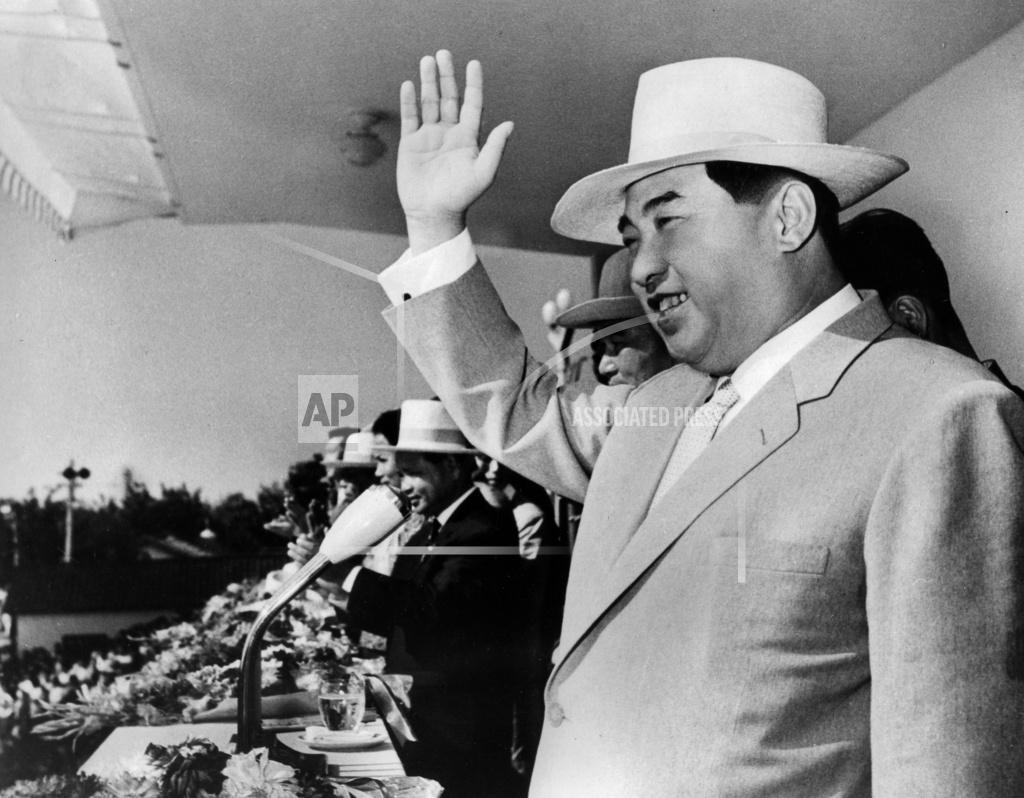
North Korea’s President Kim Il-sung spoke at a rally in Sinuiju and announced that “From now on, all new major plants must be built underground instead of on the surface” in order to protect the Communist nation’s industry from aerial bombardment. Over the next ten years, strategically important industries (such as munitions and chemicals) would have “a redundant set of more critical components constructed underground” to supplement the factories on the surface; decades later, an author would opine that North Korea “is probably the world’s most heavily fortified country.”
The West German Cabinet, wary of conceding political advantages to Communist East Germany, withheld approval today of a new Berlin pass agreement. The draft agreement, negotiated by agents of the West Berlin and East German Governments, is ready for signature. It would enable West Berliners, now barred from passing through the Berlin wall, to visit relatives in the Soviet sector of the city on any of five holiday occasions in the next 12 months. Chancellor Ludwig Erhard summoned his first Cabinet meeting after the summer holiday to decide whether to accept, reject or demand modifications in the draft agreement.
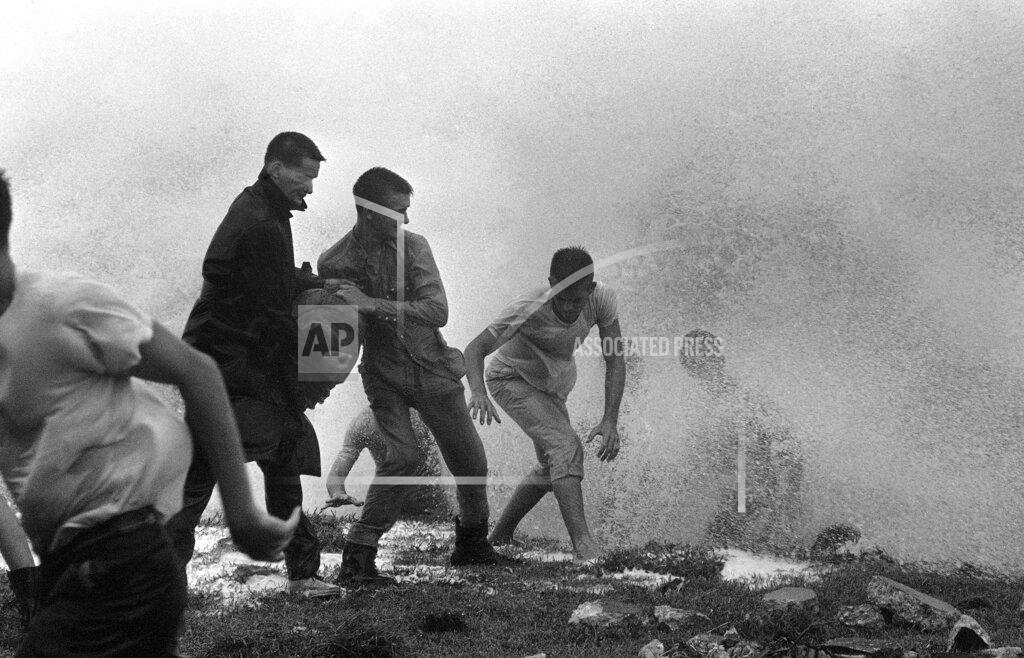
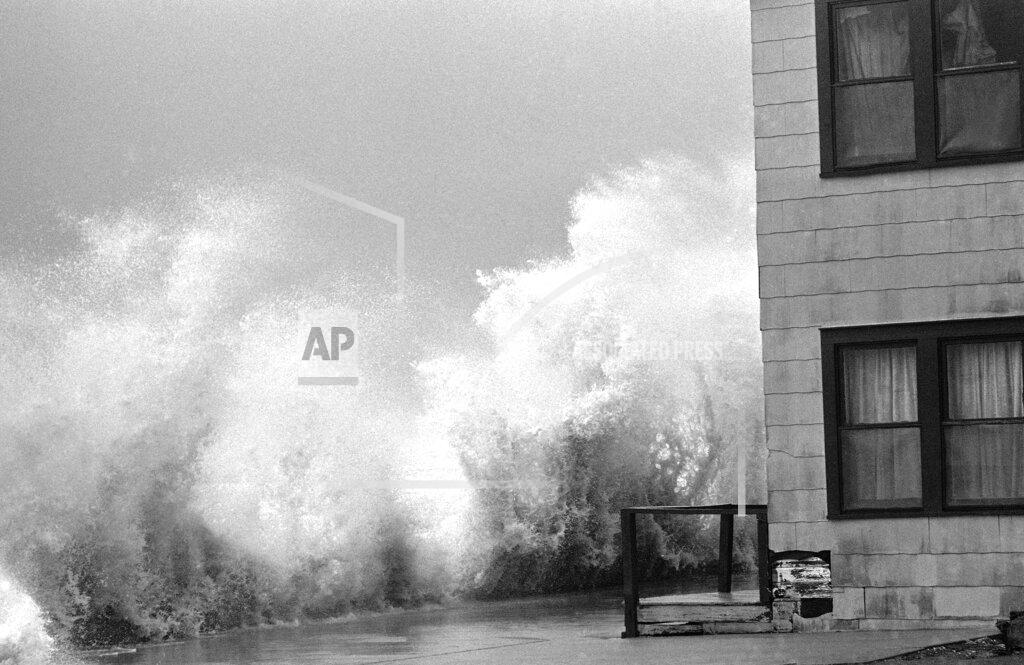
The hurricane called Dora smashed into St. Augustine, Florida today with 100-mile-an-hour winds, a 10‐foot tide and torrential rains after advance winds had battered it and Jacksonville Beach for hours. Its calm eye then pushed directly over the city. The Weather Bureau said winds of 115 mph and higher could be expected after the eye passed. Brunswick, Georgia, about 60 miles north of Jacksonville, Florida, took a severe beating from.the massive storm, whose hurricane‐force winds — more than 75 miles an hour — extended 125 miles from its center. Gales lashed the rest of the Georgia and South Carolina coasts. Hurricane warnings were up all the way to Charleston, South Carolina.
Winds that reached a peak of 95 miles an hour and crashing waves wrecked seaside buildings, flattened billboards, crumbled seawalls, ripped open piers and uprooted trees on the Florida coast. Aluminum light poles weaved, loose wires crackled and shingles peeled off by the thousands. Ninety‐two percent of Jacksonville was reported without electricity. Roofs of two motels in Brunswick were badly ripped. The roof of another building was blown off. Windows were smashed. Debris littered the city’s streets. Most of the power was out. Great green arcs flashed in the darkness as power lines snapped and transformers blew.
President Johnson has ordered the Federal Bureau of Investigation to compile its reports on recent civil disturbances so he can determine whether these disturbances have any pattern. The President said at a late afternoon news conference that he wanted a precis of the scores of F.B.I. reports “on the various problems that we have encountered in cities and states that could involve a violation of Federal laws.” Out of the compilation, he said, “we may find some particular pattern that will need to be pointed up, and thatmay lead us to make further recommendations.” He gave no time limit for the completion of the compilation.
Such a pattern has been suggested by others. On August 16, Roy Wilkins, executive secretary of the National Association for the Advancement of Colored People, requested Attorney General Robert F. Kennedy to initiate an inquiry by the Federal Bureau of Investigation. He based his request not on any evidence, which he disclaimed having, but on a “widespread suspicion that they [civil disturbances] have been planned and that persons have been paid to start them and keep them going.” The President turned aside questions aimed at determining whether any of the reports might have shown any pattern. He said he was reading the reports at the rate of “about 40 a night.” In response to Mr. Wilkins’s statement, Whitney M. Young Jr., executive director of the National Urban League, said on August 20 that it was the consensus of major civil rights leaders that ”there has been a pattern” to the disorders.
President Johnson’s announcement kept alive a topic — one with explosive political implications — with which he has been concerned before. At a news conference on July 24, he said “extremist elements” had been involved in racial disorders in New York. He said then that “at the appropriate time I think their identity will be made known.” Today’s announcement about the F.B.I. reports was apparently the reason for his hastily assembled news conference, but he mentioned it almost as an afterthought. He brought it up in the middle of an answer to a question involving an advisory panel on foreign affairs, the formation of which he had just made public. He said the Government was informing all mayors and governors that, where problems of civil disturbance arise, “we will make available through appropriate channels of their peace officers full information that we may have.” Asked what kind of recommendations he had in mind in the aftermath of the inquiry, he said he would not limit himself to “legislative” recommendations.
The President made no direct reference to charges by his Republican opposition that he was ignoring violence in the streets. But his statement seemed to be in part an answer to those charges, and also a warning against further disorders. The United Automobile Workers of America today won a huge new contract front the Chrysler Corporation that was expected to prevent prolonged national strikes in the automobile industry for the next three years. Walter P. Reuther, the union president, and John D. Leary, Chrysler vice president of administration, announced the settlement at 9:05 AM, in company headquarters here, 55 minutes before 74,000 Chrysler workers were scheduled to strike.
Chrysler, giving in to nearly all the union’s major demands, provided a three‐year contract with earlier retirement, bigger pensions, improved wages, longer vacations, two more holidays, a 50 percent increase in relief time for assembly line workers, improved pensions for retired workers and several other benefits. No price increase in autos and trucks was expected, even though the agreement exceeded the rough guidelines for union raises established by the President, recently a 3.2 per cent increase in wage costs. The settlement will bring Chrysler’s wage and benefit payments to an average of 4.7 percent above the industry’s general costs of $3.80 to $4.10 an hour for each worker. The settlement came after nearly 10 weeks of bargaining that ended with a 22½‐hour session.
The stock market and thd business community reacted favorably to the auto contract settlement. On the New York Stock Exchange, stocks soared to historic highs in heavy trading. Economists termed the agreement only “mildly inflationary.”
President Johnson said today that he was happy that the United Automobile Workers of America and the Chrysler Corporation had agreed on the terms of a new three‐year contract “peacefully and privately.” The President also told a news conference that he was happy about the statements of union and management officials that the settlement was noninflationary. Meanwhile, Government economists were busy trying to put a price tag on the settlement to determine, for one thing, how far it had exceeded the guideposts of the President’s Council of Economic Advisers for noninflationary settlements.
President Johnson would like the Senate to adopt a “sense of Congress” resolution as a reasonable compromise in the battle over reapportionment of state legislatures. An in‐dication of the President’s desire for compromise was provided this evening by Senator Hubert H. Humphrey of Minnesota, the Democratic nominee for Vice President. After consultations witit Pres‐ident Johnson, Mr. Humphrey went to the Senate floor and asked that his name be added as cosponsor of a sense‐of‐Con‐gress resolution proposed by Senators Jacob K. Javits, Re‐publican of New York, and Eugene J. McCarthy, Democrat of Minnesota. The Javits‐McCarthy resolution would declare it to be the sense of Congress that, in any federal court proceeding on reapportionment, a state be given “adequate time” to conform, to the Supreme Court ruling of, last June 15. The Court held that districts both houses of a legislature must be “substantially equal” in population.
The Senate’s Democratic leadership asked that body today to reopen its investigation of the outside business activities of Robert G. Baker, former secretary to the Democratic majority. In taking the initiative, Mike Mansfield of Montana, the majority leader, asked that special emphasis be placed on recent charges of a payoff in the construction of the $25 million D.C. Stadium. Mr. Baker is alleged to have shared in such a payoff. According to allegations recently made by Senator John J. Williams, Republican of Delaware, the payoff was made by Matthew H. McCloskey, former treasurer of the Democratic National Committee and the builder of the stadium. Mr. Williams said he believed $25,000 of the payoff had been channeled into the Kennedy‐Jonnson campaign fund of 1960 through Mr. Baker.
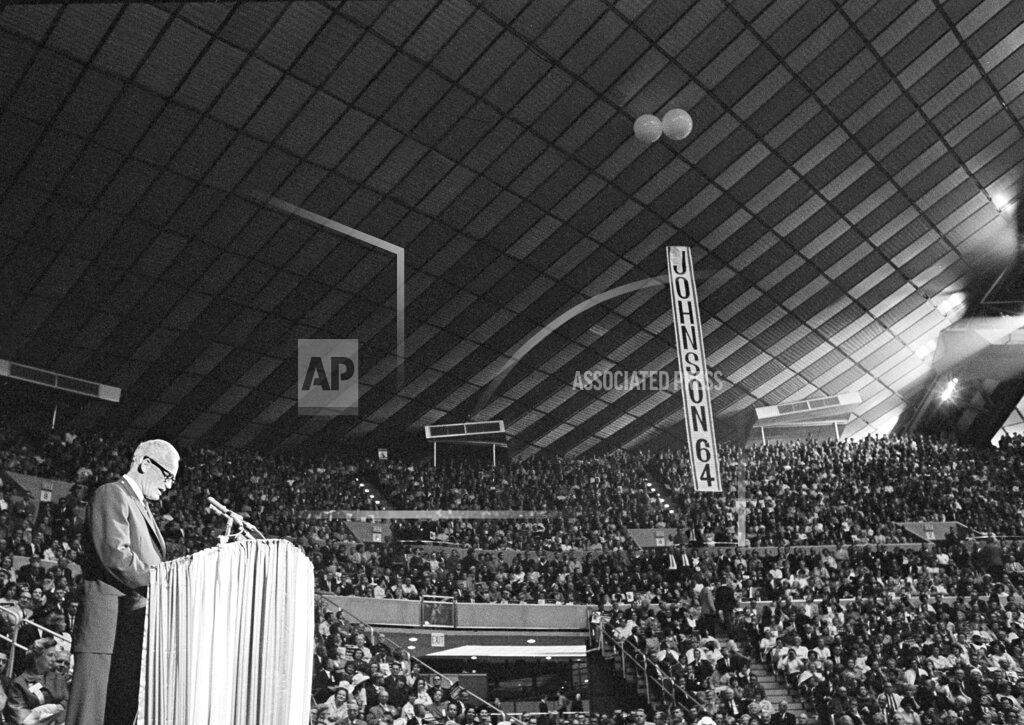
The revelations of Mr. Baker’s get‐rich‐quick career while a protégé of Lyndon B. Johnson as Senator and Vice President have been turned into a popular weapon by Republican campaigners. Both Senator Barry Goldwater and Representative William E. Miller, the party’s Presidential and Vice‐Presidential candidates respectively, have borne down heavily on the theme in recent speeches. It is at least conceivable that was an element in the Senate leadership’s decision today to urge the reopening of the case. There are many practical limitations, however, to completing any such investigation before Election Day. Mr. Mansfield introduced a resolution today that would direct the Rules Committee to reopen the investigation, which it concluded last June, “into the financial or business interests of any officer, employe or former officer or employe of the Senate.”
Mississippi Democrats provided today for a clear test between Republican and Democratic Presidential tickets. Governor Paul B. Johnson Jr. asserted that this would insure victory for Senator Barry Goldwater. Delegates to the state convention, who appeared overwhelmingly in favor of the Republican candidate, then approved the establishment of a committee to chart the future course of the Mississippi Democratic party. The panel, to be named by the Governor, will apparently seek to block state and local gains by the Republicans, and will act to preserve the Democrats’ seniority in the state’s Congressional delegation.
With the denunciations of the national party, its candidate and policies, and with a Goldwater bumper sticker taped to the Chickasaw County standard, a casual visitor might have mistaken the session in the Municipal Auditorium for a Republican pep rally. The convention opened with Governor Johnson’s keynote speech, which echoed many of the criticisms of President Johnson and Senator Hubert H. Humphrey, his Vice‐Presidential running mate, that have been voiced by Representative William E. Miller, the Republican Vice‐Presidential nominee.
Senator Kenneth B. Keating struck back today at Robert F. Kennedy’s criticism of his record in Congress. Obviously stung by the Democratic Senate candidate’s charges that he had sponsored no significant legislation, Mr. Keating said his record in many fields, including civil rights and criminal Justice, was longer and bolder than Mr. Kennedy’s. “Long before the Attorney General showed any interest in civil rights,” the Senator said at a Republican women’s meeting here, “I was the author of bills to bring about equal rights for all citizens, many of which were enacted into law.”
Two Black boys and a girl desegregated Union Springs High School in Union Springs, Alabama, today without incident.
John Osborne’s “Inadmissible Evidence” premieres in London.
The Seattle Post-Intelligenter reports that Cleveland GM Gabe Paul has requested economic surveys of the Seattle market in anticipation of a possible Indians’ move to the Northwest.
Carl Yastrzemski’s two‐run homer in the 10th inning, his third hit of the game, carried the Boston Red Sox to a 6–5 victory over the Cleveland Indians tonight. Dick Radatz, tying the American League record by making his 71st appearance, got the victory for a 14–8 won‐lost record.
The Detroit Tigers’ Mickey Lolich outpitched Whitey Ford tonight, 4–0, and checked the New York Yankee winning streak at five games. Lolich struck out 12 Yankees as he hurled a five-hitter for his 16th victory and third consecutive shutout. He has six altogether, and seven straight victories. Don Wert’s three-run homer is the big blow for the Tigers. The third‐place Yankees, who have struck out 51 times in the last four games, thus lost some of the ground they had gained in the last few days. They dropped a half game in the standings and trail the league-leading Orioles, who split a doubleheader, by a game and a half.
Willie Kirkland hit a two‐out homer in the ninth to give the Washington Senators a 4–3 victory over the league‐leading Baltimore Orioles and a split of their double‐header tonight. The Orioles won the opener, 6–3, as Boog Powell hit a pair of two‐run homers. Powell got three singles in the second game and was involved in all three Baltimore runs. Powell’s home runs were his 33rd and 34th and eight of them have been hit in D.C. Stadium. Tonight’s were off Buster Narum, and both followed walks to Norm Siebern. Robin Roberts started the opener for the Orioles but left the game after hitting a double in the third inning. Roberts was sent to a hospital for treatment for dehydration and exhaustion.
The Minnesota Twins rocked one of the league’s top winners, Juan Pizarro, tonight and sent the Chicago White Sox to their third straight loss, 5–2. The defeat dropped the Sox one game behind Baltimore, which split a double‐header with Washington. Jim Grant settled down after yielding two runs in the first to go the route for his 13th victory. Pizarro, a 17‐game winner, absorbed his eighth defeat. Grant scattered six White Sox hits. Bill Skowron’s double followed Don Buford’s walk and Floyd Robinson’s single accounted for the White Sox runs.
Lou Brock’s 5 hits leads a St. Louis Cardinal 20-hit attack as they whip the Philadelphia Phillies, 10–5 in 11 innings. Brock also hit his tenth home run. The St. Louis Cardinals took sole possession of second place in the National League. The Cards had tied the score in the ninth when Ken Boyer’s single drove in two runs. Curt Flood opened the five-run top of the 11th with a single off Jack Baldschun, the loser, and Lou Brock also singled. Bill White then doubled, scoring both runners to break the tie.
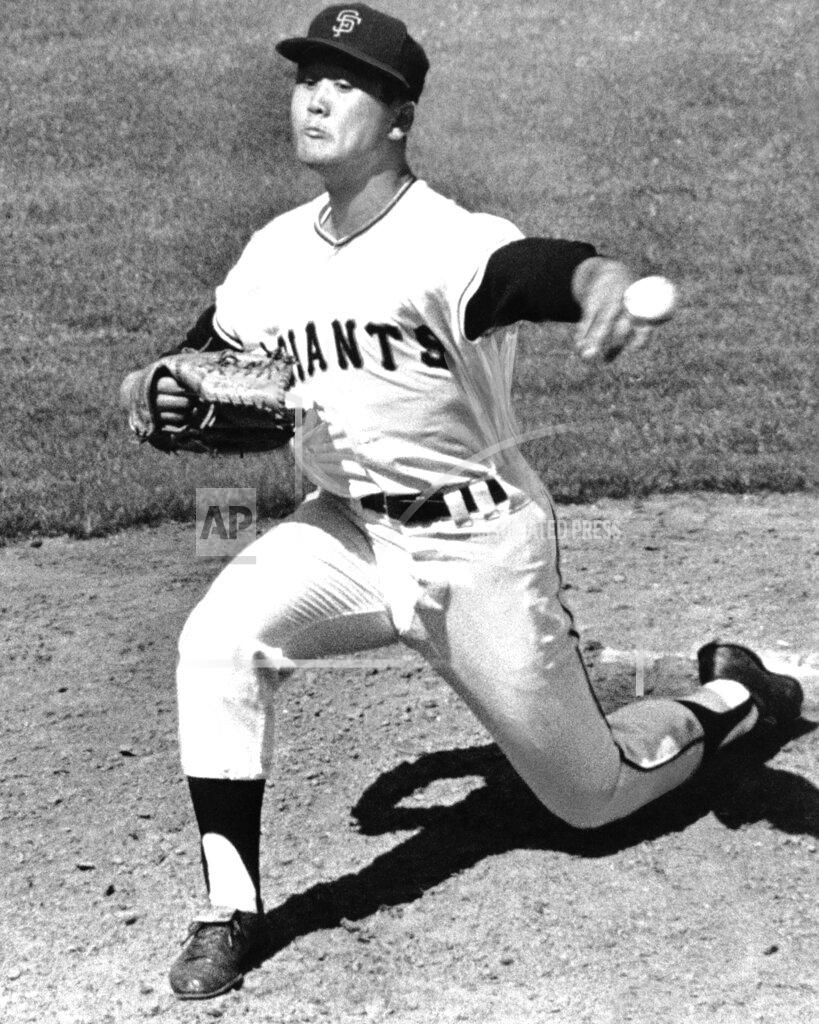
The Los Angeles Dodgers rout the San Francisco Giants, 8–1, behind Don Drysdale’s (17–13) five-hitter. Tommy Davis has a home run, while Willie Davis has a grand slam. Big Frank Howard hits a 3-run homer off Bob Hendley, the 8th homer he’s clubbed off him in 20 at bats, including 4 consecutive last year (not in the same game). Hendley (10–11) takes the loss.
Bob Veale posted his 16th victory tonight and ran his season strike‐out total to 200 as the Pittsburgh Pirates defeated the Cincinnati Reds, 4–1. Veale, who has lost 10 games, was tagged for 13 hits, but scattered them and held the Reds scoreless after the first inning before needing help from Al McBean in the ninth. Veale became the first pitcher in Pittsburgh history to fan 200 or more batters in one season.
Three‐run scoring splurges in the third and eighth innings and four‐hit pitching by Tony Cloninger gave the Milwaukee Braves a 7–4 decision over the New York Mets at Shea. The victory was the 16th for Cloninger. Joe Torre led the 10‐hit Milwaukee attack. The big Braves’ catcher drove in four runs with two doubles and a single, contributing to each scoring inning.
The Chicago Cubs broke a deadlock with three runs in the seventh inning and beat the Houston Colts, 6–3, today before a crowd of 2,054 — smallest of the season at Wrigley Field. Dick Ellsworth (14–14) got the win for the Cubs, with relief mop up by Lindy McDaniel in the ninth.
Dow Jones Industrial Average: 855.57 (+3.66).
Born:
Willie Broughton, NFL defensive tackle and nose tackle (Indianapolis Colts, Dallas Cowboys, Los Angeles Raiders, New Orleans Saints), in Fort Pierce, Florida.
Tim Manoa, NFL fullback (Cleveland Browns, Indianapolis Colts), in Tonga.
Ben Tamburello, NFL guard and center (Philadelphia Eagles), in Birmingham, Alabama.
Mike Ashley, British retail entrepreneur (Frasers Group plc), in Walsall, Staffordshire, England, United Kingdom.
Died:
Sakari Tuomioja, 53, former Prime Minister of Finland (1953-1954) and the United Nations mediator in the Cyprus dispute, died 24 days after suffering a stroke while in Geneva.
H. N. Sanyal, 62, the Solicitor General of India, was strangled in his bedroom in New Delhi. Sanyal was the apparent victim of a burglary.
Charles O’Neill, 82, Irish-Canadian composer, organist, cornetist, and bandmaster.

 History Diaries