24 days to war in Europe.
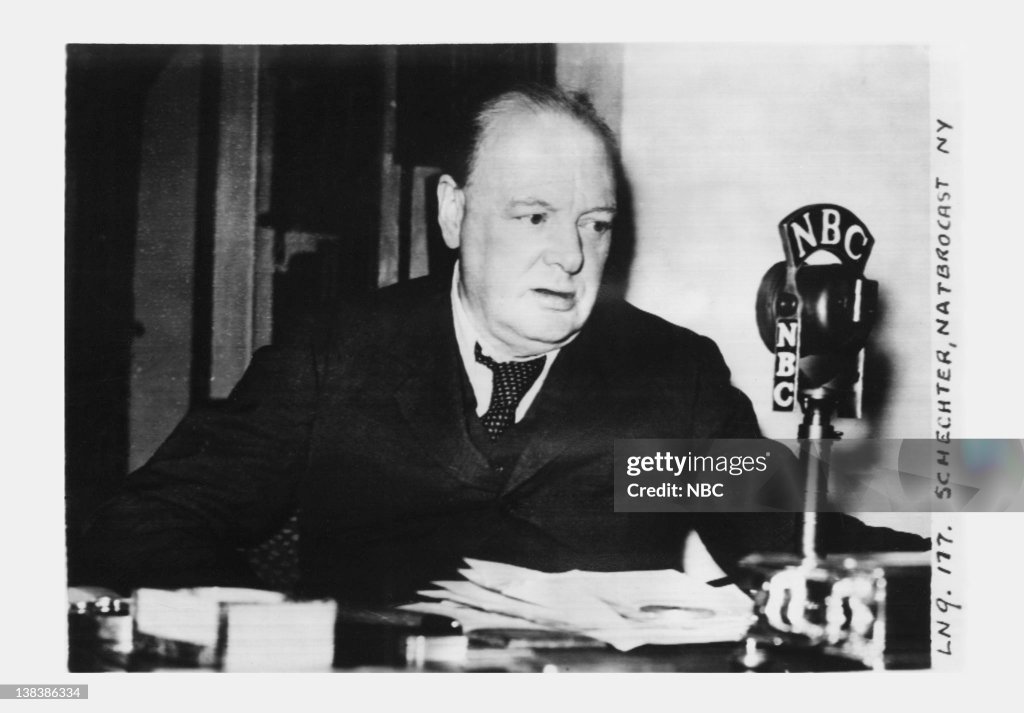
Winston Churchill gave his speech, “A Hush Over Europe,” which was broadcast to the United States from London. Churchill makes a fifteen-minute radio broadcast to America, warning of the increasingly serious threat of war in Europe and the likelihood of American involvement. The speech was given just four weeks before the outbreak of war in Europe, and Churchill hoped to increase U.S. interest in the face of impending war. In the speech, Churchill discussed the “hush over Europe,” which he described as a hush of suspense and fear, and also mentioned the movement of armies, including two million German soldiers and more than a million Italians. He also said that the world must strive to create a system of human relations that will end the uncertainty and allow the world’s creative forces to get on with their work. “This is the time to fight — to speak — to attack!” Churchill sees war as depending upon Hitler; he scoffs at Axis “liberations” mentioned in a radio address.
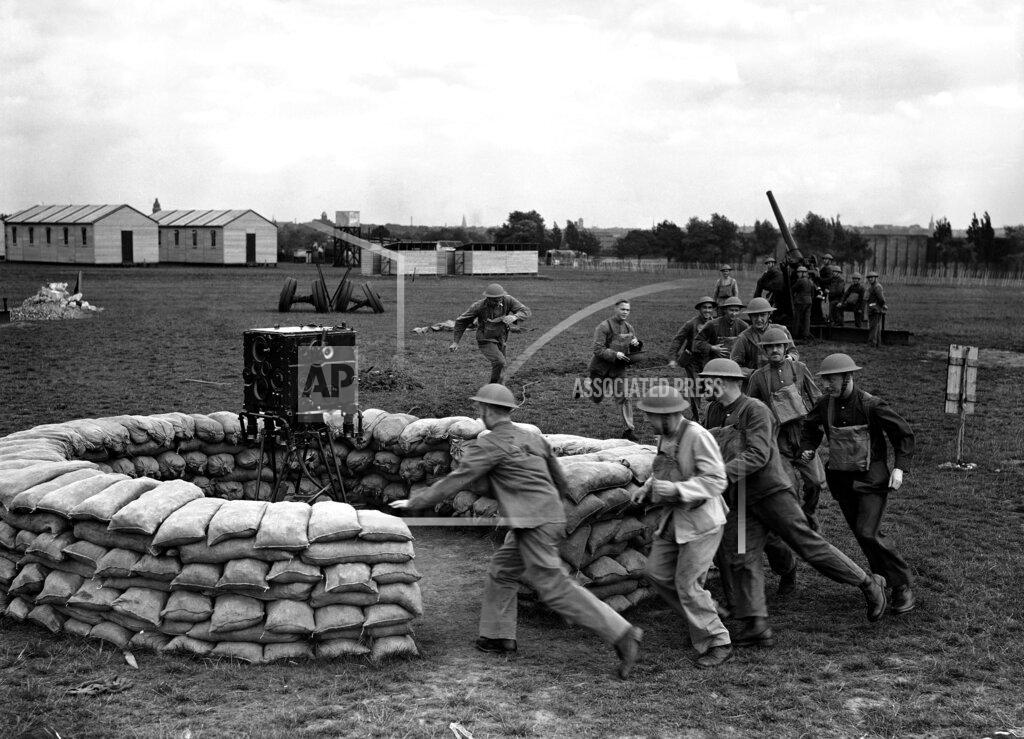
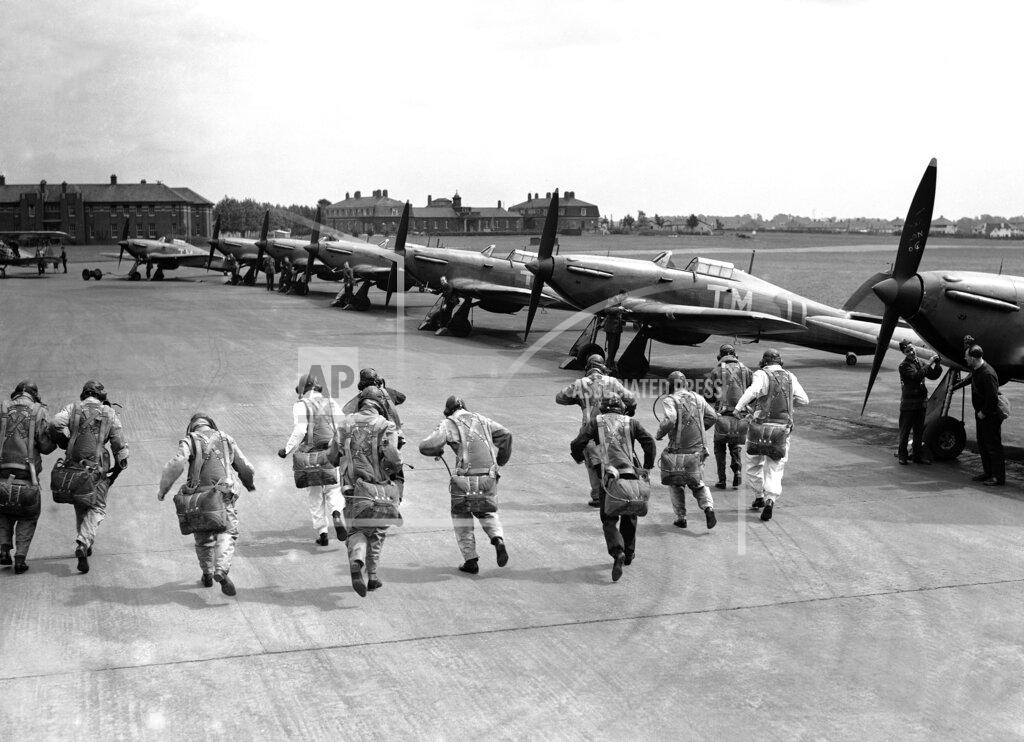
1,300 warplanes filled the skies over Britain on the first of several days of air defence tests. An imaginary enemy out in the North Sea tonight sent wave after wave of bombing planes, raiding Eastern England in the most ambitious test yet made of Britain’s air defenses. Ready to meet them were 800 defending planes, including the world’s fastest fighters, and 1,400 anti-aircraft batteries. London’s balloon barrage was up to keep the raiders high.
Several accidents were reported. Five were killed when a bomber crashed and burned at Tollerton near York. Lifeboats and destroyers are searching for two planes coast guards declared had been seen to fall into the sea off the Essex coast. Many pilots apparently were able to penetrate the defenses by switching off their engines and gliding in from great heights, shielded by low clouds until well over their objectives.
The maneuvers will continue on an unprecedented scale until Friday. They will reach their climax at midnight tomorrow when twenty-six counties of Southeastern England will be blacked out for four hours. Hundreds of miles of curbstones have been painted white in the London area, trees have been ringed with white to guide traffic in the darkness and traffic lights have been shielded except for thin crosses that will not be visible from the air. The windows of The New York Times Bureau, like those of other newspaper offices, will be covered with black paper during the early morning hours while the blackout is in progress.
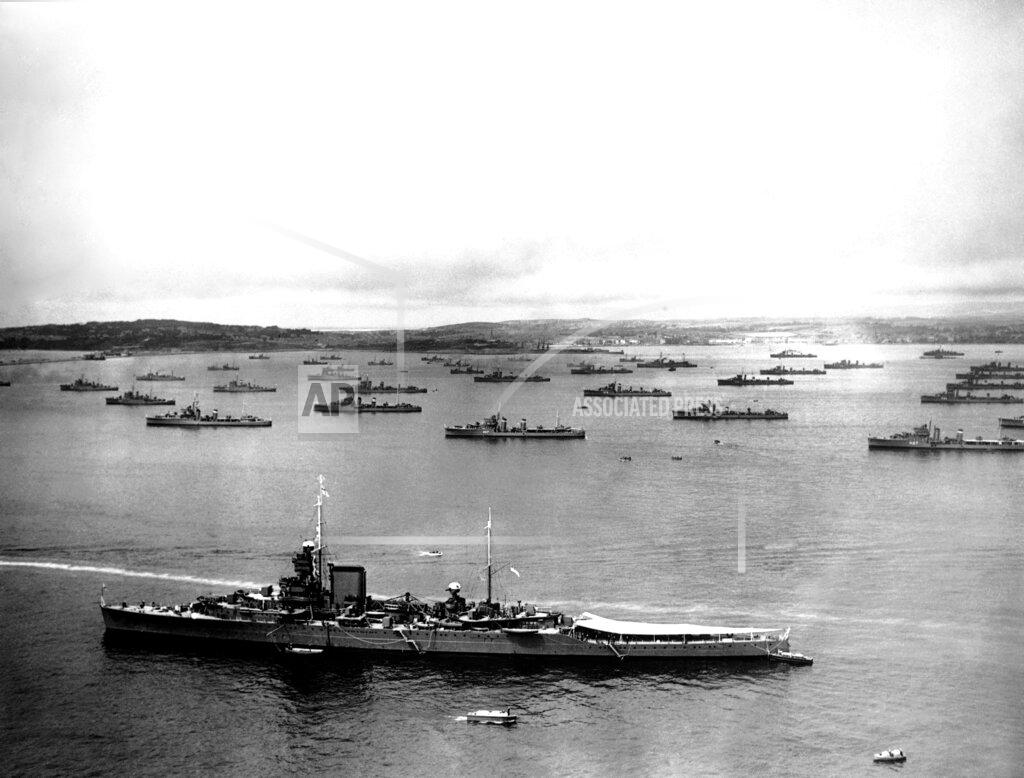
While the Royal Air Force was beginning its greatest demonstration of preparedness for war, King George boarded the royal train at Perth, Scotland, bound for a review of 133 warships of the reserve fleet at Weymouth tomorrow. This, too, will be unprecedented as the greatest assemblage of reserve ships in the peacetime history of the British Navy.
At sunset tonight, as the fleet swung at anchor, it filled Portland Bay almost as far as watchers on shore could see. Three battleships, the HMS Ramillies, HMS Revenge and HMS Iron Duke, which had been lent to the reserve fleet for the King’s visit, stood on the horizon; a little apart loomed the huge bulk of the aircraft carrier HMS Courageous. The middle distance was filled with sixteen cruisers and fifty-five destroyers, while in the foreground were swarms of smaller craft, ready for the royal inspection. As soon as the review is over the reserve ships will steam eastward to join the Home Fleet on combined maneuvers in the North Sea. From now until the second week of September Britain’s preparedness will be at its peak and no armed challenge can catch this country unawares.
Germany issues an official warning to the Polish government in Warsaw, saying that another threatening diplomatic note to Danzig will result in strained Polish-German relations, with Poland being responsible.
An angry Reich press menaces Poland, threatening to wipe the country off the map if criminal agitation continues. On direct orders from Berchtesgaden, where Chancellor Adolf Hitler received Albert Förster, the Danzig Nazl leader, for a conference this morning, the German press today fired a violent word barrage from its heaviest propagandistic artillery, threatening to wipe Poland from the map with the mailed German fist if Polish quarters continued their “criminal war agitation” and “brazen provocation” of either Danzig or the Greater German Reich.
Simultaneously the press also held Britain and France responsible for Poland’s actions, and semi-official pronouncements warned both London and Warsaw that Germany as well as Danzig was prepared to meet any “preventive war” that might be forced on her. This verbal barrage, executed in the best style of the Czecho-Slovak crisis, was motivated by a short. quotation from the conservative Polish newspaper Czas, warning that a fait accompli in the Free City would be answered by Polish guns. But inasmuch as this warning was in line with Marshal Edward Smigly-Rydz’s Krakow speech Sunday, the barrage was obviously intended as an answer to the marshal as well.
“Play With Fire,” “High Water Mark of Polish Insolence.” “Cheap Saber-Rattling in Warsaw,” “Danger of Polish War Hysteria” and. “Agitation on Orders From London and Paris” — these are some of the banner headlines in today’s German press. In vehement articles it denounces. the Poles as “conscienceless firebrands and criminals against peace” and the British and French as their accomplices. The Lokal-Anzeiger in particular says that any shot against Danzig would bring the Poles in touch with a German mailed fist that would freeze the hot blood of Polish insolence, while the Boersenzeitung sees in the Czas threats “innate Polish brutality,” saying: “The first shot from a Polish gun. will in our eyes be sufficient cause to give Poland an answer the letters of which will represent the concluding sentence of present Polish history.”
And to make plain that this bar rage is not merely against the Polish press but against the government, the B. Z. am Mittag features under the front-page-wide headline “Beware, Polonia” a picture of Marshal Smigly-Rydz and a cartoon depicting a gun exploding through its breach with a shell striking a comic figure labeled Poland. At first glance this looks like a propagandistic overture to another coup to bring more territory home. into the Reich and settle accounts. with Poland. But in semi-official quarters it was explained that today’s outbursts represented merely the first warning shots intended to answer the Poles in kind and that the anti-Polish campaign would return to its “normal firing volume” tonight or tomorrow unless new provocations occurred.
Italians plan a big parade with 50,000 troops; Premier Benito Mussolini will not attend. The Army of the Po had a day of rest today since the maneuvers ended prematurely yesterday, but a great parade of 50,000 men and 10,000 vehicles will take place as scheduled in Turin tomorrow.
The keynote to peace lies in sacrifice, without which the tenets of Fascism or even of legality will fail, says Pope Pius XII in a letter that Luigi Cardinal Maglione has written to Canada and that is being hailed in some quarters here as the Pontiff’s most important doctrinal pronouncement to date.
Paris sees a storm brewing in Europe. Germany’s tone toward Poland and the Danzig Nazi chief’s visit to Hitler are cited. Foreign Minister Georges Bonnet returned today from a few days’ vacation to meet. a situation that is regarded as showing signs of developing critically during the coming weeks. All political weather prophets, at least, find in today’s news some of those now familiar symptoms of a coming storm. Albert Foerster, Nazi district leader of Danzig, has gone to Berchtesgaden in the same manner as the Austrian and Sudeten German Nazi leaders came seeking instructions. The German press has raised the tone of its diatribes against Poland. There has been, according to information in Paris, much telephoning during the past few days between the Bavarian mountain home of Chancellor Adolf Hitler and Rome.
Here in France reports are being circulated in the way it is always done on the eve of a new German diplomatic offensive that the German Government will do nothing that might provoke a disturbance. It is even specified in some provincial newspapers, from sources that are not revealed, that the Reich authorities will be quite satisfied with a change in the status of those citizens of Danzig who wish to become German and with certain changes in customs arrangements in the Free City.
Large army maneuvers begin in Finland. Finnish nervousness over Soviet intentions is growing.
The existence of acute differences in Spain is borne out by hundreds of Spaniards from Andalusian towns visiting Gibraltar recently. They unanimously condemn Generalissimo Francisco Franco’s recent decree handing over powers to the Falange Española. Several military officers from Seville now staying at Gibraltar hotels declare that sooner or later General Franco will regret signing this decree, which they say has not the support of a single army officer. These officers believe that when he least expects it General Franco will face a serious conflict, beginning in Andalusia, where unrest prevails and where resentment over what is regarded as General Gonzalo Queipo de Llano’s unfair dismissal from his command is still unhealed. Although already two important posts have been offered to him outside Spain, it is not expected General Queipo de Llano will leave Spain.
An unprecedented shortage of airplanes, engines and pilots as a result of Great Britain’s rearmament program, an exceptional increase in mail loads and “an unfortunate series of losses of aircraft” has compelled Imperial Airways, Britain’s £1,650,000 commercial flying organization, to refuse further passenger bookings this year on its 22,000 miles of empire routes. Passenger reservations already made will stand, but only as passengers cancel their bookings can intending passengers get seats.
The company announced tonight that it had already ordered forty-eight engines, each of 1,100 horsepower, from the United States, and was considering purchasing planes from abroad to meet the urgent demand. With heavy Christmas mails not expected, however, bookings may be resumed before January. Hitherto the company has recruited most of its trained pilots from the Royal Air Force, but this source is now closed.
7th Venice Film Festival opens with a United States boycott due to Benito Mussolini’s Fascist Italian regime. German Propaganda Minister Joseph Goebbels is among the atendees.
The French cargo ship Astree came ashore at Ouistreham, Calvados.She was refloated the next day.
President Roosevelt depicts his foes in Congress in gambler roles; they risk world peace and national well-being to defeat his programs, he says. President Roosevelt today accused the anti-New Deal Congressional coalition of Republicans and conservative Democrats which scuttled his neutrality and pump-priming programs of gambling with world peace and with the economic wellbeing of this country. At a press conference, held in the small study of his estate, the President said bluntly that the members of this group, constituting a solid Republican minority and about a quarter of the Democrats of both branches, were betting their own hunches against the safety of a billion and a half human beings and the financial security of millions of Americans.
The President said he personally hoped that they won both wagers, but that if they lost the people would know whom to hold accountable. With Mrs. Roosevelt at his elbow, prompting him occasionally with apt figures of expression, the President said that his opposition was betting, first, that business would be able to absorb the 3,000,000 persons who would be cut loose from relief and works projects jobs in the Spring, and, second, that there would be no international crisis before Congress returned to session next year.
The first hunch, Mr. Roosevelt said, involved many millions of persons in that the relatives and dependents of the workers would be affected. It presented, he said, a definite challenge to business, a challenge which business had a good chance of meeting because of current conditions in the country. In addition to those actually affected directly by the loss of the jobs because of a reduced Federal work program, the President said, business men, both small and big throughout the country, would be affected by the general loss of purchasing power. At Mrs. Roosevelt’s suggestion, he likened the action of the anti-Administration coalition to pushing business over the edge of a precipice.
This, he said, was a risky matter. A safe descent of a precipice required a general slowdown for success and gave business little chance to pick up the slack. His lending and housing legislation, he said, had been designed to provide a more gradual descent, a descent during which business and industry would have time to gather themselves and prepare for what was to come. The sudden discharge of 3,000,000 persons, he said, was a tremendous drop, and it was to avoid this that he had prepared his lending and housing programs. Through them, he said, there would have been made available a period of transition, softening the blow and allowing more time for absorption.
Apparently, however, he said, the opposition had chosen the precipice method. It was, he said, as was the case with the neutrality legislation, a terrific risk. In analyzing the discharges, President Roosevelt remarked that 1,000,000 of the 3,000,000 persons on relief rolls would go out in the Spring. In addition, he said, about 2,000,000 persons employed on WPA projects would go out as the projects were finished. The total of persons, he said, could be quadrupled in view of dependents.
The second bet, made by depriving him of his neutrality bill, the President went on, left him without power to make an American move to prevent international war if the crisis came before Congress returned in January. He had made such moves before, he recalled, in September, 1938, and April of this year, but now could not do so. This, he said, was a situation affecting a billion and a half persons throughout the world. The disagreement with the Republicans and Conservative Democrats, Mr. Roosevelt said, was not one of method, but one of belief as to what would take place. His opponents were, in effect, betting that the President of the United States was wrong. They, and they alone, he said, would be accountable to the people of the nation if they lost.
President Roosevelt’s claim of victory for the objective of his court reorganization plan, despite failure of Congress in 1937 to pass the Supreme Court Reorganization Bill, drew today a denial from Senator Burke, who acted as spokesman for the rebellious Democratic group in Congress. The President’s statement was made yesterday coincident with his signing of the Court Proctor Bill. In it he said: “It is true that the precise method which I recommended was not adopted, but the objective, as every person in the United States knows today, was achieved. The results are not even open to dispute.”
This statement was received with mixed reaction at the Capitol, but most members of Congress expressed their opinions privately. However Senator Burke charged that “the President would now have the country believe, that in true copy-book style, he has used his crushing defeat on court reorganization as ‘a stepping-stone to victory’.” The Nebraska conservative Democrat argued that not only is there no connection between the President’s original proposal and subsequent events but that the Court Proctor Bill itself “has no kinship to the ‘proctor’ that was proposed (by the President in 1937).”
A U.S. Senator speaks out against a third term for President Roosevelt, insisting that a change will best serve the needs of the country. Senator George spoke out today against a third term for President Roosevelt and demanded a “prompt settlement” of the issue. Before leaving for his home at Vienna, Georgia, the Senator, whom President Roosevelt tried vainly to unseat last year, asserted that he opposed the third term “under any circumstances or conditions.”
“The course followed by the great and patriotic leaders of the past against the third term for any President and under any conditions, is wise and right — not only in normal times but especially in abnormal times, times of upheaval and chaos in political thought and action. The prompt settlement of this issue in line with the examples set by great statesmen and patriots of the past will substantially serve the best interests of the Democratic Party and the country.”
In Uvalde, Texas, Vice President John N. Garner inspected his flock of bantam chickens today, pronounced his pecan crop about “one-fifth good” and hoped Congress would quit earlier next summer. He did not bother to open his mail and announced he was seriously considering air-conditioning several rooms of his home. Asked if he hadn’t waited a little late in the summer for that, he replied: “Yes, but possibly we’ll be home considerably earlier next summer. With the national conventions going up in 1940, there ought to be a good chance of Congress quitting early… I’m mighty glad to get out of governmental affairs for a while,” the Vice President told a small group of neighbors.
The 1940 models were unveiled today at the proving grounds of the Packard Motor Car Company at Utica, Michigan, a few miles from Detroit. M.M. Gilman, president of the company, officiated in the presence of more than 4,500 dealers and distributors.
The American fishing vessel Rainbow was destroyed by fire on the north side of South Indian Island, Territory of Alaska (58°22′15″N, 134°42′00″W). The only person on board survived.
The historical adventure film “Stanley and Livingstone” starring Spencer Tracy and Cedric Hardwicke premiered at Grauman’s Chinese Theatre in Hollywood.
Aided by Jimmy Foxx’s twenty-eighth and twenty-ninth home runs, old Robert Moses Grove extracted another well-pitched game from his aging left arm today, and the Boston Red Sox whipped the Philadelphia Athletics, 9–2, for the eighth time in ten contests this season.
Opening a three-game series against the Washington Senators, the New York Yankees scrambled themselves into committing four errors, all of them in scoring innings; saw their pitching subjected to perhaps the worst slamming it has experienced this year, suffered themselves to be confined to seven hits and swallowed their third straight setback, 7–4. The Senators explode for 16 hits. More painful than the result was its consequences, for the beating reduced the Yanks’ lead to seven games over the Red Sox. It didn’t mean a thing to the Senators, about twenty-five games off the pace even though they now have won eight straight.
The Cincinnati Reds split a doubleheader with the Chicago Cubs, losing the opener, 7–3, before edging out a 7–5 win in the tenth inning of the nitecap.
The Philadelphia Phillies end their 10-game losing streak and beat the Brooklyn Dodgers, 3–2.
The British cargo ship Frank B. Baird ran aground at Murray Bay, Quebec, Canada. She was refloated the next day leaking, and sailed to Quebec City for drydocking.
The British cargo ship Wendover grounded in the St Lawrence River at Cape Goose, Canada. She was refloated later that day.
The Japanese again proclaim the victory of a battle in Mongolia, with 800 Soviet and Mongolian dead. They also claim to have sot down 862 Soviet aircraft during the fighting. Marshal Zhukov will soon form his reply.
Reports of what is believed to be the first attempt by Japanese to seize — as distinct from interfere with — British property in China were confirmed in London today. The Japanese are pressing the government of Honan Province to transfer to Japan the anthracite mines there.
The British gunboat HMS Seamew departed for Canton today, marking the opening of the Canton River to neutral traffic after twelve days, during which it was closed by the Japanese because of “military necessity.” Although the past two weeks brought increased Japanese military movements around Canton, it was still not apparent what the Japanese meant by “military necessity.”
Domei, Japanese news agency, reported tonight that Wang Chingwei, former Premier of China, who has been advocating Japanese-Chinese peace, had arrived in Canton several days ago and would make a radio peace appeal tomorrow to the Southwestern Provinces and Chinese living overseas. Since he fled from Chungking to French Indo-China last December, Mr. Wang has been under Japanese protection and has been mentioned frequently as the prospective head of a new Japanese-dominated government for occupied parts of China. Word of his arrival at Canton lent substance to reports that he might head a Japanese-controlled South China regime, but informed Chinese said Mr. Wang was reluctant to do this because Japanese control in this region did not extend far beyond Canton city.
Although the Japanese are still in possession of the major cities of Tsincheng and Kaoping and a number of lesser towns, the Chinese claimed today that they had smashed the invaders’ big clean-up effort in Southeastern Shansi Province. “The Japanese forces in Southeastern Shansi face annihilation,” a Chinese military spokesman said at a press conference in Chungking today. “The question is now not when they will get out but how.” He asserted Chinese troops were steadily closing in on Japanese garrisons, some of which were besieged. He said most of the main communications routes had been blocked and that Linhsien and Changchih were among important towns recently recaptured by the Chinese. The Chinese Government is reportedly highly pleased over the Chinese positions in Shansi. Generalissimo Chiang Kai-shek commented. with high optimism on the Shansi situation at the weekly memorial meeting yesterday. He said that the Chinese still dominated Shansi and that so long as they held Shansi, Japanese domination of North China was impossible.
The New Zealand coaster Waimea was scuttled in the Cook Strait off Turakirae Head, North Island as a means of disposal.
Dow Jones Industrial Average: 141.10 (+0.34).
Born:
Viorica Viscopoleanu, Romanian athlete (Olympic gold medal, long jump, 1968), in Storozhynets, Romania.
Phil Balsley, American baritone singer of The Statler Brothers; in Augusta County, Virginia.
William Hibbard, American composer, musician and conductor, in Newton, Massachusetts (d. 1989).
Naval Construction:
The Kriegsmarine (German Navy) Type IXB U-boat U-111 is ordered from AG Weser, Bremen (werk 976).
The Royal Navy Bar-class boom defence vessel HMS Barbain (Z 01) is laid down by the Blyth Shipbuilding & Drydock Co. Ltd. (Blyth, U.K.).

 History Diaries