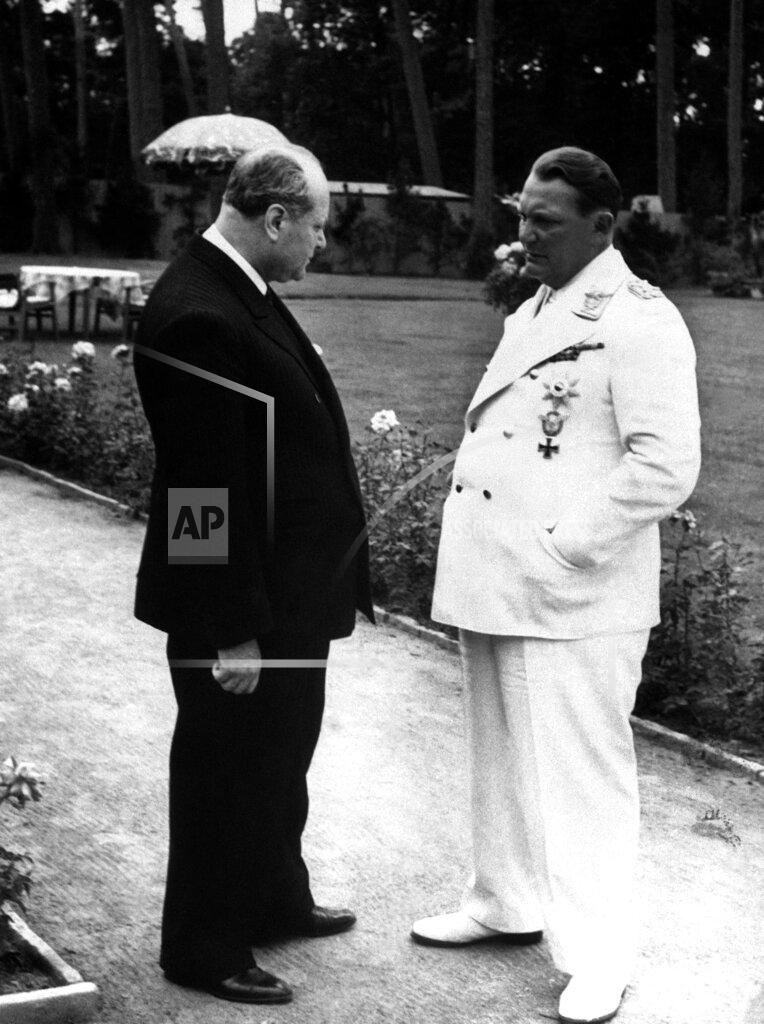
Advice from Colonel Josef Beck, Foreign Minister of Poland, caused yet another delay today in the issuance of Great Britain’s declaration on Danzig, which was approved by the Cabinet Wednesday and was expected to be read by Prime Minister Neville Chamberlain in the House of Commons yesterday or today. Far from detecting a flavor of “appeasement” in the British statement, the Poles are said on reliable authority to have been too well pleased by the stiffness and precision of London’s attitude. They felt it would be a pity for the British to waste such heavy artillery at the present moment, which the Poles seem to regard as comparatively quiet.
Colonel Beck’s advice to the British was to hold up their declaration a while and issue it at a psychological moment when the crisis over Danzig might be developing more swiftly. It seems that the British have agreed for the time being, although informed quarters Indicated the declaration might be made Monday. Before then the British will have a chance to discuss the matter with the Polish Ambassador, Count Edward Raczynski, who is returning here from Warsaw tomorrow. And they may be able to persuade him. The British are not sure by any means of the wisdom of further delay in making their position perfectly plain. They are still troubled at the realization that they have. not yet convinced Germany that they mean business.
For domestic reasons, too, Mr. Chamberlain feels it necessary not to allow a breath of suspicion in this country about the government’s firmness. The tremendous press campaign in favor of bringing Winston Churchill into the Cabinet has been based partly on the necessity of proving Britain’s determination to the dictators. The campaign has run up against Mr. Chamberlain’s opposition, but. the government would like to offset the clamor for Mr. Churchill by a show of Churchillian firmness on its own part. Such a demonstration, the government feels, would be provided by an unequivocal declaration of Britain’s readiness to fight against aggression in Danzig, just as it was provided yesterday by a bill extending export credits on a huge scale to Britain’s new allies.
Chancellor of the Exchequer Sir John Simon took up the chorus of warnings against aggressors today. in a speech at the opening of a new branch of the Yarmouth Savings Bank. Referring to the extent of British investments in savings banks, he said it was “proof of the steady confidence of the people of this country.”
“If it is to be a test of nerves that is to be applied to the people of this country,” he declared, “there is no people in the world that will stand it better than the British people.”
“This confidence is not misplaced,” he continued. These savings banks are a manifestation. of the local good sense and patriotism of our people. This is not a movement which has been imposed from above. The British are a great people at managing their own affairs. They are just a little unwilling to see an undue amount of interference from above.”
Meanwhile there was great satisfaction at the news that arrangements were being made for the closest collaboration between the British and French air forces. The British Royal Air Force is expected, at first at least, to be the spearhead of any British attack on Germany. and the first British fighting force to engage an enemy. Therefore, it is regarded as most important in London that the pilots and observers become familiar with French terrain and landmarks. There is, of course, nothing official said about details yet, but it is understood that they are far along and the two air forces are expected to profit much by each other’s experience.
Potatoes today became the latest political issue in the Danzig-Polish quarrel. Danzig officials said that Polish customs officials were refusing to permit trucks carrying potatoes to cross the frontier in the free city’s territory. Danzig housewives complained of a potato shortage. The newspaper Neueste Nachrichten said that at one border point the Poles turned back potato trucks with the remark: “Poland is not interested in providing food for German soldiers stationed in the free city.”
German quarters in the free city were excited by a report that a German citizen named Johannes Lux was arrested yesterday at the Polish border community of Raty on a charge of having assisted fugitive Germans to cross into Germany at unguarded points.
German Jews face a crushing task. The one-fourth with property or jobs must care for all, pending emigration.
The Reich closes three theological schools. A German magazine calls the study of theology useless.
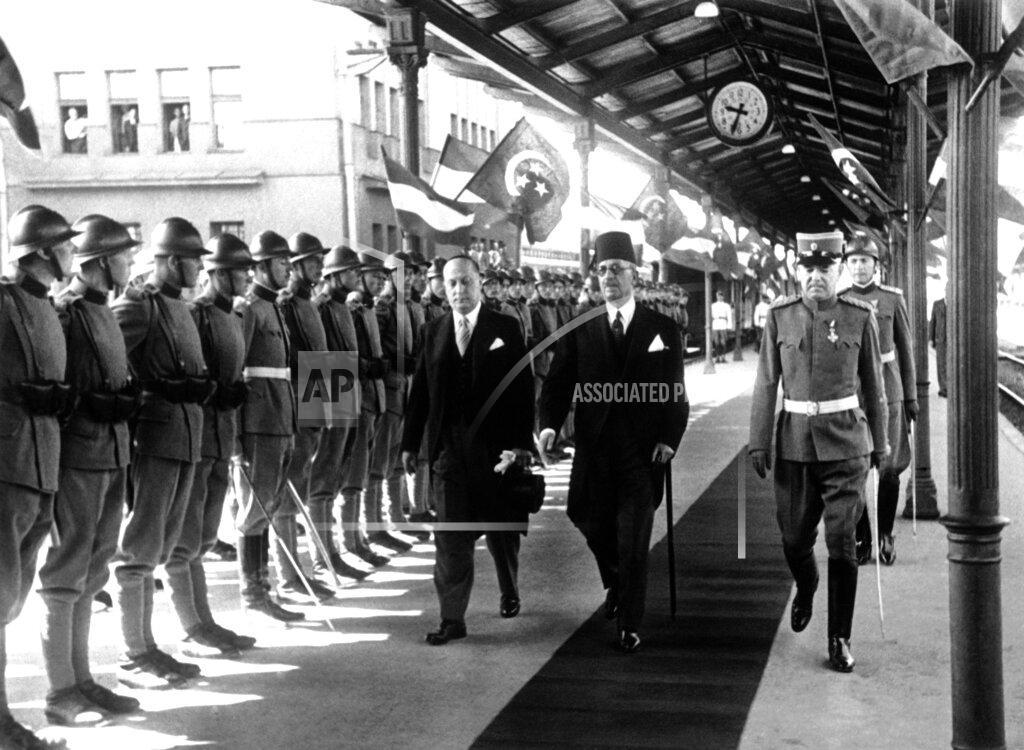
Premier George Kiosseivanov of Bulgaria concluded his state visit to Berlin today. Contrary to original plans, however, he did not leave for Sofia but went to Munich, where tomorrow he will go sightseeing prior to returning to Bulgaria. A communiqué issued here tonight says merely that all questions of mutual interest as well as the general European situation were discussed “in that feeling of most intimate friendship natural to such old friends as Bulgaria and Germany.” It concludes: “The discussions demonstrated anew how much the natural and traditional friendship of both nations, jointly and with Italy, contribute toward establishing Bulgaria as a factor for order in Southeastern European territory. In this sense Germany and Bulgaria will continue to strengthen their relations, politically, economically and culturally.”
Rumania, richest of the Balkan powers, was openly alarmed tonight over what diplomatic circles described as a German plan for a “Little Axis” in Southeastern Europe. Rumanians charged that the cordial reception given Bulgaria’s Premier, George Kiosseivanov, in Berlin this week was an indication of Germany’s efforts to weld Bulgaria, Yugoslavia and Hungary into a proAxis bloc. Hungary and Bulgaria were Germany’s World War allies; Yugoslavia (or Serbia) was on the other side. Significantly, Rumanians said, Premier Kiosseivanov’s visit coincided with the attendance of General Henry Werth, Chief of Staff of the Hungarian Army, at German maneuvers. The Regent of Yugoslavia, Prince Paul, made a similar trip to Berlin last month.
En route home to Sofia Premier Kiosseivanov is scheduled to confer with Prince Paul at Bied, Yugoslavia, Sunday. Bucharest newspapers demanded to know whether Chancellor Hitler had promised Bulgaria help in regaining the Black Sea region of Southern Dobruja, which Bulgaria lost to Rumania in the 1913 Balkan War. They recalled that Minister of Justice Hans Frank had told Sofia newspaper men June 24 that Germany expected Bulgaria to be on her side “in the next war.”
Italian companies dealing with the government are prohibited from employing Jews.
British Open Men’s Golf, St Andrews: In the last Open played for 7 years, due to WWII, England’s Dick Burton wins by 2 strokes from American Johnny Bulla.
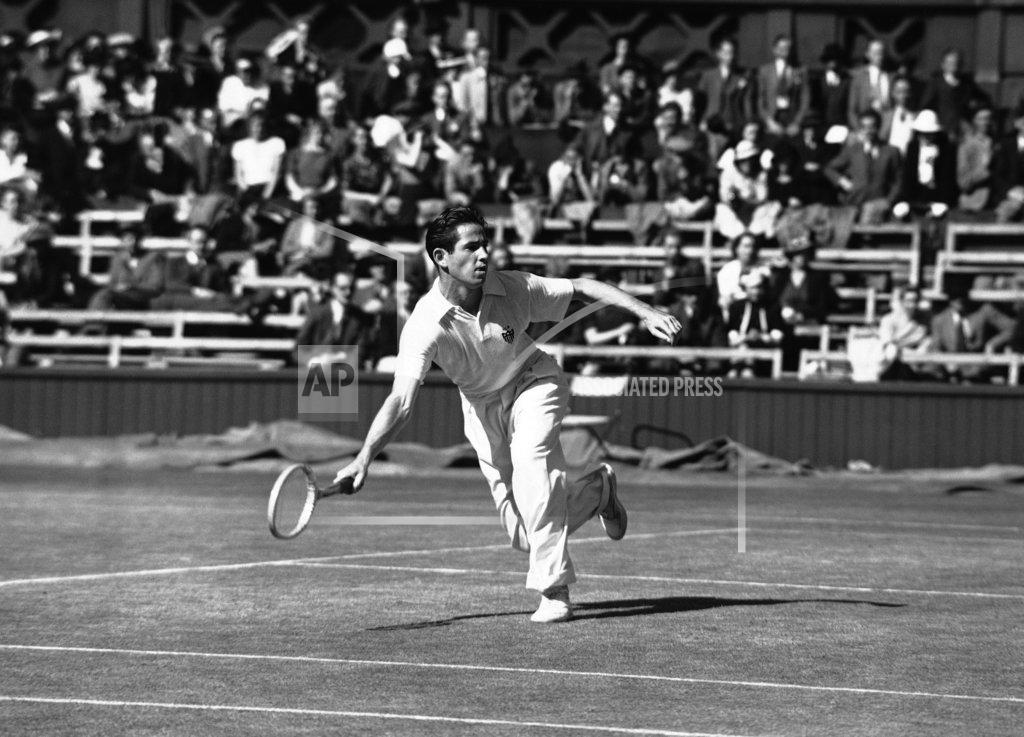
Bobby Riggs defeated fellow American Elwood Cooke, 2–6, 8–6, 3–6, 6–3, 6–2, in the Gentlemen’s Singles final at Wimbledon. In a Wimbledon sweep, he also won the doubles and mixed doubles titles.
The ban against Action Francaise is lifted just four months after the election of Pope Pius XII, who was even more convinced of the usefulness of anti-Communist right-wing movements than his predecessor.
The first of two Latécoère 299 prototypes, land-based three-seat aircraft derived from the Latécoère 298 design, took flight. The design would not enter production.
The French comedy-drama film “The Rules of the Game” directed by Jean Renoir premiered in Paris.
The automotive company SeAZ was founded in the Soviet Union.
Hashim al-Atassi resigned as President of Syria in protest against the French cession of the Republic of Hatay to Turkey. The French appointed Bahij al-Khatib to succeed him as Head of State.
Today in Washington, President Roosevelt moved to spike possible extension of German-claimed areas in Antarctica by directing Admiral Byrd to leave this Fall to substantiate American claims to territory within the sphere of influence of the Monroe Doctrine.
The Senate heard Senator Barkley, the majority leader, eulogize Navy Secretary Swanson, who died today, and adjourned at 12:19 PM until 10:45 AM Monday, after adopting a resolution for a state funeral for Mr. Swanson in the Senate chamber on that day. The Monopoly Committee heard Thurman Arnold, Justice Department Anti-Trust Law enforcement officer, tell of plans to attack restraints of trade in the building industry by anti-trust suits brought simultaneously throughout the country. The Education and Labor Committee heard arguments on National Labor Relations Act amendments.
The House was in recess.
A group of Senators, estimated by some to be 34 strong, agreed today to stand together against any attempt to repeal the arms embargo of the Neutrality Act. This was one of the largest Senate groups gathered under the plans to oppose Administration efforts for revision of the law. Senator Johnson of California, at whose invitation the meeting was held, said that no accurate count had been kept of those attending, since members came and went as their other duties permitted. He added that he believed there had been thirty-four during the course of the gathering but that, in any event, there had been “a sizable group of Senators” willing to pledge themselves to fight together on the arms embargo issue.
The participants in the meeting subscribed to the following statement, which Mr. Johnson made public, but they declined further comment: “We are unalterably opposed to the repeal or modification of the present Neutrality Law prohibiting the sale or exportation of arms, munitions or implements of war to nations engaged in war. We are against any discretion being lodged in the hands of any Chief Executive to determine an aggressor or aggressors during any war abroad. We believe in the real neutrality of our nation in case of any armed conflict. We are determined to maintain our position by every honorable and legitimate means at our command.”
Senator Pittman, chairman of the Foreign Relations Committee and sponsor of a resolution based on the Administration’s recommendations for revision of the Neutrality Act, when told of the meeting in Senator Johnson’s office said: “I have no comment to make.”
“I endorse Senator Pittman’s statement 100 percent,” said Representative Bloom of New York, acting chairman of the Foreign Affairs Committee, who was in Mr. Pittman’s office for a conference. Mr. Bloom is of the opinion that, if the Senate will knock out the arms embargo feature which the House forced back into his resolution before adopting it last week, the House will recede from its stand.
There was no doubt in Capitol circles that if the number of Senators reported by Senator Johnson as having signed the anti-neutrality bill petition wished to, they could carry on a prolonged filibuster. A much smaller number has waged a successful filibuster, the latest instances being when a dozen Southerners prevented a vote on the Anti-Lynching Bill in 1937 and 1938 by forcing it off the calendar.
Acceptance by WPA workers of the 130-hour month with security wages established by Congress is the only possible outcome of spreading strikes by skilled WPA workers in New York City and other parts of the country against increased hours, Colonel F. C. Harrington, Work Projects Commissioner, informed officials of the American Federation of Labor who called on him today to protest new working conditions.
Meanwhile, as pressure was put on Congress by several organizations to modify the act, Senator James E. Murray, Democrat, of Montana, said he would offer amendments to the Relief Act to restore the prevailing wage on WPA projects and to prevent any reduction in monthly “security” wages. Although not directly involved in the current walkouts, the CIO issued a long statement today calling upon Congress to restore former hour and wage provisions. The statement asserted that the present manifestations are “evidence of just resentment against the starvation and wage-cutting WPA bill passed. by Congress.” The Workers Alliance, an organization of unemployed, issued a similar statement.
A threat to prosecute on felony charges all persons in New York who interfere with work on WPA was made yesterday by Lieutenant Colonel Brehon B. Somervell, local Works Progress Administrator, as more than 100,000 WPA workers in New York City and other parts of the nation went on strike in protest against longer working hours and reduced hourly wages imposed by act of Congress. Colonel Somervell declined to indicate the specific persons against whom he might proceed in the Federal courts. He said he had asked John T. Cahill, United States. Attorney, for an interpretation of the following section of the new Federal Relief Bill, as a basis for prosecution: “Any person who knowingly, by means of any fraud, force, threat, intimidation or boycott, deprives any person of any of the benefits. to which he may be entitled [under the act], or attempts so to do, or assists in so doing, shall be deemed guilty of a felony and fined not more than $2,000 or imprisoned not more than two years, or both.”
Secretary of the Navy Claude A. Swanson, who had been in ill health for many months, died this morning at the Rapidan (Virginia) camp which was established by President Hoover as a week-end retreat. Death followed a stroke which the Secretary suffered yesterday. He was 77 years old. Always an ardent champion of the navy, first as member of the House, then as chairman of the Senate Committee on Naval Affairs and finally as Secretary of the Navy, Mr. Swanson for years had been a leader in every movement involving the building up of the navy to a strength second to none. in the world. Secretary Swanson was the second head of the Navy Department to die in office. The other was Thomas W. Gilmer, who was killed by a bursting gun on the USS Princeton, the first American screw propeller warship, on February 28, 1844, ten days after he assumed office. Secretary Gilmer was also a Virginian and, like Mr. Swanson, a former Governor of Virginia.
Secretary Swanson’s illness dated to February, 1936, when he was stricken with pleurisy, an attack so serious that for a time his life was despaired of. From that time until his death he was very feeble, yet he managed personally to attend to the duties of his office, keeping track of every move for the increase of the fleet both in fighting and noncombatant units. He often said to friends that his dream was “the greatest navy afloat.” He lived to see that dream well on the way to realization.
The fact that its chief was dead was noted in every part of the Navy Department today, Admiral Leahy, Chief of Naval Operations, who was probably the man closest to Mr. Swanson and his most intimate friend, was deeply affected by the passing of the “beloved Secretary” under whom, the Admiral added, the greatest peacetime expansion in the history of the navy was accomplished. On March 4, 1933, when Mr. Swanson assumed office, there were building, in all the naval and private shipbuilding plants of the country, just seventeen combatant ships. Under Secretary Swanson this number was increased by 197 fighting ships, either now completed or under construction.
Paul V. McNutt today denied that he would enter the Presidential contest if President Roosevelt seeks a third term. It was reported yesterday that those supporting his candidacy would persist in their move no matter what Mr. Roosevelt did. “All my plans have been made on the assumption that Mr. Roosevelt would not seek a third term,” Mr. McNutt said today. “If, on the contrary, he does now want a third term, my loyalty to the chief dictates what action I should take.” He added that this meant that if the President entered the field he would decline to run.
Thomas Dewey maps his 1940 presidential strategy, with quiet emphasis on publicity and vote-getting strength in interviews.
New York District Attorney Thomas E. Dewey’s popularity among Republican voters as a possible presidential candidate for 1940 has decreased slightly in the last seven weeks while that of Senator Arthur Vandenberg has increased, according to the latest survey of party sentiment by the American Institute of Public Opinion, of which Dr. George Gallup is director. The survey shows that Dewey, with 47%, is still the leading popular choice, however, among Republicans with definite opinions on 1940 candidates. He polled more than twice as many preference votes as Vandenberg, who was second with 19%, and three times as many as Senator Robert A. Taft of Ohio, the third-most-popular choice, at 13%.
The U.S. government adds seven more surplus commodities to the food stamp program.
Frank Dolazel, 52, confesses to one of the infamous “Torso Murders” in Cleveland, Ohio. He will later recant. He dies in prison under suspicious circumstances while awaiting trial. After his death, he is cleared of the charges. Another man, a politician’s cousin, is implicated in the crimes. Because of his family connections, he is never tried, but after he is committed to a mental hospital for life, the murders end.
The Sacramento Solons (PCL) beat the San Francisco Seals, 5–4 in an exhibition game played inside Folsom Prison.
For the third time in their last four games the Boston Red Sox defeated the world champion New York Yankees today, 4–3, to give Red Ruffing his third defeat. The scoring was confined to no more than a run an inning. Manager Joe Cronin hit a homer for Boston in the fourth.
Joe Gallagher’s only hit today was a seventh inning home run driving in three runs to give the St. Louis Browns an 8–6 victory over the Detroit Tigers. The victory broke the Browns’ losing streak which had reached five and evened the two-game series.
Cleveland Indians’ star pitcher Bob Feller snaps the White Sox win streak at 5 as he wins in Chicago, 7–3.
The Brooklyn Dodgers beat the New York Giants, 3–2, today in the opener of their four-game series. The victory, strengthening the Dodgers’ hold on third place in the National league, was the eighth straight pitched by Whitlow Wyatt, 30-year-old rookie from Milwaukee. He has yet to be defeated. The Dodgers scored all their runs off Cliff Metton in the first two innings.
With the bases full, the score tied, and two men out in the sixth, Max West tripled today to provide the Boston Bees with a 7–3 victory over Philadelphia. The blow came off Max Butcher, who relieved Walter Beck when the latter was ejected by Umpire Babe Pinelli for protesting ball and strike decisions.
Argentina opens a Nazi probe and will challenge subversive actions.
Japan makes more claims of victories in the air and on the ground but in fact its offensive has ground to a halt. Zhukov now prepares a limited operation to push back the Yasuoka Detachment, which has lost most of its tanks and failed to reach the Kawatama Bridge.
Japan assails Britain as an enemy. People in Japan mark the second anniversary of war in China with a smokeless, meatless, and drinkless day. The Japanese believe their military power has beaten the Chinese to their knees and that their resistance is sustained only by foreign support, in which Britain is preeminent, and that if British support is withdrawn the war will quickly finish and reconstruction will begin.
Hachiro Arita, the Foreign Minister, predicted an early peace. He declared the wish for peace was growing daily among Chinese nationalists who were dissatisfied with Generalissimo Chiang Kai-shek’s useless resistance. He asserted that although Japan had dealt fatal blows to General Chiang, some third powers remained blind to the actual situation and cherished ambitions for keeping China in a semi-colonial status. Such a mistaken policy of third powers, he said, had caused undesirable conflicts.
This oblique reference to the Tientsin situation was followed by another directed at the Anglo-French-Soviet conversations. Japan, Mr. Arita said, cannot overlook the fact that the Communist International’s intrigues are still aimed at the ultimate Bolshevization of China.
Lieutenant General Seishiro Itagaki, War Minister, in his address glanced benevolently at the young officers’ idea that Britain is the ultimate enemy in Japan’s way, saying: “Japan’s immediate enemy is not the Chiang Kai-shek government alone. Chiang is still resisting Japan in complicity with third powers who have ambitions in East Asia. Those third powers must be crushed in order to give the final blow to Chiang Kai-shek. That is the key which will bring the war to an end.”
In the strongest official statement yet issued about British-Japanese relations, Colonel Moriaki Shimizu, director of the Army Information Bureau, declared today that the Japanese hate Britain now more than in any other critical period. His long manifesto was issued in connection with the second anniversary of the Chinese-Japanese conflict and voiced the contention that Great Britain was primarily responsible for China’s continued resistance.
The British gunboat HMS Falcon was extensively damaged early today when Japanese planes, attacking Chungking, dropped bombs all around her.
Charging that Japan is attempting to gain full control of the Pacific by dominating China and by eliminating European and American interests from Asia, Madame Chiang Kai-shek, wife of the Chinese generalissimo, appealed tonight to the powers to apply economic sanctions against Japan without delay. Madame Chiang broadcast her appeal over a coast-to-coast NBC network by relay from Chungking, speaking in commemoration of the second anniversary of the war in China.
“If this opportunity is lost, no words will adequately describe the international calamities that are in the making,” she declared. “And while it is impossible to palliate the crimes of the aggressor nations, it would be equally difficult for the friendly powers to undo the harm that would come from their inaction at a time of great pressure.” She emphasized that China was relying upon the members of the League of Nations and the signers of the Briand-Kellogg pact and the Nine-Power Treaty.
Chiang Kai-shek predicts Chinese victory in the war with Japan before the end of 1940.
Philippine President Manuel Quezon’s own Nacionalista Party assured his reelection in 1941 by voting today to change one of the most definite provisions of the Commonwealth Constitution, making the six-year non-re-elective Presidential term four years with re-election permitted. Only four of the 600 delegates, all from Batangas Province, opposed the change.
Dow Jones Industrial Average: 133.22 (-0.36).
Born:
Karl Finch, NFL wide receiver (Los Angeles Rams), in Modesto, California.
Charlotte Moore, American actress, in Chicago, Illinois.
Died:
Deacon White, 91, American baseball player.
Naval Construction:
The Royal Navy Lake-class ASW whaler Wastwater (FY 239) is laid down by the Smith’s Dock Co., Ltd. (South Bank-on-Tees, U.K.).
The Royal Navy Hunt-class (Type I) escort destroyer HMS Cleveland is laid down by Yarrow Shipbuilders Ltd. (Scotstoun, Scotland).
The U.S. Navy Long Island-Archer class escort aircraft carrier USS Long Island (AVG-1; later ACV-1 and then CVE-1) is laid down as the civilian freighter Mormacmail (1st) type C3-S-A1, for the Moore-McCormack Lines (Mooremack), by the Sun Shipbuilding & Drydock Co. (Chester, Pennsylvania, U.S.A.).
The Royal Navy sloop HMS Black Swan (L 57; later U 57), lead ship of her class of 8, is launched by Yarrow Shipbuilders Ltd. (Scotstoun, Scotland).




 History Diaries