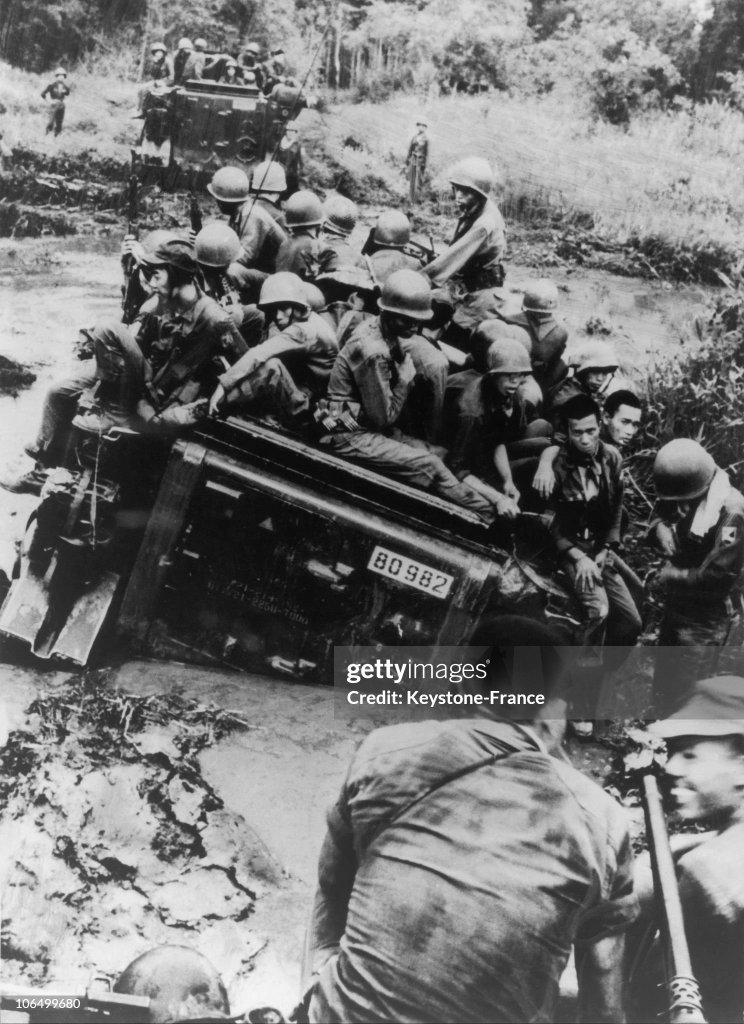
Việt Cộng strikes at United States and South Vietnamese interception posts at terminal points of the Hồ Chí Minh Trail presented General Maxwell D. Taylor with a new military problem today on his first day as Ambassador to South Vietnam. An American officer said there might have been a link between General Taylor’s arrival and two large‐scale attacks yesterday and Saturday on United States Special Forces camps in the central highlands near the Laotian and Cambodian frontiers.
The two attacks formed part of increased Communist pressure in the highlands in the last two weeks. For many months the main Việt Cộng military efforts have been concentrated in the populous Mekong Delta south of Saigon. General Taylor arrived from Honolulu this morning and immediately began conferences. He presented a copy of his credentials to Foreign Minister Phan Huy Quát and arranged to be formally received by the South Vietnamese Chief of State, Major General Dương Văn Minh, later in the week. He received a brief courtesy call from the British Ambassador, R. G. A. Etherington‐Smith, who is departing on leave Thursday.
It was in the central highlands that the main Communist danger was seen in 1961. when General Taylor first came to South Vietnam as a special representative of President Kennedy. His report after that visit formed the basis of the present United States military mission in support of the South Vietnamese Government. Analyzing the recent increase in military activity, the United States officer, who could not be identified by name, cited General Taylor’s arrival, the presence in Saigon of a United Nations’ mission investigating Cambodian border tensions and the start of the rainy season in the delta as reasons for the new Việt Cộng aggressiveness.
James S. Killen was sworn in today as the new United States aid director to South Vietnam. He has been the aid administrator in South Korea for the last three years.
The United States has turned to Britain, the Soviet Union, the International Control Commission in Laos and the International Red Cross to ascertain the fate and condition of a Navy jet pilot shot down in Laos a month ago. However, officials said today, those representations have produced no response. Prince Souphanouvong, the leader of the pro‐Communist Pathet Lao in Laos, has acknowledged that an American pilot is being held by his forces near Khang Khay, his headquarters.
Lieutenant Charles F. Klusmann, the pilot, was captured by the Pathet Lao after his carrier-based jet fighter was shot down over Laos last June 5, while flying a reconnaissance mission over Communist‐occupied areas. On June 16 the United States asked the British and Soviet Ambassadors in Vientiane, Laos, and the International Control Commission to inquire about Lieutenant Klusmann when they flew to Khang Khay to confer with Prince Souphanouvong.
The Senate Foreign Relations Committee approved today President Johnson’s nomination of Randolph Appleton Kidder, a Foreign Service officer, to be Ambassador to Cambodia.
Galo Plaza Lasso, special United Nations representative in Cyprus, announced today the impending establishment of a “free zone” along the truce line within Nicosia’s old walled city. He said the move constituted “our first major breakthrough” in efforts to bring about a disengagement of the hostile Greek and Turkish Cypriote forces.
Mr. Plaza Lasso, the senior civilian United Nations official here, spoke at a news conference during which he confirmed that he was relinquishing his post and that “no one will replace me.” Except for one absence of 10 days, he has been here since May 14. He said he felt his task had been completed. While noting that he would remain on call, he said he did not want “to have to come back.” The official said he was leaving the island next Tuesday and the following day would join U Thant, the United Nations Secretary General, in Geneva to make “a progress report” on Cyprus.
Mr. Plaza Lasso, an Ecuadorian, said that both the Greek and Turkish Cypriot leaders had agreed that the United Nations would have the “exclusive right” to patrol, search, disarm, arrest and detain in the “free zone.” The zone would extend 100 yards back from each side of the “green,” or truce, line in the old city, he said. Greek and Turkish fortifications are only yards apart in many places along this line. Mr. Plaza Lasso said Archbishop Makarios, President of Cyprus, was prepared unilaterally to pull the Greek Cypriot forces back 100 yards from the truce line without waiting for the conclusion of negotiations with the Turkish Cypriots.
The United Nations aide said that in all his talks with Greek Cypriots on disengagement he had been “careful” not to include the Nicosia‐Kyrenia Road, most of which is held by the Turkish Cypriotes. The road, he said, represents the only breathing space held by the Turkish community, which is outnumbered 4 to 1 on the island. Unofficial estimates of Greek Cypriot military strength range up to 7,000 and of Turkish irregulars up to several hundred. There are thousands of weapons on the island, and it is believed the Greek Cypriots have artillery.
Moise Tshombe announced today that he would assume four posts in the transition cabinet he is forming. He said he would become Minister of Foreign Affairs, Minister of Information and Minister of Economic Coordination as well as Premier. Mr. Tshombe was asked by President Joseph Kasavubu yesterday to form the government. The former President of Katanga Province said at a news conference that the other members of his cabinet would be men who had not served in previous Congolese governments. This sharply limits his choice and suggests that he will select chiefly “technicians” rather than professional politicians.
Mr. Tshombe devoted most of the day to consultations with political leaders. However, he met late this afternoon with the United States Ambassador, G. McMurtrie Godley. The meeting, at a private residence near the Congolese Parliament, lasted about an hour. Mr. Godley said later that the talk had dealt chiefly with the United States program of economic and military assistance to the Congo. The Ambassador said the meeting had been held at Mr. Tshombe’s request after he had told the Congolese leader several days ago that he was prepared to brief him on United States aid programs here. Observers found the meeting significant. They noted that the United States was one of Mr. Tshombe’s most determined opponents when he led the secession of Katanga. Mr. Tshombe frequently denounced the United States at that time.
For the last three years the United States has been the most vigorous supporter of the Government of Premier Cyrille Adoula. Since Mr. Tshombe’s return to the Congo 10 days ago, however, Washington appears to have been playing a cautious waiting game. Mr. Adoula, who resigned June 30, now heads a caretaker government. The embassy has been careful not to antagonize Mr. Tshombe. In turn, Mr. Tshombe has been the model of cordiality toward the United States, whose aid program to the Congo now amounts to about $55 million a year. At a recent news conference, he played down past differences with the Americans, which he attributed to a “misunderstanding.” He added, “I have no animosity for anyone.”
The United States and the Soviet Union announced today that they would hold private talks in an attempt to break a procedural deadlock at the 17nation disarmament conference. They said they would meet as the conference’s co‐chairmen to seek an “agreed basis” for detailed negotiations on how to scrap missiles and other means of delivering nuclear bombs. A report on the talks between Clare H. Timberlake of the United States and Semyon K. Tsarapkin, the Soviet representative, is to be given next Tuesday.
It was agreed at the conference that detailed negotiations should be held in a working group. However, the conference has been deadlocked since it resumed a month ago on how this group should proceed. The Soviet Union insists that the negotiations be confined to its proposal for the elimination of most nuclear delivery vehicles at the beginning of the projected three‐stage disarmament program. Under this “nuclear umbrella” plan, Washington and Moscow would retain only enough missiles to provide a deterrent against aggression during the disarmament process. Mr. Timberlake reiterated the West’s refusal to limit the negotiations to the Soviet plan. This plan, in the Western view, would upset the balance of power in Moscow’s favor.
United States officials believe that the Soviet Union’s offer to support some forms of United Nations military peace‐keeping operations signals the start of a long and important round of international negotiations. The Soviet statement was regarded by officials here as a response to a four‐month‐old United States proposal on peacekeeping missions. It contains several key provisions that Washington could not accept, State Department specialists noted, but it puts the two sides “within negotiating distance.” Moscow offered under certain conditions to support and pay for United Nations peace‐keeping forces drawn from Western, neutral and Communist nations, but not from the major powers.
The Russians’ new interest in United Nations peace forces is thought to reflect a decision in Moscow that the boycott of such forces, as organized for the Middle East and the Congo, had injured rather than promoted Soviet diplomacy. Officials in Washington doubt that the Soviet leaders have yet decided whether they wish now to help establish new forms of international peacekeeping or whether they wish to participate primarily to prevent the use of that machinery against them. The Soviet proposal urged that United Nations members make troops and facilities available to the Security Council for peace‐keeping purposes. The Soviet proposal excluded the five powers holding permanent seats on the Security Council from contributing forces. The five are the United States, the Soviet Union, Britain, France and Nationalist China.
United States policy‐makers have long looked upon the United Nations as an agency for peace‐keeping operations that could promote Western objectives and yet avoid charges of “colonialist” intervention. At the same time, many American officials have had higher hopes for peace‐keeping missions by the world organization. They have wanted to develop standing procedures for United Nations action, covering everything from mediation to military intervention in disputes that would otherwise develop into conflict among the major powers.
The Vatican’s Congregation of Rites voted sainthood today for 22 African Blacks who were slain in Uganda in the 19th century for refusing to renounce their Roman Catholic faith. They are expected to be formally canonized in a ceremony in Rome October 18.
An avalanche, on Mont Blanc in the French Alps, killed 14 mountain climbers, including former world champion slalom skier Charles Bozon, 31.
Ram Kishan became Chief Minister of Punjab.
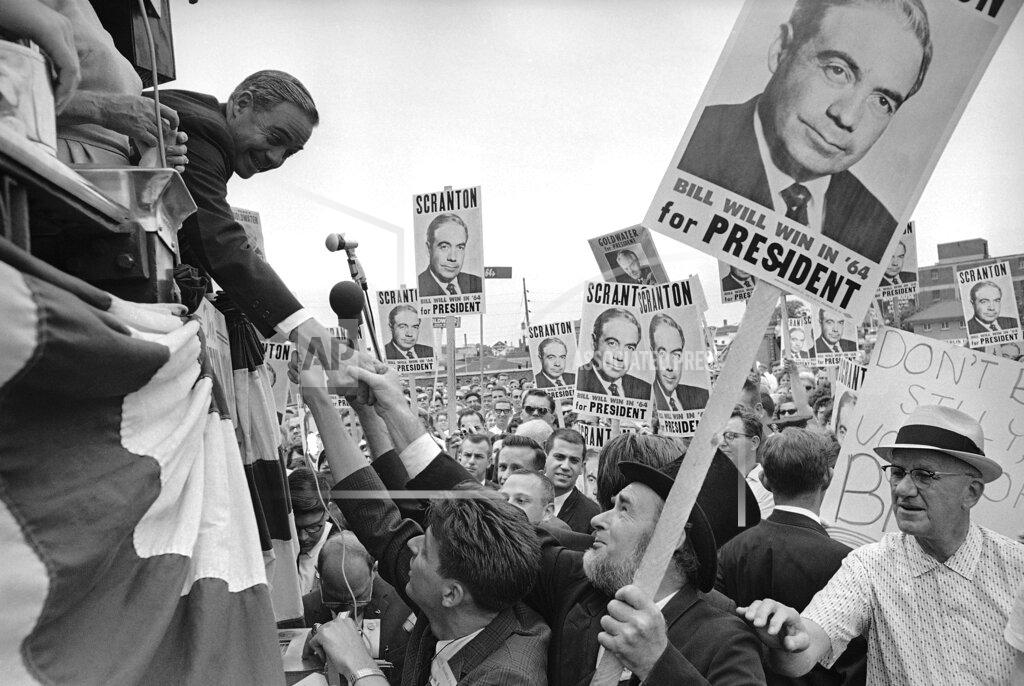
Opponents of Senator Barry Goldwater faltered today in their effort to find a winning issue for a fight over the Republican party platform. Their proposals to write into the platform an endorsement of the new Civil Rights Act’s constitutionality and a denunciation of the John Birch Society did not attract significant delegate support. Governor William W. Scranton of Pennsylvania, chief rival of the Arizona Senator in the fight for the Republican Presidential nomination, suggested these planks yesterday. The Scranton forces seemed disorganized and discouraged today. They did not even fill the spectator seats at the hearings of the Platform Committee in the St. Francis Hotel in San Francisco. And they did not take the opportunity to ask witnesses leading questions.
Senator Goldwater’s leaders blunted the edge of the platform attack by indicating privately that they would accept many relatively liberal planks. The Goldwater men, supremely confident, joined politely in the applause for speakers who had attacked their candidate. Governor Rockefeller was today’s major spokesman for the opposition. He told the platform‐writers, meeting in advance of the Republican National Convention, opening here Monday, that the party faced “the greatest crisis of its history.” He urged them not to let the party “be transformed into a narrow, doctrinaire instrument of extremism.”
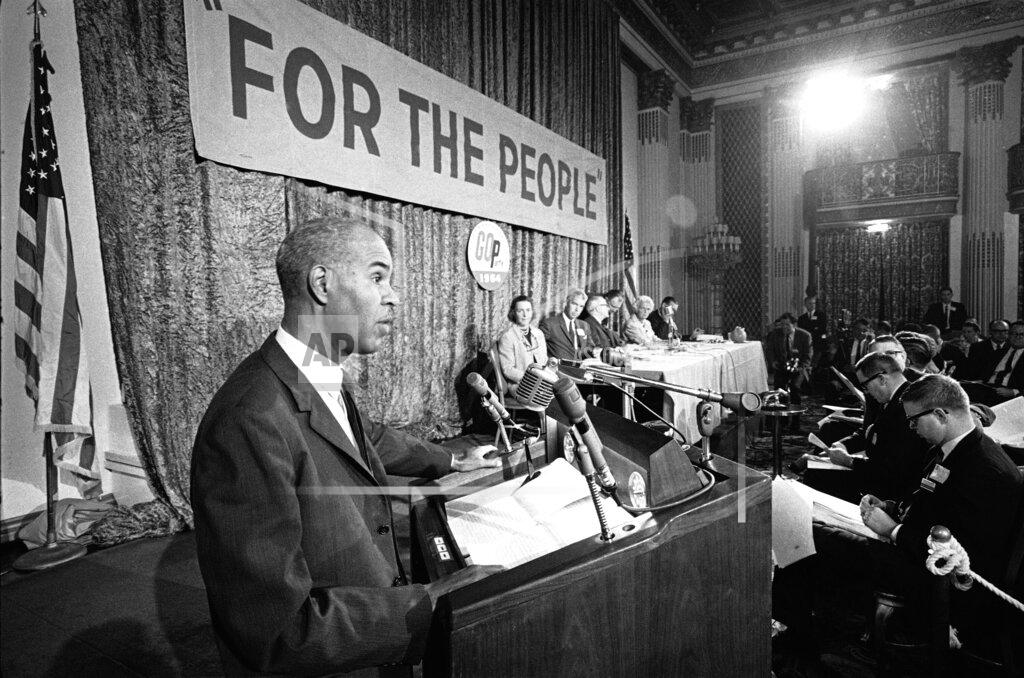
An even more direct attack on Senator Goldwater was made by Roy Wilkins, executive secretary of the National Association for the Advancement of Colored People. His target was Senator Goldwater’s vote against the civil rights bill on the stated grounds that it was “unconstitutional” and would lead to a “police state.” Mr. Wilkins told the convention not “to permit these attacks to go unchallenged or, worse still, to have this convention, through any vote or selection, seem to endorse such a charge.” By “selection” Mr. Wilkins clearly meant the now likely nomination of Senator Goldwater for President.
The Rev. Dr. Martin Luther King Jr. also called on the delegates to write a strong civil rights plank. Dr. King, president of the Southern Christian Leadership Conference, asked especially for Federal protection of civil rights workers in Mississippi and other difficult areas of the South.
Governor George Romney of Michigan said today that the Republican Platform Committee should not fight over the Civil Rights Act. “It’s constitutional,” Mr. Romney said. “I don’t think the constitutionality of this law should be the focus of a fight.” The Governor said he did not feel “a group of delegates” could determine the legality anyway.
Governor William W. Scranton accused Senator Barry Goldwater’s political managers tonight countenancing a “smear campaign” by “radical extremists” against himself and a “vicious pressure campaign” against delegates to the Republican National Convention. The Pennsylvania Governor, ending an intensive two‐day campaign swing in Illinois, charged in a nationwide television broadcast that Senator Goldwater’s managers “have undertaken a no‐holds‐barred campaign to see to it that the delegates at the convention do not reflect the wishes of the people back home.”
Senator Barry Goldwater was quoted today as having said that “as of now” he did not have a chance to defeat Lyndon B. Johnson in the Presidential election. “But come Election Day, there is going to be another horse race.” These words were released by the Arizona Senator’s office, which said they were from a transcript of an interview June 30 with Hermann Schreiber of the German news magazine, Der Spiegel. Der Spiegel this week carried a somewhat shorter, and less qualified, version of Mr. Goldwater’s words. According to the text of the interview printed in the German magazine, Mr. Goldwater also said:
That, with all due respect to American military leaders, Germany would have won both world wars if she had not been badly led.
That French President Charles de Gaulle should be “supported in the development of his own atomic weapons.”
That “if necessary” he would favor using limited nuclear weapons to support antiSoviet uprisings in Eastern Europe.
President Johnson’s $962.5 million program to combat poverty was sent to the Senate floor virtually intact today. The omnibus Economic Opportunity Act, which is stalled in the House Rules Committee, was reported favorably by the Senate Labor Committee. The vote was 13 to 2, with two Republican Senators — Barry Goldwater of Arizona and John G. Tower of Texas — opposed.
The Administration may now shift its strategy and move to pass the antipoverty bill in the Senate first. The President has made the program a high‐priority item on his legislative list for the remaining month or two of the Congressional session. As reported from committee, the bill cannot come up for a full Senate vote before July 22. Committee members have until July 21 to file their views for the official report. Senators Goldwater and Tower are expected to produce a minority statement.
The Senate will be in official recess next week so that its Republican members can attend their party’s national convention in San Francisco. The legislation would set up a job corps to get 40,000 teenagers out of slums into rural camps; a work‐training program to keep 200,000 more teenagers from dropping out of school; a work‐study program to subsidize needy college students, and a $340 million fund for community antipoverty programs.
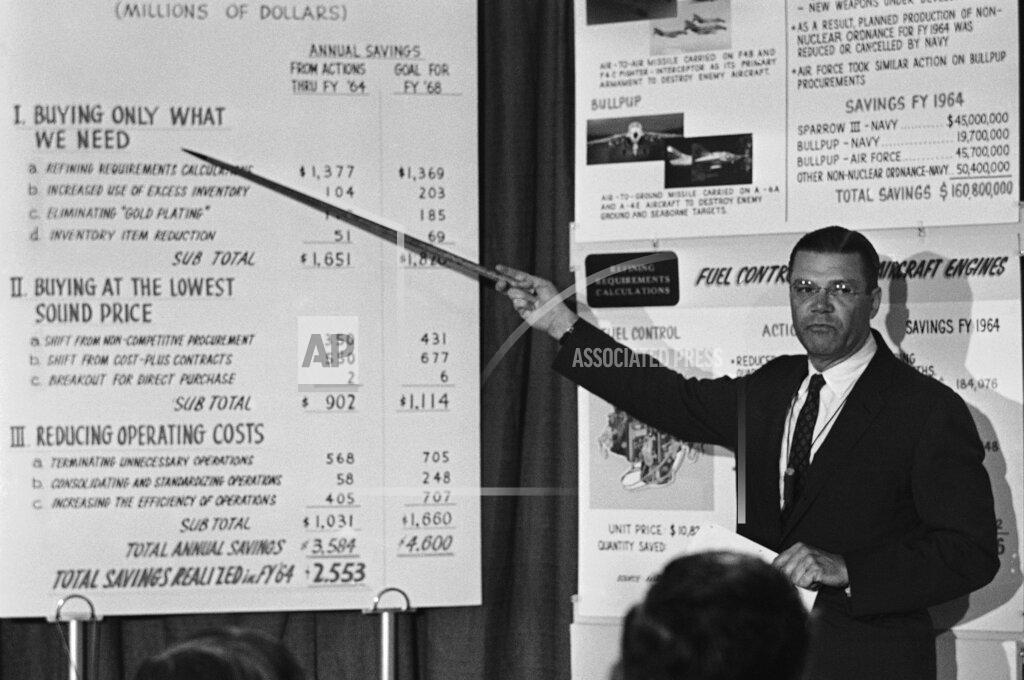
Secretary of Defense Robert S. McNamara reported to President Johnson today that because of the Pentagon’s cost-reduction efforts the Government saved $2.5 billion, instead of a previously estimated $1 billion, during the fiscal year that ended last June 30. Moreover, the Secretary said in a detailed memorandum, he expects to pare costs further. He predicted that in three years the annual savings of the Defense Department would total at least $4.6 billion.
These savings, Mr. McNamara explained at a news conference, refer to the amount of money that would otherwise have been spent but for new administrative techniques and cost‐consciousness instilled in responsible officials since he became Secretary. “We haven’t even begun to scratch the surface,” he declared. “Cost‐consciousness has begun to permeate down. We are beginning to be flooded with suggestions.” Copies of the memorandum, with a covering note attached by President Johnson, have been sent to 15,000 defense contractors, news representatives and leading citizens throughout the country.
The President’s note stated: “I believe you will be interested in reading the attached report from Secretary McNamara on the Defense Department’s cost‐reduction program. It gives me confidence that my pledge to get a dollar’s worth of value from every dollar spent can be fulfilled.”
In Biloxi, Mississippi, U.S. District Judge Sidney Mize ordered the first integration of public schools anywhere in the state, directing the school districts in Biloxi, Jackson and Leake County to desegregate starting with the 1964–1965 school year. Judge Mize, a native Mississippian who has been Federal judge for southern Mississippi for 35 years, previously issued a temporary order directing the three districts to submit a desegregation plan by July 15. Mississippi is the only state of the Old Confederacy that has not desegregated public schools below the college level.
Board members of the National Association for the Advancement of Colored People began their second day of a tour of Mississippi today. They had an integrated breakfast in Meridian and an integrated lunch here. Before lunch, the group stopped at a Black church in Laurel, where Black youths told how they had found violence but no hamburgers during an earlier test of desegregation at this city’s Burger Chef. There were no incidents today for the integrated group of the N.A.A.C.P. leaders, which includes nine whites and four Blacks. Jones County law officers watched carefully as the caravan, which is testing compliance with the Civil Rights Act of 1964, moved through the city and out to the Holiday Inn on the highway.
In a sweeping decision, the Georgia Court of Appeals ruled today that systematic exclusion of Blacks or any class of citizens from juries violated the rights of any defendant—white or Black. The court held that under State and Federal law, both grand and trial juries must be selected without discrimination. On this basis, the court reversed the conviction of a white civil rights worker Ralph W. Allen of Melrose, Massachusetts, who was sentenced to two years’ imprisonment last December.
The government rested tonight its case in the 72-day-old $25 million pension fund fraud trial of James R. Hoffa, president of the International Brotherhood of Teamsters.
The United States Court of Appeals upheld yesterday the dismissal of a $500,000 libel suit brought by Dr. Linus C. Pauling, internationally known biochemist and Nobel prize winner, against The New York Daily News.
The 14th Berlin International Film Festival ended. Turkey, the United States, Japan, India and the Netherlands took the prizes tonight as Berlin’s 14th international film festival ended after a 12‐day competition at which 34 countries presented 58 features and documentaries. Rod Steiger of the United States won the best actor’s award for his portrayal of Sol Nazerman, survivor of concentration camps and operator of a Harlem pawnshop, in the official American entry, “The Pawnbroker.”
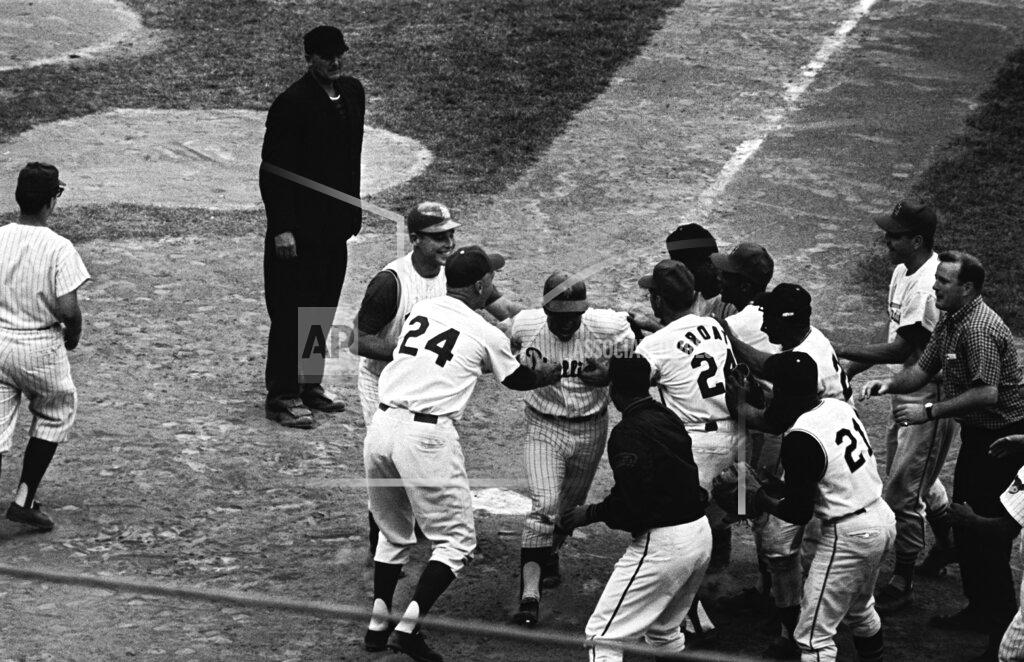
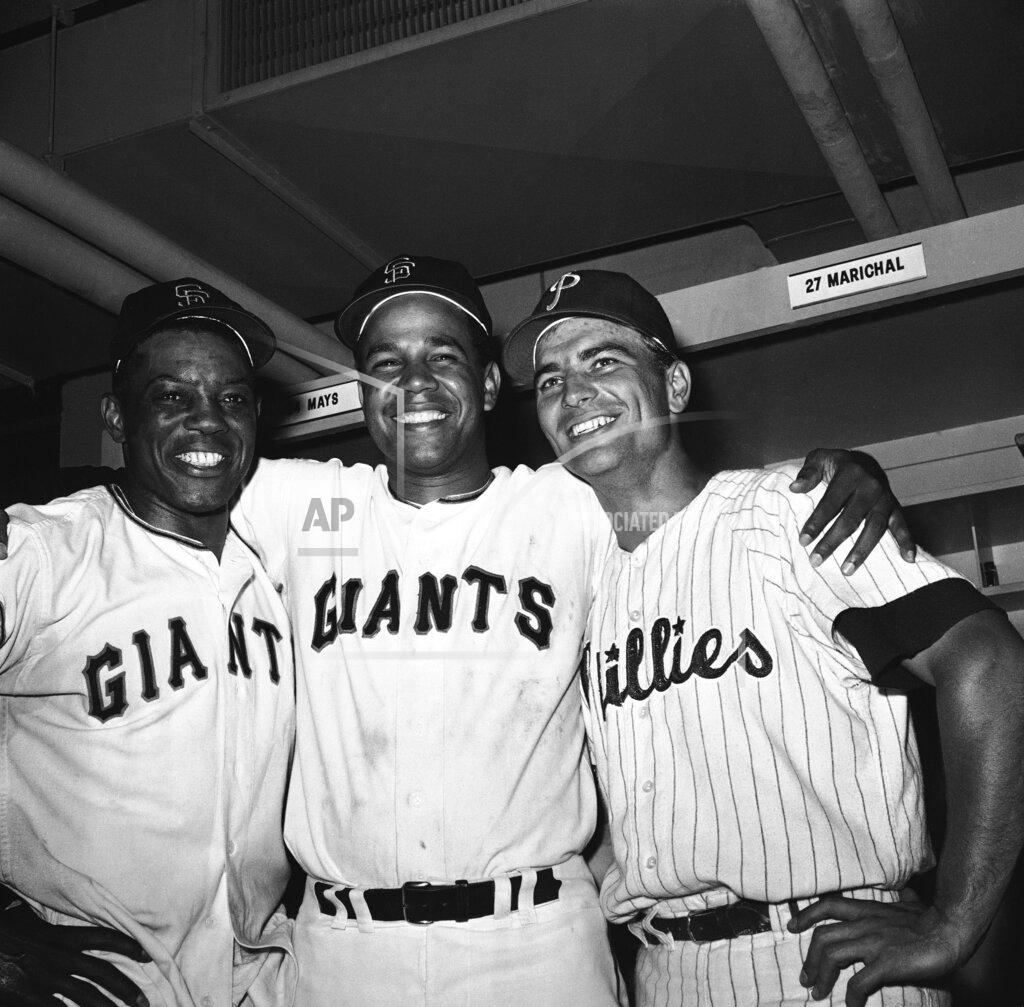
Johnny Callison’s 9th-inning, two-out 3-run walk-off home run off Dick Radatz caps a 4-run rally and gives the National League a 7–4 win in the 35th Major League Baseball All-Star Game at Shea Stadium. This evens the series at 17.
Dow Jones Industrial Average: 844.94 (+0.70).
Born:
Theo Travis, British progressive rock and ambient music saxophonist, flautist, and composer (Soft Machine/Legacy, 2006-present; Gong, 1999-2010), in Birmingham, England, United Kingdom.
Died:
Lillian Copeland, 59, American track and field athlete, 1932 Olympic gold medalist in the women’s discus throw

 History Diaries