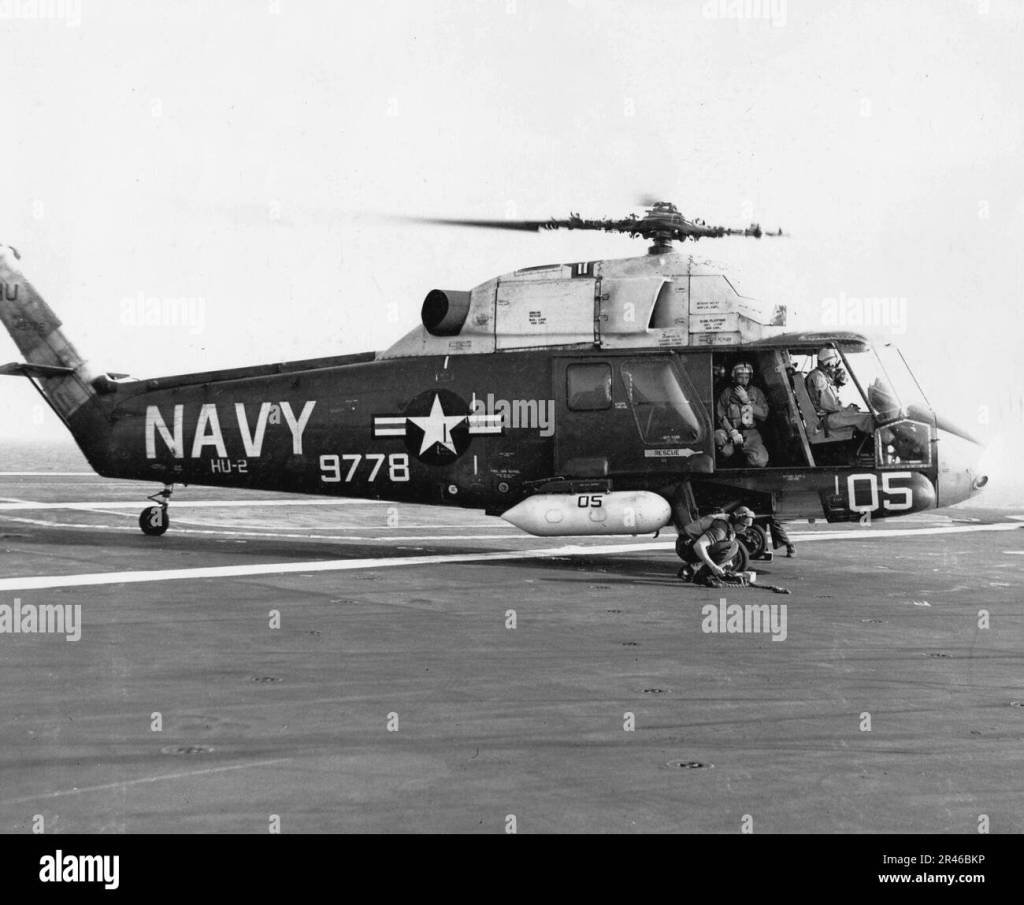
Over Laos, Pathet Lao antiaircraft artillery shot down a U.S. Navy RF-8A Crusader photographic reconnaissance aircraft piloted by Lieutenant Charles F. Klusmann. It was the first U.S. Navy aircraft and first American fixed-wing aircraft to be lost over Indochina in the Vietnam War era. Klusmann would be taken as a prisoner of war but would escape a few months later.
President Johnson was informed of the downing of the plane during a conference at the White House with Secretary of State Dean Rusk. The White House declined to comment. Reconnaissance flights by United States jet aircraft were first announced May 21 by the State Department. The flights were begun at the request of Prince Souvanna Phouma, the neutralist Laotian Premier, who had appealed to the United States for help in observing “the activities and movements of the forces which are invading, attacking and fighting in Laos,” the Department reported. Neither the State nor the Defense Department would disclose the origin of the reconnaissance flights. However, qualified sources reported that the flights were being made from the carrier Kitty Hawk in the South China Sea off the Vietnamese coast. A Defense Department spokesman said that the RF‐8A Crusader, a single‐seat supersonic photo reconnaissance plane — was unarmed and was not escorted by fighter aircraft.
A second Navy jet is shot down on June 8th. Washington immediately orders armed jets to escort the reconnaissance flights, and by 9 June escort jets are attacking Pathet Lao gun positions and a Pathet Lao headquarters. The downing of the two planes and the retaliatory strikes are made public, but the full extent of the US involvement is not.
Communist‐led forces captured the key village of Phou Kout in a renewed offensive in the Plaine des Jarres area Friday, United Press International reported Saturday. The Associated Press said, however, that Laotian neutralist forces still held Phou Kout and were standing fast against Pathet Lao artillery and mortar fire.
An officer charged with the murder of eight persons at a demonstration, setting off last year’s Buddhist crisis, was found guilty tonight and sentenced to life imprisonment by South Vietnam’s Revolutionary Tribunal. His five‐day trial had become the focal point of religious tensions under Premier Nguyễn Khánh. To Buddhists, the officer, Major Đặng Sỹ, a Roman Catholic, represented all the oppression they had felt under the regime of Ngô Đình Diệm. Catholics demanded a fair trial free from overtones of religious hatred. The verdict and sentence typified the middle‐of‐the‐road course the Khánh Government had attempted to follow between the two groups. Many Buddhists had asked for a death sentence for the 37-year‐old officer, whom they denounced as the “butcher of Huế.”
The major was commander of troops in the central Vietnamese city of Huế, where the demonstration occurred on May 8 last year. His troops fired on the demonstrators killing eight and wounding 15. The nine‐man revolutionary tribunal set up after the November coup d’état that overthrew the Diệm regime previously passed death sentences against Ngô Đình Diệm’s brother, Ngô Đình Cẩn, and his close aide, Phan Quang Đông, both of whom were publicly executed. Major Đặng Sỹ beamed with relief on hearing the sentence, and shook hands with friends. who clustered around him. Roman Catholics had looked upon the trial as a test of justice under the Khánh regime. They denounced all attempts to condemn Đặng Sỹ in advance and threatened widespread demonstrations if he was sentenced to death.
President de Gaulle declared today that Communist China must be an “integral part” of any world peacemaking. Receiving the credentials of Peking’s first Ambassador to France, the French chief of state said Communist China was a “very great country and a very great people.” Between the two countries, he said, there were “the best reasons to know and understand each other in everything that men on earth have to realize for their progress and their development.” The friendly ceremony for Ambassador Huang Chen came a day after General de Gaulle and George W, Ball, United States Under Secretary of State, agreed during an hour’s talk that Communist expansion must be stopped in Southeast Asia but disagreed on what Peking’s intentions were and how they ought to be faced.
Contrary to Washington’s belief in persistent Chinese expansionism, the French view is that the Chinese would like to stabilize the Indochina area south of their border and thus might cooperate in neutralizing it, as General de Gaulle has proposed. The French have made it clear that they do not believe the United States policy of supporting the South Vietnamese Government against the Communist insurgents will prove fruitful. General de Gaulle received General Huang at Élysée Palace while Mr. Ball relaxed in the countryside outside Paris. Mr. Ball is to fly to London tomorrow.
The President called today’s ceremony, which lasted 15 minutes, an event that in the eyes of both countries “takes on great importance.” He declared that the establishment of relations “can have a far‐reaching effect” because peace is the main issue in the world. “Peace is, of course, essential to all men,” he said, “and it is possible to establish it on earth only if a power like China is an integral part of it. This is the reason for which you and we who want peace can and must, without doubt, understand and get along with each other.”
The Secretary General, U Thant, has accepted an invitation from Premier Khrushchev to visit the Soviet Union next month. They are expected to discuss a number of problems, including the question of admitting Communist China to the United Nations and the political and financial problems created by the Soviet Union’s refusal to pay its assessments for the United Nation forces in the Congo and the Middle East. These two questions are so controversial that the General Assembly session, scheduled to begin in mid‐September, is being postponed until November 10 to prevent its decisions from becoming issues in the United States Presidential election.
Reliable sources said today that the Secretary General would see Mr. Khrushchev during the first half of July. This will be their first meeting since August, 1962. Mr. Thant has already made plans to attend the summer session of the United Nations Economic and Social Council, which will open in Geneva on July 13. It was understood that Mr. Khrushchev’s invitation was extended before Cambodia’s recent complaint to the Security Council against alleged aggression by the United States in Southeast Asia or the threatened Turkish intervention in Cyprus.
Premier Khrushchev and President Tito of Yugoslavia will meet in Leningrad Monday for two days of talks. They are expected to discuss the Soviet Union’s ideological dispute with Communist China.
The United States will make a renewed effort in the coming weeks to win Soviet agreement to a halt in the production of fissionable materials for nuclear weapons. A cutoff in the production of enriched uranium and plutonium for military purposes, State Department officials said, will be one of the major proposals to be pressed by the United States when the 17-nation disarmament conference resumes Tuesday in Geneva after a six‐week recess. United States officials are not optimistic that the new round in the protracted talks will lead to any major or dramatic arms control agreement. In this outlook of cautious pessimism, a cessation in the production of fissionable materials for weapons is viewed as the most likely area in which some progress can be made. The United States and the Soviet Union took a step in the direction of a phased reduction in April when they simultaneously announced cutbacks in the production of weapons materials.
Premier Levi Eshkol of Israel declared last night that his nation’s development depended on its ability to use cheap nuclear power for industry and to desalt water for agriculture. He emphasized that Israel was exerting every effort “to harvest the positive fruits of this atomic age.” The Premier spoke at a dinner given in his honor by the board of governors of the Israel Bond Organization at the Waldorf‐Astoria Hotel. Mr. Eshkol cited the need for greater Israel bond resources to finance the exploration and exploitation of natural resources to improve and expand Israel’s industrial production, which he said had more than tripled since Israel became a nation in 1948.
During Mr. Eshkol’s official three‐day visit to Washington, announcement was made that the United States and Israel would undertake joint studies in desalting water. Mr. Eshkol’s talk yesterday was his last official one during his current visit here. He leaves for a tour of American cities this morning and will return to New York later in the week. In 1963, he reported, industrial production totaled about $1.5 billion. He cited the settlement of the Negev Desert and Central Galilee as key factors in the solving of employment problems and attracting private investment.
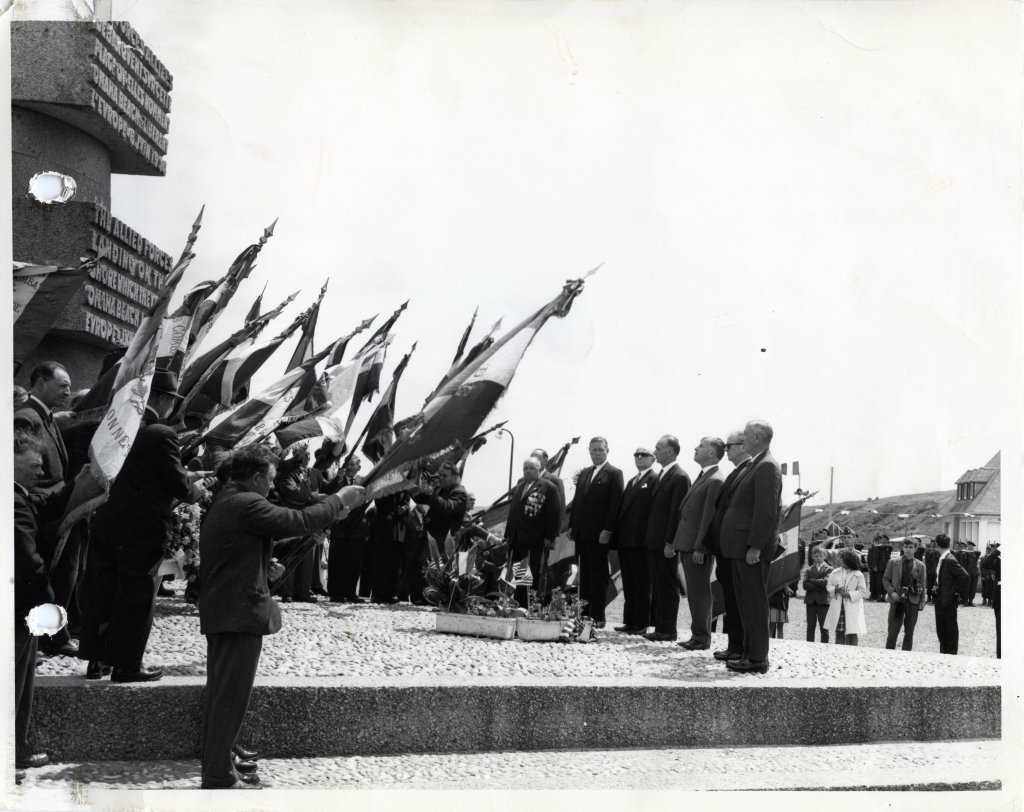
In a message to French and American veterans of D‐Day gathered at Sainte-Mère-Église in commemoration today, President Johnson said: “We share with you the common grief for loved ones and our common hope for a better future.” Ambassador Charles E. Bohlen read the President’s message to about 2,000 Americans and Frenchmen gathered in the cemetery at the towns of Vierville-sur-Mer and Saint‐Laurent‐sur-Mer, where 9,386 crosses and Stars of David mark the American dead. Not far from the cemetery is Omaha Beach, where United States forces, the First Infantry Division and the 29th Infantry Division, landed 20 years ago today.
Under a temporary order, the rocket launches at Cuxhaven, Germany, are terminated, though they never resume.
The U.S. Senate agreed today to dispose of three weakening amendments backed by conservative Republicans before voting to shut off the Southern filibuster against the civil rights bill. The request, which required unanimous consent, was made yesterday by Senator Bourke B. Hickenlooper of Iowa. As a result of the agreement, Senator Mike Mansfield of Montana, the Democratic leader, postponed from next Tuesday to Wednesday the attempt to invoke closure of debate. Closing of debate requires the approval of two‐thirds of the Senators, present and voting‐67, if all 100 are present.
Mr. Mansfield was not happy about the demand of the Hickenlooper group. But he and Senator Everett McKinley Dirksen of Illinois, the Republican leader, had to yield with what grace they could muster. Had they refused to permit voting on the amendments, it might have cost them votes needed for closure. Unless closure can be imposed, there will be no bill. Because of the expected absence of Senator Clair Engle, Democrat of California, who has undergone brain surgery, only 66 votes may be necessary for closure. The leaders are agreed that the Republicans will have to furnish 24 to 26.
Mr. Mansfield left no doubt that the leaders had gone along with Mr. Hickenlooper in the hope of getting votes for closure. “What’s going on now,” he told reporters, “is that through this —” There he broke off and said simply, “It’s votes for closure.” Asked whether he believed the agreement would make converts for closure, Mr. Mansfield said, “My name is Michael H. Mansfield — the ‘H’ is for ‘Hope’.”
The liberals in both parties raised no objection to the agreement for the same reason. But they were concerned lest the Senate adopt the amendments, two of which would greatly restrict the scope of the bill and its enforcement powers. Furthermore, the three amendments are themselves open to amendment during debate. The supporters of the bill said that this could open up “a real can of worms.”
The military occupation of the divided and hostile Eastern Shore community of Cambridge, Maryland will be a year old soon, and moderate observers here believe it is preparing to mark the anniversary by virtually guaranteeing that troops will stay here well into the second year, perhaps indefinitely. Since last June 14, helmeted citizen soldiers of the Maryland National Guard have imposed martial law in Cambridge to prevent open warfare between whites and Blacks. The military mission — 400 fully equipped men — here is the longest civil peace‐keeping duty ever assigned to the National Guard of any state. It has already cost the taxpayers of Maryland $1 million. It is currently costing them $40,000 a week. The anniversary of martial law will be preceded next Tuesday by an election that is regarded as almost certain to bring to power a new and more ardently segregationist city administration that is pledged to get the Guard out of town, if it can, and deal with racial problems “on the local level.”
One highly placed white moderate this week paraphrased “on the local level” as meaning “at the end of a nightstick.” Cambridge, he said, is headed for a decade of hate and violence. The election is expected to install Osvrey C. Pritchett in a four‐year term as Mayor, together with two City Councilmen backed by the Dorchester County Businessmen’s and Citizens Association, a segregationist group that is successfully seizing the political initiative here. The president of the association, William L. Wise, is a Shell Oil distributor who is believed to have statewide political ambitions. Mr. Wise and his group backed Governor George C. Wallace of Alabama in Maryland’s Presidential preference primary last month. Mr. Pritchett, who was defeated in a bid for Mayor in 1960, is a 62‐year‐old plumber and volunteer fire department official who is pledged to a return to “law and order.”
President Johnson assured a union gathering in New York that the civil rights bill would pass, but he said Americans must strive to eliminate prejudice in their hearts. Laws can give men rights, the President said, but justice will not become a reality until it lives in the spirit of man. “We have proposed, and under the great leadership of Senator Humphrey [here] on the platform, we will pass, the strongest civil rights bill in American history,” he said. “But now is the time of look beyond that bill — to struggle to eliminate the heavy weight of discrimination in the hearts and homes of people; to give to members of minorities the training, the education, the housing which will enable them to pass through the doors of opportunity.”
Senator Barry Goldwater continued to gain national convention votes yesterday in his drive toward the Republican Presidential nomination. State and district conventions yesterday gave the Arizona Senator 64 votes, increasing his total of committed delegates to 532. This leaves Mr. Goldwater 123 votes shy of the total 655 necessary for nomination at the convention, which opens July 13 at San Francisco. Governor Rockefeller of New York trails Mr. Goldwater with 121 votes. Governor William W. Scranton of Pennsylvania has 86; Ambassador Henry Cabot Lodge 45; and former Vice President Richard M. Nixon 16. Twenty‐two of Mr. Goldwater’s new votes came from party meetings in Washington; 20 in Alabama; 14 in Colorado; 4 in Hawaii; and 4 in Virginia.
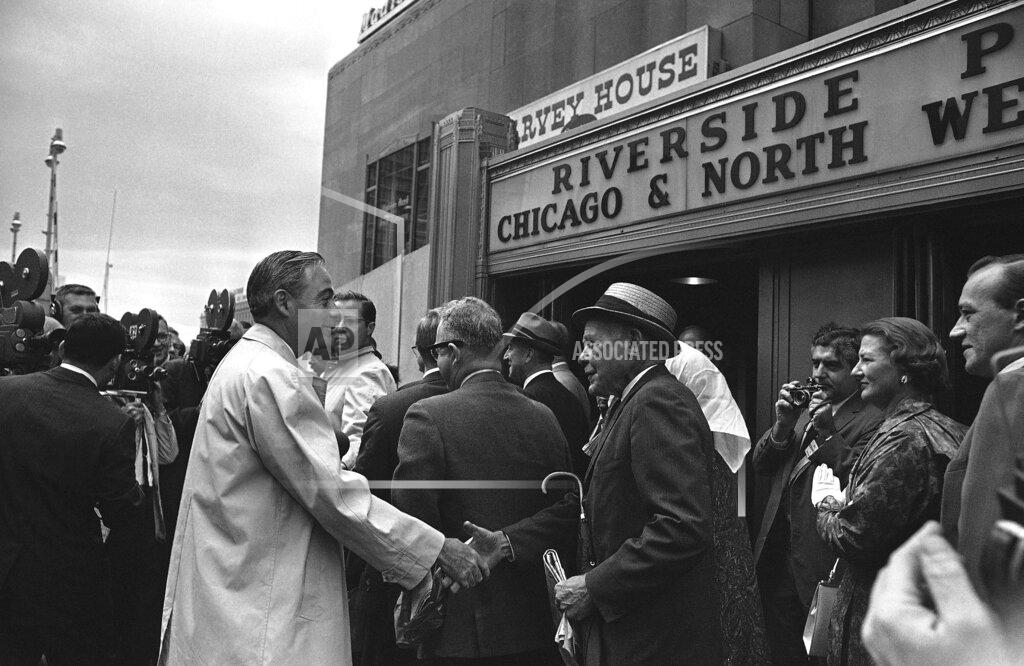
Former President Dwight D. Eisenhower acted today to hold the Republican National Convention open for Governor William W. Scranton of Pennsylvania. Politicians gathering in Cleveland for the annual Governors Conference seemed to feel that General Eisenhower had made his move too late to halt the drive by Senator Barry Goldwater of Arizona for the Presidential nomination next month. Mr. Scranton, in an 85‐minute conference at Gettysburg, Pennsylvania, with his distinguished constituent, agreed that if a majority of the delegates indicated that they wanted to make him their Presidential nominee, he would make himself available. The Governors’ Conference is nonpartisan, but 16 of the 50 State Governors are Republicans and they will become for the next few days the focus of internal agonizing over the party’s leadership and course for the next four years. Only three of the 16 are avowed Goldwater supporters.
A burst of activity began in Washington today to promote Governor William W. Scranton of Pennsylvania as the man to block Senator Barry Goldwater’s nomination at the Republican National Convention next month.
Senator Hugh Scott, whose chances of re‐election in Pennsylvania this year are thought to be menaced by the prospect of a Goldwater ticket, announced the formation of a Congressional committee to elect Mr. Scranton President. A co-sponsor is Representative Robert J. Corbett, whose home is in Pittsburgh.
In another move, Gerald D. Morgan, once a top aide to former President Dwight D. Eisenhower and now a Washington lawyer, distributed a letter urging several thousand “Eisenhower Republicans” across the country to get behind the Pennsylvania Governor as the “natural compromise candidate between Barry Goldwater and Nelson Rockefeller.”
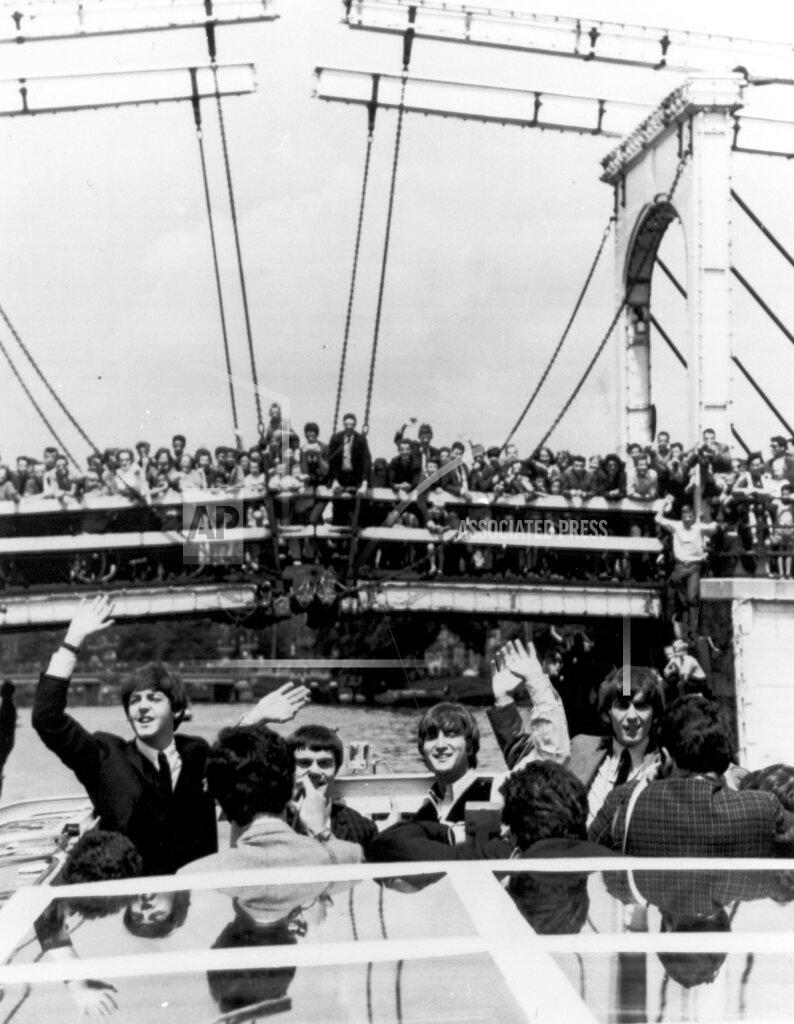
The Rolling Stones were introduced to the American public in a pre-recorded segment of the ABC television show The Hollywood Palace. Although they had been flown to Los Angeles for the taping and played three songs, the only part that was televised was a 45-second segment of “I Just Want to Make Love to You” and host Dean Martin made derogatory remarks about the Stones, including “Their hair is not long. It’s just smaller foreheads and higher eyebrows.”
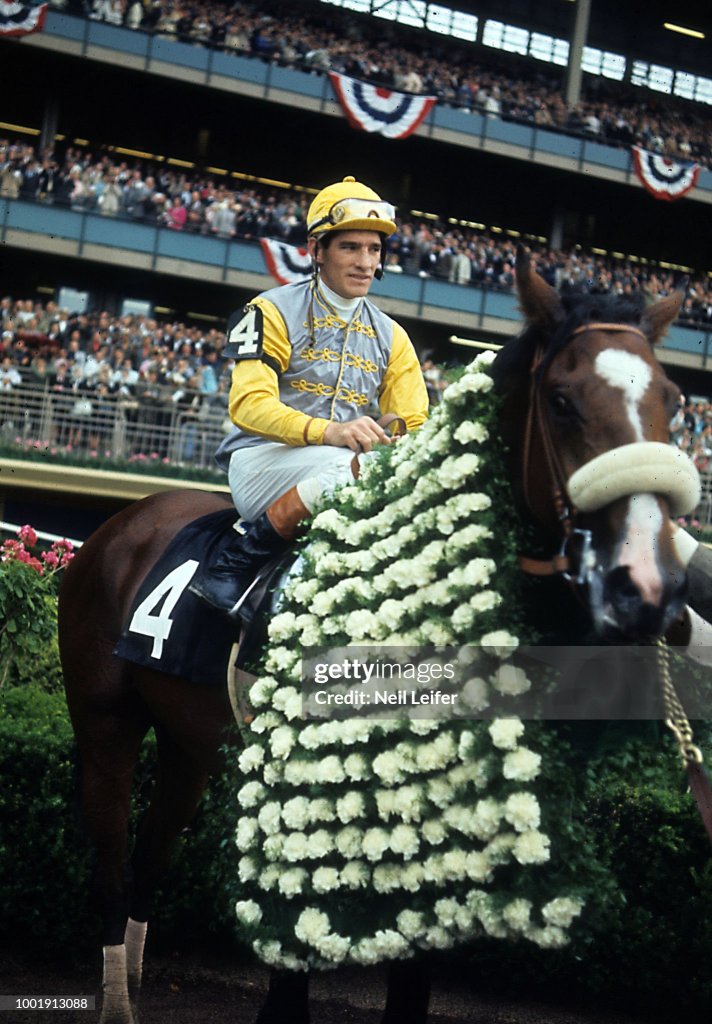
Quadrangle, Paul Mellon’s 3‐year‐old, won the $154,600 Belmont Stakes yesterday at Aqueduct. Northern Dancer, the winner of the Kentucky Derby and the Preakness Stakes, finished third in his bid to become the first Triple Crown winner since 1948. Roman Brother was second. Mantlel Ycaza rode Quadrangle in the 1½‐mile contest, raced in 2:28⅖, Quadrangle returned $15.10 for $2 to win.
The Los Angeles Dodgers restored a modest amount of equilibrium yesterday to a baseball world that they dominated last season but one they have found hostile and cheerless this season. They went to their bench to bolster their offense, drove 14 hits off four pitchers and defeated the New York Mets, 9–2.
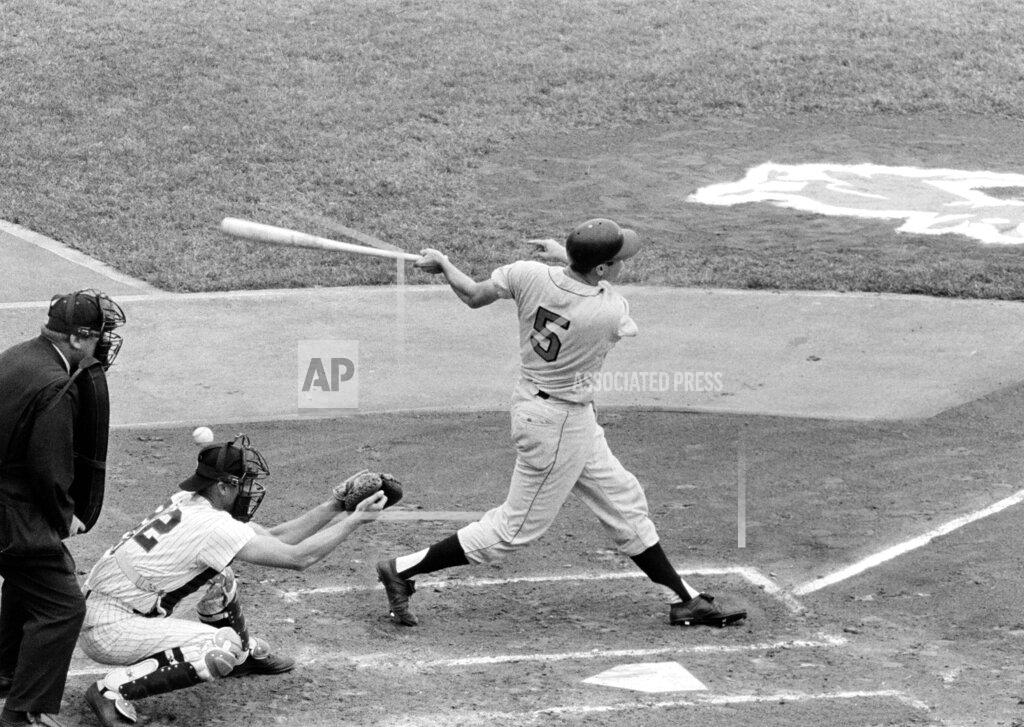
The San Francisco Giants moved into first place in the National League ahead of Philadelphia by scoring a 4–2 victory over the Phils. Tom Haller’s two‐run homer in the ninth inning gave the San Francisco Giants the victory today over the Phillies and the lead in the National League race. Haller’s blow came off Ed Roebuck, who allowed his first runs in 19⅓ innings. The winning rally that broke a 2–2 tie started after one out with a single by Jesus Alou. Haller then slammed his fourth homer inside the wire fence guarding the light tower in right field. Billy O’Dell, who had relieved Jack Sanford and halted a rally in the eighth, gained the victory. The Giants lead the Phils by 4 percentage points.
Born:
Edgar Cáceres, Venezuelan second baseman, shortstop, and first baseman (Kansas City Royals), in Barquisimeto, Venezuela.
Dave Gans, NHL centre (Los Angeles Kings), in Brantford, Ontario, Canada.
Joe McGrail, NFL nose tackle (Buffalo Bills), in Philadelphia, Pennsylvania.
Paul “Guru” Josh, British musician (Infinity), born in London, England, United Kingdom (d. 2015).
Died:
Guy Banister, 63, FBI agent cited during the 1967 Trial of Clay Shaw as part of the conspiracy to kill John F. Kennedy.
Robert Warwick, 85, American stage, film and television actor (“Konga”, “Zorro”, “Lady Godiva”).
 History Diaries