The Nixon administration scored a major victory when the Senate rejected proposals for reducing the number of troops abroad. First defeated was an amendment that would have required a 125,000-man reduction over the next 18 months, then a compromise that would have required a 76,000-man reduction in the force of 450,000 overseas troops.
Secretary of State Kissinger sought to reassure Soviet leaders about their continuing role in the Middle East. At a news conference, Mr. Kissinger disclaimed any American intention of expelling Soviet influence from the area. He also said that Arab leaders had agreed that the President’s trip to the Middle East next week would be a timely symbol of the American commitment to the new relationship with the Arabs.
Prince Fahd lbn Abdel Aziz, the Deputy Premier of Saudi Arabia and a brother of King Faisal, was given a warm welcome at the White House, where he conferred with President Nixon and Secretary of State Kissinger. The elaborate reception, including a formal luncheon, underscored what administration officials described as a major effort to befriend the oil-rich Arab country.
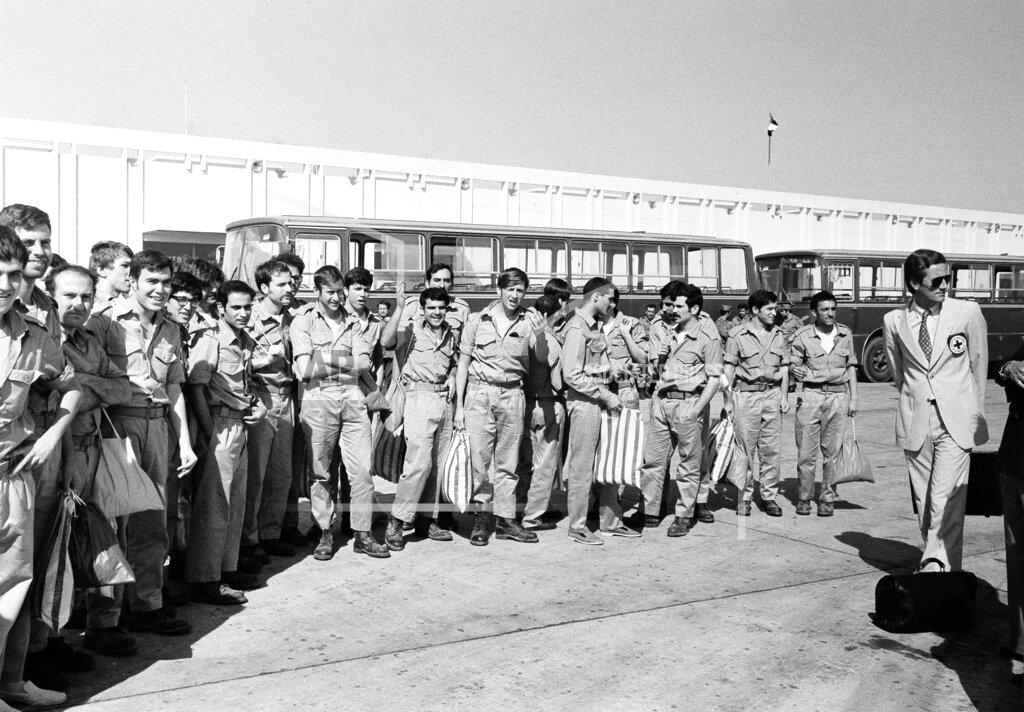
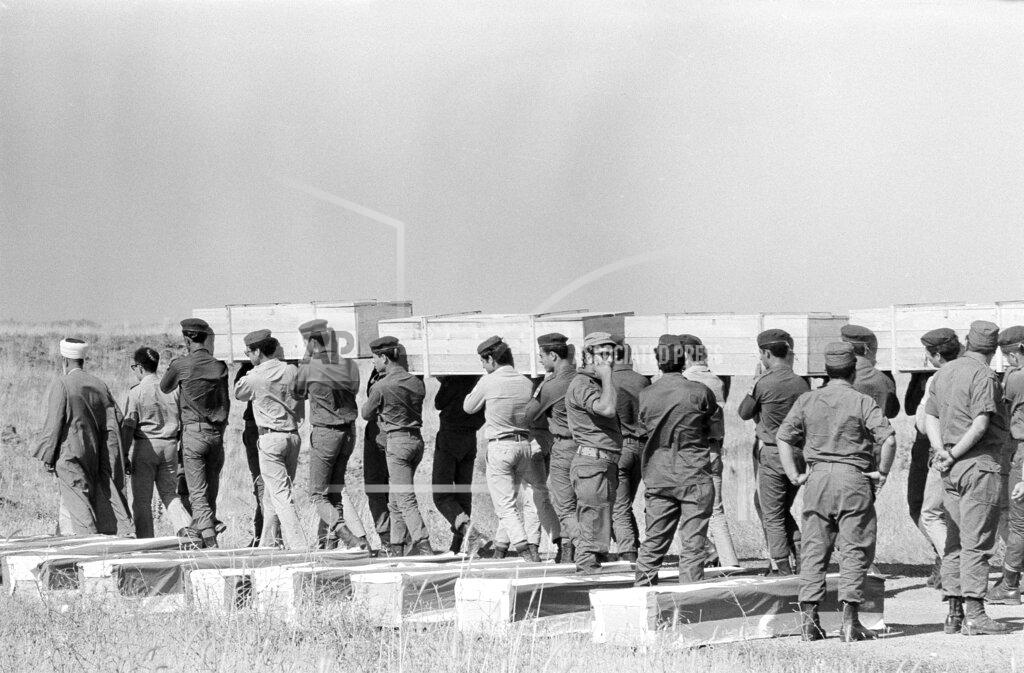
As part of the ceasefire agreement between Israel and Syria, the last 382 Syrian prisoners of war were returned from Israel to Damascus on a jumbo jet chartered by the International Red Cross while the remaining 56 Israeli POWs arrived at Tel Aviv after being released by Syria.
In a surge of unrestrained jubilation that swept away security guards and official arrangements, more than 1,000 Israelis stormed an airplane at Ben Gurion Airport to welcome home 56 prisoners of war being returned from Syria, where most had been held since the October war.
And in Damascus, where 382 Arab prisoners were returned as part of the exchange, the joy of welcome was just as unrestrained. Not even fire hoses could keep the swarming crowd in check.
Twelve persons were killed and 18 wounded as a dozen 107-mm. rockets tore into scattered sections of Phnom Penh, the third such rebel attack on the Cambodian capital this week.
In neighboring South Vietnam, President Nguyễn Văn Thiệu complained that the United States has not supplied the military and economic aid it pledged in the face of continuing Communist aggression after the signing of the Paris ceasefire pact.
The Saigon Government announced tonight that it was restoring the diplomatic privileges of the Việt Cộng delegation in Saigon — including access to the press — in the interest of a new start for the frozen talks on carrying out the cease‐fire. For the government, it was the second conciliatory move in as many days. Yesterday, Saigon announced that a prominent political prisoner, Trần Ngọc Châu, had been released. At a press conference this morning, Brigadier General Phan Hòa Hiệp, Saigon’s delegate to the Two‐Party Joint Military Commission, said that the decision had been made to “provide the Communist side with a good occasion to prove its goodwill.” On April 16, charging that the Communists had stepped up their attacks throughout the country, the South Vietnamese Government effectively isolated the Việt Cộng’s delegation to the commission at Tân Sơn Nhứt air base, cutting its telephone lines, canceling its weekly press conference and suspending liaison flights to the Việt Cộng administrative center at Lộc Ninh.
With high schools and universities closed and about 103 student protesters still in jail, Phnom Penh remained devoid of student demonstrations today. But diplomats, Government officials and even some students wondered which way the protests would turn next. The high school where the education minister and his aide were killed Tuesday, while being held hostage by students, was empty today, surrounded and sealed off by squads of lounging soldiers in battle fatigues. There is a theory here that since it is widely agreed that the students were not responsible for the death of the two men, student leaders have been shocked and sobered by the incident and may therefore moderate their protests. On the other hand, the demonstration — and the taking of the two hostages — was designed to free five students who had been jailed in an earlier protest over deteriorating economic conditions. Some believe the further arrests will deepen the protest.
Confusion still exists over who was responsible for the deaths of Keo Sangkim, the education minister, and Thach Chea, a former minister who was Mr. Keo Sangkim’s adviser. An early report held the Government police responsible, but an American teacher on the scene said later that he saw a gunman break into the school and fire the fatal shots.
Cambodia’s Premier, Long Boret, had a narrow escape today when two rockets fired by Communist insurgents exploded only 200 yards from Buddhist pagoda where he was attending a ceremony. According to the military police, seven people were killed when rockets hit different parts of Phnom Penh.
The shooting down of a U.S. Army helicopter in Seoul was described by State Department officials in Washington as “obviously the result of a misunderstanding.” They noted that it was the second incident of its kind in less than a month. On May 15. South Korean anti-aircraft gunners fired at two U.S. military planes but the U.S. Army said there was no evidence the aircraft had violated a restricted air zone. Two unidentified officers were wounded in the downing of the helicopter, on a routine flight in the vicinity of the restricted area.
The new French government under Premier Jacques Chirac won a vote of confidence, 297 to 181, in its first test of strength in parliament. The vote was on a policy statement by Chirac that pledged maintenance of France’s independence abroad and austerity measures to deal with the nation’s economic woes. Chirac said his program would mean social reforms and substantial improvements in everyday life.
A young couple escaped by light plane from Poland across Czechoslovakia and into Austria to seek asylum in the West. Stanislav Haiduk, 30, who had worked as a glider builder in Poland because he had always wanted to fly out of the country, brought the plane in safely, although he reported being fired upon by Czech border guards. He and his wife, Irena, 25, landed near Hohenau in northeast Austria.
A “substantial reward” was offered by family members for the safe return of the Earl and Countess of Donoughmore, believed kidnaped by the Provisional wing of the Irish Republican Army from their home 870 miles from Dublin. Meanwhile, British troops continued to seal off backroads in Northern Ireland near Londonderry in an effort to halt the smuggling of weapons. Elsewhere, a bomb exploded outside a Belfast waterfront pub, injuring one woman. It was the first such blast in more than two weeks.
A new Instrument of Government is promulgated making Sweden a parliamentary monarchy.
Italy confirmed its diplomatic recognition to the Knights of Malta (unrelated to the Republic of Malta) as a “foreign state”, despite the Order’s lack of territory beyond the Palazzo Malta and the Villa del Priorato di Malta, both surrounded by the city of Rome, and the Order’s embassies to Italy and to the Holy See (Vatican City). The Corte suprema di cassazione, the nation’s supreme court, ruled that “the Sovereign Military Hospitaller Order of Malta constitutes a sovereign international subject, in all terms equal, even if without territory, to a foreign state with which Italy has normal diplomatic relations,” based upon treaties made between the Order and the Kingdom of Italy in 1884, 1915, and 1938, and with the Italian Republic in 1956.
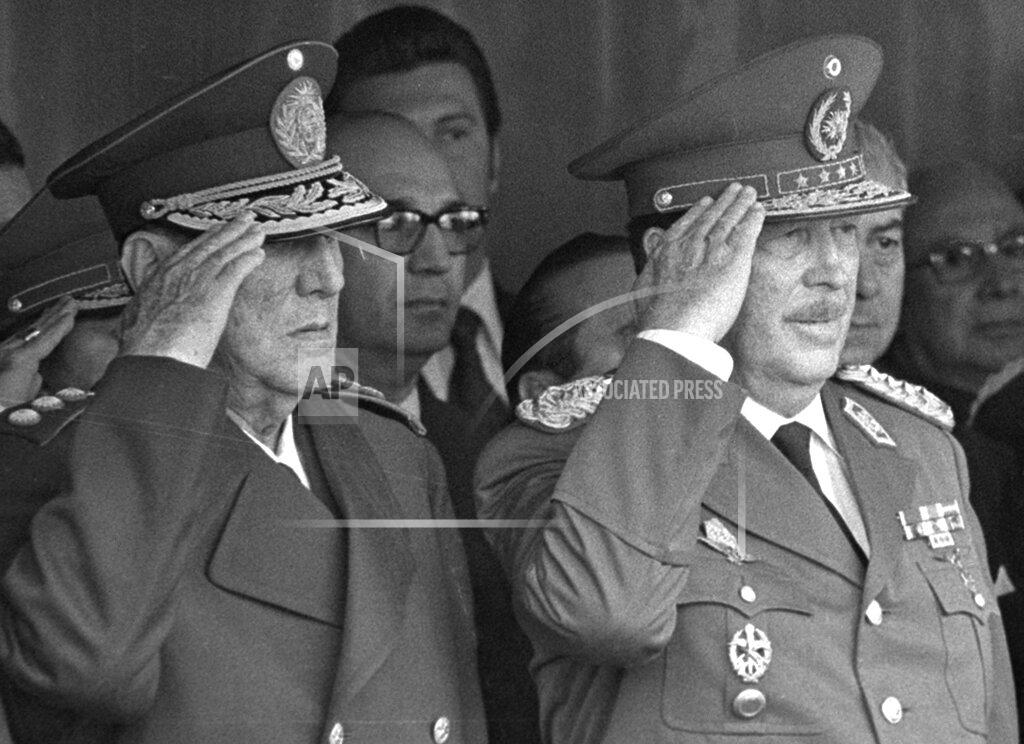
Bolivian President Hugo Banzer’s military-backed regime has established control over all news dispatches filed from the country. Foreign correspondents were told to submit copies of their news dispatches after communications were halted while a mini-rebellion by a handful of army officers was in progress. The uprising was quickly ended without a shot being fired.
The United States is trying to manipulate the lives of Micronesian people, partly by maintaining a poor level of political education, an advocate for Pacific island people charged before the U.N. Trusteeship Council. Susan Costello of the Friends of Micronesia group said that while Washington is building the area’s tourism industry, it has been painfully slow in advancing other forms of economic development. This neglect, she said, seriously impairs Micronesia’s ability for self-determination.
President Nixon was reportedly named by a Watergate grand jury last February as a co-conspirator in the alleged attempt to cover up the Watergate burglary. The report, which was confirmed by the President’s lawyer, James St, Clair, completes the circle of conspiracy alleged in the indictment handed up March 1 and explains what was contained in the mysterious briefcase handed to the judge at that time, The revelation is expected to have a political Impact on the President’s chances at the impeachment hearings and to affect the trials of his former aides named in the indictment.
The House Judiciary Committee heard evidence that 17 wiretaps undertaken in 1969 against reporters and government officials produced some political information about the President’s opponents but no evidence of “national security” leaks, according to members of the committee. The members said that in one case electronic surveillance of an adviser to a Democratic presidential contender continued for 19 months after federal agents concluded that the wiretap had produced “nothing significant” about security leaks.
After more than a year of mounting pressures from the Watergate scandals, a study of administration officials indicates that President Nixon has lost much of his control of the machinery of government and is presiding over a loose confederation of departments and agencies that feel increasingly independent of the White House. And now there are signs that the key Office of Management and Budget is beginning to weaken its grip on the lines of authority over government activities.
Bruised by the domestic politics of the Vietnam conflict and the Watergate affair, its influence in the White House broken by the practitioners of détente, the Central Intelligence Agency is undergoing a major, perhaps fundamental, transformation. Its claws — the covert operations that once marshaled large mercenary armies in Laos and Latin America and toppled undesired governments in Iran and Guatemala — are now largely retracted. Its weightiest organ in the bureaucracy, the Board of National Estimates, a federal court of intelligence, has been abolished. Under its new director, William E. Colby, some of the agency’s functions and priorities have been shifted, with seemingly paradoxical results. Although President Nixon has given Mr. Colby more power and responsibility than most of his predecessors, the director has markedly less access to the White House.
Rutgers University has agreed to pay more than $375,000 to women and minority-group faculty members who have been receiving lower salaries than their white male colleagues. The settlement, which affects 186 women and 24 minority-group members, was described as the largest payment ever made by a university to compensate for racial or sexual discrimination.
A former Latin American journalist, Alvaro Garcia-Pena, pleaded guilty in a federal court in Washington, D.C., to two charges in connection with a scheme that defrauded the Population Reference Bureau of at least $84,000 over the last five years. Garcia-Pena, 43, was acting president of the organization when he was fired earlier this month, officials said. The bureau, a 45-year-old nonprofit foundation supported by the United Nations and numerous private foundations, is devoted to population studies. Officials said Garcia-Pena would issue checks in the names of prominent experts and then cash them himself.
Surgeons removed General Creighton W. Abrams’ cancerous left lung in a four-hour operation at Walter Reed Army Medical Center in Washington. “All visible evidence of the malignancy has been removed,” a spokesman said. “General Abrams tolerated surgery well and will remain in the recovery suite a number of days.” Abrams, 59, Army chief of staff, entered the center May 23 for what the Army called “a mild case of pneumonia.” Tests later showed the presence of cancer.
The federal appeals court in Washington, D.C., ruled that identification by voiceprint cannot be introduced as evidence in criminal trials. “Whatever its promise may be for the future,” wrote Judge Carl McGowan for the court, “voiceprint identification is not sufficiently accepted by the scientific community as a whole to form a basis for a jury’s determination of guilt or innocence.” A voiceprint is an electronic process that displays in a pattern of lines for visual analysis the sound of an individual’s voice. Courts in Florida and Minnesota now admit voiceprints but the New Jersey Supreme Court has ruled them inadmissible in that state.
A shotgun‐wielding former convict was killed by the police in Omaha, Nebraska, today as he emerged from a burning rooming house after shooting to death a policeman and wounding 10 other persons. Elza Carr, 33 years old, held officers at bay for nearly five hours before flames apparently set off by tear gas drove him to the porch of the house where he died in a fusillade of police bullets. Patrolman Paul Nields, 32, died of shotgun wounds in the head. He was shot during an attempt to shoot tear gas into the rooming house on Omaha’s North Side, where Mr. Carr was holding policemen off. Eight other policemen, a bystander and Mr. Carr’s half-brother were wounded. One officer, Sgt. Guy Goodrich, was listed in serious condition.
The fuel shortage and slower speed limits have reduced the death rate on the nation’s highways to the lowest since the National Safety Council began keeping figures in 1933, the council said. For the first four months of the year, traffic deaths occurred at an annual rate of 3.4 per 100 million miles traveled, compared to 4.2 for all of last year. The council called this year’s decline “a startling reduction in such a short period of time.” Fatalities for the last four months fell 24% to 12,480, from 16,500 in the same period last year. Disabling injuries declined to 440,000 from 570,000. The council said that in a crash, a person’s chance of survival was four times greater at 50 mph than at 70.
World Bank President Robert S. McNamara told U.S. religious leaders that Americans have yet to “face up to the harsh truth” of increasing want in the world. “It’s one of the great moral issues of the century,” he said, and urged a conference of Protestant, Roman Catholic and Jewish leaders in Aspen, Colorado, to lead the way in alerting people to the crisis. McNamara, a former U.S. secretary of defense and an ordained lay elder in the United Presbyterian Church, said a third to a half of the 2 billion persons in the world’s underdeveloped countries suffer from malnutrition and a fourth of their infants die before they reach the age of 5.
The Labor Department issued regulations requiring private employers with federal contracts of $2.500 or more to provide job opportunities for the handicapped. Firms are required to take positive steps in promotions, training, transfers, terminations, accessibility for jobs and determination of working conditions.
Eight people were killed in the collapse of a Gibson’s Discount Store in Forrest City, Arkansas, and 75 others injured when a tornado leveled the building.
Julie Ann Junkin won the 47th National Spelling Bee in Washington by spelling a word she had never heard of. Julie Ann, 12, a sixth grader from Gordo, Alabama took the $1,000 first prize with hydrophyte (a plant growing in water). Crying and laughing at the same time, she said it was her study of pronunciations that enabled her to spell a word she didn’t know and outlast a field of 80 other young spellers. “I knew mantelletta (an outer garment worn by Roman Catholic prelates)” she said in referring to the word misspelled by runner-up Gail Meier, 14, of Arlington, Tennessee, “but I took a stab at hydrophyte.”
Lee May hits the first “foamer” in Houston Astros team history, a promotion where Astrodome patrons get free beer for the rest of the night if an Astro belts one out on an even-numbered minute. May hits a second shot for good measure and Larry Dierker tosses a three-hitter in a 4–0 whitewash of the Montreal Expos.
Dow Jones Industrial Average: 845.35 (+15.17, +1.83%).
Born:
Uncle Kracker (stage name for Matthew Shafer), American rock and country singer (“Follow Me”; “Drift Away”); in Mount Clemens, Michigan.
Danny Strong, American actor (Jonathan Levinson-“Buffy the Vampire Slayer”, “Gilmore Girls”, “Mad Men”), in Manhattan Beach, California.
Sonya Walger, British actress (“Lost”), in Hampstead, London, United Kingdom.
Anson Carter, Canadian NHL right wing (Washington Capitals, Boston Bruins, Edmonton Oilers, New York Rangers, Los Angeles Kings, Vancouver Canucks, Columbus Blue Jackets, Carolina Hurricanes), in Toronto, Ontario, Canada.
Patrick Hape, NFL tight end and fullback (Tampa Bay Buccaneers, Denver Broncos), in Killen, Alabama.
Rico Clark, NFL defensive back (Indianapolis Colts, Cincinnati Bengals, New England Patriots), in Atlanta, Georgia.
Jonathan Kerner, NBA center (Orlando Magic), in Atlanta, Georgia.
Guillaume Musso, French novelist known for the thriller Et Apres (“Afterwards”), adapted to the film of the same name; in Antibes, Alpes-Maritimes département, France.
Died:
Blanche Yurka, 86, actress (“Tale of 2 Cities”, “Cry of Werewolf”).



 History Diaries