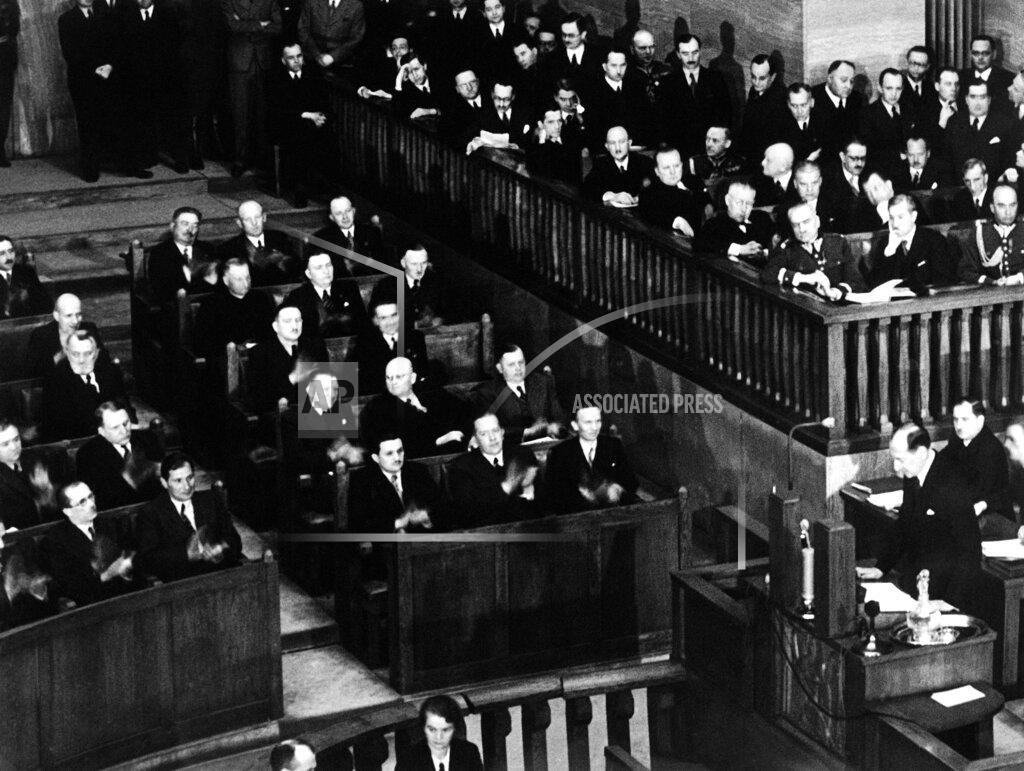
Poland rejects a Reich demand for Danzig, but keeps the door open. Polish Foreign Minister Józef Beck spoke to the Sejm (Polish Parliament), noting that the German-Polish relationship was rapidly deteriorating due to Germany’s bullying tactics. Official circles indicated that the Polish Government was ready to discuss any new German suggestions for a settlement but only on the conditions laid down in Colonel Beck’s speech, that is that Poland’s special rights in Danzig must be realized and that no attempts be made to restrict Poland’s sovereignty over her own territory.
Consequently, it is up to the Germans to decide whether there will be peace in Eastern Europe or whether the tension must continue. The Poles now regard the exchange of views between the two countries as closed. It is pointed. out that Warsaw’s answer to Chancellor Hitler’s speech and the German memorandum of April 28 was contained in Colonel Beck’s address and also in the Polish memorandum delivered to the German Foreign Office this afternoon. Consequently, Warsaw will make no further proposals and so far as the Poles are concerned the present situation may last indefinitely.
Diplomatic observers were present in force in the Sejm this morning when Colonel Beck made his momentous speech. They were impressed by his tactfulness and moderation. They considered that, as strong and emphatic as it was, it contrasted favorably with Herr Hitler’s anti-Polish outburst of last week. The atmosphere in the Sejm, it was observed, was reminiscent of that in the House of Commons last month when Prime Minister Neville Chamberlain announced the British guarantee to Poland-devoid of the dramatic staging of a Hitler oration, dignified, quiet and businesslike. The entire diplomatic corps was represented, excepting the German and Italian Embassies. The Japanese Ambassador’s presence was noteworthy. The streets of the capital were deserted during the half hour that Colonel Beck spoke. But there was no compulsion, no suspension of work as in Germany last Friday.
Contrary to the many predictions of Polish counter-demands, Colonel Beck made none, but he intimated, nevertheless, that in any future conversations the “experiences of recent times,” would be kept in mind. He also referred to Herr Hitler’s sudden unilateral repudiation of the non-aggression pact and to the German attacks on Poland. As a consequence of them, he said, Poland must ask special safeguards against the recurrence of such “experiences;” thus wider guarantees and stricter obligations will be demanded in any future conversations or arrangements with the Reich.
The rift in German-Polish relations appeared to have widened tonight, following Polish Foreign Minister Josef Beck’s speech in the Sejm. What, if any, decision it has elicited from Chancellor Adolf Hitler has not yet been ascertained. The speech and Its Implications for the future relations between the two nations, however, were considered of sufficient importance to justify a conference lasting almost seven hours between Herr Hitler and Foreign Minister Joachim von Ribbentrop in Berchtesgaden this afternoon.
The greatest secrecy shrouded all movements in Berchtesgaden and Munich all day. Herr von Ribbentrop was accompanied by Italian Ambassador Bernardo Attolico to Munich. They were en route to Italy — where Field Marshal Hermann Göring and Colonel General Walther von Brauchitsch, Commander in Chief of the German Army, also are visiting — for a weekend conference with Count Galeazzo Ciano, Italian Foreign Minister, at Lake Como.
The German Foreign Minister arrived at Berghof, Chancellor Hitler’s chalet, shortly after 2 PM, and there was a persistent rumor that Albert Forster, Nazi district leader of Danzig, and Arthur Greiser, Danzig Senate President, also were at Berghof, but a denial of the rumor was issued by the semi-official German news agency. Herr Greiser was seen in Danzig at noon yesterday. Herr Greiser allegedly stated he was departing early today for an appointment in Hamburg. It was unofficially stated in Danzig this afternoon, however, that he had already departed for Hamburg. With modern means of transportation, he could in a very few hours have been in Southern Germany.
Another report, which appeared to be based on wrong information from Berchtesgaden authorities, alleged that the Papal Nuncio, Mgr. Cesare Orsenigo, also visited Herr Hitler this afternoon, after having flown down from Berlin.
The Italians tonight do not feel that Colonel Josef Beck, Polish Foreign Minister, has completely closed the doors to agreement with Germany and so Count Galeazzo Ciano, the Italian Foreign Minister, will leave for his talks with Joachim von Ribbentrop, German Foreign Minister, in a moderately hopeful frame of mind. Italy will now make a truly determined effort to mediate between Berlin and Warsaw.
Despite his strong words, it is believed here that Colonel Beck would like to come to terms with Germany. His policy has always been friendly and he was disposed to make some concessions until Chancellor Adolf Hitler’s intransigent speech one week ago. That speech left him no other choice but to openly take a strong attitude.
Yet, as the situation is seen here, Herr Hitler now realizes that his brow-beating tactics did not work with Poland and he, or at least his followers, will oppose war. However, someone must get the two parties together, and that is where Italy will try her hand. Significantly enough, it was Herr von Ribbentrop, according to a good informant, who asked for this meeting, and not Count Ciano.
The Foreign Affairs subcommittee of the British Cabinet met today to consider the Russian proposal for a military alliance. French comments on the plan have been received and the British reply will be forwarded to Moscow tonight or tomorrow. The British, it would appear, still do not want to join any such strong military alliance as the Soviet proposes, if only on the ground that it would alienate the smaller anti-Communist States of Europe and tend to the establishment of ideological blocs. What is going on now is apparently an attempt to reach some compromise between the Russian desire for a general alliance and the British desire for simultaneous guarantees to smaller nations against Axis aggression.
There was a report tonight that Great Britain and France had agreed to the Russian alliance proposal, but this was denied. It was finally confirmed that the German Ambassador, Herbert von Dirksen, was returning to London. He was recalled at the same time that the British recalled Ambassador Sir Nevile Henderson from Berlin as a symbol of their disapproval of Germany’s seizure of Czecho-Slovakia. He is expected here tomorrow.
Prime Minister Neville Chamberlain in the House of Commons today was pressed for some information as to the state of negotiations between Russia, France and Britain, Noel Baker, a Laborite, asking if it was not time the government made up its mind to accept cooperation with Russia. “We cannot accept the view that we should give up altogether our own opinions and accept without question the views of some other government,” retorted Mr. Chamberlain. “We have to look after the interests of our country and also look at the probabilities of achieving success in the policy we are following.”
The Estonian cabinet met today and approved in principle a German proposal for a non-aggression pact with that country.
Dorothy Garrod was elected Disney Professor of Archaeology at the University of Cambridge, the first woman to hold a professorship at either Cambridge or Oxford.
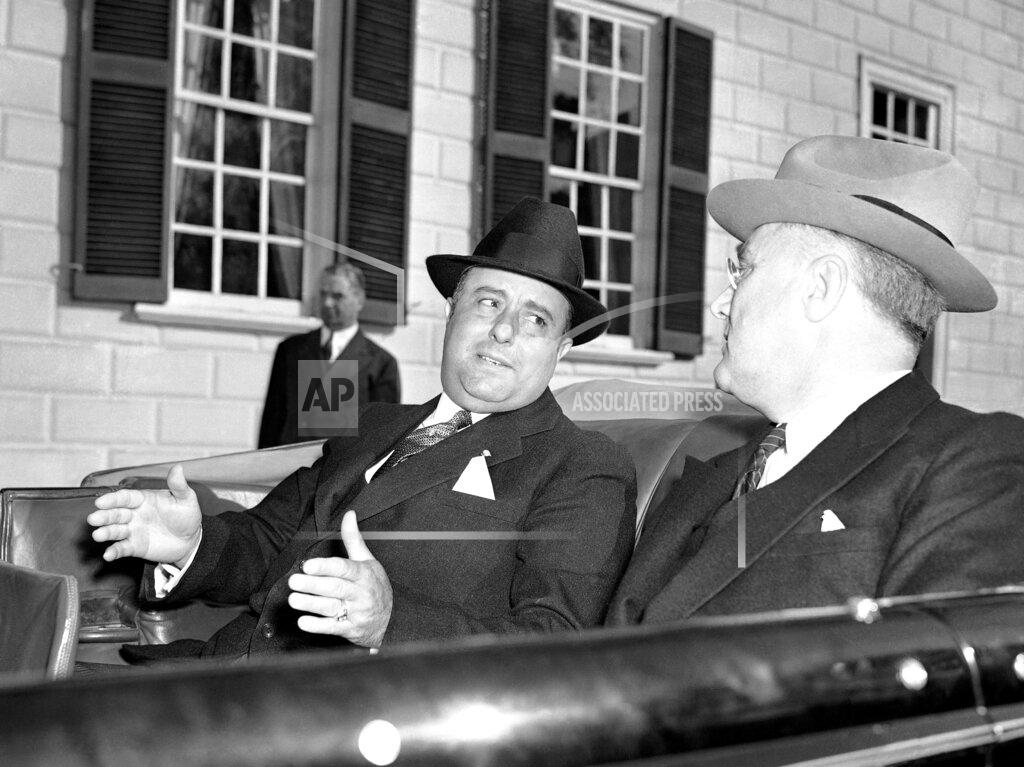
Today in Washington, President Roosevelt, accompanied by Mrs. Roosevelt, greeted President Anastasio Somoza of Nicaragua and Señora Somoza.
The Senate was in recess. The Appropriations Committee approved a $388,000,000 increase in the Agricultural Supply Bill; the Military Affairs Committee reported favorably a bill to compel individuals to buy government bonds in war or during an emergency; the Interstate Commerce Committee concluded hearings on the Wheeler Omnibus Transportation Bill; the Education and Labor Committee heard American Medical Association opposition to the Wagner Federal Aid Health Bill; a joint House and Senate Immigration Committee reported favorably the Wagner Refugee Bill.
The House met at noon; passed the Hobbs bill permitting detention of certain alien criminals and adjourned at 4:55 PM until noon Monday. The House Labor Committee continued hearings on amendments to the National Labor Relations Act.
The Congressional economy drive received a hard blow from the Senate Appropriations Committee today when it voted an increase of $338,000,000 in the Agriculture Department Supply Bill. The fund was intended for parity payments to farmers and distribution of crop surpluses. Paradoxical though it might seem, the same action revived the movement to slash all appropriations for the next fiscal year by a given percentage, including the appropriation which was increased today. Proposals to reduce the agriculture measure horizontally, first by 10 percent and then by 5 percent, were defeated by the committee, but many members expressed a willingness to apply the principle to the whole appropriation schedule for 1939-40 if such a proposal were offered on the floor.
The proposed horizontal reductions were defeated by members who explained they did not want to single out one bill for this sort of treatment — least of all a farm-relief measure. The movement for the horizontal cut is expected to be transferred to the Senate floor. The 10 percent reduction was proposed in committee by Senator Townsend, Republican, of Delaware, and the 5 percent cut by Senator O’Mahoney, Democrat, of Wyoming.
Senators Byrnes, Harrison, Byrd and others identified with the economy “bloc” are known to favor a general reduction in all appropriations already voted for next year, except those needed for fixed charges and for veterans and old age pensions. This could be done by an amendment to the final appropriation bill, or by a separate resolution. Leaders of the movement calculated tonight that around $600,000,000 might be pared from next year’s expenditures in this manner.
Amid scenes of unusual military pageantry, General Anastasio Somoza, President of Nicaragua, was welcomed to the United States today in a manner similar to the greetings given to President Roosevelt on his visits to Latin-American republics. Field artillery 75s barked twenty-one-gun salutes, a fleet of army bombers and swift pursuit planes roared overhead, 5,000 soldiers, sailors and marines supplemented by metropolitan police and firemen stood at attention and President Roosevelt, accompanied by Mrs. Roosevelt, the Vice President and Mrs. Garner, Chief Justice and Mrs. Hughes and all except two members of the Cabinet went to Union Station to meet the distinguished visitors.
From the time President Roosevelt walked through the gold cloth curtains which draped the entrance, to the Presidential suite at the railroad station with General Somoza at his side until the last guest had departed from the White House musicale tonight, the nation’s capital was treated to a demonstration of American hospitality reminiscent of the reception given to King Albert of Belgium after the World War.
For the head of the little Central American republic it was indeed a triumphal return, for General Somoza first came to the United States twenty-two years ago to study accounting at the Pierce Business College in Philadelphia, and “El Yanqui,” as General Somoza came to be known in Nicaragua because of his sympathies for the United States and his dislike for Sandino in the Nicaragua uprising years back, appeared to enjoy himself to the full.
It was the first time that President Roosevelt had left the White House to receive a visiting foreign chief of State since he entered it in 1933, and not even the crowd that turned out to witness the parade that marked his first inaugural was equal in numbers to the throng which lined the route of the procession today. Government workers, let out of their offices early to view the spectacle, stood four and five deep along the streets from the Union Station to the Capitol and down Constitution and Pennsylvania Avenues to the White House grounds, where the parade ended. The President and Mrs. Roosevelt, accompanied by his military and naval aides, were waiting in the Presidential suite at the station, recently refurbished with WPA funds, when the special train that brought General Somoza up from New Orleans came to a stop at 11:35 this morning.
The production of soft coal, a vital element in the nation’s fuel supply, halted almost completely last night as 130,000 Western miners joined the stoppage of 320,000 mine workers employed in the Appalachian district. Only a warning by Dr. John R. Steelman, chief of the United States Conciliation Service, that they could not break off negotiations and start a “civil war” in the coal fields prevented the bituminous operators and leaders of the United Mine Workers from returning to their homes yesterday.
Dr. Steelman’s demand that conferences be resumed was made in the name of “the American people and the American Government” at a meeting called to announce that seven weeks of discussion between representatives of the miners and the operators had resulted in complete disagreement on the terms of a new contract. Both sides agreed to meet with Dr. Steelman, although Charles O’Neill, chief negotiator for the mine owners, emphasized that it would take something more than “platitudes and scoldings” to produce an accord.
Without explanation the Navy Department canceled today the cruise of the midshipmen’s practice squadron to European waters. It is known, however, that the reason for the cancellation was the European situation. If war should break out in Europe, the Navy Department wants the Atlantic Squadron to remain intact and ready for service, not in foreign waters, but nearer home.
The vessels on which the Annapolis midshipmen were to have made the cruise to various European ports are the battleships New York, Texas and Arkansas, the backbone units of the recently organized Atlantic Squadron, of which the New York is the flagship. The squadron was scheduled to sail from Annapolis June 2 with Antwerp as its first port of call, after which it was to have visited Rotterdam, Stockholm, Helsingfors and Edinburgh. The schedule called for a visit of about one week at each of the ports. This will be the first year since 1926 in which the midshipmen have not visited Europe.
Kilner-Lindbergh Board was established by General H. H. Arnold to revise military characteristics of all U.S. military aircraft, including the B-29 design in the AAF 5-year program. The Board was composed of General W. C. Kilner, Charles A. Lindbergh, Colonels Carl Spaatz and Naiden, and Major Lyon.
Flash floods kill 75 in Northeast Kentucky.
The president of the American Bankers Association agrees that the Social Security Act needs to be changed.
An 82-inch telescope, second-largest in the world, is dedicated at the University of Texas McDonald Observatory in Fort Davis, Texas.
In a 10–5 A’s win, the A’s Sam Chapman hits for the cycle against the Browns Harry Kimberlin. Tomorrow he’ll homer in his first two at bats against Johnny Marcum.
While flames and smoke continued to throw a lurid pall over its cramped, jagged ramparts, Chungking wrestled today with the fright and misery resulting from the preceding two days of Japanese raids. Acres lay in ruins while firemen, soldiers and volunteers fought to check blazes that crept block after block through the heart of the city, turning additional acres to smoking heaps of masonry along Tuku Street. Relief workers estimated the killed and injured in the bombings Wednesday and yesterday at more than 2,000, three-fourths of them being casualties of yesterday’s attack. Rescue squads struggled with the task of finding hospitals for the maimed, of saving hundreds trapped by felled buildings and gathering the dead for burial.
Meanwhile, thousands, urged on by the fear of more death from the sky, crowded all avenues of escape from the capital. It is estimated that 200,000 have fled from the city. All day the streets were thronged by Chinese with bundles and furniture. Rickshaws were piled high with household effects, and trucks and sedan chairs were loaded with odds and ends. Sampans and steam ferries carried fugitives across the Yangtze and Kisling Rivers. The highways to the west were jammed with refugees. Sampans increased the fare from 1½ cents to $6.
Nearly all stores are closed and the food shortage has become acute. The lack of water in many sections of the city has added to the suffering. A number of hospitals have no water for their patients. The British Ambassador, Sir Archibald Clark Kerr, and Consul General Stark Toller and their staffs evacuated the British Embassy and consulate, where more than twenty Chinese were killed when four bombs hit, to take up new quarters on the south bank of the Yangtze.
The main German Embassy and Consulate building was not burned, though surrounding structures belonging to the establishment were blasted and set on fire by bombs, which also badly damaged the main structure. Trapped by flames on virtually all sides, Consul General and Frau Seibert remained throughout last night in the main building. ready with a few cans of water to fight the flames if their home caught fire.
Today they watched, horrified, when 100 Chinese women, children, and aged persons, who had sought refuge at the base of the thirty-foot city wall, were trapped by flames and burned to death. The French Consulate, adjoining the British and German buildings, was damaged by a bomb that fell on the lawn. Most of the foreign business men and a number of foreign missionary residents have moved to new abodes far in the hills on the south bank of the Yangtze.
Troops of the Chinese 26th Division broke through to the Xinlong airfield at Nanchang, Jiangxi Province, China, destroying three Japanese aircraft.
Dow Jones Industrial Average: 131.47 (-0.39).
Born:
James R. Jones, American lawyer and politician (Rep.-D-Oklahoma, 1973-1987; U.S. Ambassador to Mexico, 1993-1997), in Muskogee, Oklahoma.
Cesare Fiorio, Italian sporting director of various Formula One teams, in Turin, Italy.
Naval Construction:
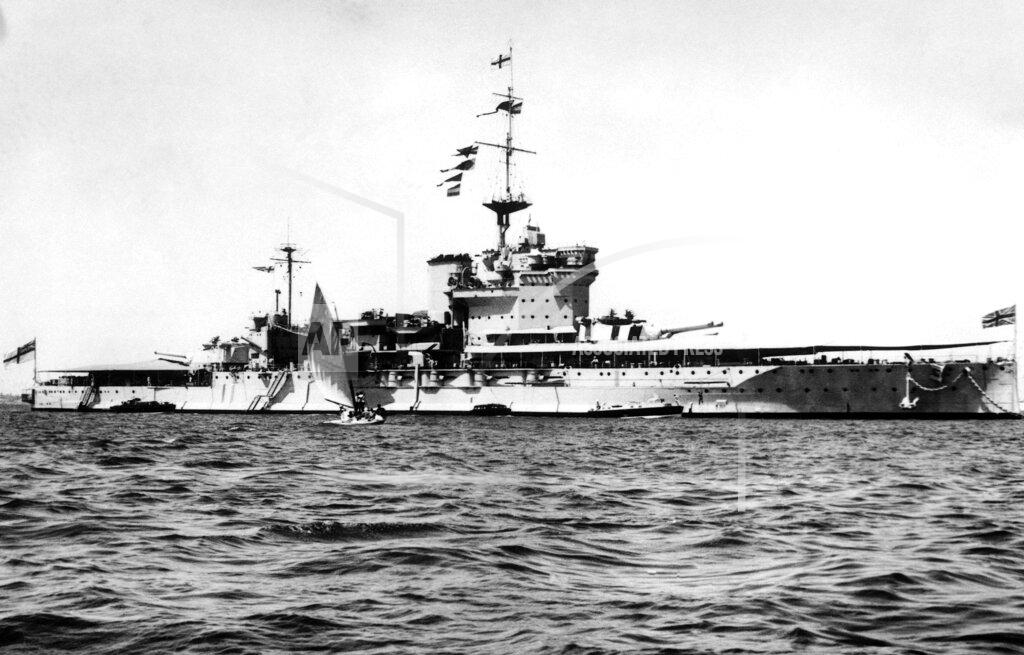
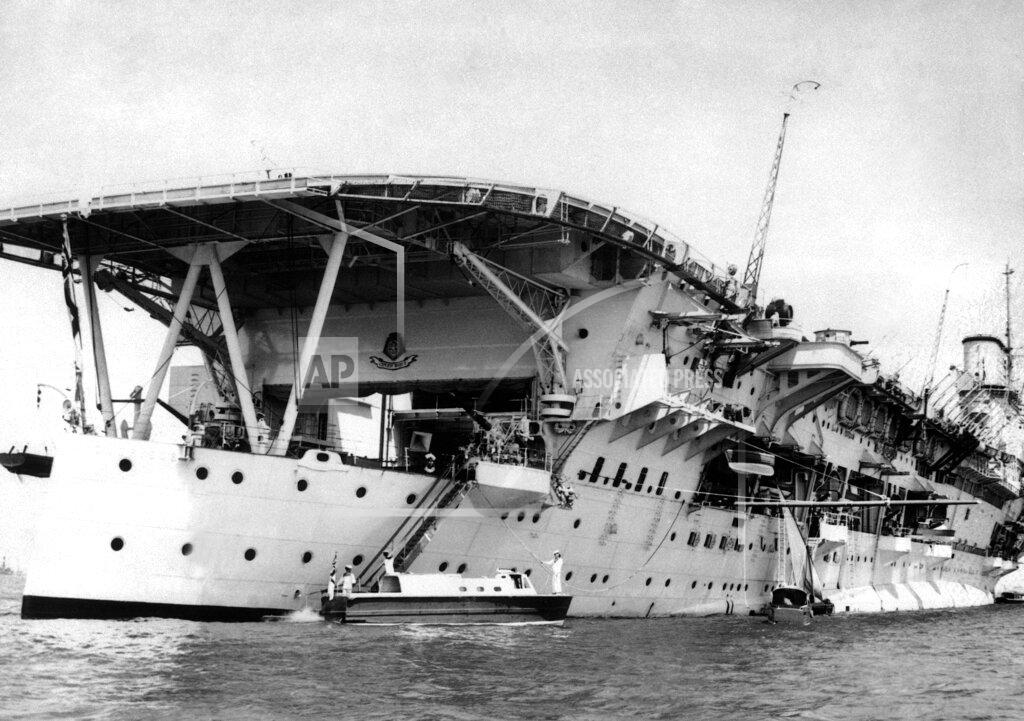
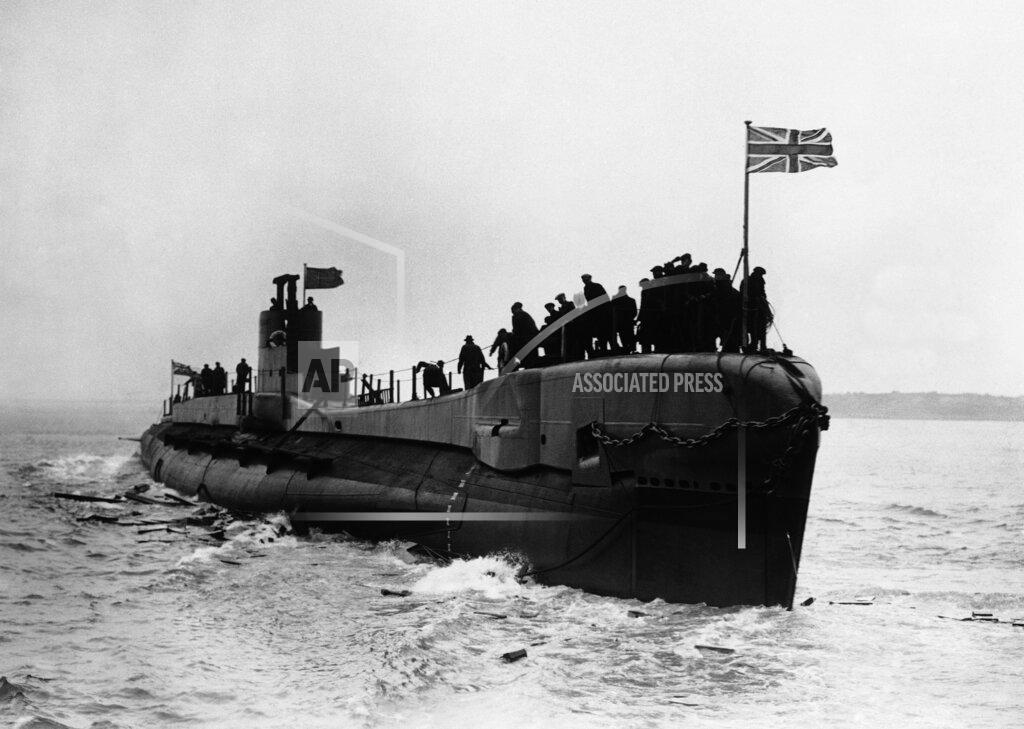
The Royal Navy “T”-class submarines (First Group) HMS Triad (N 53) and HMS Truant (N 68) are launched by Vickers Armstrong (Barrow-in-Furness, U.K.).
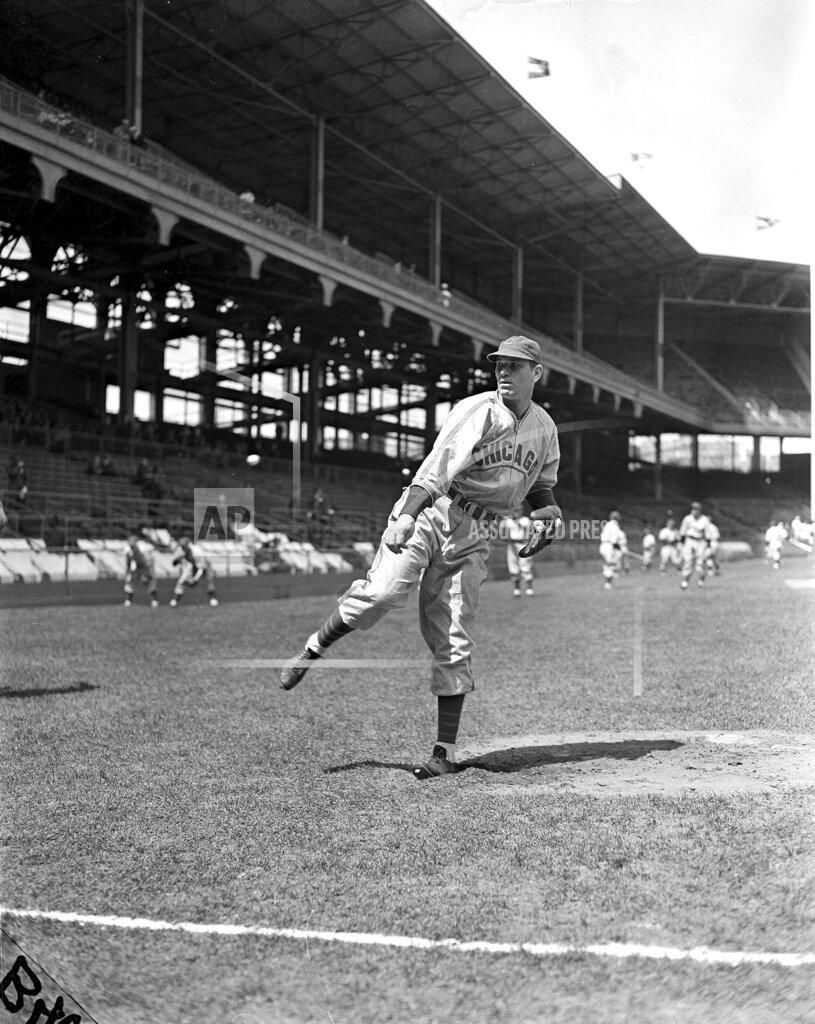
[Dean was probably the best pitcher in the National League during the mid-1930s with the St. Louis Cardinals. While pitching for the NL in the 1937 All-Star Game, Dean faced Earl Averill of the American League Cleveland Indians. Averill hit a line drive back at the mound, hitting Dean on the foot. Told that his big toe was fractured, Dean responded, “Fractured, hell, the damn thing’s broken!” Coming back too soon from the injury, Dean changed his pitching motion to avoid landing as hard on his sore toe enough to affect his mechanics. As a result, he hurt his arm, losing his great fastball. By this time, he is a shell of what he was, playing out the string.]
 History Diaries