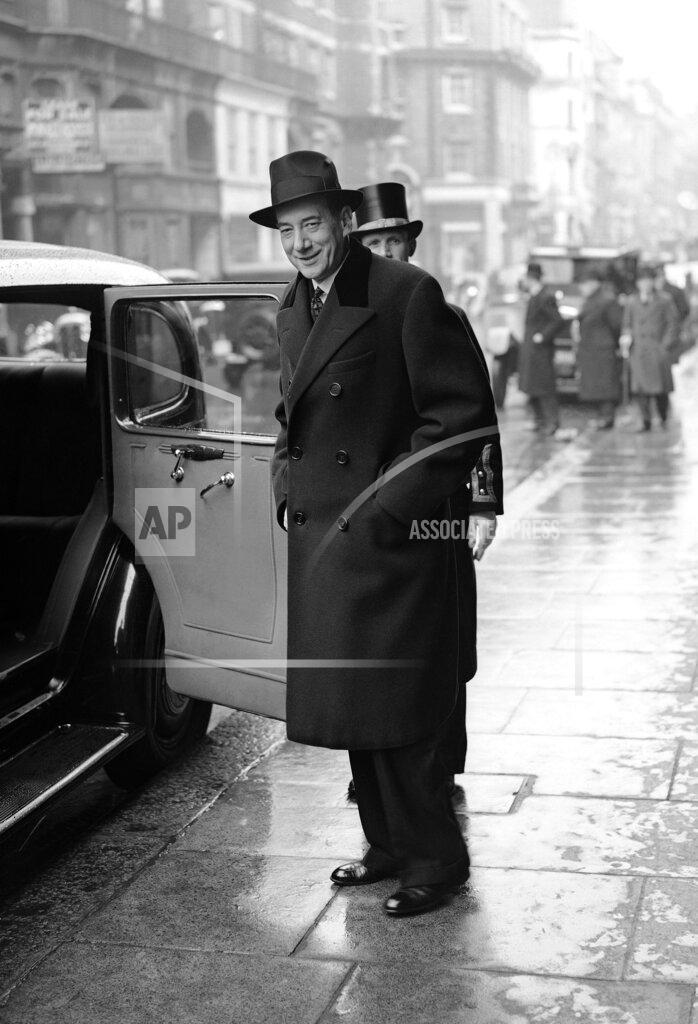
London had a case of nerves yesterday, induced by fear that the dictators might act to tear the web that Britain is weaving around them. Reports that Italy planned to occupy Albania, that Rome was sending new troops to Spain and that Germany had ordered anti-Jewish violence in Bohemia-Moravia were capped by another report, subsequently repudiated, that the First Lord of the Admiralty had announced hurried manning of anti-aircraft guns in the navy. But London was cheered by word that Foreign Minister Beck of Poland was ready to enter an Anglo-French defensive compact.
Russia’s role in this set-up, however, was still not fixed. Moscow remained suspicious of British policy and Poland’s intentions.
The “encirclement” efforts continued to be an object of attack in Berlin, where the entire propaganda machine emphasized that the powers should take note of Chancellor Hitler’s warning at Wilhelmshaven. While Colonel Josef Beck, the Polish Foreign Minister, is in London negotiating a mutual assistance pact with Great Britain to supplement the Franco-British military alliance, the entire German propaganda apparatus — press, radio and the whole battery of more or less official correspondences — continues to sound with little variation but increasing vehemence a warning that Chancellor Adolf Hitler uttered in his speech at Wilhelmshaven last Saturday.
This warning was to the effect that such pacts and alliances constitute encirclement and the new Germany is not going to wait, as did the old before the last war, “until the encirclement net has been closed and has become unbreakable.” This constant repetition is motivated by fear that the world in general and the affected powers particularly may not have fully understood that warning and all its implications. The British press is accused, in fact, of having given only an inadequate presentation of that speech, and Prime Minister Neville Chamberlain is reproached with having either failed to read the speech or with failing to understand it.
At the same time German quarters take pains to dispel the notion sedulously spread by Britain in anticipation of Colonel Beck’s visit that neither Mr. Chamberlain’s pledges to Poland nor Poland herself had been in Herr Hitler’s mind when he made his speech. And all the propaganda instruments concentrate on warning Poland by name not to take the place of Czecho-Slovakia in Britain’s encirclement policy or to take Britain’s chestnuts from the fire. In this connection press comments even resurrect a word left out of the official version of Chancellor Hitler’s speech, namely, that Germany has no intention of attacking other nations “indiscriminately.”
Resentment against these efforts assumed tangible form in Danzig, where uniformed Nazis rioted and attacked the residence of the Polish Commissioner General. Danzig Nazis, in protest at what they regard as “unilateral discussions” — meaning the negotiations between Foreign Minister Josef Beck of Poland and the British Government — were carrying on organized and serious anti-Polish riots here today. An angry crowd of uniformed Nazis attacked the residence of the Polish Commissioner General and smashed a number of windows in the offices of the Polish Telegraphic Agency. The Polish Red Cross offices, also were attacked and great damage was caused to a number of other Polish institutions here. In several cases Nazis tore down Polish flags and destroyed them.
In Warsaw a grave view of these riots was taken because it was the first time that the extraterritorial rights of the Polish Commissioner General had been violated by the Nazis in what was termed such an “outrageous” manner. Bread and butter rations have been announced for Danzig by the Nazi Administration. Coffee and tea will be adulterated with maize and other leaves in order to extend the supply. Angered housewives demonstrated against the Nazis. The demonstration was dispersed by the police and a number of women were detained.
Wilhelm Huth, Vice President of the Danzig Senate, told the Chamber of Industry and Commerce today that “we shall never yield our essential rights for living to Poland.” “Besides,” Herr Huth said, “Germany is now so strong she will not stand for having our rights diminished.” He told the chamber that there still were 5,090 Jews in Danzig, but that their “influence” had been broken. The gap caused by their elimination from the export business, he declared, must be filled by “intensifying export initiative.”
Italy appears ready to take control of Albania; troops are massed at the port. It was confirmed in Rome that Italy had made preparations for military intervention. It was explained that Albania had been recently flirting with the democracies. In Tirana it was said that Albania’s relations with Italy were strained. Negotiations are proceeding feverishly between representatives of the Italian and Albanian Governments on whose results will depend whether forceful measures will be taken to change the character of the relations hitherto existing between Italy and Albania. The need for some such change is ascribed here to the fact that Albania recently has thrown out some feelers to ascertain the possibility of coming to an understanding with the democracies, wherefore Italy feels her investment in Albania endangered.
It is considered possible that the negotiations will be successful, but Italy is playing safe and has made all preparations for military intervention should such a step in her view become necessary. Italo-Albanian relations are strained to the breaking point, according to reports from Tirana. Great ferment reigns in that capital, where it is feared that Italy may take strong action not only to protect her interests but also in view of the tense international situation.
Hungary and the Slovak Republic signed a peace treaty in Budapest ending their short conflict. Slovakia ceded a small amount of territory to Hungary.
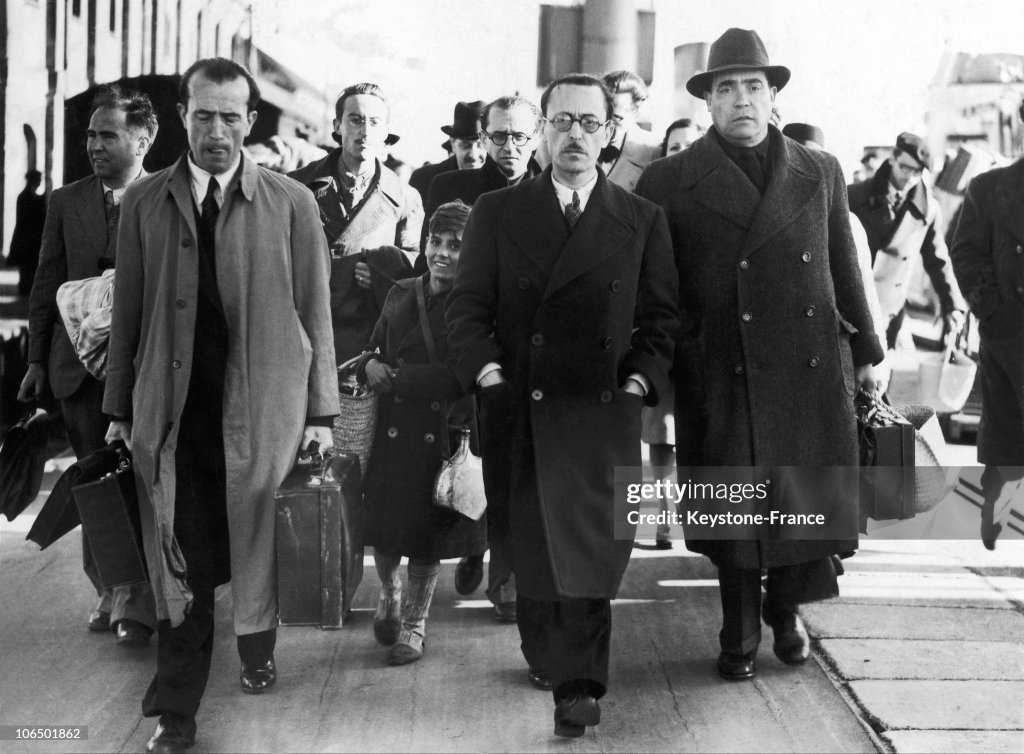
Despite the refusal of Nazi authorities to give permission for their departure, hundreds of refugees have managed to flee Czecho-Slovakia and are pouring into England on almost every boat. from The Netherlands and Poland. About 1,700 Sudeten German Social Democrats, Czechs, Jews and fugitives who had gone to CzechoSlovakia from Germany and Austria have reached England since. Chancellor Adolf Hitler took Bohemia and Moravia. In addition, there are a thousand in Poland and several hundred in The Netherlands waiting to come to England. Most of these escaped by bribing German officials or by perilous flight across the frontier. About 700 of the emigres were brought to England by the British Committee for Refugees from Czecho-Slovakia, which had already evacuated about 1,500 between the annexation of the Sudetenland and of the Czecho-Slovak Republic. Another thousand, fairly well-to-do persons, have come unassisted.
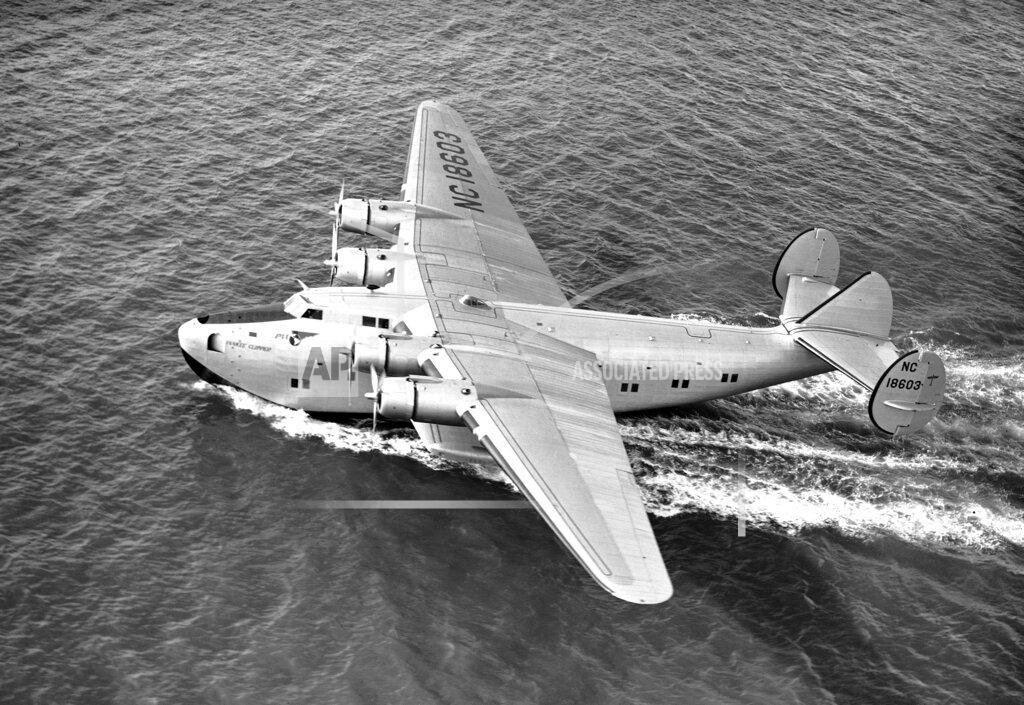
The Yankee Clipper flying boat reaches Southampton after an uneventful flight from Marseille.
War guilt trials start in Spain. In Valencia, 21 are executed.
Rafael Henche, Socialist Mayor of Madrid, was among 20,000 prisoners taken in the capture of Alicante by Nationalist forces last Wednesday. Others captured included Pedro Guerrero Villapalos, who was accused of complicity in the death of José Calvo Sotelo, Monarchist leader, and Vicente Santa Maria Cotello, who Nationalists charge was responsible for the execution of José Antonio Primo de Rivera, founder of the Spanish Fascist party. The slaying on July 13, 1936, of Señor Calvo Sotelo, chief critic of the former Leftist government, brought to a head the conflict between Right and Left that precipitated the civil war five days later. Señor Primo de Rivera was executed by a Republican firing squad Nov. 20, 1936, for “military rebellion.”
The U.S. Ambassador to Spain says the bombing of civilian areas to lower resistance failed during the civil war, and hardened resolve instead.
The new Nationalist Spain’s envoy appeals to the United States, especially the press, for understanding of the regime.
Spanish Nationalist air ace Garcia Morato (with 40 kills during the Civil War) was killed when his Fiat CR32 Chirri aircraft crashed, due to engine failure, whilst performing for a newsreel take.
Turkey showed signs of seeking to exact a price for adherence to the Anglo-French front by moving to annex the Sanjak of Alexandretta. France tonight disclosed she was reinforcing her defenses in the Sanjak (district) of Alexandretta, Syria, after Turkey had informed her of a desire to annex the 10,000-square mile area “as quickly as possible.” Officials said that “as a precautionary measure” France would send a cruiser to Alexandretta harbor, strategically situated in the Eastern Mediterranean, to reinforce the garrison, now 1,500 men. The disclosure followed assurances by the Turkish Ambassador that Turkey would not seize the sanjak by force.
French sources described the problem as “delicate.” It was understood the Turks had suggested that France should abandon the sanjak to them in exchange for guarantees to allow French and British warships to pass through the Turkish-controlled Dardanelles from the Mediterranean into the Black Sea in event of war. Alexandretta, a semi-independent territory in Northern Syria with a population of 200,000 and an excellent harbor, is a part of the League of Nations Syrian mandate to France. By a French-Turkish friendship treaty of last July 4, an equal number of Turkish and French troops were to be stationed in the district. However, last October France withdrew French and Syrian troops, and the sanjak was left almost exclusively in the hands of Turkish officials and Turkish troops.
Today Turkey was reported demanding annexation of Alexandretta as the price for supporting the British and French-led “Stop Hitler” bloc, and one report, published in the conservative newspaper Figaro, said a Turkish army of 60,000 already was at the Alexandretta frontier.
Three-year old Faisal II became King of Iraq upon the death of his father. King Ghazi of Iraq dies in an automobile accident in Baghdad. The king’s death led to widespread disorders and Iraqis, believing rumors that the British had planned Ghazi’s demise, attacked the British consul and stoned him to death. Faisal, the three-year old son of Ghazi, became King Faisal II.
With European developments focusing attention here on this country’s attitude in the event of war, the Senate Foreign Relations Committee prepared to open hearings today on the neutrality problem, with former Secretary of State Stimson as the first witness. Colonel Henry L. Stimson, who was Secretary of State under President Hoover, will be the first witness before the Senate Foreign Relations Committee when It begins its neutrality hearing tomorrow morning. According to the announcement to-day by Senator Pittman, the committee chairman, Colonel Stimson will be the only witness at tomorrow’s session, which will be public. On Thursday the committee will hear Bernard M. Baruch, chairman of the War Industries Board during the World War and long-time adviser on foreign policy, particularly as it refers to non-involvement of the United States in war. Mr. Baruch has made numerous studies of international economic relations in time of war and their effect on neutrals.
Beyond these two days’ sessions, no definite plans have been concluded for the hearings, Senator Pittman said. It was understood, however, that the committee was desirous of obtaining as broad a cross-section of current public opinion as possible. To this end it is probable that representatives of peace societies, religious, farm and labor organizations and of women’s clubs will be invited to suggest what they and their organizations believe Should be done, legislatively, to outline the foreign policy of the United States. The hearings will take at least two weeks.
On the House side, the Foreign Affairs Committee decided today to start hearings on neutrality legislation April 11. A subcommittee composed of Representatives Bloom of New York, Luther A. Johnson of Texas, Kee of West Virginia, Shanley of Connecticut, Fish of New York, Rogers of Massachusetts and Eaton of New Jersey was appointed to meet on Thursday and complete arrangements for the hearings, which also will be held publicly. Members of both houses commented on the excellent tactics dis-played by Senator Pittman in inviting Colonel Stimson to be the first witness before the committee. The former Secretary of State has pronounced views on what this country’s foreign policy should be at the present time, and they go beyond what President Roosevelt or Secretary Hull have publicly advocated.
The Senate confirms William O. Douglas as Supreme Court Justice, 62–4. This vote, in which all but four of the Republican membership aligned themselves with a solid Democratic contingent, came after five hours of debate yesterday and today. During four-fifths of this time Senator Frazier conducted a one-man crusade in an effort to have Mr. Douglas’s qualities restudied by the Judiciary Committee. His colleague, Senator Nye, and Senator Lodge and Reed voted with him.
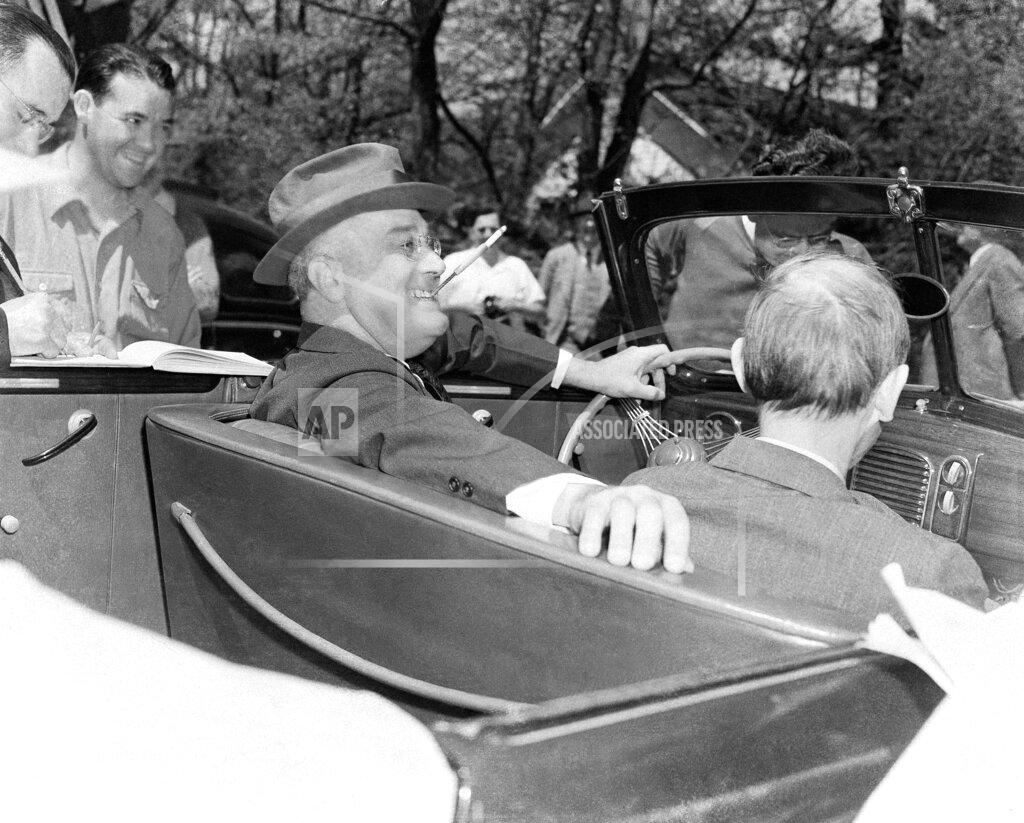
President Roosevelt denounced today the strategy of some Senators and Representatives in forcing favorable action on pet measures by having them inserted as “riders” to major legislative enactments on which there appears to be general agreement. Using as an example the $358,000,000 emergency defense measure which he signed last night, the President stated that an extraneous amendment included in the measure would give the same pension and retirement privileges to reserve officers and enlisted men disabled on temporary thirty-day duty as are given to officers and enlisted men of the regular army.
The President said he was calling particular attention to the old practice because the rider to the defense measure had been the first instance of the method during the present session of Congress, He said the cost of pension and retirement provisions had thus been increased about $5,000,000 or $6,000,000 a year in the first few years of the rider’s operation. The President made known his attitude at his bi-weekly roadside press conference. Accompanied by Secretary Hopkins, he drove down from the “Little White House” to the correspondents’ cottage in his open car. In the statement he read to correspondents he said:
“In signing the bill for emergency national defense in relation to the air service and the purchase of a large number of additional planes, it is necessary to call attention to a so-called rider which was added to the bill which has no relation whatsoever to the title or the purpose of the bill. This rider gives the same retirement and pension privileges to reserve officers and enlisted men who may become disabled while on temporary thirty-day duty as are accorded to regular officers and men of the army. In other words, any civilian under certain circumstances would get the same disability retirement privileges as those whose whole time is in the government service. This question is, of course, open to full and adequate study, but it seems a pity that without this study this clause, which will cost the government a large sum of money, has been tacked onto an emergency defense measure to which it has no relationship whatsoever.”
The War Department has completed plans to start work on the new $300,000,000 army air program the minute the Army Appropriation Bill, which has passed both houses of Congress and is now in conference, is signed by the President. The $358,000,000 emergency army air defense bill, which was signed by the President at Warm Springs yesterday, carries an authorization of $300,000,000 for air corps planes. The army appropriation bill will make available $50,000,000 as the initial appropriation to carry out this program.
Within a few hours after the bill becomes law the first of the airplane contracts will be signed, all of them for combat planes of the most advanced types, including bombers, pursuit and interceptors. Contracts will be awarded for 550 airplanes. Assistant Secretary of War Louis Johnson disclosed today that as late as last November the army began the preparation of the initial contracts. Mr. Johnson said that 3,000 planes will be constructed, tested and put into operation by July 1, 1941. This will increase the fighting air force to 5,500 or 6,000 airplanes, all representing, said Mr. Johnson, “the best types of aircraft now in existence.”
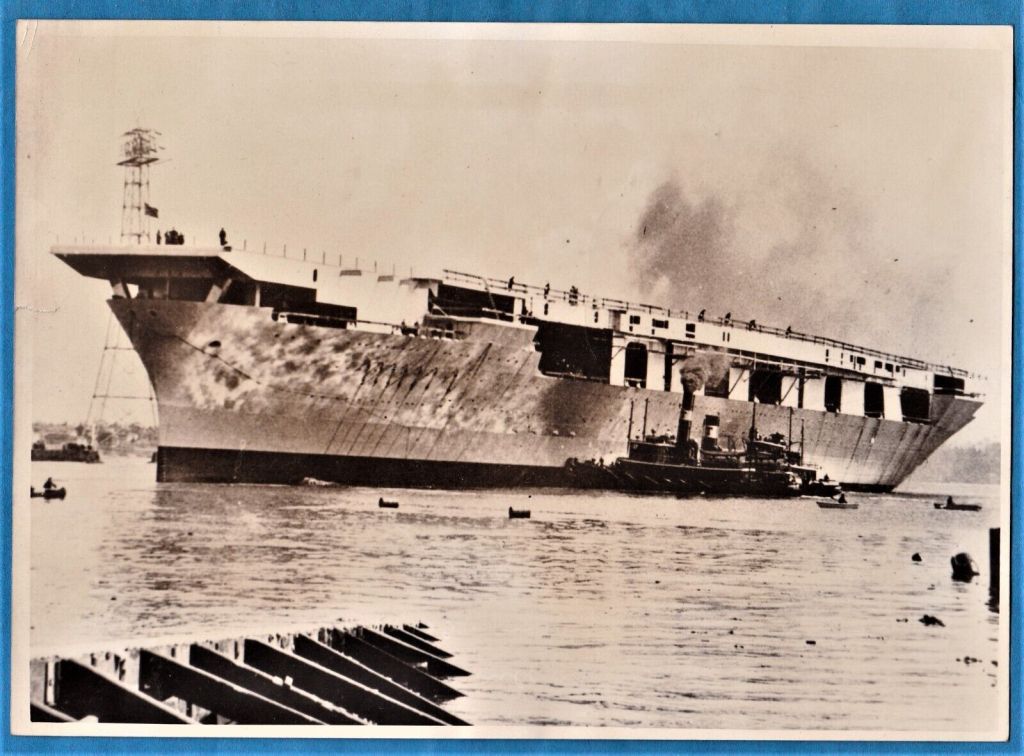
The latest addition to the nation’s armament, the airplane carrier Wasp, slid smoothly down the ways today at the Bethlehem Shipbuilding Corporation’s Fore River yard. Before she took to the water, a traditional bottle of champagne was broken across the Wasp’s knife-like prow by Mrs. Charles Edison, wife of the assistant secretary of the navy.
Considerable secrecy surrounded construction of the new war vessel, and it was impossible to determine, through casual inspection the number of planes the Wasp will carry. The riveting and uproar attendant to ship construction ceased throughout the big yard during the ceremony, but a deep throated salute was given the warship by the new liner Panama, recently constructed in the same yard for the government-operated Panama Railroad Line. When launched the Wasp carried no armament and much work remained to be done on her.
An ashamed Jack Benny pays a $10,000 fine for smuggling jewelry into the country for his wife. Two hundred fans listen to the judge scold Benny.
Glenn Miller and His Orchestra recorded “Moonlight Serenade.”
Commerce Secretary Harry Hopkins will make Iowa his legal residence; the move spurs talk of a Presidential candidacy.
James J. “Jimmy” Hines was released from Tombs jail in New York City on $35,000 bail pending an appeal for his conviction as the political fixer for the numbers racket.
Vice-President John Nance Garner cautions partners in a Uvalde housing venture to go slow on increasing debt.
Senate farm groups discuss a compromise $415,000,000 plan to eliminate crop surpluses
The Senate passes a measure to tax State and Federal salaries reciprocally; a House parley is required.
Four navy airmen are killed when planes collide in a formation flight at the launching of aircraft carrier Wasp.
The hosiery union, staggered by a $711,932, sit-down judgment, maps an appeal of the Apex case.
Large-scale output of electron microscopes is made possible by a new apparatus, chemists are told.
An Anti-fascist riot is staged in Mexico City by union “shock troops”; three Falangistas expelled.
Argentine police in Buenos Aires raid five Nazi headquarters and arrest some leaders for espionage.
The Japanese seize Kongmoon for the third time this week. There are thousands of Chinese casualties. Two Chinese divisions from Kwangsi Province were reported yesterday to have broken the Japanese spearhead thrust into the district between Macao and Canton, killing or capturing 3,000 Japanese and driving the remnants back to ships in the river. Today the Japanese returned to the attack with reinforcements from ships in the river and, aided by lifting fog which permitted the use of airplanes, retook Kongmoon. Several thousand Chinese casualties were reported. The Chinese retreated south toward Sunwui, but continued to fight.
Severe fighting was carried west of Kaoan today as Japanese invaders pushed an advance from Nanchang in Kwangsi Province deeper into the interior toward Changsha in Hunan. The Japanese thrust was directed from Tsingan and Fengsin, thirty-five and thirty miles, respectively, northwest of Nanchang. On the Han River front west of Hankow, Chinese reported their forces had crossed to the east bank in a counter-offensive and were attacking Japanese at Chungsian, center of the Japanese straggling line.
Chinese troops destroyed the Chekiang-Kiangsi Railway before evacuating Nanchang, according to the Kiangsi Governor, Hsiung Shih-hui in a speech in South Kiangsi on the war situation. The destruction of the railway, he said, “put a stop to the influx of foreign merchandise,” evidently referring to Japanese goods. He declared this would give the Chinese a new impetus to promote domestic production.
Japanese troops occupied the Paracel Islands in the South China Sea. They were to be declared a Japanese protectorate.
Dow Jones Industrial Average: 129.80 (-2.45).
Born:
Hugh Masekela, jazz trumpeter, described as the “father of South African jazz” (“Grazing in the Grass”; “Soweto Blues”; “Sarafina!”), and anti-apartheid activist, in Witbank, South Africa (d. 2018).
Bill Bridges, NBA power forward (NBA Championship-Warriors, 1975; NBA All-Star, 1967, 1968, 1970; St. Louis-Atlanta Hawks, Philadelphia 76ers, Los Angeles Lakers, Golden State Warriors), in Hobbs, New Mexico (d. 2015).
Howie Hughes, Canadian NHL right wing (Los Angeles Kings), in St. Boniface, Manitoba, Canada.
JoAnne Carner, American golfer (U.S. Women’s Open 1971, 1976), in Kirkland, Washington.
Ernie Terrell, American boxer (WBA heavyweight champion 1965-1967), in Belzoni, Mississippi (d. 2014).
Danny Thompson, British double bassist (Blues Incorporated; Pentangle; Richard Thompson; John Martyn), in Teignmouth, England, United Kingdom.
Died:
Ghazi of Iraq, 27, King of Iraq (auto accident).
Joaquín García Morato, 45, Nationalist fighter ace of the Spanish Civil War (crashed while performing low acrobatics for newsreel cameras).
Naval Construction:
The Royal Navy Abdiel-class minelayer HMS Latona (M 76) is laid down by Thornycroft (Southampton, U.K.).
The Royal Navy “K”-class destroyer HMS Kashmir (F 12, later G 12) is launched by Thornycroft (Southampton, U.K.).
The U.S. Navy aircraft carrier USS Wasp (CV-7), sole ship of her class, is launched by the Bethlehem Shipbuilding Corp. (Quincy, Massachusetts, U.S.A.).
The Royal Navy Net-class boom defence vessel HMS Magnet (Z 27) is commissioned.
 History Diaries