Major General Nguyễn Khánh, the new leader of South Vietnam’s military Government, left Saigon today by helicopter for a three‐hour morale‐raising visit to peasants and soldiers in the midst of an antiguerrilla operation. Continuing the energetic pace with which he has taken up the reins of government since seizing power three days ago, General Khánh turned his trip into just the sort of psychological gesture Americans had urged upon Vietnam’s former leaders. Unlike his predecessors, the gregarious 36‐year‐old general seemed to need no urging.
Heavy artillery, firing into a guerrilla-infested marshland, frequently drowned out the stocky young general’s words as he joked with village children, gave pep talks to troops and stressed his determination to do a better job of fighting the Communists than did the military junta that preceded him. “The essential point for defeating the Communists is to have the rural population with us,” General Khánh said, “not just the people of Saigon but the people here in the country. Here is where the people are suffering and need to be protected.” American advisers and observers here hearing General Khánh argue points they have been trying to make for months, reacted favorably. The man now leading the battle in which American prestige is laid squarely on the line may not have assumed power under auspicious circumstances — the initial reaction of diplomats and Vietnamese alike was that coups like last Thursday’s could tend to be habit‐forming — but observers found little to criticize in General Khánh’s words or deeds so far.
Military sources confirmed that there had been no major dislocations in tactical planning and schedules. Specific operations planned before the coup are going on across country on schedule after being suspended Thursday and Friday, the sources said. General Khánh said the operation against guerrillas in this area, 30 miles north of Saigon, started yesterday, only one day behind schedule as a result of the coup. Local officers gave General Khánh and General Paul D. Harkins, chief of United States forces here, a briefing on the military activity. Helicopters armed with machine guns and rockets circled, alert to prevent any Viet Cong guerrillas in the area from setting up mortar positions within range of the town.
Panama was reported today to have rejected new mediation offers and to be insisting on the use of the disciplinary machinery of the Rio Pact in her dispute with the United States. Several Latin‐American diplomats met over the weekend with Miguel J. Moreno Jr., chief Panamanian delegate to the Organization of American States. They tried to persuade him to adopt a more conciliatory course. But Mr. Moreno was determined to carry to a showdown his government’s charges of United States aggression.
When the Council of the Organization of American States meets Tuesday afternoon, diplomats said, Mr. Moreno will demand a vote on applying the 1947 Rio Pact of Reciprocal Assistance. Panama has put diplomats on notice that if the aggression charges are not given prompt consideration by the Council she will ask the United Nations to intervene, either through the Security Council or in a special session of the General Assembly. In addition, Panamanian officials have been hinting at a possible withdrawal from the O.A.S. if the Council does not respond to Mr. Moreno’s appeal of last Friday for action to protect his country from a “constant threat of an armed North American attack.”
A faint glimmer of hope appeared today that Archbishop Makarios, President of Cyprus, would accept British‐United States proposals for keeping the peace in Cyprus and finding a solution in the bitter dispute between Greek and Turkish Cypriotes. The hope appeared when the proposals were formally presented to the Archbishop. Yesterday, before they were received, he rejected them. “We have made constructive proposals and we expect constructive answers,” an informed Western source said bluntly. Britain warned that her troops in Cyprus wouId be withdrawn to their bases on the island if fighting was resumed. A Greek Cypriote spokesman for the Government said in Nicosia that a new reply to the proposals could be expected “soon.” He apparently meant tomorrow or Tuesday at the earliest. No one was confident that the formal proposals would not be rejected. But in Western circles the faint glimmer of hope replaced the heavy gloom of last week.
Ghana has become an official one‐party Socialist state following a nationwide referendum marked by widespread fraud and intimidation. The Government contends that in the week‐long voting that ended Friday, 99.9 percent of those who cast ballots voted “yes” for proposals giving President Kwame Nkrumah dictatorial power. In many areas thousands of voters had no choice. In all but a few wards in the Northern Region, voters found that the “no” boxes had been removed by Government‐appointed polling officials. In many other areas in the central and coastal districts, the slits of the “no” boxes were sealed. Ghanaians were repeatedly warned by the Government‐controlled press and radio that anyone who failed to vote or dared to vote “no” would be punished as a “counterrevolutionary.”
Premier Chou En‐lai of Communist China has said that Peking and Moscow have agreed to negotiate questions concerning the Chinese‐Soviet border. His statement, in an interview January 23 with the writer Edgar Snow, was the first official mention of intergovernmental discussions between Peking and Moscow on frontier problems. Mr. Chou explained Peking’s point of view on a wide range of Chinese concerns, international and domestic, in the five-hour interview with Mr. Snow, an American specialist in Chinese affairs. The interview was granted during the Premier’s recent official visit to Conakry, Guinea. The Chinese Premier has curtailed his African tour and will fly back to Peking, with a refueling stop in Karachi, Pakistan, tomorrow. He is scheduled to begin a formal visit to Pakistan February 17.
Mr. Chou had been expected to remain in Africa two weeks longer and visit Pakistan on his way back to China. It was suggested in Karachi that he was eager to return home because of problems posed by the exchange of diplomatic missions with France. Communist China has asserted that parts of the Soviet Union’s territory, consisting of eastern Siberia, the Maritime Provinces and at least 500,000 square miles of Central Asia, were gouged out of China by Imperial Russia through a series of “unequal” treaties dating back to 1858.
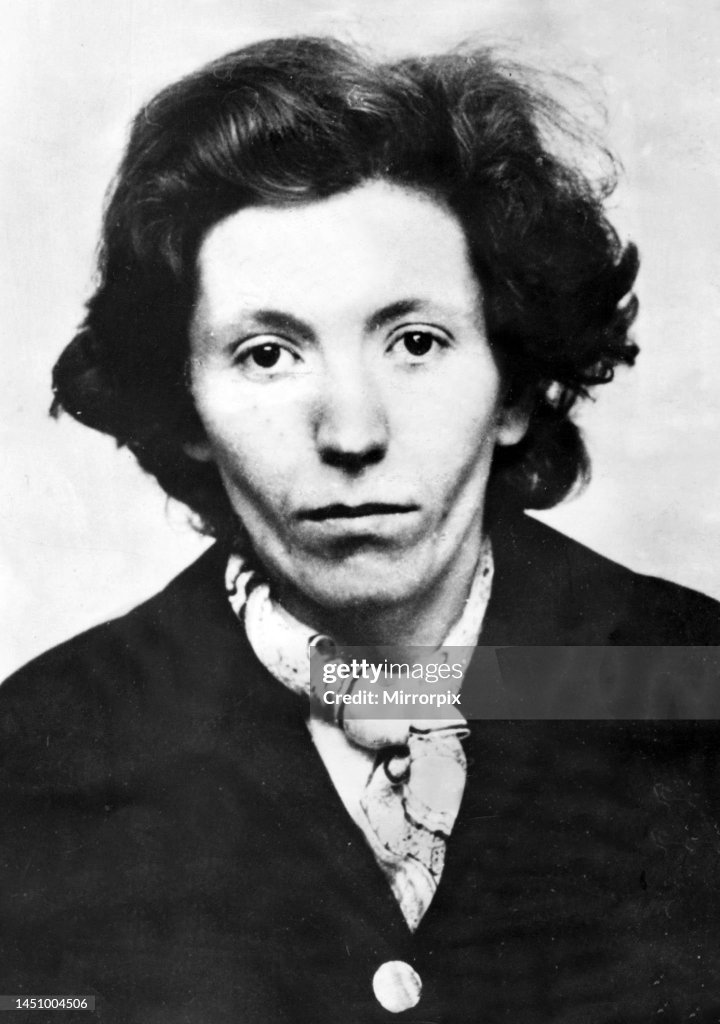
The nude body of Hannah Tailford, a 30-year-old prostitute, was found in the River Thames near the Hammersmith Bridge in London, ten days after she had last been seen at her home. Tailford was the first of six victims of a serial killer whose modus operandi would lead to the designation “Jack the Stripper”. Despite “intense media interest and one of the biggest manhunts in Scotland Yard’s history” the case is unsolved. Forensic evidence gathered at the time is believed to have been destroyed or lost. While the case was never solved, one suspect committed suicide, and remains the most likely suspect. The killings ended with his death.
The U.S. Coast Guard seized four Cuban fishing boats in U.S. territorial waters near the Dry Tortugas and jailed the fishermen at Key West. In retaliation, Cuba would cut off the water supply to the U.S. Navy base at Guantanamo Bay.
Escorted by Secret Service agents, Mrs. Marina Oswald arrived in Washington tonight from Dallas to testify before the commission, headed by Chief Justice Earl Warren, investigating the assassination of President Kennedy. Mrs. Oswald, the widow of Lee H. Oswald, the accused slayer of President Kennedy, is to appear tomorrow before the commission as a voluntary witness.
Will a jury of white men, most of them native Mississippians, vote to convict a white supremacist of killing a Black integration leader? That question is expected to be answered this week in the Hinds County Circuit Court, where the murder trial of Byron De La Beckwith resumes tomorrow. Beckwith, a 43‐year‐old salesman and White Citizens Council member, is accused of hiding in a clump of sweetgum trees and shooting Medgar W. Evers in the back with a high-powered rifle, Mr. Evers state field secretary for the National Association for the Advancement of Colored People, had just stepped from his automobile in the driveway of his home.
The supreme penalty for murder in Mississippi is death in the gas chamber, but such a verdict in this case is considered out of the question unless the state presents a flawless case. Life imprisonment or a reduction of the charge are considered more likely, if there is a guilty verdict at all. Speculation around town is that there will be an acquittal or a hung jury. No trial with racial overtones has drawn so much attention in the state since two men were acquitted in Sumner in 1955 of slaying a 14‐year‐old Black, Emmett Till, for whistling at a white woman.
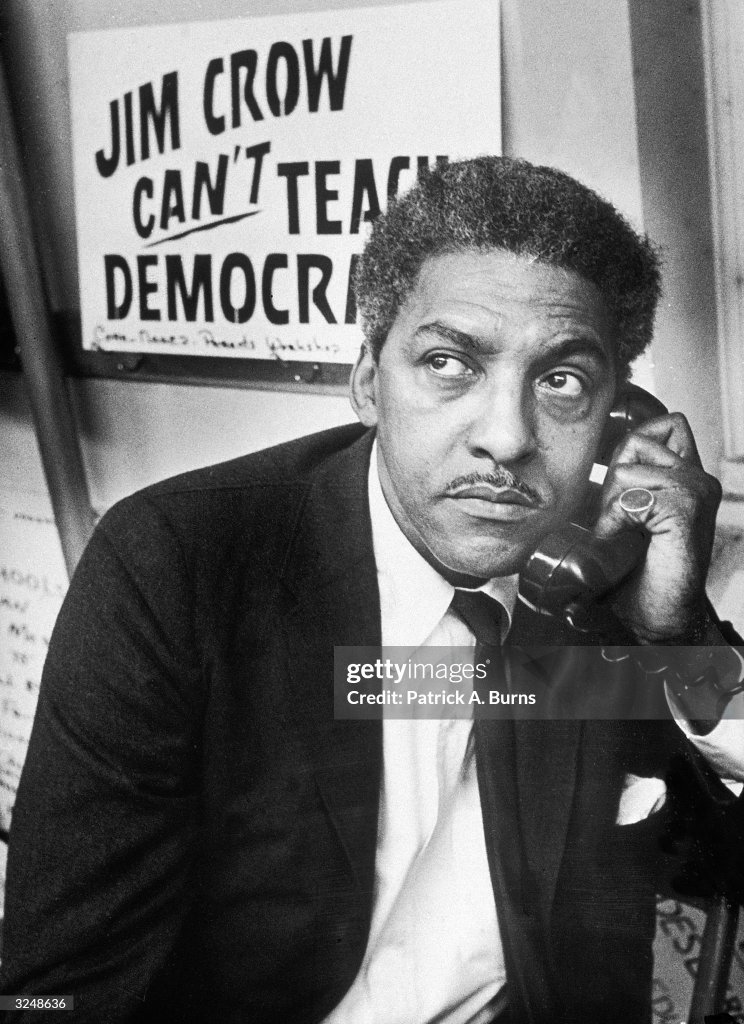
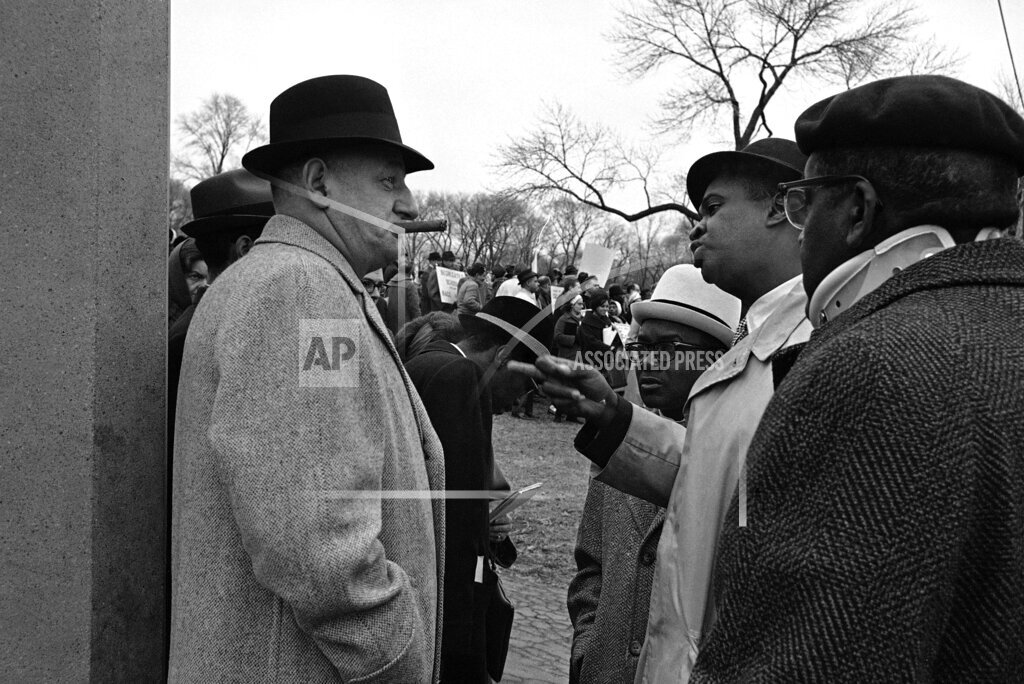
The first citywide New York school boycott is scheduled to begin at 6:30 tomorrow morning, when civil rights pickets will begin marching around hundreds of public schools. The boycott was called by a number of civil rights groups to point up their dissatisfaction with the school system’s integration efforts. Their announced objectives are the achievement of better racial balance in all schools, including those in Harlem and Bedford-Stuyvesant, and the improvement of education for all pupils. The Rev. Milton A. Galamison, a leader of the boycott, warned that the one‐day demonstration would be followed by other protests, including possibly a protracted boycott, if school authorities failed to come up with a “meaningful” integration program.
James B. Donovan, the president of the Board of Education, described the scheduled boycott as a “lawless course of action” and said he would not “react one inch” to the pressure. He made the statement during an exchange on television with James Farmer, national director of the Congress of Racial Equality, which is taking part in the protest.
Mr. Donovan said he would do everything in his power to hold Mr. Galamison “personally and criminally responsible” if any child, Negro or white, were injured during the boycott. He charged that the Negro leader, by repeatedly referring to the possibility of violence, had conducted a “campaign of intimidation” to keep pupils at home. The Police Department, meanwhile, took precautions to avert violence. On Saturday the department received assurances from school and boycott leaders that they would do everything possible to make sure that the demonstrations were orderly.
Richard M. Nixon returned today to Winston-Salem, North Carolina, the scene of local triumphs in 1960. Friend and foe alike wondered if his 1964 candidacy could be far away. The former Vice President’s phrase for this trip was “strictly nonpolitical.” At least two, if not all three of his appearances tomorrow, will amount to political exposure, however, whether they are so calculated or not. He landed at Greensboro Airport, where he suffered a knee injury in the 1960 campaign. The injury put him out of action for a time. Mr. Nixon carried Guilford County, which contains Greensboro, and Forsyth, which contains Winston‐Salem. He lost the state by 58,000 votes. North Carolina has 26 votes in the Republican convention and 13 Presidential electors.
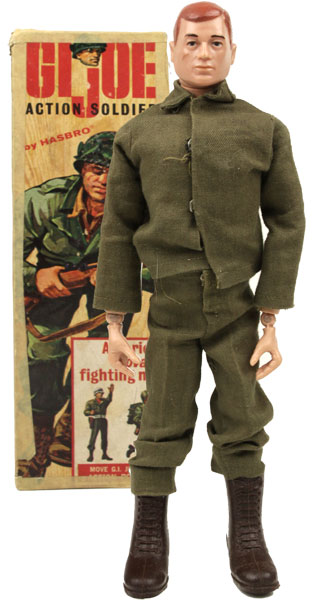
“G.I.Joe,” debuts as a popular American boy’s toy. The first “G.I.Joe” was released to the toy market. Toy company Hasbro released the 12-inch soldier to the public. Avoiding the word “Doll” to keep the stigma away that boys played with dolls. Action Soldier (Army), Action Sailor (Navy), Action Pilot (Air Force), Action Marine (Marines) and later on, the Action Nurse.
The Ranger 6 American lunar probe began its 900-mile descent to the Moon at 4:09 in the morning, Eastern time, but when the command came NASA ground control for its six television cameras to turn on, nothing happened. During its 14-minute drop to the lunar surface, the probe was supposed to take 3,000 pictures and relay them back to Earth before impact. It crashed in the Mare Tranquillitatis at 09:24:33 between the Pliny and Dionysius craters.
Fred Hastings, a 29-year-old skydiver from Louisville, Kentucky, survived a 5,500 foot plunge to Earth despite the failure of his parachute. The lines of his main parachute became tangled with the canopy, and the emergency chute on his chest got tangled with the main chute. The reserve chute, however, caught enough air to slow his speed to 50 miles an hour, moments before he crashed into rain-soaked ground adjacent to the Freeman Municipal Airport in Seymour, Indiana.
Five Dallas children died tonight in flames that broke out in the kitchen of their frame home as they played about a gas stove. Two other children were hurt. The dead, members of two families, were trapped before help could reach them. Neighbors saw one of the mothers, Mrs. Ruby Gilbert, dash out the front door screaming: “Save my children! Save my children!”
The Hall of Fame Special Veterans Committee tabs Red Faber, Burleigh Grimes, Tim Keefe, Heinie Manush, John Montgomery Ward, and Miller Huggins for induction, the biggest veterans class ever. Keefe and Ward were teammates and brothers-in-law, with Ward married to the famous actress Helen Dauvrey and Keefe married to her sister Clara Gibson.
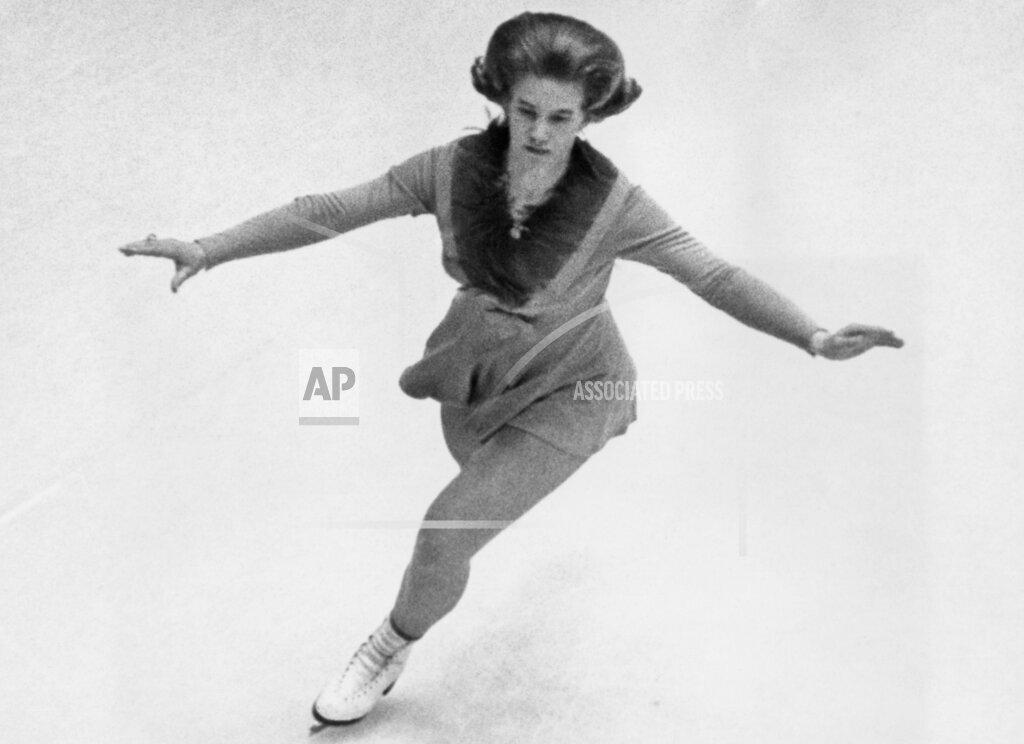
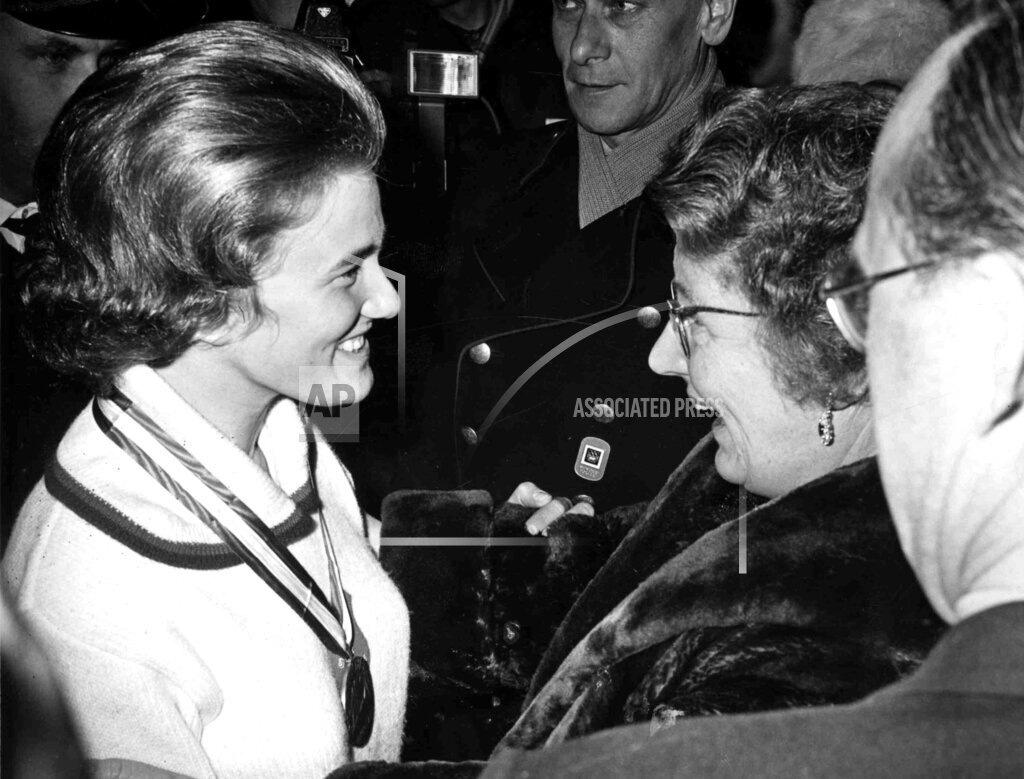
Sjoukje Dijkstra (Netherlands) wins Olympic gold for women’s figure skating.
Born:
Laura Poitras, American documentary film maker (“Citizenfour” – Academy Award, Best Documentary), in Boston, Massachusetts
Maria Gazia Chiuri, Italian fashion designer (Christian Dior), in Rome, Italy.
Dan Morgan, NFL guard (New York Giants), in Wheeling, West Virginia.
Brendan Toibin, NFL kicker (Washington Redskins), in Columbia, South Carolina.
Ramesh Kumar Nibhoria, Punjabi engineer and inventor, in Firozpur, India.

 History Diaries