
President Nixon has given his personal assurance to President Lon Nol of Cambodia that the United States will continue to provide “maximum possible assistance” to his government in the fight against Cambodian insurgents. Mr. Nixon gave his assurance to Lon Nol in a letter dated January 28 and made public in Washington yesterday.
State Department officials said that about half of the Cambodian insurgents were now around Phnom Penh in a force of between 15,000 and 20,000 men. This concentration has thinned out insurgent forces in other parts of Cambodia, the officials said, and has led to some victories by Government forces in those areas. The latest intelligence estimate in Washington is that barring an internal collapse of Lon Nol’s administration, the Government forces should be able to withstand the insurgent encirclement and the frequent shelling and rocketing of the capital. The officials said that Government forces had been able to keep the Mekong River open for traffic to Phnom Penh and that the city was receiving regular supplies of oil, food and other commodities. Moreover, with the end of American combat assistance last August, the Cambodian forces were reported to have shown some improvement, although the United States still does not believe the army is performing as well as it should.
Anti-government troops resumed their deadly shelling of the densely populated city of Phnom Penh and its environs, killing 15 civilians and wounding 71. After a four-day lull, the Communist-led insurgents struck before dawn, firing about 100 high-explosive shells into the capital’s southern and western edges and outskirts. The casualties in this morning’s bombardment would almost certainly have been higher if not for the fact that the neighborhoods where the shells rained down had been hit earlier and had been largely evacuated by the terror‐stricken residents.
In the neighborhood known as Boeing Chi Poun, near the private villa of President Lon Nol that had been hit by artillery fire several times before, most of the residents who were still living there — perhaps only 30 percent of the original population — began moving out to pagodas, schools and relatives’ houses in the northern part of the city, as the other 70 per cent of the neighborhood had done before them. But a handful, mostly old people, have decided to remain. “I am frightened,” said Sar Vorn, who is 60 and has saddened eyes. “But I am old and am not going to leave my home.” His wife, Ing Eun, nodded her agreement. “I am not running anywhere anymore,” she said. “I leave it all to destiny now.”
Three gunmen seized a Greek freighter in the port of Karachi, Pakistan, and said they would blow up the ship and kill their two hostages unless the Greek government freed two Arab terrorists sentenced to death in Athens. Authorities said the three gunmen, who were reported to have pistols and hand grenades, had identified themselves as members of a group called “Muslim International Guerrillas.”
The term in a mental hospital of a Soviet dissident, former Major General Pyotr Grigorenko, has been extended for six months — after two Western psychiatrists were told last year he would be released last November, Grigorenko’s friends reported. Medical commissions pronounced him sane twice last year, but a court ordered continued detention, they added. The army general, 66, was confined in 1970 after leading a campaign to low exiled Crimean Tartars to return to their homeland. An appeals court, however, has allowed him to be transferred to a mental hospital near Moscow where conditions are said to be better than in his previous confinement in a criminal asylum.
Jewish ballet dancer Valery Panov, 35, said in Leningrad that Russian officials have told him his wife will never be allowed to leave the Soviet Union, and that his own exit visa will be revoked for refusing to emigrate without her. His wife Galina, 25, also is a ballet dancer. They have been seeking exit visas to emigrate to Israel for two years.
Terrorists bombed one of Belfast’s main rail terminals, the Great Victoria St. Station, and police said the terminal was “burning fiercely.” The 14-story Europa Hotel was damaged in the explosion. Authorities believe the bombers were Irish Republican Army guerrillas. Two ambulance attendants and a fireman were injured in the blast. Earlier, terrorists bombed a post office in Newry, North Ireland, and British troops fired volleys of rubber bullets at rioters in Belfast. No casualties were reported in either incident.
More than 2,000 passengers were robbed of cash and jewelry worth $125,000 in a raid by river pirates in northern Bangladesh, police reported in Dacca. A 200-man pirate gang, armed with sophisticated weapons and traveling by fishing craft, surrounded 11 ferries in the River Padma near Madaripur. Some passengers jumped into the river when the pirates opened fire to stop the ferries.
In Peking, the People’s Daily called on the Chinese nation to throw its energies wholeheartedly into the current ideological campaign symbolized by the slogan, “Criticize Lin Piao, criticize Confucius.” An editorial assessed the matter as of first importance for the Communist Party, army and nation. The campaign has reached a new intensity with the merging of two separate movements vilifying the late Defense Minister Lin Piao and the ancient Chinese sage Confucius. Both are accused of trying to restore old regimes in their particular eras.
A 48-hour wildcat strike by 4,800 tin miners increased tensions in Bolivia as the miners declared solidarity with peasants who have been protesting food prices. Meanwhile, the army announced that 13 persons were killed, 10 wounded and 21 alleged “extremists” captured by troops crushing a farm workers’ revolt around the city of Cochabamba last week.
A kidnaped Argentine executive of the Pepsi-Cola Co. was freed after being held by guerrillas for almost a month. Police in Buenos Aires said Douglas Gordon Roberts, 46, was released after the company apparently paid an undisclosed ransom. He was kidnaped January 4.
After the 1972 declaration of martial law by Philippine President Ferdinand Marcos and the seizure of the private ABS-CBN Corporation network, the Government Television (GTV-4) channel was launched in Manila on VHF channel 4. It would become Maharlika Broadcasting System in 1980, and, after the fall of the Marcos dictatorship, be rebranded as People’s Television Network (PTV).
Pope Paul VI encyclical “To Honor Mary.”
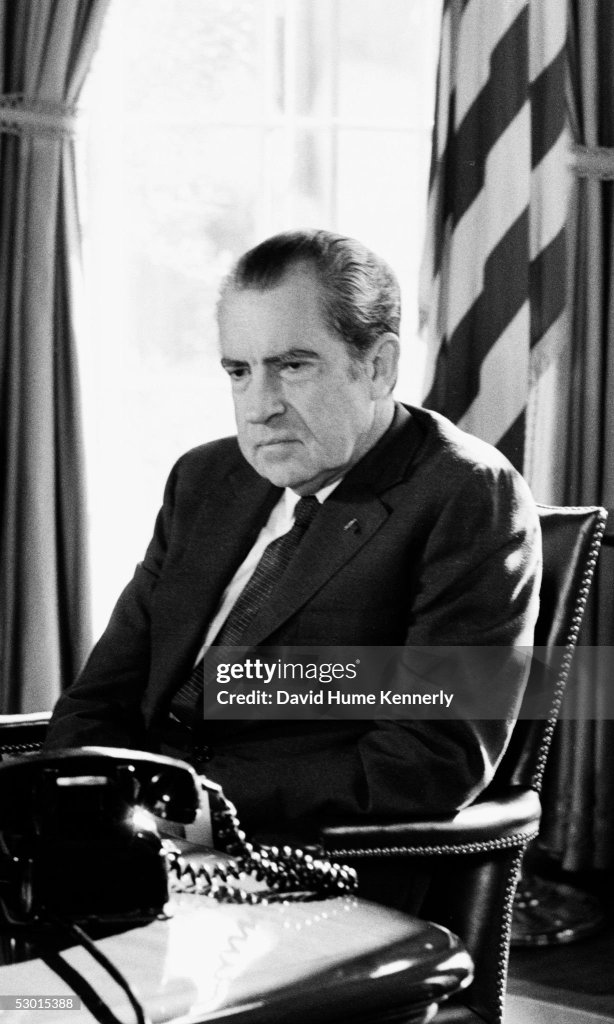
One of the experts who testified that manual erasures had caused the gap in a presidential Watergate tape denied that the examining panel had been directed to place blame. Thomas G. Stockham Jr., professor of electrical engineering at the University of Utah, said the six-man panel had been “explicitly asked to investigate the authenticity and integrity of the tapes” and not to “prove anything.” Earlier, the attorney for President Nixon’s long-time secretary, Rose Mary Woods, had charged that the experts “were given the job to prove it was her and they went out to do it…”
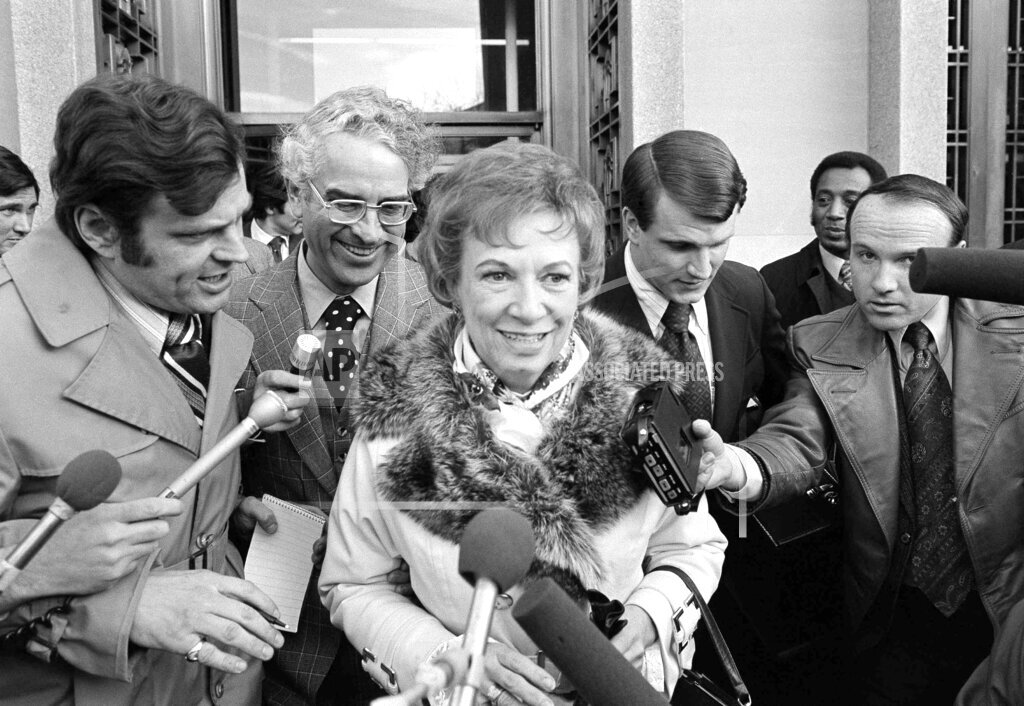
A White House move to name the first black woman to a federal court of appeals received a setback from the American Bar Association’s powerful committee on the federal judiciary. The panel rated Jewell LaFontant unqualified to serve on the Seventh U.S. Circuit Court of Appeals. Although the ABA has no veto power over appointments, its stands on potential candidates have traditionally prevailed. Mrs. LaFontant, 51, is a deputy solicitor general in the Justice Department. She is a friend of President Nixon and has been highly praised by him.
Military spying inside the White House began in the fall of 1970, a few months after Adm. Thomas Moorer became chairman of the Joint Chiefs of Staff and more than a year earlier than previously reported, closely involved sources said. The spying involved as many as five high-ranking officers who regularly received and delivered over the next 15 months classified documents pilfered by a Navy yeoman, these sources said.
The soaring profits that oil companies have been reporting in the last two weeks have lifted their industry into the highest circle of profitability, largely on the wings of one of the most spectacular fourth quarters that any industry has ever reported. The oil industry has complained for years that its profits were short compared with others and that this limited their growth and their ability to meet energy needs. There was no profit shortage in 1973.
The major oil companies stand to reap a lot more than record profits from the energy crisis. Fuel shortages have weakened retail competition by independent gasoline stations; they have increased pressure to deregulate the price of natural gas, which would mean higher prices; they have at last made the development of alternative fuels, in which oil companies have invested, potentially profitable, and they have slowed, and in some cases rolled back, the increasingly costly environmental protection movement. Meanwhile, tax concessions to the oil industry, worth billions of dollars a year in tax savings, have so far remained intact.
A gasoline gap — with January allocations exhausted and February deliveries blocked or delayed by a truckers’ strike — left motorists across the New York metropolitan area with little or no fuel. A federal official said yesterday was the worst day of the energy crisis thus far for drivers. Panic buying compounded the problem as motorists went from station to station in search of an open pump. In some sections, more than half the stations were closed, their January allocations having been depleted a day or two ago. Lines of cars at open stations were six blocks long in New York City, and a mile or more in the suburbs.
The Justice Department proposed new legislation that would restrict the dissemination of arrest records and other information held in law enforcement data banks in the first administration action to implement President Nixon’s recently announced “major initiative” toward protecting privacy rights of individuals. The proposal would permit individuals to review their records and to correct inaccurate information, and it would allow them to bring lawsuits against anyone who improperly disclosed their records.
The Skylab 4 astronauts, nearing the end of man’s longest space flight, found and corrected today a minor problem in the Apollo spaceship that is to return them to earth next Friday. The astronauts — Lieutenant Colonel Gerald P. Carr of the Marines, Dr. Edward G. Gibson and Lieutenant Colonel William R. Pogue of the Air Force — were in the 79th clay of their 84‐day endurance flight when they discovered the problem while checking the Apollo’s electrical and fuel systems. The main electrical system for the ferry ship, attached to the Skylab craft, had an apparent short circuit in one connection. Tomorrow Colonel Carr and Dr. Gibson will go outside the spacecraft for four and a half hours to retrieve film from telescope cameras.
The YF-16 Fighting Falcon officially flies for the first time. The prototype had previously made a brief unintentional flight. Employing “fly-by-wire” technology, the prototype General Dynamics YF-16 completed its first flight over Edwards Air Force Base, California. The aircraft went on to win a fly-off competition against the Northrop YF-17 for a lightweight multi-role fighter contract. The F-16 would also fly for allied nations around the world.
A winter storm dumped up to 12 inches of snow on Massachusetts and several inches on Connecticut and Rhode Island. Snow, sleet and freezing rain made driving hazardous from New York City to northern Ohio. Snow fell also on the upper Great Lakes region, the upper Mississippi Valley and the northern Plains.
Playmobil toys debut at the Nuremberg Toy Fair, designed by Hans Beck and produced by the Brandstätter Group.
Barbra Streisand gets her first Billboard #1 hit, “The Way We Were.”
The 10-day-long 1974 British Commonwealth Games concluded in Christchurch, New Zealand.
Smallest crowd at Cleveland Arena (Cavaliers vs Golden State-1,641).
Born:
Osgood “Oz” Perkins, American actor, screenwriter and director, son of actors Anthony Perkins and Berry Berenson; in New York, New York.
Woo Mi-hwa, award-winning South Korean stage, television and film actress; in Jecheon, North Chungcheong Province, Republic of Korea.
Qin Kanying, Chinese chess grandmaster, five-time Chinese national champion; in Shanghai, People’s Republic of China.
J. R. Conrad, NFL guard (New York Jets), in Fairland, Oklahoma.
Fariha Pervez, Pakistani pop music singer; in Lahore, Pakistan.
Died:
Jean Absil, 80, Belgian composer.
Marieluise Fleisser, 72, German writer and playwright.
Stephen Hymer, 39, Canadian economist, was killed in a car accident in Shandaken, New York.
Imre Lakatos, 51, Hungarian philosopher of mathematics and science, died of a heart attack.
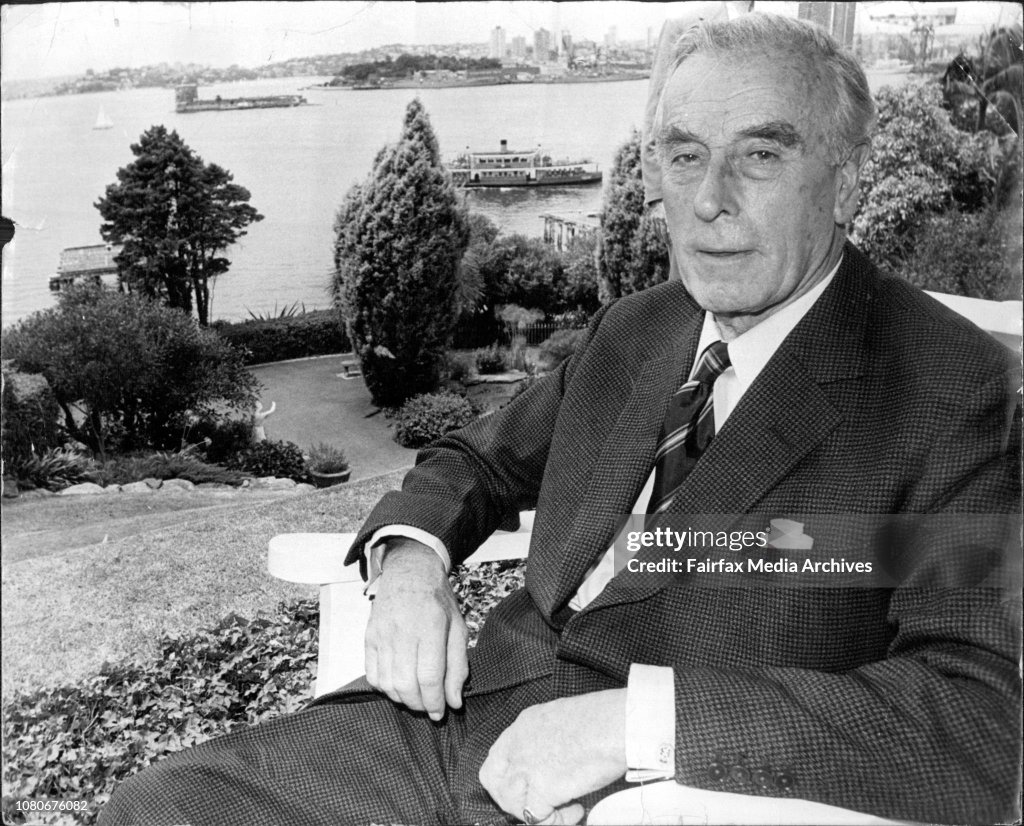
Sir Frank Messervy, KCSI, KBE, CB, DSO & Bar, 80, British Indian Army general who was the first commander-in-chief of the Pakistan Army after the Dominion of Pakistan’s independence in 1947.
Mauro Pelliccioli, 87, Italian art restorer who worked on the conservation-restoration of Leonardo da Vinci’s The Last Supper.
Lydia Sokolova (stage name for Hilda Tansley Munnings), 77, English ballerina.


 History Diaries