Kerch Falls
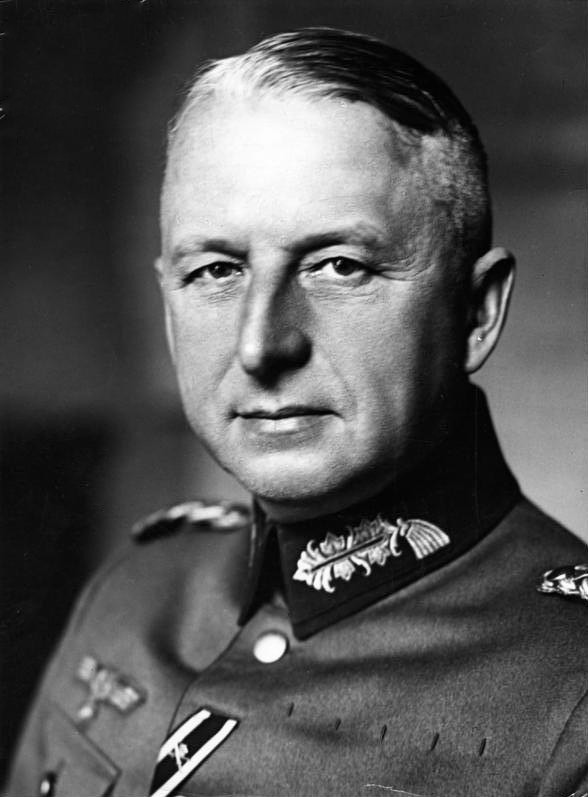
General Erich von Manstein’s 11th Army completes its conquest of the bulk of the Crimea on 16 November 1941 by capturing Kerch. The Soviets have held out hope that they could retain the Kerch peninsula in the far east of the Crimea as a springboard to relieve the trapped forces at Sevastopol in the extreme west of the Crimea. However, their forces retreat in disarray across the Kerch Strait to the Caucasus. Soviet Deputy Navy Commissar Admiral Gordey Levchenko is blamed for the loss and arrested. He will be sentenced to 10-years imprisonment in a labor camp for the loss on 26 January 1942. However, other admirals will step forward in Levchenko’s defense, and his punishment will be changed to a temporary reduction in rank to captain 1st class and eventual (in 1944) reinstatement of rank.
Manstein’s occupation of the eastern end of the Crimea creates the appearance of a solid front that runs almost due north from Kerch through Kharkiv and Moscow up to Tikhvin, where it veers east to Leningrad. This is somewhat misleading, as the Wehrmacht usually advances only along main roads and never sets sight on vast stretches of territory. The Red Army is counterattacking along most of that line, but with little success at the moment. The German resumption of Operation TYPHOON shifts into high gear today. East of Volokolamsk, a powerful Soviet counterattack by five cavalry divisions and a tank division of 16th Army runs into the German advance by Fourth Panzer Army and disintegrates. The counterattack is not without effect, however, as the fierce fighting (one Soviet tank brigade is reduced to two “runners”) further weakens panzer units that are fighting both the Soviets and the weather.
General Hoepner, commander of Panzer Army 4, successfully opens a wedge between Soviet 5th and 30th Armies and reaches the Volokolamsk-Moscow highway at Dubosekovo. This is a dangerous development and is exactly what General Guderian is attempting to do south of Moscow at Tula— without success. The Soviets later attempt to create a legend about this battle, “The Testimony of the 28 Fallen Heroes,” in which 27 men (after shooting one coward) destroy 50 panzers before all are killed valiantly in combat. This appears to be pure propaganda. In fact, a couple of the men survive and become POWs and another dies later in a Soviet hospital, though the NKVD does indeed later arrest one of the survivors— as a deserter. The regimental commander himself isn’t even at the battle and learns about his deeds of bravery from journalists.
Elements of the Soviet 49th and 50th Armies stopped an attack by the German 43rd Corp directed at the Moscow-Tula highway.
Many of the German generals don’t agree with the strategy to continue pushing east as the weather worsens, and this manifests itself in ways that will recur throughout the remainder of World War II. General Adolf Strauß, commander of the 9th Army northwest of Moscow, is one of them. Complying with the orders issued at the Orsha Conference on 13 November, Strauß commits three divisions to an attack between the Ivankovo Reservoir (aka Moscow Sea) and the Volga Reservoir without any plans to reinforce them. Strauß, like other commanders, sees no point to further minor advances that will just leave his lightly clad men exposed to both the elements and certain Soviet counterattacks.
Near 9th Army northwest of Moscow, Panzer Army 3 under General Georg-Hans Reinhardt secures a crossing over the Lama River on the way to Klin. This is accomplished due to heroic exploits by a motorized infantry regiment of the 7th Panzer Division. This is led by Hasso von Manteuffel, who will receive the Ritterkreuz (Knight’s Cross) for the feat. Manteuffel personally enters a Soviet power plant that supplies power to areas yet to be conquered and turns it off. Manteuffel’s victory is extremely dangerous for the Soviets, opening a clear path to the city itself which Manteuffel and the rest of the 7th Panzer Division are capable of exploiting unless the Red Army quickly shifts in reinforcements.
Overall, the German progress on 16 November is satisfactory in terms of the hopes placed in it by the high command. New opportunities are created, particularly at Klin, and the Wehrmacht retains an outside chance of advancing into Moscow itself by the end of the month. The frozen ground restores the German mobility and to some extent makes it easier to transport supplies. However, the Soviets, for the most part, continue to hold the places they need to, such as Tula, and German hopes of a general breakdown in Soviet morale are not coming true.
Propaganda Minister Joseph Goebbels publishes in the German magazine Das Reich that “The Jews wanted the war, and now they have it”- referring to the Nazi propaganda scheme to shift the blame for the world war onto European Jewry, thereby giving the Nazis a rationalization for the so-called Final Solution.
On this Sunday, a Catholic Mass was secretly held in a dark aisle between bunks on the second floor of Block 4 at Auschwitz Concentration Camp.
British Lieutenant Colonel Geoffrey Keyes’ team, tasked with capturing or assassinating Erwin Rommel in Libya, hid during daylight and moved into positions after sundown.
British corvette HMS Marigold damaged German submarine U-433 with depth charges 50 miles east of Gibraltar at 2255 hours. After U-433 surfaced, Marigold continued to attack her with guns. U-433’s crew scuttled the boat after suffering 6 killed; the 38 survivors were captured.
Allied convoy PQ.3 departed Hvalfjörður, Iceland in stormy weather.
Iraq breaks diplomatic relations with Vichy France.
Corvette HMS Marigold (K 87) sank the U-433, commanded by Oberleutnant zur See Hans Ey, south of Malaga in 36-13N, 04-42W. Six officers and thirty two ratings the submarine were rescued. Six ratings were lost in the submarine. The convoy proceeded towards Malta, but after nightfall on the 18th, the steamers returned to Gibraltar. During its career the U-433 damaged 1 ship for a total of 2,215 tons.
Destroyer HMS Antelope departed Hvalfjord at 1100 for Scapa Flow, where she arrived at 0730/18th.
Minesweepers HMS Hazard and HMS Hebe departed Greenock at 0300 for Scapa Flow, where they arrived at 0900/17th.
Destroyer HMS Chelsea was damaged in a collision with an unknown merchant ship while escorting convoy ON.36. The destroyer lost six feet of her stern, but was able to reach Liverpool under her own power. The damage was repaired at Liverpool and completed on 14 December.
Minesweepers HMS Gossamer, HMS Hussar, and HMS Speedy arrived at Murmansk from Archangel.
British fishing trawler Fernbank (211grt) was sunk by German bombing twelve miles northwest of Myggenaes. Five crewmen were lost on the trawler.
Examination vessel Minna (290grt) was damaged by German bombing in 56-04-36N, 2-51-12W. The vessel arrived at Leith on the 17th.
Battleship HMS Nelson, escorted by destroyers HMS Zulu, HMS Sikh, and HMS Gurkha departed Gibraltar to return to the United Kingdom. Light cruiser HMS Hermoine, aircraft carrier HMS Argus, and destroyers HMS Laforey, HMS Lightning, HMS Legion, and HNLMS Isaac Sweers sailed with the battleship to feint to the east. A probable German supply ship was reported by a submarine in 44-00N, 2-00W at 0001 on the 17th. Battleship HMS Nelson and light cruiser Hermoine proceeded to intercept, but no contact was made. The groups parted company at 1845/17th and arrived back at Gibraltar, less light cruiser Hermoine, on the 19th. Light cruiser Hermoine arrived back on the 21st.
A Convoy of steamers Blairatholl (3319grt), BARON Newlands (3386grt), Shuna (1575grt), Cisneros (1886grt), and Ottinge (2870grt), and oiler RFA Brown Ranger departed Gibraltar escorted by destroyer HMS Wild Swan, sloop HMS Deptford, and corvettes HMS Convolvulus, HMS Rhododendron, and HMS Marigold. The convoy, Operation CHIEFTAIN, was a diversion for Operation CRUSADER in the eastern Mediterranean. A U-boat contact was made by destroyer Wild Swan on the 16th. The destroyer was joined by corvette HMS Samphire.
Destroyers HMS Kipling, HMS Jackal, and HMS Decoy departed Alexandria on the 3rd serial of the APPROACH operation. The destroyers returned to Alexandria on the 17th.
Destroyer HMS Farndale arrived at Suez to join the Mediterranean Fleet and passed through the Suez Canal.
British motor torpedo boats MTB.68 and MTB.215 patrolled off Bardia to intercept a reported submarine.
Dutch submarine HNLMS O.21 unsuccessfully attacked Italian steamer ITU (1578grt) in convoy in the Tyrrhenian Sea.
An Italian convoy of steamers Citta Di Genova (5413grt) and Citti Di Napoli (5418grt), escorted by destroyers Pigafetta and Da Verazzano, which had departed Taranto on the 14th, arrived at Benghazi.
Convoy SC.55 departed Sydney, CB, escorted by corvettes HMCS Battleford, HMCS Drumheller, and HMCS Summerside and minesweeper HMCS Nipigon. Corvettes HMCS Dunvegan, HMCS Kenogami, HMCS Lethbridge, and HMCS Prescott on the 18th. The original corvettes were detached on the 19th when the convoy was joined by destroyer HMCS St. Francis and corvettes HMCS Mayflower, HMCS Nanaimo, and HMCS Sorel. Destroyer HMCS St. Francis was detached on the 25th, corvettes HMCS Dunvegan, HMCS Prescott, and HMCS Sorel on the 28th, and corvettes HMCS Kenogami and HMCS Lethbridge on the 29th. On the 28th, destroyer HMS Amazon joined the convoy, on the 29th, destroyer HMS Foxhound, and on the 30th, corvettes HMS Heartsease and HMS Roselys, and anti-submarine trawlers HMS Ayrshire and HMS Notts County. Corvettes HMCS Mayflower and HMCS Nanaimo were detached on 1 December, destroyer Amazon on 3 December, and corvette Heartsease, trawlers Ayrshire and Notts County were detached on 4 December. Anti-submarine trawler HMS St. Cathan joined on 4 December and arrived with the convoy at Liverpool on 5 December.
The unqualified support of 5,000,000 C.I.O. members in the country’s basic industries was pledged today to John L. Lewis and the United Mine Workers in their strike for a union shop in the captive coal mines. The pledge was given by unanimous vote of the C. I. O. national executive board after Philip Murray, C. I. O. president and first vice president of the miners’ union, had set forth his belief that the union was wholly justified in its demand and that the responsibility for the deadlock rested with the steel companies which control the mines. Among those who voted for the resolution backing Mr. Lewis were officials of Sidney Hillman’s Amalgamated Clothing Workers. Mr. Hillman, who took a leave of absence from his post as president of the union when he became associate director of the OPM, is not a delegate to the C.I.O. convention, which is to open tomorrow, but the enmity between Mr. Lewis and Mr. Hillman is expected to flare into the open at the convention sessions.
Union and management conferees on the captive coal mine dispute broke off negotiations today, still deadlocked on the union shop issue, and John L. Lewis, standing firmly on his order for a work stoppage by 53,000 miners, checked the next action up to President Roosevelt and maybe congress. With this development, it was apparent government-labor relations in the light of the defense program had reached a crisis, for Mr. Roosevelt had declared only Friday production from the coal mines owned by steel companies busy with armament orders must continue without delay. Highly volatile elements in an explosive situation were the threat of an industry-wide strike in the soft coal fields and the possibility of an open break between the government and the C.I.O.
Pickets belonging to the C.I.O. United Mine Workers turned back employees of a Youngstown Sheet and Tube Company captive coal mine late today. It was the first indication that the strike ordered by John L. Lewis was being carried out.
Speaking before 3,000 persons last night at the Nazi “mass murder” protest meeting held at the Metropolitan Opera House in New York under the auspices of the Committee to Defend America and the Free World Association, Paul V. McNutt, Federal Security Administrator, declared that “a desperate Nazism finds that it is faced with a growing unrest throughout the occupied lands and a stronger and firmer line of resistance in the free nations of the world.”
Harold L. Ickes, Secretary of the Interior, declared tonight that those dissidents “who consciously or unconsciously are playing the traitor’s part” must stand aside while the nation marches toward the goal approved by an overwhelming majority — the defeat of Hitler.
Flood waters moved out of the upper Willamette River valley of Oregon today and churned northward toward Albany, Corvallis, Salem and Portland. Major highways still were under a foot of water, but traffic, after being halted overnight, was resumed. Scores of buildings were flooded by an unprecedented 3.7 inches of rainfall in 24 hours that sent the Willamette river roaring up from a zero reading to a depth of 13 feet, three feet over flood stage.
TU 4.1.5 (Commander William K. Phillips) clears Argentia, Newfoundland, to assumes escort duty for convoy HX.160; between 17 and 28 November, heavy seas will cause varying degrees of damage to destroyers USS Mayo (DD-422), USS Nicholson (DD-424), USS Babbitt (DD-128), USS Leary (DD-158) and USS Schenck (DD-159). The convoy will not be attacked by U-boats (see 19, 20 and 27 November).
Saburō Kurusu, Japan’s special envoy to the United States, spent today in a series of informal conversations with officials at the Japanese Embassy in preparation for his first meeting with Secretary of State Cordell Hull tomorrow morning. In these conversations, Admiral Kichisaburō Nomura, the Japanese Ambassador, reviewed in detail the conversations he has already had with Mr. Hull and Under-Secretary of State Sumner Welles looking toward a general settlement in the Pacific. During the day, Mr. Kurusu discussed United States-Japanese relations with most of the embassy officials and in the evening he talked again with the Ambassador, Kaname Wakasugi, the Minister, and Sadao Iguchi, counselor of the embassy. The special envoy did not see any member of the United States Government during the day and no announcement was made about his conversations at the embassy. Officials there explained that he needed a rest after his flight across the Pacific.
Chinese forces in Kwangsi and Yunnan Provinces, bordering on French Indo-China, were reported tonight to be blowing up bridges and destroying roads for a depth of many miles from the frontier to hamper any Japanese offensive from the French colony.
Rear Admiral Jean Decoux, Governor General of French Indo-China, said in a broadcast heard here today that “any one in Indo-China who won’t cooperate fully in the new order must not expect from me weakness, indulgence or mercy.”
Two units of the Japanese Navy’s Advance Group, Pearl Harbor Strike Force, depart Yokosuka today. The 2nd Submarine Unit consists of seven submarines two of which are carrying “Glen” seaplanes (Kugisho E14Y1, Navy Type 0 Small Reconnaissance Seaplanes). All seven arrive on station off Hawaii on 6 December; one, with a “Glen”, is stationed about 26 nautical miles (48 kilometers) north of Oahu; three are stationed between Kauai and Oahu, and three, one with a “Glen”, are stationed between Oahu and Molokai. One submarine of the Support Group, HIJMS I-10, also departs. On 7 December, HIJMS I-10 is underway between the Fiji and Samoa Islands.
Obsolete Japanese battleship HIJMS Settsu began to sail around the Inland Sea in Japan to generate fake radio communication messages at different ports.
Crown Prince Yi Un was attached to the training department of the Japanese Army.
The Japanese carrier fleet exercised in the Kurile Islands.
Minelayer HMS Teviotbank arrived at Singapore.
Canadian troops of “C” Force arrived in Hong Kong.
The USAAF’s USAFFE is redesignated the Far East Air Force (FEAF).
Born:
Ann McLaughlin Korologos (née Lauenstein), American business executive (19th United States Secretary of Labor, 1987-89), in Chatham, New Jersey (d. 2023).
Dan Penn [Pennington], American songwriter (“I’m Your Puppet”; “Cry Like a Baby”; “Do Right Woman, Do Right Man”), producer (The Boxtops), and singer, in Vernon, Alabama.
Gerry Marshall, British auto racer (625 x overall and class saloon wins), in London, England, United Kingdom (d. 2005).
Died:
Miina Härma (née Hermann), 77, Estonian composer.
Naval Construction:
The Royal Navy “T”-class destroyer HMS Tumult (R 11) is laid down by the John Brown Shipbuilding & Engineering Company Ltd. (Clydebank, Scotland).
The Kriegsmarine (German Navy) Type VIIC U-boats U-603 and U-604 are launched by Blohm & Voss, Hamburg (werk 579 and 580).
The Regia Marina (Royal Italian Navy) Soldati-class (Second Group) destroyer Corsaro is launched by Odero Terni Orlando (O.T.O.), Livorno, Italy.
The Royal Navy Fairmile B-class motor launch HMS ML 309 is commissioned.
The Royal Navy MMS I-class motor minesweeper HMS MMS 75 (J 575) is commissioned. Her first commanding officer is T/S/Lieutenant Peter Brown, RNVR.
The Royal Navy “U”-class (Third Group) submarine HMS P-39 (P 39) is commissioned. Her first commanding officer is Lieutenant Norman Marriott, DSC, RN.

