In the Crimean Campaign, the German 11th Army captured Perekop.
The Soviet GKO issued the Directive to Organize a Strategic Defense, which proved to be disastrous as it led to over 50 divisions of Soviet troops being trapped at Vyazma and Bryansk in Russia shortly after.
HMS London arrived in Archangel, Russia with Lord Beaverbrook and Averell Harriman aboard.
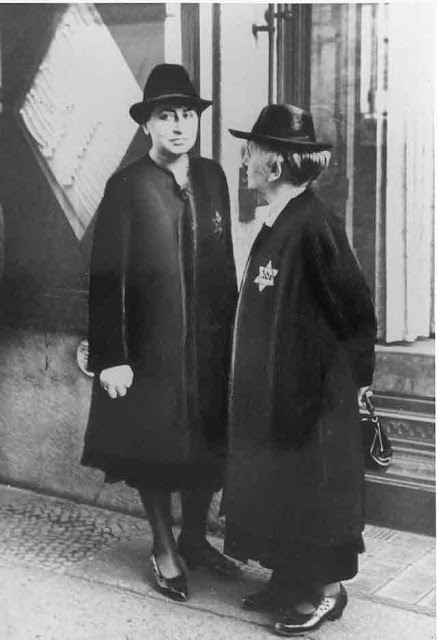
The Jager Report (issued on 1 December 1941) noted that 989 adult male, 1,636 adult female, and 821 children, all Jews, were killed in Eišiškės, Lithuania for a total of 3,446 people. The Jews in Eišiškės were taken to pits dug in the town’s Jewish cemetery and machine-gunned into them.
Having defeated the Red Army from Lithuania, the Germans are still asserting control over all of its towns and villages. On 27 September 1941, the Germans commit a horrifying massacre at Eišiškės, a small town in southeastern Lithuania. While hardly unique in the course of World War II, the Massacre at Eišiškės is representative of similar horrifying incidents across the length and breadth of occupied Europe.
Eišiškės, whose odd name’s origins are lost in the mists of history (it was known as Eshishok or Eyshishok at the time), is a traditionally Jewish town. There are indications of Jewish settlement there dating back almost 1000 years. German troops first arrived on 23 June 1941 but had little impact on the town. On 21 September 1941, however, an Einsatzgruppen, or mobile killing squad, shows up. With it are Lithuanian auxiliaries who participate in the Einsatzgruppen’s activities as they do throughout Lithuania.
The Einsatzgruppen seize a recently constructed schoolhouse that has not even been put into use and establish their command post there. The Germans then use Eišiškės as a collection point for Jews from the surrounding area. When four thousand Jews are collected and imprisoned in three local synagogues, the SS men and their local auxiliaries take them in groups of 250 to the local Jewish cemetery. The Germans and their helpers have dug pits there, which is the usual custom in such situations. The Jews are ordered to undress and stand at the edges of the pits. Once they are in position, the Lithuanian auxiliaries gun them down so they fall into the pits for easy burial.
A total of 3,446 Jews in Eišiškės perish in this fashion on 27 September 1941. After the war, a memorial stone is placed on the approximate spot of the executions. Today, in the 21st Century, there are no Jews in Eišiškės.
23,000 Jews were massacred at Kamenets-Podolsk, Ukraine.
German troops in Yugoslavia launch Operation Užice. This is the first major counter-terrorism operation of modern times. This operation is directed against the “Užice Republic,” a Yugoslav partisan stronghold centered around the town of Užice in western Serbia on the banks of the river Đetinja. The Germans are involved because the Italian occupying troops have been unable to retain control over the region. The Germans are ruthless and determined to recover the lost territory by any means necessary. Serbia was known before the war as being friendly to Great Britain, so this is a natural area for an insurgency to break out. However, the partisans are not capable of defending territory against Wehrmacht troops and quickly give ground.
The partisans have been stirring in Czechoslovakia as well (called the Protectorate of Bohemia and Moravia by the German occupiers). The Germans have appointed Konstantin von Neurath, a former Foreign Minister and Minister without Portfolio, as the region’s Reich Protector (Reichsprotektor), or top administrator. However, von Neurath is not a particularly ardent supporter of Hitler and is considered “soft” by the top members of the Third Reich. Accordingly today Reinhard Heydrich, chief of the SS-Reichssicherheitshauptamt (Reich Main Security Office) or RSHA, is appointed Deputy Reich Protector.
Heydrich is known as a cold, ruthless, and utterly depraved official who does whatever it takes to force people to do as instructed. This is exactly the type of individual that Heinrich Himmler wants in charge of a sensitive territory that is close to the heart of the Reich and the source of many of its munitions and equipment. Once Heydrich arrives on 27 September 1941, there is no question that von Neurath is now only a figurehead and Heydrich, who is “in good” with Himmler and other top friends of Hitler, holds the true reins of power (it is quite traditional for this kind of arrangement to exist within the German military, such as with Hindenburg and Ludendorff during World War I).
Air reconnaissance fails both the Italians and British to find the main opposing fleets. The British are attempting another reinforcement of Malta with Operation Halberd. The Italian’s are attempting to intercept them. An Italian torpedo bomber hit British battleship HMS Nelson in the bow with a torpedo in the Mediterranean Sea between Sardinia, Italy and Tunisia.
British submarine HMS Upright sank Italian submarine chaser Albatros between Sicily and mainland Italy. German submarine U-371 rescued 42 survivors.
British minelaying cruiser HMS Abdiel and destroyers HMS Kandahar, HMS Jaguar, and HMS Griffin departed Alexandria, Egypt after sundown with supplies for Tobruk, Libya. This would be the final Operation Supercharge supply run for the besieged city.
Two residents of Germany were sentenced to death today for listening to foreign broadcasts and 22 more persons in German-controlled territory were reported executed for other offenses.
The Ethniko Apeleftherotiko Metopo — National Liberation Front (EAM) — was created by the Communist Party of Greece (KKE) and other parties and organizations.
British Commandos executed Operation CHOPPER, an overnight raid on Saint-Aubin-d’Arquenay in occupied France.
German submarine U-201 attacked Allied convoy HG.73 600 miles north of the Azores islands, sinking two merchant ships and the anti-aircraft ship HMS Springbank; 32 were killed, 201 survived.
The Italian Council of Ministers today, upon Premier Mussolini’s proposal, took the gravest of all rationing steps by ordering that each individual may have only 200 grams, or about 7 ounces, of bread daily, starting October 1. Other important decrees of a political and financial nature were also sanctioned, making this one of the outstanding Ministerial meetings of the war.
The extreme Right Wing newspaper Tevere demands the abolition of all Jewish associations in Italy which, it says, are merely hotbeds of anti-fascism, and defeatism. Many editorials in the past few days have charged that Jews as well as Free Masons, professing to be Fascists, were attempting to undermine Italian morale.
The Italian garrison at Wolchefit Pass in Abyssinia surrendered to British King’s African Rifles regiment. The British 25th East African Brigade accepts the surrender.
French General Georges Catroux, Free French High Commissioner in Syria and Lebanon, announces Free French recognition of Syrian independence with the provision that the French will continue to exercise their mandate authority until such time as it can be properly terminated.
RAF Bomber Command, Day of 27 September 1941
24 Blenheims on escorted raids to Amiens railway yards, which were bombed, and to Mazingarbe power-station which was not bombed. No Blenheims lost.
During the night of 27/28 September, British landing ship Prince Leopold, accompanied by MGB.316, MGB.314, MGB.312, landed a Commando unit at St Vaast, near Cherbourg in Operation CHOPPER. Destroyers HMS Fernie and HMS Vanity provided covering patrol. The force withdrew after obtaining information.
Faroes motor fishing vessel Fram (92grt) was sunk at Vestmannhavn by German bombing. There were no casualties on the vessel.
Submarine HMS Trident sank German auxiliary anti-submarine trawler UJ 1201 (former UJ 126: trawler Steiermark: 446grt) off Rolvsoy Sound.
Convoy OG.75 departed Liverpool escorted by sloop HMS Rochester and corvettes HMS Bluebell, HMS Campion, HMS Carnation, HMS Heliotrope, and HMS Mallow. Minesweeping trawler HMS Burke and anti-aircraft vessel HMS Ariguani joined the convoy on the 28th. Corvette HMS La Malouine joined the convoy on 3 October. On 4 October, destroyer HMS Lamerton joined the escort. Destroyers HMS Foresight, HMS Forester, HMS Fury, HMS Legion, and HMS Lively departed Gibraltar on 7 October and joined the escort on 8 October. Corvette HMS Fleur de Lys departed Gibraltar on 8 October and joined the convoy escort. On 13 October, aircraft carrier HMS Ark Royal, which was exercising east of Gibraltar, flew off aircraft to provide escort for the convoy. Destroyer HMS Vidette joined the escort on 13 October. The convoy arrived at Gibraltar on 13 October.
Attacks on convoy HG.73 continue.
U-201, commanded by Oberleutnant zur See Adalbert Schnee, sank Norwegian steamer Cervantes (1810grt) in 48-37N, 20-01W and Auxiliary fighter catapult ship HMS Springbank (Captain C. H. Godwin DSO) in 49-10N, 20-05W from convoy HG.73.
At 0208 hours on 27 September 1941, U-201 fired a spread of two torpedoes at a steamer of 5000-tons and a corvette in convoy HG.73 north-northeast of the Azores, observed a bright flash close to the escort and a steamer sinking immediately. In fact, one torpedo apparently detonated prematurely close to the Leadgate in station #41 but the other hit and sank the Cervantes (Master Henry Austin Fraser) in station #53. The day before the ship had picked up three survivors from Avoceta after she had been sunk from the same convoy by U-203 (Mützelburg). Three crew members, two gunners and three passengers were lost. The master, 27 crew members, three gunners, one passenger and the three rescued survivors were picked up by the British steam merchant Starling from the same convoy and landed at Liverpool on 1 October. The ship was repatriating four survivors (DBS) from the Ciscar, which had been sunk by U-201 (Schnee) on 19 August. The 1,810-ton Cervantes was carrying potash and cork and was headed for Liverpool, England.
At 0209 hours on 27 September 1941, U-201 fired the stern torpedo at a steamer in convoy HG.73 but missed, so the U-boat turned around and fired a spread of two torpedoes at the same ship at 0211 hours. Lookouts on HMS Springbank (Capt C.H. Godwin, DSO, RN) on station in the fifth column observed a torpedo passing between her and the Leadgate in station #41, shortly before the fighter catapult ship was hit on the port side by two torpedoes about 430 miles west-southwest of Cape Clear. Most survivors from the vessel were rescued by HMS Jasmine (K 23) (LtCdr C.D.B. Coventry, RNR), which went alongside to take off survivors and later scuttled her by gunfire after an attempt to sink her with depth charges failed. One officer and 31 ratings were lost. Other survivors were picked up by HMS Hibiscus (K 24) (LtCdr C.G. Cuthbertson, RNR), which landed them at Gibraltar and by HMS Periwinkle (K 55) (LtCdr P.G. MacIver, RNR) which landed them at Milford Haven. On 18 September, HMS Springbank had launched the Fulmar fighter, which chased away a German Fw200 Condor aircraft and landed at Gibraltar where it was discovered that faulty ammunition had caused all but one of the guns to jam. The next day her AA armament was used to keep a shadowing Fw200 at distance to the convoy.
U-201 later that night sank the British steamer Margareta (3103grt) in 50-15N, 17-27W from convoy HG.73. At 2303 hours on 27 September 1941, U-201 fired two G7e torpedoes from a distance of 3500 meters at two ships in convoy HG.73 southwest of Cape Clear and observed one ship breaking in two after being hit, sinking within one minute and another sinking by the stern. However, only the Margareta (Master Holger Pihlgren) in station #42 was hit and sunk. The master and 33 crew members were picked up by HMS Hibiscus (K 24) (LtCdr C.G. Cuthbertson, RNR) and landed at Gibraltar. The 3,103-ton Margareta was carrying general, including scrap and cork and was headed for Glasgow, Scotland.
Submarine HMS Clyde encountered U-111 supplying U-68 in Tarafal Bays, Antao Island, Cape Verde Islands. Submarine Clyde was missed by torpedoes from U-68 and was narrowly missed when the second submarine attempted to ram her. At 0330, submarine Clyde was damaged in a collision with U-67. Submarine Clyde arrived at Gibraltar on 4 October.
T/Sub Lt (A) C. F. G. Carr-Gregg RNVR, and Air Mechanic D. V. Blacklaws were killed when their Fulmar of RN Fulmar Flight Dehkheila crashed off Hurguarda in the Red Sea during an a dummy attack on a warship.
Minelaying cruiser HMS Abdiel and destroyers HMS Kandahar, HMS Jaguar, and HMS Griffin departed Alexandria for Tobruk on Serial 13 of the SUPERCHARGE operation. The ships arrived back at Alexandria on the 28th and SUPERCHARGE came to an end. Also sailing on this date was Serial 14. Anti-submarine trawler HMS Wolborough, A 7, A 11, and store ship Miranda departed Alexandria. They turned back on the 28th after A 11 was bomb damaged. They sailed again on the 29th and arrived on 1 October. Store ship Tiberio also sailed on this date in Serial 15 and arrived at Mersa Matruh. She sailed on the 28th and was damaged by British bombing on the 30th. She arrived at Tobruk on 1 October. In this operation 6308 officers and men and 2100-tons of stores were carried to Tobruk. 5444 officers and men, 544 wounded, and one prisoner of war was brought from Tobruk.
Submarine HMS Upright sank Italian submarine chaser Albatros off Messina. U-371 rescued forty two survivors from the chaser.
Submarine HMS Tetrarch made an unsuccessful attack on a steamer in Zea Channel. Later that day, the submarine sank Greek coastal steamer Panajotis Kramottos (120grt) with artillery southwest of Milos. Dutch submarine HNLMS O.21 made an unsuccessful attack on a steamer in 42N, 10E.
The first Maritime Commission EC-2 type freighter (Liberty Ship), Patrick Henry, is launched at Baltimore, Maryland, along with 13 sister ships during a Presidential launching ceremony. These 14 vessels were the first of 2,742 Liberty ships. This standardized type of ship is to be put into mass production in American shipyards to fulfill the need for merchant vessels in a wartime economy. With 14 new cargo ships sliding down the ways, America put a vital span yesterday into the “bridge of ships,” by which this government expects to contribute to the downfall of Adolf Hitler. It was the largest mass launching since World war days, and was notable, too, because among the vessels which hit the salt tides were three of the new “liberty ships,” designed for mass production. The launchings took place on the Atlantic and Pacific coasts and on the Gulf of Mexico, as well. President Roosevelt signalized the occasion with the usual device of an electrically transcribed speech, heard at all the launching ceremonies, in which he called the event a “telling blow at the menace to our nation.”
Virtually every nonessential occupation and purchase will be subject to tax on and after next Wednesday, when the new Revenue Act of 1941 takes effect. Food, housing, basic clothing and transportation within commuting distances are not covered, but sports, amusements, travel for the sake of travel and luxury goods of all types will be made to bear part of the burden of national defense. Never in the history of the country have so many taxes to be borne by rich and poor alike been placed on the statute books. They will continue to pay the same taxes of 6 ½ cents on each package of cigarettes and of 2.4 cents on each pint of beer. These defense excise rates, once passed for a limited period of five years, have been made permanent. But the new taxes have been placed, so far as possible, on amusements and luxury goods.
The United States and Great Britain will begin discussing ways and means of implementing the Atlantic Charter next month when Sir Frederick Leith-Ross, chief economic adviser to the British Government, comes to Washington for a series of conferences with Vice President Wallace, chairman of the new Economic Defense Board. The president of the Inter-Allied Raw Materials Bureau, to which was delegated Wednesday the duty of establishing reserve stocks of food and raw materials to be used in rehabilitating post-war Europe, is expected to discuss with Mr. Wallace and President Roosevelt the extent to which the United States is prepared to cooperate in the creation and operation of a raw materials pool. Coincidentally, Sir Frederick is expected to take advantage of this opportunity to discuss with the Vice President Article IV of the Atlantic Charter which, as signed by President Roosevelt and Prime Minister Churchill in their recent meeting, stated that the two countries “will endeavor, with due respect for their existing obligations, to further the enjoyment by all States, great or small, victor or vanquished, of access, on equal terms, to the trade and to the raw materials of the world which are needed for their economic prosperity.”
The giant steel mills of the Tennessee Coal, Iron and Railroad Company were closed tonight by a strike of members of the C.I.O. Steel Workers Organizing Committee. About 19,000 men are employed in manufacturing units at Fairfield, Bessemer and Ensley, all in this district. The walkout followed an unsuccessful last-minute effort to postpone the general strike until tomorrow night. The S.W.O.C. voted the immediate walkout by acclamation a few minutes after Governor Frank M. Dixon refused a union demand that State Guard units be withdrawn. Tennessee Coal and Iron, with eight blast furnaces and eighteen open hearths, was producing more than 200,000 tons of steel ingots a month, most of which was going into defense industries. Tonight’s walkout followed by twenty-four hours a work stoppage at the company’s Ensley works, involving 4,500 men. Union. sources said it resulted from grievances of long standing, including dissatisfaction with incentive wages.
President and Mrs. Roosevelt were in retirement at their home in Hyde Park today after a motor trip back from Tivoli, New York, where they participated in the burial service for G. Hall Roosevelt, brother of the First Lady.
The head of the United States Navy, in Bermuda, fired another barrage last night against the Neutrality Act. In a press conference at the end of his second day’s visit of inspection to American defense bases under construction here, Secretary of the Navy Frank Knox expressed gratification at progress of the work which “will be finished just as quickly as God wills.” Asked to comment on Senator McKellar’s resolution in the Senate for outright repeal of the Neutrality Act, the Secretary said he had covered that ground Tuesday at the launching of the Battleship Massachusetts at Quincy. Nevertheless, he reiterated his belief that the act should be wiped off the statute books in order to get the United States “out of an embarrassing position.”
Opponents of the Administration’s foreign policy are organizing for a fight against revision of the Neutrality Act, and Senator La Follette made it clear today that opposition Senators would resist any changes.
The California State Federation of Labor today condemned Charles A. Lindbergh for his Des Moines anti-Jewish speech.
The Duke and Duchess of Windsor were greeted by thousands of Chicagoans during a stay of two hours and forty-five minutes today. They arrived at 7:45 AM and left for St. Paul at 10:30. It was the Duke’s first Visit to Chicago since 1924, when he was the Prince of Wales.
The U.S. Navy announced that the British cruiser HMS Newcastle has put into Boston for repairs. This is the twenty-eighth British or Free French warship to seek repairs in American navy yards.
The first U.S. Army Officer Candidate School (OCS) class graduates from Fort Benning, Georgia. General Marshall is to address the class but due to observing the Louisiana Maneuvers, Brigadier General Omar Bradley takes his place. The reading focuses on leadership and the concept of the citizen soldier in a democracy.
“Blue Champagne” by Jimmy Dorsey and His Orchestra with vocal by Bob Eberly reaches Number 1 on the Billboard Pop Singles chart in the U.S. This song, which debuted on the charts on 2 August 1941, was charted for 14 weeks, was Number 1 for 1 week and was ranked Number 9 for the year 1941.
Major League Baseball:
Cy Slapnicka, GM of the Indians since November 1935, resigns saying, “I simply decided that after six years on the job I preferred a change.” Oddly, Oscar Vitt, storm center of the Indians in 1940, resigns today as the manager of Portland (PCL).
Bobby Bragan drives in 5 runs for the second time in 4 days and the Phillies whip the Dodgers, 7–3. Despite the loss, the Dodgers stay 2 ½ games ahead of the Cards, 6–5 losers to the Cubs. Catcher George Pfister makes his debut behind the plate for the Dodgers, but the league will rule that Pfister, who never signed a Brooklyn contract, is the property of Montreal (International League), and his name is supposedly removed from the box score. His 0-for–2 stays in the encyclopedias. Pfister will spend his next three years in the service, break a leg while playing minor league ball in 1946 and become a minor league manager and coach and baseball lifer. He will be a coach on the 1952 Brooklyn Dodgers.
The Giants were beaten today, 5–4, by the Braves, as a comeback effort fell just short. The game was played in the teeth of a piercing east wind from Massachusetts Bay. In the ninth inning there was dynamite in the New Yorkers’ bats as they made four hard hits to come within a run of tying the count. They scored twice against Al Javery in that frame on singles by Dick Bartell, Babe Young, Mickey Witek and Johnny McCarthy. With Herb Barna coming up and Witek and McCarthy on third and first bases, respectively, Javery was relieved by Dick Errickson, who struck out the over-eager Barna on four pitches.
The Cubs came from behind today to beat the Cardinals, 6–5, after knocking Howard Pollet out in the eighth inning with a decisive 3-run rally.
The White Sox regain 3rd place by scoring 8 runs in the 4th inning and thumping the Tigers, 10–6. The last 2 runs come off phenom Virgil Trucks who debuts with 2 innings.
The Yankees tune-up for the Series with a 4–3 loss to the Senators, although the Griffmen drive Lefty Gomez off the mound in the 1st inning. Keller finally plays, going 0-for–4, while DiMaggio has 2 RBIs to take the lead 123 to 122 over Keller. New York will be shut out tomorrow by the Nats. The Yankees pull off their record-tying 194th DP (1928 Reds) when Tommy Henrich traps a Cramer fly ball and throws to Rizzuto who tags two baserunners.
After going 1-for-7 in the twinbill on the 24th, Ted Williams starts the day with a .401 batting average and refuses a suggestion by Boston manager Joe Cronin that he sit out the season to preserve his average. Against the A’s he hits one single in 4 at bats and his average drops to .39955. Dom DiMaggio’s 3-run double helps the Sox win, 5–1.
At Pittsburgh, the Reds outslug the Pirates to win 15–9. The win goes to sensational rookie Elmer Riddle (19–4), who benefits from a 7-run 7th. Elmer is replaced with the score 14–9 and 2 innings later his brother Johnny comes in to catch.
Cleveland pitcher Al Smith homers in the 9th inning to beat the Browns, 4–3. His teammates don’t help much, making 7 errors behind him. Jeff Heath hits his 20th triple of the year and is just the third major leaguer to top 20 doubles, 20 triples, and 20 homers in the same season. He joins Schulte (1911) and Bottomley (1928). It will be 38 years before George Brett will duplicate the feat in the American League. Willie Mays will do it in the National League in 1957 and that is the list for the 20th century.
Philadelphia Phillies 7, Brooklyn Dodgers 3
New York Giants 4, Boston Braves 5
St. Louis Cardinals 5, Chicago Cubs 6
Chicago White Sox 10, Detroit Tigers 6
Washington Senators 4, New York Yankees 3
Boston Red Sox 5, Philadelphia Athletics 1
Cincinnati Reds 15, Pittsburgh Pirates 9
Cleveland Indians 4, St. Louis Browns 3
Joseph Rochefort warned U.S. commanders at Pearl Harbor, U.S. Territory of Hawaii that the Japanese communication codes were being changed.
Japanese troops in plain clothes infiltrated the north gate of the walled city of Changsha, Hunan Province, China, but failed to complete their sabotage mission. Japanese forces land paratroops behind the Chinese lines and penetrate into Changsha. The Chinese counterattack the paratroops, destroying them, and in an uncharacteristically decisive move, wheel their forces north of the city, cutting off the Japanese troops in the city. About 100,000 Japanese troops found themselves surrounded.
In a desperate eleventh-hour effort to save Changsha, the Chinese forces are reported to have launched a simultaneous offensive in the provinces of Chekiang, Kiangsu and Anhwei. This offensive, designed to relieve the pressure on the Chinese troops in Hunan, is, however, generally believed in Shanghai to have come too late.
The first anniversary of the conclusion of the German-Italian-Japanese alliance was observed here today in what was officialy described as a “dignified” manner without any public demonstration, in keeping with the delicate International situation in which Japan finds herself.
After completing the ceremonies celebrating the first anniversary of the Tripartite Pact, Japanese Foreign Minister Admiral Toyoda Teijiro spoke to U.S. Ambassador Joseph Grew and “urged him to strongly recommend to his home government to have the ‘leaders’ meeting” (between President Roosevelt and Japanese leaders) materialize immediately. This information is sent in a message to the Japanese embassy in Washington, D.C.; officials there responded, “As I have pointed out on several previous occasions while reporting on matters pertaining to this issue, the United States insists that it would be inappropriate to hold the “leaders’ conference” until the two nations have come to a complete agreement on all the points involved. At present the United States is allegedly investigating our attitude with regard to said various points. Since, as you said, we have already said all that is to be said, we are now committed to await expression of intentions by the United States.
Melbourne defeated Essendon by 29 points in the VFL Grand Final.
Dow Jones Industrial Average: 126.03 (+0.22)
Born:
Gay Kayler, Australian country music singer, in Gatton, Queensland, Australia.
Joel Shapiro, American artist known for his stick figure sculptures (Loss and Regeneration), born in Queens, New York (d. 2025).
Sam Zell, American business magnate, in Chicago, Illinois (d. 2023).
Dicky Suprapto, Indonesian actor and film producer, husband of Indonesian first president Sukarno’s daughter, Rachmawati Soekarnoputri. (d. 2006).
Naval Construction:
The U.S. Navy oiler USS Suamico (AO-49), lead ship of her class of 11, is laid down by the Sun Shipbuilding & Drydock Co. (Chester, Pennsylvania, U.S.A.).
The U.S. Navy Navajo-class fleet tug USS Menominee (AT-73) is laid down by the United Engineering Co. (San Francisco, California, U.S.A.).
The Royal Navy Isles-class minesweeping trawler HMS Bressay (T 214) is laid down by Cook, Welton & Gemmill (Beverley, U.K.); completed by Amos & Smith.
The U.S. Navy PC-461-class submarine chasers USS PC-571 and USS PC-572 are laid down by the Albina Engine & Machine Works (Portland, Oregon, U.S.A.).
The Royal Navy River-class frigate HMS Jed (K 235) is laid down by Charles Hill & Sons Ltd. (Bristol, U.K.); completed by Bellis & Morcom.
The U.S. Navy Gleaves-class destroyer USS Welles (DD-628) is laid down by the Seattle-Tacoma Shipbuilding Corp. (Seattle, Washington, U.S.A.).
The U.S. Navy Fletcher-class destroyer USS De Haven (DD-469) is laid down by the Bath Iron Works (Bath, Maine, U.S.A.).
The U.S. Navy Fletcher-class destroyers USS Guest (DD-472) and USS Hutchins (DD-476) are laid down by the Boston Navy Yard (Boston, Massachusetts, U.S.A.).
The U.S. Army transport USAT Frederick Funston is launched by the Seattle-Tacoma Shipbuilding Corp. (Seattle, Washington, U.S.A.). In 1943 she is acquired by the U.S. Navy and becomes the attack transport USS Frederick Funston (APA-89).
The U.S. Navy Accentor-class coastal minesweeper USS Exultant (AMc-79) is launched by W.A. Robinson Inc. (Ipswich, Massachusetts, U.S.A.).
The U.S. Navy Accentor-class coastal minesweeper USS Radiant (AMc-99) is launched by Anderson & Cristofani (San Francisco, California, U.S.A.).
The U.S. Navy Accentor-class coastal minesweeper USS Security (AMc-103) is launched by H.G. Marr (Damariscotta, Maine, U.S.A.).
The U.S. Navy Gleaves-class destroyers USS Cowie (DD-632) and USS Knight (DD-633) are launched by the Boston Navy Yard (Boston, Massachusetts, U.S.A.).
The Royal Navy Hunt-class (Type II) escort destroyer HMS Ledbury (L 90) is launched by Thornycroft (Southampton, U.K.).
The U.S. Navy Bogue-class escort carrier USS Barnes (CVE-7) is launched by Western Pipe & Steel Co. (San Francisco, California, U.S.A.). She is transferred to the Royal Navy under lend-lease on completion and commissions as the HMS Attacker (D 02).
The Royal Navy harbor defence motor launch HMS HDML 1059 is commissioned.
The Royal Canadian Navy Bangor-class (VTE Reciprocating-engined) minesweeper HMCS Chedabucto (J 168) is commissioned. Her first commanding officer is T/Lieutenant John Herbert Bowen Davies, RCNR.
The Nihon Kaigun (Imperial Japanese Navy) Type B1 (I-15-class) submarine HIJMS I-23 is commissioned. Her first commanding officer is Lieutenant Commander Shibata Genichi.
The Royal Navy “U”-class (Second Group) submarine HMS Una (N 87) is commissioned. Her first commanding officer is Lieutenant Desmond Samuel Royce Martin, RN.
The Kriegsmarine (German Navy) Type VIIC U-boat U-436 is commissioned. Her first commanding officer is Kapitänleutnant Günther Seibicke.
The Nihon Kaigun (Imperial Japanese Navy) Kagerō-class destroyer HIJMS Akigumo (秋雲; “Autumn Clouds”) is commissioned. Her first commanding officer is Commander Arimoto Terumichi.

