OKH Chief of Staff General Franz Halder has a big day on 23 August 1941. He meets with Army Group Center commander Field Marshal von Bock and General Guderian at Army Group Center headquarters in Borisov, then flies to the Wolfsschanze in East Prussia to confer with Hitler. Guderian flies with Halder and makes an impassioned plea to Hitler for authorization to drive on Moscow. Hitler, however, rejects it and argues that advances in the north and south were “”tasks which stripped the Moscow problem of much of its significance.” He tells Guderian that the situation at Kyiv represents “an unexpected opportunity, and a reprieve from past failures to trap the Soviet armies in the south.” The other officers nodded in agreement with each of Hitler’s points, and it became obvious to Guderian that the decision had already been made.
Hitler, in fact, feels that there will be plenty of time to move on Moscow later. He says:
“the objections that time will be lost and the offensive on Moscow might be undertaken too late, or that the armored units might no longer be technically able to fulfill their mission, are not valid.”
Guderian and Halder return to the front with clear orders to push Guderian’s Panzer Group 2 south to link up with Army Group South and encircle the Soviet troops at Kyiv. This is a bitter blow for Guderian, Halder, and von Bock, who all feel that a quick attack on Moscow will be decisive.
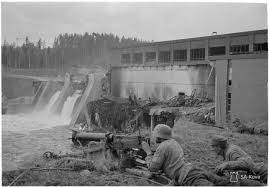
In the Far North sector, the Finns continue their advance on the Karelian Isthmus. The Finns capture the village of Taipale on the northwestern shore of Lake Ladoga. In addition, the Finnish 10th and 15th Divisions clear a “motif” (fortified position) held by Soviet 142nd Rifle and 198th Motorized Divisions on the Kilpola islands just off the shore of Lake Ladoga. The Soviets, however, have had time to evacuate 26,000 troops from the motif across the lake by boat.
A little to the southwest, the Soviet 115th and 123rd Rifle Divisions prepare to attack advance Finnish detachments of the Finnish Light Brigade T that have crossed the Vuoksi river. Finnish Group F, struggling forward toward Ukhta (Kalevala) on Ozero Sredneye Kuyto Lake, take another small village, Korpiyarvi, northwest of Ukhta. The Soviets are putting up fierce resistance, and the numerous small lakes and marshes in the area favor the defense.
Finnish 6th Division of 36 Corps have trapped some Soviet troops at Nurmi Lake and Nurmi Mountain, and the Soviet troops there are in desperate straits. The Finns intercept a Russian radio message during the night that claims the troops are in “complete encirclement.” The Finns, though, also are very strained, and today use the last of their own reserves to extend its line northward to prevent the Soviets from escaping. The Soviets, though, discover a logging road which is not on any maps north of the lake along which they begin to withdraw. The battle becomes a race between the retreating Soviets and the extension of the Finnish troops to the north through rough terrain.
In the Army Group North sector, Marshal Voroshilov, in command at Leningrad, assigns 48th Army to the Northern Front and gives it responsibility for defending the approaches to Leningrad. General Alexander Novikov becomes his air commander.
The Germans are pressing in on the port of Tallinn (Reval), Estonia, so Soviet cruiser Kirov and destroyers Gordy, Leningrad, and Minsk provide supporting gunfire.
In the Army Group Center sector, the Soviets plan an offensive to be led by reinforced 24th Army. It is planned to begin on 30 August. The plan is to smash a small hole through some weakened German divisions. It is hoped that this will force the entire Wehrmacht front back. Meanwhile, since General Guderian now has plans to head south with his Panzer Group 2, the Germans will have few reserves to counter a massive offensive — though the Soviets do not know this. On the German side, General Hoth’s Panzer Group 3 continues attacking toward Velikiye Luki.
In the Army Group South sector, the Romanian 4th Army is bogged down in front of Odessa. The Soviet Black Sea Fleet has been instrumental in providing artillery support. Both sides have taken heavy casualties, but the Romanians have an easier time bringing in reinforcements than the Soviets, who can only be supplied by sea.
Italian troops of the 2nd Army begin relieving German troops on garrison duty in the former Yugoslavia. The German troops’ next assignment is the Russian Front, where replacements are badly needed.
Soviet Transcaucasus Military District is redesignated Transcaucasus Front, commanded by General Kozlov. He has four armies — 44th Army, 45th Army, 46th Army, and 47th Army — and it is given responsibility for the entire coastal region from Turkey to Tuapse.
Soviet minesweeper T-204 Fugas hits a mine and sinks west of Kronstadt.
Operations EGV1 and EGV2, whose objectives are to provide convoy protection in northern waters near Murmansk and Archangel, begin when Force M departs from Scapa Flow. It is led by heavy cruisers Devonshire and Suffolk.
General Schaumburg as Kommandant von Gross-Paris announces: “…all Frenchmen taken into custody, either by the German authorities in France or on orders originating with them, will be regarded as hostages. Should any further criminal action occur, hostages will be shot in a number corresponding to the seriousness of that action.”
This practice of taking hostages from the civilian population and executing them is a common tactic by the Germans during World War II and is considered a war crime.
Hitler orders a halt to Aktion T-4, the euthanasia program, in Germany. More than 70,000 Germans have been gassed since the passage of the Euthanasia Decree of September 1, 1939. Bishop Galen’s sermon of August 3 was probably the single most important reason Hitler is forced to abandon the euthanasia program, although it will quietly continue to operate under the code-name: 14f13. Thousands of political prisoners, habitual criminals, Jews and others too sick to work are certified insane and put to death in concentration camps gas chambers
Royal Navy submarine HMS Tetrarch torpedoes and sinks two Italian ships near Sirte:
• 413-ton freighter Fratelli Garre 12 miles northwest of Sirte.
• 395-ton freighter Francesco Garre 1 miles north of Sirte;
Royal Navy submarine P-33, reported overdue on the 21st, is sunk while attacking a convoy off Pantelleria by Italian torpedo boat Partenope. This action may have taken place on 18 August.
An RAF Bristol Blenheim bombs and sinks 582-ton Italian freighter Constanza south of Lampedusa.
Italian aircraft bomb and sink Royal Navy destroyer Fearless south of Sardinia.
Italian aircraft bomb and damage Royal Navy light cruiser Manchester south of Sardinia.
Due to sightings of Italian ships sailing to Bardia, the Royal Navy dispatches destroyers Jackal and Napier to intercept them. However, no contact is made because the Italian ships change course back to the north.
Italian minelayers Aspromonte and Reggio lay minefield SN-44 in the Sicilian Strait. This is a massive minefield of 1125 mines.
Having heard of the departure of Royal Navy Force H from Gibraltar (Operation Mincemeat), the Italian fleet goes to sea. Led by battleships Littorio and Veneto based at Taranto and heavy cruisers Bolzano, Gorizia, Trento, and Trieste, along with five destroyers from Trapani and three light cruisers from Palermo, the fleet patrols off the western Italian coast.
Hanns Kerrl complains to the head of the Reich Chancellery that because of the continuing confiscations of Church property, which are taking place without his being consulted or even informed beforehand, his continuation as Minister of Ecclesiastical Affairs is becoming “increasingly unbearable.” (Note: Bormann, when questioned about the continuing seizures, excuses them by saying they had been decided before Hitler’s order of July 30.)
HMS Zinnia was torpedoed and sunk by the German submarine U-564 off the coast of Portugal.
Marshal Philippe Petain and his cabinet held two long meetings today to study means of stemming the tide of terrorism, sabotage and subversive activities in France. A decree published in the official Journal, as predicted, turned over to military courts cases involving Communists and leftists, with the death penalty provided and no appeal possible. Even as the cabinet gathered for its morning session, however, word reached Vichy of a new train wreck in the unoccupied zone at the entrance to the Valdonne tunnel east of Marseille yesterday. Thirty miners were injured. The Petain death-for-Communist activities decree published today was drafted August 14, the same day the German military command made a similar ruling because of the demonstrations and shootings in Paris August 12.
It is Last Night of the Proms at the Royal Albert Hall — the first-ever, as previously the annual event was held at the Queen’s Hall at Langham Place, which was destroyed by the Luftwaffe in June 1941. Chief conductor Sir Henry Wood leads the London Symphony Orchestra through the night and gives the first-ever “Conductor’s Speech.”
There is no major action today by either side. The RAF is beginning to equip Bristol Beaufighters with airborne radar sets, and these are beginning to make an impact. Beaufighter pilot John Cunningham, in particular, is developing a reputation in the press as “Cat’s Eye Cunningham,” but his eyes are nothing special — this is just a cover for his use of radar.
Later in the afternoon, six Luftwaffe Heinkel He-111H-5s of KG 26 attempt to intercept a reported convoy in the North Sea. One crashes into the sea after being hit by destroyer fire. The five crewman take to a dinghy and are taken prisoner by the British.
The Air Ministry orders 750 Griffon-engined Spitfires. The order is soon converted to one for Mk. Vs.
There is a heavy air raid on Malta after dark. Corrodino, the area northeast of Ta Silch, Safi, and St. George’s Barracks are hit with incendiary bombs. In addition, five incendiaries fall on the dockyard area, but they are put out quickly.
The RAF at Malta sends 10 Wellingtons to bomb the area northwest of Tripoli, while 5 Blenheim bombers attack a convoy.
The Germans have been stalking Convoy OG.71, and their reconnaissance is bearing fruit. The convoy loses several ships today, adding to two lost on the 22nd.
U-143, commanded by Oberleutnant zur See Harald Gelhaus, sank Norwegian steamer Inger (1418grt) in 58-58N, 7-50W. At 2347 hours on 23 Aug 1941 the Inger (Master Jørgen G. Jørgensen) was torpedoed and sunk by U-143 about 30 miles northwest of Butt of Lewis, Scottland. The ship had been ordered to return to Loch Ewe escorted by two armed trawlers for unknown reasons. She was hit by two torpedoes and sank immediately. One of the lifeboats floated free and three survivors rescued 11 more, but no more survivors were seen the following morning. Seven Norwegian crew members and two British gunners were lost. The escort ships had continued without looking for possible survivors. The lifeboat was later located by an aircraft and the survivors were picked up by the Ladylove that evening and taken to Stornoway. The 1,409-ton Inger was carrying 1500 tons of coal and coke, bound for Reykjavik, Iceland.
Submarine U-201, commanded by Oberleutnant zur See Adalbert Schnee, sank British steamers Stork (787grt) and Aldergrove (1974grt) in 40-43N, 11-30W on the 23rd. At 0214 hours on 23 Aug 1941, U-201 fired a spread of four torpedoes at the convoy OG.71 northwest of Lisbon and saw one hit on a freighter and two on a tanker which sank burning after 15 minutes. Two minutes later a stern torpedo was fired and a detonation heard. Schnee claimed two ships with 9000 grt sunk and two with 12,000 grt damaged. In fact, only the Stork and Aldergrove were sunk in this attack.
The master, 16 crew members and two gunners from Stork (Master Evan Atterbury Morris Williams) were lost. Three crew members were picked up by HMS Campion (K 108) (LtCdr A. Johnson, RNVR) and landed at Gibraltar on 24 August. The 787 ton Stork was carrying cased aviation fuel and was headed for Gibraltar.
The master, 32 crew members and five gunners from the Aldergrove (Master Hugh William McLean) were picked up from the lifeboats after two hours by HMS Campanula (K 18) (LtCdr R.V.E. Case, DSC, RNR) and landed at Gibraltar the next day. The only passenger (a naval rating) was lost. The 1,974 ton Aldergrove was carrying patent fuel and was headed for Lisbon.
Submarine U-564 on the 23rd damaged Norwegian steamer Spind (2129grt) in 40-43N, 11-39W. The ship was then sunk by U-552, commanded by Oberleutnant zur See Erich Topp. At 0335 hours on 23 Aug 1941, U-564 (Suhren) fired four single torpedoes at ships from the convoy OG.71 in grid CG 2772 and heard one definite and one possible detonation. Suhren reported on steamer damaged and another possibly damaged. However, the Spind (Master Johannes Berg Jonassen) was missed by a torpedo shortly after having left the convoy to proceed to her destination alone and no other ship was hit during this time. At 06.48 hours on 23 August, U-552 fired a spread of two torpedoes at the Spind, but both were surface runners and missed. After surfacing seven minutes later, the U.boat opened fire with all guns and fired 20 rounds of 8,8cm and 250 rounds of 2cm before the Germans were forced to dive at 07.15 hours because the HMS Boreas (H 77) was approaching the area and fired at the U.boat. The gun crew of Spind was able to fire two shots at the U.boat before all men abandoned ship in two lifeboats and by jumping overboard after about 20 minutes. The second mate was shot and severly injured while lowering himself down to the starboard boat. Topp then tried to sink the burning Spind with a coup de grâce, which was a dud. The destroyer first approached the lifeboats to tell the survivors that they will be picked up later and went on to drop depth charges, but U-552 managed to escape unharmed. The Spind was burning in the accommodations amidships and the bunker coal in the ´tween deck and the destroyer tried to extinguish the fire before picking up the survivors. After a second attempt to extinguish the fire, the ship was shelled by the destroyer and sank within five minutes. All survivors were landed in Gibraltar on 25 August. The 2,129 ton Spind was carrying coal, coke and engine parts and was headed for Lisbon, Portugal.
Corvette HMS Zinnia (Lt Cdr C. G. Cuthbertson DSO RNR) was sunk by U-564, commanded by Oberleutnant zur See Reinhard Suhren, in 40-43N, 11-39W west of Portugal on the 23rd. At 0525 hours on 23 August 1941, U-564 fired three single torpedoes at ships in the convoy OG.71 about 80 miles west.northwest of Cabo Mondego, Portugal and claimed the sinking of two steamers and a corvette. However, only the loss of HMS Zinnia (K 98) (LtCdr C.G. Cuthbertson, DSC, RNR) can be confirmed from Allied sources. 17 survivors were rescued by the corvettes HMS Wallflower (K 44) (LtCdr I.J. Tyson, RN), HMS Campion (K 108) (LtCdr A. Johnson, RNVR) and HMS Campanula (K 18) (LtCdr R.V.E. Case, DSC, RD, RNR), but one died shortly after being picked up and another died in Gibraltar where the survivors were landed in the evening.
Submarine HMS Tetrarch sank Italian steamers Fratelli Garre (413grt) at twelve miles northwest of Sirte and Francesco Garre (395grt) at one mile from Sirte.
Heavy cruisers HMS Devonshire (SO Force M) and HMS Suffolk, aircraft carrier HMS Victorious, and destroyers HMS Inglefield, HMS Eclipse, and HMS Escapade departed Scapa Flow as Force M.to operate in the northern waters in Archangel and Murmansk areas in Operations E. G. V. 1 and E. G. V. 2.
An Albacore of 832 Squadron ditched off Cape Wrath. Destroyer HMS Inglefield rescued Sub Lt H. Eyre, Sub Lt D. J. R. Harvey, and Leading Airman T. E. J. St Vaughan.
Minelayers HMS Southern Prince, HMS Port Quebec, and HMS Adventure, escorted by destroyers HMS Castleton, HMS Newark, and HMS Charlestown, laid minefield SN.70A east of Iceland. The heavy cruiser HMS Devonshire force provided cover for this minelay as they proceeded on their operation.
Minesweeper HMS Speedwell was damaged in a collision with British steamer St. Julian (1952grt) in the North Sea. The damage to the minesweeper was minor.
Destroyers HMAS Napier and HMS Jackal departed Alexandria to intercept any supply ships attempting to enter Bardia. A merchant ship was sighted by submarine HMS Talisman in 33-30N, 24-20E. No further contact was made. The ship turned northward to avoid the British ships. The ships arrived back at Alexandria on the 24th.
Italian steamer Constanza (582grt) was sunk by British Blenheims from Malta south of Lampedusa.
There was no TREACLE operation on the 23rd.
German raider Orion arrived at Bordeaux, escorted by submarines U-75 and U-205, after raiding in the Atlantic, Pacific, and Indian Oceans. The cruiser sank nine and a half ships for 57,744 tons. She shared seven kills with cruiser Komet.
Convoy OS.4 departed Liverpool escorted by destroyers HMS Caldwell, HMS Castleton, HMS Vanoc, HMS Volunteer and HMS Walker. The destroyers were detached on the 28th. Also departing with the convoy was French sloop Chevreuil which was detached on the 27th, special service vessel HMS Fidelity, which was detached on 2 September, escort vessels HMS Gorleston and HMS Lulworth, which were detached on 9 September, and anti-aircraft ship HMS Palmores which as detached on the 28th. On the 31st, escort vessels HMS Sennen and HMS Totland joined the convoy and were detached on 9 September. On 9 September, destroyer HMS Vansittart joined the convoy and escorted it into Freetown arriving on 11 September.
President Roosevelt tonight commandeered the Federal Shipbuilding & Dry-dock Co. at Kearny, New Jersey, in the name of the United States government and ordered the navy department to get the strike-bound plant back to work on $493,000,000 in defense orders by Monday morning. Acting under his unlimited emergency powers on grounds that halting of work on the defense orders jeopardizes the national interests, Mr. Roosevelt ordered the navy department to move in and take over immediately.
President Roosevelt and a member of Britain’s ruling family met here tonight, and the very fact of their meeting served to cement more firmly the bonds of Anglo-American friendship. Following so closely the dramatic conference at sea between the chief executive and British Prime Minister Churchill, the visit of the Duke of Kent at the Roosevelt home could not help but take on a measure of significance. The temporary White House insisted, however, that the duke, youngest brother of King George VI, was here primarily on an informal, social visit. The president himself also had sought to minimize the importance of his having a royal guest. There was not even a hint that any sort of announcement might be expected as a result of the visit.
Administration lieutenants disclosed today that the new Lend-Lease appropriation to be asked of congress will approximate $5,000,000,000 and will provide no funds for Soviet Russia. Congressional leaders discussed an additional Lend-Lease appropriation with the president earlier this week. A well-informed official, unwilling to be quoted by name, said today that the chief executive had agreed at that time that none of the new money would go to Russia. Instead, it was said, the Russians probably will be given credit if they need it.
Detroit Mayor Edward Jeffries announced tonight that an agreement had been reached to end the city’s four-day transportation tie-up and will be offered immediately to 4,000 striking A.F.L. transit workers for ratification. The settlement, announced jointly by Jeffries and W.D. Mahon, international president of the A.F.L. Amalgamated Association of Street, Electric Railway & Motor Coach Employees, was reached in what the mayor called the “final” conference with the union. It was indicated the agreement would not meet with the approval of the C.I.O. whose spokesmen said they feared the collective bargaining election “might be rigged’ in favor of the A.F.L. by inclusion of white-collar workers in the municipally-owned transit system.
Resolutions commending President Roosevelt and Secretary Hull for “their courageous attitude in the conduct of our foreign affairs” were adopted today by the Young Democratic Clubs of America. The convention stated in a resolution “that the policy of aiding nations and peoples resisting aggression must be implemented by effective means to insure delivery of materials, utilizing every facility at our disposal.” The convention approved the Administration’s policy of “full and complete aid” to England and China. and said that “we approve of the policy of full and complete aid to Russia, believing that our hatred of communism and our determination to destroy its roots in this country should not blind us to the fact that Russia is battling our common enemy.”
Harassed gasoline filling station operators, some of whom planned to close their pumps today to conserve their dwindling August quotas, were advised by Washington last night that a plan had been worked out by the Eastern oil companies to furnish them all the gasoline they need next Saturday and Sunday for the Labor Day holiday. The announcement came too late to affect today’s operations in most cases, since the bulk of the gasoline needed for Sunday is ordered and delivered by late afternoon Saturday, but it guaranteed an adequate supply to care for the travel next week-end, which always is the heaviest of the year. The extension of the 7 PM curfew at stations to 1 PM Sundays in most cases, and to all day in some localities, had been announced by the dealers before the plan of the Eastern Petroleum Marketing Committee was made public by Deputy Petroleum Coordinator Ralph K. Davies.
University of California tonight reported an 11.2 percent decrease in enrollment, indicating many former students and prospective students have taken jobs in the defense boom or joined the armed forces. University of California, on the basis of the total student population of its combined campuses, is the largest university in the nation. Its enrollment, until this year, has increased steadily.
An output of Army tanks which will equal the value of $1,000,000,000 in 1942 is called for in a plan made known today by the Office of Production Management.
A 10 percent reduction in the price of major types of rayon greige goods, effective Monday, was ordered today by Leon Henderson, Administrator of the Office of Price Administration and Civilian Supply. He issued a price ceiling schedule expected to affect the costs of dresses, shirts, underwear, coat and suit linings and many other items.
“Daddy” by Swing and Sway with Sammy Kaye with the Kaye Choir marks its eighth non-consecutive week at the top of the Billboard singles chart.
The Ryder Cup begins at Oakland Hills Country Club. Bobby Jones captains the Challengers and Walter Hagen is the U.S. Ryder Cup Captain. The U.S. team defeats the British 8 ½ to 6 ½ on 24 August. Over 20,000 people attend. Jones wins his match against Henry Picard, 2 and 1.
Major League Baseball:
Flatbush fans couldn’t cheer much for the Dodgers today, because those so-called “beloved bums” took a humiliating beating from the Cubs, 7–1, with Claude Passeau permitting only one Dodger to pass second base until the ninth inning. The Cubs meanwhile, erupted for five runs in the third and coasted to victory.
The Reds, who refuse to be counted out in their long-shot bid for the National League pennant, today walloped the Braves, 7–2, scoring five run in the last two innings, for their twelfth victory in fourteen games.
Johnny Humphries, a big blond Virginian who received his diploma from a long-term course in the bullpen, pitched his third consecutive shutout for the Chicago White Sox today as he smothered the Red Sox, 3–0.
The revamped Yankees, with a new lineup, rallied nobly around Senor Vernon Gomez and smashed the Cleveland Indians into submission, 7–2. That ended a losing streak of three games in a row and convinced a gathering of 7,500 that once these Yanks mean to win a ball game they can, indeed, become very mean.
A single to center field by Rip Radcliff with two out in the tenth inning drove in the run that enabled the Tigers to beat the Senators today, 6–5. Tuck Stainback was perched on second when Radcliff nicked Bill Zuber for his third hit of the day.
The New York Giants beat the Pittsburgh Pirates, 5–3, in the opener of their doubleheader, but lost, 4–3 in the nightcap. Maurice Van Robays homered in both games for Pittsburgh.
Lefty Lee Grissom, an erratic southpaw, who until he downed the Giants a week ago couldn’t beat any one this year, did a good job on the Cardinals at Shibe Park today, even though he needed relief in the ninth, as the Phillies upset the Cardinals, 4–2.
The St. Louis Browns won their eleventh game in the last sixteen, excluding two ties, by defeating Philadelphia today, 6–1, but remained in the cellar. After two were out in the first the Browns scored four times on five singles off Bump Hadley, a hit batsman and an error by Wally Moses.
Chicago Cubs 7, Brooklyn Dodgers 1
Cincinnati Reds 7, Boston Braves 2
Boston Red Sox 0, Chicago White Sox 3
New York Yankees 7, Cleveland Indians 2
Washington Senators 5, Detroit Tigers 6
Pittsburgh Pirates 3, New York Giants 5
Pittsburgh Pirates 4, New York Giants 3
St. Louis Cardinals 2, Philadelphia Phillies 4
Philadelphia Athletics 1, St. Louis Browns 6
Canadian Prime Minister William Lyon Mackenzie King made a speech to 10,000 Canadian troops in Aldershot, England. Some of the soldiers, tired of endless training exercises and anxious to see some action, booed and heckled the Prime Minister.
The Japanese inform Ambassador Nomura that there have been reports in U.S. newspapers about shipments of U.S. goods to Russia. Tokyo instructs Nomura to explain to the U.S. that shipments to Russia via Japanese coastal waters will be looked upon with disfavor. Nomura calls on Secretary of State Hull and expresses Japan’s desire for peace, which Hull reciprocates. Hull, however, notes that the Japanese press has been touting a new policy of Japanese expansion in the Pacific. Nomura responds that his government knows about U.S. oil shipments to Vladivostok and feels that this evinces a lack of sincerity on the U.S. side.
Nomura returns to see Hull again later in the day and tells him that his government wishes the two countries’ heads of state to have a summit meeting before 15 October 1941. He also asks that the U.S. stop shipping supplies to Russia and delay a proposed Allies conference at Moscow. Hull is noncommittal but promises to tell President Roosevelt about the requests.
The Japanese are keeping their negotiations with the Americans secret and have been lying to the Germans about what they are doing. German Foreign Minister Ribbentrop meets with his Japanese Ambassador Oshima in Berlin and admits that the war in the USSR may last into 1942 — a very rare admission. When communicated to Tokyo, this reinforces the hotly contested decision not to invade the Soviet Union.
The Imperial Japanese Navy 30,000-ton aircraft carrier HIJMS Shōkaku (翔鶴, “Soaring Crane”) departs from Yokohama on a shakedown cruise. Afterward Shōkaku docks at Ariake, Tokyo and becomes the flagship of 1st Air Fleet of Carrier Division 5.
The Imperial Japanese Navy heavy cruiser HJIMS Ashigara arrives at Sasebo.
The IJN begins converting 7,397-ton freighter Awata Maru into an auxiliary cruiser at Mitsubishi Heavy Industries in Kobe, Japan.
The IJN begins converting 5,181-ton freighter Hide Maru into an ammunition ship at Osaka Iron Works.
Dow Jones Industrial Average: 125.91 (+0.07)
Born:
Gloria Ehret, American golfer (Women’s PGA Championship, 1966), in Allentown, Pennsylvania.
John Morris, MLB pitcher (Philadelphia Phillies, Baltimore Orioles, Seattle Pilots-Milwaukee Brewers, San Francisco Giants), in Lewes, Delaware (d. 2025)
Marty Martínez, Cuban MLB shortstop, third baseman and second baseman (Minnesota Twins, Atlanta Braves, Houston Astros, St. Louis Cardinals, Oakland A’s, Texas Rangers), in La Habana, Cuba (d. 2007).
Jim Gray, AFL and NFL cornerback and kick returner (New York Jets; Philadelphia Eagles), in White Plains, New York.
Margaret Julia Leon, English actress (“The Royalty”, “Don’t Tell Father”), in Ringwood, Hampshire, England, United Kingdom.
Patrick Taylor, Irish-Canadian medical researcher, editor, and novelist (An Irish Country series), in Bangor, Northern Ireland, United Kingdom.
Bunny Lee, Jamaican reggae record producer, in Kingston, Jamaica (d. 2020).
Naval Construction:
The U.S. Navy YMS-1-class auxiliary motor minesweeper USS YMS-120 is laid down by the Harbor Boat Building Co. (Terminal Island, California, U.S.A.).
The U.S. Navy 77-foot Elco patrol motor torpedo boat USS PT-67 is laid down by the Electric Launch Company Ltd. (Elco), (Bayonne, New Jersey, U.S.A.).
The Kriegsmarine (German Navy) Type VIIC U-boats U-629 and U-630 are laid down by Blohm & Voss, Hamburg (werk 605 and 606).
Les Forces Navales Françaises Libres (Free French Naval Forces) MMS I-class motor minesweeper D 261 is launched by J.S. Doig Ltd. (Grimsby, England, U.K.).
The Royal Navy MMS I-class motor minesweeper HMS MMS 45 (J 545) is launched by Richards Ironworks Ltd. (Lowestoft, England, U.K.).
The Royal Navy MMS I-class motor minesweeper HMS MMS 89 (J 589) is launched by John Morris (Gosport, England, U.K.).
The Royal Navy MMS I-class motor minesweeper HMS MMS 116 (J 616) is launched by J.S. Doig Ltd. (Grimsby, England, U.K.).
The U.S. Navy YMS-1-class auxiliary motor minesweeper USS YMS-117 is launched by Harbor Boat Building Co. (Terminal Island, California, U.S.A.).
The U.S. Navy Accentor-class coastal minesweeper USS Caracara (AMc-40) is launched by the Bristol Yacht Building Co. (South Bristol, Maine, U.S.A.).
The U.S. Navy Accentor-class coastal minesweeper USS Loyalty (AMc-88) is launched by the F. L. Fulton Shipyard (Antioch, California, U.S.A.).
The U.S. Navy submarine chaser (prototype steel hull) USS PC-452 is launched by the Defoe Shipbuilding Co. (Bay City, Michigan, U.S.A.).
The Royal Navy “U”-class (Third Group) submarine HMS P-39 is launched by Vickers Armstrong (Barrow-in-Furness, U.K.).
The Kriegsmarine (German Navy) Type VIIC U-boat U-755 is launched by Kriegsmarinewerft (KMW), Wilhelmshaven (werk 138).
The Royal Canadian Navy Flower-class corvette HMCS Calgary (K 231) is launched by Marine Industries Ltd. (Sorel, Quebec, Canada).
The U.S. Navy Gleaves-class destroyer USS Emmons (DD-457) is launched by the Bath Iron Works (Bath, Maine, U.S.A.).
The Royal Navy Fairmile B-class motor launch HMS ML 233 is commissioned.
The Royal Navy Fairmile B-class motor launch HMS ML 287 is commissioned.
The Royal Navy MMS I-class motor minesweeper HMS MMS 50 (J 550) is commissioned.
The Royal Navy Fairmile C-class motor gun boat HMS MGB 320 is commissioned.
The Kriegsmarine (German Navy) Type IXC U-boat U-155 is commissioned. Her first commanding officer is Kapitänleutnant Adolf C. Piening.

