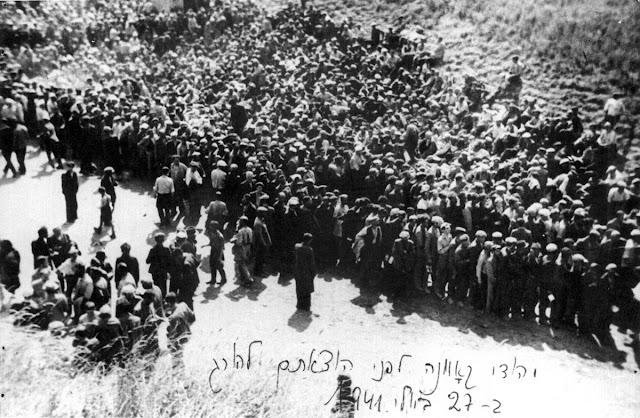
Field Marshal Fedor von Bock, commander of Army Group Center, holds a conference on 27 July 1941 at his headquarters at Novy Borisov. Commander-in-Chief Walther von Brauchitsch, the head of the Oberkommando des Heeres (OKH), the Supreme High Command of the Wehrmacht, attends. The gist of the meeting is simple: follow the Fuhrer’s orders. While the assembled generals sit silently, one of Brauchitsch’s aides reads a memorandum. It states that the generals are to follow Hitler Directive 33, which specifies that there is to be a pause in the offensive while bypassed Soviet units are subdued, the line is straightened, and repair and maintenance take place. They were under no circumstance to try to push further east towards Moscow at this time. Instead, they were ordered to focus on mopping up the territory already taken, restore their overworked equipment, restock supplies, and to straighten out the German front line, which had become more of an “S” shape due to Guderian and Hoth’s successful Blitzkrieg. Coming away from this meeting, Hoth and Guderian were angry and frustrated.
It is an odd event, made necessary in the eyes of OKW and Hitler due to the strong opposition by many generals and Field Marshals to this strategy. The main targets are Generals Guderian and Hoth, whose Panzer Groups 2 and 3, respectively, have outpaced their colleagues. Both generals disagree, with Guderian writing in his journal that Hitler:
“preferred a plan by which small enemy forces were to be encircled and destroyed piecemeal and the enemy thus bled to death. All the officers who took part in the conference were of the opinion that this was incorrect.”
The importance of the meeting is not so much what is said, but the fact that Hitler and von Brauchitsch feel it is necessary at all. That it is held at the Army Group Center headquarters also is significant, given that von Bock, Hoth, and Guderian are intent on taking Moscow, which they feel is easily within their grasp.
When the meeting is over, Guderian hurriedly puts together a plan with Hoth and von Bock to honor Directive 33 in form, but not in substance. From here on, generals on the eastern front will often operate through “back channels” and conduct their operations with increasingly looser “interpretations” of OKW (and Hitler) orders.
There is something to be said for both the OKW position and that of von Bock, Hoth, and Guderian. On the one hand, the panzers have been fighting steadily for over a month and simply driving for that long puts a heavy strain on the equipment, let alone engaging in endless combat. On the other hand, however, the Red Army is reeling and it is imperative for the Wehrmacht to destroy the Soviet capacity to resist quickly during good campaigning weather.
In the Far North sector, the German 36 Corps (General Hans Feige), under pressure from the Army of Norway (AOK Norwegen) headquarters (General Nikolaus von Falkenhorst), attacks the Soviet defenses east of Salla. The attack, the first in weeks, gains no ground at a heavy cost in lives. Feige regroups for another try in a couple of days.
In the Army Group North sector, the Germans approach the Estonian capital Tallinn and capture it late in the day. There is heavy fighting near Velikiye Luki.
In the Army Group Center sector, German forces, after many days of trying, finally link up to the east of Smolensk. This happens when XXXIX Korps (General R. Schmidt) of Panzer Group 3 meets XLVII Korps (General J. Lemelsen) of Panzer Group 2. There is little question that at this stage of the war the panzers of Generals Hoth and Guderian have formed a powerful combination that is clearing the way east.
In the Mogilev area, Soviet resistance ends due to a lack of supplies. About 35,000 Soviet troops go into captivity. A small number of trapped soldiers manage to escape to the east.
This closes a massive pocket that traps large portions of Soviet 16th, 19th, and 20th Armies. The Soviets immediately begin planning a breakout, to be led by the 20th Army. The German line is weak because the infantry is still struggling to catch up with the panzers on the eastern side of the pocket.
However, this Axis victory did not come without strategic implications. For the first time, the Soviets tried to implement a determined coordinated counterattack against a large part of the front, although the counterattack was almost entirely a failure. Nevertheless, the increasing resistance showed that the Soviets were not yet defeated, and that the Blitzkrieg towards Moscow was not going to be an easy task. This exacerbated a division between the German high command and political leadership. The leaders of the General Staff, Franz Halder and Walter von Brauchitsch, and frontline commanders like von Bock, Hoth, and Guderian counseled against dispersing the German armored units and to focus directly on Moscow. Hitler reiterated the lack of importance of Moscow and strategic encirclements, and ordered a concentration on economic targets such as Ukraine, the Donets Basin, and the Caucasus, and more tactical encirclements to weaken the Soviets further. As a result, the German offensive effort became more fragmented, leading to the battles at Kiev and Uman. Those battles were also German victories, but also cost them vital time, men, and material on their approach towards Moscow, allowing the Soviets time to prepare the defenses of the city.
In the Army Group South sector, Soviet 26th Army counterattacks Panzer Group 1. The panzers are greatly in need of repair and maintenance, as noted in the war diary of LVII Korps (General Kuntzen):
“It must be understood that without a rapid and plentiful supply of track rollers, track links and bolts for the Mark IV and track bolts for the Kpfw 38(t) the number of available panzers will sink further so that the combat strength of the panzer regiments will be greatly weakened. Still especially urgent is the delivery of fully operational motors, gearboxes, oil and specialized panzer grease.”
This need to pause the offensive is understood at the very highest and the lower levels of the Wehrmacht, but, as noted above, many generals seeking the glory of conquest refuse to accept it.
Romania occupies the final section of territory that it considers rightfully due it according to its previous historical control. Meanwhile, German 17th Army continues pushing to close the trap at Uman.
The Spanish add to their volunteer Blue Division on the eastern front by sending a small volunteer air group. The Escuadra Azul joins III,/JG 27 to become 15,/JG 27 of General Kesselring’s Luftlotte 2. Captain Angel Salas Larrazabal leads the unit, which is equipped with Bf 109E fighters.
The Freiwillingen Legion Niederlander (Dutch Volunteer Legion), an auxiliary force for the SS, is established under the command of Lieutenant-General Henry Alexander Seyffardt.
Wilhelm Keitel ordered all copies of the 13 May 1941 order, which effectively allowed German military personnel to murder Soviet civilians, destroyed. Several copies would remain, however, and surface during the Nuremberg Trials.
German radio announces that the Wehrmacht has advanced to within 45 miles of Leningrad and that they have reached the neighborhood of Volosovo.
The Soviet Soobrazitelnyy-class destroyer Smelyi was sunk in the Gulf of Riga by the German motor torpedo boat S-54.
The Red Air Force bombs and sinks 338-ton German trawler Elbing III near Libau.
Soviet passenger ship Lenin hits a mine and sinks within 10 minutes between Sevastopol and Yalta. There are about 643 survivors and 1000+ deaths, including a large fraction of 1200 Soviet soldiers of the Red Army reserves. The best estimates place the total casualties at 2500-4600 people, but there is no passenger list. Apparently, the mine was in a “friendly” minefield in an area that the Lenin should have avoided. Navy pilot Lieutenant I.I. Svistun survives the sinking, but not for long — Svistun is blamed for the blunder. He will be shot for his error on 24 August.
Four teenagers, son and nephews of Nestor Lakoba, political enemy of Lavrentiy Beria (already killed in Dec 1936), were executed in Moscow, Russia as sentenced by the Military Collegium of the Soviet NKVD.
German leader Adolf Hitler requested Romanian leader Ion Antonescu to conquer and occupy the Ukrainian territory between Dniester and Bug Rivers. Hitler is pleased with the Romanian army’s performance to date. Now that Romanian troops have “recovered” their “lost” territories, however, they may act like the Finns have recently in Karelia and decide to curtail further offensive operations. To avoid this, Hitler sends a letter to his fellow dictator that specifically asks Ion Antonescu to clear the entire area between the Dniester and Bug Rivers and add it to the Romanian province of Transnistria. Antonescu, eager to add to Romanian territory, agrees.
General der Panzertruppe Joachim Hermann August Lemelsen receives the Knights Cross today for his performance in command of the 47 Panzerkorps at Smolensk.
During his evening rambles with cronies, Hitler gives his vision of a successful campaign in the USSR:
“We must take care to prevent a military power from ever again establishing itself on this side of the Urals, for our neighbors to the West would always be allied with our neighbors to the East. That’s how the French once made common cause with the Turks, and now the English are behaving in the same fashion with the Soviets. When I say, on this side of the Urals, I mean a line running two or three hundred kilometers east of the Urals.”
Heretofore, there has been virtually no discussion within the German government as to what a successful conclusion to Operation Barbarossa would look like. At least now Hitler indicates that the limit of the Wehrmacht’s advance would be slightly beyond the Ural mountain range. Presumably, a decapitated Soviet state would remain on the far side of the Urals, with the Wehrmacht watching it sort of like Roman soldiers manning the Danube.
The German commander in chief of the Order Police in occupied Kraków issues an order that brings into existence the local municipal police force (UP) in the occupied Ukrainian SSR. In the newly formed Reichskommissariat Ukraine the auxiliary police forces are named Schutzmannschaft. The units are used primarily to keep order and carry out constabulary duties, but also participate in various war crimes relating to the Holocaust.
Vilna: The Germans murder two members of the Judenrat [Jewish council] when the community fails to pay an enormous bribe.
Germans in Belgrade take 1200 Jews from Belgrade to the Tasmajdan concentration camp, where about 120 are shot.
Clothing taken from Jews in Ponas, Ukraine is sold.
There is an uprising by several hundred Serb men in Srb, Croatia. It is motivated by the killings of local Serbs by Ustasa units led by Vjekoslav Maks Luburic. This is a very controversial incident, and the controversy centers around exactly what the uprising was about and who it was directed against. The official state description is that it was an uprising by local Serbs against the occupying German forces, while some others claim that it was a nationalist uprising by ethnic Serbs directed against Croat civilians.
Rome Radio touts the failed motor-launch attack on Malta’s Grand Harbour on the 26th as a resounding success. However, it does slightly hedge its bets:
“It is not possible to say what damage was inflicted on the British Navy but knowing how our seamen delivered the attack one must rest assured that at least eight more British units have been rendered unseaworthy. With this exploit which may be compared with the greatest naval battles was concluded a three-day epic, opened on 23 July by the action of one of our submarines and so successfully carried out by our aviation and MAs.”
Of course, the Italian attackers didn’t disable any Royal Navy ships at all and only managed to destroy an old stone bridge.
The ships that escorted Convoy SUBSTANCE to Malta arrive safely back in Gibraltar. Operation SUBSTANCE, a successful Royal Navy supply run to Malta, ends when Force H arrives back at Gibraltar.
Royal Navy submarine HMS Tetrarch uses its deck gun to sink Italian caique Nicita about five miles south of the Greek island of Kos.
Operation GUILLOTINE, the reinforcement by the Royal Navy of Cyprus, continues as 6676-ton transport Salamalia departs Port Said for Famagusta.
British Commandos carried out Operation CHESS, an overnight raid on Ambleteuse, France. The Commandos cross the English Channel in two motor launches and land at a random spot about two miles from the Slack River near Ambleteuse. The men remain ashore for a couple of hours, accomplish little aside from stand on French soil, and they are picked up by a landing craft. The British are encouraged at being able to complete the operation undetected and plan more such missions.
Five British motor torpedo boats (MTB) sailed from Dover, England, United Kingdom to attack a German destroyer in the English Channel. Two of the boats narrowly escaped collision when crossing each other’s bows at top speed by only ten feet. When the attack took place the torpedoes were fired at too great a range scoring no hits, in fact one torpedo actually just missed one of the friendly MTBs. On the way home one of the MTBs opened fire on a British aircraft which came down to investigate them.
The United Kingdom nationalized railroads for the duration of the war.
An Axis convoy departs from Naples bound for Tripoli. It has a heavy escort which includes the Italian 8th Cruiser Division. A return convoy from Tripoli also puts to sea.
Weather is poor over northwest Europe today. This causes problems for the RAF, but not for the Germans.
After ten weeks of respite, German bombers attack London tonight. The Luftwaffe makes its largest raid on London in 10 weeks, putting 50 aircraft over the capital. The Germans lose four planes.
RAF Bomber Command, Day of 27 July 1941
6 Blenheims to Yainville power-station turned back.
RAF Bomber Command, Night of 27/28 July 1941
Minor Operations
14 Wellingtons and Whitleys to Dunkirk, which was found to be cloud-covered, 36 Hampdens minelaying off Lorient and St-Nazaire, 3 O.T.U. sorties. 1 Hampden lost.
The Luftwaffe attacks the Suez Canal during the night.
Luftwaffe ace (27 victories) Hans Kolbow, KIA 17 July 1941 south of Stara Bychow by Soviet flak, is posthumously awarded the Ritterkreuz.
Convoy OG.69 was attacked by German five submarines on the 27th through 28 July.
U-203, commanded by Kapitänleutnant Rolf Mützelburg, sank British steamer Hawkinge (2475grt) in 44-55N, 17-44W. At 0254 hours on 27 July 1941, U-203 attacked the convoy OG.69 about 800 miles southwest of Fastnet and reported the sinking of two ships, totalling 14000 grt. However, only the Hawkinge (Master Walter Aron Isaksson) was hit. 13 crew members and two gunners were lost. The master and five crew members were picked up by HMS Sunflower (K 41) (LtCdr J.T. Jones, RNR) and landed at Londonderry. Seven crew members and three gunners were picked up by HMS Vanoc (H 33) (LtCdr J.G.W. Deneys, DSO, RN) and landed at Liverpool. The 2,475-ton Hawkinge was carrying coal and was headed for Lisbon, Portugal.
U-79, commanded by Kapitänleutnant Wolfgang Kaufmann, sank British steamer Kellwyn (1459grt) in 43N, 17W and claimed sinking a second steamer. Between 0021 and 0024 hours on 27 July 1941, U-79 fired a spread of four torpedoes and the stern torpedo at the convoy OG.69 about 350 miles west-northwest of Cape Finisterre and had to dive because a destroyer was closing in, so Kaufmann only saw a column of fire and heard several detonations. He reported three ships sunk and two others probably damaged. In fact, only the Kellwyn (Master Alexander McLean) was hit and sunk, the later explosions must have been depth charges from the escorts. The master, ten crew members and three gunners were lost. Nine crew members were picked up by the British armed trawler HMS St. Nectan (LtCdr H.B. Phillips, RNR) and landed at Gibraltar on 1 August. The 1,459-ton Kellwyn was carrying coke and was headed for Lisbon, Portugal.
U-126, commanded by Kapitänleutnant Ernst Bauer, sank British steamer Erato (1335grt, The convoy Commodore ship) and Norwegian steamer INGA I (1304grt) in 43-10N, 17-30W.
At 2351 hours on 27 July 1941, U-126 fired four bow torpedoes and then two stern torpedoes at the convoy OG.69 200 miles west of Cape Finisterre. Bauer reported that one ship exploded, another hit on a small ship beyond and hits by the stern torpedoes on two different ships aft and amidships. The last vessel was seen sinking after it broke in two. However, only two ships were reported sunk at this time, the Erato (probably the first ship hit) and the Inga I (probably the ship, which broke in two). Eight crew members and one gunner from the Erato (Master George D. Smail), the ship of the convoy commodore (Capt C.M. Ford, RD, RNR), were lost. The master, the commodore, five naval staff members, 22 crew members and four gunners were picked up by HMS Begonia (K 66) (Lt T.A.R. Muir, RNR) and landed at Gibraltar. The 1,335-ton Erato was carrying general cargo, military and naval stores and was headed for Gibraltar.
The Inga I (Master Lorentz Tvedt) was hit on the starboard side between the engine room and boiler room by one torpedo and sank in two minutes. Three crew members were lost. The master and 15 crew members were rescued by an escort vessel and landed at Gibraltar on 30 July. The 1,304-ton Inga I was carrying coal and coke and was headed for Gibraltar.
U-126 claimed sinking two more steamers on the 27th.
For operation FB, Light cruisers HMS Nigeria (Vian had hoisted his flag in Nigeria at 1740 on the 25th) and HMS Aurora with destroyers HMS Tartar and HMS Punjabi departed Scapa Flow at 1000 as Force A for Seidisfjord, arriving on the 29th. British oiler RFA Oligarch, escorted by destroyer ORP Garland had departed Scapa Flow at 1400 on the 24th for Seidisfjord, arriving on the 27th. They departed Seidisfjord later that day with trawlers Sealyham and Wastwater to refuel Force A. Force A departed Seidisfjord at 1330 on the 29th. They met the oiler Oligarch group at 1400 on the 31st to refuel. Destroyer Tartar was sent ahead to land a Norwegian officer at the W/T station at Kap Linne. At 1800 on the 31st, light cruiser Nigeria and destroyer Tartar entered Advent Fjord, Spitsbergen. Light cruiser Aurora and destroyer Punjabi proceeded to Gronfjord. Destroyer Garland was engaged on anti-submarine patrol at the entrance to Isfjord. On 1 August, oiler Oligarch refueled the ships at Spitsbergen. Destroyer Garland and Norwegian steamer Dagny I (1392grt) joined the Oligarch group. Destroyer Garland, anti-submarine trawlers Sealyham and Wastwater, and oiler Oligarch proceeded to sea. A party was landed at Bear Island on 2 August to demolish the W/T station and embark four Norwegian operators. The ships refueled again on 3 August. Oiler Oligarch was then sent with destroyer Garland and trawler Sealyham to Seidisfjord. Steamer Dagny I and whaler Wastwater were detached on 3 August and proceeded to the Faroes.
Heavy cruiser HMS Dorsetshire departed the Tyne for Scapa Flow, escorted by destroyers HMS Windsor and HMS Worcester. The cruiser arrived on the 28th.
Armed merchant cruiser HMS Esperance Bay arrived at Scapa Flow for onward passage to London.
British fishing trawler Ben Strome (198grt) was sunk by German bombing fifteen miles SE of Fuglo Island. The crew of ten was all lost.
The German 3rd Motor Torpedo Boat Flotilla with S.54, S.55, S.57, and S.58 attacked Soviet ships in the Gulf of Riga. Soviet destroyer Smiely was sunk by German motor torpedo boat S.54, in company with S.55, in the Gulf of Riga. S 57 and S.58 unsuccessfully attacked two Soviet minesweepers at Oesel.
Submarine HMS Tetrarch sank Italian caique Nicita five miles south of Kos.
Light cruiser HMS Ceres damaged her port screw when it contacted the pier during docking at Trincomalee.
Ocean boarding vessel HMS Corinthian arrived at Gibraltar after Western Patrol.
Corvette HMS Gardenia intercepted French auxiliary patrol vessel Edith Germaine (130grt) at 12-38N, 17-55W. Corvette HMS Amaranthus was in company. The trawler was taken towards Freetown by the two corvettes. When it was determined the trawler was going to Dakar, it was allowed to continue.
Convoy ON.2 departed Liverpool, escorted by sloop HMS Black Swan and corvette HMS Convolvulus. Both escorts were detached the next day. On the 28th, destroyer ORP Burza, corvettes HMS Aubretia, HMS Nigella, and HMS Snowdrop, minesweeper HMS Britomart, and anti-submarine trawlers HMS Daneman, HMS Notts County, and HMS St Apollo. Destroyers HMS Amazon and HMS Georgetown and corvette HMS Heartsease joined on the 30th. Destroyer Georgetown and minesweeper Britomart were detached on 1 August, destroyers Amazon and Burza, corvettes Aubretia, Heartsease, Nigella, and Snowdrop, and anti-submarine trawlers Daneman and St Apollo on 2 August. Armed merchant cruiser HMS Ranpura, destroyer HMS Burwell, and corvettes HMCS Chambly and HMCS Pictou joined on 2 August. The convoy was dispersed on 8 August.
Convoy HX.141 departed Halifax, escorted by armed merchant cruiser HMS Montclare and corvettes HMCS Nanaimo, HMCS Orillia, and HMCS Trail. Corvettes HMCS Chicoutimi and HMCS Matapedia joined on the 28th. Corvettes Chicoutimi, Nanaimo, and Trail were detached on the 30th. On the 30th, destroyer HMCS Skeena and corvettes HMCS Alberni and HMS Primrose joined the convoy. The escort was detached on 6 August when relieved by destroyers HMS Douglas, HMS Leamington, and HMS Skate, corvette HMS Veronia, and minesweeper HMS Speedy. The corvette and the minesweeper were detached on 8 August and destroyers were detached on 9 August. Anti-submarine trawlers HMS St Elstan and HMS St Zeno escorted the convoy in Home Waters. The convoy arrived at Liverpool on 11 August.
President Roosevelt’s order consolidating United States and commonwealth forces in the Philippines under General Douglas MacArthur was viewed in official quarters here today as a step to make secure a base for any necessary operations in the far Pacific. In cooperation with British and Netherlands Indies forces, military authorities explained, American forces in the Philippines could at least give pause to any threat of a southward attack by the Japanese, regardless of support from the main United States fleet.
In addition to keeping in touch with Washington today, President Roosevelt found time to see at least one caller on matters of state. This visitor was Bernard M. Baruch, head of the War Industries Board in the World War, who flew to Hyde Park, presumably to discuss economic aspects of the drive opened last week to halt new Japanese acts of aggression threatening areas vital to our national interests. A weekly visitor to the White House, Mr. Baruch apparently is serving as an unofficial Presidential adviser. The President sent to Washington the nomination of Douglas A. MacArthur, former Army Chief of Staff, to be a lieutenant general. He will command the Army Forces in the Far East. In the church service which the President and Mrs. Roosevelt attended was a fresh reminder of the critical international situation.
Senatorial opposition to legislation extending: service of draftees and other soldiers appeared diminishing today in light of war-like developments in the Far East. Although some opponents made it clear they would continue to fight the proposal relentlessly when the senate takes it up, probably by Wednesday of this week, others who had been expected to vote against it, said they were reserving decision pending further clarification of Japan’s move into Indo-China.
A sharp debate in the Senate this week over the passage of the service extension resolution appeared probable today. Senator Robert R. Reynolds, chairman of the Military Affairs Committee, asserted that passage of the service extension resolution would mean that Congress had authorized the United States to enter the war as an “active, participating, shooting ally of Russia and Great Britain.” Senator Reynolds cast the one dissenting vote when his committee yesterday reported by 9 to 1 the resolution declaring that “the national interest is imperiled” and. giving President Roosevelt authority to extend indefinitely the service of all selectees, National Guardsmen and members of the Regular and Reserve components of the Army. He indicated that he would oppose the measure on the floor by voice and vote. However, the growing crisis in the Far East may have the effect of silencing some isolationists in the Senate who wish the Administration to keep its hands off Europe but who still believe the United States should take a firm stand in the Pacific.
Harry L. Hopkins, President Roosevelt’s lease-lend coordinator, tonight pledged all possible aid — “and immediately” — to Russia in her war with Germany and pictured Germany as caught between two hostile camps supplied by America.
Douglas A. MacArthur was promoted to Lieutenant General. MacArthur is promoted to Lieutenant General today after having been recalled to active duty yesterday as a Major General. MacArthur had never previously held this rank, though his father had been one of the few Lieutenant Generals in the U.S. Army from the Civil War until World War II. MacArthur would hold this rank until he was promoted to full General following the Japanese assault on the U.S. and its possessions in December, 1941. MacArthur was subsequently promoted, over his protest, to temporary General of the Army and then to permanent General of the Army, the rank he held at his death in 1964.
The first section of the U.S. Army 5th Infantry Division arrives in Iceland.
The ground echelon of the USAAF’s 33d Pursuit Squadron (Interceptor) sails for Iceland in the transport American Legion. The ship is part of Task Force 16 consisting of the battleship USS Mississippi (BB-41), the heavy cruisers USS Quincy (CA-39) and USS Wichita (CA-45), five destroyers, the miscellaneous auxiliary USS Semmes (AG-24), the store ship USS Mizar (AF-12), and the cargo ship USS Almaack (AK-27). Within a few days, TF 16 is joined by the aircraft carrier USS Wasp (CV-7), carrying the air echelon of the 33d Pursuit Squadron, the heavy cruisers USS Vincennes (CA-44), and the destroyers USS Walke (DD-416) and USS O’Brien (DD-415).
David Ross Brower becomes the first to climb the Lost Brother peak in the Sierra Nevada, one of 33 peaks in the mountain range that he is the first to ascend. This apparently is Brower’s last “first” in the range. He later recounts his experiences in “A Climber’s Guide to the High Sierra” (Sierra Club, 1954). Brower will serve as a lieutenant in the US 10th Mountain Division and earn a Bronze Star in action in Italy.
103°F is recorded in Cleveland, the highest temperature recorded in Cleveland in July.
American singer and actress Judy Garland (19) weds British-American musician David Rose (31); they divorce in 1944.
Major League Baseball:
Cleveland’s wilting Indians salvaged the final game of their three-game series with the Red Sox, 4 — 0, today as Joe Heving returned to haunt his former team-mates with a six-hit masterpiece.
The Chicago Cubs crushed the New York Giants, 9–2. Clyde McCullough started the fireworks with a second-inning homer. Cliff Melton was shelled for four more Cubs runs in the third, and the Giants never recovered.
The Reds and Phillies divided a doubleheader today to end their four-game series at 2-all. After losing the first game, 2–0, on a pair of unearned runs, the Phillies made a dozen hits to win the nightcap, 8–1. Paul Derringer won the opener for the Reds with a five-hit shutout.
Even the mighty Yankees, it seems, cannot keep their impressive streaks going forever. They bagged their ninth victory in a row at the Stadium yesterday to the thunderous acclaim of 52,304 onlookers by walloping the White Sox, 9–5, in the first engagement of a double-header. Indeed, the Bronx Bombers made a veritable shambles of the 40-year-old Ted Lyons’s bid for his 243nd major league mound victory. A fifteen-hit barrage, which included Joe Gordon’s seventeenth homer, enabled Red Ruffing to stalk off with this one for his twelfth victory against only three defeats, It was also the burly righthander’s ninth straight and the 241st of his big league career. But in the nightcap the bruising Bronx Bombers succumbed to the wiles of left-handed Thornton Lee to lose, 7–3, despite Joe DiMaggio’s twenty-third homer.
The on-rushing Athletics, fighting to finish in the first division for the first time since 1933, swept a double-header from the Tigers before 25,609 fans at Shibe Park today, 8–1 and 7–0. Jack Knott and Les McCrabb each won their ninth games for the Athletics.
Today Frankie Frisch’s red hot Pittsburgh Pirates beat the once-confident pennant-chaser Brooklyn Dodgers in both ends of a double-header, 4–3 and 8–0, for four victories in the five-game series, and, to add to the humiliation, the double defeat was administered before the season’s record crowd at Forbes Field, 40,093.
The Cardinals gained on second-place Brooklyn today, making their lead two games, as they split a double-header, losing the first game to the Braves, 12–10, but winning the second, 8–6. Rookie Pitcher Howard Krist scored his eighth triumph against no defeats in the second game. Harry Gumbert came to his rescue in the ninth inning, however.
The Senators swept a double-header with St. Louis, 4–3 and 5–3, today to climb out of the American League cellar and drop the Browns into eighth place. Washington saved an even break in the four-game series. Dutch Leonard went the distance for Washington in the nightcap.
Cleveland Indians 4, Boston Red Sox 0
New York Giants 2, Chicago Cubs 9
Philadelphia Phillies 0, Cincinnati Reds 2
Philadelphia Phillies 8, Cincinnati Reds 1
Chicago White Sox 5, New York Yankees 9
Chicago White Sox 7, New York Yankees 3
Detroit Tigers 1, Philadelphia Athletics 8
Detroit Tigers 0, Philadelphia Athletics 7
Brooklyn Dodgers 3, Pittsburgh Pirates 4
Brooklyn Dodgers 0, Pittsburgh Pirates 8
Boston Braves 12, St. Louis Cardinals 10
Boston Braves 6, St. Louis Cardinals 8
St. Louis Browns 3, Washington Senators 4
St. Louis Browns 3, Washington Senators 5
The front of the United States embassy building was smeared with foot-high swastikas in blue paint during the night, along with numerous homes and other buildings elsewhere in downtown Bogota, Colombia.
While a cease-fire is being negotiated, it has not yet taken effect. The Peruvian military has a paratrooper unit which it uses today to seize the port city of Puerto Bolivar. This is the first time in the Americas (and one of the very few times ever) that airborne troops are used to successfully seize a strategic objective from enemy control.
In Chungking, There is bitter criticism of Roosevelt’s policy of supplying American oil to Japan.
Chungking, capital of the central Chinese government was under air raid alarm for five hours and 15 minutes today as more than 100 Japanese planes swarmed over Szechwan province, bombing Chengtu and other points.
Numerous European and Jewish refugees and hundreds of Chinese civilians reported today they had been manhandled by Japanese marines during a 12-hour “reign of terror” in the Hongkew section of Shanghai following fatal shooting of a Japanese navy warrant officer. The officer was shot in the Japanese-occupied part of the International settlement yesterday, supposedly by a Chinese gunman.
The Japanese Imperial General Headquarters officially decided to pursue a southern advance, abandoning the previous ambitions against Russia.
Japan Finance Minister Masatsune Ogura announces that the proper plan for Japan is to “forge ahead towards the establishment of the Greater East Asia Co-prosperity sphere.” The Imperial General Headquarters is reaching the same conclusion and making plans to strike to the south, not north toward the Soviet Union in order to help its ally Germany.
An extremist group among Japanese army and navy officers, putting their heads together in non-stop conferences since the British-American freezing of Japanese credits, were known today to be urging seizure of Shanghai’s entire International settlement. On the other hand, moderates among the Japanese here are advocating a “wait-and-see” policy. Informed quarters expected some action, probably through the Japanese-controlled Nanking regime, within the next few days. One possible step was believed to be forcible closure of American banks in Shanghai. The Japanese have ample forces ready if occupation of the international areas is decided upon.
The Japanese lodge a diplomatic protest with the United States over the delivery of war supplies to the Soviet port of Vladivostok. This technically violates neutrality laws, but the U.S. at this point isn’t too worried about those.
Japan will station troops within striking distance of Thailand when she lands at least 24,000 men in southern Indo-China. 8,000 troops will be garrisoned at Phnom Penh, 4,000 will be garrisoned at the naval base of Cam Ranh Bay, northeast of Saigon (today Ho Chi Minh City).
General MacArthur, promoted officially to Lieutenant General as he returns to active duty in the U.S. Army today, establishes his headquarters at No. 1 Calle Victoria in Manila. MacArthur makes his quarters in the building’s penthouse. He controls the newly created United States Army Forces in the Far East (USAFFE). USAFFE has roughly 20,000 troops in the Philippines, many of whom are Philippine auxiliaries. MacArthur is uniquely positioned to supervise operations in the Philippines because he has been a Philippine Field Marshal for several years despite having retired from the U.S. Army in the late 1930s.
Born:
Andrew McMaster, Scottish keyboardist, and songwriter (The Motors — “Airport”; “Tenement Steps”), in Calton, Glasgow, Scotland, United Kingdom.
Bill Baxley, American politician (Democrat, Lieutenant Governor of Alabama, 1983–1987), in Dothan, Alabama.

