Soweto
President Ford sent Congress for its approval a new four-year U.S.-Turkish security cooperation agreement that he said would give new strength to the North Atlantic Treaty Organization’s southeast flank. The agreement resumes Turkey’s participation in defense measures and activities that Turkey had suspended in retaliation for the U.S. cutoff of aid over the Cyprus dispute.
U.N. Secretary General Kurt Waldheim, acting under a newly approved Security Council resolution, moved today to arrange an early resumption of talks between representatives of the Greek and Turkish communities of Cyprus. The Council by a vote of 13‐0 approved a resolution renewing the mandate of the United Nations peace force in Cyprus just 17 minutes before the scheduled expiration of its term at midnight. China and Benin, formerly Dahomey, did not participate in the vote. The same text asked Mr. Waldheim to assist the parties in resuming negotiations for a settlement of their dispute and to report back by October 30. Speaking after the vote, the Secretary General recommended an early renewal of the talks, urged both sides to show restraint and warned there would be little chance of progress unless they approached the negotiations with more flaxibility than they have demonstrated until now.
East and West Germany had a diplomatic row over the Communists’ arrest of two West German border patrolmen. The Bonn government at first accused East Germany of kidnapping the two but backed down when one of the detained men appeared on East German television and said that they had not been kidnapped. West Germany then said that, in any case, it was uncivilized for East Germany to hold the pair.
In a wide-ranging television interview to night, President Valery Giscard d’Estaing asserted his right to determine basic French policy and to decide the composition of the government. The President, who has come under attack in what the interviewer called a “ferocious political battle,” answered questions for more than an hour about his character, his preferences in poetry, his public style, as well as his view of the Presidency and his determination to stay in power. He seemed relaxed, even confident, and sought to show that he remained fully in charge despite criticism that he demonstrated a lack of authority and indecision. There will be no Cabinet shuffle in July as officials have been predicting, he said, and he saw no reason to hold Parliamentary elections before the deadline in spring 1978, as many politicians have begun to advise.
The personal physician of the late oil billionaire, J. Paul Getty, said that Getty had been diagnosed as having prostate cancer two months before his recent death. “Mr. Getty knew he had cancer,” Dr. Clive MacKenzie said in London. “I discussed it with him and he took it very well. He was one of the few people I’d tell outright.” The diagnosis was shared with only Getty’s personal aide, Norris Bramlett; one of his closest friends, Penelope Kitson, and his son Gordon, according to MacKenzie.
A poultry wholesaler was kidnaped in Rome less than 24 hours after police found a meat importer for whose release abductors had demanded that record meat prices be slashed. The same leftists were believed involved in both kidnappings. There were no immediate demands in the second. But in the first, the gang demanded sale of 71 tons of top-grade meat at a third of market price. After the rescue of the first victim, the terrorists warned that they would keep up their campaign to force food sales to the poor.
Romanian President Nicolae Ceausescu has ousted Defense Minister Ion Ionita and two members of the ruling Politburo in what the official news agency Agerpres called a move to streamline the government. The shakeup was the biggest in the Romanian government since April, 1974.
The Bank of England identified the leading oil‐producing countries today as the likely agents behind the year‐long decline of the British pound. By reducing oil revenues payable in sterling, liquidating investments in Britain and reducing the sterling amounts held in their official reserves, members of the Organization of Petroleum Exporting Countries contributed to heavy pressures on the British currency, a routine bank report showed. Britain’s central bank spelled out the details in the tables, graphs and financial vernacular of its quarterly statistical bulletin. Although the figures are sometimes imprecise and cover the period only through March 31, they offer the first authoritative explanation of what has been happening to sterling.
The newly arrived United States Ambassador was murdered in Beirut along with his economic counselor and their Lebanese driver. Terrorists in Beirut kidnapped and murdered Francis E. Meloy Jr., the newly appointed U.S. Ambassador to Lebanon, along with his economic adviser, Robert O. Waring, and the Embassy’s Lebanese chauffeur, Zoheir Moghrabi. Meloy, the incoming U.S. Ambassador to Lebanon, accompanied by Robert O. Waring, the U.S. Economic Counselor, was on his way to present his credentials to the new Lebanese President-elect Elias Sarkis. Meloy, Waring and their driver, Zuhair Mohammed Moghrabi, were kidnapped by Popular Front for the Liberation of Palestine members as they crossed the Green Line, the division between Beirut’s Christian and Muslim sectors. Meloy had been in the country for a month, but not presented his credentials to the former president Suleiman Franjieh who had taken refuge outside Beirut and refused to step down. The Ambassador, Francis Meloy, was reportedly taken from his car and shot to death and dumped in a garbage pile. In 2013, a report released by the CIA said that Meloy was assassinated by an “extreme Lebanese leftist militia” that had links with the PFLP.
The United States said today, that its efforts to help promote a political solution in Lebanon would continue despite the kidnapping and murders of Ambassador Francis E. Meloy Jr., his economic aide and his chauffeur‐bodyguard in Beirut this morning. “The goals of our policy must remain unchanged.” President Ford said at the White House this afternoon. “The United States will not be deterred from its search for peace by these murders.” Evacuation of the 53 American officials remaining in Beirut and 1,400 other Americans had been considered, officials here said, but that move was rejected because it would seem that a terrorist act had determined American policy. Secretary of State Henry A. Kissinger, in a statement of his own late in the day, said: “The President’s statement expressed the shock and revulsion that all of us feel at this tragic, cowardly and senseless act.”
Syrian Government sources said today that President Hafez al‐Assad was postponing scheduled trips to Yugoslavia and Rumania. which were to have taken place immediately after the President’s three‐day visit to Paris beginning tomorrow. There was no immediate indication whether the postponements were related to the assassination in Beirut of Francis E. Meloy Jr., the United States Ambassador to Lebanon. The government sources said that the trips to Yugoslavia and Rumania, which were unexpectedly announced late last week, had been postponed because President Assad wanted to be in Damascus to continue arranging for the deployment of an Arab League peacekeeping force in Lebanon. The trips to Yugoslavia and Rumania, both of which Mr. Assad has visited before, were announced a few days after the Soviet Union sharply criticized the Syrian intervention in Lebanon as a continuation of bloodletting, rather than a way of ending it.
United States officials have cautioned King Hussein that Jordan stands to lose millions of dollars in American military and economic aid if it buys an antiaircraft missile system from the Soviet Union. King Hussein, who will go to Moscow tomorrow, had made a tentative deal to buy 14 Hawk antiaircraft missile batteries from the United States. But the deal fell through when Jordan could not arrange $850 million financing for the missiles and associated equipment and training. Saudi Arabia had been counted on to pay a large share but backed out when it learned the total cost. In what some sources say was an attempt to press the United States into better terms, King Hussein contacted the Russians and plans were made for his trip to Moscow.
The government of India tightened its grip on thousands of political prisoners by extending to two years the period of time it can hold them without trial or formal charges. The move was seen as a strong indication that Prime Minister Indira Gandhi had no immediate plans to lift the state of emergency she imposed a year ago. A Government statement said the action was taken “for dealing effectively with the emergency.” It came in the form of a Presidential ordinance amending the Maintenance of Internal Security Act, the Government’s main weapon for holding political prisoners. Under the amendment, prisoners may be held for 24 months without being informed of the charges against them and without the right to petition for release. The amendment is expected to affect thousands of prisoners, but there is no way to estimate the number.
Canadian Prime Minister Pierre Elliott Trudeau presented President Ford with Canada’s gift to mark the U.S. bicentennial, a book of photographs of the two nations’ 5,500-mile common border. Ford and Trudeau, who was on a one-day visit to Washington, discussed the upcoming economic summit, to be held in Puerto Rico, as well as other international questions, during an hour-long meeting at the White House. The visit ended with a dinner hosted by Ford aboard the presidential yacht Sequoia, after which Trudeau flew back to Ottawa.
A large majority of American governments called on Chile today to allow the Inter‐American Human Rights Commission to continue monitoring violations and collecting information in this country. A resolution backing the Human Rights Commission was approved by 21 of the 23 nations attending the sixth general assembly of the Organization of American States. Chile and Brazil abstained in the vote. The United States delegation, which had been led by Secretary of State Henry A. Kissinger at the start of the twoweek assembly, voted in favor, and Robert White, deputy head of the United States mission to the organization, said that it “accomplishes great things for human rights.” The United States had wanted an even stronger mandate for the seven‐member Human Rights Commission, but it was unable to get the votes among the majority of Latin American governments that are now under right‐wing military control.
The United States has agreed to sell 12 F‐5 jet fighter planes to Kenya in one of the biggest single American arms deals in Africa, according to senior United States officials. The agreement, which needs Congressional approval, was discussed today by Defense Secretary Donald H. Rumsfeld and Kenya’s Defense Minister, James S. Gichuru. United States officials estimated the cost of the fighter bombers at $70 million to $75 million. Officials said after the meeting that an agreement “in principle” was reached and that a United States Air Force team would visit Nairobi later in the month to work out the details and delivery dates. In agreeing to sell the planes to Kenya, the United States is taking the first conclusive step in a key policy departure designed to counter growing Soviet influence in Africa. Mr. Rumsfeld, on the first official trip that a United States Defense Secretary has made to Africa, is set to leave tomorrow for Zaire, which wants mainly antitank weapons, helicopters and artillery.
An Angolan court ordered the arrest today of an important prosecution witness for perjury in the trial here of 13 British and American mercenaries. A second state witness was challenged by one of the mercenaries for giving false testimony and his testimony was also likely to be stricken from the record as the trial neared its close. “The main task of this trial is to behave with dignity and to tell the truth,” the presiding judge, Ernesto Teixeira da Silva, said as he agreed to let a mercenary, Andrew Gordon McKenzie, contest charges made against him. The discrediting of two of 10 state witnesses weakened the prosecution’s case and strengthened the fairness of the court’s procedure.
Mozambique army troops shelled a tea estate on the Rhodesian border with rockets and mortars for the second time in five days, a Rhodesian spokesman said. There were no injuries reported. The spokesman said “indiscipline among the border troops” was responsible for the three-hour barrage.
The British Foreign Secretary, Anthony Crosland, predicted today that unless Rhodesia accepted majority rule “quickly” the country would face “bloody conflagration” involving the United States, the Soviet Union and Cuba. Mr. Crosland outlined the scenario in the House of Commons: “First, the guerrilla war would escalate. Then the nationalist guerrillas would seek support from outside Africa, from Cuba and the Sovict Union. “If that happened, the United States would intervene on the other side, and the prospects of the most bloody conflagration in southern Africa would be really desperate.”
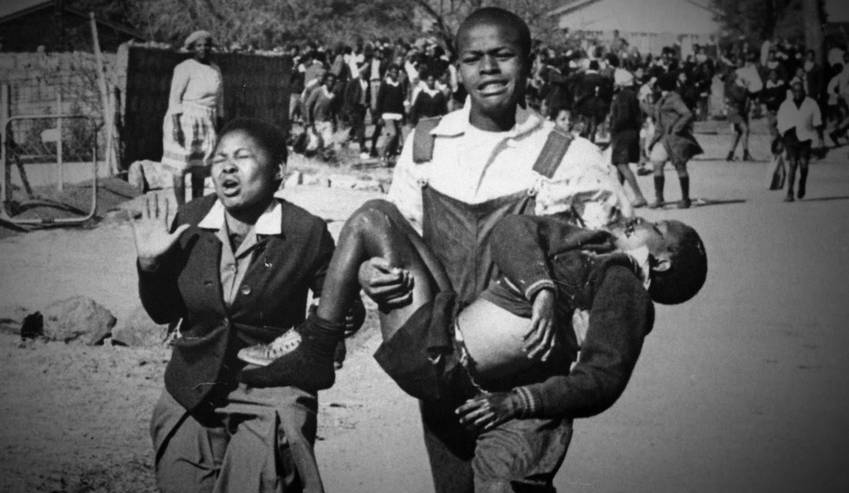
At least six persons were killed when a demonstration by 10,000 students in the black township of Soweto, 10 miles from Johannesburg, South Africa, turned into a riot. Two of the dead were students killed by police gunfire, and an official statement said two others were government officials pulled from their cars and killed by the students. The area was sealed off to whites and army units were standing by. The Soweto uprising, a protest by black African schoolchildren and adults against a regulation requiring the teaching of classes in the Afrikaans language and barring the use of the Zulu language, began in the black African slum district near Johannesburg known as the South West Township in South Africa, with six deaths on the first day of student protests. At the time, Soweto’s schools were “open only to those who can afford books and uniforms”, and a group of 100 of the older students had assembled the day before to plan the protest march against the mandatory use of Afrikaans for teaching mathematics and science. Wearing their school uniforms, the students gathered at the school with picket signs the next morning and at 7:30 began marching to a nearby stadium in the Orlando East neighborhood. The death toll after the riot ended was 178 people killed, including 12 children and two white bystanders; and 1,139 injured. On July 6, South Africa’s Education Minister Michiel C. Botha announced that his government agreed to rescind the regulation requiring mandatory instruction in Afrikaans.
Industrial production, personal income and housing starts all rose in May as the expansion of the economy continued, government reports disclosed today. Housing construction, however, continued to be one of the few sluggish sectors, mainly because the cost of new homes has risen much faster than average incomes. At an annual rate of 1.42 million units in May, housing starts were slightly above the April level of 1.38 million units but not so high as in February and March. The Commerce Department reported that the United States balance of payments on current account swung, as expected, into modest deficit in the first quarter of 1976, after a strong surplus all through 1975. Building permits for new construction continued to indicate a gradual recovery in housing, however. Permits were at an annual rate of 1.16 million in May, up from the April level of 1.1 million and the highest level since the recovery began in the spring of last year.
The Senate approved a $4 billion bill that sponsors said would create up to 300,000 jobs, mainly through public works projects. The 69-25 vote was six more than the two-thirds needed to override a possible veto by President Ford. The bill is almost identical to a $6 billion measure Ford vetoed in February. The House voted to override that one, but the Senate fell three votes short. The bill just passed was reached in a House-Senate conference and now the House must vote. There was no immediate indication if the President would veto it.
The House rejected an effort to cut the food stamp program by $794 million and kept intact a $12.5 billion agriculture and food services appropriations bill. The measure, passed 377 to 26 and sent to the Senate, would fund farm subsidy, rural and conservation development and food service programs for the 1977 fiscal year that starts October 1. Rep. John H. Rousselot (R-California) proposed the food stamp cut from the $4.749 billion provided in the bill but lost on a 222-184 vote. The food stamp money still is $409 million less than the $5.2 billion provided in the current fiscal year.
A growing number of government and academic experts have concluded that the present policies of the United States, Germany and France encouraging the commercial use of plutonium and the development of the breeder reactor will undermine existing international controls and could lead to the spread of nuclear weapons. Partly as a result of this increasing awareness, a HouseSenate conference committee approved today an amendment to the foreign aid bill applying a limited curb to both the exporting and importing of plutonium reprocessing equipment, and a House committee conand an amendment to another bill that in effect would ibar such shpiments from the United States for the next few years. Both actions, according to staff members, represent the first time Congress has moved to enact laws concerning the complex nuclear proliferation problem. Past Congressional actions in the area were said to have involved resolutions that do not have the effect of law.
The Louisiana House Committee on Civil Law and Procedure rejected the proposed Equal Rights Amendment to the U.S. Constitution, effectively dooming the issue in the state Legislature for the fourth consecutive year. The resolution calling for ratification technically still could be considered by the full House, but that would be highly unlikely in view of the heavy vote, 10 to 6, against it. Thirty-four states have ratified the amendment, but two of them have moved to rescind ratification and at least four more would have to approve for the ERA to take effect.
Attorney General Edward Levi told a news conference that he thought the courts had tried to follow the 1974 law that orders federal courts to impose school busing in desegregation cases only as a last resort. His statement sharply contrasts with the repeated assertions of President Ford that if the courts would follow the law, the so‐called Esch Amendment, they would not have to impose “forced busing.” Mr. Levi, holding his first news conference in a year, also said that he did not think that the Supreme Court should “go back” on its earlier rulings on school desegregation and busing. He portrayed the Justice Department’s current theories and initiatives regarding busing as attempts to continue the development of the law on busing, rather than to modify earlier rulings. The Attorney General’s statement that the Court should not “go back,” and his description of the department’s efforts as attempts to “continue” rather than modify Supreme Court case law, contrast with the impression given by recent Presidential and White House statements.
A bill to continue the Federal Energy Administration for 15 months and to require major energy companies to disclose costs and profits for major functions, such as oil production, was approved by the Senate and sent to conference with the House. The Senate wrote into the measure amendments authorizing Federal subsidies and loan guarantees for energy conservation efforts by home owners. business and state and local governments. However, it seems unlikely that the House will go along with these provisions because House and Senate conferees have been deadlocked on similar provisions in another bill that would establish mandatory energy efficiency standards for new buildings. The energy agency is scheduled to expire at midnight June 30. Congress expects to send the extension bill to President Ford before the deadline. He is expected to sign it.
House Republican leaders said today that they would try to shame the Democrats into agreeing to rules changes that would prevent anyone from again amassing as much power as Representative Wayne L. Hays of Ohio. The House Democratic leadership, aware that every member who has been implicated in the Capitol Hill sex scandal has been a Democrat, has been seeking to dampen minority demands that changes are needed to prevent payroll padding and other abuses of power. The Democratic strategy is to smooth over the administrative questions that the cases of Elizabeth Ray and Colleen Gardner have posed, and thus deprive the Republicans of campaign issue in an election year. Republicans, outnumbered in the House by 2 to 1, have introduced a dozen resolutions intended to correct administrative abuses in the two weeks since Miss Ray accused Mr. Hays of having given her a job with no duties in return for sexual favors.
Jimmy Carter’s apparently successful campaign for the Democratic presidential nomination has left his organization more than $1 million in debt. Aides to Mr. Carter, however, believe that the pace of private contributions will continue to accelerate, generating more federal matching funds and enabling him to pay off the debt. As of June 1, his campaign had assets of about $775,000, including $144,000 in cash, and debts of more than $1,840,000. His prospective Republican opponents, President Ford and Ronald Reagan, were operating in the black after the first five months of 1976.
Two nurses were arrested and charged with the murders of five patients last summer at the Veterans Administration Hospital in Ann Arbor, Michigan, the Federal Bureau of Investigation said. The two were also charged with 10 counts of introducing poison into the intravenous medicine of patients during a series of mysterious deaths from respiratory arrest at the hospital. Jay E. Bailey, acting special agent in charge of the Michigan F.B.I. office, identified the suspects as Filipina B. Narciso, 30 years old, of Ypsilanti, Michigan, and Leonora M. Perez, 31, a former Ann Arbor resident who now lives in Evanston, Illinois. Mr. Bailey would not comment on any possible motive for the slayings. Little was known of the background of the two nurses, other than that they are natives of the Philippines. The two women have been the center of the F.B.I. investigation at the V.A. hospital since last August, when Federal agents were called in to investigate a series of breathing failures among 20 patients. The nurses have consistently maintained that they are innocent of any wrongdoing. After a vast FBI investigation into the deaths, the nurses Filipina Narciso and Leonora Perez were charged with murder and tried but would be convicted only for the charges of poisoning and conspiracy. Both defendants were recent immigrants to the United States, and the trial was marred by accusations of racism. One man, originally slated to be the lead witness for the prosecution, referred to Perez and Narciso as “slant-eyed bitches” and asserted that there was a nationwide conspiracy of Filipino nurses to murder veterans. Also, racial tensions ran high because of the country’s large rates of immigration from Asia. Public opinion was against prosecution of the nurses on the basis that they could have had only the most trivial of possible motives for conspiring to commit such extremely serious crimes, and the case was dropped after a retrial had been ordered.
United States Steel Corporation, which is involved in a number of air pollution conrtroversies around the country, has reopened a dispute with the Environmental Protection Agency over mill emissions in Birmingham, Alabama, the South’s most polluted city. The company wants to continue operating its old‐fashioned open hearth steel furnaces through 1977, despite an earlier promise to shut them by July 1. The Federal environmental agency, which extracted the shutdown promise more than a year ago after long and frequently acrimonious negotiations, says the hearths must close by the agreed‐upon date because they discharge more than 3,000 tons of reddish iron dust into Birmingham’s air each year, and because they are a major cause of the city’s consistent inability to meet air pollution standards.
Insects which appear to be ticks have been mailed in extortion letters to several companies and may be linked to a series of 16 letter bombs delivered to various corporate executives this week, the FBI reported. In Denver, the FBI said an extortion note containing two allegedly diseased ticks was received Monday by the Combined Insurance Co. of America. An FBI spokesman said the envelope markings on the envelope were similar to those on the terrorist letter bombs. A second company reporting getting a letter containing ticks was a plastic division of Mobil Chemical located in Macedon, New York.
A second man has been found guilty of first-degree murder and sentenced to life imprisonment for the stabbing death in Philadelphia last December 7 of newspaper heir John S. Knight III. The sentence was handed down against Steven Maleno, 25, who had pleaded guilty. A jury convicted Salvatore Soli, 37, of Knight’s murder and he was sentenced on May 21. A third suspect, Felix Melendez, 20, was found murdered and Maleno and Soli are charged with his death.
Landing and takeoff noise levels of the Anglo-French supersonic Concorde jet should go down as pilots become accustomed to operating at Dulles International Airport outside of Washington, D.C., Transportation Secretary William T. Coleman Jr. said in Paris. He urged the New York Port Authority to permit the Concorde to land and take off at Kennedy Airport “if New York expects to remain the primary port of exit and entry into the United States … Coleman said he felt the Port Authority showed poor judgment when it denied and delayed landing rights for the Concorde at Kennedy.
Unusually heavy rains, up to 12 inches in some areas, flooded vast sections of Houston yesterday, causing at least four deaths and sending thousands of residents fleeing their inundated homes and businesses. Rescue operations by helicopters and boats went on through the night as the police attempted to account for several missing persons and transfer flood victims to higher ground. Hundreds of others were stranded at offices, at friends’ homes and at ad hoc “flood parties.” This morning, some of them made their way home to find heavy damage. A few reported finding that poisonous copperhead snakes had taken refuge in their outlying apartments. Damage was estimated in the tens of millions of dollars today as the flood waters, six feet deep and more in some low‐lying areas, receded. More rain was forecast, but by late this afternoon storm clouds had spared most of the metropolitan area from fresh downpours. For the first time in its 11-year history, the Astrodome was forced to cancel a sports event because of bad weather. Officials said a game between the Pittsburgh Pirates and the Houston Astros was “rained in.” Although the domed stadium was dry inside, where players were warming up before a dozen diehard fans, flooded streets prevented four umpires from getting there.
The character of “Victor Lord”, featured on almost every episode of the U.S. soap opera “One Life to Live,” was written out of the series by having him die in a hospital after having a stroke. In 2003, the storyline of the TV series would feature a twist of Victor turning out, almost 27 years later, to have been alive all along and planning a bizarre scheme involving killing his granddaughter to receive a heart transplant, ending with Victor dying a second time on the show.
Panamanian-born jockey Jorge Tejeira set a record by winning eight horse races in a single day, finishing in first place three times at the Keystone Racetrack in Bensalem, Pennsylvania, then five more times at the Atlantic City Race Course in Mays Landing, New Jersey.
Baseball Commissioner Bowie Kuhn ordered a hearing on the mass sale of unsigned star players by the Oakland A’s and told the players not to change sides until he had looked into the issues raised by the money “revolution.” Charles Finley, the Oakland owner, sold Vida Blue, the pitcher, to the Yankees and Joe Rudi, outfielder, and Rollie Fingers, pitcher, to Boston for a total of $3.5 million. The commissioner acted less than 24 hours after the Oakland team had beaten the major leagues’ trading deadline with the biggest auction of talent in baseball history. The A’s sold Vida Blue to the New York Yankees for $1.5 million and Joe Rudi and Rollie Fingers to the Boston Red Sox for $1 million apiece, two months after having traded Reggie Jackson and Ken Holtzman to the Baltimore Orioles. As a result, Charles O. Finley in effect dismantled the club that had won the last five Western Division championships in the American League and three straight World Series from 1972 through 1974.
The league leader in earned run average, Bill Travers lowered his mark to 1.59 by pitching the Milwaukee Brewers to a 9–0 shutout victory over the California Angels. The southpaw yielded only three hits, walked three, and struck out four. Hank Aaron drove in two runs with the 749th homer of his major league career.
Making his 13th start, Mike Cuellar finally turned in his first complete game of the season and pitched the Orioles to a 10–2 victory over the White Sox. Doug DeCinces and Lee May made it easy for Cuellar, each hitting a three-run homer.
A five-run splurge in the first inning enabled the Cubs to defeat the Reds, 5–3, in a game called because of rain in the bottom of the seventh. Singles by Joe Wallis, Jose Cardenal and Bill Madlock produced the Cubs’ first tally before a single by Manny Trillo and double by Steve Swisher added a pair apiece.
Victims of a two-run rally in the ninth inning, the Royals were stopped on their seven-game winning streak by the Tigers, 4–3. Dan Meyer opened the frame with a single, advanced to second after Rusty Staub flied out and scored on a single by Alex Johnson to tie the score at 3–3. Johnson then stole second and, after an intentional pass to Aurelio Rodriguez, Mickey Stanley batted for Bruce Kimm and singled to drive in the Tigers’ winning run.
A three-run homer by Al Oliver provided the game-winning blow for the Pirates, who defeated the Astros, 6–3. The Pirates picked up a run in the first inning on singles by Frank Taveras and Willie Stargell around a stolen base before Oliver delivered his round-tripper in the third. Two more runs driven in by Richie Hebner and Dave Parker clinched matters in the fifth.
Graig Nettles homered to spark a three-run outburst in the second inning and Oscar Gamble hit for the circuit with two men on base in the seventh when the Yankees added four more runs to clinch a 9–4 victory over the Twins.
Scoring all their runs in the seventh inning, the Dodgers defeated the Mets, 4–1. After Steve Garvey, Ron Cey and Dusty Baker led off with singles, two runs scored when Bill Russell singled. Ted Sizemore then doubled to add another pair, sealing the defeat for the Mets.
Claudell Washington, who entered the game with a .217 average, smashed a homer and single, driving in four runs, to lead the Athletics to a 4–1 win over the Red Sox. Paul Mitchell posted the decision on a three-hitter. Joe Rudi and Rollie Fingers, whom A’s owner Charlie Finley had sold to the Red Sox, practiced before the game but then changed into street clothes because Commissioner Bowie Kuhn had ordered a hearing on the deal to be held in New York June 17.
Dick Allen batted in two runs with a single and drove in two more with a homer, while Jim Kaat (6–2) yielded only four hits, as the Phillies defeated the Giants, 6–1. John Montefusco (7–6) took the loss for the Giants.
Dave Winfield, Merv Rettenmund and Mike Ivie drove in two runs apiece to account for all of the Padres’ scoring in a 6–2 victory over the Expos. A bases-loaded single by Winfield and double by Rettenmund produced four runs in the third inning before Ivie homered with a man on base in the fifth.
On the brink of another defeat, the Cardinals rallied for two runs in the ninth inning and edged the Braves, 4–3. Willie Crawford walked and Hector Cruz sacrificed. Willie Montanez booted a grounder by Mike Tyson, putting runners on first and third. Vic Harris singled, scoring Lou Brock, who ran for Crawford. After a walk to Don Kessinger loaded the bases, Bake McBride singled to drive in the winning run.
With a triple and homer, Buddy Bell batted in four runs to lead the Indians to a 9–4 victory over the Rangers, handing Bert Blyleven his third straight loss since the Rangers obtained the righthander in a deal with the Twins. Bell knocked in one run with his triple and three with his homer.
Milwaukee Brewers 9, California Angels 0
Baltimore Orioles 10, Chicago White Sox 2
Chicago Cubs 5, Cincinnati Reds 3
Kansas City Royals 3, Detroit Tigers 4
Pittsburgh Pirates 6, Houston Astros 3
New York Yankees 9, Minnesota Twins 4
Los Angeles Dodgers 4, New York Mets 1
Boston Red Sox 1, Oakland Athletics 4
San Francisco Giants 1, Philadelphia Phillies 6
Montreal Expos 2, San Diego Padres 6
Atlanta Braves 3, St. Louis Cardinals 4
Cleveland Indians 9, Texas Rangers 4
The stock market shook off Tuesday’s spell of profit taking yesterday to post a modest gain in moderately active trading. The Dow Jones industrial average, up 6.47 points to 992.39 at 3 PM. retreated thereafter following the report of the death of the American Ambassador to Lebanon to close at 988.62, up 2.70.
Dow Jones Industrial Average: 988.52 (+2.60, +0.26%)
Born:
Tom Lenk, American TV actor (“Buffy the Vampire Slayer”); in Camarillo, California.
Luke Petitgout, NFL tackle and guard (New York Giants, Tampa Bay Buccaneers), in Milford, Delaware.
Clarence Love, NFL cornerback (Philadelphia Eagles, Baltimore Raves, Oakland Raiders), in Jackson, Michigan.
Bobby Setzer, NFL defensive end (San Francisco 49ers, Chicago Bears), in Walnut Creek, California.
Mfon Udoka, WNBA forward (Detroit Shock, Houston Comets, Los Angeles Sparks), in Portland, Oregon.
Died:
Hector Pieterson, 12, South African schoolboy, shot by police during the Soweto uprising. The photograph of his body being carried sparked worldwide outrage against South Africa’s apartheid government.
Francis E. Meloy Jr., 59, U.S. ambassador to Lebanon, kidnapped and killed.
 History Diaries