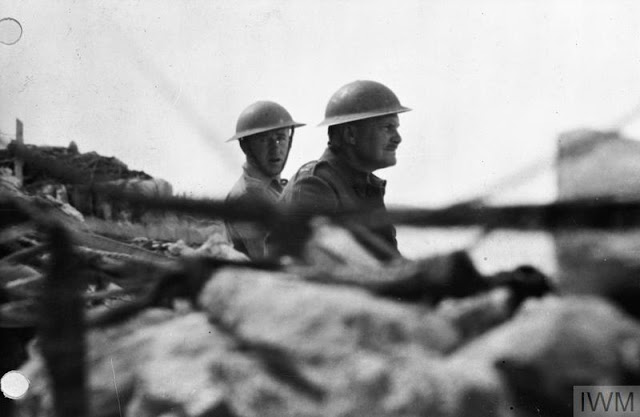
The British evacuation from Crete begins winding down as the Luftwaffe’s domination over the waters south of the island increases. The capture of new airfields at Heraklion (Candia), Retimo (Rethymno), and elsewhere raises the Luftwaffe’s power to new heights, and the RAF is powerless to prevent extremely accurate Junkers Ju 87 Stuka attacks on warships during daylight hours. The problem for the Royal Navy is that, while they can make it to the key embarkation ports such as Sfakia during darkness, they can’t get clear of the island before dawn — and Luftwaffe pilots are early risers.
Australian destroyers HMAS Napier and HMAS Nizam embarked 1,510 troops at Sfakia, Crete, Greece and departed before dawn for Egypt; they were attacked by Axis aircraft en route, causing minor damage. At 0600 hours, British cruiser HMS Phoebe, minelayer HMS Abdiel, and destroyers HMS Jackal, HMS Kimberley, and HMS Hotspur departed Alexandria, Egypt for Sfakia to evacuate more troops. During the night of 31 May/1 June, about 4,000 men are taken off. These are the final evacuations from Sfakia. Light cruiser HMS Phoebe leads the evacuation contingent there. They are covered by a large force including cruisers Calcutta and Coventry. The Luftwaffe damages destroyer Napier, one of the ships at Sfakia.
There are 16,511 men land at Alexandria on 31 May 1941 from Crete. However, this is just a fraction of the thousands of British and Dominion troops still on the island, let alone thousands of Greek soldiers. Many of the Allied soldiers barely escaped from the mainland during the Germans’ Operation Marita, and now they find themselves caught in the same kind of trap on Crete. A small number can be taken out by two Sunderland flying boats, but only 54 senior officers (including General Freyberg) make it out that way.
By 31 May the evacuation of Crete was drawing to a close and the commandos of Layforce, running low on ammunition, rations and water, fell back towards Sfakia too. Colonel Laycock and some of his headquarters, including his intelligence officer Evelyn Waugh, managed to get out on the last ship to depart. The vast majority of the commandos were left behind on the island. Although some of them were later able to make their own way back to Egypt, by the end of the operation about 600 of the 800 commandos sent to Crete were listed as killed, missing or wounded. Only 23 officers and 156 others managed to get off the island.
On Crete, the temporary commander of Crete General Kurt Student responds to demands from his Fallschirmjäger by publishing an order authorizing reprisals against the local population. Many German troops are incensed at military actions taken against them by Greek civilians on the island and want revenge. This order plants the seeds for long-lasting hatred between Cretan civilians and Germans that extends long past the war.
The reprisals are to consist of shooting, fines, burning villages or even extermination of the male population. Several senior officers leave the conference in protest of the order, but it does go into effect and reprisals are taken. This will lead to charges made against General Student after the war.
The tables on Crete turn — the RAF now is the air force that bombs Maleme and Heraklion during the night.
In Malta, it is a quiet day in the air. However, the ruins of the building that housed the former Courts of Justice fall into the city’s main street. This blocks Kingsway until the street can be cleared.
The end is at hand at Baghdad for the Iraqi government on 31 May 1941. With the Rashid Ali government and the Grand Mufti both having fled to Persia (taking refuge in the Japanese legation), the surrender is left to the Mayor of Baghdad and his delegation. The Mayor meets the British at the Washash Bridge along with British Ambassador Sir Kinahan Cornwallis, who has been confined to the British Embassy all month.
The British decide not to occupy Baghdad, which is a very practical decision due to the small strength (1200) of British forces in the vicinity. The British invite Prince ‘Abd al-Ilah to return to the city. As part of the armistice, both sides release prisoners (except for German and Italian POWs of the British). The British allow the Iraqi troops to return o their barracks with their equipment.
Without an effective government, Baghdad descends into an orgy of looting and attacks. The government heretofore has protected the city’s Jewish Quarter, but now that protection is gone. About 120 Jewish inhabitants perish and 850 are injured before the British and the incoming (returning) government restore order.
Without flyable planes, the German military mission (Sonderkommando Junck) departs for Syria on foot (the last arriving 10 June). The eight or so Italian Fiat CR-42 fighters of 155th Squadriglia still operational at Kirkuk fly to Syria, thence to Rhodes (two are destroyed by the Italians as unusable).
In the Reich, Reichsmarschall Hermann Goering makes a lame attempt to explain the Iraq disaster to Hitler and Foreign Minister Joachim Ribbentrop:
“They don’t know anything about aviation out there, and airlifting fuel would have been pointless and costly.”
It is a feeble excuse for the utter failure of the Luftwaffe in Iraq. The British have managed to win in Iraq precisely because of its adroit use of airpower. The failed Iraq campaign probably never was a winnable proposition for the Axis due to the inherent British advantages in the region (large numbers of Indian troops close at hand, for instance), but Germany could have made a better showing and thereby curried stature within the Arab world.
The British are mopping up throughout various areas of Abyssinia. Middle East Commander General Archibald Wavell also is preparing a plan of attack against French Somaliland. Next on the docket is an assault on the last Italian port on the Red Sea Assab. Planned for mid-June, this will be Operation CHRONOMETER.
Himmler has approved Sigmund Rascher’s request to submit prisoners at Dachau to pressure-chamber experiments.
The German government has urged parents in areas most affected by the war to send their children to country camps where they will be cared for by specially-trained teachers. But the church is unhappy about this evacuation and says that the camps are being used to separate children from their parents and institute “education by the state.” Artur Axmann, the Reich youth leader, recently visited camps in Slovakia in an attempt to reassure parents.
Nazi occupiers forbid Jews access to beaches and swimming pools in the Netherlands.
Expropriation of Jewish property began in Belgium.
After successfully escaping the Oflag IV-C prisoner of war camp at Colditz Castle, Germany earlier in the month, British Lieutenant Anthony “Peter” Allan failed to secure assistance from the US Consulate at Vienna in occupied Austria. Lieutenant Peter Allan of the Queens Own Cameron Highlanders, who escaped from the Colditz Castle POW camp in a mattress carried by French Army POWs on 10 May 1941, makes it to Vienna. He had attempted to escape for Switzerland but had insufficient rations, so headed east to Vienna. Allan had walked into the US consulate there asking for help to reach Budapest and neutral Hungary. After the consul refused (there are German staff who witness the encounter), Allan went across the street and fell asleep in a park. Frozen by the night air, Allan crawled to a nearby house and surrendered. He is taken to a hospital, then back to Colditz today.
Bringing a welcome cargo of more than 4,000,000 eggs, 120,000 pounds of cheese and 1,000 tons of flour, the first foodship to ferry across the Atlantic from the United States under the terms of the lease-lend act has arrived in Britain.
Preston North End win the Cup Final replay against Arsenal, 2-1, at Blackburn.
The voyage of the SS Dunera, a troopship which sailed to Australia last July with 2,700 internees aboard, has led to the court martial of their British Army escort, including the commanding officer, after repeated questions in parliament. After the ship reached Australia in September, it was reported that the internees, most of them Jews who had fled from Hitler, has been brutally searched; their luggage had been confiscated and ripped open with bayonets, their valuable removed and never returned by their army guards. They themselves were confined below deck during the two-month journey in squalid conditions. Some were physically assaulted. One jumped overboard. The court martial found three men guilty, including Major William Patrick Scott, the CO, who was severely reprimanded. His regimental sergeant major was jailed for 12 months. The voyage was the worst incident of several which followed a series of decisions between 12 May and 26 June 1940 to intern anyone from Germany, Austria and Italy who was in Britain, although the great majority were eager to help the war against Hitler. All were out into transit camps — on racecourses, at holiday camps, in a derelict mill — until transferred to camps and boarding houses on the Isle of Man. At a peak there were 27,000 in custody. Four ships left for Canada including the SS Arandora Star which was sunk by a U-boat with the loss of 175 Germans and 486 Italians. Soon afterwards the tide of opinion turned in favor of the internees. In a Commons debate wholesale internment was denounced as callous and called a “bespattered page in our history”. Over 15,000 internees have been released and more will be, including many from the Dunera.
Former Kaiser Wilhelm II is in “serious condition” at his Doom estate in Holland and members of his family are rushing to his bed side, the official German DNB agency reported shortly before mid-night. His daughter, the Duchess of Braunschweig, has arrived at the bedside of the 82-year-old former ruler of Germany and Crown Prince Friedrich is expected to arrive from Germany during the night, it was stated.
Rationing of coffee, tea, and cocoa starts today in Switzerland.
A Soviet decree stated that children of traitors could be criminally charged after they reached the age of 15.
German Lieutenant Colonel Edwin Scholl confides to Richard Sorge in Tokyo that 170 to 190 German divisions are massed on the Soviet border and the invasion will begin on June 15.
The Luftwaffe bombed Dublin, Ireland. The bombs hit a mostly working-class area of Dublin, including the areas of the North Richmond Street, Rutland Place, Phoenix Park, the Dublin Zoo, and most especially hard hit, the North Strand. The raid claimed the lives of 34 persons, injured 90, destroyed or damaged approximately 300 houses, and left 400 persons homeless. Áras an Uachtaráin, the official residence of Irish President was also damaged. Germany would later offer compensation. In the early morning hours, the Luftwaffe bombs Dublin at 02:00. The Irish lodge a diplomatic protest with London, who characterizes the incident as a navigational error caused by high winds. The Luftwaffe also bomb Liverpool and areas along the Mersey and the Bristol area during the night, so there is some plausibility to the German denial of intent as those areas are not too distant from Dublin.
May 1941 marks the end of the Blitz or at least the most effective and devastating phase of it. The Luftwaffe is busy moving aircraft to Poland in order to support future operations in the Soviet Union. British civilian losses for the period September 1940 — May 1941 inclusive, which do include some military personnel on leave and the like, are estimated to total 39,678 dead and 46,119 injured.
At Black Tarset Street, Newcastle upon Tyne, four people, including a seven-year-old girl and an eleven-year-old Boy Scout, succumb to gas fumes emanating from a bomb crater. Two firemen (Larry Young and Leading Fireman Bruce) descend into the crater to rescue them. Young manages to retrieve the bodies and also rescue Bruce, who passes out from the fumes. Larry Young receives the George Medal for his gallantry and Bruce is commended. One of the victims, Auxiliary Fireman Wanless, earns a posthumous commendation.
It is a big day for the U-boat fleet. A massive presence of U-boats has been sent into the Atlantic in support of (now sunk) battleship Bismarck and heavy cruiser Prinz Eugen, and today the move pays off — though it is fairer to say that the U-boat fleet sinkings are simply time-shifted due to the dispositions rather than there being any net increase over what would normally have taken place.
U-38, commanded by Kapitänleutnant Heinrich Liebe, sank Norwegian steamer Rinda (6029grt) in 6-52N, 15-14W. On 0024 hours on 31 May 1941 the unescorted Rinda (Master Niels Olsen) was hit by two torpedoes from U-38 off Liberia. The torpedoes struck at hatch #4 and #5 and blew off the funnel and the entire after deck. Four men on deck and the master and another seaman on the bridge were killed. The survivors attempted to lower the lifeboats but the ship sank before they were free and the men were pulled down by the suction, drowning some of them. Only one lifeboat with one man hanging on to it and four rafts floated free. A few survivors righted the boat and picked up others during the night in the light of burning cotton. Finally, it contained 18 survivors (four of them badly burnt) and set sail for Freetown. On 1 June, they were picked up by HMS Pict (FY 132) (Lt Cdr W.N.H. Faichney, RNR) after being located by aircraft and taken to Freetown, where the wounded men were taken to a hospital ship. Bernt Gustavsen, who had been seriously burnt, stayed in the hospital for 11 months after the sinking. He then joined the Norwegian Navy and died when HNoMS Montbretia (K 208) was torpedoed and sunk by U-262 (Franke) on 18 Nov 1942 Among the survivors of Rinda was also the cat, that was found swimming in the ocean by the lifeboat during the night. She remained on board of the armed trawler that rescued the survivors and was renamed Rinda. The 6,029-ton Rinda was carrying general cargo, including cotton balls and was bound for the United Kingdom. Among the survivors of the Rinda was a cat, that was found swimming in the ocean by the lifeboat during the night. She remained on board of the HMS Pict and was renamed Rinda.
U-69, commanded by Kapitänleutnant Jost Metzler, sank British steamer Sangara (5445grt) in the harbor of Accra. At 0025 hours on 31 May 1941 U-69 fired one torpedo at the Sangara (Master Sidney Themans) lying at anchor in the roads of Accra after arriving there on 30 May. She sank by the stern in 33 feet of water with her bow still visible above the water. One crew member was lost. The master died in an accident on 13 June 1941, apparently drowning while examining the wreck of his ship. At 2110 hours on 12 August 1941 the Italian submarine Enrico Tazzoli (Capitan-Fregatta Carlo Fecia di Cossato) fired a torpedo at the bow of Sangara but missed. On 1 April 1943 the wreck of Sangara was sold to two locally based engineers for the sum of 500 pounds sterling, was refloated and towed to Lagos roads, but it was not clear what should happen with her and she was then towed to Douala at the mouth of the Cameroon River where the cargo was salvaged and sold. The 5,445-ton Sangara sank by the stern in 33 feet of water with her bow still visible above the water.
U-106, commanded by Kapitänleutnant Jürgen Oesten, sank British steamer Clan Macdougall (6843grt) at 16-50N, 25-10W. At 0313 hours on 31 May 1941 the unescorted Clan Macdougall (Master Cyril H. Parfitt) was hit by one torpedo from U-106 north of the Cape Verde Islands. The U-boat had observed the vessel leaving a harbour on São Vicente and followed her. A second torpedo became a circle runner and a third torpedo missed at 0324 hours. The ship sank eleven minutes after being hit by a coup de grâce at 0334 hours. Two crew members were lost. The master, 74 crew members and ten gunners landed at Santo Antão, Cape Verde Islands. The 6,843-ton Clan Macdougall was carrying general cargo and was bound for East London, South Africa.
U-107, commanded by Kapitänleutnant Günter Hessler, sank British steamer Sire (5664grt) at 8-50N, 15-30W. At 0739 hours on 31 May 1941 the Sire (Master John Thomas Bennett), dispersed from convoy OB.320, was hit on the starboard side in the bow by one torpedo from U-107 and sank after 10 minutes west-southwest of Freetown. Three crew members were lost. The master and 45 crew members were picked up by HMS Marguerite (K 54) (Lt Cdr A.N. Blundell) and landed at Freetown on 6 June. The 5,664-ton Sire was carrying ballast and was bound for Pepel, Sierra Leone.
U-147, commanded by Kapitänleutnant Eberhard Wetjen, badly damaged British steamer Gravelines (2491grt), a straggler from convoy HX.127, in 56N, 11-13W. On 31 May 1941 the Gravelines (Master Jean Soulé), a straggler from convoy HX.127, was torpedoed by U-147 northwest of Bloody Foreland and broke in two. The master and 10 crew members died. 23 crew members and two gunners were picked up by the British sloop HMS Deptford (L 53) (Lt Cdr H.R. White) and landed at Liverpool. The afterpart of the Gravelines sank and the forepart was towed to the Clyde and beached at Kames Bay on 3 June. The vessel was declared a total loss and was broken up in Rothesay in 1942. The 2,491-ton Gravelines was carrying timber and was bound for London, England.
U-204, commanded by Kapitänleutnant Walter Kell, sank Icelandic fishing trawler Holmsteinn (16grt) with artillery NNW of Dyrafjorden. At 0515 hours on 31 May 1941 the unescorted and unarmed Holmsteinn (Master Ásgeir Sigurðsson) was sunk by gunfire by U-204 about 65 miles west-southwest of Dyrafjord, Iceland. The U-boat had spotted the fishing vessel about 4 hours earlier and tried to evade it, but Kell assumed that they had been spotted and decided to sink the vessel to prevent that the presence of the U-boat in the area became known to the enemy. All of the ship’s complement of 4 died.
The flag of CS.1 was transferred from heavy cruiser HMS Norfolk to heavy cruiser HMS Devonshire.
Heavy cruiser HMS Suffolk arrived at Conception Bay to refuel. After refueling, she returned to patrol.
Light cruiser HMS Birmingham arrived at Scapa Flow from patrol.
Destroyer HMS Windsor departed Greenock at 1030 for Dundee to carry out repairs to weather damage. The destroyer arrived at 1030 on 1 June.
Destroyer HMS Impulsive departed Scapa Flow at 1130 escorting steamer Lady of Mann and Amsterdam to Aberdeen where the ships arrived at 1900. Destroyer Impulsive arrived back at Scapa Flow at 2230.
Anti-aircraft ship HMS Alynbank departed Methil and met convoy EC.24 off may Island. The convoy was escorted to the north. In Pentland Firth, the ship was detached from the convoy. Ship Alynbank arrived at Scapa Flow at 1800 escorting Dutch submarine HNLMS O.14 into harbour.
During the night of 31 May/1 June, the final night of evacuation of Crete took place.
Sfakia: light cruiser HMS Phoebe, minelayer HMS Abdiel, and destroyers HMS Jackal, HMS Kimberley, and HMS Hotspur departed Alexandria at 0600/31st and lifted 3710 men in the last night of the evacuation. Anti-aircraft cruisers HMS Calcutta (Captain D. M. Lees DSO) and HMS Coventry sortied from Alexandria on 1 June to assist this force, but Calcutta was sunk at 0945 on 1 June soon after leaving port in 41-55N, 28-15E. Cdr G. P. Hunter-Blair Rtd and Lt F. J. March and one hundred and one ratings were killed. One Marine and four ratings were missing. Ten ratings died of wounds. Cdr (E) R. H. Bryan RNR, and Sub Lt G. A. J. Wells RNVR, and twelve ratings were wounded. Anti-aircraft cruiser Coventry picked up 255 survivors from the cruiser.
In the evacuation of Crete, 16,511 were disembarked at Alexandria. In addition to the evacuations by Royal Navy ships, 54 men were evacuated by flying boat on the 31st/1 June.
Review of damage to British warships in operations off Crete at the end of May 1941:
Requiring routine repairs before further operations: destroyers HMS Jervis, HMS Jaguar, and HMS Griffin.
Restored to action within a fortnight: light cruiser HMS Ajax and destroyers HMS Havock, HMS Kingston, and HMAS Nizam.
Restored to action within several weeks: light cruisers HMAS Perth, HMS Naiad, HMS Carlisle and destroyers HMAS Napier, HMS Kipling, and HMS Decoy.
Restored to action only after extensive repairs: aircraft carrier HMS Formidable, light cruisers HMS Dido, HMS Orion and destroyers HMS Kelvin and HMS Nubian.
The only undamaged ships in the Mediterranean Fleet were light cruiser HMS Phoebe, anti-aircraft cruiser HMS Coventry, destroyers HMS Hero, HMS Ilex, HMS Isis, HMS Janus, HMS Jackal, HMS Hotspur, HMS Kandahar, HMS Kimberley, and HMS Hasty. Destroyer HMAS Waterhen, which was repairing and refitting earlier damage, did not take part in any Crete operations.
The following merchant ships were seized at Suda Bay and taken for use by Italy and Germany.
British steamer Araybank (7258grt) was set on fire by German bombing at Suda Bay on the 16th. Fell into German hands when the Island fell. Steamer Araybank was taken to Trieste.
British steamer Dalesman (6343grt) was damaged by German bombing at Suda Bay on the 14th and beached. The steamer was taken to Trieste and renamed Pluto.
Greek steamer Nicolauou Ourania (6397grt) was damaged by German bombing at Suda Bay on the 16th. The steamer was beached. The steamer was renamed Nikolaus for German service.
British tanker RFA Olna (7073grt) was damaged by German bombing on the 18th at Suda Bay and beached. The tanker was taken over by the Germans.
Italian torpedo boat Pleiadi was damaged by an Italian bomber falling out of control off Tobruk. Her superstructure was destroyed and her hull was damaged by fire. The torpedo boat was run aground to prevent sinking. While being salvaged, she was further damaged by RAF bombers on 13 October 1941. The torpedo boat was written off as a constructive total loss.
Convoy OB.329 departed Liverpool, escorted by destroyers HMS Campbeltown, HMS Wanderer, and HMS Westcott and corvettes HMS Uricula and HMS Periwinkle. The escorted was joined on 1 June by seaplane carrier HMS Pegasus and corvette HMS Marigold. The escorted was detached on 5 June when the convoy was dispersed.
Convoy WS.8X departed the Clyde with steamers Port Wyndham (8580grt), Duchess of Bedford (20,123grt), and Waiwera (10,800grt) and armed merchant cruiser HMS Esperance Bay. Aircraft carrier HMS Victorious and light cruiser HMS Neptune escorted the convoy from 31 May to 5 June. Heavy cruiser HMS Norfolk was with the convoy from 31 May to 11 June, when the convoy arrived at Freetown. Destroyers HMCS Assiniboine and HMCS Saguenay escorted the convoy locally. The convoy was escorted by destroyers HMS Sherwood, HMS Legion, ORP Piorun, HMS Wivern, HMS Wild Swan, HMS Vansittart, HMCS Saguenay, HMS St Marys, and HMS Brighton from 31 May to 3 June. All but Wivern, Wild Swan, and Vansittart returned to England. Armed merchant cruiser Esperance Bay was detached on 3 June. Destroyers Wivern, Wild Swan, and Vansittart arrived at Gibraltar on 6 June. HMS Destroyer Velox and corvette HMS Aster joined the convoy on 9 June and escorted the convoy into Freetown on 11 June. The convoy departed Freetown and escorted by light cruiser Neptune. They arrived at Capetown on 24 June. Convoy WS.8X departed Capetown on 28 June, escorted by light cruiser Neptune. The convoy called at Kilindini on 6 July and departed the same day for Aden. They arrived on 11 July and proceeded independently to Suez arriving on 15 July.
Americans all over the country and in war-battered Europe carried on the great Memorial Day tradition of special honors for the nation’s war dead. From the Tomb of the Unknown Soldier on the green slope overlooking the broad Potomac, to village cemeteries far away, salutes were fired, graves were decorated and taps sounded. The holiday was so widely observed it brought with it a pause in much of the nation’s intensive preparations for defense. Many principal aircraft plants, which have been working 24 hours a day, closed down until Monday.
Informed Washington opinion is that Ambassador John G. Winant’s hurried visit to this country is not so much to bring information to President Roosevelt, as to carry highly important and secret information back to London. Timing of his visit would suggest such was the case. It follows immediately Mr. Roosevelt’s Tuesday night speech, an address which stated American policy toward England and the war in positive terms and spoke vigorously but mysteriously of new measures to be attempted upon the Atlantic. At a press conference the next day, the chief executive made it more than clear he considers his plans for assuring safe delivery of American supplies to England a military secret of the most important character.
Secretary Ickes was given the job today of solving gasoline and oil problems arising from the defense program, and the Department of Justice immediately placed in his hands a potent weapon, the veto power over negotiations in anti-trust suits against 22 major oil companies. Attorney-General Jackson said in a statement the suits would not be permitted to impede regulation of the oil industry by Ickes, and mentioned negotiations were under way to reach an agreement with the oil companies on anti-trust actions.
Declaring “dictatorship and war” has been the trend of the Roosevelt administration, Senator Hiram Johnson, California Republican, asserted tonight that “dismayed, betrayed, we reel and stagger, as we realize that the subtle plan is about to flower.” Johnson challenged those who favor intervention in Europe to present a resolution declaring war. He notes that the US now is “at the brink of war,” which he attributes to President Franklin Roosevelt breaking a long string of promises to keep the country out of the war. He cites advocates for war as:
“…a smattering of good citizens, the vociferous little puppets of J. P. Morgan and Co., a large part of the press, practically all the columnists, the newspaper correspondents, all crying for war with Germany and against Hitler.”
He admits that support for Britain is popular, but “with the proviso that it should be ‘short of war.’”
The census bureau estimated today approximately 832,000 men will be required to register in the second draft enrollment, on July 1, of all youths who have reached the age of 21 since the initial registration last October 16.
A Gallup poll now reveals that 62 percent of Americans would rather see the country enter the war, if the alternative is British surrender.
One human life has been sacrificed every 10 minutes in accidents during the nation’s observance of the Memorial Day holiday. The accidental death list for the first two days of the holiday reached 292 Saturday night. Crowded highways and streets presented the greatest hazard to safety. Automobile fatalities numbered 190.
John G. Winant, United States Ambassador to the Court of St. James, said yesterday at the Hotel Roosevelt, where he is staying, that he had talked by telephone with President Roosevelt at Hyde Park and would report to the President in Washington on Tuesday.
A spectacular fire, endangering an estimated $25,000,000 in defense materials, laid waste to an area a quarter-mile square on the waterfront in Jersey City tonight. Federal and local investigations were begun at once. Damage was estimated at $3,000,000, exclusive of the undetermined loss in defense goods, at the time the fire was announced under control at midnight by Deputy Fire Chief Thomas Outwater. Simultaneously, Fire Chief Fred Ertle, Police Inspector William Hogue and Commander John S. Baylis, Coast Guard captain of the port, said that their preliminary investigation had indicated no evidence of sabotage. Starting from undetermined causes at 5:45 PM in the stockyards at the foot of Sixth Street, the flames created a towering column of smoke visible to scores of communities in the metropolitan area. Airline pilots reported on arrival at La Guardia Field, New York, that they had seen the fire a hundred miles distant. Twenty-five thousand persons pressed as near as police lines would permit on the New Jersey side, and thousands of others could be seen on rooftops in Manhattan, across the Hudson River.
Revision of our foreign policy, abstention from war with Japan unless she attacks our insular possessions and avoidance of further involvement in the affairs of Europe were among the ideas presented today during a series of round-table discussions at the second-day session of the Keep America Out of War Congress.
The Detroit Free Press will say in a first-page “statement of policy” in its Sunday editions tomorrow that it is prepared to abandon an isolationist stand and pledge its complete support to President Roosevelt in the foreign policy he defined in his national emergency radio address Tuesday.
A $3,557,000,000 increase in the nation’s budgetary deficit for the next fiscal year over the $9,210,000,000 deficit estimated in January was predicted today by Harold D. Smith, Director of the Bureau of the Budget, as a likely result of the stepping up of the defense program since the regular annual estimate was made.
U.S. Naval uniform regulations are changed today. The eagle is to face to the left in the rates comprising the Seaman Branch, Boatswain Mate, Turret Captain, Signalman, Gunners Mate, Fire Controlman, Quartermaster, Mineman and Torpedoman’s Mate. All other rating badges are to have an eagle facing right.
TG 1 (Rear Admiral Arthur B. Cook), comprising USS Yorktown (CV-5) (embarking squadrons VF 41, VS 41, VS 42, and VT 5), heavy cruiser USS Vincennes (CA-44), and destroyers USS Sampson (DD-394) and USS Gwin (DD-433), departs Bermuda for 4,550-mile neutrality patrol that will conclude at Hampton Roads, Virginia, on 12 June.
US 22nd and 23rd Fighter Squadrons, both operating P-40 Warhawk fighters, were assigned to St. Croix Airfield, US Virgin Islands.
The first issue of “Parade” magazine goes on sale.
Major League Baseball:
The White Sox, playing just well enough to make their winning streak four games, advanced within a game and a half of first place today with a 4–3 victory over the Browns. It was Chicago’s sixth triumph in eight games with St. Louis and its fourteenth triumph in the last 19 games. Young Jack Hallett wabbled badly in the early innings, yielding five hits and four bases on balls in three frames. Then he settled down and hurled hitless ball until the eighth, becoming the thirtieth White Sox pitcher to go the route in forty-one games. The Browns hopped off to a one-run lead in the first on George McQuinn’s walk, Chet Laabs’s single and Roy Cullenbine’s double. The Sox immediately tied when Luke Appling tripled and scored on Joe Kuhel’s roller to McQuinn. The Sox went ahead to stay in the second, aided greatly by Bob Harris’s wildness. Dario Lodigiani opened with a double and Mike Kreevich walked. Myril Hoag sacrificed and Mike Tresh singled off Harlond Clift’s glove to fill the bases. Harris then walked Hallett and Appling to force in two runs. The Sox got their final tally in the fifth inning.
Behind Johnny Vander Meer, the Reds stop the Cardinals, 5–2, as rookie Chuck Aleno, who debuted on May 15, runs his consecutive game-hitting streak to 17, the Major League record to start a career. The old record was 13, established by Dale Alexander in 1929. Juan Pierre will reach 16 in 2000. Aleno will end his war-years career with a .209 average. Extra-base blows figured in all the Cincinnati scoring. Frank McCormick doubled. Chuck Aleno singled and Ernie Lombardi got a two-bagger for a pair of runs in the second: Eddie Joost doubled in the one-run fifth and McCormick singled, Aleno tripled and Ernie Koy doubled for a final brace in the eighth. Vander Meer, double no-hit star of 1938, walked seven batters but fanned the same number.
Scoring four runs off Carl Hubbell in the third inning, the Brooklyn Dodgers went on to defeat the Giants, 5–2, for a sweep of the three-game series at the Polo Grounds. This was the eighth successive victory for the Brooklyn team, which now trails the St. Louis Cardinals, leaders in the National League, by only one game. Joe Medwick’s sixth home run of the campaign was the feature of the Dodgers’ big inning. Hugh Casey wins his 4th of the year over New York.
Si Johnson of the Phillies and Manuel Salvo of the Braves hooked up in a pitchers’ duel today, and although the Phils were outhit, six to four, they won,1–0, to give them the rubber game in the series. The score came in the fourth when Outfielder Joe Marty smashed a double and came home on First Baseman Nick Etten’s single. Salvo gave four walks and three hits in the seven innings he worked before leaving for a pinch-hitter. Johnson walked only one man and kept the Braves’ blows carefully spaced. Tom Earley finished on the mound for Boston. Second Baseman Carvell Rowell got two of Boston’s six hits, both singles.
The scheduled game between the Chicago Cubs and the Pirates at Pittsburgh was postponed due to rain. The game will be made up as part of a doubleheader on July 6.
The scheduled game between the New York Yankees and the Indians at Cleveland was postponed due to wet grounds. The game will be made up as part of a doubleheader tomorrow.
The scheduled game between the Boston Red Sox and the Tigers at Detroit was postponed due to rain. The game will be made up as part of a doubleheader tomorrow.
St. Louis Browns 3, Chicago White Sox 4
St. Louis Cardinals 2, Cincinnati Reds 5
Brooklyn Dodgers 5, New York Giants 2
Boston Braves 0, Philadelphia Phillies 1
Commodore L.W. Murray RCN was appointed Commander of the Newfoundland Escort Force, later the Mid-Ocean Escort Force. He reported directly to the British Commander-in Chief, Western Approaches, Admiral Sir Percy Noble.
Secretary of State Cordell Hull announced in a letter today to Dr. Quo Tai-chi, the newly appointed Foreign Minister of China, that when peace is restored in that country the United States would move for the relinquishment of her special extraterritorial rights in China.
The daring and ingenuity of American mechanics and pilots of the China National Aviation Corporation this week rescued from potential destruction a big Douglas DC-3 passenger plane that had been bombed and damaged by the Japanese last week at the air field at Suifu, 200 miles west of Chungking. The crew of the plane removed a wing from a smaller DC-2 in Hong Kong, trussed it to the wing of another DC-3, flew this plane 800 miles from Hong Kong to Suifu and there fitted the spare wing on the damaged craft before flying the crippled plane back to Hong Kong. The pilot, Hal Sweet, did the delicate job of taking the patched-up plane to Hong Kong.
The Japanese note submitted to the Netherland Government regarding Japan’s demands for raw materials from the Netherlands Indies is “final and Japan expects nothing less than acceptance as a reply,” Kenkichi Yoshizawa, head of the Japanese trade mission to Batavia, declared according to a report published here by Domei, Japanese news agency.
Dow Jones Industrial Average: 115.76 (-0.47)
Born:
Louis Ignarro, pharmacologist and Nobel laureate (1968 Nobel Prize for Physiology or Medicine for work on nitric oxide), in Brooklyn, New York, New York.
William Nordhaus, American economist (Nobel Prize 2018, climate change modelling), in Albuquerque, New Mexico.
Dame Margaret June Clark, British Professor Emeritus of Community Nursing at Swansea University, in Sheffield, South Yorkshire, England, United Kingdom (d. 2025).
Gil Morgan, American golfer (Senior Players Championship 1998, The Tradition, 1997, 1998), in Wewoka, Oklahoma.
Ted Rzempoluch, NFL defensive back (Washington Redskins), in Jersey City, New Jersey.
Naval Construction:
The Royal Navy Isles-class minesweeping trawlers HMS Stronsay (T 178) and HMS Switha (T 179) are laid down by A & J Inglis Ltd. (Glasgow, Scotland); completed by Aitchison Blair.
The Вое́нно-морско́й флот СССР (ВМФ) (Soviet Navy) “M” (Malyutka)-class (4th group, Type XV) submarine M-214 is laid down by Krasnoye Sormovo (Gorkiy, U.S.S.R) / Yard 112.
The Kriegsmarine (German Navy) Type XB U-boat U-219 is laid down by F. Krupp Germaniawerft AG, Kiel (werk 625).
The Kriegsmarine (German Navy) Type VIIC U-boat U-617 is laid down by Blohm & Voss, Hamburg (werk 593).
The U.S. Navy Accentor-class coastal minesweeper USS Acme (AMc-61) is launched by the Greenport Basin and Construction Co. (Greenport, Long Island, New York, U.S.A.).
The Вое́нно-морско́й флот СССР (ВМФ) (Soviet Navy) “ShCh” (ShChuka)-class (6th group, Type X-modified) submarines ShCh-411 and ShCh-412 are launched by A. Marti (Leningrad, U.S.S.R.) / Yard 194.
The Kriegsmarine (German Navy) Type VIIC U-boat U-435 is launched by F Schichau GmbH, Danzig (werk 1477).
The Royal Canadian Navy Flower-class corvette HMCS Sudbury (K 162) is launched by the Kingston Shipbuilding Co. (Kingston, Ontario, Canada).
The Kriegsmarine (German Navy) Type IXC U-boat U-502 is commissioned. Her first commanding officer is Kapitänleutnant Jürgen von Rosenstiel.
The Вое́нно-морско́й флот СССР (ВМФ) (Soviet Navy) Project 7U-class (Storozhevoy-class) destroyer Surovy (Суровый, “Severe”) is commissioned.
The Вое́нно-морско́й флот СССР (ВМФ) (Soviet Navy) Project 7U-class (Storozhevoy-class) destroyer Slavny (Славный, “Glorious”) is commissioned.
For the month of May 1941, German U-boats sank 63 ships (351,294 tons) and damaged 3 more ships (23,992 tons).
For the month of May 1941, total Allied shipping losses in the Battle of the Atlantic fall slightly, from 616,469 tons to 486,796 tons. This is primarily due to a steep drop in losses to surface raiders, from 91,579 tons to 15,002 tons, and to the Luftwaffe, from 323,454 tons to 146,302 tons. U-boat losses actually rise, from 249,375 tons to 325,492 tons.
Overall, merchant shipping losses in May 1941 are a total of 119 Allied ships with 436,544 tons in the Atlantic, and 20 Allied ships with 74,498 tons elsewhere in European waters. On the other hand, the Axis loses 20 ships with 74,498 tons in the Mediterranean. Royal Navy losses are heavy due to the loss of HMS Hood in the Atlantic and a bunch of warships in the waters around Crete.
There is 1 U-boat sunk in the Atlantic (U-110, briefly captured), Arctic or Baltic, and 32 serviceable U-boats are on duty in the Atlantic. The Italians continue to maintain a strong submarine presence out of Bordeaux, but, while they make occasional sinkings, generally their patrols are much less efficient in terms of enemy aircraft sunk that Kriegsmarine craft.

