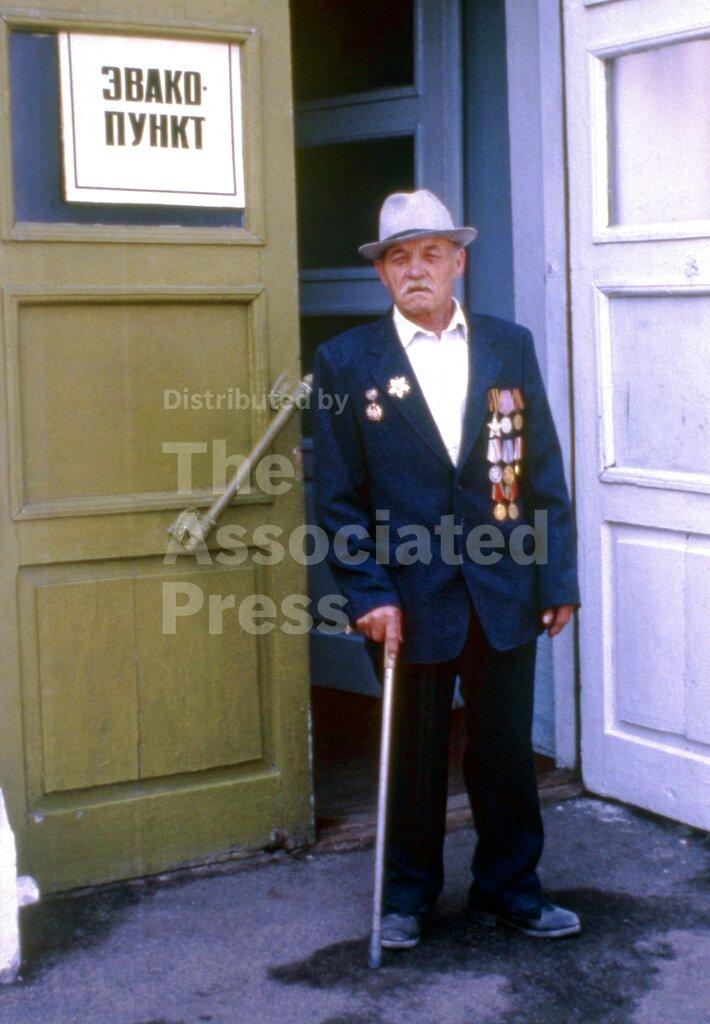
Today, for the first time since the Chernobyl nuclear accident April 26, the Soviet Government published detailed technical information for dissemination inside the Soviet Union about the health risks posed by radioactive emissions from the stricken Ukrainian power station. A dispatch by three correspondents from the official press agency Tass discussed the danger of radioactive contamination of agricultural products, including milk. Also today, sources in Moscow said a third victim of the accident died today at a Moscow hospital from exposure to high levels of radiation at the power plant on the night of the explosion. The West German magazine Der Spiegel quoted a Soviet official as saying that as of Friday four victims of the accident had died. The report, attributed to Valentin M. Falin, chairman of the Soviet press feature syndicate Novosti, could not be confirmed. The Soviet Government said April 29 that two people were killed fighting a fire at the power plant the night of the accident and has reported no deaths since then. The government did not mention any additional deaths today. In a bulletin today, the government said temperatures inside the graphite core of the reactor were “down substantially” and that the “burning process” inside the core had been effectively halted.
A Soviet foreign affairs expert accused Washington today of using the Chernobyl disaster to try to blacken Moscow’s reputation and destroy its credibility in arms talks. Georgi A. Arbatov, head of the Institute of the U.S.A. and Canada, said in a radio interview that President Reagan was out to destroy what he called the positive image that the Soviet Union had built up through various arms control initiatives. Mr. Arbatov told the Swedish radio: “Then came Chernobyl and they used it immediately, saying: ‘Look, you can’t trust the Soviet Union. They took so long to inform the world. One cannot negotiate arms control agreements with such people.’ ” He said that if the Soviet authorities had warned the local population earlier than it did, “it would have provoked a panic which could have claimed more victims than the accident itself.” The Soviet Government announced the accident April 28, two days after it occurred.
Spain arrested 10 terrorist suspects, including two who said they received orders and money from Libya to carry out attacks on American businesses. An Interior Ministry announcement said the arrest of a Spaniard and a Portuguese as they placed a bomb at a Madrid branch of the Bank of America on May 2 had led to the detention of three Lebanese, a Syrian, a Jordanian and three more Spaniards. Victor de Cerro, a Spaniard, and Victor Romano, a Portuguese, told the police that they were members of a Lebanon-based anti-Zionist group named The Call of Jesus Christ, it added. According to the ministry, they said they expected to receive $70,000 from Libyan officials for the Madrid attack and for another on an Air France office in Lisbon on April 11. Mr. de Cerro and Mr. Romano said the group’s leader in Spain was Lebanese-born Faisal Hanna Joudi, who was also arrested. They said he received instructions and money from Libyan officials. The ministry said group member Rabah Musa Mohammed Abu Kamis, a Jordanian, had taken part in an abortive attack on a Paris synagogue. Two of the Spaniards arrested were accused of providing explosives and a safe house for the two bombers, it added.
The British Government announced today that it had ordered the expulsion of three Syrian diplomats involved in an investigation of terrorist activities in Britain. The most recent case in which allegations of Syrian involvement have come to light was the attempt April 17 to smuggle a bomb aboard an Israeli jumbo jet at Heathrow Airport. But, according to a British official, the police wanted to question the three men about “more than one incident.” A statement by the Foreign Office today made no specific allegations against the three diplomats, all attaches in the London Embassy. But the expulsion notice indicates that the Government was confident, based on its investigations, that the three were directly involved in supporting and planning terrorist efforts in Britain.
The U.N. General Assembly broke a deadlock and approved a $30-million package of budget cuts to meet an immediate cash crisis. The proposals by Secretary General Javier Perez de Cuellar were enacted in a “reluctant consensus” following resistance from the large bloc of Third World countries that pay a relatively small share of U.N. assessments. Savings came, among other things, from a decision to hold a special session on Namibia as a supplement to the regular fall assembly meetings instead of separately.
Greece is preparing to put a formal end to a legal vestige of World War II by proclaiming that it no longer considers itself at war with Albania. The proposed action, which, according to Foreign Minister Karolos Papoulias, may come this month, is strongly opposed by organizations here and abroad that say that much of southern Albania is Greek territory. The largest such group is in the United States, which became a refuge for most of the Greeks who fled when the region of Epirus was divided between Greece and Albania after World War I. Mr. Papoulias’s informal announcement of the pending action last month was also condemned by the major opposition party, New Democracy. The conservatives accused the Socialist Government of failing to assure the rights of Albania’s Greek minority in return for ending the state of war.
An ordinary month in Northern Ireland began with a young man’s accusation that a soldier had put a rifle in his mouth, and it ended with a grenade attack on three policemen. In the same month three policemen, a soldier, a security guard and a purported informer were killed. A young girl was kidnapped for ransom. A priest’s home was attacked. Bombs were left in stores, packages and cars. It was March 1985, and no one but the victims remember it very well because the next month brought the same. Violence in Northern Ireland has gone on since 1969. There have been more than 2,400 deaths and more than 27,000 injuries. In the same period, there have been more than 30,000 shootings and 11,000 bombings or attempted bombings. The process also involves thousands of arrests, trials and prison sentences. Thus what has gone on is difficult to grasp.
The environment of Eastern Europe is deteriorating and efforts to combat pollution lag far behind the West, according to experts from four of the Communist nations. The experts, officials and scientists from Czechoslovakia, Hungary, Poland and Yugoslavia, said environmental protection laws are not being enforced because national policy gives higher priority to economic growth. These experts gave varying reasons for worsening air, water and soil pollution. But in all cases they made it clear that environmental ministers had relatively little power compared with economic officials and other state planners.
The world’s 1 billion Muslims began to fast and practice self-denial in observance of Ramadan, the Islamic holy month. In Lebanon, Christian militia forces called on their Muslim foes to mark the holiday by adopting a cease-fire in the country’s long sectarian fighting. And Islamic mediators urged Iran and Iraq, locked in war for more than five years, to lay down their arms for Ramadan.
British and West German investigators say they have information strongly suggesting that Syria plotted a terrorist bombing in West Berlin and an attempt to place a bomb aboard an Israeli airliner at Heathrow Airport in London. They plan to make the information public later this year when they bring two Jordanian-born brothers to trial in connection with the incidents. Reports from New York Times correspondents in Britain, West Germany, Israel, Jordan and the United States and disclosures by officials close to the investigations permit a partial reconstruction of the brothers’ involvement with Syria. According to the officials, the Syrian secret services, working through Syrian diplomatic missions in London and East Berlin, appear to have engaged Nezar Nawaf Mansour Hindawi, 31 years old, to plant a bomb on an El Al jet on April 17 by hiding it in a satchel carried by his Irish fiancée. British officials refuse to talk about the case publicly and there has been no discussion in Britain of military retaliation against Syria. Today, Britain announced the expulsion of three Syrian diplomats after Damascus refused to waive their diplomatic immunity and to allow the police to question them about terrorist activities.
Iran’s President, Hojatolislam Ali Khamenei, said today that he would like to see the Persian Gulf demilitarized, the Tehran radio reported. The President was quoted as saying at a meeting with the Libyan Oil Minister, Fawzi al-Shakshuki, “We would like to see the Persian Gulf region in complete security and that it be considered separate from the war zone.” In the Iran-Iraq war, the two sides have attacked at least 200 vessels serving either Iran’s oil terminals or the ports of nations supporting Iraq, and the attacks have sharply increased. Meanwhile, the People’s Mujahedeen, a Paris-based Iranian opposition group, yesterday denied bombing a bus in Tehran on Friday. On Friday, the Iranian press agency attributed the explosion to the group.
The authorities in Pakistan ordered an indefinite curfew tonight in parts of Karachi after gunfights erupted between two groups, wounding at least five people. In daylong clashes pitting Pathans against Urdu-speakers, three buses and an auto rickshaw were set ablaze and 15 shops and 2 gasoline stations were damaged. The police arrested more than 90 people, witnesses said. The fighting broke out after a bus accident Friday in which a boy was killed. Pathans run most of the public transportation in Karachi and have often been involved in clashes with Urdu-speaking people who accuse them of rash driving.
Two weeks of violence in Sri Lanka have altered almost every aspect of a decade-long armed struggle between ethnic Tamil guerrillas and the Sinhalese-dominated Government of President J. R. Jayewardene, according to diplomats and Sri Lanka officials. All signs, they say, point to a more critical and probably dangerous period ahead for this small island nation, which has been considered a model of democracy and development for the third world. The bombing last weekend of an Air Lanka jet preparing to leave Colombo International Airport with foreign vacationers aboard gave an international dimension to the terrorist campaign for the first time. It may also, officials say, deliver a final blow to what remained of hope for a tourist industry here. Of 17 people dead from the attack, only 3 were Ceylonese.
Election officials in Bangladesh broke a 48-hour silence and resumed announcing results of parliamentary elections, marred by charges of widespread poll rigging. The ruling party, backed by President H. M. Ershad, took a commanding lead in national elections today when vote counting resumed after a halt was called as the party fell behind. The Government election commission stopped counting votes Friday after the ruling Jatiya Party lost ground to candidates fielded by the Awami League and several other smaller opposition parties. Unofficial returns from 224 of the country’s 300 constituencies showed the Jatiya Party with 106 seats, the leftist Awami League alliance with 80 and other opposition parties with 38. Meanwhile, Sheik Hasina Wazed, the Awami leader, urged a general strike Wednesday, charging the election had been stolen.
Allen Wallis, U.S. under secretary of state for economic affairs, stopped in Jakarta to try to quiet Indonesian worries about the outcome of the Tokyo economic summit meeting and delays in the launch of an Indonesian telecommunications satellite caused by problems in the U.S. space program. Wallis told officials that many of the major concerns voiced to President Reagan during a preliminary stop in Bali had been raised at the summit.
A peaceful anti-Government rally and march by thousands of South Koreans ended this evening with riot policemen firing tear gas to disperse several hundred students who attacked them with clubs and rocks. So much tear gas was used that fumes filled the broad streets of this southern industrial city for hours. The police reported that 20 officers were injured and that 28 students were arrested in the confrontation. But the protest was orderly for the most part, buoying dissident politicians who have led a series of rallies to press demands for constitutional change to allow direct elections before the term of President Chun Doo Hwan expires in March 1988. They had regarded the rally today as a test of their ability to maintain calm after a pitched battle in the port of Inchon last Saturday produced one of South Korea’s most violent political episodes in recent years. In Inchon, 20 miles west of Seoul, militant students and workers threw gasoline bombs and rocks at riot policemen, who responded with volleys of tear-gas grenades. More than 100 people were hurt, many of them officers, and 150 people were arrested.
Treasury Secretary James A. Baker II called on China to be more flexible in negotiating a long-stalled treaty to protect U.S. businesses there. Baker said at the close of a four-day visit that he does not think the general climate for foreign investment is “as positive as it should be.” Yet, he said talks with Chinese leaders left him with the impression that Peking is willing to confront investment problems. American companies have invested about $1 billion in China since 1979.
A long-brewing power struggle among senior Nicaraguan guerrilla officials is expected to lead to a decisive confrontation in the coming week at a meeting of the top rebel leadership in Miami, according to several rebel officials here. Rebel leaders and American officials who monitor the guerrilla movement say the meeting will be the most far-reaching effort so far to reorganize the leadership of the anti-Sandinista guerrillas in an effort to expand their political appeal and military effectiveness. The meeting appears to be the culmination of a long and politically damaging debate within the rebel movement over political objectives, and it appears to reflect a power struggle among top rebel leaders. The debate has gathered force at a time when the Reagan Administration is asking Congress to renew American military aid to the Nicaraguan guerrillas. Senior rebel officials here say they expect a hard-fought debate in Miami, the outcome of which is in doubt. They add that State Department officials are pressing the rebels to resolve their differences as quickly as possible. “This could explode in disagreement or we might finally reach an accord,” a top rebel official said. “It’s a major debate that has cost us a lot already and may cost us more if it drags on.” The power struggle is within the largest rebel organization, known as the United Nicaraguan Opposition. Its essence appears to be an effort by two of its top three leaders, Arturo Cruz and Alfonso Robelo Callejas, to persuade the main guerrilla army to give them a greater share of political power and more control over the war, according to rebel and American officials.
Nicaragua accused two U.S. military officers attached to the U.S. Embassy of espionage after they were found in a restricted area. A Foreign Ministry statement said the embassy’s defense attaché, Colonel Alden Cunningham, and Capt. Barbara Sims were “intercepted” Tuesday near the town of Siuna, 140 miles northeast of Managua. The area is a war zone in the fighting against U.S.-supported rebels, the leftist government said, and the two Americans lacked authorization to be there. An embassy spokeswoman said only that embassy personnel frequently “travel through the country to get to know it.”
President Marco Vinicio Cerezo Arevalo, the first civilian to govern Guatemala in 16 years, has maintained good relations with the army in his first months in power, according to diplomats and Government officials. These authorities pointed out that Mr. Cerezo had respected military tradition by selecting a defense minister from among the ranks of senior army officers and had taken pains to avoid friction with the military. Despite demands from some quarters, Mr. Cerezo has not dissolved the civil patrol system instituted by the army under which hundreds of thousands of rural villagers have been required to join paramilitary units. Nor has he moved to dismantle the network of “development poles,” which the army established to distribute supplies and control the population in several areas of conflict.
Sudanese Prime Minister Sadek Mahdi announced an agreement with southern political parties for their participation in a broad-based government. A statement from Mahdi’s office said the agreement was reached with representatives of six southern parties and leaders of the Democratic Unionist Party. The southerners would get a share of the 18 Cabinet portfolios proportionate to the region’s population. Southern separatists have fought a long struggle with Sudanese governments for regional autonomy.
The South African-backed rebels of Angola said they killed 59 Government soldiers and 8 Cubans and shot down a Soviet-built warplane in fighting this month. Eight rebels were killed and 21 wounded in fighting from May 3 to 5, the rebels, the National Union for the Total Independence of Angola, said in a statement distributed Friday in Lisbon.
Police and army units moved into the strife-torn black South African township of Alexandra, near Johannesburg, today, arresting 16 people in a daylong sweep that included house-to-house searches. The combined police and army force of 1,670 men sealed off the square-mile township at midnight, put up roadblocks and began searching homes and of residents entering and leaving. By evening, according to a police spokesman, Capt. C. J. Marais, 16 people had been arrested, mostly on charges of possession of drugs and stolen property, and two stolen vehicles had been recovered. He said that the operation was needed to restore law and order and that it could “take a day or two, or even more” until the police left. [ Meanwhile, three blacks were killed in political violence in other areas of South Africa, Reuters reported. The charred bodies of two black men were found in separate townships in the troubled Eastern Cape, police headquarters in Pretoria said. A third man was killed in a township near Port Alfred in the Eastern Cape when a black mayor fired his revolver at a group of blacks attacking him with knives. The mayor was stabbed three times, the police said. ] As they searched through Alexandra, the police handed out pamphlets asking residents for help. People reached by telephone in the township said the situation remained tense as residents were searched coming and going.
Problems in the space shuttle’s booster rockets were “almost covered up” within the National Aeronautics and Space Administration, according to the head of a Presidential investigative commission. The chairman, William P. Rogers, said in testimony made public today that this had been done through actions and documents that minimized the difficulties. In a testy hearing on May 2, Mr. Rogers charged that the space agency had repeatedly “glossed over” the seriousness of problems with the rocket joints and had asserted in “a slick way” that data supported continuing shuttle flights when the data actually did not. It was the first time that anyone on the commission investigating the loss of the shuttle Challenger January 28, in which the seven crew members died, had made such a charge. Previously, Mr. Rogers has said that NASA’s decision-making process was “flawed” and that some NASA officials lacked common sense. The testimony the commission disclosed today was taken at a hearing closed to the public. It was the most acrimonious session yet made public. Many commission members expressing exasperation with the space agency’s performance and explanations of its handling of rocket problems that ultimately caused the shuttle disaster.
The space agency declined to respond directly today to the accusations or exchanges. A spokesman for the agency said the record of the investigation was “so voluminous that we cannot properly comment on bits and pieces of it.” The agency said that it would “continue to respond fully to commission requests for cooperation” and that it looked forward “to receiving the commission’s full report about the cause of the accident and its recommendations.” NASA documents released by the commission today indicated that problems with the rocket joints had been discussed more than a decade before the Challenger accident but had never been fully resolved. The commission made public 300 pages of testimony and 25 documents, including four memorandums indicating that as far back as 1971 questions had been raised about the design and effectiveness of the joints and seals. William L. Ray, a solid rocket engineer at the Marshall Space Flight Center, who wrote the four memorandums, said he felt then, and still felt, that the rocket joint had to be redesigned, a task that NASA has started. Other testimony in the hearing transcript released today indicated that NASA’s rocket experts at the Marshall Space Flight Center in Huntsville, Alabama, had consciously reduced and minimized information about the booster rocket problems forwarded to higher NASA officials.
The rocket engineers who told a Presidential panel three months ago that they had argued strenuously against launching the space shuttle Challenger in cold weather on Jan. 28 have now informed the panel they have been severely punished by their employer, Morton Thiokol Inc., for their testimony. The engineers, whose warnings the night before the launching were overruled by Morton Thiokol’s management, told of their subsequent treatment appearing at a closed session of the commission on May 2, according to documents made public today. They said that in recent months they had been stripped of their authority, deprived of their staffs and prevented from seeing critical data about the investigation of the Challenger disaster. It occurred 74 seconds after the launching, killing the seven crew members. William P. Rogers, chairman of the commission, today called the engineers’ most recent testimony “shocking,” adding that they were being “punished for being right.” His rebuke of the company, which built the booster rockets that caused the disaster, was included in more than 300 pages of testimony taken by the commission May 2 at what was apparently their last executive session.
President Reagan today praised the tax revision plan before the Senate as “one of the most exciting economic changes of my lifetime” and said the measure could increase the average family’s income $600 to $900 a year. At the same time, Mr. Reagan said that the tax overhaul, if enacted, could increase employment by four million over the next 10 years. “Let’s go for it!” said Mr. Reagan, in his weekly radio address from the Presidential retreat at Camp David, Maryland. Making his first detailed endorsement of the tax plan unanimously approved last week by the Senate Finance Committee, he said that although “this bill is not perfect,” the proposal met his conditions for tax reform.
President Reagan enjoys a horseback ride around the grounds at Camp David.
The President and First Lady watch the movie “The African Queen.”
An infant whose need for a liver transplant caught the interest of Nancy Reagan died during surgery at Children’s Hospital in Boston. Doctors said that 9-month-old Alex Kevin Girard’s condition went into rapid decline after the replacement organ was received, and that surgeons tried to perform a heart-lung bypass in a “desperate attempt” to save him. Mrs. Reagan had telephoned Paul and Ellen Girard to offer support after they made a public appeal for a new liver for their son, but doctors said the organ was received too late and the baby died of cardiac arrest secondary to liver failure.
Despite recent congressional action easing federal handgun restrictions, the American people continue to favor stringent curbs on the sale and possession of these weapons. The latest Gallup Poll reported that 60% of those surveyed said the laws governing the sale of handguns should be made stricter, while 30% said the present regulations were adequate. Only 8% said the laws should be relaxed. The survey also found that 41% of handgun owners backed stricter controls. Fifteen percent urged more lenient laws, while 43% said present laws should be kept as they are.
One day before a former official of the National Security Agency walked into the Soviet Embassy to make his first delivery of highly sensitive intelligence information, Federal agents intercepted a telephone call setting up the meeting, according to law-enforcement officials. But according to the officials, the tape of this conversation was not transcribed for several days, too late to warn the Federal agents watching the embassy on Jan. 15, 1980, to be on the alert for the arrival of a potential spy. That is when the Government contends that the former security agency official, Ronald W. Pelton, walked through the doors. It was not until late 1985, five years later, that a tip from a Soviet defector led to an investigation that enabled the Government to identify Mr. Pelton and to charge him with espionage. He has pleaded not guilty and his lawyers have moved to block the prosecution from using his admissions of spying to agents of the Federal Bureau of Investigation.
A jury today found Louisiana Governor Edwin W. Edwards and his four co-defendants not guilty on all counts in their second trial on Federal fraud charges. Spectators cheered, clapped, threw up their hands and cried as the verdict was announced to the tense courtroom. Seconds before, Mr. Edwards sat rocking in his chair as he had for most of his first and second trials. Today he was smiling as well, with his hands clasped under his chin. After the verdict, the smile broadened. Mr. Edwards and his co-defendants were accused of conspiring, for their own financial gain, to take over the state program in charge of approving new medical construction. Surrounded by his co-defendants, reporters and others who had heard the news of the verdict, Mr. Edwards stood triumphantly on the courthouse steps a little latter and made a speech. He had stood there often in the course of the trial and the retrial, sharply criticizing United States Attorney John Volz and the prosecution’s case.
Former President Jimmy Carter announced his affiliation with an international foundation that will work against abuses of civilian rights and honor “human rights heroes” annually with an award similar to the Nobel Peace Prize. Carter said that the Carter-Menil Human Rights Foundation, sponsored by philanthropist Dominique de Menil of Houston, will be activated in October at Emory University in Atlanta with a convention of rights advocates.
While Michael K. Deaver was still a senior White House aide but after he had announced his intention to set up a lobbying business, a Canadian official told him that the Government of Canada could use a man of his talents. The information was conveyed in a letter Friday from Allan E. Gotlieb, the Canadian Ambassador to the United States, to Representative John D. Dingell, the chairman of the House Energy and Commerce Committee. The letter, which did not identify the Canadian official, was Ottawa’s first acknowledgment that any idea of Mr. Deaver’s working for Canada had been broached while he was still a White House official. The contact was made in March 1985, two months before Mr. Deaver left the White House. Mr. Gotlieb, however, said the contact with Mr. Deaver was “light-hearted” and not an offer.
An agent of the Federal Bureau of Investigation was dismissed, another resigned and three were disciplined for an operation in Phoenix that ended when two agents mistakenly shot to death a fellow agent, who was the first female agent killed in the line of duty, The Arizona Republic reported today. The newspaper said William H. Webster, Director of the bureau, disclosed the disciplinary actions here Friday. The newspaper reported that Mr. Webster said certain procedures were not followed when Special Agent Robin Ahrens was shot October 4 while searching a for a fugitive. The Republic said the agent who was dismissed was Douglas Harada, 32, and the agent who resigned was Thomas Fernandez, 28. The bureau and the police here identified them as the agents who fired the fatal shots.
Union officials representing 2,000 Amtrak engineers said that they planned to shut down inter-city passenger service and disrupt commuter rail lines in the Northeast with a strike Monday morning. Some commuter rail lines in the Midwest and West could also be faced with walkouts, union officials meeting in Trenton, N.J., said. But Arthur Lloyd, an Amtrak spokesman in San Francisco, said the strike “may or may not affect trains in the West, we don’t know.” Union engineers on the West Coast work for individual railroads rather than for Amtrak. A spokesman for the Brotherhood of Locomotive Engineers said skilled employees are trailing the unskilled in wages.
Amtrak offered today to negotiate with its engineers union and a spokesman for the passenger line said it was confident it could avert a strike that union leaders have said would begin at 12:01 A.M. Monday. The union, the Brotherhood of Locomotive Engineers, is threatening to strike over work and safety rules. Union officials could not be reached for comment.
Fire swept through a two-story apartment building in Dayton, Ohio early today and killed seven people One child received minor injuries after jumping from a second-story window, a coroner’s investigator said. Residents of eight other apartments in the complex were evacuated safely. The victims were identified as Joyce Maupins, 33 years old; her two sons, Jamaine Maupins, 4, and Jamal Maupins, 5; three daughters, Roni Maupins, 1, Raquel Richardson, 15, and Rashonda Richardson, 9, and Richard White, 25, a family friend.
Nearly two-thirds of American mothers with children at home are in the work force, and most of these are working to support their families, a congressional study said. “Increasingly, mothers are not only cooking the bacon, they are helping to bring home the bacon,” said Rep. David R. Obey (D-Wisconsin), chairman of the Joint Economic Committee, which conducted the study. The report said more wives are going to work to help supplement their husbands’ earnings.
The number of people killed in passenger car accidents declined last year, but a nearly 16% increase in fatalities involving pickup trucks and vans caused overall U.S. traffic deaths to increase slightly in 1985, the government said. The National Transportation Safety Board reported that fatalities from transportation accidents totaled 48,354 during the year, an 0.8% increase from 1984.
Crime is intruding on national parks, according to Government officials. On the eve of an expected deluge of vacationers, they say the parks are failing to deal adequately with the worst difficulties. Two investigations by the Inspector General of the Department of the Interior at Yosemite National Park, in California, document widespread cocaine use among park employees, allegations of prostitution at a park hotel, a bungled drug investigation and clandestine electronic eavesdropping.
A fire that has charred 40 square miles of forest made a loop across southeastern North Carolina today, and officials told people in hundreds of homes along the coast to evacuate. The fire jumped to the east side of U.S. 17, and officials urged people living in at least 800 homes between that major highway and the Intracoastal Waterway to leave. Twenty-five miles of U.S. 17 was closed in Pender County, about 60 miles up the coast from South Carolina.
News anchor Barbara Walters (56) weds media mogul Merv Adelson (56) at Leonard Goldberg’s estate in Beverly Hills, California; they divorce in 1992.
American “Mötlley Crue” drummer Tommy Lee (23) weds second wife, American actress “T.J. Hooker” Heather Locklear (25); they divorce in 1993.
“Rock Me Amadeus” by Falco hits #1 on UK pop chart.
Kareem Abdul-Jabbar, the oldest player in the NBA, scored a game-high 31 points, grabbed six rebounds and blocked three shots Saturday to lead the Los Angeles Lakers past the Houston Rockets 119–107 in the opener of the Western Conference finals.
Major League Baseball:
Claudell Washington and Terry Harper hit home runs for Atlanta as the Braves nipped the Phillies, 3–1. Zane Smith (3–2) struck out eight to take over the National League lead with 53. The left-handed pitcher left the game because of a tightened muscle in the left side of his back. Gene Garber pitched hitless relief for two-thirds of an inning, while Paul Assenmacher permitted no hits over one and one-third innings for his second save. The Braves made it 3–1 in the eighth off the reliever Kent Tekulve. Harper led off by ripping a 1–1 pitch over the left field fence for his third home run.
Mike Boddicker allowed three hits over eight innings in his return from the disabled list and Fred Lynn hit a two-run homer to lead Baltimore over Kansas City, 5–2. Boddicker (3–0) gave up a home run to Steve Balboni in the seventh inning but struck out eight and walked four in his first start since coming off the 15-day disabled list. Don Aase got three outs for his seventh save. Baltimore made it 2–1 in the bottom of the inning on Lynn’s home run and added three more runs in the third.
The Brewers beat the Angels, 4–2. Billy Jo Robidoux’s two-run double in the sixth inning erased a 2–1 deficit and the rookie left-hander Juan Nieves pitched three-hit ball through six innings for Milwaukee. Nieves (3–1) departed after issuing his fourth walk to open the seventh. Bill Plesac blanked the Angels on two hits for three innings for his third save.
The Cubs edged the Padres, 6–5. The pitcher Dennis Eckersley and the catcher Jody Davis hit two-run home runs to lead Chicago. John Kruk and Graig Nettles hit two-run homers for the Padres. Eckersley (1–2) was the winner and LaMarr Hoyt (0–1) took the loss. Bip Roberts opened the game with a single and Kruk followed with his first major-league home run. The Cubs tied it in the bottom of the first. Shawon Dunston doubled and scored on two infield groundouts before Keith Moreland hit a homer. A single by Ron Cey and Eckersley’s second career home run, in the second inning, broke the tie.
A two-run single by Carlton Fisk highlighted a four-run 11th inning, and Neil Allen and two relievers combined on a three-hitter to give the Chicago White Sox a 4–0 victory over the Cleveland Indians today. Gene Nelson (3–1) pitched three perfect innings for his second victory in two days. Bob James worked a hitless 11th inning. Ozzie Guillen started the Chicago 11th by reaching base on an error by Julio Franco, the shortstop. Guillen moved to second on a sacrifice by John Cangelosi and to third on a single by Wayne Tolleson, who took second on the throw home. After the reliever Scott Bailes (4–3) walked Harold Baines intentionally to load the bases, Bryan Little, a pinch-hitter, greeted Jim Kern, a reliever, with a grounder to the second baseman, Tony Bernazard, who was unable to pick it up as Guillen scored on the error. Kern threw a wild pitch, allowing Tolleson to score, and after a walk to Ron Kittle, Fisk drove the two-run single to left field. Both starting pitchers, Ken Schrom of Cleveland and Allen of Chicago, had superb days. Allen allowed Cleveland only three hits in seven innings and struck out two, while Schrom pitched a six-hitter for 10 innings and struck out seven.
Steve Lombardozzi hit a three-run homer to cap a five-run first inning and Minnesota got a total of four home runs in a 17-hit attack to crush Detroit, 12–2. Tom Brunansky, Greg Gagne and Kent Hrbek also hit home runs and Hrbek drove in four runs in support of Frank Viola (4–2), who allowed eight hits in five innings to win his first game since April 21. Frank Tanana (4–2), the Tiger starter, saw his four-game winning streak end as Detroit lost its fourth straight game. He lasted three innings and gave up nine hits — including three homers — and eight runs.
As far as Herman Winningham is concerned, he made the right mistake. “We were on a delayed steal, and I shouldn’t have swung but I did,” Winningham said after delivering a run-scoring single in the 11th inning today that gave the Expos their seventh straight victory, a 3–2 decision over the Los Angeles Dodgers. Al Newman led off the 11th against Ken Howell (0–2) with his third single of the game. Mike Fitzgerald followed with a sacrifice, and was safe at first as Howell’s throw was too late to get Newman at second. Winningham then came up and tried to bunt, but fouled off the first pitch before taking a ball. Both runners broke on the next pitch and the left side of the Dodger infield started moving, leaving a hole on the left side that Winningham grounded his single through.
These are the best of times for the Mets and the worst of times for the Cincinnati Reds, and both kinds of times continued yesterday before another large and duly impressed crowd of 45,303 fans in Shea Stadium. Rolling along at a historic pace, the Mets overpowered the Reds, 5–1, for their seventh straight victory and the 18th in their last 19 games, and it gave them a record of 20 and 4, the best in the big leagues and one of the six best starts in modern baseball. Furthermore, the victory was an all-hands performance: The Mets got eight innings of three-hit pitching from Ron Darling and another shutout inning of relief from Jesse Orosco, who hasn’t allowed a run in 15 innings in 11 games this season. And they backed the pitching with home runs by George Foster and Gary Carter.
Don Baylor hit a two-run homer in the 10th inning and Bruce Hurst pitched a complete game to give Boston its seventh victory in its last eight games, downing the A’s, 4–2. Baylor hit a 3–2 pitch over the left- field fence off Steve Ontiveros (0–1), who relieved Jose Rijo, the starter, in the ninth. Hurst (3–2) allowed 10 hits, walked 1 and struck out 11. With one out in the 11th inning, Jim Rice singled before Baylor hit his fifth home run of the season. It was also Baylor’s fourth game-winning hit of the season.
The Astros downed the Pirates, 6–3. Glenn Davis hit two homers and a double and Bob Knepper became the National League’s first six-game winner. Davis’s first home run was into the left-field stands with two out in the sixth against the starter Rick Rhoden (2–2). Jose Cruz, the previous batter, had walked, but was thrown out attempting to steal second. Davis added a two-run homer in the eighth off Bob Walk after Bill Doran had singled as the Astros remained in first place in the National League West and won their sixth consecutive one-run decision. Knepper (6–1) allowed eight hits, walked three and struck out five in seven innings. Frank DiPino finished for his first save.
Bob Kearney singled off Dennis Lamp with two out in the bottom of the 11th to give the Seattle Mariners an 8–7 victory over the Toronto Blue Jays. The Mariners entered the 11th trailing 7–6 after having fallen behind 6–5 in the top of the ninth. Both times they rallied.
The Cardinals beat the Giants, 6–3. The pitcher Ray Burris drove in three runs with a bases-loaded double and recorded his first victory of the year for St. Louis. Burris, a 35-year-old right-hander who was signed as a free agent by the Cardinals last month, was making his first major league start of the season after being called up from St. Louis’s Triple A club at Louisville. His last victory had come on August 26, 1985, with Milwaukee. The Cardinals broke on top in the second inning as the Giant starter Roger Mason (2–2) hit a wild streak and walked the bases loaded. Burris, who was batting for the first time since 1983 when he was in the National League with Montreal — pulled a pitch past third base to clear the bases.
Batters chased Ron Guidry’s slider and his fastball, and when the night was over, the left-hander had struck out 11 in seven innings — nine in the first three innings — and the Yankees held on to beat the Texas Rangers, 4–3. The victory was their fourth in a row and their eighth straight on the road, and it put them in first place in the American League East by a half-game over Boston. Their 19–9 start is the team’s fastest since the 1958 club began with a 23–5 record. They did not win this one easily, leaving 11 runners on base, 7 of them in scoring position. And the game was turned into a harrowing one-run contest when Larry Parrish hit a homer in the ninth inning off Brian Fisher for his second home run of the game.
Philadelphia Phillies 1, Atlanta Braves 3
Kansas City Royals 2, Baltimore Orioles 5
Milwaukee Brewers 4, California Angels 2
San Diego Padres 5, Chicago Cubs 6
Chicago White Sox 4, Cleveland Indians 0
Detroit Tigers 2, Minnesota Twins 12
Los Angeles Dodgers 2, Montreal Expos 3
Cincinnati Reds 1, New York Mets 5
Boston Red Sox 4, Oakland Athletics 2
Houston Astros 6, Pittsburgh Pirates 3
Toronto Blue Jays 7, Seattle Mariners 8
San Francisco Giants 3, St. Louis Cardinals 6
New York Yankees 4, Texas Rangers 3
Born:
Matt Tuiasosopo, MLB outfielder, third baseman, and first baseman (Seattle Mariners, Detroit Tigers, Atlanta Braves), son of NFL player Manu Tuiasosopo, in Bellevue, Washington.
Luke Putkonen, MLB pitcher (Detroit Tigers), in Wheaton, Illinois.
Roberto Wallace, NFL wide receiver (Miami Dolphins), in Panama City, Panama.
Mark Dekanich, Canadian NHL goaltender (Nashville Predators), in North Vancouver, British Columbia, Canada.

