Australian troops launched a counterattack at Tobruk, Libya. Italian troops repulsed the counterattack, losing only one bunker. The Afrika Korps attack at Tobruk is at a standstill and on the evening of 3 May the Australian Brigade under General Morshead counterattacks. They send one battalion each in converging attacks, but the counterattack peters out during the night due to fierce resistance by Italian infantry and the Australians withdraw. General Paulus, in command during his “inspection tour” of North Africa, forbids further German attacks unless there is evidence that the Australians are evacuating the port.
The British at Tobruk have numerous assets with which to defend Tobruk, and one that they will return to again and again during the war on beachheads is naval shelling. Destroyers HMS Decoy and Defender shell the British positions in Tobruk during the night to support the Australian attack, then return to Alexandria.
Allied and Italian troops engaged in heavy fighting at Amba Alagi, Abyssinia. The British forces began attacks from the north against the Italian positions under the command of the Duke of Aosta at Amba Alagi. These positions guarded passes in the road between Asmara and Addis Ababa. These strong Italian positions were based on a number of steep and rugged hills where there were numerous caves.
The British under Major General Mosley Mayne are closing up on Amba Alagi, the last Italian stronghold in Abyssinia. Amba Alagi is an important north-south road junction and controls access to Italian positions in caves between Asmara and Addis Ababa.
Mayne is approaching from the north, and he plans to squeeze the Italian defenders via a pincer move on the east and west. The 5th Indian Division also is approaching from Eritrea and forcing its way through the Falaga Pass, while some South African troops also are on the way. The Italian troops are led by Amedeo, 3rd Duke of Aosta, who is noted for his gallantry — for instance, he has respected the property of (formerly) exiled Emperor Haile Selassie. Morale among the Italians (actually, mostly colonial troops) remains fairly good, but several hundred surrender during the day.
British forces attacked the Iraqi positions around HabbaniyahHabbaniyahh and RAF aircraft attacked the Iraqi Rashid airfield. With the war in Iraq now a day old, the British on 3 May 1941 are having no difficulty maintaining their positions. The Iraqis attack the British supply port of Basra today, but are beaten off. At Habbaniyah, the RAF continues its air strikes against the Iraqis who are shelling the besieged airfield from a plateau to the south. Additional RAF air attacks are launched against Rashid Airfield (previously RAF Hinaidi). The RAF shoots down an Italian SM 79 Savoia bomber. The British are continuing their sortie with ground troops out of the airfield, with some success.
The RAF receives some reinforcements, four Blenheim bombers. The British today send reinforcements toward Iraq from Palestine and Transjordan, but they have a long march across the desert. Additional forces continue to trickle into Basra.
While the Anglo-Iraq War is usually overlooked by histories of World War II, the Axis takes it very seriously for one reason: oil. Iraqi oil supplies the Royal Navy and RAF with a large portion of their fuel. German Foreign Minister Ribbentrop radios the German ambassador in Baghdad today and orders him to request permission from the Vichy French government in Syria for Luftwaffe transit rights. The French quickly agree and even chip in by sending their own munitions and other supplies being stored in Syria to help the Iraqis. The Luftwaffe and Italians prepare to send planes to Iraq via Syria.
The German ambassador in Baghdad received his orders. He was to obtain permission from the Vichy French government to transport aircraft and equipment to Iraq via Syria. The Vichy government not only gave transit permission but immediately transported almost all the French war material stored in Syria, to Iraq.
The American United Press News Agency reported: “A reliable source confirmed tonight in London that Rashid Ali al Gailani has asked Hitler for help against the British troops in Iraq, but he is believed to have initiated hostilities prematurely so that he is unlikely to play a role in future German war plans. The special military significance of Iraq lies in its oil, which supplies the British Mediterranean fleet and the Mediterranean based units of the Royal Air Force with a large part of their fuel.”
The Germans mount a victory parade in Athens.
Germany and Italy divided and annexed Slovenia.
The Province of Ljubljana was created when Italy annexed part of Slovenia including the city of Ljubljana.
Alexander Löhr was promoted to the rank of colonel general.
On the 150th anniversary of the establishment of the Polish Constitution, Winston Churchill makes a radio broadcast directed, as he puts it, “to the Polish people all over the world.” He calls the German occupiers of Poland “pitiless and venal” and “mechanized barbarians.” He cautions that the war will be “long and hard,” but “the end will reward all toil, all disappointments, all suffering.”
Australian Prime Minister Robert Menzies finally ends his extended visit to England when he boards a DC3 at Bristol bound for Lisbon. His eventual destination is Bermuda and then New York. His flight takes 6 ½ hours, and it is a risky route patrolled occasionally by the Luftwaffe. Many in England are sad to see him go, as there is an undercurrent of sentiment which sees Menzies as a better alternative than Churchill to lead the British war effort. However, there have been rumblings of dissatisfaction against Menzies in Australia, and Churchill’s grip on power remains strong, so it is time to go.
A Daily Express editorial berates the ‘fairy tales’ circulating in the popular press, i.e. ‘1. The German army is rotting in Holland; 2. There is mutiny among U-boat crews; 3. Russia is going to fight Germany.’
General Jan Smuts announced to the House of Assembly the deployment of South African troops to Egypt.
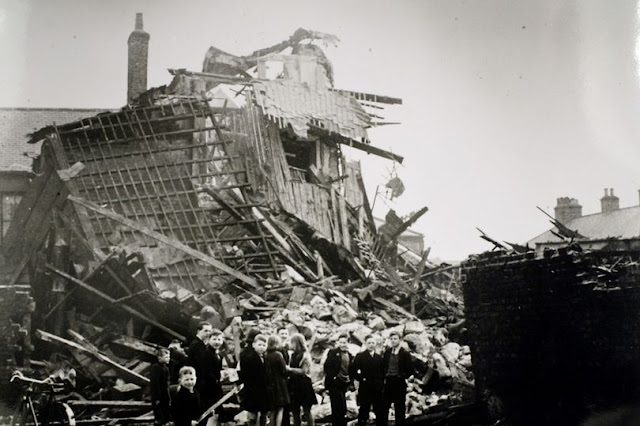
The worst night of the May Blitz of Liverpool took place, in which up to 500 bombers swarmed the skies in a relentless bombardment. The cargo ship Malakand, carrying 1,000 tons of explosives, was blown up sending shock waves four or five miles. However, only four people aboard were killed. The resulting explosion blew Huskisson Dock to pieces and sank six other ships. Parts of the ship’s plates were found over two miles away. An ammunition train also caught fire and was shunted to a siding by railway men as the ammunition was exploding.
May 3, 1941, generally is considered the worst night of destruction ever in Liverpool, with over 400 deaths. The Luftwaffe has been launching nightly raids (the “May Blitz”) against Liverpool, the critical northern port through which supplies flow. Tonight, they send about 300 aircraft and cause widespread damage to shipping and the port facilities.
The Luftwaffe is having great success at Liverpool. In fact, it may be the most successful series of Luftwaffe raids during the Battle of Britain. The pilots target port infrastructure and gradually are putting docks and deep-water berths out of commission. The total tonnage of cargo being landed is falling drastically. This is a relatively rare instance when the Axis pilots “get it right” and successfully attack the right targets with great efficiency.
However, the ships themselves are vital targets, too, and under the proper circumstances hitting them can contribute to the destruction of the port itself. The Germans get a lucky hit at Liverpool on ammunition ship Malakand, which is full of 1000 tons of shells bound for North Africa. Four people lose their lives in the massive explosion. The cause of the catastrophe is disputed, with some accounts saying it was hit by a bomb, others saying a barrage balloon fell on it and caught fire. The Malakand blows up in spectacular fashion at Huskisson Dock, and a nearby ammunition train also explodes (the heroic railway crew successfully pulls the train out to a siding while the cars behind them are bursting). The impact of the exploding Malakand — parts of which are found miles away — sinks half a dozen other nearby ships. This includes 10,224-ton Canadian passenger ship and freighter SS Europa, which later is raised for repair (and again hit by bombs while in dry-dock and destroyed for good).
The Luftwaffe has been using advanced radio direction-finding equipment (Y-Gerät aka Wotan) to locate Liverpool at night. Some Heinkel He 111 bombers bearing direction-finding equipment have been shot down relatively intact earlier in the Battle of Britain, and the British have been studying the technology in order to jam the radio signals. The British have found that, by pure chance, the radio frequency the Germans have been using is the same as a BBC television transmitter at Alexandra Palace. The British have been gradually increasing signals from this television transmission to jam the Luftwaffe signals, and that campaign gradually is bearing fruit. However, the Luftwaffe can find its targets by other means, and Liverpool continues to suffer.
Demonstrating its depth, the Luftwaffe also mounts other raids. One, on Portsmouth, damages light cruiser HMS Sirius, which is under construction. Other Luftwaffe raids sink 2722 ton British freighter Royston in the Humber, and sink 1347 ton Norwegian freighter Trajan and damage 1143 ton Norwegian freighter Sitona northeast of Blakeney. Bombs fall throughout the northeast, including at Newcastle, Tynemouth, Throckley, Catcleugh, Morpeth, Lynemouth, Gosforth, Clifton and Stannington in Northumberland, Sunderland, West Hartlepool, Gateshead, Tees Bridge Roundabout at Billingham, Lambton Park, Castletown, Ryhope and South Shields in Co Durham and York and Hull in Yorkshire.
RAF Bomber Command, Day of 3 May 1941
21 Blenheims on coastal operations from France to Holland. Some ships attacked off Gravelines were hit but 2 Blenheims were shot down.
RAF Bomber Command, Night of 3/4 May 1941
Cologne
101 aircraft — 37 Wellingtons, 35 Whitleys, 27 Hampdens, 2 Manchesters; none lost. There was 9/10ths cloud and bombing was poor. Cologne reports approximately 8 to 10 bomb loads in the city, causing minor property damage, but 11 people were killed and 14 injured.
Brest
33 aircraft — 29 Wellingtons, 3 Stirlings, 1 Manchester; claimed accurate bombing of the docks. No losses.
Minor Operations: 9 Wellingtons and Whitleys to Rotterdam, 1 O.T.U. sortie; no losses.
The Luftwaffe raids Suda Bay, Crete, and damages 7258-ton freighter Araybank. The ship is bombed again later in the month and destroyed.
The RAF raids Italian shipping in Tripoli. The planes sink 5305-ton Italian freighter Birmania, which explodes and takes with it 3339-ton freighter Citta D’Bari. Italian torpedo boat Canopo also sinks.
Royal Navy cruiser HMS Gloucester hits a mine early in the morning near Gibraltar. As Gloucester limps back to port, Italian bombers attack it and manage only a minor hit. The ship makes it back to port.
At Malta, the Luftwaffe raids Floriana for the first time in a major attack by 30 bombers. There are 9 Royal Engineers and one local employee killed when an aerial mine lands on a barracks. There is extensive damage to the docks and St. Publius Church.
U-103, commanded by Korvettenkapitän Viktor Schütze, sank British steamer Wray Castle (4253grt) in 6-48N, 13-55W. At 2223 hours on 3 May 1941 the unescorted Wray Castle (Master Gerald T. Dobson) was hit by two torpedoes from U-103 and sank within a few minutes about 110 miles south-southwest of Freetown. One crew member was lost. The master, 49 crew members and six gunners were picked up by the Portuguese steam merchant Angola, landed at St. Thomas, Gulf of Guinea and later brought to Freetown by the Portuguese steam merchant Lourenco Marques. The 4,253-ton Wray Castle was carrying sugar and was bound for the United Kingdom.
U-95, commanded by Gerd Schreiber, sank Norwegian steamer Taranger (4873grt) in 61-07N, 25-20W. The Taranger (Master Sverre Solberg) had been escorted by British aircraft after leaving Liverpool, which attacked an U-boat contact on 30 April at about 8°W. U-95 spotted the unescorted ship in AL 3178 at 0620 hours on 2 May and began to chase her, but course changes and the high speed of the ship prevented any attacks until a torpedo was fired at 0208 hours on 3 May, but it became a surface-runner. At 0245 hours, the U-boat attempted to stop the vessel with MG fire about 150 miles southwest of Reykjavik, but the ship (armed with two Hotchkiss MG) tried to escape zigzagging at full speed and sent emergency messages so the Germans opened fire with the deck gun after 10 minutes and scored 16 hits with 21 rounds. After the first hits, the engines were stopped and the crew began to abandon ship while the shelling continued from the starboard side. The port lifeboat got clear, but before the starboard boat could be launched the master was killed and three crew members were wounded. The U-boat went to the other side and fired at torpedo at 0312 hours which again became a surface-runner and a dud. At 0316 hours, the stern torpedo was fired that hit underneath the bridge and the ship broke in two and sank after being hit by a second coup de grâce at 0325 hours. Alerted by her radio calls, HMS Echo (H 23) (Lt Cdr C.H.deB. Newby, RN) was sent out, but after a fruitless search for 8 hours she headed for Iceland. Both lifeboats set sail for Iceland, but the starboard boat lagged behind. The next day, its occupants spotted the convoy OB-320, were picked up by HMS Begonia (K 66) (Lt T.A.R. Muir, RNR) and landed at Reykjavik on 10 May. On 5 May, the seriously injured first engineer had been transferred to HMS Wolverine (D 78) (Lt Cdr J.M. Rowland, RN) which had a doctor on board. In the morning on 5 May, the 17 men in the port boat saw land and were shortly thereafter rescued by the Icelandic motor fishing vessel Sigurfari (MB 95) (Skipper Bersør Guojønsson) about 46 miles from the coast. The vessel took the lifeboat in tow for Akranesi from where they were taken by passenger vessel to Reykjavik on 6 May. The 4,873-ton Taranger was carrying ballast and was bound for Vancouver, British Columbia.
Light cruisers HMS Galatea and HMS Arethusa departed Scapa Flow to relieve heavy cruiser HMS Exeter and light cruiser HMS Nigeria on Iceland Faroes Channel patrol. Heavy cruiser Exeter proceeded to Hvalfjord. Light cruiser Nigeria arrived at Scapa Flow on the 5th.
Battlecruiser HMS Hood and destroyers HMS Echo, HMS Active, HMS Anthony, and HMS Achates were ordered to return to Scapa Flow. The ships called at Reykjavik to refuel destroyers. Destroyer Echo was detached and arrived at Hvalfjord at 2350. The Hood group departed Iceland at 1800/4th and arrived back at Scapa Flow at 1300/6th.
Anti-aircraft ship HMS Alynbank departed Methil at 0715 to cover convoy EC.14 from May Island. In Pentland Firth on the 4th, the ship was detached from the duty and returned to Scapa Flow arriving at 0700.
In a German bombing raid on Portsmouth during the night of 3/4 May, light cruiser HMS Sirius, under construction there, was damaged by a bomb which went through her.
Minelayer HMS Adventure, under repair,was damaged by splinters from German bombing at Liverpool during the night of 3/4 May. The cruiser’s repair was unaffected.
Minelayer HMS Teviotbank, escorted by patrol sloops HMS Sheldrake and HMS Kittiwake, laid minefield BS.55 off the east coast of England. Paddle minesweepers HMS Snaefell and HMS Thames Queen accompanied the minelay.
Light cruiser HMS Delhi arrived at New York to refit. Refit was completed on 12 January 1942.
German tanker Nordmark replenished U-105 and U-107 at sea.
In German bombing on Liverpool, British steamer Corbet (468grt) was sunk on a mine two cables 248° from Herculaneum Dock entrance, Liverpool. Eight crewmen were lost. One was rescued from the steamer.
British sailing barge Barnacle (138grt), tug Bonita (65grt) in Waterloo Dock, motor barge Emily Burton (58grt), sailing barge Pike (168grt), sailing barge Ling (164grt), steam barge Walton (82grt) at Huskisson Branch No. 3 Dock, sailing barge Silverdale (176grt) at Canada Dock, motor vessel Ivy P. (79grt) at Langton Branch Dock, flats Grosenor, Rover, Brill (106grt), Dace (143grt), Luce (143grt) at Canada Dock, Mus (81grt), Ray (91grt), Roach (108grt), launch Surveyor No. 3 (7grt), barges Longendale (177grt), Ellesport (55grt), Orrell at Alexandra Dock No. 3, and Pike, and Norwegian steamer Bra-Kar (3778grt)were sunk by German bombing at Liverpool.
There were no casualties on tug Bonita.
Steamer Malakand (7649grt) carried ammunition. A partially deflated barrage balloon fell on deck and caught fire. The ship was abandoned at 0030/4th and blew up about 0730. One crewman from steamer Malakand was killed ashore.
Steamer Elstree Grange (6598grt), steamer Domino (1453grt) at Canada Dock, steamer Europa (10,224grt), and barge Ellesport were lost when steamer Malakand exploded. Steamer Tacoma Star (7924grt) was sunk, but was later salved.
There were no casualties on steamer Domino. One crewman was lost on the steamer Tacoma Star.
Flat Luce was lost when she caught fire from the explosion of steamer Bra-Kar and sailing barge Oyster.
British steamers Australia Star (12,614grt) and Cantal (3178grt)were damaged by German bombing at Liverpool. One crewman was lost on the steamer Cantal.
During the night of 3/4 May, British steamer Baronese (8663grt), British steamer Lobos (6479grt), Tug Wapiti (208grt), British steamer Mahout (7921grt), British tanker San Fabian (13,031grt) at Stanlow, Liverpool, steamer Silversandal (6770grt), British steamer Busiris (943grt), British sailing barge Limpet (164grt), British sailing barge Oyster (133grt), British sailing barge Glitto (166grt), and British sailing barge Clam (159grt), Greek steamer Kadin (3582grt), and Dutch steamer Salland (6447grt) were damaged at Liverpool by German bombing.
Damage to steamer Mahout caused by explosion of steamer Malakand.
Tanker San Fabian was repaired at Mobile.
Steamer Silversandal was set afire by the Malakand explosion. One crewman was killed on the steamer. One crewman was killed on Norwegian steamer Salland.
British steamer Royston (2722grt) was badly damaged by German bombing 270° from 62C Buoy, Humber. The steamer was taken in tow and sank on the 5th in 53-37N, 00-39E.
Norwegian steamer Sitona (1143grt) was badly damaged by German bombing in 53-12N, 1-11E. The entire crew was rescued. The steamer sank on the 4th.
Norwegian steamer Trajan (1347grt) was sunk by German bombing in 53-10N, 1-13E. The entire crew was rescued.
Light vessel Sirius (176grt) was sunk on a mine at Albert Dock, Liverpool.
Battleships HMS Barham and HMS Valiant, aircraft carrier HMS Formidable, and destroyers HMS Ilex, HMS Kandahar, HMS Juno, HMS Jaguar, HMS Greyhound, HMS Hasty, and HMS Imperial arrived at Alexandria.
Anti-aircraft cruiser HMS Phoebe and destroyers HMS Hero, HMS Hotspur, HMS Isis, HMS Havock, and HMS Kimberley departed Port Said and arrived at Alexandria on the 3rd.
Destroyers HMS Decoy and HMS Defender shelled Tobruk during the night of 3/4 May. The destroyers then returned to Alexandria.
British steamer Araybank (7258grt) was badly damaged by German bombing at Suda Bay. The steamer was bombed again on the 16th and became a total loss.
Italian torpedo boat Canopo was sunk by British bombing at Tripoli.
Italian steamer Birmania (5305grt) was set afire and exploded.
Italian steamer Citta D’ Bari (3339grt) was lost from the explosion of steamer Birmania.
Italian coastal steamer Guisseppe Orland (838grt) was lost on a mine at Tripoli.
Italian coastal steamer Tugnin F. (425grt) was sunk by Submarine HMS Triumph gunfire eleven miles northwest of Mersa Brega.
Ocean boarding vessel HMS Hilary intercepted Italian tanker Recco (5595grt), which had departed Teneriffe on 21 April, in 44-37N, 24-27W. The tanker scuttled herself to avoid capture.
Wendell L. Willkie, saying the administration’s existing sea patrol “is not adequate,” declared today “we have got to get the goods delivered to Great Britain. The rate of sinkings is so serious that we should protect our cargoes of arms and food to England,” the 1940 Republican presidential nominee asserted in an interview. It was reported authoritatively Willkie had sent word to President Roosevelt he would support him in any move the chief executive might make to assure delivery of American goods’ to Britain. Willkie himself told reporters: “If my information is correct, the present patrol method is not adequate to prevent our products from going to the bottom of the ocean.” Replying to reporters’ questions, Willkie asserted if he were president he would have military and naval air experts advise him regarding the best method of protecting shipments to Britain and then would proceed on their advice. “I am absolutely in favor of delivering the goods,” he said, “whether it be by convoy, airplane accompaniment or any other method deemed best.”
Charles A. Lindbergh declared tonight that the United States was not prepared to wage war abroad successfully, but pleaded that Americans must and can defend their own country. In an address at a rally of the America First Committee, attended by about 15,000 persons, he stressed what he said was America’s inadequacy in the air. He said that no matter how many planes were built and sent to England, the British Isles could not be made stronger than Germany in military aviation. “Not only is the performance of some of our vital types of service aircraft inadequate, but our total air force in the United States today, including both Army and Navy, both modern and obsolescent types, is not more than Germany can produce in a few weeks. It is a small fraction of her present air force. To enter a European war today with our air force would be almost as great a folly as that. committed by France when she declared war on Germany in 1939.” It was Mr. Lindbergh’s first speech since he resigned his colonel’s commission in the Air Corps Reserve last Monday. The resignation followed President Roosevelt’s press conference statement grouping Mr. Lindbergh with appeasers of the Revolutionary War and the Copperheads of the Civil War.
Administration supporters were reported today to have abandoned, largely because of Republican opposition, an attempt to keep the chairmanship of the important Senate Military Affairs Committee from Senator Reynolds, North Carolina Democrat. Reynolds, senior Democratic member of the committee in point of service, has been in line for the chairmanship since the recent death of Chairman Sheppard, Texas Democrat. By Senate tradition, a committee chairmanship goes to the senior member of the majority party. In the case of Reynolds, however, there were many protests against his advancement to the post in view of his criticism of the administration’s program of aiding Britain. Much of the defense legislation integrated in this program passes through the hands of the military committee. While some believed the steering committee might be persuaded to go against precedent and sidetrack Reynolds, the North Carolina senator made it known he would appeal any such decision to the Senate. A chief check of the Senate was said to show that practically all of the 28 Republicans would vote to uphold the traditional custom and give the place to the North Carolina member.
The selective service system will probably drastically revise its regulations under the draft law in the near future to limit conscription of young unmarried men, deferring indefinitely those more than 26 years old. This program is being “seriously considered” and may be acted upon within a week, according to a spokesman for the system, who said today that it would be carrying out a policy based on the Army’s experience with trainees. It is believed that concentration of induction on the age group of 21 to 26 years, with exemption of married men, can be done by regulation and need not require legislation. Some officials have expressed the belief that an attempt to amend the Selective Service Act would lead to confusing discussion which might defeat the purpose of the amendments. The proposed changes were also described as a means of achieving, a result which already has been accomplished in some cases by subterfuge.
The Royal Navy has been using U.S. ports for refits, and this pattern continues when light cruiser HMS Delhi arrives today in New York.
Senator Burton K. Wheeler of Montana said tonight that President Roosevelt had not “to date” violated “his promises of peace, but he has taken up to the brink of war.”
Returning to the U.S. at Fort Dix, New Jersey in a Navy airplane and receiving a nineteen-gun salute twenty-three years after being loaded aboard a truck one night and sent to France as a World War soldier, Secretary of the Navy Frank Knox told the annual reunion of the Seventy-eighth Division Veterans Association today that America is in far greater danger now than in the last war. He said this country must be ready — and must make it “unmistakably clear” to the whole world that it is ready — to make any sacrifices necessary to preserve our institutions and the American way of life. After presiding at the first “all-out” review of the 18,000 troops and 1,700 motorized vehicles of the federalized Forty-fourth Division — the first review of an American war-strength division held since the World War — Colonel Knox asserted he was “very impressed” with the results of the division’s seven months’ training.
United States naval convoys of war material to Great Britain were advocated yesterday by Max Singer, national senior vice commander of the Veterans of Foreign Wars, after he was received in Brooklyn on the steps of Borough Hall by Borough President John Cashmore.
University of California at Berkeley Professor Glenn T. Seaborg’s research group proved Plutonium-239 was more fissionable than Uranium-235.
The California Clipper, inaugurating Pan-American airways’ new transpacific route to Singapore, took off late today from its Treasure Island base in San Francisco Bay on the first hop of the 9,472-mile flight to Malaya.
Hailed by government and union officials as the forerunner of more harmonious relations between the Bethlehem Steel Company and the C.I.O., a contract prohibiting strikes and lockouts in the company’s Hoboken shipyard was signed yesterday by representatives of the company and the Industrial Union of Marine and Shipbuilding Workers of America.
Twice specifically emphasizing that she was speaking for the President of the United States, Secretary of Labor Frances Perkins told 2,500 persons meeting under auspices of the New Jersey State Electrical Workers Association at the Hotel Commodore last night that it was “important” that there be no strikes in a united country that has provided the mechanism to avert them.
A widespread belief on the part of the public that defense strikes can be traced — at least in part — to the presence of Communist party members in the labor unions, is indicated today in nation-wide studies by the American Institute of Public Opinion. A majority of labor union members interviewed in the course of the institute’s survey concur in this belief. This does not mean, of course, that the American public is explaining the whole strike situation in terms of Communist activities. Many other possible contributing causes were recognized by voters in the survey, as will be noted presently, No one, probably, can completely assess the influence of the Communist party in labor troubles.
Far-reaching regulations designed to prevent the development of monopoly in the radio broadcasting industry were adopted today by the Federal Communications Commission by a 5-to-2 vote. The regulations are intended to open the field to new chains in order to foster and strengthen network broadcasting by free competition, the commission said.
WPAT-AM radio in Patterson, New Jersey begins broadcasting.
The motion picture “Meet John Doe” is released in the U.S. Directed by Frank Capra, the film stars Gary Cooper, Barbara Stanwyck, Edward Arnold, Walter Brennan, Spring Byington, James Gleason and Gene Lockhart. Cooper plays a naïve man who is hired to head a national goodwill drive that will promote Arnold, a corrupt politician. The film was nominated for a Best Writing Academy Award.
Whirlaway won the Kentucky Derby in a new Churchill Downs track record time of 2:01 2/5. Eddie Arcaro aboard Whirlaway wins the 1st leg of what will be a successful Triple Crown.
Major League Baseball:
Eighth-inning hits by Pete Reiser and Joe Medwick produced the winning run as the Brooklyn Dodgers gained a 4–3 decision over the Chicago Cubs. Reiser crashed a two-bagger just
inside the left-field foul line off the 42-year-old Charley Root and, with two out, Medwick rifled a single through the left side to bring Pete racing home. This bit of Brooklyn cooperation gave Kirby Higbe his second triumph against as many setbacks, but Kirby wasn’t on the mound at the finish. The left-handed Kemp Wicker ploughed through a rough ninth inning to keep the game safe for the Dodgers.
The Boston Braves uncorked a three-run seventh-inning rally today to give Jim Tobin his first victory of the season, 3–2, in a tight pitching duel with Paul Derringer of the Reds. The champions scored a brace of tallies in the third, and Derringer, who had held the Braves to a lone hit in the first six innings, looked as though he would breeze to his second decision of the young season. Gene Moore, whose first inning single was the Braves’ only hit up to then, opened the seventh with a sharp single to left and raced all the way to third when Lonnie Frey booted Max West’s blistering roller. Eddie Miller doubled to the left-field corner, scoring Moore and sending West to third. West scored the tying run on Babe Dahlgren’s infield roller, Miller taking third. Buddy Hassett pinch hit for Ray Berres and scored Miller as he beat out a drag bunt.
The Yankees, playing in Chicago, took thirteen innings to down the White Sox, 6–5, the result moving the New Yorkers back into second place in the American League. Joe McCarthy’s team won because Buddy Rosar lofted his first home run of the campaign into the lower left field stand to open the thirteenth, with Pete Appleton pitching. That brought a happy ending to a game that had been a nightmare to the Yankee skipper. It was the Yanks’ third victory in as many overtime games this season.
The amazing Indians ran their winning streak to nine games today. They jumped on Mike Ryba for four runs in the first inning, and the resultant 4–2 triumph over the Red Sox was Southpaw Al Milnar’s third in four decisions. Ryba is so versatile that he is frequently called a “one-man team,” but his eight teammates could not prevent the extra-base blows that gave the American League leaders a sweep of the two-game series. Roy Weatherly opened the Indians’ first frame with a double and scored on Ken Keltner’s triple. Lou Boudreau walked and Keltner tallied on Hal Trosky’s fly. With the count three and two, Jeff Heath lined his fourth home run of the season over the exit gate in League Park’s right-center field. Ray Mack’s triple later in the inning was wasted.
The Tigers’ star rescue man, big Al Benton, did his job again today to safeguard a victory over the Athletics, 4–3, and give the home club a sweep of the two-game series. Taking over with young Hal Newhouser in a jam in the eighth, Benton used his sinker ball to hold the Philadelphia rally to two runs. It was Detroit’s fourth victory in five games.
The Pittsburgh Pirates handed the New York Giants their sixth successive setback, the score being 3–2. Max Butcher of the Pirates holds the Giants to six hits. Stu Martin launched the decisive Pirate thrust in the eighth with a two-bagger to left which Jo-Jo Moore almost caught but could not hold after a soul-stirring sprint. Debs Garms drew a pass and then Arky Vaughan sent a shallow drive to right which Mel Ott almost caught but didn’t. The bases were full, but only for a moment. On the next play Elbie Fletcher lifted a long fly to Johnny Rucker in deep center and Martin galloped home after the catch. In fact, it was that long a clout he could have walked home.
Hank Gornicki of the St. Louis Cardinals pitches a one-hitter in his big-league debut, beating the Philadelphia Phillies 6–0. Stan Benjamin’s single is the lone hit. It is the Cards’ 8th straight win. The Cardinals smacked an even dozen hits off Bill Crouch and Walter Beck, who pitched the last inning, The salvo included home runs by Outfielder Don Padgett in the fourth and Second Baseman Frank Crespi in the ninth. The Cards’ big uprising came in the seventh on singles by Johnny Mize, Enos Slaughter. Crespi and Gornicki, a double by Terry Moore, Gus Mancuso’s sacrifice and Jimmy Brown’s long fly.
It was a battle of home runs today in St. Louis as the Browns broke their latest losing streak with a 9–7 victory over the Senators. Washington drove in five of its seven tallies with four-baggers, while St. Louis contributed two over-the-fence wallops that accounted for three runs The first two circuit blows by Jim Vernon and Cecil Travis, good for three runs, came in rapid-fire succession in the Senators’ first inning. But veteran pitcher Vern Kennedy stuck it out courageously and allowed only five hits, including another homer and a double by the slugging Travis, after that initial round. Harold Clift and George McQuinn hit the homers for the Browns.
Chicago Cubs 3, Brooklyn Dodgers 4
Cincinnati Reds 2, Boston Braves 3
New York Yankees 6, Chicago White Sox 5
Boston Red Sox 2, Cleveland Indians 4
Philadelphia Athletics 3, Detroit Tigers 4
Pittsburgh Pirates 3, New York Giants 2
St. Louis Cardinals 6, Philadelphia Phillies 0
Washington Senators 7, St. Louis Browns 9
The Panama Canal Zone was placed under the Panama Sector of the U.S. Caribbean Defense Command.
New Zealand Division light cruiser HMS Leander arrived at Colombo.
The Japanese raid Chungking. Captain James Roosevelt took off today for Rangoon, Burma, as air alarm signals warned that Japanese raiders had been sighted. Chinese said twenty-seven Japanese planes made the attack, in which a succession of demolition bombs wrecked a number of buildings in the vicinity of the Press Hostel, where representatives of news agencies and newspapers are quartered.
Prince Norodom Sihanouk is crowned king of Cambodia.
Business and industry are being increasingly affected adversely in Japan by the domestic political situation, the uncertain international outlook and a tightening government control over economic factors, according to The Foreign Commerce Weekly that was issued today by the Commerce Department.
Foreign Minister Yosuke Matsuoka, having recovered from his cold, was received by Emperor Hirohito today and submitted to him, according to Domei, the Japanese news agency, “a detailed report on the diplomatic policy to be followed by the government to cope with the new phase of the world situation resulting from the recent signing of the Russian-Japanese neutrality pact.”
Dow Jones Industrial Average: 115.55 (-0.17)
Born:
Dave Robinson, NFL linebacker (Hall of Fame, 2013; NFL Champions-Packers, 1965–1967; Super Bowl I and II Champions, 1966, 1967; Pro Bowl, 1966, 1967, 1969; Green Bay Packers, Washington Redskins), in Mount Holly, New Jersey.
Edward Malloy, 16th president of the University of Notre Dame, in Washington, District of Columbia.
Frank Collett [Taglieri], American jazz pianist and bandleader, in Brooklyn, New York, New York (d. 2016).
Nona Gaprindashvili, Georgian world women’s chess champion (1962–78) and the first woman Grandmaster, in Zugdidi, Georgian SSR, Soviet Union.
Rena Koumioti, Greek laiko and entechno singer, in Nea Ionia, Athens, Greece (d. 2023).
Naval Construction:
The Royal Navy Bar-class boom defense vessel HMS Barking (Z 181) is laid down by Lobnitz & Co. Ltd. (Renfrew, Scotland).
The Royal Australian Navy Bathurst-class minesweeper-corvette HMAS Broome (J 191) is laid down by Evans Deakin Ltd. (Brisbane, Queensland, Australia).
The U.S. Navy SC-497-class (110-foot wooden hull) submarine chaser USS PC-453 (later reclassified SC-453) is launched by the Fisher Boat Works (Detroit, Michigan, U.S.A.).
The Royal Navy Shakespeare-class minesweeping trawler HMS Rosalind (T 135) is launched by A & J Inglis Ltd. (Glasgow, Scotland); completed by Aitchison Blair.
The Nihon Kaigun (Imperial Japanese Navy) No.13-class submarine chaser Ch-17 is launched by Tokyo Ishikawajima Zosen, Fukagawa, Tokyo, Japan.
The Kriegsmarine (German Navy) Type XB U-boat U-116 is launched by F. Krupp Germaniawerft AG, Kiel (werk 615).
The Kriegsmarine (German Navy) Type VIIC U-boat U-654 is launched by Howaldtswerke Hamburg AG, Hamburg (werk 803).
The Royal Navy “U”-class (Third Group) submarine HMS P-32 is commissioned. Her first commanding officer is Lieutenant David Anthony Baily Abdy, RN.
The Kriegsmarine (German Navy) Type VIIC U-boat U-205 is commissioned. Her first commanding officer is Kapitänleutnant Franz-Georg Reschke.
The Kriegsmarine (German Navy) Type VIIC U-boat U-451 is commissioned. Her first commanding officer is Korvettenkapitän Eberhard Hoffmann.
 History Diaries