The War comes to Iraq
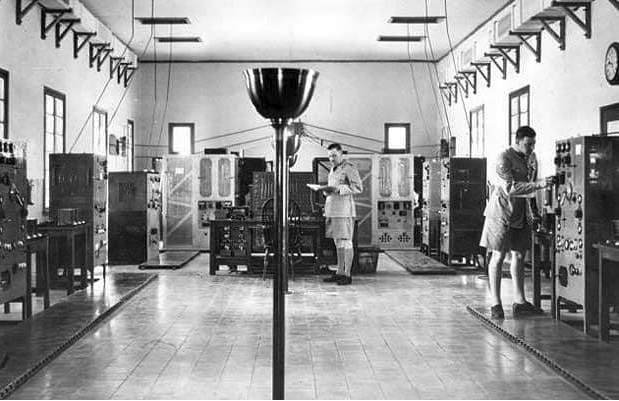
The Anglo-Iraqi War began, starting with airstrikes centered around RAF Habbaniyah. The Iraqi Army has concentrated a force of more than a division in strength overlooking Habbaniyah. At 0500 hours, during Muslim morning prayers, 33 British aircraft from RAF Habbaniyah and 8 Wellington bombers from RAF Shaibah attacked the Iraqi artillery positions which had been threatening RAF Habbaniyah for the past two days. Iraq troops responded by shelling RAF Habbaniyah, killing 13 and wounding 29. Elsewhere, RAF aircraft attacked the Rashid airfield near Baghdad, Iraq, destroying 22 aircraft on the ground. The RAF lost 5 aircraft in Iraq on this date. The British have about 80 obsolete aircraft at Habbaniyah, many of them training types. Despite their age and unsuitability they were immediately employed against the Iraqi forces with considerable success. The British are aided by five companies of Kurds. There were skirmishes at several points between the British and Iraqis near the Persian Gulf, especially at Basra where there were riots and some shooting in opposition to further British landings.
The Iraqis continue to shell the British airfield at Habbaniyah, west of Baghdad, from a plateau to the south of the airfield. The Iraqis have 28 artillery pieces, but the Royal Air Force has complete control of the air despite the Iraqis having adequate planes. As the day opens, the Iraqis remain in a threatening posture, but British operations are not in any impinged or their forces really threatened — aside from the Iraqis controlling land routes between the isolated British garrisons.
The British decide enough is enough. They give the Iraqis a firm ultimatum to leave the area. The Iraqis refuse, so, before dawn, the British at Habbaniyah make a sortie out of the perimeter. Using their lightly armed 80-100 old trainers, Gladiator fighters, and other obsolete aircraft, the RAF pilots support a battalion of the King’s Own Royal Regiment (Lancaster), six companies of Assyrian Levies (Kurds), 18 armored cars and a company of RAF personnel. All told, the British have about 2,200 troops against the nearby Iraqi forces of about a division in size. Since the Iraqi government controls virtually the entire country, its forces potentially vastly outnumber the British — if they can bring them to bear.
The British objective is to give themselves some breathing room around Habbaniyah and, if that goes well, restore land communications to their other bases. The air attack, timed to coincide with Muslim morning prayers, goes well, though Iraqi counterfire kills 13 and wounds 29 in Habbaniyah airbase, including civilians. The Iraqis immediately begin to fall back toward Fallujah. In addition to bombing Iraqi positions on the nearby plateau, the RAF raids the Iraqi airfield at Rashid airfield near Baghdad and destroy 22 planes on the ground at a cost of 5 of their own.
Mufti Amin al-Husseini declares jihad against the British “infidels.” The Iraqi leader, Rashid el Gailani requests aid from Germany. The generals in Berlin basically shrug their shoulders due to the impossibility of sending help, but Hermann Göring is determined to provide assistance to Germany’s allies in Iraq. He, along with the Italians, begins to send some planes that are crudely painted in Iraqi national markings. The Germans have no ground facilities for their aircraft in Iraq, however, as the British occupy all the airfields, and Iraq is far from the nearest Luftwaffe bases. These are daunting logistical issues, but it is the only form of assistance the Axis can send. The Arabs are willing Axis allies, and it is important for Germany to at least make a show of trying to help.
At Basra, the British seize oil installations. The situation in the port is very unsettled, with some guerrilla activity against the British, but so far the British there remain in control. Women and children (including travel writer Freya Stark) continue to seek refuge in the British embassy, many flown out of Habbaniyah. In London, British Prime Minister Winston Churchill deliberates about what to do with the extremely important Iraqi oil wells and pipelines. The British continue sending reinforcements from India, with both troops and additional aircraft expected to arrive soon at the southern port of Basra and overland from Palestine.
The wily premier of Iraq was reported reliably late tonight to have sent an urgent appeal to Berlin for military help after a day-long battle with the British garrison at Habbaniyah airdrome which raged sternly into the night. Official British pronouncements said the Iraq force, massed about the air base, began to shell British cantonments at dawn on orders from Premier Raschid Ali al Gailani, who seized power April 4 in a coup d’etat. This coup was clearly axis-inspired, the British said.
The British government tonight broadcast the following appeal to the 3,500,000 people of Iraq, in Arabic, urging them to overthrow the pro-German regime of Premier Rashid Ali Beg Gailani and save themselves from war: “People of Iraq! Disown Rashid Ali and those few military leaders who, for the sake of their own gain, have sought to quarrel with Great Britain and betrayed the interest of your country. “Rashid Ali has overthrown the Iraq constitution and threatened the life of the lawful regent whom he has driven from the country. He is ready to extend the war to Iraq at the bidding of the axis and will bring untold misery to your country unless he is quickly repudiated. You desire to live in peace. Overthrow those mercenary intriguers and let law and order reign once more.”
Sandstorms at Tobruk, Libya limited the offensive capabilities of German tanks on this date. 100 kilometers to the west, British gunboat HMS Ladybird bombarded Axis positions at Derna.
The Germans continue their attack at Tobruk in the Wadi Giadia sector. A dust storm seriously hampers operations, preventing General Rommel from making use of his panzers. A stalemate has developed, with the Germans fighting hard to expand their bridgehead (roughly 2 miles (3.2 km) along a 3 mile (4.8 km) front) through the Australian 9th Infantry Division perimeter. They have little success, and the Australians prepare to counterattack. However, the two sides are in a classic “clinch,” and the outcome of the battle is far from certain. The Germans have occupied some high ground, but the Italian infantry has had difficulty overcoming surviving Australian garrisons in the rear. General Paulus, who has an overall command for the time being in North Africa, continues to grant General Rommel operational control, but he is growing increasingly leery of chances of success and tells Rommel not to press his attack home.
The Royal Navy has several different ways of resupplying Malta. Sometimes, a direct approach is taken, but at other times more covert operations are used. In the first such clandestine attempt, the 4702-ton British freighter Parracombe, disguised as a Spanish tramp steamer, hits a mine (some sources say it was sunk by Italian aircraft) off Cape Bon while trying to make a run past at night and sinks. This is part of Operation Temple, a convoy to resupply Malta with Hurricane fighters and other supplies. Along with everything else, 21 crated Hurricanes go to the bottom. There are 18 survivors from the 47-man crew, who are rescued by the Vichy French in Tunisia and interned at Bizerte.
Royal Navy destroyer HMS Jersey is returning from a sweep in search of Axis convoys to the Afrika Korps when it hits a mine dropped by the Luftwaffe at the entrance to Valletta Harbour in Malta and sinks. There are 35 deaths and an additional 48 wounded. The Luftwaffe has been successful in eliminating all Royal Navy minesweepers at Malta, making the waters treacherous. This incident causes the British immediately to transfer three warships (light cruiser Gloucester and destroyers Kashmir and Kipling) from Malta to Gibraltar rather than attempt to enter the harbor, which Jersey now blocks.
The Royal Navy bombards Derna with the gunboat HMS Ladybird.
The Royal Navy begins operations to ferry troops from Mersa Matruh to Tobruk aboard destroyers HMS Decoy and Defender. The 2041-ton Greek steamer Virginia makes it to Tobruk with badly needed supplies. The Luftwaffe attacks, but the steamer quickly makes it in and out of the port without damage.
The government begins evacuating civilians from the cities on Cyprus to the countryside due to fears of Luftwaffe raids.
With Operation MARITA successfully completed, the Wehrmacht tightens its control over the Greek mainland and occupies various villages and towns. As in Norway, Hitler authorizes that enemy soldiers be granted amnesty if they will surrender their weapons and go home. This process begins today.
Mathios Potagas, a 17-year-old from the village of Vytina in the Arcadia province of the Peloponnese, spots a Wehrmacht column approaching his village and decides to do something about it. He grabs his father’s old hunting musket and opens fire from a ridge while shouting insults. The Germans quickly kill him. Potagas has become a legendary figure in the area, and there is a statue of him in the village square.
New Zealand Prime Minister Peter Fraser is in Cairo, on his way to London for a visit. Churchill sends him a cable saying that “The successful defense of Crete is one of the most important factors in the defense of Egypt.” New Zealand General Bernard Freyberg is in charge of Commonwealth forces there. Churchill notes that “an airborne attack” on Crete is expected “in the near future.” Churchill, of course, does not mention that this very prescient intelligence is derived from reading German codes in the Ultra program.
The rainy season basically has halted operations in Eritrea for the time being. The Italians remain in their fortifications in the mountains near the Eritrean border under the command of the Duke of Aosta.
The Fifth “Lake”-class U.S. Coast Guard cutter, authorized for transfer on 10 April under Lend-Lease, is turned over to the Royal Navy. The USCGS Chelan becomes HMS Lulworth (Y 60; see 12, 20 and 30 May).
Churchill, who is in a foul mood because he has discovered that his wife has been using his honey in her garden, tours Plymouth.
According to a poll reported in a Gallup survey printed in the News Chronicle, the British people favor retaliatory air raids on Germany — but only by a fairly close 53 — 38% margin, with 9% uncertain. Somewhat oddly, the people in heavily bombed areas are less likely to support such “vengeance” raids, with 76% supporting such raids in largely untouched North Riding/Cumberland/Westmorland areas, but only 45% in London. The further people are from the bombing, the more they approve of raids on Germany. This somewhat supports a pre-war thesis that terror bombing can destroy the will to resist, though different interpretations can be placed on such data.
The British attitude toward Vichy France’s military continues to descend into murkiness. Lord Halifax, in Washington, has complained to US Secretary of State Cordell Hull about humanitarian food shipments that have made their way to France. This attitude was fairly common within the British government around the turn of the year, but now some at Whitehall are having second thoughts. Winston Churchill, in fact, has completely changed his initial attitude against such US aid and now thinks it is a good idea to have the Americans involved a little more closely in European affairs. In fact, apparently, he thinks that the new US Ambassador to France Admiral Leahy may be able to use such aid to wring concessions from Petain, maybe even form a covert alliance with the French. Churchill sends Foreign Secretary Anthony Eden a memo basically telling Eden to tell Halifax to cool it and leave the Americans alone about it.
Nazi-occupied Netherlands lays off Jewish journalists.
Increasing evidences of a strain in the relations between Russia and Germany are reported in diplomatic circles in Turkey which have received reports that Germans in Rumania are openly encouraging the hope for an imminent recovery of Bessarabia.
The Rumanian government established the National Center for Rumanianization, which was mainly tasked with expropriating Jewish properties and distributing them to Rumanians.
Hitler has fixed 22 June 1941 as the date for Operation Barbarossa, and there is extreme confidence within the German government that large swathes of Soviet territory will fall quickly. The real issue at this point is not military operations, but rather an exploitation of the soon-to-be conquered territories in the East. Accordingly, the government forms an Economic Staff to plan and administer this gargantuan task. This is the Oldenburg Plan, and its sole objective is to take out as much from the USSR as possible both to help the German economy and destroy the Soviet one. As the report states, “many millions of people will starve to death in Russia if we take out of the country the things necessary for us.” This is not considered a bad thing or even anything of much consequence. This strain of thinking will persist throughout the war.
A German memorandum noted that the plan to remove large quantities of food out of Eastern Europe to feed German civilians and military personnel would likely result in the starvation of millions of Eastern Europeans especially through the winter. The plan would continue to be implemented, however.
After sundown, 65 German bombers attacked Liverpool, England, United Kingdom for the second consecutive night.
The Luftwaffe also makes some sweeps over the North Sea. At 23:25, the Germans bomb and sink 1414-ton Norwegian collier Trajan (formerly the Doris). All 21 men aboard survive when picked up by destroyer and landed at Harwich, though some are injured. The wreck is located roughly a dozen miles northeast of Blakeneny, Norfolk.
Hans-Joachim Marseille was promoted to the rank of Unteroffizier while stationed in Libya.
By 53% to 38%, with 9% undecided, the people of Great Britain are in favor of reprisal bombing of Germany. But people in heavily blitzed areas are noticeably less in favor of reprisal bombing than those in areas which have escaped the worst of the raids on Great Britain.
RAF Bomber Command, Day of 2 May 1941
25 Blenheims on operations from France to Norway. 2 ships attacked off the Frisians were claimed probably sunk and a 2,000-ton ship off Ostend was also claimed sunk, the first success of the Channel Stop operation. No aircraft lost.
RAF Bomber Command, Night of 2/3 May 1941
Hamburg
95 aircraft — 49 Wellingtons, 21 Whitleys, 19 Hampdens, 3 Manchesters, 3 Stirlings. 3 aircraft — 1 Hampden, 1 Manchester, 1 Whitley — were lost. Good bombing results were claimed. Hamburg reports no outstanding incidents but 26 fires were started — 13 large, 3 people were killed, 16 injured and 206 bombed out.
Emden
17 Wellingtons and 6 Whitleys. Ground haze spoiled bombing. 1 Wellington lost.
Minor Operations: 11 Hampdens minelaying in Frisians, 3 Wellingtons to Rotterdam, 8 O.T.U. sorties. No losses.
The Luftwaffe mines Alexandria Harbour, temporarily closing it to traffic. Alexandria is the Royal Navy’s irreplaceable port in the eastern Mediterranean. It is reopened by sunset.
Luftwaffe incursions continue at Malta, but they are just fighter sweeps and reconnaissance today. Minesweeper Fermoy is hit while in drydock for maintenance and utterly destroyed.
U-201, commanded by Oberleutnant zur See Adalbert Schnee, sank British tanker Capulet (8190grt), which had been torpedoed and abandoned on 28 April, in 60N, 16W. At 1615 hours on 28 April 1941 the Capulet (Master Edward Henry Richardson, DSC) in convoy HX.121 was torpedoed by U-552 (Topp) south of Iceland in 60°16N/16°10W. She broke her back, caught fire and was abandoned. Eight crew members and one of four gunners were lost. After HMS Douglas (D 90) (Cdr W.E. Banks, DSC, RN) tried to sink the tanker with gunfire, the destroyer picked up the master and 17 survivors and landed them at Londonderry. 17 survivors were rescued by the British rescue ship Zaafaran (Master Charles Kavanagh McGowan, DSC) and landed at Greenock on 1 May. At 2114 hours on 2 May, U-201 found the drifting wreck of the Capulet and sank her by a coup de grâce. The 8,190-ton Capulet was carrying fuel oil and was bound for Scapa Flow, Scotland.
Ex-US Coast Guard cutter/escort ship HMS Lulworth (Lt Cdr C. Gwinner (emcgy), built in the US, was commissioned into the Royal Navy at New York with crew from battleship HMS Resolution, under repair.
Minesweeping trawler HMS Alberic (286grt, T/Lt R M Johnson RNVR) was sunk in an accidental collision with destroyer HMS St Albans in Pentland Firth. T/Sub Lt C. S. Whitehead RNVR, and twelve ratings were lost on the trawler. The destroyer proceeded to Southampton at 0400/9th for repairs to her bows, completing on 4 June.
Armed yacht HMS Nyula (48grt, T/Lt W. H. F. Kelly RNVR) was sunk in a collision off the Tyne.
P/T/Sub Lt (A) S. W. Everett RNVR, was killed when his Swordfish of 828 Squadron from Hatston crashed into the sea.
German auxiliary anti-submarine trawler Vp 808 (trawler Reichsprasident Vor Hindenburg: 321grt) was sunk by British bombing northwest of Borkum.
Alexandria Harbour was closed due to mining, but was reopened at 1730.
Destroyers HMS Kandahar, HMS Juno, HMS Jaguar, HMS Imperial, and HMS Hasty sailed after Alexandria Harbour reopened to relieve destroyers HMAS Stuart, HMAS Voyager, HMAS Vampire, HMAS Vendetta, and HMAS Waterhen escorting the Battle Fleet. The Australian destroyers arrived at Alexandria that evening.
Destroyers HMS Decoy and HMS Defender departed Port Said late on the 2nd to embark troops at Mersa Matruh and transport them to Tobruk.
Destroyer HMS Jersey (Lt Cdr A. F. Burnell-Nugent) entering Grand Harbour, Malta, was sunk on a mine. Lt (E) M. G. Gardner and Surgeon Lt D. Lorimer RNVR, and thirty three ratings were killed. Two officers and forty six ratings were wounded. Because there were no minesweepers available, light cruiser HMS Gloucester and destroyers HMS Kipling and HMS Kashmir were sent to Gibraltar. Destroyers HMS Kelly, HMS Jackal, and HMS Kelvin had already entered the harbour and remained with repairing destroyer HMS Janus.
On the 3rd, light cruiser HMS Gloucester exploded a mine in her paravane at 0224. She was attacked by Italian bombers and hit on the stern by a bomb which did not explode at 1325. Neither incident caused significant damage to the cruiser which was docked briefly to correct the damage on her arrival at Gibraltar. Light cruiser Gloucester and destroyers HMS Kipling and HMS Kashmir arrived at Gibraltar on the 4th.
Gunboat HMS Ladybird bombarded Derna.
British steamer Parracombe (4702grt), carrying crated twenty one Hurricanes and other stores brought from England in convoy OG.59 for Malta, was sunk 9½ miles 62° Cape Bon on a mine. This movement had been designated Operation TEMPLE. Eighteen crewmen were interned in Bizerte.
Greek steamer Virginia (2041grt) arrived at Tobruk with supplies. After unloading, the steamer departed during the night of 2/3 May, escorted by anti-submarine trawler HMS Wolborough. Despite air attacks in Tobruk Harbour on the 2nd and at sea on the 3rd, the steamer was not damaged.
Destroyer HMS Foxhound arrived at Gibraltar from Freetown.
Destroyer HMS Vidette arrived at Gibraltar from Freetown escorting British steamer Nyholt.
Convoy OB.318 departed Liverpool by destroyers HMS Campbeltown and HMS Newmarket, sloop HMS Rochester, corvettes HMS Marygold, HMS Nasturtium, and HMS Primrose, and anti-submarine trawler HMS Angle. Destroyer HMS Westcott and corvettes HMS Auricula and HMS Dianthus joined on the 3rd. The destroyers, which joined on the 2nd, and the trawler were detached on the 7th. On the 7th, destroyers HMS Amazon, HMS Broadway, and HMS Bulldog, corvettes HMS Aubretia, HMS Hollyhock, and HMS Nigella, armed merchant cruiser HMS Ranpura, and anti-submarine trawlers HMS Daneman and HMS St Apollo joined the escort. On the 8th, destroyer Westcott, sloop Rochester, and corvettes Auricula, Dianthus, Marigold, Nasturutium, and Primrose were detached; the corvettes to join HX.123. The remainder of the escort was detached on the 10th when the convoy was dispersed.
Today in Washington, President Roosevelt conferred with Admiral Harold R. Stark, Chief of Naval Operations, and General George C. Marshall, Chief of Staff, and with Harold D. Smith, Director of the Budget. He left for Charlottesville, Virginia, for a week-end during which he will dedicate the Woodrow Wilson birthplace at Staunton.
The Senate was in recess.
The House heard discussion of the convoys issue and adjourned at 1:03 PM, until noon on Monday. The Ways and Means Committee heard further recommendations regarding the proposed new tax bill.
President Roosevelt today called upon the nation to go on a basis of “twenty-four hours a day and seven days a week” to meet the increasing demand for munitions, planes and ships in the critical situation which confronts the country. In a letter to William S. Knudsen and Sidney Hillman, directors of the Office of Production Management, the President praised the efforts made in this direction to date, but added bluntly that “it is not enough.” He asked, therefore, for the cooperation of government, labor and management in “expanding and speeding up” the production of machine tools, in utilizing all industrial machines and in combing the country for trained machinists.
Mr. Roosevelt said in a press conference that he did not think it would be necessary to increase the hours of labor in order to get machine tools produced rapidly and existing machines working at full speed. Many men trained to operate machines were working at other occupations and many young machinists actually had been drafted, the Executive asserted. He revealed that the Army had been asked to recheck the standing of such men and indicated that they might be excused from military service even if they were already in the Army. Emphasizing that more exemptions of skilled men should be allowed by local draft boards and appeal boards, the President added that the country did not need young doctors and engineers as infantrymen. He declared they could be more useful in their regular occupations. Three Roosevelt Objectives Mr Roosevelt mentioned three objectives under his speed-up program:
- To get a pool of all useful or potential machine tools whether in large or medium-sized factories or in a small garage in Hyde Park, New York.
- To use them where they are or move them where they can be employed.
- To see if it is not possible to get the men to man them on a 168-hour-a-week basis, with time out only for necessary repairs to the machines.
President Roosevelt asserted tonight that $3,500,000,000 of additional taxes represented a “minimum of our revenue requirements” and that every individual and every corporation should bear “its fair share of the tax burden.” The chief executive expressed his views in a letter to Chairman Doughton, North Carolina Democrat, of the house ways and means committee, which is holding hearings on proposals to raise the vast sum by new revenue legislation. Mr. Roosevelt did not, however; suggest specifically the sources from which an extra $3,500,000,000 in federal revenue should be drawn, but, in a sentence for which no explanation could be obtained from White House officials, the president declared: “The income tax cannot fix the tax liability of individuals and corporations with equity as long as the tax base is defined to exclude substantial and significant elements of income.”
Warned by Secretary Jones that the world situation “is very, very serious” and that he did not know “how long England can take the punishment it is taking now,” manufacturers, distributors and retailers of consumer goods pledged cooperation with the government today in combating price advances as the nation mobilizes its full power to defend the United States and aid the anti-Axis nations abroad.
A resolution calling for the use of the United States Navy to insure the safe delivery of aid from this country to Great Britain was adopted by the National Executive Committee of the American Legion at a meeting in Legion headquarters in Indianapolis today.
An indeterminate but substantial number of the best trained young American military pilots soon will fly with British squadrons as observers in every type of air service. Orders were issued today by the War Department authorizing the dispatch of “junior air corps officers” for service as observers in the small pursuit ships as well as on bombers and larger craft. It was announced also that “some officers are crossing the Atlantic on British airplanes being flown to England.”
The United States should make its contribution to the fight of the democracies on the basis of practical self-interest, not sentiment, Sir Gerald Campbell, British Minister at Washington, told a thousand persons in the Town Hall yesterday forenoon, at the last lecture of the current season.
Addressing the annual meeting of the American Council on Education today on the subject of the war and the British universities, James B. Conant, president of Harvard University, said: “It would seem to me the time for final action by this country is close at hand.”
A government spokesman told the nation’s food and clothing producers tonight that “business as usual Is out” as long as “a life-or-death” emergency exists. The warning came from Donald M. Nelson, O.P.M. purchasing director, who spoke before a defense conference on consumer goods at which the nation’s principal producers of food, clothing and household furnishings were represented. “Business as usual is out,” Nelson said, “you are not going to see any more of it until this emergency is over. The most terrible mistake any of us could possibly make is to fail to understand that fact.”
A majority of the commercial airline pilots operating out of La Guardia Field support Charles A. Lindbergh’s isolationist views and his action in resigning his commission in the Army Air Reserve, but at the same time hope that Britain can win, according to a canvass of more than 100 pilots made at the airport over a two-day period by the New York City News Association.
The FCC approves regular scheduled commercial TV broadcasts to begin July 1. The Federal Communications Commission (FCC) grants 10 stations commercial TV licenses, to take effect 1 July 1941. The television stations are to broadcast 15 hours per week with 525 lines and 30 frames per second. The first license is granted to W2XBS (WNBT), the second to W2XAB (WCBW). The experimental Dumont network already is on the air in New York City, but it is not granted a license in this first crop. These will be the only licenses granted until 2 May 1944 due to the outbreak of war involving the United States.
The National Defense Mediation Board persuaded today spokesmen for General Motors Company and the United Automobile Workers of AmericaC.I.O. to resume negotiations in the hope that an agreement might be reached in a few days.
Admiral Ernest J. King breaks his flag as Commander in Chief Atlantic Fleet in heavy cruiser USS Augusta (CA-31), at Newport, Rhode Island.
The USN’s Office of Naval Intelligence initiates a three-week indoctrination course to prepare naval officers for foreign and domestic intelligence duties.
Major League Baseball:
The Dodgers, after starting a trifle off key, they attuned themselves nicely and concluded the afternoon’s concerto with a 7–3 triumph over the Cubs. It was their fourteenth victory in the last sixteen performances. Dolph Camilli’s bat boomed once again, after being more or less muted since last Sunday. He exploded his seventh home run of the season off Bill Lee into Bedford Avenue in the eighth inning to clinch the contest. But Cookie Lavagetto’s line single to left in the seventh drove in the run that was enough to win, for it broke a 3-3 deadlock and brought some warmth to the ladies’ day crowd of 18,543.
Because sage Ted Lyons held them to five hits, the birthday gift the New York Yankees today prepared for Charley Ruffing and the White Sox at Comiskey Park was anything but appropriate. Instead of the victory he sought on the eve of his thirty-sixth anniversary, the redhead from Nokomis went down to his second defeat of the campaign. More irksome still, he was shelled to cover for the first time this year and the White Sox won, 8–1. His effectiveness departing after five innings of one-hit shutout pitching that matched the effort of Lyons, Ruffing was driven off the mound in the sixth when the Sox rushed over five runs before Steve Peek stopped them.
The American League leading Indians boomed their victory streak to eight games in a row today with a 7–3 triumph over the Red Sox in their series opener. With their first ladies’ day crowd of 14,000 cheering even the semblance of a hit, Cleveland made eleven against Heber Newsome and Tom Judd. The Tribe staged a four-run rally in the fifth inning, when Jeff Heath tripled with the bases full. It was the third straight victory for Mel Harder, although he was chased in the sixth after allowing three runs on four hits. Harder hurled four hitless frames, but needed the help of Joe Heving. Red Sox outfielder Ted Williams’ batting average hits the lowest point of the season at .308; he finishes the season over .400.
Detroit’s hitters stayed hot for the fourth straight time today and with Schoolboy Rowe turning in a pitching gem and Rudy York firing his fifth home run, the Tigers massacred the Athletics, 15–1. The Tigers collected seventeen hits off three Athletic pitchers to bring their total for the last four days to fifty-eight hits.
The Giants and Pirates played to a 7–7 tie. After the frostbitten conflict had gone thirteen innings, Beans Reardon, umpire in chief at the plate, humanely called the game on account of darkness. At that late hour it could not be seen how the deadlock ever could be broken. The Giants still had their five-game losing streak, the Corsairs still languished in the cellar and the ladies had their explanations to make for late dinners. Perhaps Terry was the most chagrined. As late as the eighth inning the Giants, thanks to a couple of homers by Billy Jurges and Mel Ott, looked to have the game tucked away, 7–3. But in this round Harry Gumbert and Bob Carpenter proceeded to blow the four-run lead and by the time Terry came up with a pitcher who really could pitch, namely Ace Adams, the Pirates also had found one.
The Cardinals strengthened their grip on the National League lead today by winning, 4–2, from the Phillies for their seventh-straight victory. St. Louis unveiled a rookie pitcher of promise. Right-hander Howard Krist, who won twenty-two games for Houston and set a Texas League earned-run record of 1.71 last year, gave the Phillies only five hits, two in the ninth inning, when the losers scored their runs. He walked only one man, hit one and struck out four.
Sid Hudson’s pitching stamina and the batting of the veteran catcher, Rick Ferrell, gave Washington a 7–4 victory over the Browns today in twelve innings. Hudson, winning his first game against three defeats, went the entire route and Ferrell drove in four of the Senators’ runs. He singled with the bases loaded in the twelfth to score two tallies, enough for the victory, but Hudson made it certain by following with a double to count two more.
The scheduled game between the Cincinnati Reds and the Braves at Boston was postponed due to rain. The game will be made up as part of a doubleheader on July 13.
Chicago Cubs 3, Brooklyn Dodgers 7
New York Yankees 1, Chicago White Sox 8
Boston Red Sox 3, Cleveland Indians 7
Philadelphia Athletics 1, Detroit Tigers 15
Pittsburgh Pirates 7, New York Giants 7
St. Louis Cardinals 4, Philadelphia Phillies 2
Washington Senators 7, St. Louis Browns 4
Dissatisfaction with everything pertaining to government, whether Nanking’s or Chungking’s, is rapidly spreading throughout China’s Yangtze Valley, according to reliable reports reaching here from Nanking and Hankow. Communists are finding it fertile ground for recruitment. With Nanking, Chungking and Japanese authorities claiming overlordship over this immensely rich territory, the average Chinese farmer or merchant is finding it difficult to meet the demands of all three authorities and at the same time provide food for himself and family. The Japanese military and Japanese civilian organizations, protected by troops, are buying rice and other food at previously arranged official prices and reselling the goods at immense profits in other markets. This drain, against which Chinese farmers are unable to protest because of fear of execution, is causing hunger in the Yangtze Valley. The Japanese collectors of farm products are far from gentle in their methods, so Chinese farmers hate every collector and official. There also is hatred against the Chungking guerrillas and against Wang Ching-wei’s Nanking satellites. Whatever the Chinese farmer does, he loses.
Although a possibility of a visit by Foreign Minister Yosuke Matsuoka to the United States remains a topic of discussion in political quarters in Tokyo, it is unlikely that Mr. Matsuoka will make a statement regarding it for publication, Koh Ishii, spokesman of the Cabinet Board of Information, told foreign correspondents today.
Dow Jones Industrial Average: 115.72 (+0.42)
Born:
Clay Carroll, MLB pitcher (World Series Champions-Reds, 1975; MLB All-Star, 1971, 1972; Milwaukee-Atlanta Braves, Cincinnati Reds, Chicago White Sox, St. Louis Cardinals, Pittsburgh Pirates), in Clanton, Alabama.
Red Stroud, ABA guard (New Orleans Buccaneers), in Lake, Mississippi (d. 2008).
Paul Darrow, English actor (‘Kerr Avon’ — Blake’s 7″), in Chessington, Surrey, England, United Kingdom (d. 2019).
Eddy Louiss, French jazz Hammond B3 organist (Double Six), in Paris, France (d. 2015).
Jules Wijdenbosch, Surinamese politician, President of Suriname (1996-2000), in Paramaribo, Surinam.
Naval Construction:
The U.S. Navy MMS I-class motor minesweeper USS YMS-38 is laid down by Robert Jacob Inc. (City Island, New York, U.S.A.).
The U.S. Navy MMS I-class motor minesweeper USS YMS-77 is laid down by the Stadium Yacht Basin (Cleveland, Ohio, U.S.A.).
The Royal Navy Hill-class minesweeping trawler HMS Duncton (T 220) is laid down by Cook, Welton & Gemmill (Beverley, U.K.); completed by Holmes.
The Вое́нно-морско́й флот СССР (ВМФ) (Soviet Navy) “S” (Stalinec)-class (3rd group, Type IX-modified-2) submarines S-22, S-23, S-24, S-25, and S-26 are launched by Krasnoye Sormovo (Gorkiy, U.S.S.R) / Yard 112.
The U.S. Navy coastal minesweeper USS Puffin (AMc-29) [ex-fishing boat Mary Jane] is commissioned. Her first commanding officer is Lieutenant (j.g.) Odber R. McClean, Jr.
The U.S. Navy coastal minesweeper USS Phoebe (AMc-57) [ex-fishing boat Western Robin] is commissioned.
The Royal Navy Banff-class sloop HMS Lulworth (Y 60) [ex-USCGS Chelan] is commissioned. Her first commanding officer in British service is Lieutenant Commander (retired) Clive Gwinner, RN.
 History Diaries