Calm continues on the western front. A Nazi raid is checked in the interior by French fliers and the perception in the West is that the probability of an offensive has diminished. Light reconnaissance patrols in the Moselle/Saar region. There was intermittent German shelling of the town of Forbach.
The United States merchantman City of Flint, seized in the Atlantic three weeks ago by a German raider, was released today by Norwegian authorities. The City of Flint sailed to Bergen with U.S. control finally restored.
While the Jewish population of entire towns and villages in Austria and the Czech Protectorate is being transported to Poland to serve in labor battalions, Jews in Germany still seek to make use of every possibility to emigrate. About 2,000 monthly are thought to still be escaping, but most lack the means.
Negotiations are ongoing in Moscow. The Finns are not giving any ground and state that they have given as much as they possibly can without jeopardizing their own security. Stalin meets with them. The Finnish delegation, headed by former Premier Juho Paasikivi was requested this afternoon to go to the Kremlin at 6 o’clock this evening.
The Finnish Foreign Office announced tonight that the Russian-Finnish talks in Moscow today “proceeded in an amicable atmosphere” and added that the Finnish delegates would need new instructions before any further discussion could take place at the Kremlin.
A British economist holds that the war will reduce the Reich and most of Europe to privation; a trade threat is paramount.
German authorities insist that the Reich has sufficient food to make the British blockade absolutely ineffective. Of course, there is practically no coffee but a Nazi invention — apple tea — is offered as a substitute for the traditional “kaffee-klatsch” or coffee gossip hour.
Rear Admiral Hugh Sinclair, the head of MI6 (“C”), dies of cancer and is succeeded by Colonel Stewart Menzies.
An anonymous “German scientist who wishes you well” leaves a prototype proximity magnetic mine fuse and a report with details of German weapons research for Captain Hector Boyes, the British Naval Attaché in Oslo, on a British consulate windowsill, in Oslo.
The Holy See instructed Mgr. Cesare Orsenigo, Nuncio in Berlin, to protest at the Wilhelmstrasse for the order issued by the German Ministry of the Interior forbidding the publication of the Pope’s encyclical in Germany, it was learned in Vatican circles today.
Negotiations are under way between Yugoslavia and Bulgaria for a closer understanding than at present exists, it was learned today. The reason for this diplomatic move is anxiety over Russia.
The Swedish cargo ship Mercia sank in the Baltic Sea off Bornholm, Denmark.
The Greek cargo ship Nicolaos M. Embiricos struck a mine and sank off the Goodwin Sands, Kent near the Sandettie Lightship (51°13′N 1°39′E) with the loss of one crew member. Survivors were rescued by the British North Goodwin Lightship and a Dutch ship.
The Norwegian cargo ship Sig struck a mine and sank off the mouth of the Humber (53°43′N 0°17′E) with the loss of three of her 19 crew. Survivors were rescued by the British fishing boat Ellen M.
U-23 laid nine mines off Cromarthy Firth, but without result.
U-21 laid nine mines in the Firth of Forth, which later resulted in the sinking of three ships.
Convoy OA.30 departs from Scotland. Convoy OB.30 departs from Liverpool.
The War at Sea, Saturday, 4 November 1939 (naval-history.net)
Destroyers BEDOUIN, ESKIMO, MATABELE were to ordered to rendezvous with light cruiser GLASGOW off Stadtlandet in the search for German liner NEW YORK.
On Northern Patrol, two light cruisers were on patrol between the Orkneys and the Faroes, three light cruisers and one AMC between the Faroes and Iceland, and three AMCs in the Denmark Strait. When a London flying boat from depot ship MANELA was reported missing, the five Northern Patrol cruisers carried out a search.
Anti-aircraft cruiser CAIRO departed Grimsby and arrived at Rosyth on the 6th.
The first of the Methil-Bergen ON convoy series departed Methil with five British merchant ships at 1710. Convoy ON.1 put to sea escorted by destroyers FAME, TARTAR, ASHANTI and SOMALI. At sea, FAME was relieved by destroyer PUNJABI, which had been refueling at Scapa Flow. The convoy was given anti-aircraft support by anti-aircraft cruiser CURLEW, which departed Scapa Flow on the 5th, and close cover by light cruiser EDINBURGH, which departed Rosyth, later refueled at Scapa Flow, departed on the 6th, joined the Home Fleet at sea. and arrived back at Rosyth on the 9th. En route to Bergen, ASHANTI was detached from the convoy for refueling and to repair defects at Sullom Voe and did not rejoin until the start of the return convoy. ON.1 arrived at Bergen on the 7th without incident.
Convoy OA.30 of 12 ships departed Southend escorted by destroyers GREYHOUND and GALLANT from the 4th to 6th, and dispersed on the 7th.
Convoy OB.30 departed Liverpool escorted by destroyers VANOC and WHIRLWIND to the 7th.
Canadian destroyer HMCS ASSINIBOINE, working up prior to departing for Canada, attacked a submarine contact northwest of Guernsey at 0200.
Minesweepers HUSSAR and SPEEDWELL were involved in a minor collision. SPEEDWELL repaired in the Tyne, completing on 10 December.
U-21 laid mines in the Firth of Forth during the night of the 4th/5th, on which one merchant ship and one netlayer were sunk, and light cruiser BELFAST badly damaged . U-61 later tried to reinforce the minefield, but could not get through the patrol line.
Steamer BRANDON (6668grt) was attacked by a U-boat 120 miles W of the Hebrides. Submarines TRIUMPH and TRIDENT were sent to investigate and carry out a search.
Greek steamer NICOLAOS M EMBIRICOS (5295grt) was sunk on a British defensive minefield off the Goodwins, 15 miles east of Dover near the Sandettie Light Vessel. One crewman was lost and the survivors picked up by the North Goodwin Light Vessel and a Dutch boat. They were transferred to British lifeboats.
Finnish steamer OTAVA (1290grt) was seized in the Gulf of Bothnia by German warships and taken to Swinemünde.
Light cruiser BIRMINGHAM was relieved by light cruiser DAUNTLESS in the Sunda Strait on the 4th and arrived at Singapore on the 6th.
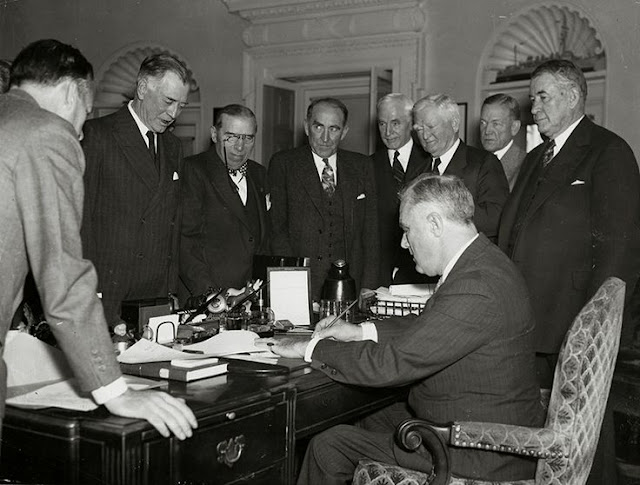
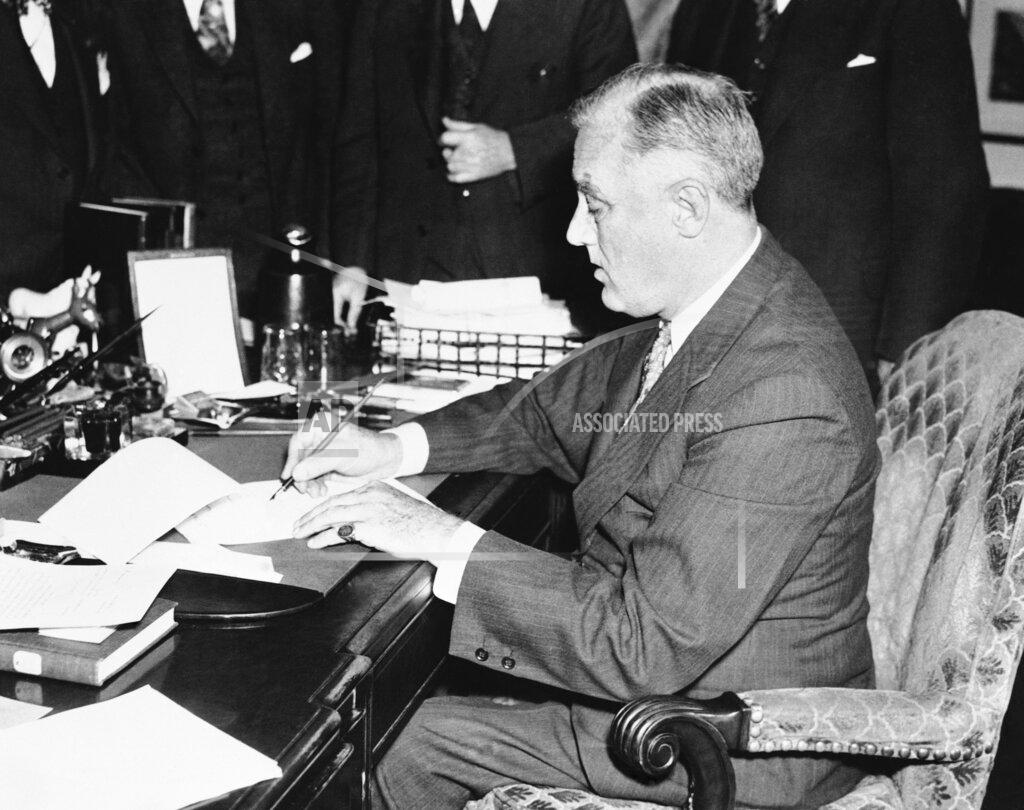
The American Neutrality Law came into force, forbidding American ships and citizens from entering clearly defined war zones. U.S. President Roosevelt today signed the new Neutrality Act repealing the embargo on the export of arms to belligerent countries. His signature releases at least £ 44 million of arms ordered by Britain and France before the embargo came into effect with the declaration of war. It repeals the arms embargo and substitutes a policy of “cash and carry,” prohibits U.S. vessels and citizens from entering combat zones, and establishes National Munitions Control Board composed of the Secretaries of State, Treasury, War, Navy and Commerce.
The modification of the neutrality legislation passes into law. Although by its terms the ban on American ships and civilians in clearly defined war zones is confirmed, it does provide for supply of arms to belligerents on a “cash and carry” basis. Such arms must be ordered from private companies, paid for up front and transported to the war zone in the in ships provided by the purchaser. British naval strength means that, as is intended, only the Allies will benefit from this. Within a few days both the British and the French establish purchasing missions in Washington.
The United States embargo against sale of arms, ammunition and implements of war to belligerents was legally lifted at 12:04 o’clock this afternoon when President Roosevelt, at a ceremony attended in his office by Congressional leaders. signed the joint resolution adopted by Congress after its historic six weeks’ debate. Within a minute afterward the President signed two proclamations designed to protect the United States in the new situation. A later proclamation established a combat area in the European war zones into which American nationals and ships will not be permitted to proceed except under conditions that the President will lay down in rules and regulations to be issued early next week. Through one of the first two proclamations he reiterated his previous order closing United States ports to submarines.
Only one combat area was defined, extending from Norway, south of Bergen, and the Baltic Sea to Spain and taking in Great Britain, Ireland and the English Channel. The Mediterranean was not included, for reasons which were considered obvious although they went unexplained officially. The Amended Neutrality Law Itself forbids American vessels to carry cargoes to the belligerent countries, England, France and Germany. The combat zone proclamation forbids our ships to go in areas which German submarines or British warships may make dangerous.
The combat zone proclamation has the effect of barring trade in American vessels with the neutral nations Belgium, Holland, Denmark, Sweden, Estonia, Lithuania and Latvia. It also shuts off this commerce with Finland and Russia through the Baltic Sea, but permits it with them through the Arctic, while Russian Black Sea ports are also open to our ships. Cargoes in American ships may still be carried to Italy, Spain, Portugal, Yugoslavia, Greece, Turkey, Rumania, and Bulgaria, and also to Norway, north of Bergen. The President in an accompanying statement said that combat areas may be changed with a changed situation. Some zones now dangerous may become safe and vice versa.
It appeared that there had not been sufficient naval activity in the Mediterranean to warrant a ban being placed on the movement of American traffic in that area, in view of the well-known circumstances that the President does not want to interfere with such movement except when and where necessary. There was also the implication that the United States did not wish to cause undue interference with trade to Italy, whose position toward her German Axis partner is of constant concern to the nations. It was considered obvious by observers that anything preventing needless concern to Italy would be to the advantage of peace.
Technically, Germany could also order supplies, but the British blockade prevents that. The Soviet Union also can order supplies from the U.S. and ship them through its port of Vladivostok without British interference, and that becomes a key (and obscure) port of supply for the USSR throughout the war.
President Roosevelt declares area around British Isles a combat zone.
The new U.S. embargo law does not affect the moral embargo placed on Japan, President Roosevelt says.
U.S. domestic politics are absent from the neutrality victory. The vote for full repeal of the embargo was joined by Democrats who fought other New Deal measures.
Lifting of the embargo against arms shipments to belligerents in the European war has released at least $170,000,000 of orders from France and Great Britain for American-built planes and provided a stimulus for plant expansion that will put American plane production at a new high level, it was indicated yesterday in the aviation industry.
While American shipping men faced with dismay the prospect of a collapse of the merchant marine on the North Atlantic, one American-flag vessel, the Black Gull of the Black Diamond Line, left port with a big cargo yesterday, bound for Rotterdam and Antwerp.
A naval authorization bill which will require Congressional appropriations of about $1,300,000,000 will be introduced at the next session of Congress, probably on the first day. The bill, which carries the approval of President Roosevelt, provides for the construction of ninety-five combatant ships, including three aircraft carriers, eight cruisers, fifty-two destroyers and thirty-two submarines. Completion of the program will increase the fighting strength of the navy to about 2,100,000 tons. The bill also provides for a maximum naval air strength of 6,000 planes, for thirty-six lighter-than-air craft and twenty-one auxiliary vessels.
Representative Vinson of Georgia, chairman of the House Committee on Naval Affairs, who will pilot the bill through the House, said that the authorizations would give the United States a fleet having an underage strength in 1944 of 15 battleships, 59 cruisers, 11 aircraft carriers, 173 destroyers, 87 submarines, 6,000 airplanes and 36 lighter-than-aircraft. He added that the new construction might be completed within three or four years.
The tonnage of the new fighting units provided in the bill is about 400,000 and that of auxiliaries about 125,000, these auxiliaries including aircraft tenders, destroyer and submarine tenders and repair ships. The bill does not fix the tonnage of the proposed units, leaving it to the discretion of the President to distribute the 400,000 tons of fighting craft among the four types stipulated, “the total tonnage in each type to be the amount determined by the President to be in the best interests of the national defense.” Not only does the bill provide for a record-breaking increase in the four combatant types of ships, but it makes radical changes in existing law involving construction. The present law, which provides that naval construction shall be allocated on a fifty-fifty basis between the navy and private yards, would be repealed, but the provision fixing the profits of private yards at 10 percent of the completed cost would be retained.
Another departure is a section which would authorize the Secretary of the Navy to advance to private contractors not to exceed 30 percent of the contract price of the ship, but only in cases where adequate security for the protection of the government is given. Also the Secretary, in the interest of the national defense, might award contracts for ships, aircraft or parts without competitive bidding when prices were determined to be “fair and reasonable.”
Chairman Vinson pointed out that the bill did not provide for what is generally termed “a two-ocean navy.” He added that it did provide for a navy adequate to defend the United States from “any single aggressor” nation, while not providing for a navy strong enough to guarantee protection against combinations of other navies. Asked why the bill provides for no battleships, Mr. Vinson said that eight battleships, six of 35,000 tons each and two of 45,000 tons each, were now under construction and would assure an adequate first line. He pointed out that some ships now in commission will be over-age in 1944, adding that most or all over-age ships could be made ready for emergency service.
Ships which will be over age in 1944, he cited, include 8 battleships, 6 cruisers, 120 destroyers and 32 submarines. If they were retained in commission the 1944 fleet would have 23 battleships, 65 cruisers, 11 aircraft carriers, 293 destroyers and 89 submarines. The given tonnage total of 2,100,000 includes these over-age units. For several weeks Mr. Vinson and the Navy Department have been at work on the bill. This morning Admiral Harold R. Stark, Chief of Naval Operations, went to the Capitol and in a conference that lasted three hours worked out the final details with Chairman Vinson. When the conference ended Mr. Vinson made public the text of the bill and announced that it would be introduced in the House during the first week of the next session. Public hearings before the Committee on Naval Affairs would begin, he added, January 8.
FDR writes a letter to Archibald MacLeish that the Magna Carta has been placed in the “safe hands” of the US Library of Congress.
Blood can be kept for a long time if rapidly cooled, experiments by a physicist and his wife prove. This means that blood for transfusions may help many more wounded soldiers.
Spunky 7-year-old Bruce Crozier, who had been lost for six days in the wild lands of Northern Arizona while posses aggregating 800 men searched for him, walked into a hunting camp in Wildcat Canyon today.
The longshoremen’s strike against nine coastal steamship companies entered its third day yesterday, with New York’s coastwise shipping at a standstill.
Packard offers the first car air conditioner as a new car option. They call it the “Weather Conditioner.” The unit takes up half the trunk space and costs a steep $279. There is no way to moderate the air from the unit, it requires an extended manufacturing process and many people apparently consider it a useless luxury, so it is not receiving a lot of orders.
Actress and comedian Phyllis Diller née Driver weds inspector Sherwood Diller in Covington, Kentucky.
Selected College Football scores:
Alabama 7, Kentucky 7
Amherst 13, Mass State 0
Baylor 27, T.C.U. 0
Boston College 13, Auburn 7
Brooklyn 12, C.C.N.Y. 6
Brown 54, Tufts 7
Catholic University 13, Tulsa 7
Cornell 13, Columbia 7
Dartmouth 33, Yale 0
Duke 7, Georgia Tech 6
Duquesne 21, Marquette 13
Fordham 13, Rice 7
Georgetown 14, West Virginia 0
Holy Cross 46, Providence 0
Illinois 16, Michigan 7
Iowa 4, Purdue 0
Lehigh 20, Haverford 13
Manhattan 26, Boston University 0
Michigan State 14, Syracuse 3
Mississippi 14, Vanderbilt 7
Missouri 27, Nebraska 13
NYU 14, Lafayette 0
North Carolina 17, North Carolina State 0
Northwestern 14, Minnesota 7
Notre Dame 14, Army 0
Ohio State 24, Indiana 0
Oklahoma 38, Iowa State 6
Oregon 38, Wash State 0
Penn 13, Navy 6
Penn State 12, Maryland 0
Pittsburgh 13, Temple 7
Princeton 9, Harvard 7
Richmond 0, VMI 0
Rutgers 32, New Hampshire 13
Santa Clara 27, Stanford 7
Southern California 19, Oregon State 7
Southern Methodist 10, Texas 0
Tennessee 20, Louisiana St 0
Texas A&M 27, Arkansas 0
UCLA 20, California 7
Villanova 13, Detroit 6
Virginia 47, Chicago 0
Hundreds are homeless after floods in Cuba.
Maria and Mario Montessori flew from Naples to Madras and were greeted by children from Theosophical schools. Montessori gave a press conference and expressed her delight at visiting India. She stayed in India for much longer than she had expected. Montessori had lived in Barcelona, Spain since 1915, but had to flee when the Spanish Civil War began in 1936. She and her family eventually settled in the Netherlands, where she established her own school, study center, and training center.
The Japanese bomb Chengtu. The Chinese reported they shot down two Japanese bombers of a squadron of thirty-four that raided Chengtu today. Wreckage of the two planes was said to have been found, one south of the city, the other to the southwest. A fleet of Chinese pursuit planes challenged the Japanese over the Szechwan capital and a number of invading planes, in addition to the two found wrecked, are believed to have been damaged. The Japanese unloaded bombs on the airfield, destroying a single-motored passenger plane owned by the Chinese-American National Aviation Corporation and damaging another. No bombs were dropped on the city.
Despite surface appearances, which perhaps intentionally are being given a pessimistic tinge, secret currents are moving in favor of compromises with the United States and Britain. The conference today between the United States Ambassador, Joseph C. Grew, and the Japanese Foreign Minister, Admiral Kichisaburo Nomura, was of the highest importance for future United States-Japanese relations. The interview, which was held at Admiral Nomura’s invitation, lasted an hour and covered in outline all the major causes of disputes that have developed from the Japanese Army’s actions in China.
No formal note was presented but Mr. Grew reinforced his strong “bill of complaints” by documentary evidence that he handed to Admiral Nomura. Those documents furnished concrete particulars regarding American objections to Japan’s actions in China and reminded the Foreign Minister of the long list of unanswered American protests. It was authoritatively stated that embargoes or any form of pressure did not enter the conversations. Former President Roosevelt’s maxim, “Speak softly and carry a big stick,” describes the present Roosevelt’s policy as carried out by Ambassador Grew, but good diplomacy does not wave a big stick all the time.
By giving notice of the abrogation of the trade treaty the United States decisively told Japan that its protests could not be disregarded indefinitely and Mr. Grew did not need to remind Admiral Nomura that the sands would soon be running out. The lapse of time is not entirely the present government’s fault. Since the United States took action regarding the trade treaty there has been a change of administration in Tokyo, and the whole foreign policy, based on the anti-Comintern pact, has crumbled.
The present Cabinet has been intensively occupied in preparing a peace policy in China, to which Japan’s hopes of pacification are pinned. A high official told this correspondent today that the whole appearance of the Far Eastern situation would be altered in six months. Its intentions regarding relations with the United States are bound up in the government plans for the creation of a new government in China.
Dow Jones Industrial Average: 152.36 (-0.28)
Born:
Ed Sharockman, NFL cornerback (NFL Champions-Vikings, 1969 [lost Super Bowl IV]; Minnesota Vikings), in St. Clair, Pennsylvania (d. 2017).
Michael Meacher, politician, in Hemel Hempstead, Hertfordshire, England, United Kingdom (d. 2015).
Died:
Percy Douglas, 63, British naval officer.
Charles Arnold Tournemire, 69, French organist and composer.
Naval Construction:
The U.S. Navy fleet oiler (later converted to an escort carrier) SS Sangamon (AO-28; later CVE-26), lead ship of her class of 4, is launched by the Federal Shipbuilding & Drydock Co. (Kearny, New Jersey, U.S.A.).
The Royal Australian Navy Bar-class boom defense vessel HMAS Koala is launched by the Cockatoo Docks and Engineering Co. Ltd. (Sydney, New South Wales, Australia).
The Royal Indian Navy auxiliary patrol vessel HMIS Badora (FY 079) is commissioned. Her first commander is Temporary Lieutenant Henry Lee, RINR.
The Вое́нно-морско́й флот СССР (ВМФ) (Soviet Navy) “L” (Leninec)-class (3rd group, Type XIII) submarine L-19 is commissioned.
The Kriegsmarine (German Navy) Type IX U-boat U-44 is commissioned. Her first commander is Kapitänleutnant Ludwig Mathes.
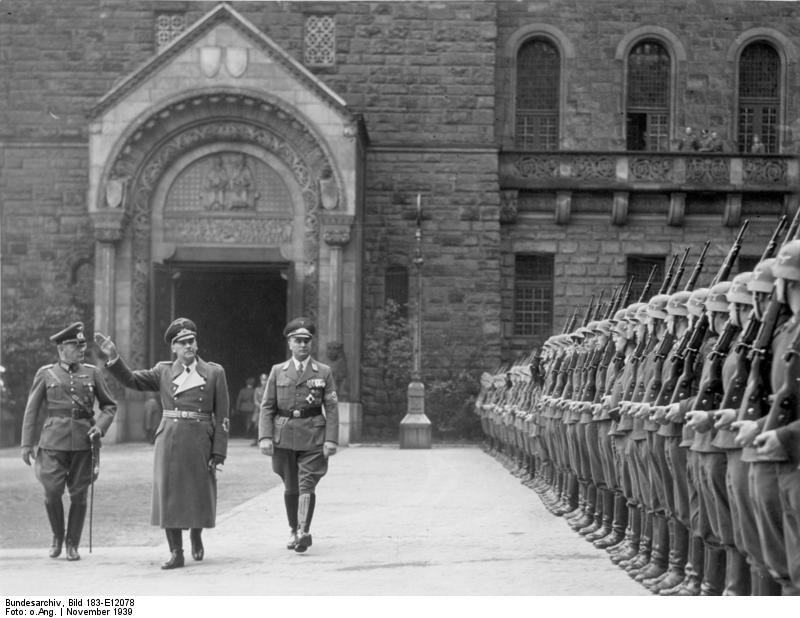
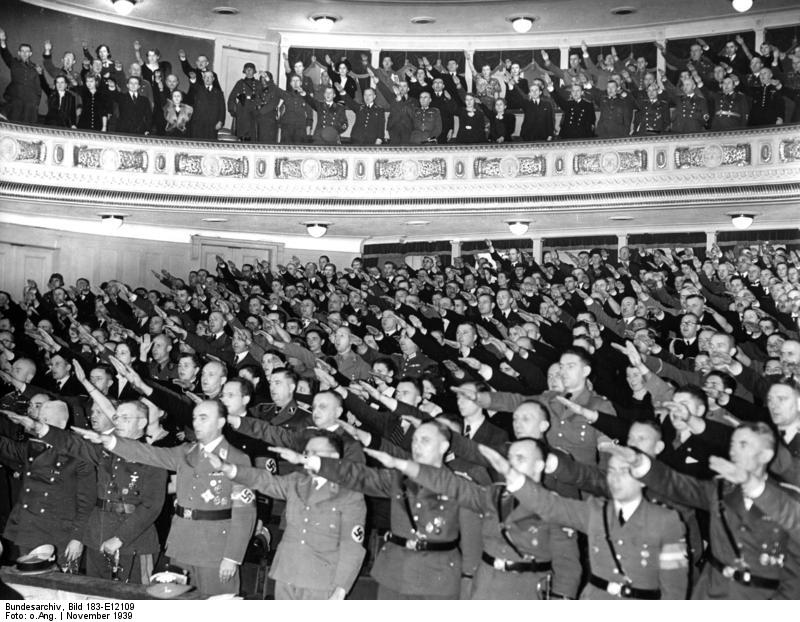
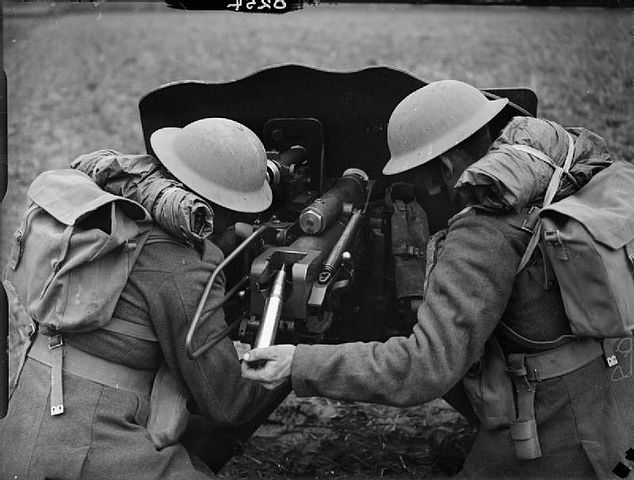

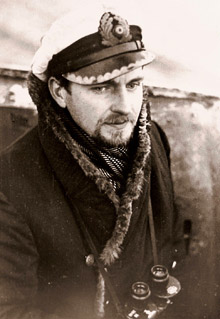
The first of U-44’s two patrols began on 6 January 1940 when she left Wilhelmshaven for the North Sea, eventually circumnavigating the British Isles, travelling as far south as the Bay of Biscay and Portugal. It was in these two locations that U-44 sank her first (and last) merchant ships. Following these victories, she headed north again, travelling just north of the coast of Scotland and back into the North Sea. She then returned to Wilhelmshaven, arriving there on 9 February 1940. Over a period of thirty-five days, U-44 sank eight merchant ships, for a total loss of 30,885 GRT.
Unlike her first outing, U-44’s second patrol was a disaster, not even lasting through the first day. After spending more than a month in Wilhelmshaven, she began her second patrol on 13 March 1940. A few hours after leaving port, U-44 entered minefield Number 7, just off of the northern coast of the Netherlands. This particular minefield was laid by the British destroyers HMS Esk, Express, Icarus, Faulknor and Impulsive. Upon entering the minefield, U-44 struck one of the devices and sank at 54°14′N 5°07′E. All forty-seven of her crew were lost, including Kapitänleutnant Mathes, who was posthumously promoted to Korvettenkapitän, effective from 1 March 1940.
U-44 made two war patrols, with 8 ships sunk, total tonnage 30,885 GRT.
 History Diaries