
The Central Committee of the Soviet Communist Party will meet in special session later this month to discuss the Soviet Union’s farm problems, party officials said in Moscow. The poor grain harvest, down by about 25% from last year’s, is expected to be a major topic. Senior party spokesman Vadim V. Zagladin denied reports published in the West that changes in the Soviet high command will be considered. And Viktor G. Afanasyev, editor of the Communist Party daily newspaper Pravda, denied rumors that Soviet President Konstantin U. Chernenko is about to resign because of ill health.
Mikhail S. Gorbachev, the youngest member of the Soviet leadership group, has solidified his position as the second in command, a Soviet official said today. The official, Viktor G. Afanasyev, who is the chief editor of Pravda, was quoted by a Japanese journalist as having called Mr. Gorbachev a “second general secretary.” Mr. Afanasyev, who is a member of the Communist Party’s policy-making Central Committee, discounted as “out of the question” a rumor that the General Secretary, Konstantin U. Chernenko, might step down. He said Mr. Chernenko was in good health and working. Mr. Chernenko became General Secretary, in effect the Soviet leader, in February on the death of Yuri V. Andropov. Mr. Gorbachev, who is 53, has been viewed since then as the likely successor to the 73-year-old leader.
Valery Marchenko, a Ukrainian human rights activist imprisoned for transmitting information on political prisoners, has died in a Leningrad prison hospital, rights groups in Britain and on the Continent reported. Marchenko, 37, reportedly died of kidney failure after he was denied access to a dialysis machine at a civilian hospital. The former editor of a Ukrainian literary magazine was sentenced in March to 10 years in a labor camp and five in internal exile.
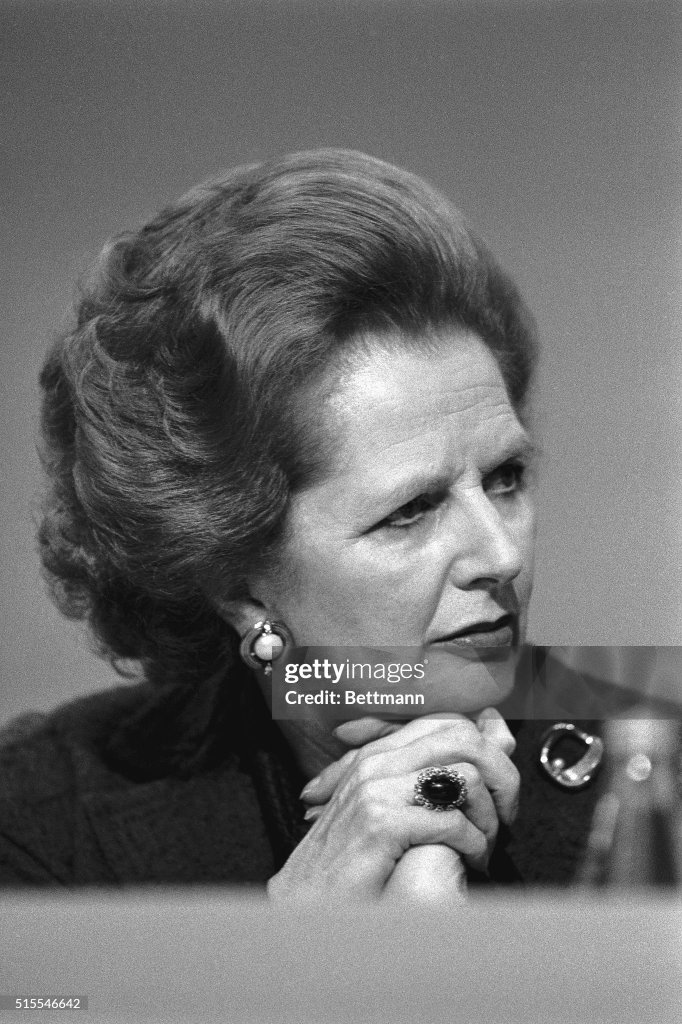
Britain’s top law official, Home Secretary Leon Brittan, condemned violence by striking miners and warned their leader, Arthur Scargill, that the Conservative government of Prime Minister Margaret Thatcher will not crack in the seven-month-old strike. Speaking at the opening day of the Conservative Party’s conference in Brighton, Brittan accused the striking miners of using “fear to smash freedom.” The strikers are protesting government plans to close 20 unprofitable mines and cut the 175,000-man labor force by next spring. More than 7,000 strikers have been arrested in violent clashes.
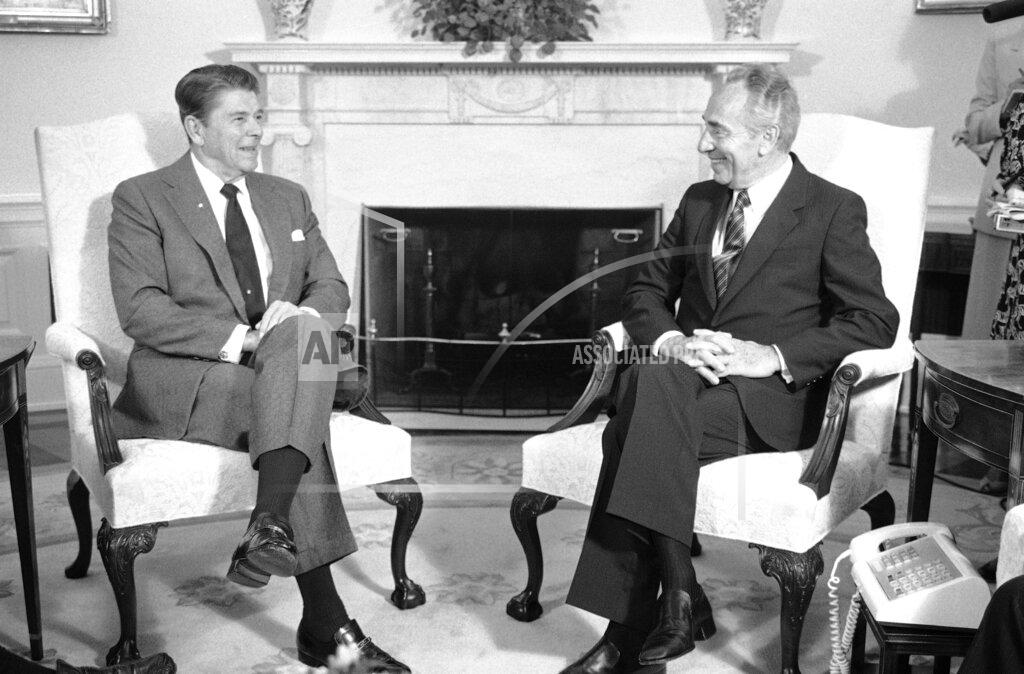
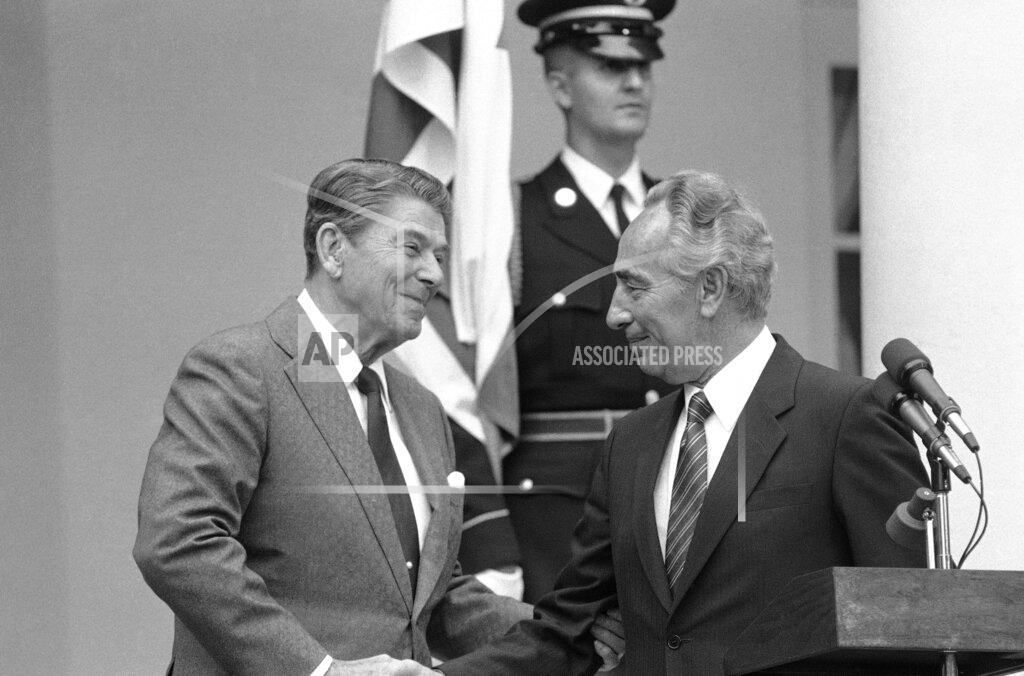
President Reagan participates in a meeting with the Prime Minister of the State of Israel, Shimon Peres. President Reagan promised Israel emergency aid if the country was faced with a balance-of-payments crisis. However, after listening for two days to detailed appeals by Prime Minister Shimon Peres for billions of dollars in additional financial support over several years, the Administration put off until next year any steps to increase military and economic aid to Israel beyond the current $2.6 billion.
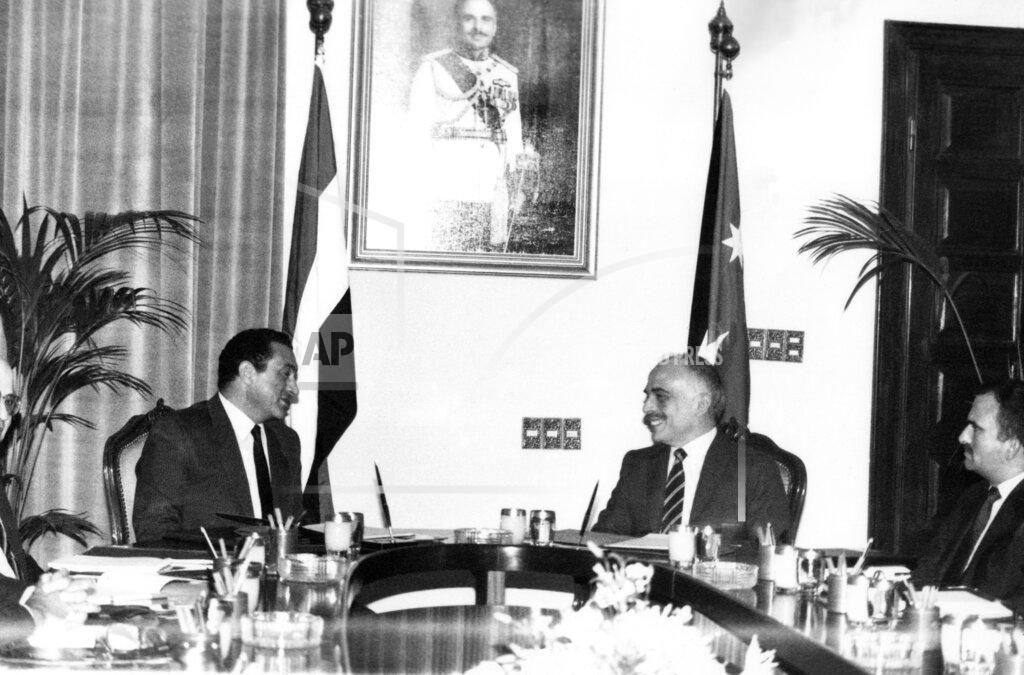
Hosni Mubarak arrived in Amman, Jordan, on the first state visit by an Egyptian leader to an Arab country since his nation was ostracized by the Arabs after making peace with Israel.
Fuad abu Nader, 28, a nephew of President Amin Gemayel, has been elected commander of Lebanon’s main right-wing Christian militia coalition, the Lebanese Forces, by a vote of an eight-man council. Abu Nader, described as a moderate, reportedly supports Gemayel’s policy of cooperating with Syria to end Lebanon’s fighting. He replaces Fadi Frem, who criticized Gemayel’s rejection of a U.S. and Israeli role in the search for peace. Meanwhile, six leftist Muslim groups joined in a Syrian-backed movement called the National Democratic Front to oppose “fascist” forces among the country’s Christians as well as “all forms of partition.”
Soviet President Konstantin U. Chernenko and President Ali Abdullah Saleh of Yemen have signed a 20-year treaty of friendship and cooperation, the first such accord between their two countries. At the signing ceremony in Moscow, Chernenko said the treaty is not aimed against any third country-a possible reference to South Yemen, which traditionally has had closer relations with the Soviet Union than its northern neighbor. The Soviets signed a similar treaty with South Yemen in 1979 and are said to have about 5,000 civilian and military advisers in that country.
The Soviet Union is seeking a truce with rebels in Afghanistan’s strategic Panjshir Valley, Western diplomats in New Delhi said. The offer could indicate that the Soviet attack on rebels in the valley last spring was unsuccessful. The diplomats also said the Soviets have deployed tanks, artillery and armored vehicles around Kabul to try to prevent rebel rocket attacks. And they cited unconfirmed reports saying that Moscow has sent 70,000 more troops to try to seal off Afghanistan’s border with Pakistan against rebel infiltration. The new Soviet deployment, which could not be independently confirmed, is believed one of the biggest since Moscow sent troops into Afghanistan in 1979. Until the latest reported troop movement, Western officials estimated Soviet military strength in Afghanistan at 105,000 soldiers.
Iran said today that the death toll from the Iraqi air attack on the supertanker World Knight on Monday had risen to seven and that two of eight wounded crewmen were in critical condition in a Tehran hospital. The Iranian national press agency report received in London said the wounded crewmen, who were taken by helicopter to Tehran’s Motahhari Hospital, were suffering from severe burns and most of them were unable to speak. The agency did not give the nationalities of the wounded or that of the seventh man to die. The tanker’s Hong Kong owners, World-Wide Shipping, said the dead were two British officers and one Indian officer and the rest were Hong Kong crewmen. Shipping sources said a fire aboard the tanker had been extinguished and the vessel was under tow.
The Indian Government, trying to patch up relations with the Sikhs, returned control of the entire Golden Temple complex to the sect’s leaders today and withdrew the last of its security forces, the United News of India reported. An unspecified number of police and paramilitary troops left three buildings in the 72-acre temple complex in Amritsar, in the northern state of Punjab, during the afternoon, the independent news agency said. Punjab state officials handed over to the temple the management keys to the three buildings, two of which had been used as a command post by the militant Sikh leader Jarnail Singh Bhindranwale. The main temple and other buildings were returned to the Sikhs on September 29 when the Indian Army withdrew from the holiest Sikh shrine, ending nearly four months of military occupation.
Salvadoran rebel leaders accepted an offer from President Jose Napoleon Duarte to meet insurgent representatives next Monday in northern El Salvador. The unexpected diplomatic effort to end five years of civil war was welcomed by diplomats throughout Central America.
A judge sent seven of Chile’s top opposition leaders to jail today on charges of endangering internal security by calling a two-day protest last month in which nine people died. Judge Arnaldo Toro of the Santiago Court of Appeals indicted eight leaders of the opposition Monday after the military government accused them of breaking the Internal Security Law with the September 4-5 protest. Arrest warrants were issued Monday and all but one of the indicted dissidents appeared before Judge Toro today. A labor leader, Jose Ruis di Giorgio, also was indicted, but he was not immediately jailed because he was out of town. He was expected to return Wednesday and surrender to Judge Toro. The seven dissident leaders were applauded by followers as they were taken from the court building to a Santiago jail. The one woman among them was taken separately to a women’s prison. The dissident leaders face jail terms of up to five years if found guilty.
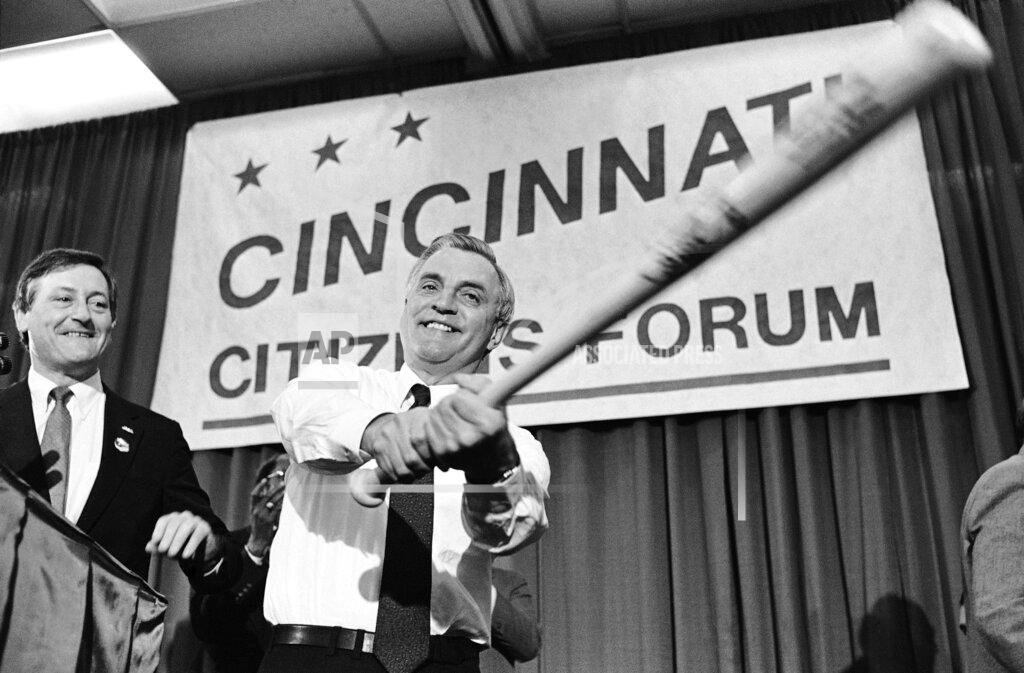
Social Security was stressed in campaign statements by both President Reagan and Walter F. Mondale. The Democratic Presidential nominee, speaking in Pittsburgh, challenged Mr. Reagan to pledge his full commitment to Social Security and Medicare and accused the President of failing to keep 1980 promises to keep the two programs intact.
Mr. Reagan went beyond his debate position of Sunday and pledged to oppose reduction of Social Security benefits for “future recipients” as well as current beneficiaries.
First Lady Nancy Reagan hosted a White House luncheon to commemorate the 100th anniversary of the birth of Eleanor Roosevelt, one of the nation’s best known and most active First Ladies. After quoting Mrs. Roosevelt as having said her “interest or sympathy or indignation is not aroused by an abstract cause, but by the plight of a single person who I’ve seen with my own eyes,” Mrs. Reagan added: “So, on behalf of the millions of single persons whose lives Eleanor Roosevelt touched, we offer on her centennial the gratitude of a whole nation.” The 130 guests included Mrs. Roosevelt’s three surviving children, nine grandchildren, personal friends of the late First Lady, and members of the Eleanor Roosevelt Centennial Commission and the Eleanor Roosevelt Institute.
President Reagan participates in a signing ceremony for H.R. 1904, amending the Child Abuse Amendments of 1984.
President Reagan participates in a signing ceremony for S. 2603, Older Americans Act of 1984, located in the White House’s Rose Garden.
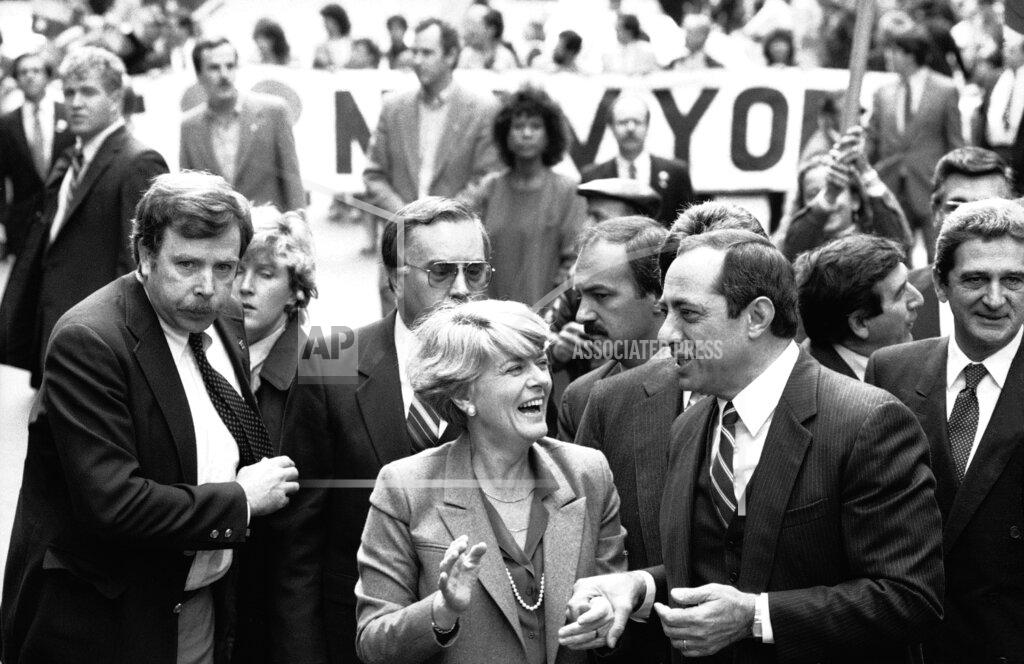
Geraldine A. Ferraro’s campaign is startlingly different from all previous national campaigns in imagery and perspective. Though she offers the insights of both a mother and a feminist, Mrs. Ferraro is, above all, a pragmatist. She worries why mothers want her to kiss babies, but when asked to do so, she does.
House and Senate conferees sought White House approval of a possible compromise on a $470 billion catchall spending bill Congress must approve before it can adjourn.
An immigration bill was stalled in the adjournment-minded Congress. House and Senate conferees drafting a comprehensive measure met again, but failed to reach agreement on a compromise they could recommend to the two chambers.
Makers of semiconductor chips would be explicitly protected for the first time from piracy by imitators under a bill approved in the House by a vote of 363 to 0. The legislation was sent to President Reagan for his expected approval.
The seven Challenger astronauts, freed from the burden of minor technical breakdowns, turned fuller concentration to observations of the earth with imaging radar and a camera. But they took time out for a jovial news conference.
Another major church-state case will be reviewed by the Supreme Court. The Justices agreed to decide whether the Constitution permits local school systems to use Federal funds to teach remedial classes for disadvantaged children in parochial schools.
The radical anti-abortion group known as the Army of God has threatened the life of U.S. Supreme Court Justice Harry A. Blackmun, author of the court’s decision legalizing abortion, a federal law enforcement source said. The source, who spoke on condition of not being named, said the threat came in a letter to Blackmun. National Public Radio first disclosed the letter’s existence. FBI spokesman Ed Gooderham had no immediate comment on the report. More than 10 years ago, Blackmun wrote the majority opinion holding that women have the right to decide whether to have abortions during the first six months of pregnancy.
After two years of legal maneuvering, a 12-member jury was selected in New York to decide whether CBS libeled retired Gen. William C. Westmoreland in a 1982 documentary about the Vietnam War. Anti-war activist Daniel Ellsberg made a surprise courtroom: appearance before the trial convened and handed out copies of 1967 diplomatic cables that he said supported CBS’ case. Westmoreland is suing CBS for $120 million for reporting that he falsified estimates of enemy troop strength.
The virus believed to cause acquired immune deficiency syndrome has been found in the saliva of persons with the greatest risk of contracting the deadly disease, but federal health authorities said that it is unlikely that anyone could get AIDS through contact with saliva. Researchers in Boston confirmed a previous suspicion that AIDS might be transmitted through saliva, as well as through other bodily fluids. But Dr. Edward N. Brandt Jr., assistant secretary for health in the Department of Health and Human Services, said it is “very unlikely” that the disease can be transmitted through saliva.
Cancer-causing genes and the processes that can make them dangerous appear so important in normal life that the disease probably never will be eradicated, researchers said. Cancer seems to stem from mutations in special genes that appear otherwise important in normal life, and “there’s no way we’re going to completely abolish mutations,” said William Hayward of Memorial Sloan-Kettering Cancer Center in New York. “I don’t think it likely on the basis of our present trajectory (of research) to eliminate the process” of cancer development, said Dr. Paul Marks, president of Sloan-Kettering.
Two environmental groups gave Interior Secretary William P. Clark a “D” grade for having “taken no substantive action to reverse the controversial policies” of his predecessor, James G. Watt. Spokesmen for the Sierra Club and the Friends of the Earth said in Washington that “Clark and Watt may have different methods of directing the Interior Department, but the two are alike when it comes down to results. With Clark, the President has merely changed his environmental image, not his environmental policies.”
Ratification of a tentative pact between General Motors and the United Automobile Workers by rank-and-file members is still in doubt, union leaders acknowledged.
The United Farm Workers union faces a serious new challenge from an old antagonist. The teamsters’ union recently notified Cesar Chavez, founder of the farm workers’ union, that it would not renew a 1977 agreement that ended competition between the unions in organizing agricultural workers.
Linwood Briley, who led the largest death row escape in United States history, today lost appeals in the Supreme Court and a Federal appeals court in an attempt to stop his execution Friday. It was Mr. Briley’s third unsuccessful appeal to the Supreme Court, which refused to hear the appeal of his sentence for shooting to death John Gallaher, a country-western disk jockey, in Richmond, Virginia, in 1979. Mr. Briley, 30 years old, is scheduled to die in the Virginia electric chair. A three-judge panel of the United States Court of Appeals for the Fourth Circuit today denied a separate appeal after a hearing in which Mr. Briley’s attorneys asserted that his jury had been biased because it had not included opponents of capital punishment and that Mr. Briley had been discriminated against in sentencing because he is black and his victim was white. William Allen, a defense lawyer, said he would now seek a stay from the Fourth Circuit to prepare another appeal to the Supreme Court. Mr. Briley and his brother James, who is also on death row, led four other condemned killers in an escape from Mecklenburg Correctional Center on May 31. All were captured.
Curbing the spread of common colds is made possible by the use of facial tissues treated with virus-killing chemicals, a Washington meeting of the American Society for Microbiology was told.
Internal communication in the brain is more complex than previously believed, according to new findings. The discovery that individual nerve cells often use two or even three substances called neurotransmitters to communicate with one another, rather than just one, has prompted speculation that these neurotransmitters work in concert with one another much as hormones do.
Despite being offered another one-year contract, Angels manager John McNamara resigns. He will be named manager of the Red Sox on the 18th.
The Detroit Tigers win the World Series opener as Jack Morris pitches a complete-game 3–2 victory over the San Diego Padres. Larry Herndon’s 2-run home run in the 5th is the margin. The Tigers struck first in Game 1 when Lou Whitaker doubled to lead off the top of the first and scored on Alan Trammell’s single but their starter Jack Morris (a 19-game winner during the season) struggled in the bottom half, as he surrendered two-out singles to Steve Garvey and Graig Nettles, followed by a two-run double to Terry Kennedy. Padre starter Mark Thurmond took a 2–1 lead into the fifth, but then surrendered a crucial two-out, two-run homer to Larry Herndon. Nettles and Kennedy both singled to open the San Diego sixth, but Morris snuffed out their momentum by striking out the rest of the side. Kurt Bevacqua started what looked to be a comeback with a leadoff double in the seventh, but was thrown out at third while attempting to stretch the hit into a triple. Despite the close call, Morris remained focused and set down the last nine remaining Padre batters for a complete game, 3–2 victory.
Dow Jones Industrial Average: 1175.13 (-2.76)
Born:
Marie Kondo, Japanese organizational guru (“The Life-Changing Magic of Tidying Up”), in Tokyo, Japan.
Matt Toeaina, NFL defensive tackle (Chicago Bears), in San Francisco, California.
Jamey Richard, NFL center (Indianapolis Colts), in Weston, Connecticut.
Keith Zinger, NFL tight end (Atlanta Falcons), in Heidelberg, Baden-Wurttemberg.
Ghetts [Justin Clarke], British musician, in Plaistow, East London, England, United Kingdom.


 History Diaries