The U.S. House of Representatives unexpectedly rejected an administration request for an additional $474 million in military aid for South Vietnam. The action could cause considerable difficulty for the administration in continuing military support to the Saigon government during the next three months. Unless some last-minute measure can be devised by the Administration, it now appears that the Defense Department has virtually run out of spending authority to continue military aid to South Vietnam during the fiscal year that ends on June 30. Partly because it overspent in the first part of the fiscal year, the Defense Department is close to the $1.126‐billion ceiling that Congress has imposed on military aid to South Vietnam in this fiscal year. To permit continuing aid in the remainder of the fiscal year, the Administration had asked Congress to raise the ceiling to $1.6‐billion as part of a supplementary defense bill.
Communist‐led insurgents and Government troops clashed today in hand‐to‐hand fighting in the besieged coastal city of Kampot, military sources said. The insurgents cut telephone lines from the city, 85 miles southwest of Phnom Penh, and destroyed Kampot’s power station. Six American military advisers in the city escaped, the sources added. No details of casualties were available. Government troops have abandoned 19 positions on the outskirts of the city. A government infantry brigade, backed by three armored personnel carriers, has been brought in to relieve the city, threatened by 4,000 insurgents since the beginning of last month, the sources said. Insurgent gunners fired 80 mortar shells into the city in a two‐hour barrage this morning.
The Khmer Rouge guerrillas have also renewed rocket attacks on Phnom Penh, according to military police. Eleven civilians were wounded and two houses damaged when three 107‐mm rockets landed in an area where President Lon Nol lives. Insurgent gunners have fired more than 700 rounds into the capital in the last three months. More than 1,000 civilians have been killed or wounded.
Jacques Chaban-Delmas, a liberal Gaullist and a former Premier under President Pompidou, became the first announced candidate in the campaign to succeed the late Mr. Pompidou as President. His announcement was quickly followed by that of Edgar Faure, the president of the National Assembly, and himself a former Premier.
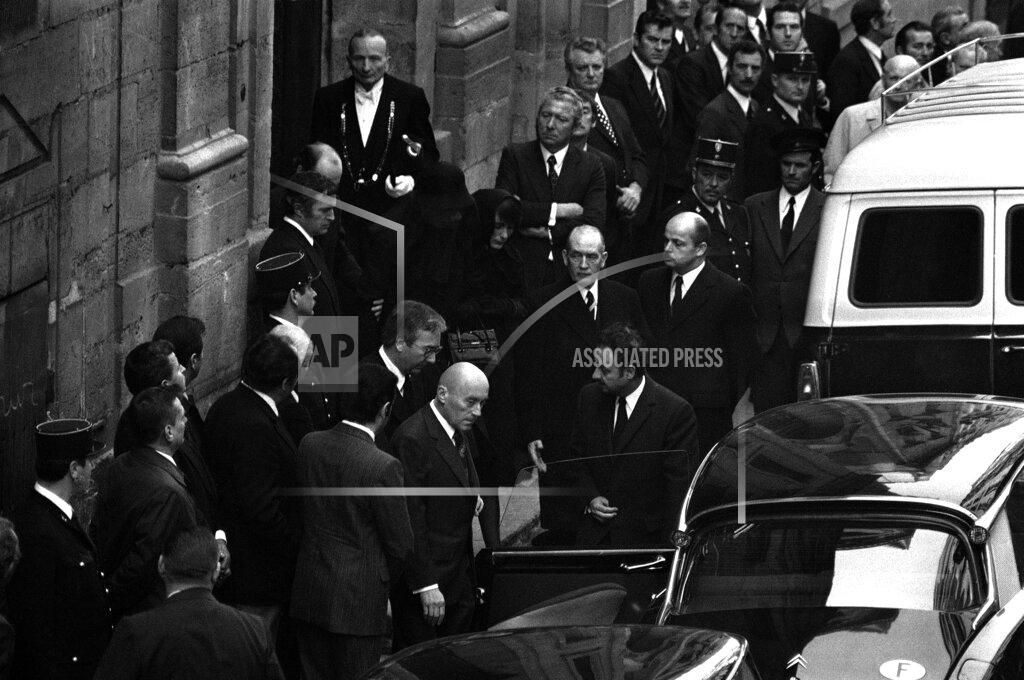
A gilded oak coffin draped with the Tri-color of France was lowered into a grave near Paris and President Georges Pompidou was laid to rest. The simple burial service in the village churchyard at Orvilliers, where Mr. Pompidou spent his weekends, followed an austere funeral at his parish church in Paris.
Pravda today accused The New York Times, The Washington Post and other American newspapers of “obvious political sabotage” of Soviet‐American negotiations because of “pessimistic” reports that Secretary of State Kissinger bad failed to achieve negotiating breakthroughs during recent talks here. The authoritative commentary, broadening two earlier attacks by Leonid I. Brezhnev, the Soviet leader, on the. French press and the Western press in general, was directed particularly at press suggestions that the Kissinger mission had failed because of the Kremlin’s intransigence. It was not clear whether Moscow might also be chastising Mr. Kissinger. Dispatches written by newsmen traveling with him one his airplane are often based, at least in part, on informal comments made by the Secretary himself.
“Certain organs of the American bourgeois press, especially such influential newspapers as The New York Times and The Washington Post, indulge in irresponsible disinformation, contrary to the facts,” Pravda asserted. “They try, with all their force, to represent the whole business in such a way as to create the impression that the Moscow mission of H. Kissinger has ‘flopped completely because of the Kremlin’s hard line.’”
In Northern Ireland, the 1966 ban against the Ulster Volunteer Force was lifted by order of Merlyn Rees, Secretary of State for Northern Ireland.
Britain announced a phased program of releasing prisoners held without trial in Northern Ireland and an overhaul of the province’s police force to make it acceptable in areas where policemen never dare venture. The Labor government also disclosed that temporary reinforcements of 250 soldiers had been sent to Northern Ireland, bringing the total army deployment to 15,750.
Charges that Prime Minister Harold Wilson’s signature was forged on a letter that helped property speculators make huge profits are being investigated, Scotland Yard said. The deal allegedly involved members of Wilson’s Labor Party staff. Wilson brought libel suits against two London newspapers that broke the story, but there was no indication that Wilson himself had done anything improper. In his recent election campaign, he criticized Conservatives for failing to limit profits made by property speculators.
The passengers of the crippled luxury liner Queen Elizabeth 2 flew from Bermuda to New York with good humor and compliments for their host, Cunard Steamship Line Ltd., that stranded them at sea. Two planes began shuttling the 1,630 vacationers home within hours after they set foot on the island following their rescue by the Norwegian cruise ship Sea Venture. The QE2, its boilers damaged, was still wallowing in the Atlantic 270 miles southwest of Bermuda. “It was a ball,” said Larry Marinelli from Queens, New York. “I’m sorry it is over.”
Women in Jordan were granted the right to vote in elections for the first time. However, the suspension of parliamentary democracy prevented the right of suffrage from being exercised except in local elections.
Thousands of dissident Ethiopian university students roamed the streets of Addis Ababa, breaking into several grocery stores and distributing free food to the poor in new protests against the government of Prime Minister Endalkachew Makonnen. The students carried anti-government banners and staged sit-downs in the city center before being dispersed by riot police. The demonstrators demand effective measures to deal with the country’s chronic drought problems.
India has quietly asked the United States to resume foreign aid, a move that underlines government concern over food shortages and the faltering Indian economy. American aid to India was broken off in 1971, when the Nixon administration leaned toward Pakistan in the war against India. Recently, the United States says, it has indicated a willingness to resume aid, and Indian officials have in turn expressed a desire to get it.
Voting was held for 28 of the 31 seats of the new House of Assembly of the British colony of the Gilbert and Ellice Islands, now the nations of Kiribati (Gilbert Islands) and Tuvalu (Ellice Islands).
The wife of kidnaped U.S. Vice Consul John Patterson set out to drive to Arizona, where Mexican authorities believe Patterson is being held hostage by his abductors. But Mrs. Patterson turned back to Hermosillo, Mexico, after being driven 45 miles in a U.S. consular station wagon. It was understood that she had a ransom of $500,000 ready to exchange for her husband. U.S. officials had no comment as to why Mrs. Patterson turned back.
Two men shot and killed the personnel director of the Fiat-Concord automobile factory in Cordoba, Argentina. Police identified the victim as Roberto F. Klecher, 39, an Argentinian, and said the killers probably were guerrilla terrorists.
Troops took over private boats from yacht clubs in northeastern Brazil to help evacuate thousands of homeless victims of floods. New rains flooded more communities in the north and northeast as the government engaged in a rescue and food supply operation for an estimated 300,000 refugees.
The crash of a Wenela Air Services flight in southern Africa killed 78 of the 84 people on board. The Douglas DC-4 went down shortly after takeoff from Francistown in Botswana after departing toward Blantyre in Malawi. Most of the dead were Malawian gold miners who were returning home. The chartered DC-4 reportedly caught fire after taking off from Francistown, near the Rhodesian border. It crashed before it could return to the airport. The dead included the pilot and copilot and 75 miners. The flight engineer and five passengers survived, reports said.
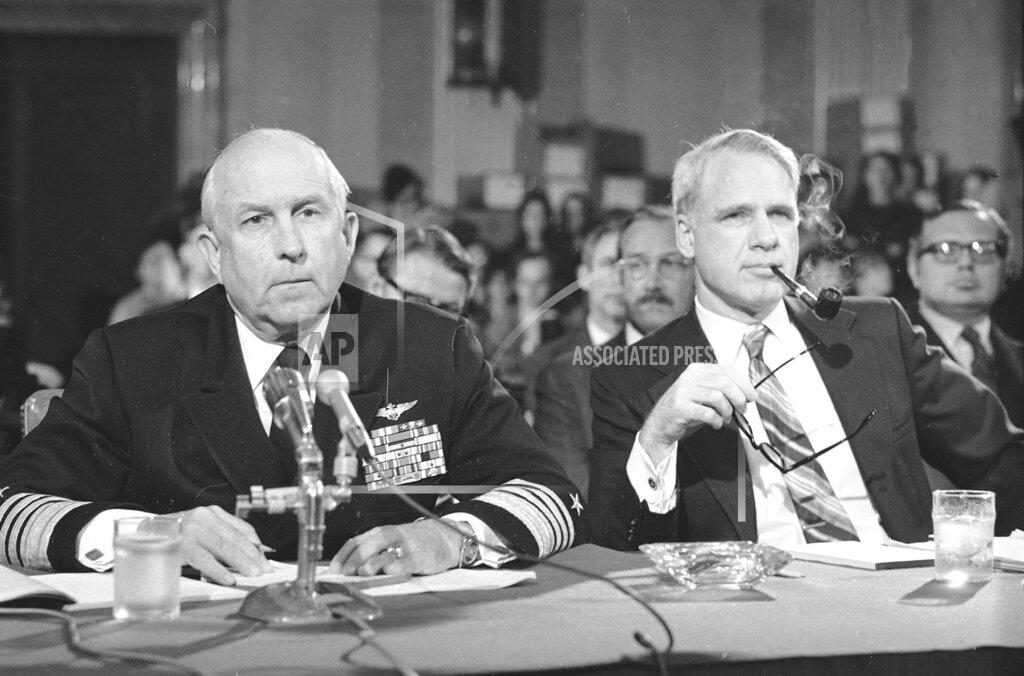
Secretary of Defense James R. Schlesinger and several Senators clashed today over American nuclear strategy and whether the Administration’s new policies would make nuclear war more or less likely. Appearing at a joint hearing of two Senate Foreign Relations subcommittees, Mr. Schlesinger defended Administration programs to develop greater flexibility in American nuclear war plans. The goals, he said, are to add to the deterrence of nuclear war and, if that fails, to have the ability to fight a limited war that would “avoid an orgy of destruction.” By flexibility, the Administration seems to mean all or some combination of the following elements: Ability to strike at a variety of targets other than Soviet cities, programed computer plans for targeting, plans to fire different numbers of missiles, command and control procedures to make sure orders are carried out, missiles that can survive a Soviet first strike and missiles with increased accuracy and yield.
Senator Stuart Symington, Democrat of Missouri, opposed the Administration’s new policies for the selection of nuclear targets other than population centers and for the building of more accurate missiles with less explosive power. He said these policies “lower the nuclear threshold and increase the probability of war.” Senator Edmund S. Muskie, Democrat of Maine, argued that Administration moves were making nuclear weapons “more usable, more respectable.”
The Internal Revenue Service and the congressional Joint Committee on Internal Revenue Taxation formally closed their inquiries into President Nixon’s taxes. The committee commended the President’s decision to pay more than $400,000 in back taxes and officially noted its agreement with the substance of most of the recommendations of its staff, which found that the President underpaid his taxes during his first four years in the White House.
The White House said that President Nixon’s personal wealth would be virtually wiped out when he pays his tax bill of more than $460,000. Mr. Nixon has been given 30 days to pay, and will reportedly have to borrow almost half the amount.
The staff of the House Judiciary Committee has reportedly been ordered to determine whether there was a violation of a constitutional provision barring a President from receiving extra compensation. The inquiry stems from the report on Mr. Nixon’s taxes, which found that he personally benefited from several federal expenditures and that they constituted taxable income.
The House Judiciary Committee demanded that the President decide by Tuesday whether he will give the committee the 42 tape recordings it has requested for its impeachment inquiry. Declaring that “the patience of this committee is wearing thin,” Peter Rodino, the committee chairman, said “we will subpoena them if we must,” perhaps as early as Wednesday.
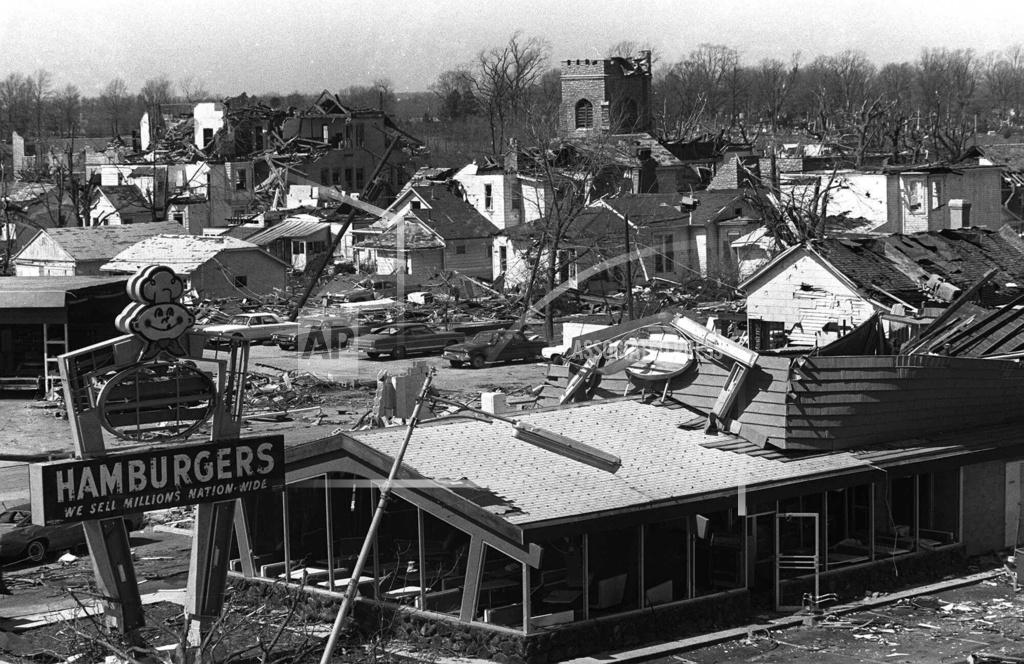
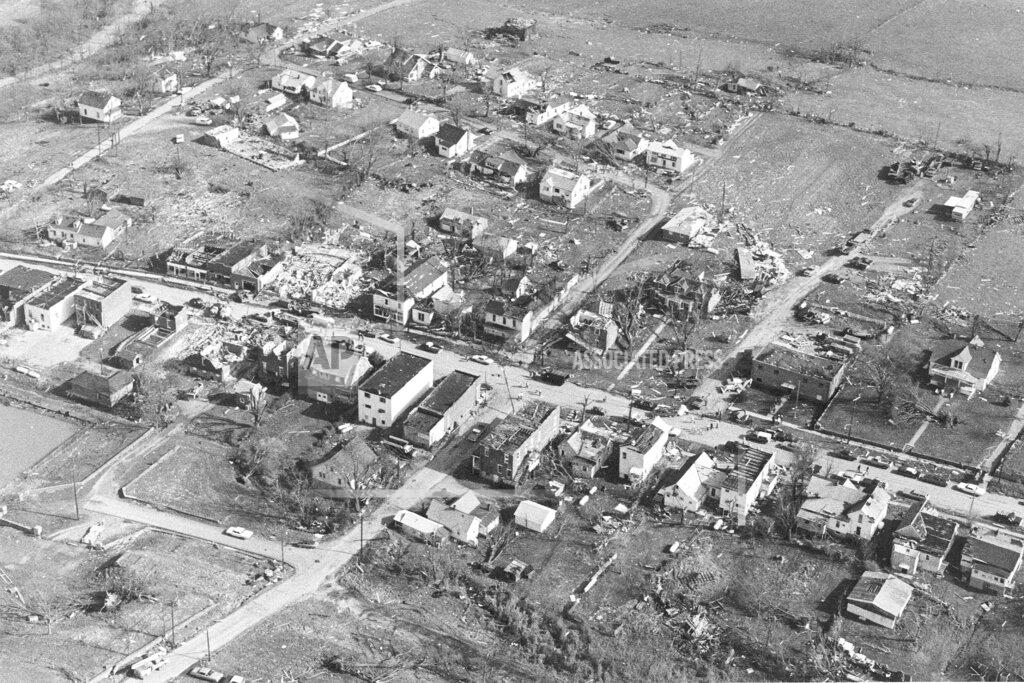
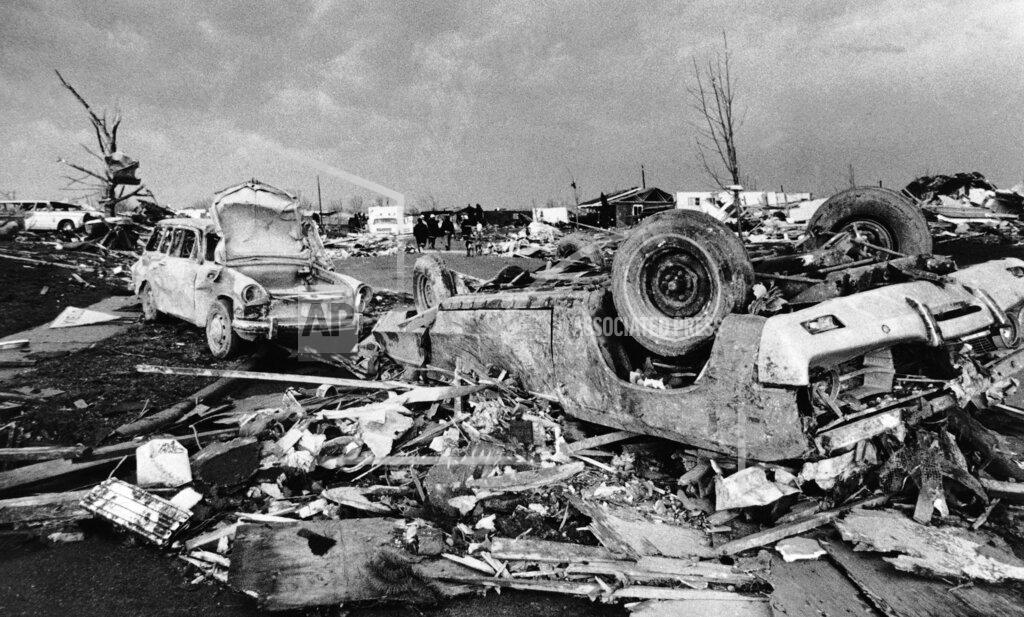
As the residents of 11 Southern and Middle Western states surveyed the devastation left by the nation’s worst tornado disaster in almost half a century, new tornado warnings were issued for six additional states. Wednesday’s outbreak of nearly 100 twisters claimed more than 300 lives, caused more than $1 billion in property damage and led President Nixon to declare parts of five states disaster areas.
For the old Miami Valley city of Xenia, Ohio, Wednesday was the day of the tornado; today was the day of the bulldozers. Still stunned by the sudden twister that cut a path several hundred yards wide through the city of 25,000, the residents began clearing away the debris.
Although they could offer no evidence, federal authorities said here today that they believed Patricia Hearst was forced to record the message saying that she had joined the terrorist Symbionese Liberation Army. The most outspoken was James Browning, the United States Attorney for the Northern District of California. He said the possibility that Miss Hearst had joined the group could not be ruled out but added, “I don’t believe it.” In a meeting with reporters, Mr. Browning said: “We are assuming that what she said yesterday was said under duress — someone holding a gun at her head or the like — or she felt it was necessary to say those things to get free.” In Washington, meanwhile, Clarence M. Kelley, director of the Federal Bureau of Investigation, said that the agency would continue its two‐month investigation of the case.
Senate supporters of a bill to provide public financing for federal election campaigns failed to halt a filibuster and call up the 86 pending amendments. Majority Leader Mike Mansfield of Montana said a new cloture motion would be presented today and voted on Tuesday. Opponents of public financing resumed their filibuster after the cloture vote and said they planned to continue it indefinitely. The measure has been on the floor for three weeks. It would earmark for each candidate of a major party a campaign sum equivalent to 10 cents per eligible voter in primaries and 15 cents in general elections.
Eight former Ohio National Guardsmen pleaded innocent before a U.S. magistrate in Cleveland to charges of violating the civil rights of four Kent State University students killed by guard gunfire on May 4, 1970, during a student antiwar protest. The eight were released on their own recognizance and were scheduled to appear today at a pretrial hearing at which trial dates would be set. The men had been called to the campus on May 2 after a military center was burned. Some of them opened fire on a crowd of demonstrators during the climax of a protest that began May 1.
Embattled Veterans Administrator Donald E. Johnson emerged. from a meeting with President Nixon of the newly created Domestic Council Committee on Veterans Services, set up to examine veterans’ grievances, and announced that he had the President’s confidence and “I intend to stay in this position.” After Mr. Nixon disclosed plans for the committee earlier this week, demands for Johnson’s resignation came from Rep. Olin Teague (D-Texas), Senator Alan Cranston (D-California) and several veterans organizations, but not from the American Legion. Mr. Johnson is a former national commander of the legion.
The Connecticut Liquor Control Commission unanimously approved a new liquor permit for Mory’s, the New Haven club celebrated in the Yale University “Whiffenpoof” drinking song. The commission revoked the club’s license two years ago because its governing board was not elected by the full membership. A second issue was Mory’s refusal to allow women to join. Mory’s now has changed its bylaws and the board will be elected by its 18,000 members. Commission Chairman George Montano said, however, that the issue of sex discrimination was not. involved in the decision to reissue the license.
The Cedars of Lebanon Hospital in Miami, in the middle of a financial crisis that threatens its $75 million expansion program, has defaulted on two mortgages totaling $13.8 million. They are on loans covering the new north building, the only one of three new structures now completely in service. The Cedars complex was dedicated on February 14 by President Nixon. The Atico Mortgage Corp., which financed the federally-guaranteed loans, could foreclose the loans on the new building or assign them to the government, which could then try to work out a payment plan.
The strong surge of wholesale prices continued in March despite an unaccustomed drop in farm and food prices, the Department of Labor reported today. The rise in the wholesale price index, was 1.3 percent after adjustment for normal seasonal changes in some prices, about the same as in February but less than in the three; preceding months. The index was marked last month by a near‐record jump of 2.9 percent in prices of industrial commodities, a category covering thousands of items at all stages of processing from raw materials to finished goods. While the energy category again played an important role in this increase, it was no longer dominant. Metals prices last month contributed more than energy to the over‐all rise in industrial prices.
Lieutenant Colonel Wilmer N. Grubb was buried at Arlington National Cemetery today, 2,616 days after his death in a North Vietnamese prison camp. A misty rain settled softly on his widow, his aging parents and his four young sons as they joined scores of friends and relatives in a final tribute to the Air Force pilot who died a few days after he was shot down in early 1966. His funeral today, with full military honors, was the first Conducted for any of the 23 American prisoners of war whose bodies were released by North Vietnam and returned to this country last month — almost precisely a year after those prisoners who survived their internment were joyously welcomed back. But the homecoming of Colonel Grubb and the others who died as captives, has gone almost unnoticed, another sign, perhaps, of the country’s waning interest in the war, its issues, its anguish and its victims.
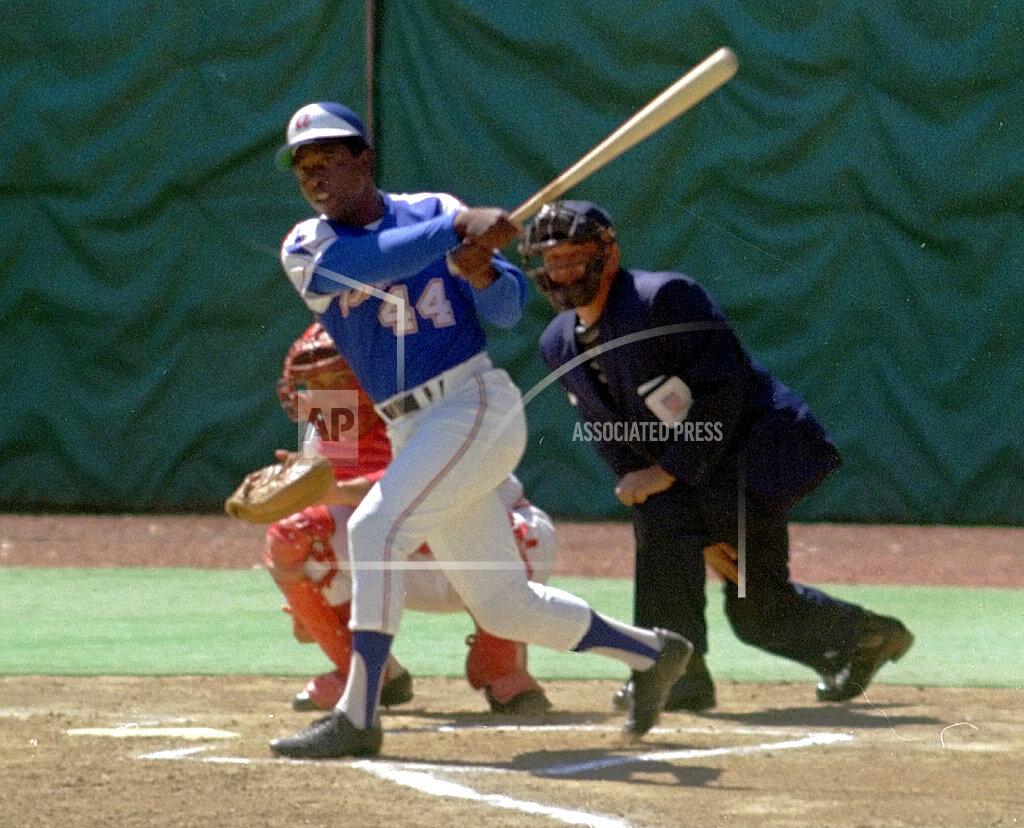
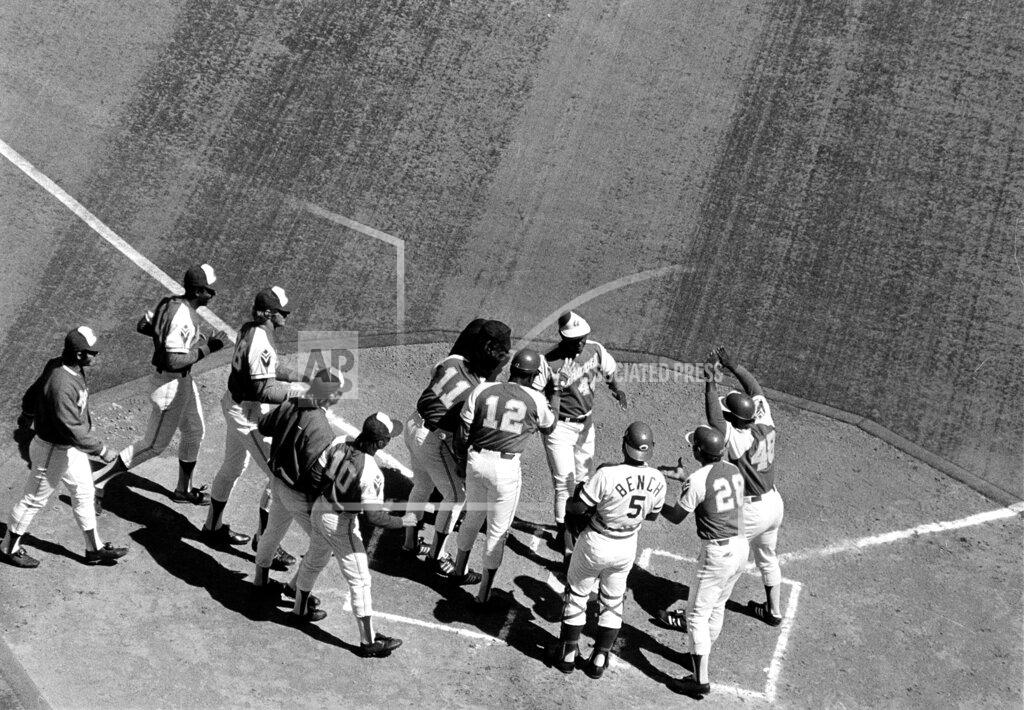
On his first swing of the season, Hank Aaron hit the 714th home run of his major league career, tying Babe Ruth’s record with a 400-foot, three-run line drive against the Reds in Cincinnati.
At Riverfront Stadium, in his first swing of the season, Hank Aaron hits a 3-run home run off Jack Billingham as the Braves lose to the Reds 7–6 in 11 innings. It comes on a 3–1 pitch. It is home run 714 for Aaron to tie him with the Babe and Hank is greeted by Bowie Kuhn and Vice-president Gerald Ford. The Reds, trailing 6–2 in the 8th, get a 3-run homer from Tony Perez, tie in the 9th on an RBI-double from Rose, and win it in the 11th when Rose scampers home from second base on a wild pitch by Buzz Capra. While the Braves wanted to keep him out of the opening three-game series against the Reds so that the record could be tied and broken at home in Atlanta, Commissioner of Baseball Bowie Kuhn had ruled that Aaron was required to play at least two of the three Cincinnati games. On April 7, Aaron came up to bat three times in a 5 to 3 win over the Reds, striking out twice and grounding out once.
Dow Jones Industrial Average: 858.89 (+0.86, +0.10%).
Born:
O. J. Santiago, Canadian NFL tight end (Atlanta Falcons, Dallas Cowboys, Cleveland Browns, Oakland Raiders), in Whitby, Ontario, Canada.
Lasse Pirjetä, Finnish NHL centre (Columbus Blue Jackets, Pittsburgh Penguins), in Haukipudas, Finland.
Dave Mirra, American bicycle motocross (BMX) rider last inducted into the BMX Hall of Fame; in Chittenango, New York (committed suicide, 2016).
Glenn Lyse, Norwegian pop music singer; in Stavanger, Norway.



 History Diaries