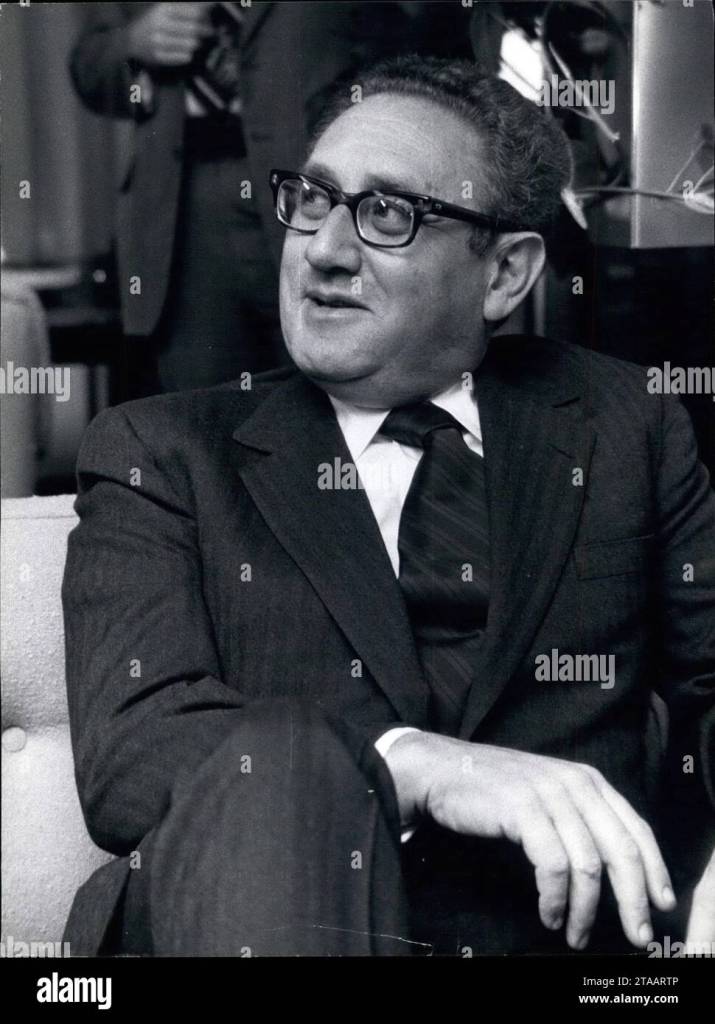
U.S. Secretary of State Henry Kissinger called on European allies to pool their resources to solve the energy crisis. Kissinger announced that the United States is prepared to make financial and intellectual contributions to help solve the crisis. During his speech, Kissinger conceded that the U.S. should have done more to promote permanent peace in the Mideast. He added that the U.S. also should have consulted our European allies regarding Mideast policy.
The U.S. Senate Appropriations Committee cut $3.5 billion out of the $77.2 billion Defense Department budget request for this year. But under Pentagon prodding, it preserved two controversial radar and missile defense projects the House wants to kill. The Senate committee’s overall reduction amounted to $865 million more than the House cut. Once the Senate acts on the committee’s recommendations, the widely varying House and Senate versions will have to be resolved by a conference committee.
North Vietnamese troops have begun pulling out of Quảng Đức Province where, they have lost an estimated 1,000 killed in the biggest battle since the Paris cease‐fire, intelligence sources here said today. There was no sign whether the withdrawal across to Cambodia was permanent or a preparation for a renewed assault against the 7,000 Government troops in Quảng Đức.
The political leader of the Viet Cong believes there has been no progress toward peace in Vietnam since the cease‐fire agreement was signed nearly 11 months ago and he blames the United States. In a written interview yesterday Huỳnh Tấn Phát, president of the Viet Cong’s Provisional Revolutionary Government, said that the United States and South Vietnam had worked since the agreement to sabotage discussions of peace. “The United States and the Saigon administration have been seeking all means to degrade and sabotage these negotiations” between the Viet Cong and South Vietnam in Saigon and in Paris, Mr. Phát said. He criticized both South Vietnam and the United States in answering questions, but laid ultimate blame for the continuing war at Washington’s doorstep.
Mr. Phát, a 60‐year‐old Saigon architect before he joined the Viet Cong, denied that the Communists planned an offensive in the next few months, but would not rule out continuing warfare. Predictions of a Communist offensive are “the thief crying ‘stop thief’ played by the Saigon Administration and the United States,” Mr. Phát said. “So long as the Saigon Administration under conditions imposed by the United States and under United States direction continues its acts of war, it will be punished whenever and wherever, with appropriate forms and forces,” Mr. Phát said.
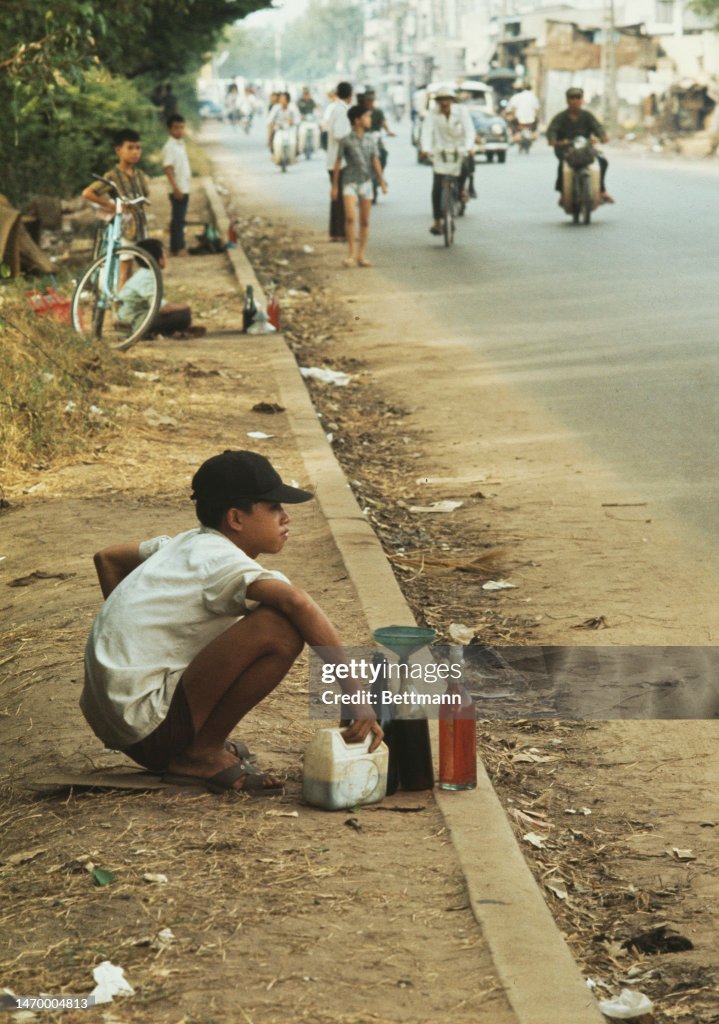
A major South Vietnamese oil supply depot burst into flames again because of high winds. The depot had been bombed previously by North Vietnam, causing an extensive loss of the country’s oil supplies. The Pentagon announced that South Vietnam and Cambodia will receive U.S. oil every day.
The Pentagon disclosed that it was drawing upon the nation’s war reserves to furnish 23,500 barrels of fuel to the South Vietnamese and Cambodian forces each day and would commandeer domestic fuel supplies to replenish the military fuel stores sent to Southeast Asia.
Cambodian forces, including former insurgents now supporting the Phnom Penh regime, battled rebels on the Tonle Sap River north of the capital. The rebels attempted to cross the river to reinforce their units blocking Highway 5, Phnom Penh’s link with the rice fields of Battambang province.
A special cabinet meeting was called in Tel Aviv to decide if Israel will attend the Mideast peace conference in Geneva.
In Cairo, President Anwar Sadat fired his armed forces chief of staff and the commanders of two armies which were fighting major battles against the Israelis along the Suez Canal.
The Soviet Union announced a record grain crop this year. But Agriculture Secretary Earl Butz said that the United States probably would continue sales of feed grain to Russia. The Soviets are able to reduce their military budget because of Western detente.
The Soviet leadership, signaling continuing interest in improved relations with the United States, disclosed a scaled‐down economic plan for 1974 that promises increased growth in the consumer sector and a slight drop in the formal military budget.
The Soviet Union, reacting to the vote yesterday by the House of Representatives linking trade concessions to freer Soviet emigration, contended today that the move contradicted the trend toward relaxation of tensions. But the Government newspaper Izvestia muted Soviet disappointment by noting that the Nixon Administration would keep trying to extend credits and most‐favored‐nation, or nondiscriminatory, status to the Soviet Union. The Soviet inclination to rely on President Nixon was further reflected in the first public comment here on Gerald R. Ford as the new Vice President. The literary weekly Literaturnaya Gazeta portrayed Mr. Ford as a generally lackluster politician who had never prompted any major legislation himself but who was on balance acceptable because he had gone along with the summit efforts of Mr. Nixon and the ‘Soviet leader, Leonid I. Brezhnev.’
Some 29,000 British railroad workers staged slowdowns over a wage dispute stalling rail service and preventing coal deliveries throughout the oil‐starved country. The Government reacted immediately by extending the national state of emergency for a second month.
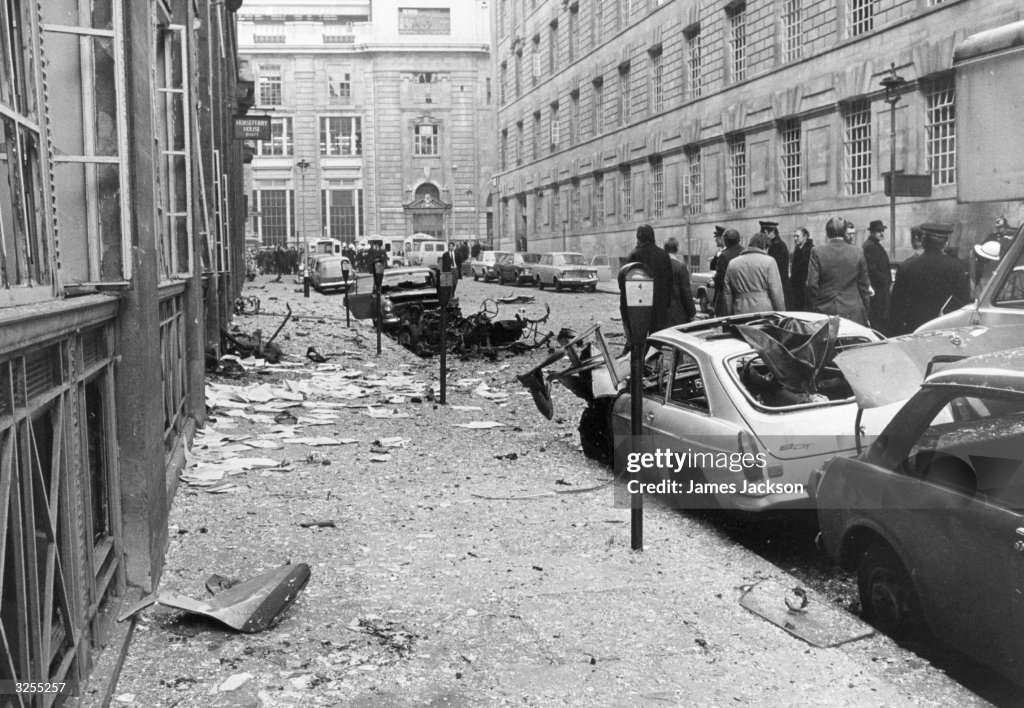
Irish Republican Army terrorists, using guns, booby-trapped cars and land mines, killed one policeman and wounded seven other law officers and soldiers in Northern Ireland in an offensive apparently aimed at sabotaging creation of a peace-promoting Council of Ireland.
Cardinal Vicente Enrique y Yarancon, archbishop of Madrid and highest Roman Catholic prelate in Spain, called on the government to give Spaniards more political freedom. In one of the strongest church interventions since Gen. Francisco Franco won the civil war in 1939, the cardinal said the right to meet and associate for legitimate ends can only bring benefits to the church and country.
Elections were held for the first time in the Arab kingdom of Bahrain, as voters chose candidates for 30 of the 44 seats in the nation’s unicameral Majlis. The Malis would be dissolved in 1975 by the nation’s King Isa bin Salman Al Khalifa and another election would not take place until 2002.
The official death toll from a cyclone that hit southern Bangladesh stood at 89, but independent news reports said several thousand persons may have died in the storm. A Dacca newspaper, the Janapad, said the cyclone and tidal waves affected 2.5 million persons and destroyed or damaged property and crops worth $113 million. Most of the fatalities were fishermen caught in the Bay of Bengal when the cyclone moved toward the Bangladesh coast Sunday, news reports said.
The China Motor Corporation (CMC), based in Taiwan, opened its first manufacturing facility, located at Yangmei, in Taoyuan City three years after entering into a technology sharing contract with the Mitsubishi Motors, a Japanese manufacturer.
The Canadian and U.S. governments must give the St. Lawrence Seaway a major facelift soon at a cost of millions of dollars. Otherwise “intolerable” shipping bottlenecks will result, says a report by the U.S. Corps of Engineers. The report says the Welland Canal, in particular, will be inadequate by 1990 to handle the volume of shipping between Lakes Ontario and Erie. It recommends that Canada and the United States form a joint committee to examine the seaway’s future needs.
Canada begins selling Olympic coins ($5 and $10 silver coins). The Summer games will be held in Montreal in 1976.
Carlos Andres Perez, a moderate leftist, was named president-elect of Venezuela and promised the industrialized world, “Give us just treatment and we will give you oil.” Victory for Perez, 51, of the Democratic Action Party, was confirmed when his chief opponent conceded defeat after returns from Sunday’s election showed he had 48% of the votes to 37% for Lorenzo Fernandez of the governing Social Christian Party.
The Nixon Administration outlined a tentative master plan for fuel allocation that would reduce gasoline supplies and give priority to essential community services, farming, manufacturing, mail delivery, passenger and freight transportation and production of energy, especially electricity.
A typographical error made by the new U.S. Federal Energy Office led to reports nationwide that President Nixon was proposing to reduce American gasoline production by 25 percent, effective December 27. With priority given under administrator William Simon’s regulations to the Department of Defense, and services such as public transportation and emergency vehicles, the Associated Press noted, the amount left over for retail gasoline stations would be “a cut of far more than 25 percent.” The mistake was caught 10 hours later and hastily corrected to note that the proposed cut was 5% rather than 25%. A spokesman for the Federal Energy Office told reporters, “We screwed up this morning.”
The National Petroleum Refiners Association claimed that a 25% cut in gasoline production will cause a reduction in quality, and low-quality gasoline would have an adverse effect on cars.
Reaction to the government’s allocation plan was sampled in Los Angeles. Groups who get priority in fuel allocation were pleased with the plan, but the news is bad for the average commuter. Some gas station owners believe that the small amount of fuel which is to be allocated won’t cover their operating expenses, and the stations may close.
Walter Heller, a former economic adviser to presidents Kennedy and Johnson, described an extremely gloomy economic picture for 1974 including hundreds of thousands of Americans losing their jobs, a six-month recession and an inflation rate approaching 10 percent.
Some truckers began work stoppages to protest high fuel costs and low speed limits. Teamsters union officials insisted that their truckers will continue working despite the shutdown of some independents. Fearing a more widespread trucking shutdown, several Illinois hog and cattle markets closed.
The energy crisis may have a ripple effect. Moving Florida fruits and vegetables to Northern markets is becoming more and more difficult because of the fuel crisis; a “food crisis” may result. The average person is likely not aware of the seriousness of the food situation. Even without shortages, consumers will pay more for food as the cost of diesel fuel rises. Agriculture Secretary Earl Butz has predicted a tight food situation for next year.
The energy shortage has hit the Northeast hard. One Massachusetts power company ordered coal from Poland; the first shipments have begun arriving. The firm’s president explained that Polish coal was purchased to keep the company operating at full capacity. The coal is supposedly clean-burning and cheap. Polish economic attaché Stanislaw Zajac said that Polish coal is plentiful, and Poland is more than willing to sell America its coal.
Special Watergate prosecutor Leon Jaworski attended the confirmation hearings for Attorney General designate William Saxbe. Saxbe and Jaworski both vowed to maintain the special prosecutor’s office independent of White House control. Saxbe was particularly delighted over the declaration of independence.
Leon Jaworski, the special Watergate prosecutor, said that the White House had agreed to let his investigators search through Presidential files looking for information on the Watergate scandals. Mr. Jaworski disclosed the unprecedented measure of White House cooperation — similar to an arrangement denied to Archibald Cox, the former prosecutor—when he appeared in court to receive two more subpoenaed White House tapes from Chief Judge John J. Sirica.
A joint committee of Congress agreed to examine President Nixon’s personal finances; a complete audit will be carried out. Committee chairman Wilbur Mills appealed to every American to provide any information they have regarding the President’s taxes. The Congressional Joint Committee on Internal Revenue Taxation decided that it would not limit its investigation of President Nixon’s tax returns to the two areas on which Mr. Nixon has asked for a ruling, but would examine every aspect of his returns for his Presidential years. It was not immediately clear whether any problem would develop with the President in light of the committee’s insistence on broadening any investigation beyond the scope he envisioned when he pledged full cooperation with the investigation.
A large group of consumer advocates and Congressmen urged the federal government to require more specific ingredient labels on food products. Representative Benjamin Rosenthal revealed that his own son died from ice cream which failed to list peanut butter as an ingredient; his son was allergic to peanuts.
The Senate Appropriations Committee has refused a request by the White House and Senate leaders for a $1 million energy study grant to a new private commission headed by retiring New York Governor Nelson A. Rockefeller. “We shot it down,” said Senator Henry Bellmon (R-Oklahoma) in confirming the refusal for Rockefeller’s Commission on Critical Choices for Americans. Bellmon and other critics insisted that their opposition was unrelated to reports that Rockefeller, a Republican, will make a 1976 presidential bid. “We’ve got a half-dozen studies gathering dust,” Bellmon said. “Why study more? What we need now is some action.”
The Republican Speaker of the New York Assembly and its majority leader were indicted by a Manhattan grand jury in connection with an alleged scheme to siphon votes from Democratic candidates, thus aiding Republicans, in last year’s election. A spokesman for Speaker Perry B. Duryea confirmed that the sealed indictments had been filed. Also reported indicted was Majority Leader John E. Kingston. The jury reportedly had been considering charges of illegality in the preparation and distribution of campaign leaflets that could have weakened Democrats by siphoning off votes for the Liberal Party. They were signed by a group whose chairman actually worked as a part-time aide in Speaker Duryea’s office.
George Metesky, New York City’s feared “mad bomber” of the 1940s and ’50s, left a Manhattan court a free man except for an apparently routine discharge from Creedmoor State Hospital in Queens after 17 years as a patient. Metesky, 70, planted 32 homemade bombs in public places from 1940 until his capture in 1957 to publicize what he believed was shabby treatment of him by Consolidated Edison after he was injured in an explosion. His discharge was due to a law that states no one can be kept in a mental institution for a longer period than he would have served in prison for the same offense. Metesky plans to live with a sister in Connecticut and write a book “with the whole story.”
A federal judge ordered the Department of Health, Education and Welfare to release to elementary and secondary schools $20 million in funds appropriated by Congress but impounded by the Administration. The suit was brought by Pennsylvania, Washington, Nevada, Illinois and Texas. A separate suit also has been filed asking for release of $55.5 million in impounded higher education funds.
Democrats chose Kansas City as the site for their 1974 convention. The party’s charter and its position on national issues will be discussed.
The luxury liner “Queen Elizabeth” set sail last week to give those aboard a better look at the comet Kohoutek. Predawn comet watchers searched the skies for Kohoutek for three successive nights, but each night Kohoutek was elusive to the amateur astronomers because of weather. The astronomer who discovered Kohoutek was on board but unable to join the comet watchers because sea sickness kept him in bed all three days of the voyage.
The city of San Diego, California filed an antitrust lawsuit against the National League claiming there was a conspiracy to move the San Diego Padres baseball team from San Diego to Washington D.C.
Dow Jones Industrial Average: 810.73 (-23.45, -2.81%).
Born:
Lou D’Agostino, NFL fullback (New York Jets), in Brooklyn, New York, New York.
Makhtar N’Diaye, Senegalese-American NBA power forward (Vancouver Grizzlies), in Dakar, Senegal.
Tony Hsieh, American Internet entrepreneur and venture capitalist, CEO of Zappos; in Illinois (d. 2020).
 History Diaries