Exit Pál Teleki
Hitler issued Directive No. 26, Co-operation with our Allies in the Balkans:
The Führer And Supreme Commander Of The Armed Forces.
The Führer’s Headquarters. 3rd April, 1941. 15 copies
Directive No. 26 — Cooperation With Out Allies In The Balkans.
- The military tasks allotted to countries in southeast Europe in the campaign against Yugoslavia are based on the following political considerations:
Hungary, which will receive the Banat, will occupy this territory for preference, but has declared herself ready to take part in further operations for the destruction of the enemy.
Bulgaria will get back Macedonia and will therefore be chiefly interested in an attack in this direction, although no particular pressure will be exerted by Germany. The Bulgarians will also be responsible, with the support of a German armored formation, for rear protection against Turkey. For this purpose Bulgaria will also employ the three divisions at present standing on her Greek frontier.
Romania will limit her efforts, in her own interest as well as in that of Germany, to guarding the frontiers with Yugoslavia and Russia. The Head Of The German Armed Forces Mission will take steps to ensure that Romanian defensive precautions against Russia are increased, and that if possible the Romanian forces in the Temesvar area (one infantry division and cavalry brigade) are moved further eastwards in order not to disturb contact between Hungarian 2nd Army and German XLI Army Corps. At least the passage of Hungarian and German Liaison Units across the front between Romania and Hungary must be allowed to proceed unhindered.
- Military cooperation and chain of command in the forthcoming operation will be governed as follows:
The coordinated command of this campaign, in so far as the operational aims of the Italian and Hungarian forces within the framework of the whole operation are concerned, is reserved to me. It must be exercised in a manner which takes account of the sensibilities of our allies and enables the Heads Of State of Italy and Hungary to appear to their peoples and to their armed forces as sovereign military leaders.
I shall therefore convey such military demands for the coordination of operations as are made to me by Commander In Chief Army and Commander In Chief Airforce to The Duce and to Regent Horthy in the form of personal letters, as proposals and wishes.
The same attitude will be adopted by Commander In Chief 12th Army towards the Bulgarian civil and military authorities.
If individual Bulgarian divisions take part in operations against Yugoslavia, they must come under command of the local German Commanders.
- A headquarters of The German General With The High Command Of The Hungarian Forces will be established in Hungary, and its Staff will include Airforce Liaison Staff.
This Mission will ensure liaison between myself and the Regent, and between the branches of the German Armed Forces and the Hungarian High Command.
All details of collaboration with Italian and Hungarian forces will be arranged by the branches of the Armed Forces concerned and by the Liaison Staffs to be set up between adjoining Armies and Air Fleets.
- The Air Defense Forces of Romania and Bulgaria will be incorporated in the German air defenses of those countries in so far as they are not employed in the operational areas of their own armies. Hungary will be independently responsible for the defense of its own territory, on the understanding, of course, that the security of the German formations operating there, and the positions important to them, are secured by German forces.
- Apart from the new agreement regarding coordinated command, our other understandings with Hungary remain in force. The Italian 2nd Army will only be free to move when the attack by the German 2nd Army and the mobile forces of XLVI Army Corps begins to be effective. It may be necessary that this attack be first directed in a southerly rather than southeasterly direction. The High Command Of The Armed Forces will ensure that the Italian Airforce confine itself to the protection of the flanks and rear of the Albanian front, to the attack upon the Mostar airfield and on coastal airfields, and to cooperation on the front of the Italian 2nd Army as soon as that Army begins its attack.
- I shall later lay down the occupation duties of the various countries after the campaign. From the beginning of operations collaboration with our allies will be so conducted as to emphasize our brotherhood of arms for the achievement of political aims common to all.
(signed) Adolf Hitler.
Russia was understood tonight to have officially recognized the new Simovic regime as the legal government of Yugoslavia during a meeting at the Kremlin attended by the Yugoslav minister and Andrey Vyshinsky, Soviet vice-commissar of foreign affairs. Gen. Dusan T. Simovic’s army coup in Yugoslavia has “altered the Balkan situation” and initiated a new phase in the affairs of southern Europe, the Red army organ, Red Star, said today in the first public Russian comment on the Yugoslav crisis.
German diplomats leave Belgrade.
Yugoslavian General Jankovic meets with Greek General Papagos and British General Wilson in Athens to coordinate strategy.
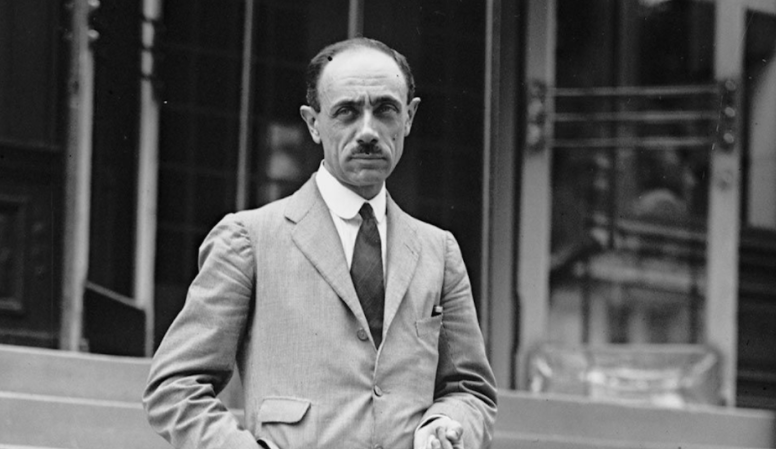
Prime Minister of Hungary Pál Count Teleki de Szék committed suicide soon after midnight. Teleki’s desire was to keep Hungary non-aligned, yet he could not ignore Nazi Germany’s dominant influence. Prime Minister Teleki had two choices. He could continue to resist Germany’s demands for their help in the invasion of Yugoslavia, although he knew this would likely mean the immediate invasion of Hungary or he could defy the Allies and allow passage of German military across Hungary. In the evening of April 2, Teleki received a telegram from the Hungarian minister in London that the British Minister of Foreign Affairs, Mr. Anthony Eden, had threatened to break diplomatic relations with Hungary if she did not actively resist the passage of German troops across her territory, and to declare war if she attacked Yugoslavia. At around midnight he received a call that is thought to have advised him that the German army had just started its march into Hungary. It was then that Teleki chose to save his honor by committing suicide. His suicide note said in part: We have become breakers of our word. I have allowed our nation’s honor to be lost. The Yugoslav nation was our friend. But now, out of cowardice, we have allied ourselves with scoundrels. We will become body-snatchers! A nation of trash. I did not hold you back. I am guilty.”
Prime Minister Count Teleki Pál, the Hungarian Prime Minister, who committed suicide very early today, is succeeded by the notoriously pro-German Foreign Minister, László Bárdossy who retains his foreign affairs portfolio. Pál left a letter addressed to Admiral Horthy, the regent, “You will understand that I am unable to carry on in the face of the specter of war.”
Meanwhile, Wehrmacht troops are pouring across the Hungarian border to take up positions for a move south.
The British government severs diplomatic relations with Hungary.
German Foreign Minister Joachim Ribbentrop also is busy preparing for the post-invasion world in the Balkans. He sends Edmund Veesenmayer of the shadowy Dienststelle Ribbentrop — sort of a private Foreign Ministry which Ribbentrop used as a back-door channel during times of turmoil — to Zagreb. Veesenmayer is there to meet with General Slavko Kvaternik of the Ustaša to sort out who will be doing what after the pesky matter of the Yugoslavian military is brushed aside. The plan is to have Ante Pavelić and the Ustaša rule Croatia after things settle down. Veesenmayer himself is focused on the Balkans and becomes instrumental in persecuting Croatian and Serbian Jewry.
Throughout the Balkans, it is every man for himself. Nobody has a coherent plan, and the overwhelming sentiment is that the German wave is about to come crashing down on everyone. Croatian pilot Captain Vladimir Kren of the Royal Yugoslav Air Force defects to the Germans, telling all he knows so that the Luftwaffe will know how to best coordinate its opening strikes.
Operation LUSTRE, the British reinforcement of Greece, continues. Convoy ANF.24 from is in the Antikythera Straits when the Luftwaffe spots it. They bomb and sink 10,917-ton munitions ship HMS Northern Prince. Everyone survives, but the cargo is badly needed in Greece. Australian 19th Infantry Brigade arrives at Piraeus.
Axis troops marched toward Benghazi, Libya. British troops evacuated the city per General Philip Neame’s orders. The British 2nd Armoured Division is authorized to withdraw from Benghazi through El Regima. On learning that the British have evacuated Benghazi, Lieutenant General Erwin Rommel, commander of the Afrika Korps, orders his troops to advance on to the city during the night.
After receiving a brisk cable from Prime Minister Winston Churchill, General Archibald Wavell, Commander in Chief Middle East Command, decides to replace Lieutenant General Sir Philip Neame, General Officer Commanding Western Desert Force, with Lieutenant General Richard O’Connor.
With the British 2nd Armored Division reeling due to its orders to avoid pitched battles, British Middle East Commander General Archibald Wavell “goes to the well” again. At the behest of Prime Minister Winston Churchill, Wavell sends newly decorated Lieutenant-General Richard O’Connor, the hero of Operation Compass to the headquarters of General Officer Commanding & Military Governor of Cyrenaica Lieutenant General Sir Philip Neame. O’Connor, who is still recovering from earlier experiences in a Cairo hotel, is there to advise Neame, but not take over. He finds a chaotic situation where nobody knows where the Afrika Korps is at any point in time and his own armored forces are in a full retreat.
Meanwhile, Lieutenant General Erwin Rommel in command of the Afrika Korps and flying about from point to point in his handy Fieseler Storch, can’t believe his good fortune. The Luftwaffe, scouting ahead, reports that the Via Balbia is desolate for 60 km past Agedabia, with a few British tanks here and there in the desert after they broke down or ran out of fuel. With the British in astonishing flight to the north and northeast, Rommel orders an attack on the British southern flank. He orders the 5th Light Division to move out of Marada and join the advance, sending Italian forces to garrison it.
The Luftwaffe’s Junkers Ju 87s mount a successful attack on a retreating British column around Antelat/Solluch, losing a Stuka and an escorting Bf 110. Rommel orders Lt. Colonel Gerhard von Schwerin, commanding Special Purposes Regiment No. 200, to lead a spearhead to Ben Gania, and he sets off in the evening. There is enthusiasm and dash in the Afrika Korps that for some reason is sadly lacking at this time on the other side.
Late in the day, Rommel drives to the front and orders reconnaissance troops to make a lightning occupation of Benghazi. Informal intelligence — an Italian priest — is that the British have fled Benghazi. Rommel has every vehicle that isn’t actively fighting drive to a supply depot in the rear to get the necessary fuel.
Italian General Gariboldi, supposedly in charge of all Axis forces in North Africa, is nonplussed. He stumbles into the Afrika Korps headquarters at 21:00 demanding to be told what is going on. He remonstrates until midnight with Rommel, demanding to be allowed to give the orders to attack or not. Rommel counters that supplies are in good order and the situation is too fluid to go up the chain of command for every decision. OKW (the German military command) gets wind of the situation and quickly sends Rommel a message authorizing the offensive. While technically the OKW itself doesn’t have the authority to do this, the message effectively takes the heavy burden of command off Gariboldi’s shoulders. From this point forward, Rommel basically does what he wants and tells Gariboldi about it whenever he gets the chance. Since Gariboldi can now, unlike almost all of his peers, go to Mussolini with victories, it is a happy arrangement for everyone.
British general headquarters announced early today that the army of the Nile had withdrawn from Benghazi, important Libyan seaport, but had inflicted “considerable casualties on personnel and tanks” of axis mechanized forces. A headquarters’ communique said: “In face of the determined advance by strong Italo-German forces, disposing numerous tanks, and in pursuance of the policy so successfully adopted at Sidi Barrani of waiting to choose our own battleground, our light covering detachments have been withdrawn to selected concentration areas. In the course of this withdrawal the town of Benghazi has been evacuated after all captured military stores and equipment had been destroyed.”
However, London dispatches said the abandonment of Benghazi jolted the British public and in London military circles there was unpleasant surprise at the evacuation, which followed so closely British reports minimizing progress of the German-Italian column. The loss of Benghazi made incongruous reading alongside the news reports of spectacular east African triumphs over Italy. Neutral military observers in Lisbon termed the Italo-German operation in Cyrenaica primarily a diversion but said that it might develop into a major drive if the axis found British resistance weak.
British troops captured Asmara, the capital of Eritrea.
Italian Admiral Mario Bonetti’s fleet of 5 destroyers and smaller warships, which had sailed out of Massawa, Italian East Africa on the previous day, was detected and attacked by a force of British aircraft. Without air cover, one by one the Italian ships became so damaged by bomb hits that they had to be abandoned. The last survivor, the torpedo boat Orsini, tried to flee back to Massawa but being badly damaged by the British air attacks, she eventually settled and had to be scuttled before reaching the port. With British ground forces only an hour away from entering the port the remaining Italian ships there (Acerbi and half a dozen small MAS boats) were destroyed with demolition charges.
Italian freighter Urania attempts to escape in the Red Sea from advancing British troops. However, RAF planes disable it, and the crew scuttles the ship off Dahlak Kebir, Eritrea to avoid capture. After the war, the ship is raised for scrap. The RAF also damages Italian patrol boat Acerbi in the Massawa harbor.
Italian authorities in Addis Ababa see the end approaching. The Duke of Aosta opens negotiations.
A U-boat wolfpack has gathered around Convoy SC.26 in the mid-Atlantic south of Iceland. The U-boats go to work. This is one of those classics of the Battle of the Atlantic, with ships burning left and right, men in the water, U-boats everywhere, and everyone fighting for their lives. Combined with other attacks in the surrounding days, such as by U-46 on the 2nd, Convoy SC.26 is devastated. The convoy scatters, then reforms later in the day. But the U-boats continue to prowl.
Irish Prime Minister De Valera told the Dail (parliament) today the Irish charge d’affaires In Berlin had been instructed to protest the sinking of an Irish ship by German planes and attacks on three others in the last four weeks. Compensation also will be demanded, De Valera said.
The Jewish affairs commissioner in Paris, Xavier Vallat, meets the German ambassador, Otto Abetz, to agree measures to speed Jewish “emigration.” At the time, this means forced relocation into ghettoes in the east, in Poland. Soon, it will become something even worse.
HMS Argus and HMS Ark Royal, ferrying 12 Hurricane fighters and 3 Skua dive bombers, successfully launched them to reinforce Malta, completing Operation WINCH.
Winston Churchill warned Josef Stalin (via the Soviet ambassador in London, England, United Kingdom) of German troop movements into Poland detected by British intelligence. Sir Stafford Cripps, an avowed Socialist who is viewed as a specialist in dealings with the USSR, warns Stalin (at the behest of Churchill) about Wehrmacht troop movements in Poland that appear oriented toward the Soviet Union. Stalin refuses to believe that his “good friend” Adolf intends to stab him in the back before Josef can do it to him. June will resolve his doubts.
The Iraqi Parliamentary government was overthrown by the military coup d’état that began two days prior. The pro-Axis Rashid Ali Al-Gaylani returned to power as Prime Minister and his “National Defense Government” replaced the government of the Regent, which had been overthrown by a military coup beginning on April 1, 1941. The Soviet Union recognizes the new government at once, it was the first to do so, and the Luftwaffe makes plans to set up an airlift to Iraq. A 1930 agreement between Iraq and Britain had granted the British two bases there: Shuaiba, south of Basra, and Habbaniya, an important RAF base and training camp in the Euphrates Valley about 48 miles (77 kilometers) west of Baghdad. It was from Habbaniya that the British had flown their March 1940 espionage flights over Baku and Batum in the Soviet Union. As a result of the coup, the British send troops from India and the Middle East to ensure access to the vital oil supplies.
The Luftwaffe, perhaps to emphasize that it is still not there and not completely flown off to Bulgaria, attacks Bristol in its first big raid in many days. It sends 94 bombers, of which 76 (some accounts say 86) arrive to make bombing runs. The bombers are from KG 1, KG 26, KG 76, KG 27, KG 54 and KGr 806. The bombers are led to the target by fourteen Heinkel He 111s which are specially equipped with X-Verfahren guided radar. Another group of nine Luftwaffe bombers hit Hull. In both cities, the priorities are docks and factories, and while much damage is done, it is contained and does not cause as many casualties as some raids earlier in the Blitz.
RAF Bomber Command: Day of 3 April 1941
12 Hampdens to Brest were recalled. 1 aircraft did not receive the signal and went on to bomb the German warships in Brest harbor. 11 Blenheims to the French coast but no targets were seen. No losses.
RAF Bomber Command: Night of 3/4 April 1941
Brest
90 aircraft — 51 Wellingtons, 27 Whitleys, 11 Blenheims, 1 Stirling — reported that the warships were difficult to locate. 1 Blenheim and 1 Whitley were lost and 1 Wellington was shot down over England by an Intruder.
Minor Operations: 15 Hampdens minelaying off Brest and La Pallice; 1 aircraft lost. 7 aircraft to Ostend and Rotterdam.
Overnight, RAF unsuccessfully attacked German cruisers Scharnhorst and Gneisenau at Brest, France, but some German naval officers were killed when a bomb struck the Continental Hotel in the city.
Malta is relieved when a dozen Hurricanes are successfully flown off of aircraft carriers HMS Ark Royal and Argus and make it to the island as part of Operation Winch. However, one Hurricane crashes on landing and is lightly damaged.
U-46, commanded by Oberleutnant zur See Engelbert Endrass, continued attacks on convoy SC.26.
British steamer Alderpool (4313grt) was sunk in 58-21N, 27-59W. At 0042 hours on 3 April 1941, U-46 (Endrass) attacked the convoy SC.26 for a second time southwest of Reykjavik and observed one hit on the Alderpool (Master Tom Valentine Frank, OB.E) in station #11. The ship was abandoned and was finished off by U-73, commanded by Kapitänleutnant Helmut Rosenbaum, behind the convoy with a coup de grâce at 0328 hours the same day. The master, 36 crew members and two gunners were picked up by Thirlby and landed at Loch Ewe. The 4,313-ton Alderpool was carrying wheat and was bound for Hull, England.
British steamer Thirlby (4887grt) was torpedoed. At 0601 hours on 3 Apr 1941, the unescorted Thirlby (Master Philip Edmund Birch), dispersed from convoy SC.26, was hit in the stern by a G7a stern torpedo from U-69, commanded by Kapitänleutnant Jost Metzler, in 58°22N/28°55W. The Germans reported that the target sank immediately, however the ship which was en route from St. John, New Brunswick to Hull with a cargo of wheat did not sink and was later repaired. Two of 40 men on board were lost. Earlier that night, the Thirlby in station #12 of the convoy had probably been hit by a dud from U-46 (Endrass) and was on 10 April further damaged by a bomb from a German aircraft. Steamer Thirlby arrived at Loch Ewe on the 11th. The 4,887-ton Thirlby was carrying wheat and was bound for Hull, England.
British steamer Athenic (5351grt) was damaged by torpedo. Steamer Athenic was assisted by corvette HMS Arbutus.
U-46 had to return to base due to serious problems with the flaps of the torpedo tubes.
Other U-boats conducted more attacks on Convoy SC.26.
U-73, commanded by Kapitänleutnant Helmut Rosenbaum, sank British steamer Westpool (5724grt) and Belgian steamer Indier (5409grt) in 58-12N, 27-40W.
At 0508 hours on 3 April 1941 the Westpool (Master William Stafford) in convoy SC.26 was hit by one torpedo from U-73 and sank in less than one minute south-southwest of Reykjavik. The master, 33 crew members and one gunner were lost. Eight crew members were picked up by HMS Havelock (H 88) (Cdr E.H. Thomas, DSC, RN) and landed at Liverpool on 9 April. The 5,724-ton Westpool was carrying scrap iron and was bound for Leith, Scotland.
At 0508 hours in 3 April 1941, U-73 hit the Westpool in convoy SC.26 with one torpedo and one minute later missed a presumed armed merchant cruiser with another. At 0512 hours, a third torpedo was fired which struck the Indier (Master J. Onghena) under the bridge, causing the ship to sink within one minute over the bow. 42 men of the 44 crew members and two gunners on board were lost. The four survivors were picked up and landed at Liverpool. The 5,409 ton-Indier was carrying steel and general cargo and was bound for Glasgow, Scotland.
U-73 sank British tanker British Viscount (6895grt) in 58-15N, 27-30W. At 0832 hours on 3 April 1941 the British Viscount (Master William Caghill Baikie), dispersed from convoy SC.26 three hours before, was hit amidships by one torpedo from U-73 south-southwest of Iceland. The tanker caught fire, was abandoned and foundered later in 58°18N/27°50W. The master and 27 crew members were lost. 18 crew members and two gunners were picked up by HMS Havelock (H 88) (Cdr E.H. Thomas, DSC, RN) and landed at Liverpool. The 6,895-ton British Viscount was carrying Admiralty fuel oil and was bound for Scapa Flow, Scotland.
U-74, commanded by Kapitänleutnant Eitel-Friedrich Kentrat, sank the Greek steamer Leonidas Z. Cambanis (4274grt) in 58-12N, 27-40W. At 0500 and 0501 hours on 3 April 1941, U-74 fired two torpedoes at the convoy SC.26 and observed two detonations and saw one ship sinking after ten minutes. Kentrat reported two ships sunk, but probably both torpedoes hit the Leonidas Z. Cambanis. The 4,274-ton Leonidas Z. Cambanis was carrying wheat and was bound for Swansea, England.
U-74 damaged armed merchant cruiser HMS Worcestershire (11,402grt) in 58N, 27W. At 0542 hours on 3 April 1941, HMS Worcestershire (F 29) (A/Capt John Cresswell, RN), ocean escort from the dispersed convoy SC.26, was hit by one G7e torpedo from U-74. The ship had been missed by a first G7e torpedo at 0539 hours and was then hit underneath the bridge by the second torpedo, which was a surface runner. The U-boat had fired its last torpedo and could only observe how the ship stopped for two hours and then continued to Liverpool under escort by HMS Hurricane (H 06) (LtCdr H.C. Simms, RN). At 1422 hours, U-69 (Metzler) tried to attack the damaged ship, but was chased away by two destroyers.
U-76, commanded by Oberleutnant zur See Friedrich von Hippel, sank Finnish steamer Daphne (1939grt) in the North Atlantic, about 60N, 20W. The Daphne (Master Johannes Ivar Eriksson) was claimed in a radio signal by U-76, which was lost two days later and was identified by the xB-Dienst. The BdU awarded this ship to U-76. All of the ship’s complement of 22 died. The 1,939-ton Daphne was carrying coal and was bound for Lillehammer, Norway.
U-124 aided three shipwrecked survivors from the Umona, which had been sunk three days before, giving them some water, bread, and a bottle of Cognac.
Light cruiser HMS Nigeria joined convoy HG.57 at sea.
Light cruiser HMS Dido departed Scapa Flow for anti-aircraft duties at Loch Ewe. The cruiser departed on the 7th with convoy OG.58.
Anti-aircraft ship HMS Alynbank departed Scapa Flow at 0930 to meet convoy WN.8 in the Pentland Firth and escort it to Methil, where they arrived at 0800/4th.
German tanker Thorn (5436grt), which had been involved in refueling Admiral Hipper on her recent sortie, was sunk by submarine HMS Tigris 100 miles southwest of St Nazaire.
Submarine HMS Undaunted departed Portsmouth for Gibraltar where she arrived on the 13th.
River mouth patrol boat HMS Bahram (72grt, 2nd Hand J. N. Crawford) was sunk in mining in North Channel, Spurn. Crawford and seven other ratings were lost. There was only one survivor.
Mine destructor ship HMS Bushwood was damaged in a collision in Bristol Channel. The ship was repaired at Cardiff from 29 April to 7 May.
British steamer Cairnie (250grt) was sunk by German bombing six to eight miles south by west of Tod Head. The entire crew was rescued.
British steamer Greenawn (784grt) was lost to unknown cause in the North Sea, near Montrose.
British steamer Geddington Court (6903grt) was damaged by German bombing in 56-25N, 2-13W.
British steamer Assuan (499grt) was damaged by German bombing in 56-42N, 2-26W. The steamer was beached two miles east of Scurdy Ness. The steamer was refloated on the 4th and berthed at Montrose.
Italian destroyer Battisti, en route to bombard Port Sudan, broke down and was scuttled by accompanying Italian destroyers. Italian destroyers Tigre, Pantera, Manin, and Sauro, in sight of Port Sudan, were attacked by Swordfish of 813 and 824 Squadron from Aircraft carrier HMS Eagle, based at Port Sudan. Destroyers Manin and Sauro were sunk in the air attacks ten miles off Port Sudan. Destroyers Tigre and Pantera were damaged in air attacks and were sunk by destroyer HMS Kingston.
Italian submarine Micca attacked two steamers in 34-10N, 25-24E without success.
Destroyers HMS Janus and HMS Jaguar departed Alexandria for Port Said to guard against attack in the Red Sea from the Italian Massawa destroyers. When word was received that two of the Italian destroyers were sunk by aircraft carrier HMS Eagle’s aircraft, the destroyers were returned to Alexandria. Destroyers HMS Griffin and HMS Greyhound on patrol in the Straits of Jubal continued their duty until 4 April. On the 4th, destroyers Greyhound and Griffin and gunboats HMS Ladybird and HMS Gnat were ordered to return to Alexandria; all arriving on the 5th.
During minesweeping operations, minesweeper HMS Abingdon was damaged in a German dive bombing attack at Malta.
Convoy OB.306 departed Liverpool, escorted by destroyers HMS Achates, HMS Boadicea, HMCS Columbia, and HMCS St Francis, corvettes HMS Hepatica and HMS Windflower, and anti-submarine trawlers HMS Arab, HMS Ayrshire, and HMS Lady Madeleine. On the 4th, destroyer HMS Broadwater joined the escort was detached on the 7th. Destroyer HMCS Niagara joined on the 5th and was detached with destroyer Columbia on the 8th. Destroyer Boadicea was detached on the 6th. The remainder of the escort was detached when the convoy dispersed on the 9th.
Convoy ANF.24 was attacked by German bombers off Kithera and munitions ship Northern Prince (10,917grt) was sunk in Antikithera Straits, in 35-34N, 23-23E. The cargo she carried was so desperately needed in Greece that part of her cargo intended for Egypt was not unloaded prior to sailing. The entire crew was rescued.
Convoy HG.58 departed Gibraltar escorted by sloop HMS Egret, corvettes HMS Asphodel, HMS Azalea, HMS Coreopsis, and HMS Fleur de Lys, Dutch submarine HNLMS O.21, and anti-submarine trawler HMS Arctic Ranger. Corvette Asphodel was detached on the 5th for Freetown, corvette Coreopsis on the 9th, corvettes Azalea and Fleur de Lys on the 10th, and submarine O.21 on the 12th. Destroyers HMS Chelsea, HMS Verity, HMS Veteran, and HMS Wolverine joined the convoy on the 16th. On the 18th, destroyer Chelsea was detached, and arrived at Liverpool on the 20th with the sloop and the other three destroyers.
In the capital today, President Roosevelt conferred with Admirals Harold R. Stark, Chief of Naval Operations, and Robert L. Ghormley; Constantin Potitch, the Yugoslav Minister; George de Ghika, the new Hungarian Minister, who presented his credentials, and with Edward J. Flynn, chairman of the Democratic National Committee.
The State Department announced that by direction of the President it had asked the recall of Admiral Alberto Lais, Naval Attaché of the Italian Embassy, because of his alleged connection with sabotage of Italian ships in American ports.
The Senate passed the $1,340,610,744 agriculture appropriation bill; approved the bill authorizing $150,000,000 for additional defense housing; confirmed the nomination of Edward McCauley to the Maritime Commission; approved the agreement with Mexico for reciprocal rights for transit of military airplanes; completed Congressional action on the $4,393,221,154 fifth supplemental defense appropriation bill, and adjourned at 5:45 PM until noon tomorrow.
The House passed the $212,087,300 State-Justice-Commerce Departments appropriation bill, heard discussion of strikes in defense industries and adjourned at 3.59 PM until noon on April 14.
A ban on use of American naval vessels to convoy shipments abroad was made the first objective today of a congressional group organized to oppose “involvement in war.” Senator Burton K. Wheeler, Montana Democrat, announced it had been decided to support the anti-convoy resolution introduced by Senator Tobey, New Hampshire Republican. At the same time, he said an 11 member “executive committee” had been appointed to plan for mass meetings in every part of the country aimed at building up public sentiment against taking “the few remaining steps that will lead to actual participation” in war. Wheeler is chairman of the organization formed at a meeting Tuesday of some 75 senators and house members.
In a step just short of a break in relations, the United States today linked Italy’s high ranking naval attaché here with widespread sabotage of Italian merchant ships and bluntly told his government to call him home immediately. The immediate recall of the Italian naval attaché, Admiral Alberto Lais, is demanded by the United States in a note connecting him with “acts in violation of the laws of the United States.” Secretary Hull said at a press conference today that these acts were the sabotaging of Italian ships in American ports.
Federal court forbade the C.I.O.’s United Auto Workers tonight from “interfering” with Ford Motor Co. employees, and the union immediately accused the company of breaking its word in a pact to keep the River Rouge plant closed. The company’s application for the injunction, a union statement said, was a “deliberate violation of its pledge to make no effort to open the Rouge plant during a period of conciliation.” A temporary injunction was issued by Judge Arthur J. Tuttle. For two days the giant River Rouge plant, employing 85,000 men, has been closed because of the U.A.W.-C.I.O. strike. In a surprise move tonight the company sought a court order to restrain the U.A.W.-C.I.O. from “threatening and intimidating employees.”
C.I.O. union members tonight ratified an agreement to end the 16-day strike at four General Motors plants in Oakland. Management and union representatives were scheduled to meet tomorrow at 10 a.m. to sign the agreement which will return 2,250 men to their jobs.
The possibility of federal seizure and operation of the strike-bound Allis-Chalmers plant in Milwaukee was raised today by a remark from Secretary Stimson that “the War Department was equipped” to operate such an establishment. Meanwhile, the defense mediation board called representatives of management and labor to Washington for negotiations looking to a settlement of the case. At the same time, Representative McCormack, Massachusetts Democrat, the Democratic floor leader, predicted early action by President Roosevelt to relieve the general strike situation, and the chief executive’s attitude was described by a White House secretary as one of “watching and waiting.” Without threatening to take over the Allis-Chalmers plant, Stimson told reporters in response to questions that he believed the war department could operate it if need be.
Joseph W. Martin Jr., Republican national chairman, called on Americans to night to unite in making the nation invincible against assault from within or without and declared his own party must police and audit the Roosevelt administration in the present emergency. In a radio address, the Massachusetts representative declared that in the midst of a great national crisis there was a vital need for “a vigorous, virile Republican party.” It must, he said, “police and audit the new deal administration to protect our country from financial, political and social bankruptcy.”
Representative Martin Dies of Texas predicts that the United States will be at war with Axis powers within ninety days. The chairman of the House Committee on Un-American Activities made his prediction last night in an interview, in which he also disclosed threats of sabotage against the naval fuse plant under construction in Macon, Georgia. “England and the United States will win the war after a hard, bitter struggle,” Mr. Dies said. “It will be won by a joint invasion of Germany and Italy through Greece and the Balkans.” The Texan said that he believed it was the duty of the United States to fight, and to send an army to Europe.
North American Aviation test pilot Robert C. Chilton takes his first flight — a one hour familiarization — in the company’s prototype of a new fighter for the Royal Air Force, the NA-73X, NX19998, at Mines Field. (Mines would later be known as Los Angeles International Airport, LAX.) This plane will eventually emerge as the superlative P-51 Mustang.
Lost for nine hours in stormy weather, a large Eastern Air Lines plane crashed in the rain-flooded marshlands about ten miles west of Vero Beach, Florida today, injuring the thirteen passengers and crew of three, none seriously.
In a letter to the commanders in chief of the Pacific, Asiatic, and Atlantic Fleets, U.S. Navy’s Chief of Naval Operations, Admiral Harold R. Stark, expressed the feeling that beyond question the presence of the Pacific Fleet in Hawaii had a stabilizing effect in the Far East.
El Rancho Vegas, the first resort hotel (complete with gambling) on what will become the Las Vegas Strip, opens today. After it burns down in 1960, Howard Hughes will buy the property but do nothing with it. While it is the site of the first hotel on the Strip, and you would think somewhat important and remarkable in Las Vegas history, it now somewhat incongruously stands almost completely vacant, as if nothing at all important ever sat there at all.
Walton’s overture “Scapino” premieres in Chicago.
New Zealand Division light cruiser HMS Leander arrived at Colombo. The cruiser departed the same day for Madras.
A lengthy manifesto was issued yesterday on the conclusion of the ten-day meeting of the eighth plenary session of the Central Executive Committee of the Kuomintang. The manifesto emphasized the necessity of having a national army based on unity and discipline and said: “Any one who attempts to utilize the war situation for ulterior ends or who acts without orders will not be exempt from military disciplinary measures.” The manifesto declared that attempts to use improvement of the people’s livelihood as a pretext for instigating class struggle were incompatible with the welfare of the nation and military principles. It states that such attempts “will lead to social turmoil.”
The heavy cruisers USS Chicago (CA-29), under command of Rear Admiral John H. Newton, Commander Cruisers Scouting Force, and USS Portland (CA-33) and the destroyers USS Clark (DD-361), USS Conyngham (DD-371), USS Reid (DD-369), USS Cassin (DD-372), and USS Downes (DD-375), departed Suva, Fiji Islands, bound for Pearl Harbor (see 10 April).
Dow Jones Industrial Average: 124.65 (+1.22)
Born:
Eric Braeden, German-American actor (“The Rat Patrol”, “”The Young and the Restless””, “Colossus: The Forbin Project”), in Bredenbek, Germany.
Jan Berry, American rock and roll vocalist (Jan and Dean — “Surf City”), in Los Angeles, California (d. 2004)
Philippé Wynne, American soul and funk singer, lead vocalist of The Spinners (“One of a Kind (Love Affair)”), in Detroit, Michigan (d. 1984, of a heart attack).
Jorma Hynninen, Finnish baritone, in Leppävirta, Finland.
Collin Mooney, NFL fullback (Tennessee Titans), in Katy, Texas.
Carl Boenish, American father of BASE jumping, in New Castle, Pennsylvania (d. 1984).
Died:
Pál Teleki, 61, Hungarian politician (Prime Minister of the Kingdom of Hungary, 1920-1921 and 1939-1941), committed suicide in despair over his nation’s capitulation to an alliance with Nazi Germany.
Naval Construction:
The Royal Navy Isles-class minesweeping trawler HMS Stroma (T 150) is laid down by Hall, Russell & Co. Ltd. (Aberdeen, Scotland).
The U.S. Navy 77′ Elco motor torpedo boat PT-35 is laid down by the Electric Boat Co., Elco Works, Bayonne, New Jersey.
The Royal Navy Hunt-class (Type III) escort destroyer HMS Holcombe (L 56) is laid down by A. Stephen & Sons Ltd. (Glasgow, Scotland).
The Royal Navy Hunt-class (Type III) escort destroyer HMS Bolebroke (L 65) is laid down by Swan Hunter and Wigham Richardson Ltd. (Wallsend-on-Tyne, U.K.); completed by Wallsend. She is transferred to the Royal Hellenic Navy before completion and commissions as RHS Pindos (L 65).
The Royal New Zealand Navy coastal minesweeper HMNZS Gale (T04) is commissioned.
The Kriegsmarine (German Navy) Type VIIC U-boat U-564 is commissioned. Her first commanding officer is Oberleutnant zur See Reinhard Suhren.
The Kriegsmarine (German Navy) Type VIIC U-boat U-652 is commissioned. Her first commanding officer is Oberleutnant zur See Georg-Werner Fraatz.
 History Diaries