In what will be the only success of the entire offensive, the alpini of the Pusteria Division capture the fortified peak of Mali Spadarit, on the extreme left wing of the Albanian Front. However, this leaves them far in advance of any friendly troops, and heavy fire from adjacent Greek positions on their flanks and rear forces them to withdraw somewhat back down the slope. In Gambarra’s sector, attempts to maneuver against Monastery Hill get nowhere, and Gambarra already has to bring up troops from his reserve Bari Division to reinforce the Puglie and Cagliari. Meanwhile, it has begun to rain, negating the Italian advantage in the air, and increasing the foot soldiers’ misery. The Italian Primavera Offensive continues into a second day on 10 March 1941. On the left flank, the Pusteria Division captures, then loses Mali Spadarit, a peak overlooking the strategic Klisura Pass. In the center, Italian attacks to take Monastery Hill fail, and the Italians begin to bring up the reserve Bari Division. Elsewhere, the Italians are stopped cold by fixed Greek defenses of the Greek 1st Division. The weather turns poor, with cold rain negating any advantage that the Italians have in the air. The Italian high command decides to try to outflank the main Greek positions.
The Greek War Ministry announced: “We have continued our offensive operations and won new enemy positions. The enemy has launched violent counterattacks that have been repulsed with heavy losses.”
Operation LUSTRE, the British reinforcement of Greece, continues. The troop convoys from Alexandria and Suda Bay are arriving every three days. So far, the first troop tranche has arrived at Piraeus, and the second is en route.
Wavell reports that the LUSTRE reinforcement plan is up to date. “First flight landed Piraeus, second flight half strength enroute, third flight half strength loading, extra flight in gap between third and fourth flights will complete second and third. Passing of ships through canal has made full programme possible.”
The German 5th Panzer Regiment arrived in North Africa.
Major General Thomas Blamey, General Officer Commanding Australian 6th Division, sends a message to the Australian Government concerning the upcoming operations in Greece. He ends his message saying, “Military operation extremely hazardous in view of disparity between opposing forces in numbers and training.”
The newly worked-up aircraft carrier, HMS Formidable, passed through the Suez Canal to join Admiral Andrew Cunningham’s Mediterranean fleet at Alexandria, Egypt, which has been without an armored carrier since HMS Illustrious had been withdrawn as a result of the serious damage it had suffered from enemy dive-bombers in January 1941.
At Keren, Eritrea, Lieutenant-General William Platt remains frustrated at his troops’ inability to fight through the narrow Dongolaas Gorge. The fierce Italian resistance at Keren is the only thing standing between the British and the coast at Massawa. Platt is assembling his troops for another attempt at the middle of the month.
Keren is a key crossroads whose capture will enable the British to scoop up all of Eritrea and head south into Abyssinia toward Addis Ababa, which is being threatened by the South African advance far to the south. Once the British are past Keren, the entire Italian position in East Africa will become unhinged — but there are very few routes in this rough country that are able to support large military operations. So far, attempts to flank Keren using secondary routes have produced no results.
Far to the south, the South African forces continue to advance north from the vicinity of Mogadishu. Operation CANVAS continues without any meaningful results despite swallowing large amounts of territory. Now about 500 miles (900 km) past it, the Italian resistance begins to stiffen forward of the fortress of Jijiga, Abyssinia. The Italians stop the 23rd Nigerian Brigade of the British 1st African Division at Dagabur (Degehabur), about 100 miles (160 km) south of Jijiga. Since taking Mogadishu, Italian Somaliland, the troops of Major General William Platt, General Office Commanding British Troops in Sudan, have advanced 600 miles (966 kilometres) north from there into Abyssinia and only now come into contact with any Italian forces. Their encounter is at Dagabur.
Belgian Congolese troops, meanwhile, cross the border into Abyssinia from the west and take Italian base Asosa.
There is a rare meeting of the War Cabinet at the Cabinet War Room bunker (“Paddock”) located in Brook Road, Dollis Hill, northwest London. It is a massive, two-story underground facility under a corner of the Post Office Research Station site. The bunker is only used for two meetings during the war. Visiting Australian Prime Minister Menzies gives a summary of Australian achievements in the war to date.
Australian Prime Minister Robert Menzies writes down in his diary his impression of the Blitz:
“Curious to see the North Lodge at Buckingham Palace lying in ruins this morning. Houses shattered in Curzon Street. Germans are poor psychologists. If they had left the West End alone the East Enders might have been persuaded that they alone were bearing the brunt of the war. And Buckingham Palace again! ha ha!”
Of course, the German bombs at Buckingham Palace came within whiskers of killing the King, which would not have been such a laughing matter.
The British government rejects a plan to feed the small democracies stating that “Nothing has since occurred to alter the view of His Majesty’s Government that it is the responsibility of the German Government to see to the material welfare of the countries they have overrun, nor to weaken their conviction that no form of relief can be devised which would not directly or indirectly assist the enemy’s war effort.”
A secret report by the SS on the mood of the German people notes that the sale of “Pictures of the Führer at Annual Fairs … At present popular feeling … does not approve of the sale of pictures of the Führer alongside images of saints, rosaries and devotional objects.”
Germans shoot 17 Polish civilians after resistance fighters kill an actor who announced he was not Polish but German.
Darlan ratifies Murphy-Weygand agreement for provisioning of French North Africa. Darlan again threatens to use the French navy to protect convoy food ships bound for France if the Royal Navy continues to seize them. Darlan was speaking in the presence of Marshal Petain to a press conference for American journalists. “I am responsible for feeding 40 million people, plus millions more in Africa. I will feed them even if I have to use force.”
The issue of humanitarian aid will remain throughout the war, with the US wishing to help the people of Europe, but the British government objecting on the grounds that any aid of any sort to countries controlled by the Germans will help the Axis war effort.
France confirms the Murphy-Weygand Agreement today. Pursuant to the agreement, the United States agrees to supply French North Africa with certain basic commodities, so long as the French do not build up stockpiles and do not export them.
French diplomat Gaston Henry-Haye was featured on the cover of TIME Magazine in the United States.
Beer was rationed in Vichy France due to a shortage of barley and hops. Starting March 15, beer could not be sold on Saturdays or Tuesdays.
Yugoslavian Regent Prince Paul convened a second meeting of the Crown Council to discuss the proposals made by German Chancellor Adolf Hitler at Berchtesgaden on March 4, 1941. There is great disagreement about what course to take — support the British or succumb to the Germans.
Nikolai Voznesensky stepped down as the Chairman of the State Planning Committee of the Soviet Union and took the new role as the First Deputy Chairman of the Council of People’s Commissars of the Soviet Union.
Maksim Saburov became the Chairman of State Planning Committee of the Soviet Union.
After the winter lull, air operations are picking up again. Both sides launch damaging raids, though the Luftwaffe continues to have the upper hand in terms of the devastating effects of their raids.
The Luftwaffe raids Portsmouth after dark for the second night in a row. It is one of the most devastating raids outside of London for some time. The Germans put around 240 bombers over the city, the most since 1940, and cause extensive damage to the docks and shipping. They sink a minesweeping trawler, HMT Revello, killing one man, and damage destroyers HMS Sherwood, Tynedale and Witherington, training ship HMS Marshal Soult and four other minesweeping trawlers. Four sailors on shore also perish. 750 people in the town die in the Portsmouth raid.
RAF Bomber Command: Day of 10 March 1941
1 Blenheim on weather reconnaissance turned back.
RAF Bomber Command: Night of 10/11 March 1941
Cologne
19 Hampdens; 1 aircraft lost. Some fires were claimed to have been started. Cologne reports 24 people killed and 60 injured but no serious industrial damage was caused.
Le Havre
8 Blenheims and 6 Halifaxes. This was the first Halifax operation of the war. No aircraft were lost but the Halifax of Squadron Leader Gilchrist, 35 Squadron, was mistakenly shot down over Surrey by an R.A.F. fighter while returning from the raid. Only the pilot and one other man survived.
St-Nazaire
14 Whitleys; only 4 bombed the main target. No losses.
In Malta, there are repeated attacks by the Luftwaffe throughout the day. At 12:21, nine German Bf 110s strafe the Sunderland flying boats in St. Paul’s Bay, destroying one and damaging two others. In addition, a fuel lighter has to be beached with damage. The defending Hurricanes shoot down one of the Bf 110s. After dark, up to 20 bombers attack in bright moonlight, damaging Luqa Airfield and various other points on the island.
Centimetric radar is being developed both by the Americans and the British, and today both countries try out a prototype mounted in a bomber. The USAAC uses a Douglas B-18 Bolo bomber to try out the radar, but it is a first test of the equipment with no real results beyond making sure the aircraft can handle it. The British are at the next stage in their development and today use the radar to make an air-to-air detection. It is hoped that centimetric radar will have useful applications in naval warfare.
U-552, commanded by Oberleutnant zur See Erich Topp, sank Icelandic trawler Reykjaborg (687grt) 459 miles southeast of Iceland. At 2052 hours on 10 March 1941, U-552 hit the Reykjaborg (Master Ásmundur Sigurðsson) with a dud and then fired 103 rounds from the deck gun and 592 rounds from the 2cm AA gun at the vessel between 2314 and 2347 hours. The trawler sank about 459 miles southeast of Iceland. One of the three survivors that managed to reach a raft died but on 14 March the others were picked up by HMS Pimpernel (K 71) (Lt F.H. Thornton, RNR) escorting the convoy OB.296 and later landed at Greenock. She was probably the largest Icelandic-owned trawler at the time. The 687-ton Reykjaborg was carrying fish.
Captain W. N. T. Beckett MVO, DSC, commanding officer of the heavy cruiser HMS Exeter completing repairs at Devonport, died. Captain O. L. Gordon took over command of the cruiser on the 11th. On the 24th, cruiser Exeter departed Devonport to work up at Scapa Flow.
Destroyer HMS Worcester, escorting convoy FN.428 drove off three German S-boats off the coast of Norfolk. Destroyer HMS Southdown, escorting convoy FS.429A drove off German S-boats off Sheringham. There was no damage to either convoy.
Submarine H.28 was in a collision with an unknown merchant ship in the Irish Sea. The submarine was repaired at Belfast from 12 March to 14 April.
British steamers Corinia (870grt), Sparta (708grt), and Waterland (1107grt) were sunk on mines in 50-55N, 00-35E. Nine crewmen and five gunners were lost on steamer Corinia. Nine crew members were missing on steamer Sparta. Five crewmen and two gunners were lost on steamer Waterland.
German tanker Nordmark met German supply ship Alsterufer (2704grt) on the 10th. On 11 March, the tanker replenished the supply ship.
Norwegian steamer Bur (4343grt) was damaged by German bombing in 52-12N, 5-52W. The ship put into Fishguard during the evening of 10 March in a sinking condition. The ship was beached on Goodwick Sands and later repaired at Barry.
Dutch steamer Libra (391grt) was damaged by near misses of German bombing in 52-05N, 5-51W. The steamer was towed into Swansea.
German minelayers Konigin Luise and Cobra, escorted by the 5th Minesweeping Flotilla, laid minefield PREGEL during the night of 10/11 March extending the Westwall minefield northwards.
Damaged Aircraft carrier HMS Illustrious departed Alexandria, escorted by destroyers HMS Juno and HMS Griffin, for Port Said. Due to mining, the transit of the aircraft carrier through the Canal was delayed. The destroyers returned to Alexandria on the 11th. Aircraft carrier Illustrious was able to begin her transit of the Canal on the 15th. The aircraft carrier was en route for repairs in the United States. These repairs required eleven months to complete.
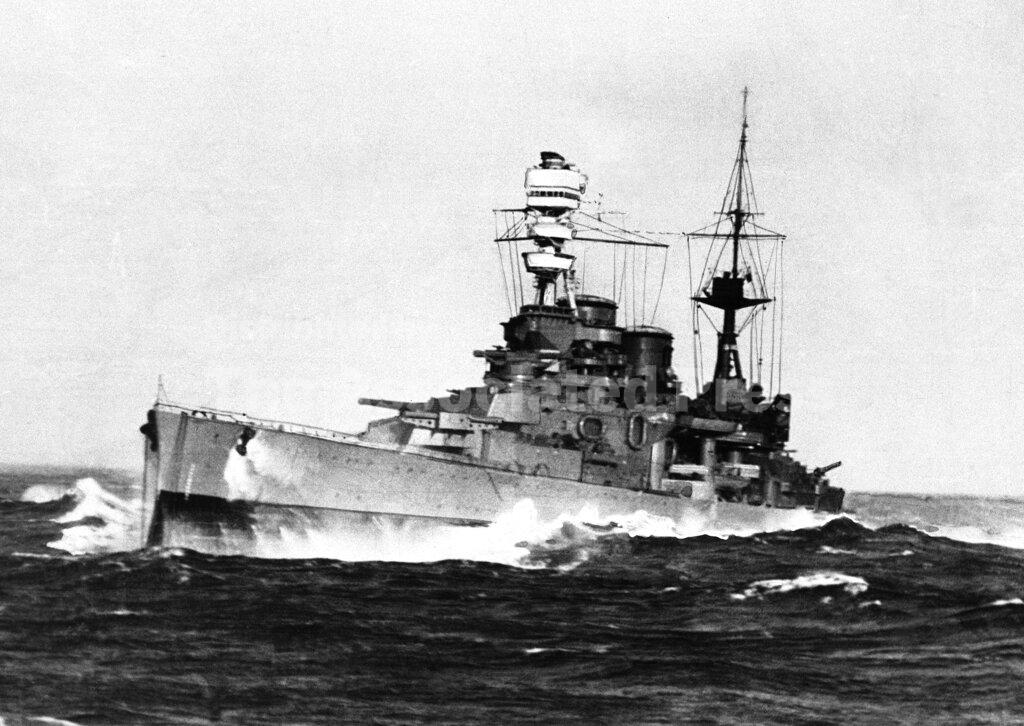
Battlecruiser HMS Repulse, aircraft carrier HMS Furious, and destroyers HMS Duncan and HMS Foxhound departed Gibraltar to protect the SL convoy route. They relieved battleship HMS Malaya of convoy SL.67. Battleship Malaya and destroyers HMS Faulknor and HMS Forester then proceeded to Gibraltar. Destroyers HMS Verity, HMS Veteran, HMS Hesperus, HMS Havelock, and HMS Hurricane from convoy OB.298 joined convoy SL.67. Convoy SL.67 was also soon joined by destroyers HMS Douglas, HMS Chelsea, HMS Wolsey, HMS Mansfield, HMS Salisbury, HMS Broke, and HMS Saladin.
Dutch submarine HNLMS O.23 arrived at Gibraltar from England.
Convoy OB.296 departed Liverpool, escorted by destroyer HMS Vanquisher and corvettes HMS Campanula, HMS Freesia, and HMS Pimpernel. The escort was joined on the 11th by destroyers HMS Whitehall and HMS Winchelsea and on the 12th by destroyer HMS Viceroy. On 13 March, destroyer Viceroy was detached. The three corvettes were detached on the 14th. The remaining three destroyers were detached on the 15th when the convoy was dispersed. Destroyer HMS Caldwell joined on 10 February.
Convoy SC.25 departed Halifax, escorted by armed merchant cruiser HMS Laconia and submarine HMS Thunderbolt. The submarine was detached on the 15th and the armed merchant cruiser on the 24th. On 26 March, destroyers HMS Chesterfield, ORP Garland, and HMCS Ottawa, sloop HMS Weston, and corvettes HMS Heather, HMS Hepatica, and HMS Picotee joined the escort. The escorts were detached when the convoy arrived at Liverpool on the 29th.
Convoy BN.19 departed Aden, escorted by sloop HMS Auckland. The convoy arrived at Suez on the 17th.
In Washington this day, President Roosevelt sent to Congress a request for an emergency appropriation of $300,841,820 for the Navy, conferred with legislative leaders, with Secretary Hull and Rear Admiral R. E. Ingersoll and William C. Bullitt.
The Senate passed the $1,415,991,838 Independent Offices Appropriation Bill, the $1,533,567,102 Fourth Supplemental Defense Appropriations Bill, the bill authorizing $100,802,830 in construction and naval shore stations, the $242,000,000 Naval Base Authorization Bill, approved a resolution affirming United States support of the Monroe Doctrine, heard Senators Wiley and Vandenberg discuss aid to Britain, and adjourned at 4:36 PM until noon Thursday.
The House agreed to consider tomorrow the Lend-Lease bill as passed by the Senate, sent back to committee the District of Columbia Tax Bill, and adjourned at 3:48 PM until noon tomorrow. The Rules Committee approved for House consideration the bill to make permanent the Office of Government Reports, and the Judiciary Committee heard William C. Bullitt on the defense labor situation.
With the bill authorizing the enormous British aid program all but enacted, the U.S. administration moved swiftly today to obtain the money. One well-informed senator said $3,000,000,000 would be sought as a starter. President Roosevelt spent a busy day conferring with fiscal and legislative advisers and House Speaker Rayburn, one of the latter, said that the chief executive would send to congress by midweek his initial request for cash and contract authorizations under the program.
A series of White House conferences today cleared the decks for final legislative and administrative action on the Lend-Lease program. Meanwhile, two Senate Republicans who voted against the aid-to-Britain measure appealed for unified national support of the program.
A drive for the fullest possible standardization of war equipment among the armed services of the United States and between our services and the British is being intensified in anticipation of the “single order” system of defense production which the Administration has set as one of its goals under the Lend-Lease program.
W.P.A. Commissioner Howard O. Hunter today authorized a 48-hour week for W.P.A. workers on “certified national defense construction projects.” The order applied to all projects which the secretaries of war and navy may certify “as important for national defense.” It was expected to affect an estimated 200,000 workers who have been working from 30 to 39 hours a week. Straight time will be paid for the extra hours. The W.P.A. explained that the projects affected would be airports, access roads to military camps and construction of buildings and other facilities at army or navy stations.
The National Labor Relations Board today asked the Ford Motor Co. and the United Automobile workers (C.I.O.) if they would consent to bargaining elections In the Ford River Rouge and Highland Park plants. The union replied that it was “willing and eager” to comply with the board’s request. Harry Bennett, Ford motor personnel director, declined comment. He said I. A. Capizzi, company counsel, would answer the communication upon his return next week from the west coast.
The Communist-influenced national cabinet of the American Youth congress called upon American students today to strike April 23 In a demonstration “against those who would muzzle education in order to mislead us deeper into the European war.”
Carrying a U.S. prototype centimetric air-interception radar, a B-18 Bolo fails to achieve any results. On the same day, the British centimetric AI radar made its first confirmed contact. Honors for this “first” thus go to the British.
Preparations were being made yesterday for the enlistment of 25,000 young men for training as Naval Reserve aviators to man the expanding forces of the two-ocean Navy. Authorization for the recruiting was announced Sunday by the Bureau of Navigation.
An American Airlines DC-3 transport with eight passengers aboard skidded in a ground spin and struck a levee wall at Lunken Airport tonight, but none of the passengers was hurt seriously, J.R. Merrill, district sales manager for the line, said.
U.S. Navy Rear Admiral Edward J. Marquart is detached as Commander Minecraft Battle Force.
13 Northrop YP-61s are ordered for the USAAF.
The USAAF 73d Squadron begins its transfer from McChord Field, Tacoma, Washington to Elmendorf Field, Anchorage, with eight Douglas B-18 Bolos. This will take four days.
Baseball’s Brooklyn Dodgers announce that their players would wear batting helmets during the 1941 baseball season. General Manager Larry MacPhail (he started the Dodger dynasty in the thirties) predicted that all baseball players would soon be wearing the new devices.
The realization that the United States, as well as Japan, will become a “high-powered defense State,” and that Japan’s position in the Pacific will be profoundly affected by that, are the leading ideas of the first Japanese comments on the United States Senate’s passage of the lease-lend bill.
Rear Admiral Ōnishi Takijirō presented Commander-in-Chief of the Combined Fleet Admiral Yamamoto Isoroku with a preliminary study for the attack on Pearl Harbor, based on Commander Genda Minoru’s plan but with some modifications.
Acting Japanese Consul General Ojiro Okuda is continuing his spying operations on the US Pacific Fleet. Today, he sends another message to Tokyo listing the ships present there on the 9th. This includes “Four battleships… Five heavy cruisers… Six light cruisers… [and the aircraft carrier USS] Yorktown.”
The Western Hupei Operation continues. Japanese 13th Infantry Division advances to take Kuankungling, Hutzuchung, and Hsianglingkou along the Yangtze River as the Chinese (Kuomintang) continue retreating on Chunking.
Chinese reports declare that the Japanese, while briefly occupying the South Kwangtung coast, ravaged towns and villages, burned many houses, destroyed salt works and rice fields and seized vast quantities of cotton in storage as well as tungsten and tung oil intended for export to the United States. They are said to have burned what they were unable to carry off. An official Japanese statement from Canton admits the removal of commodities and “military supplies” and speaks of the destruction of whatever was too bulky to remove.
Japan stepped in to mediate the undeclared war between Vichy France and Thailand. Vichy France ceded territory to Thailand and gave Japan a monopoly of the Indochinese rice crop and the right to an airfield at Saigon. This is a major expansion of Japanese influence in Indochina, which formerly was confined to the northern area around China.
Queensland’s Public Works Department begins construction of the Rocklea Small Arms Factory/Munitions Works.
Australian heavy cruiser HMAS Canberra and New Zealand Division light cruiser HMS Leander departed Mauritius to patrol 400 miles southeast of Madagascar with armed merchant cruiser City of Durban. On 20 March, light cruiser Leander left for patrol and returned to Mauritius arriving on the 22nd. She refueled and departed the same day to patrol a line between Mauritius and Madagascar.
Dow Jones Industrial Average: 123.64 (+2.17)
Born:
George Smith, American Chemist (Nobel Prize for Chemistry, 2018), in Norwalk, Connecticut.
Arifin C. Noer, Indonesian film and theater director and scenario writer (d. 1995).
Died:
William Eagleson Gordon, 74, Scottish recipient of the Victoria Cross.
Naval Construction:
The Royal Navy LCT (Mk 2)-class landing craft, tank HMS LCT 137 is lid down by Stockton Construction (Thornaby, U.K.).
The Nihon Kaigun (Imperial Japanese Navy) Kaidai-type (KD7 subclass, I-176 class) submarine HIJMS I-177 is laid down by Kawasaki (Kobe, Japan).
The U.S. Navy Accentor-class coastal minesweeper USS Jacamar (AMc-47) is launched by the Greenport Basin and Construction Co. (Greenport, Long Island, New York, U.S.A.).
The Royal Navy Hunt-class (Type II) escort destroyer HMS Chiddingfold (L 31) is launched by the Scotts Shipbuilding & Engineering Co. (Greenock, Scotland).
The U.S. Navy O-1-class submarine USS O-10 (SS-71) is recommissioned at the Philadelphia Navy Yard.
The Royal Navy Fairmile B-class motor launch HMS ML 214 is commissioned.
The Royal Navy Vosper 70-foot class motor torpedo boat HMS MTB 36 is commissioned. Her first commanding officer is Lieutenant Robert Alexander Allan, DSO, OBE, RNVR.
The Nihon Kaigun (Imperial Japanese Navy) Type C (I-16 class) submarine HIJMS I-22 is commissioned. Lieutenant Commander Kosokabe Yuzuru.
 History Diaries