The first soldiers of a British expeditionary force from North Africa arrived in Greece. The first of the 58,000 British and Australian troops to occupy the Olympus-Vermion line in Greece arrive from Egypt. British cruisers HMS York, HMS Bonaventure, and HMS Gloucester arrived at Piraeus, Greece, disembarking troops from North Africa. These troops for Operation LUSTRE include parts of the British 1st Armoured Division.
Limited Greek offensive operations continue on 7 March 1941 at the center of the line, west of Klisura Pass in the Senteli Mountains, by II Corps (1st, 5th, 11th, 15th, and 17th Divisions). The Italians are building up their forces for a major effort in the same effort, so the Greeks make little progress.
South African leader Jan Smuts is in Cairo consulting with British Middle East Commander General Archibald Wavell, Foreign Minister Anthony Eden and CIGS John Dill. He okays the use of his country’s troops wherever they are needed, which at the moment is Greece. Smuts sends a telegram to Whitehall expressing his agreement to the use of South African troops there.
New Zealand General Bernard Freyberg arrives in Athens. He is slated to command a major part of the British force.
The British continue advancing toward Mogadishu along the main road in Italian Somaliland. Supply difficulties are slowing them more than scattered Italian opposition.
Ernest Bevin, the Minister of Labour and former leader of the Transport and General Workers’ Union, has been given powers to schedule any factory or firm as being engaged on essential work of national importance. Once scheduled, no employee can either leave or be dismissed without the consent of the local national service officer of the ministry. The object is to prevent labor turnover damaging the war effort. As a condition of being rated “essential”, employers must guarantee weekly wage rates and welfare arrangements that satisfy the ministry, and workers may be disciplined for lateness or absenteeism. The first “Essential Work Orders” will apply to the engineering, aircraft, building and shipbuilding industries, the railways, the docks and the mines. The 221,000 workers in the five royal dockyards and in 52 private yards are now put under the control of the admiralty, which will decide priorities. Shipyards have been plagued by stoppages at a time when nearly a million tons of shipping have been sunk in the current quarter. This week John Brown’s on Clydeside is on strike.
German submarines U-47, U-70, U-90, and U-A attacked Allied convoy OB-293 320 miles northwest of Scotland, United Kingdom. British whaling factory ship Terje Viken (largest in the world) and British tanker Athelbeach were sunk, while two others were damaged. U-47 was lost with all 48 on board to unknown causes on the same day. U-70 was rammed by Dutch tanker Mijdrecht, then suffered a four-hour depth charging by corvettes HMS Camellia and HMS Arbutus, killing 20; the 25 survivors eventually surrendered.
It is an extremely busy day in the Battle of the Atlantic. However, one event stands out above all the others.
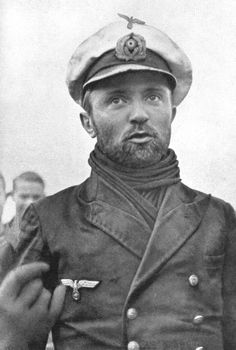
Günther Prien is one of the top U-boat aces, having received news of his promotion to Korvettenkapitän as of 1 March 1941 (though technically he remains a Kapitänleutnant at this time, the promotion becoming effective posthumously). Prien has to date been mentioned in the official military communiques (Wehrmachtbericht) seven times (with another to come). Each mention on the nightly news is one of the highest honors of the Third Reich, equivalent to receiving a top medal.
Prien also became the 5th recipient of the Oak Leaves to the Knight’s Cross of the Iron Cross as Kapitänleutnant and commander of U-47 (on 20 October 1940). Throughout his career (including today), Prien has sunk 30 merchantmen of 162,769 tons, sunk a warship of 29,150 tons (Royal Navy battleship HMS Royal Oak at Scapa Flow in 1939), and damaged eight other merchantmen of 62,751 tons along with a warship of 10,035 tons. Günther Prien is a commander of great daring and an asset to the U-boat command.
Today, Prien sights Convoy OB.293 and vectors in a Wolf Pack (the other U-boats involved are U-70, U-99, and U-A). Prien’s U-47 damages 20,638-ton British whaling factory ship Terje Viken (reputedly the world’s largest before the war, currently serving as a tanker). U-70 (Kptlt. Joachim Matz) also fires three torpedoes at it, but misses. Before U-70 can fire a fourth, U-99 (Otto Kretschmer) then torpedoes and disables the Terje Viken, turning it into a flaming wreck. The whaling ship’s crew abandons ship and survives. The abandoned derelict remains afloat for a while, but finally is sunk by the Royal Navy escorts as a hazard to navigation.
Afterward, U-47 disappears. Since none of the 45 men on board ever is heard from again, it is unknown what happened to U-47. One theory is that U-47 is destroyed or seriously damaged by attacks from convoy escorts HMS Wolverine and Verity, two of four destroyers in the vicinity. In any event, the warships do see what is believed to be the U-boat rise almost to the surface, then explode in an orange fireball. However, recent scholarship has called the identity of this U-boat into question, and it may not have been U-47 at all that the British saw explode. In fact, some wild conspiracy theories posit that Prien survived the patrol, but was arrested for subversion upon his return to port — but that has been completely disproven (among other things, Prien was a solid member of the NSDAP, but there are many other reasons this theory is not widely believed).
Of all the U-boat commanders, it is fair to say that Prien’s memory has been the most long-lasting within the German military. His name has been considered for several major weapons systems, and his life has been celebrated in various media forms such as film and books. His death also is the first of three top U-boat commanders in the next ten days which are extremely damaging to the fleet and show how thin the “bench” of ace commanders is. This lack of depth is an endemic problem within all branches of the German military, as top Luftwaffe aces and tank commanders also are extremely difficult to replace when lost.
The German authorities soon realize that U-47 is missing and presumed lost. However, the Propaganda Ministry decides to keep the news from the public. The British also realize that Prien is missing — they have excellent spies — and turn Prien’s loss and the German decision to keep it hidden into a propaganda coup. The RAF will drop leaflets over Germany asking “Wo ist Prien?” (Where is Prien), stirring wild speculation about his fate throughout the Reich.
12 German motor torpedo boats attacked British ships of convoys FN.426 and FS.429 off East Anglia, England, United Kingdom, United Kingdom, sinking 5 ships, damaging 1 ship, and killing 59.
Battleship Bismarck entered the Kiel Canal.
German battlecruisers Scharnhorst and Gneisenau sighted an Allied convoy near Azores, but did not attack due to the presence of British battleship HMS Malaya. Commanding Operation BERLIN with heavy cruisers Gneisenau and Scharnhorst, Admiral Lütjens has been waiting for several days on the Cape Town-Gibraltar convoy route northwest of Cape Verde. Today at 09:20, his lookouts spot a convoy (SL-67). However, as in an earlier instance, among the escorts is a battleship, HMS Malaya. Lütjens is under strict orders to avoid combat with capital ships. However, in this area of the ocean, Lütjens now has another card to play. He radios U-boat command (BdU) in Lorient to vector in any U-boats nearby. Two U-boats arrive and attack the convoy during the night of 7-8 March (early on the 8th) and sink 28,488 tons of shipping.
Malaya, meanwhile, also spots the two German cruisers and steams toward them. The Malaya closes to within extreme firing range, about 24,000 meters, but Lütjens decides to obey his orders and heads west out into the Atlantic.
German Jews began to be pressed into forced labor.
A farmer in Barcelona, Spain hitchhiked a ride today on a truck carrying a coffin. It was raining, so the farmer crawled in the coffin and closed the lid. Two other men thumbed rides and sat down beside the coffin. The farmer pushed up the lid and asked “Has it stopped raining?” One man was killed and the other injured seriously when they leaped in terror from the moving truck.
The Luftwaffe continues its lone-raider operations over England during the day, dropping scattered bombs hither and thither. The British claim to down two bombers, one by convoy escort HMS Guillemot. RAF Coastal Command attacks Den Helder and shipping off the Dutch coast. RAF Bomber Command is inactive.
The RAF attacks Tripoli, including its airfields and harbor. The Afrika Korps continues digging its defensive line west of El Agheila.
The Luftwaffe bombs Malta during the day and after dark, damaging the dockyard area and some ships. British 11,063 transport Essex is damaged (again), and destroyer HMS Imperial is hit by splinters. Fighters of 7,/JG 26 are achieving dominance over the island, and they strafe the harbor and damage a Sunderland flying boat. Island Governor Lt. General Dobbie cables the Chief of the Air Staff and warns that he needs RAF fighters if the island is to remain useful to the Royal Navy.
U-99, commanded by Korvettenkapitän Otto Kretschmer, torpedoed British whaling vessel Terje Viken (20,638grt) in 60N, 12-50W. At 0505 hours on 7 March 1941, Terje Viken (Master O. Borchgrevink) in convoy OB.293 was hit by two torpedoes southeast of Iceland. This must have been U-47 (Prien), which is reported missing since this attack. At 0550 hours, the ship was missed by a spread of three torpedoes from U-70 (Matz), but at the same time U-99 fired a torpedo that hit on the port side and the crew abandoned ship. Later a part of the crew reboarded the ship and tried to save her, but she capsized at 1855 hours. On 14 March, the wreck was scuttled by gunfire of a British salvage tug. Two crew members were lost. The master, 99 crew members and five gunners were picked up by HMS Hurricane (H 06) (LtCdr H.C. Simms, RN) and landed at Greenock. At the time of her loss, the Terje Viken had been the largest whaling factory ship in the world. One of the largest ships sunk during the war, the 20,638-ton Terje Viken was carrying ballast and was bound for Curaçao, Netherlands Antilles.
U-70, commanded by Kapitänleutnant Joachim Matz, damaged British steamer Delilian (6423grt) and Athelbeach (6568 GRT) in 60-28N, 13-38W. On 7 March 1941, U-70 (Matz) attacked the convoy OB.293 southeast of Iceland, but was lost after a second attack at 0725 hours. The survivors claimed that they had hit three ships in the first attack at 0445 hours and another in the second. In fact they had hit Athelbeach and Delilian in station #71 and #61 during the first attack and Mijdrecht during the second.
At about 0450 hours, the Delilian was hit on the starboard side by one torpedo and her crew abandoned ship. When Mijdrecht approached one of her lifeboats about 90 minutes later, she was herself damaged by a torpedo from the same U-boat. Escorts later brought the crew back to Delilian which turned back and arrived at Kames Bay on 10 March. She was repaired at Glasgow and returned to service in May 1941. The 6,423-ton Delilian was carrying general cargo and was bound for St. John, New Brunswick.
Athelbeach was also damaged and was subsequently sunk a couple of hours later by U-99 (see below).
U-70 damaged Dutch motor tanker Mijdrecht (7493grt) in 60-31N, 13-52W. The tanker arrived in Rothesay Bay with extensive damage. Tanker Mijdrecht was temporarily repaired at Govan. The Mijdrecht (Master J. Swart) was approaching a lifeboat from Delilian when she was hit by one torpedo on the starboard side, about six feet forward of the engine room bulkhead. The master spotted the periscope of U-70 on the starboard bow, rammed the submerged U-boat at a speed of 7 knots and reported its position to the escorts. The 7,493-ton Mijdrecht was carrying general cargo and was bound for Trinidad.
U-70 claimed hitting two more ships in the convoy before being lost herself.
U-70, commanded by Kapitänleutnant Joachim Matz, was forced to the surface after an attack by corvettes HMS Arbutus and HMS Camelia and her commanding officer and twenty four men were picked up. Twenty ratings were lost. The Mijdrecht (Master J. Swart) was approaching a lifeboat from Delilian when she was hit by one torpedo on the starboard side, about six feet forward of the engine room bulkhead. The master spotted the periscope of U-70 on the starboard bow, rammed the submerged U-boat at a speed of 7 knots and reported its position to the escorts. The tanker managed to reach Rothesay Bay on 19 March, was temporary repaired at Govan and later went to Middlesbrough for permanent repairs. The conning tower of U-70 had been badly damaged, but the pressure hull remained intact and Matz decided to head away from the convoy for repairs. At 0815 hours, HMS Camellia (K 31) (LtCdr A.E. Willmot, RNR) sighted the U-boat on the surface, which dived shortly afterwards. Until 1030 hours, this corvette and HMS Arbutus (K 86) (LtCdr H. Lloyd-Williams, RNVR) carried out five attacks with depth charges, followed by another four attacks by HMS Arbutus (K 86) alone. Altogether the corvettes dropped 48 depth charges in the nine attacks. The U-boat was forced to surface after the last attack at 1244 hours and had to be abandoned by the crew. 25 survivors were picked up and taken prisoner by the corvettes. During its career under Kapitänleutnant Matz the U-70 sank 1 ship for a total of 820 tons and damaged 3 ships for a total of 20,484 tons.
U-99 sank British tanker Athelbeach (6568grt) in 60-30N, 13-30W.At 0640 hours on 7 March, U-99 torpedoed the already damaged (by U-70) Athelbeach (Master Malcolm McIntyre) and the crew abandoned ship. At 0715 hours, the U-boat began to shell the tanker and sank her with a coup de grâce 15 minutes later. The master and six crew members were lost. 37 crew members were picked up by HMS Camellia (K 31) (LtCdr A.E. Willmot, RNR) and landed at Greenock. The 6,568-ton Athelbeach was carrying ballast and was bound for New York, New York.
Convoy OB.293 escorts destroyers HMS Wolverine and HMS Verity and corvettes HMS Arbutus and HMS Camellia made further anti-submarine attacks.
U-47, commanded by Korvettenkapitän Günther Prien, was lost at this time, possibly to marine accident. Other possible reasons for the loss of U-47 include mines, by its own torpedoes or by an attack by British corvettes HMS Camellia and HMS Arbutus. All of the ship’s complement of 45 died, including the U-boat ace Prien. During its career the U-47 sank 1 warship, 30 merchant ships for a total of 162,769 tons and damaged 8 ships for a total of 62,751 tons. The U-47 was commanded by Korvettenkapitän Prien, one of Germany’s top U-boat aces and the first U-boat commander to win the Knight’s Cross of the Iron Cross. By far his most famous exploit, however, was the sinking of the British battleship HMS Royal Oak (08) at anchor in the Britain’s Home Fleet’s anchorage in Scapa Flow.
U-A was damaged by destroyer HMS Wolverine.
On 8 March, U-74 attacked a ship, escorted by two destroyers in the area.
U-37, commanded by Kapitänleutnant Asmus Nicolai Clausen, sank Greek steamer Mentor (3050grt) from dispersed convoy OB.292 in 59-30N, 25W. At 1047 hours on 7 March 1941 the unescorted and unarmed Mentor, dispersed from convoy OB.292 the day before, was hit by one torpedo from U-37 and sank by the bow with a still turning propeller about 270 miles southwest of Iceland. Seven crew members were lost. The master and 21 crew members were picked up by a Faroese trawler in 60°40N/12°40W and landed at Thorshavn on 13 March. The 3,050-ton Mentor was carrying ballast and was bound for Takoradi, Ghana.
Heavy cruiser HMS London, escorted by destroyer HMS Matabele, which had set off from Scapa Flow earlier in the day, arrived at Scapa Flow at 1500 after refitting. Destroyer HMS Mashona, which departed Hartlepool at 0035, had also been detailed to escort the cruiser London, but did not make contact. The destroyer arrived at Scapa Flow at 1600.
Light cruiser HMS Dido parted company with convoy SL.65 and arrived in the Clyde. The cruiser sustained structural damage from heavy weather during this duty. Cruiser Dido was repaired in the Clyde and departed on the 22nd for Scapa Flow.
Destroyer HMS Nizam departed Scapa Flow at 1600 for Greenock on completion of working up exercises. The destroyer arrived at Greenock at 1000/8th.
Motor torpedo boat MTB.28 was lost by fire at Portsmouth.
Submarine HMS Porpoise made an unsuccessful torpedo attack against a German submarine in 57-50N, 19-50W.
The German 1st MTB Flotilla of S.26, S.27, S.28, S.29, S.39, S.101, and S.102 and 3rd MTB Flotilla of S.31, S.57, S.59, S.60, and S.61 made a sortie against convoys FN.426 and FS.429 off Yarmouth and Cromer during the night of 7/8 March.
British steamer Dotterel (1385grt) was badly damaged by S.29 off Number 6 Buoy, Southwold. The steamer went ashore in 52-41N, 1-59E. There was no possibility of salvage. Eight crewmen were lost on the steamer. Lt C. W. C. Checucci and two ratings of patrol sloop HMS Sheldrake were lost trying to board the steamer. Nineteen survivors were rescued.
Sloop HMS Sheldrake was near missed by a torpedo.
British steamer Kenton (1047grt) was sunk by S.31 in 52-57N, 1-30W. Four crewmen were lost on the steamer.
British steamer Corduff (2345grt) was sunk by S.28 off Number 8 Buoy near Cromer. Fourteen crewmen were rescued, two taken as prisoner, and seven lost.
British steamer Boulderpool (4805grt) was sunk by S.61 in 52-58N, 1-28E, ten miles south of Sheringham Buoy. The crew was rescued.
British steamer Rye (1048grt) was sunk by an S.27 off Cromer. The entire crew of twenty two and two gunners were lost.
After midnight, two more ships were sunk.
British steamer Togston (1547grt) was sunk by S.102, two miles 305° from Smith’s Knoll. Eight crew members were missing from the steamer.
British steamer Norman Queen (957grt) was sunk byS 102 off S. Haisborough Buoy, east of Cromer. Twelve crewmen and two gunners were lost on the steamer. One crewman was taken as a prisoner of war.
British steamer Flashlight (934grt) was sunk by German bombing in 53-34N, 00-49E. The entire crew was rescued.
Destroyers HMS Fearless, HMS Foresight, HMS Fortune, and HMS Foxhound departed Gibraltar at 2300 to rendezvous with Battlecruiser HMS Repulse, aircraft carrier HMS Furious, and troopship Strathmore and escort them into Gibraltar.
Light cruisers HMS Orion and HMS Ajax and Australian light cruiser HMAS Perth, comprising convoy AG.3, departed Alexandria with 1900 troops for Piraeus arriving at 1000/8th. The cruisers were ordered to remain in the Aegean to cover convoys.
Greek personnel ships Corinthia (3701grt), Ionia (1936grt), Hellas (2295grt), and Marie Maersk (8271grt) departed Piraeus on the 7th as convoy GA.1 1/2, escorted by Greek destroyers RHS Spetsai and RHS Hydra. The convoy arrived at Alexandria on the 10th.
German bombing attacks on the Malta shipyard caused additional damage during the night of 7/8 March. British steamer Essex (11,063grt) was struck by three bombs and further damaged. Destroyer HMS Imperial was slightly damaged by splinters from the German bombing.
Convoy OG.55 departed Liverpool escorted by destroyers HMS Achates, HMS Boreas, and HMS Ramsay, sloops HMS Egret and HMS Weston, corvettes HMS Azalea, HMS Fleur De Lys, HMS Heather, HMS Picotee, and HMS Snowdrop, and anti-submarine trawlers HMS Arab, HMS Ayrshire, HMS Kingston Chrysolite, and HMS Lady Madeleine. Trawler Kingston Chrysolite joined the convoy on the 7th. Destroyers Achates and Boreas, corvettes Heather and Snowdrop, and the trawlers were detached on the 12th. On 14 March, submarine HMS Pandora and corvette HMS Coreopsis joined the convoy. The convoy arrived at Gibraltar on the 21st with destroyer Ramsay, sloop Egret, submarine Pandora, corvettes Azalea, Coreopsis, and Fleur De Lys, and trawler Kingston Chrysolite.
Convoy OB.293 was sighted by U-47. German submarines U-47, U-99, U-70, and U-A attacked the convoy.
Convoy FS.429 was escorted by destroyer HMS Pytchley and patrol sloop HMS Puffin. Convoy FN.426 was escorted by destroyers HMS Versatile, HMS Berkeley, and patrol sloop HMS Sheldrake. Destroyers HMS Worcester (D.16, Captain Halsey aboard) and HMS Whitshed were dispatched to cover both convoys. Before midnight, five steamers were sunk.
Convoy AN.18 of two British, two Greek, and one other ship departed Alexandria and Port Said escorted by destroyer HMS Havock and corvette HMS Hyacinth. The convoy was later joined by anti-aircraft cruiser HMS Calcutta and destroyer HMS Ilex. Destroyer HMS Greyhound operated in the area of the convoy. The convoy arrived at Piraeus on the 11th.
In Washington, President Roosevelt said at a press conference today that he was opposed to jurisdictional labor strikes which hamper the defense program and that some form of an overall Federal mediation mechanism might be created to handle the problem. He criticized Congressional delay in passing the Lend-Lease bill. He conferred with Secretary Wickard and with W. Averell Harriman.
The Senate accepted the revised Ellender Amendment to the Lend-Lease bill, continued consideration of amendments at a night session, and recessed and recessed at 9:55 PM until 11 AM tomorrow.
The House passed the $188,000,000 First Deficiency Bill, heard debate on the report plans to mobilize women in national defense and adjourned at 4:37 PM until noon Monday. The Naval Affairs Committee heard naval officers on the bill for the construction of fleet auxiliaries.
Opposition to the Lend-Lease bill collapsed tonight, and with administration leaders in secure command of the situation, the senate rapidly pushed the measure to a point where final passage confidently was expected by tomorrow night. This confidence on the part of leaders was based upon an expectation that no filibustering tactics would develop. A possibility remained, of course, that they might, but in a long day and evening which saw amendment after amendment summarily rejected, the opponents of the measure showed no inclination to indulge in any strategy of delay. Just before adjournment, Senator Barkley, Kentucky Democrat, the Democratic leader announced that upon convening tomorrow, he would ask for an agreement limiting the length of the day’s speeches, in an effort to bring the measure to a final vote before evening.
President Roosevelt disclosed yesterday that he was considering establishment of a special board not only to mediate strikes but to consider production problems as well. The president told his press conference that while he could only generalize about the board at this time, it would not be like the Taft-Walsh board of the World war, which handled labor problems through worker-employer cooperation effort. It might have, he said, a broader field.
A congressional committee heard testimony from a member of the navy’s high command today that some proposed new naval auxiliary vessels, such as cargo ships and tankers, might be transferred to Britain under the lend-lease program. Rear Admiral Royal E. Ingersoll, assistant chief of naval operations, conceded the possibility in reply to questions during testimony before the house naval committee on legislation to authorize the construction or acquisition of 200,000 additional tons of auxiliaries. The admiral quickly and emphatically asserted, however, that there had been no definite allocation of any of the proposed ships. He was followed by Rear Admiral Samuel M. Robinson, chief of the bureau of ships, who declared the requested authorization had “nothing whatever to do” with the lend-lease bill and had been prepared long before that program was submitted to congress. Chairman Carl Vinson, Georgia Democrat, precipitated the lively discussion of the possible transfer when he said to Ingersoll: “Let’s put the cards on the table, admiral. Is this 200,000 tons needed for the maintenance of our fleet, or is part of it for the lend-lease program?” After reiterating there had been no definite allocation of the vessels, Ingersoll replied: “We might use part of it that way.”
If Hitler should win the war the situation of the Jews in Europe will become increasingly serious and Jews in other parts of the world will be under additional pressure, Wendell L. Willkie said in an interview given to Joel Slonim of The Day, Jewish daily, in today’s issue of that paper.
Moving again in its policy to preserve first call on vital materials for defense industries, the Office of Production Management today imposed formal industry-wide priorities on nickel and neoprene, a form of synthetic rubber.
Nearly 5,000 employees of the Midvale Steel Company voted by about two to one in favor of a proposal to put all three working shifts on a seven-day, fifty-six hour week, with time and a half pay for overtime, “in the interests of the national defense emergency,” it was announced early today.
Strikes were called yesterday at the plants of the Moline Iron Works, Moline, Illinois, and the Federal Motor Truck Company, Detroit, increasing to twenty-three the number of defense plants thus affected. Construction work at four Army projects also was disrupted by strikes.
The United States Steel Corporation was notified today by the Steel Workers Organizing Committee of the rejection of the corporation’s offer to increase the wages of 261,000 employees, by 2.5 cents an hour provided that steel operations remained above 85 percent of capacity. The union is demanding a pay hike of ten cents an hour.
Ten ways to strengthen the Hatch act and other corrupt practices law were suggested by the Committee on Campaign Expenditures in its report to the Senate today. The report recommended that these suggestions be studied by the Committee on Privileges and Election, with a view of submitting amendments to the existing laws.
James Stewart, at the height of his film career as the result of his being chosen the best actor of 1940, tonight won his fight to make himself eligible for military service by adding 10 pounds to his lanky body. The tall film star had been classified last November as being unfit for immediate military duty because of a weight deficiency. Stewart protested the ruling and began fattening himself up for another physical examination, Today draft board No. 245 in West Los Angeles announced that Stewart had been reclassified as being available for duty and would be called into the army within the next few weeks.
U.S. Navy aircraft carrier USS Wasp (CV-7) encounters foundering U.S. lumber schooner George E. Klinck in storm off Cape Hatteras, North Carolina, and rescues her crew.
3rd largest snowfall then in NYC history (18.1″).
It is spring training in the US baseball leagues. A recent issue in the sport has been the protection of batters’ heads from pitches. Two Brooklyn Dodgers, Pee Wee Reese, and Joe Medwick try out batting helmets during a special exhibition game in Havana, Cuba against the Cleveland Indians. They have no issues using the helmets, which later become standard equipment.
At Havana, the Dodgers roll over the Cleveland Indians, 15–0. Pee Wee Reese and Joe Medwick use a batting helmet designed by two Johns Hopkins doctors with the help of Larry MacPhail. The two Dodgers, victims of HBPs last year, pronounce the helmets satisfactory. Brooklyn pitcher Van Lingle Mungo celebrates the win a little too hard and when tomorrow’s game is rained out, he continues to party. The result is that manager Durocher sends him a note informing Mungo he’s been reassigned to the Dodgers’ minor league camp in Macon. Mungo will pitch just 2 innings for Brooklyn this year.
Light cruiser HMS Emerald arrived at Colombo, Ceylon (today Sri Lanka).
The Japanese Western Hupei Operation continues making progress. The 13th Infantry Division of the 11th Army has a bridgehead on the southern/western bank of the Yangtze River. It breaks out and takes Wuchiapa, Hsiawulungkou, and Chienchiatai. The objective is to clear the river valley and push the defending Chinese (Kuomintang) forces back toward Chunking.
Generalissimo Chiang Kai-shek, addressing yesterday’s session of the People’s Political Council, charged that the Chinese Communist party many times during the past two years had violated a pledge it made to the government in 1937 promising support of the “Three Peoples Principles” of the National Government. A transcript of the session yesterday, released today, showed the Generalissimo went into considerable detail in explaining relations between the dominant Kuomintang [Nationalist party] and the Communists who nominally entered a united front of all political groups when the war with Japan started. Conditions finally reached a point, the Generalissimo said, where he was forced to take action against the Communist Fourth Army due to the fact it had violated military orders and the rules for discipline. Despite his differences with the Communists, however, the Generalissimo said he was willing to accept a resolution approved by the Council for discussion of a settlement. of Kuomintang-Communist differences.
Believing that the “settlement” of the Indo-Chinese-Thai dispute marks an end to the recent “Pacific crisis,” political and financial circles today regained some of their lost buoyancy. Shipping and textile shares rose moderately and the Tokyo Stock Exchange shares, which are the market’s favorite gambling counter and the most reliable barometer of its sentiment, gained 3 points.
The transport USS William P. Biddle (AP-15), escorted by the light cruiser USS Concord (CL-10), arrived at Pago Pago, Samoa, and disembarked the Seventh Defense Battalion. This was the first unit of the Fleet Marine Force deployed to the Southern Hemisphere in World War 2.
Dow Jones Industrial Average: 121.59 (-0.04)
Born:
Charlie Bryant, NFL running back (St. Louis Cardinals, Atlanta Falcons), in Lake View, South Carolina (d. 2001).
Died:
Günther Prien, 33, German U-boat ace (went missing aboard U-47).
Julian Eltinge [Dalton], 59, American vaudeville, Broadway, and silent film female impersonator star (“The Crinoline Girl”), of a suspected cerebral hemorrhage.
Naval Construction:
The U.S. Navy YMS-1-class auxiliary motor minesweeper USS YMS-2 is laid down by Henry B. Nevins Inc. (City Island, New York, U.S.A.).
The U.S. Navy PC-461-class (173-foot steel hull) submarine chaser USS PC-488 (later IX-221, USS Eureka) is laid down by the Sullivan Dry Dock and Repair Co. (Brooklyn, New York, U.S.A.).
The U.S. Navy SC-497-class (110-foot wooden hull) submarine chaser USS PC-497 (later SC-497) is laid down by the Westergard Boat Works, Inc. (Rockport, Texas, U.S.A.).
The U.S. Navy 77-foot (PT-20-class) Elco patrol motor torpedo boat USS PT-30 is laid down by the Electric Boat Co., Elco Works (Bayonne, New Jersey, U.S.A.).
The Kriegsmarine (German Navy) Type VIIC U-boat U-412 is laid down by Danziger Werft AG, Danzig (werk 113).
The Royal Navy “S”-class (Third Group) submarine HMS Splendid (P 228) is laid down by the Chatham Dockyard (Chatham, U.K.).
The Royal Navy minelayer HMS Abdiel (M 39), name ship of her class of 6, is commissioned. Her first commanding officer is Captain the Hon. Edward Pleydell-Bouverie, RN.
The Royal Navy Flower-class corvette HMS Wallflower (K 44) is commissioned. Her first commanding officer is Lieutenant Commander Ismay James Tyson, RD, RNR.
 History Diaries