Churchill issued his Battle of the Atlantic directive. Catapult armed merchantmen (CAM) were to be fitted out, merchant ships to be given AA weapons as a first priority, and more Coastal Command squadrons formed and fitted with radar. Port and dockyard congestion was to be dealt with and the defense of ports greatly improved. These and numerous other matters were to be dealt with as a matter of the very highest priority. Overall direction was to be exercised by a Battle of the Atlantic Committee chaired by the Prime Minister himself. Looking remarkably like a Fuhrer Directive, Churchill’s directive wants to “defeat the attempt to strangle our food supplies and our connection with the United States” by:
— Hunting down U-boats, both at sea and in their pens/shipyards;
— Giving “Extreme Priority” to catapult ships able to launch fighters;
— Concentrating Coastal Command’s forces upon the vulnerable Northwestern Approaches;
— Formation of a “Battle of the Atlantic Committee chaired by Churchill himself.
Today technically is viewed as beginning “the Battle of the Atlantic.” However, this is just an arbitrary date based on Churchill’s adoption of the phrase; the true battle at sea has been in progress since the first day of the conflict, and nothing changes at this time other than Churchill issuing this directive giving the battle the very highest priority.
Churchill telegrams to Eden agreeing that the situation in Greece had worsened — so much so that he War Cabinet found it difficult to believe that Greece could be saved unless Turkey or Yugoslavia came in on the allied side, which now seemed most unlikely. German planes lay mines in the Suez Canal, blocking the British supply route to Greece and North Africa. Eden replies later in the day: “…we are unanimously agreed that … the right decision was taken in Athens…”
The Greeks are looking over their shoulders toward the Bulgarian front. Commander-in-chief Papagos prepares contingency plans for the event of a German invasion from that direction.
The seesaw battles in the center of the Albanian front continue on 6 March 1941. The Greeks and Italians have been fighting over the heights near the Klisura Pass for two months, with neither side able to make lasting gains. Today, the Greeks recapture some of the high ground, aided by the RAF and Greek Air Force. The Greeks claim to capture a thousand Italian prisoners.
The Italians are preparing their own offensive in the area within a few days. Mussolini is in Albania to oversee the preparations and watch the start. This offensive is extremely important to Mussolini because he wants to prove that his troops can succeed against the Greeks before the Wehrmacht invasion scheduled for April.
There are some minor encounters between the Afrika Korps and the British forces west of Agheila. The British have noticed that the enemy is using armored vehicles, but finds nothing significant about that, as the Italian tanks have been relatively ineffective. An Italian convoy of four freighters makes it to Tripoli carrying German troops and supplies without the British noticing.
Two British LUSTRE convoys departed from Alexandria, Egypt for Greece; the first convoy, consisted of British cruisers HMS York, HMS Bonaventure, and HMS Gloucester departed with troops to reinforce Greece; the second, consisted of freighters Clan Macauley and Cingalese escorted by destroyers, departed with tanks and equipment. At 0715 hours, an empty convoy returning from Greece to Egypt was attacked by Italian submarine Anfitrite east of Crete; Anfitrite was counterattacked and forced to the surface and was scuttled by her own crew.
A British casualty list, scarcely more than one percent of the losses suffered by the Italians in the African campaign between November 30 and February 11, was announced to the House of Commons today by Captain H. D. R. Margesson, the war secretary. British imperial land forces in that period lost only 433 killed, 87 missing and 1,249 wounded, he said, as against “the capture or destruction of the whole Italian army in east Libya, estimated to exceed 150,000 men.”
Turkey, astraddle the Balkan fence, tonight adopted a wait-and-see attitude with the extent of British backing for Greece as a prominent factor in her policy-making. Now that Germany is her next-door neighbor in occupied Bulgaria, Turkey is strengthening her defense preparations, but most observers agree that the prospects of her being thrown into war immediately are remote.
Ethiopia’s Patriots led by Haile Selassie captured Bure. The first Ethiopian guerrillas to enter Bure (Burye) wore a hybrid mixture of captured Italian uniforms and tribal robes. There was no resistance. Bombed by the RAF and besieged by the Sudanese and Ethiopians, the 6,000-man garrison slipped out in the night; Ethiopia’s “Patriots” have won their first victory. The Italians had resisted for a week, but an attack on their communications by the guerrilla leader Haile Yusuf forced them to withdraw. However, they did destroy one Ethiopian battalion blocking the retreat.
The American United Press Agency reported: “The East African war has turned into a race to Addis Ababa between the army of Abyssinian volunteers and the mechanized South African troops who stand in such remarkable contrast to each other. The South African troops are advancing from Mogadishu toward Harar, which lies about 30 miles from the Djibouti-Addis Ababa railway line.”
German spokesmen warned today that it may be “extremely dangerous for Greece” if the Athens government accepts proposals reportedly made by British Foreign Secretary Anthony Eden. The spokesmen said they were unaware of the exact nature of Eden’s proposals, but last night Eden said in Athens that Britain and Greece will fight on side-by-side “until final victory is won.” The warning, following a statement here three days ago that German-Greek relations were “not good,” made no mention of possible Nazi military action against the Greeks but it was said that Adolf Hitler’s “Balkan security army” is ready for all eventualities.
Yugoslavian Regent Prince Paul convened a meeting of the Crown Council to discuss the proposals made by German Chancellor Adolf Hitler at Berchtesgaden on March 4, 1941.
New German laws decreed that Polish farm workers were not to complain, were denied from any cultural events, and were forbidden to have sexual intercourse. A large number of Polish workers is being used within Greater Germany for farming. Their relationships with German women are becoming scandalous, at least in the minds of the Reich’s leaders. New laws decreed today forbid these workers from any relationships whatsoever, and also forbid these “guest workers” from complaining or participating in civic life.
German battleship Bismarck receives orders to depart from Hamburg and move to Kiel. The Luftwaffe escorts the Bismarck with Bf 109 fighters and two armed merchant cruisers. An icebreaker accompanies the Bismarck. The battleship is approaching operational status, though it still must stock up with supplies and ammunition before it can embark on a raiding voyage.
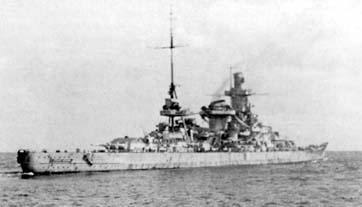
German heavy cruisers Gneisenau and Scharnhorst sit astride the shipping lanes heading south from Great Britain to Freeport. Today, they rendezvous with U-124 (Kptlt. Georg-Whilhelm Schulz), which recently refueled from a German tanker in the Canary Islands. Scharnhorst and Gneisenau are steaming at half speed up and down the convoy lanes, waiting for targets to appear.
Dutch Communist resistance fighter Leen Schijveschuurder was executed for strike activities. The fallout from the February 1941 General Strike continues. The Germans are in complete control and are taking reprisals.
Back home after almost half a year of mysterious isolation in north Africa, General Maxime Weygand spent two hours and a half today in consultation with Chief of State Philippe Petain. Some competent observers deduced that the visit of Weygand, commander of an unbeaten and untested French colonial army, foreshadowed establishment of a firmer central authority, emanating from Vichy, over the African empire. This, they said, meant recognition by Weygand that Petain s growing popularity is sufficient to unite and cement this empire, threatened at the fall of France with disintegration.
The workers at John Brown’s shipyards in Glasgow go out on strike.
For the first time, women become signalmen on Britain’s mainline railways. They have had two weeks of training and begin their duties on the South Yorkshire joint line.
Churchill memos personal secretary Alexander Cadogan that King Carol II of Rumania, who abdicated and fled the country under fire from the Iron Guard, should be “offered accommodation.”
At the war cabinet meeting, visiting Australian Prime Minister Robert Menzies has sharp words. He complains about London making important decisions for the Dominions (such as committing Australian and New Zealand troops to Greece) without first properly consulting their governments. Churchill has been mounting a charm offensive with Menzies, but the Australian PM is not being swayed from his skepticism about such risky decisions.
An attempt to recover a mine for study in the Falmouth Inner Harbour goes disastrously wrong. The mine explodes, sinking 196-ton British barge Queen Wasp and accompanying echo sounding boat Mouse, and killing five men from shore establishment ship HMS Vernon (which was used to capture mines for study throughout the war). There are six deaths and four injuries.
Churchill has lunch with a small group of friends in the basement of No. 10 Downing Street. The editor of the Sunday Dispatch, Charles Eade, attends and writes a detailed account for his personal use. Churchill dwells on Operation CLAYMORE, the successful commando raid on the Norwegian Lofoten Islands, noting that the whale oil factories were important to the German diet. Churchill also mentions a 4,000-pound bomb the Luftwaffe recently dropped on Herndon, killing 80 people and injuring 300 others. Among the other topics covered at the luncheon, downed Luftwaffe airmen being treated well by Englishwomen who come across them (a tendency later turned around in “Mrs. Miniver” (1942)) is downplayed by Mrs. Churchill, who says that “before this war is over, we should be hating our enemies all right.”
The Luftwaffe continues its pattern of sending lone raiders over the Channel during the daytime. There are scattered bombings in London, Kent, and East Anglia. There is a small attack northeast of London after dark.
Captain Margesson, the Minister of War, reports to the Commons that German air losses from all causes and in all theatres (except the Mediterranean), since the war began, amounted to 5,346 planes and that the total British losses were 854.
It is decided to abandon production of the Supermarine Spitfire Mk. III in favor of the Mk. V which can be produced more quickly. Another factor is that the Merlin XX of the Mk. III is urgently required for the Hurricane Mk. II while the Merlin 45 of the Mk. V is readily available.
RAF Bomber Command: Day of 6 March 1941
5 Blenheims to oil depots in Belgium and Holland; 1 aircraft bombed Sluiskil. No losses.
The Royal Yugoslav Air Force (Serbo-Croatian: Vazduhoplovstvo Vojske Kraljevine Jugoslavije, VVKJ) is secretly mobilized. It remains completely unclear who it would be used against — the Germans or the British.
On Malta, the RAF is still recovering from yesterday’s massive Luftwaffe attacks that devastated Hal Far airfield. The Royal Engineers Bomb Disposal Squad clears nineteen unexploded bombs from the base.
The Luftwaffe once again mines the Suez Canal. These are acoustic mines, which the British have not yet learned how to counter, and they are particularly effective in the narrow waters of the canal. This effectively closes the canal for three weeks, though some high priority ships are allowed through. Among other things, this delays the transit of aircraft carrier HMS Formidable to the Red Sea, where it could be extremely useful in protecting convoys in the eastern Mediterranean.
Corvette HMS Hepatica completed fitting out Greenock and left for workups.
Destroyer HMS Active arrived at Scapa Flow at 1630 from Greenock to join the Home Fleet.
Minesweeping trawler HMS Keryado (252grt, Chief Skipper H. C. Gue RNR) was sunk on a mine eight miles south of Newhaven. Nine ratings were lost on the trawler.
British barge Queen Wasp (196grt) and echo sounding boat HMS Mouse were lost in Falmouth Inner Harbour while attempting to recover a mine. P/T/Sub Lt R. B. Sutherland RNVR, and five ratings from HMS Vernon were killed in the explosion. Four men were wounded.
Tug Sun VII (202grt) was sunk on a mine 1-2 miles 60° from North Knob Buoy, Barrow Deep. Five crew members were lost.
Norwegian tanker Mexico (3017grt) was sunk on a mine in 51-53N, 1-37E. Ten crewmen were lost and twenty three were rescued.
British steamer Eilian Hill (781grt) was damaged on a mine off Nell’s Point, Barry Island.
German minelayers Brummer, Cobra, and Konigin Luise, escorted by the 5th Minesweeper Flotilla, laid mines forty five miles east of the Outer Skerries in minefield WOLLEN during the night of 6/7 March.
Battlecruiser HMS Renown with destroyers HMS Fortune, HMS Duncan, and HMS Velox departed Gibraltar to conduct exercises. They were joined at sea by destroyers HMS Fearless, HMS Foresight, and HMS Foxhound. The ships arrived back at Gibraltar on the 7th.
Italian submarine Anfitrite was sunk at 0715 by destroyer HMS Greyhound in Kaso Strait, in 34-55N, 23-45E. The Commanding Officer and thirty eight prisoners were rescued. Destroyer Greyhound was escorting convoy AS.16 with destroyer HMS Havock at this time.
Battleships HMS Barham and HMS Valiant and destroyers HMS Jervis, HMS Janus, HMS Jaguar, HMS Hotspur, HMAS Voyager, and HMAS Waterhen departed Alexandria at 0700/6th to carry out gunnery exercises. The force, designated Force A, then proceed to the west of Crete to operate from Suda Bay in support of the LUSTRE operations. Troops were embarked on heavy cruiser HMS York and light cruisers HMS Bonaventure and HMS Gloucester which sailed at noon as convoy AG.1.
British steamers Clan Macauley (10,492grt) and Cingalese Prince (8474grt), loaded with tanks, departed Alexandria as convoy AG.2, escorted by destroyers HMS Nubian, HMS Mohawk, and HMS Wryneck, for Piraeus.
Light cruiser HMS Ajax and Australian light cruiser HMAS Perth arrived at Alexandria from the Aegean.
Corvette HMS Salvia departed Tobruk to return with defects to Alexandria.
Convoy AG.1 arrived at Piraeus on the 7th and the troops and cargo were disembarked. Convoy AG.2 arrived at Piraeus on the 8th and the cargo was safely disembarked. The cruisers of AG.1 departed Piraeus the same day and returned as convoy GA.1, arriving at Alexandria on the 8th. Convoy AG.2 arrived at Piraeus on the 8th.
Convoys AN.17 and AS.16 were attacked by Italian bombing south of the Kaso Straits. No damage was done, but the destroyers used from thirty to fifty per cent of their ammunition repelling the attacks.
Today in Washington, President Roosevelt received the new Polish Ambassador, Jan Ciechanowski, who presented his credentials. Restricting his calling list again because of a cold, he also received Secretary Morgenthau, Norman Davis, president of the American Red Cross, and Representative Joseph A. Gavagan of New York.
The Senate considered amendments to the Lend-Lease bill and recessed at 5:59 PM until 11 AM tomorrow. The Appropriations Committee approved the $1,533,576,102 fourth supplemental Deficiency Appropriation Bill.
The House passed the $890,824,037 Agriculture Appropriation Bill, approved the Nichols resolution for a committee to investigate airline disasters, tabled the Satterfield resolution asking the State Department for information on the destroyer-bases deal with Great Britain and adjourned at 5:25 PM until noon tomorrow. The Rules Committee approved the Cox resolution to create a committee to investigate the defense program, the Public Buildings and Grounds Committee heard Mayor La Guardia and others on the need for government aid for community facilities in defense industry areas, and the Naval Affairs Committee reported the bill increasing Navy personnel.
Administration spokesmen offered a new concession to senate opponents of the British aid bill today after a “compromise” amendment on the question of sending troops outside the western hemisphere had failed to attract the support they expected of it. Chairman George of the foreign relations committee, in the middle of vigorous appeal for quick passage of the bill, offered to eliminate an authorization to the president to “transfer” war supplies to Great Britain. Some had feared this language might be construed as power to deliver the articles in question or to convoy merchant ships transporting them across the ocean. George made clear that he had in mind only a prohibition against physical delivery of war supplies in England, and not a restriction on the bill’s grant of power to the president to make defense articles available to the British on whatever terms he deemed proper.
Radio speeches tonight found Senators Hatch of New Mexico and Wallgren of Washington, both Democrats, supporting the Lend-Lease bill.
A new national survey by the American Institute of Public Opinion has shown that men of draft age favor the Lend-Lease bill by a large majority (55%–24% among those with firm opinions), Dr. George Gallup, the institute’s director, reports.
The United States ordered the Italian consulates in Detroit and Newark closed in retaliation for the closings of February 15. The government asks the Italian government to close their consulates in Newark, New Jersey, and Detroit, Michigan, and to provide information about the movements of Italian military, and naval personnel. The United States restricted movements of Italian consular officials and ordered two consulates closed today in what was believed an unprecedented move against a so-called “friendly” power. The Italian diplomatic staff in Washington was excluded from the “request,” but the embassy was asked to keep the state department informed of the movements of its military and naval attaches outside the capital. Although it was not so designated officially, the action plainly was in retaliation for similar restrictions imposed on American diplomatic officials in Italy and the closing of American consulates at Naples and Palermo. The Italian consulates at Detroit and Newark, N. J., the only foreign consulates in those cities, are to be closed and the personnel withdrawn. The personnel may, however, be transferred to other posts in this country.
The War Department will request legislation at this session of Congress to extend by six to twelve months the year’s training authorized for the National Guard providing the international situation remains the same or grows worse. This was revealed today by an authorized Army spokesman who explained that the National Guard, which was ordered into federal service in increments beginning September 15, 1940, would not complete its training, particularly in mass maneuvers of combat units, within the authorized year of service. General George C. Marshall, Chief of Staff, was represented as feeling that another year of training was advisable and that a minimum of six months was essential. This disclosure came with a War Department announcement showing that 28 percent of Army cantonment and other construction was behind schedule and that only 8 percent of the projects had been completed. This has been a major factor in delaying induction of trainees under the selective service program.
After four days or debate the House passed and sent to the Senate today the 1942 fiscal appropriation for the Agriculture Department, carrying in all $1,420,977,559.
Edward Teller, a native of Hungary, becomes a naturalized US citizen, following in the footsteps of Albert Einstein and other émigré scientists.
U.S. sculptor Gutzon Borglum dies following complications after surgery; he carved the heads of Presidents Washington, Jefferson, Lincoln and Theodore Roosevelt on Mount Rushmore, South Dakota. His son, Lincoln, finished the project later that year, just prior to the start of World War II.
Secretary Ickes approved today the transfer to Great Britain of about 500,000 cubic feet of American helium gas originally sold to France in May, 1940, for research and medical purposes.
The U.S. Navy officially acquires USS Long Island (AVG-1), the country’s first escort carrier. Its first skipper is Commander Donald B. Duncan.
Fierce fighting has broken out on the western bank of the Yangtze river in western Hupeh, as Japanese troops today launched a new offensive aimed at driving the Chinese back into the mountains, west towards the Kuomintang capital of Chungking. The offensive — the first in the region since November — began at 0530 hours as Japanese artillery shelled Chinese positions to provide cover for three regiments which advanced and took the Chinese stronghold at Chang-kang-ling. At the same time, on another flank, between 600 and 700 Japanese infantry, with aerial and artillery support, took Fan-chia-hu.
Japanese declared today that their landings at six Chinese coastal points on the Gulf of Tongking had nullified United States aid to the Chinese Government and, as an army spokesman at Canton put it, “the doom of Chiang Kai-shek’s regime is sealed.”
An unimpeachable informant said tonight that Generalissimo Chiang Kai-shek had approved a plan of the People’s Political Council to undertake arbitration of the disputes between the Communists and Conservative elements in the Chinese Government. The council, in a resolution this afternoon, said that failure of the Communist members to attend the current meetings, and their refusal to withdraw a series of demands upon the government, had “set a bad precedent.”
Extension of the truce between Thailand and French Indo-China, which expired at noon, will be unnecessary, the spokesman of the Japanese cabinet information bureau reported today, because “all possible differences have been eliminated” by a Japanese-negotiated settlement which is now virtually complete. Even though “minor details” of an undisclosed nature remain to be worked out, there is “no possibility of a hitch occurring,” said the spokesman, Koh Ishii. He said the details were not sufficiently important to wreck the conference and expressed belief that a tacit truce In the border fighting would remain in force without further formalities. Nature of the settlement was not disclosed.
The U.S. government also creates an administrative action to place a hold on certain licenses issues to Japan for 5 million barrels of high grade petroleum (gasoline) and rich crude oils.
Tatsuta Maru departed Yokohama, Japan with new skipper Captain Toichi Takahata. The 16,975-ton liner is being used to scout out obscure routes for an attack on the Hawaiian Islands and engage in deception operations against the U.S. Navy.
Rumors that Foreign Minister Yosuke Matsuoka will shortly visit Berlin, with a stopover in Moscow en route either going or coming or both, though still officially unconfirmed, have acquired greater solidity from the apparently imminent conclusion of Japan’s mediation between French Indo-China and Thailand and the departure of the German Ambassador, Major General Eugen Ott, for Berlin.
Dow Jones Industrial Average: 121.63 (+1.33)
Born:
Karyn Kupcinet [Roberta Lynn Kupcinet], American model, and stage and screen actress (“The Ladies Man”; “The Gertrude Berg Show”), in Chicago, Illinois (d. 1963).
Died:
Gutzon Borglum, 73, Danish-American artist and sculptor best known for creating the Mount Rushmore memorial.
Naval Construction:
The civilian freighter Mormacmail, type C3-S-A1, is acquired by the U.S. Navy for conversion into an escort aircraft carrier. She will be commissioned in June as the USS Long Island (AVG-1, later ACV-1 and finally CVE-1).
The Royal New Zealand Navy Isles-class minesweeping trawler HMNZS Scarba (T 175) is laid down by Cook, Welton & Gemmill (Beverley, U.K.); completed by Holmes.
The Royal Navy Flower-class corvette HMS Poppy (K 213) is laid down by Alexander Hall & Co. Ltd. (Aberdeen, Scotland).
The Royal Australian Navy Bathurst-class minesweeper-corvette HMAS Ipswich (J 186) is laid down by Evans Deakin Ltd. (Brisbane, Queensland, Australia).
The U.S. Navy Aloe-class net tenders USS Hackberry (YN-20, later AN 25) and USS Sandalwood (YN-27, later AN-32) are launched by American Shipbuilding Co. (Cleveland, Ohio, U.S.A.).
The Kriegsmarine (German Navy) Type VIIC U-boats U-567 and U-568 are launched by Blohm & Voss, Hamburg (werk 543 and 544).
The Royal Navy Hunt-class (Type II) escort destroyer HMS Puckeridge (L 108) is launched by J.S. White & Co. (Cowes, U.K.).
The Royal Navy Fairmile B-class motor launch HMS ML 150 is commissioned.
The Royal Navy harbor defence motor launch HMS HDML 1018 is commissioned.
The Kriegsmarine (German Navy) Type VIIC U-boat U-560 is commissioned. Her first commanding officer is Oberleutnant zur See Hans-Jürgen Zetzsche.
 History Diaries