The United States today dismissed a proposal by Mikhail S. Gorbachev, the Soviet leader, for an interim agreement barring the spread of chemical weapons. The proposal, put forward January 15, had been characterized by the Soviet Union as a preliminary step toward a formal treaty banning production, storage and use of chemical weapons. Donald Lowitz, chief of the United States delegation, told the 40-nation Conference on Disarmament meeting here that achieving such a comprehensive treaty eliminating chemical weapons remained Washington’s “first priority.” “However,” he said, “the United States is opposed to a formal treaty -as some have suggested — such as one that would mirror the nuclear nonproliferation treaty for nuclear weapons.”
Anatoly B. Shcharansky, the Soviet human rights activist and campaigner for the right of Jews to emigrate, was freed here today after eight years in prisons and labor camps. Wearing a fur hat, an oversize black overcoat and baggy trousers, Mr. Shcharansky, 38 years old, walked across a snow-covered stretch of bridge and threaded his way past two parked United States vans to freedom. Within hours, he had been reunited with the wife, whom he had not seen since 1974, and flown to a hero’s welcome in Israel. His release was the high point of an elaborately synchronized East-West prisoner exchange that appeared to be one of the most concrete, and dramatic, results of the meeting in November between President Reagan and Mikhail S. Gorbachev, the Soviet leader. The exchange had been secretly negotiated in the last few months by officials in Washington, Bonn and East Berlin.
Anatoly B. Shcharansky arrived in Israel today to a joyful welcome from Government leaders, friends and tumultuous crowds of supporters. Mr. Shcharansky, who was freed from a Soviet labor camp on Monday, pledged to continue the struggle for human rights. His wife, Avital, who had campaigned for nine years for his freedom, stood by his side, blinking back tears as well-wishers on the tarmac sang Hebrew wedding songs. Mr. Shcharansky looked stunned at first, but soon displayed the wit and poise for which he was known in the Soviet Union. When he spotted familiar faces of Moscow friends in the crowd, he rushed over and hugged them.
President Reagan said today that he was encouraged by the release of Anatoly B. Shcharansky from Soviet confinement and that he hoped this was just a start. In a news conference, he said he had no way of knowing the motivation of the Soviet authorities in allowing the Jewish activist to be freed, but he noted that since his meeting in Geneva last November with Mikhail S. Gorbachev, there had been an increase in the number of Soviet citizens allowed to leave. He said he could not judge the validity of the Soviet contention that Andrei D. Sakharov, the physicist who helped develop nuclear weapons, could not be allowed to emigrate because of his knowledge of nuclear secrets. “They have made a start and I hope it is just a start and that they will continue,” Mr. Reagan said.
Oleg A. Troyanovsky, the chief Soviet delegate to the United Nations, will give up his post on Friday and return to the Soviet Union, a spokesman at the Soviet Mission said today. Mr. Troyanovsky will be replaced by the Soviet Ambassador to Spain, Yuri V. Dubinin, who will arrive in April, the spokesman said. He said he did not know what Mr. Troyanovsky’s new post would be. His country’s chief delegate since 1977, Mr. Troyanovsky studied at Swarthmore College in the late 1930’s. His father, Aleksandr A. Troyanovsky, was the Soviet Ambassador to the United States.
A provincial court today threw out slander charges brought by the Government against Lech Walesa. The verdict here came after Mr. Walesa, the founder of the outlawed Solidarity union movement, faced down a prosecutor, stopping short of his request for an apology to election officials whose reports on voter turnout he had disputed. The dramatic, though not unexpected, finale came at the end of a day of long recesses in which court officials sought to avoid a full-blown trial. During much of this time, Mr. Walesa, who faced up to two years in prison on the charges, sat calmly in the dock doing a crossword puzzle in his shipyard’s newspaper.
All the assets of Britain’s largest print union were frozen today as a penalty for its attempt to stop the distribution of Rupert Murdoch’s four British newspapers. The assets, an estimated $24 million, are being seized under an order issued on Monday by Justice Michael Davies in the High Court in London. The judge also levied a $35,000 fine against the union, the Society of Graphical and Allied Trades. The court action is the latest development in the battle between the print unions and Mr. Murdoch, whose newspapers have continued to publish during an 18-day-old strike over the introduction of new printing technology.
The Israeli official who brought the so-called Jewish underground to trial for anti-Arab attacks, Yitzhak Zamir, announced his resignation after more than seven years as attorney general. Despite reports that he was unhappy about alleged political interference, Zamir told reporters that pressure did not influence his decision. He said that his reason for quitting was that it was “desirable to have a change of personnel in this position.” Zamir, 55, a former head of the Hebrew University law school, was appointed by former Prime Minister Menachem Begin in 1978.
Ships from the U.S. 6th Fleet took up positions north of Libya for four days of maneuvers near the Gulf of Sidra. The exercises will include the aircraft carriers USS Saratoga and USS Coral Sea, but the Pentagon would not say how many other ships will take part. The maneuvers are the second 6th Fleet exercises in the region in less than two weeks. Libyan jets and patrol boats have been conducting maneuvers in the region since Saturday. U.S. and Libyan relations have been tense since late December, when Washington linked the Tripoli government to terrorist attacks that month at the Rome and Vienna airports in which 20 people were killed, including five Americans.
Iraq reported today that it had recaptured an island in the strategic Shatt al Arab waterway after an 18-hour battle with Iranian forces. There was no way to confirm the report, and Iran, which reported the island’s capture Monday, had no comment on it today. In another development, Iran said its troops, advancing on another front farther south, captured the disused Iraqi oil port of Faw, at the head of the Persian Gulf. Iraq denied the report. Faw was Iraq’s southern oil terminal until it was bombed by Iran early in the war. Most Iraqi oil is now exported through pipelines across Turkey and Saudi Arabia. Both sides claimed to have killed or wounded thousands of enemy soldiers, and Iran said its fighter jets and antiaircraft batteries downed 10 Iraqi aircraft today. Iraq also denied this. After what appeared to be the fiercest fighting for at least a year, the Baghdad radio interrupted programs to announce that “the Iraqi flag is waving” over Umm al-Rassas.
The Reagan Administration urged Iran today to halt its latest military offensive against Iraq and agree to negotiations to end the six-year-old war. “The United States views the newly intensified fighting in the gulf war with deep concern,” said the State Department spokesman, Bernard Kalb.
Muslim guerrillas killed at least 130 Afghan troops in a series of clashes and in stepped-up attacks on the Afghan capital of Kabul, diplomats in New Delhi said. Attacks on military posts around the city of Herat, 425 miles west of Kabul, in late January left 90 Soviet and Afghan government soldiers dead, one diplomat said. Another diplomat said rebels fired at least nine rockets at the Soviet military complex in the Afghan capital February 5.
President Reagan participates in a meeting to discuss the Philippine elections with Senators Lugar and Murtha.
President Reagan announced today that he was sending Philip C. Habib, a veteran diplomat, to the Philippines “to assess the desires and needs of the Filipino people” in the aftermath of the disputed election there. In a written statement issued by the White House, Mr. Reagan said it was “a disturbing fact” that the election was marked by fraud and violence. He also noted that no “definitive” victor had been declared in the contest between President Ferdinand E. Marcos and his challenger, Corazon C. Aquino, adding: “It is not appropriate for the United States to make such a judgment at this time.” The statement was issued hours after Mr. Reagan, Secretary of State George P. Shultz and key Administration officials held a 35-minute meeting with Senator Richard G. Lugar, Republican of Indiana, and Representative John P. Murtha, Democrat of Pennsylvania, who headed the official 20-member American team that observed the Philippine election.
A leading member of the nation’s political opposition was chased by masked gunmen across the town square here this morning and shot dead after he was trapped in a backyard outhouse. “Run! Run!” witnesses said they shouted when six gunmen leveled rifles at their target, Evelio Javier, a former Governor of Antique Province and an outspoken critic of the Government of President Ferdinand E. Marcos. The provincial Governor, Enrique Zaldivar, said he had protectively hidden witnesses who said they saw the gunmen flee in an jeep belonging to Arturo Pacificador, the National Assembly majority leader. Mr. Pacificador was in Manila today, leading the floor fight to certify Mr. Marcos as victor in the election vote canvass. “That is a lie,” Mr. Pacificador said in an interview, when told of Governor Zaldivar’s report that his jeep had been used in the killing.
Members of a United States delegation that observed the presidential election in the Philippines said today that there had been some fraud and violence, but they disagreed on how extensive the problems had been. The 19-member delegation was led by Senator Richard G. Lugar, Republican of Indiana, chairman of the Foreign Relations Committee, and Representative John P. Murtha, Democrat of Pennsylvania. They reported their findings today to President Reagan, who appointed the delegation. Before leaving the Philippines, the observers issued a statement praising some aspects of the electoral process and lamenting others. “From northern Luzon to southern Mindanao,” it said, “we have observed dedicated people, inspired and motivated by their faith in democracy. Moreover, we have seen concrete examples, both in voting and counting ballots, of success in the administration of the electoral process.”
President Ferdinand E. Marcos said Tuesday that his opponents’ protests over electoral fraud and violence were “a childish display of petulance.” At the same time, he said he would abide by the results of an official vote certification by the National Assembly. Two-thirds of the assembly members are Marcos supporters. His opponent, Corazon C. Aquino, called the National Assembly procedure, which is mandated under the Philippine Constitution, a distortion of democracy. She urged the United States not to come to the support “in the name of shortsighted self-interest” of a man who she said “continues to steal our precious votes.”
President Reagan participates in an Economic Policy Council meeting to discuss a textile proposal for the Caribbean.
Amnesty International charged that the CIA encourages Nicaraguan rebels, known as contras, to torture and execute prisoners, and it faulted both the rebel and government forces for human rights abuses. The London-based organization said the number of victims of the U.S.-backed contras “is believed to total many hundreds.” And it said that while the Sandinista government has eased some of its restrictions on personal freedom, including censorship and rights to strike and hold public meetings, many reported killings and disappearances go unsolved. It also cited the treatment of prisoners by government forces.
Former President Jimmy Carter, who met last week with high-ranking officials in Nicaragua as well as with opponents of the Managua Government, said here today that he believed there were opportunities to seek peace in the region that had not been fully explored. His comments came a day after eight Latin American Foreign Ministers met in Washington with Secretary of State George P. Shultz to urge that the United States end its support of the anti-Government rebels and support a regional peace settlement. The Reagan Administration is seeking large increases in aid to the insurgents, including military aid, which Congress has been reluctant to permit.
Chadian troops have recaptured the town of Kouba Olanga, which was taken by Libyan troops in a renewal of fighting in the central African state, Chadian officials said. A Foreign Ministry statement said that Libyan troops are expected to launch a new offensive against the town, midway between the capital of N’Djamena and the rebel stronghold of Faya Largeau, in the next few days. The Libyan move against Kouba Olanga broke a 30-month truce in the civil war. Libya supports the rebels of former President Goukouni Oueddei, who is trying to oust current President Hissen Habre.
Liberia is ready to offer asylum to Jean-Claude Duvalier, who fled Haiti for France aboard a United States Air Force plane last Friday. The offer by the West African country was reported by the French news agency amid signs that Paris and Washington were close to finding a country ready to accept the former Haitian president and his family.
Britain restored full diplomatic relations with Nigeria today, repairing a rupture that began two years ago after an attempt to smuggle a kidnapped former government official back to Lagos in an aircraft crate. The Foreign Office said Martin Ewans, a veteran diplomat, had been appointed High Commissioner to Nigeria, Britain’s biggest trading partner in black Africa. The two countries downgraded their diplomatic links and withdrew their High Commissioners in July 1984 after a bungled attempt to whisk Umaru Dikko, a former Transport Minister, to Lagos from his home in London.
As many as 19 million Africans will need emergency food supplies and other aid this year despite largely successful international effort to combat drought and famine in 1985, a U.N. official said in Geneva. Maurice Strong, executive director of the U.N. Office for Emergency Operations in Africa, told a news conference that the worst hit populations are in Angola, Ethiopia, Mozambique, Sudan and Botswana. The total estimated assistance needed for Africa in 1986 would cost donor countries about $800 million, compared with $2.9 billion last year. Strong said the United States contributed 35% to 40% of last year’s aid.
The South African authorities tonight ruled out the immediate release of Nelson Mandela, saying the freeing today of Anatoly B. Shcharansky, the Soviet dissident, did not meet terms set out on January 31 for the liberty of Mr. Mandela. Last month, President P. W. Botha suggested that Mr. Mandela, the black nationalist leader who has been in jail for over 23 years, might be freed in return for the release of Mr. Shcharansky, Andrei D. Sakharov and a South African soldier captured in Angola. In a statement tonight, H. J. Coetsee, the Minister of Justice, said: “The position of the South African Government remains unchanged. The release of Mr. Shcharansky has not met the conditions of the State President. Mr. Mandela cannot therefore be released.”
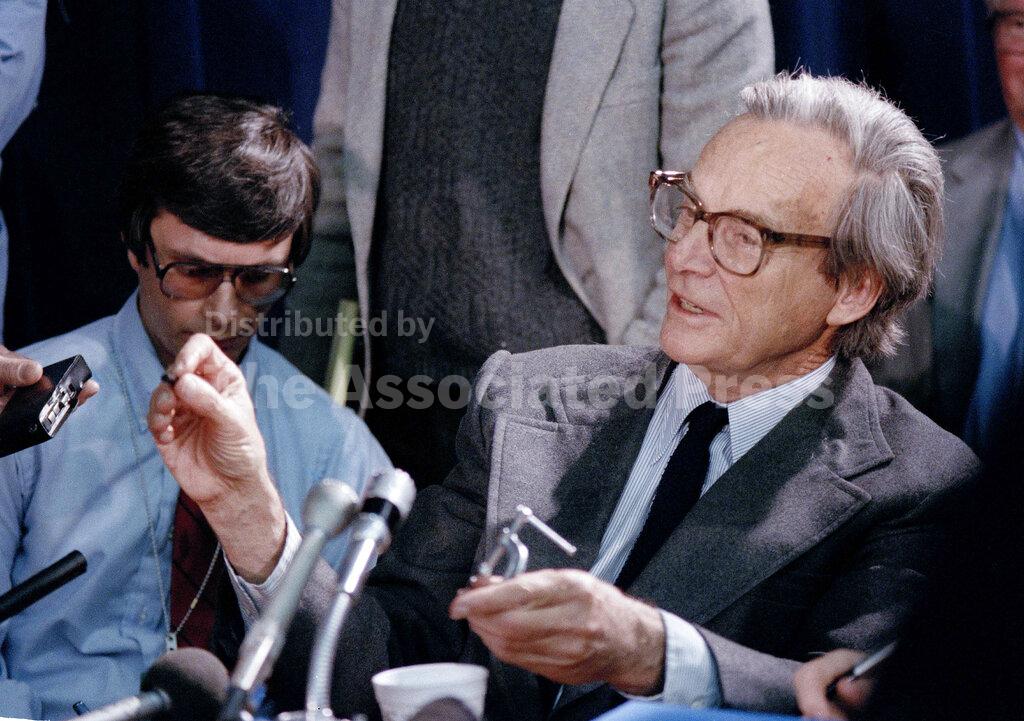
The space agency acknowledged today that cold temperatures diminish the effectiveness of critical safety seals that are designed to prevent the escape of hot gases and flames through the joints of the space shuttle’s booster rockets. The admission came under questioning by Richard P. Feynman, a Nobel Prize-winning physicist from the California Institute of Technology, at an open hearing of the Presidential commission that is investigating the cause of the explosion that destroyed the shuttle Challenger on January 28. The agency maintained that experts had judged that the seals would operate safely despite the unusually cold weather at the time of launching and the night before. But an official acknowledged, too, that on the day before, the boosters’ builder had suggested cold weather might cause a problem with the seals.
In previous public statements on this and other issues, officials of the National Aeronautics and Space Administration have given conflicting statements about the reliability of critical shuttle equipment and the agency’s preparedness for disaster. While no one has suggested the misstatements are deliberate, they have raised questions about how tightly top officials were controlling the shuttle program, and how it had been affected by pressure to keep the program on schedule and financially competitive. After a lunch break today, Dr. Feynman told the panel that he had just conducted an impromptu experiment with the rubbery material used for the giant circular rings that seal the rocket joints. He said he had immersed a piece of the material in ice water and found that it lost resiliency, a factor that space officials had said was important to the effective operation of the O ring seals.
President Reagan tonight accused Congressional opponents of his new budget proposal of maneuvering for a tax increase. He pledged a swift veto if they succeeded. In a strong statement against a tax increase, Mr. Reagan began a nationally televised news conference by saying such a bill would be “vetoed on arrival.” “Let’s be frank,” Mr. Reagan said. “Those who say our budget is D.O.A., dead on arrival, are really saying ‘Brace yourself for a tax increase.’ I think taxpayers want Congress to get its own house in order. I do too. So rest assured that any tax increase Congress sends me will be V.O.A., vetoed on arrival.” Mr. Reagan’s opening remarks on the budget were aimed at members of Congress who have warned that his budget has little chance of passage in its current form. The proposal seeks to curtail spending for 40 Federal programs through cuts or eliminations, while allowing the military budget to climb 8 percent beyond its increase to cover inflation.
In answer to a question Mr. Reagan ruled out use of an oil import fee to offset some of the spending cuts called for in his budget. “It’s historic that when you go above a certain percentage in taking revenue from the private sector, you slow the economy,” Mr. Reagan said. Mr. Reagan turned aside several questions on domestic issues such as whether he was willing to authorize Medicare or Social Security payments for elderly patients struggling to pay the cost of catastrophic illness and whether military veterans could be harmed by his budget proposal. “I know we don’t want to penalize our veterans, ” he said. But in answers to questions on the budget, Mr. Reagan gave a spirited defense of his decision to seek significant spending cuts, increase the military budget and to oppose any tax increase.
President Reagan said tonight that his Administration was still weighing proposals to change an executive order under which the Labor Department requires many Federal contractors to set numerical goals for hiring women and members of minority groups. In response to two questions at a news conference tonight, Mr. Reagan said emphatically that he opposed employment quotas, but he did not say explicitly whether he saw any differences between goals and quotas. Nor did he say whether he agreed with those members of his Administration who contend that flexible goals inevitably lead to rigid quotas. Asked whether he planned to change the executive order, issued in 1965 by President Johnson, Mr. Reagan said the matter was being reviewed by his domestic policy advisers.
Defense Secretary Caspar W. Weinberger today ordered an overhaul of security procedures, including a reliability program for holders of top-secret clearances. The 48 changes approved today were among 63 recommendations urged on Mr. Weinberger by a special Pentagon commission formed in the wake of a spy scandal involving four men, three from the same family. All have been convicted or accused of passing Navy communications secrets to the Soviet Union for almost 20 years.
Donna Ashlock, the 14-year-old California girl who received the heart of her friend and classmate, Felipe Garza, met President Reagan at the White House and said he was taller than she had expected. “I thought he was shorter,” Donna said, shivering in front of microphones outside the White House after her brief Oval Office visit. She emerged from the meeting with two presents, one a jar of presidential jelly beans and the other a surprise from Nancy Reagan, which Donna had not opened. When asked how she would describe the meeting to her friends back home in Patterson, she said, “They missed out.” Donna, on her first trip away from home since her surgery in January, is in Washington to serve as the Belle of the Ball at a St. Valentine’s Day gala Friday for the benefit of the American Heart Assn. She was suffering from a terminal heart condition when Felipe died of a stroke January 4. His parents honored Felipe’s wish to give his heart to Donna.
Arrow Air, operator of the DC-8 jetliner that crashed last December in Newfoundland, killing 248 American soldiers, halted all scheduled passenger flights yesterday and filed for reorganization under Chapter 11 of the Federal bankruptcy code. The airline said the move was prompted by what it called a series of harmful actions by Federal agencies and adverse publicity growing out of the accident. Passenger charter flights and cargo flights will continue while Arrow tries to work out a reorganization plan that would permit a return to scheduled passenger operations, the Miami-based airline said. The routes affected are from New York, Philadelphia and Miami to Puerto Rico.
Eighteen Dartmouth College students were arrested in Hanover, New Hampshire, when they tried to stop school officials from tearing down a shanty that had been erected on the college green as a symbol against apartheid. The arrests on criminal trespass charges capped three months of struggle between the school and groups of students over roughly $63 million in the college’s investments in companies that do business in South Africa. Police led the students away in handcuffs as about 300 others looked on. Crews sent by the college removed the shanty with a fork-lift truck and used a pneumatic drill to pry the floor out of the ice on the Green.
A Dartmouth disciplinary committee suspended the 12 students who participated in a sledgehammer attack last month on shanties erected on the College Green by a group protesting the policy of racial separation in South Africa. Last month 12 students arrived on the Green with a rented flatbed truck a few hours after the Martin Luther King holiday ended. Two protesters who were sleeping in one of the shanties, which were built on the Green last November to symbolize the dwellings of black South Africans, were not injured. The attack was halted by college security guards.
A sports car plowed into a crowd of Mardi Gras revelers leaving a downtown parade in New Orleans and injured 20 people, police said. There was no immediate report on the extent of injuries, but police said several people appeared to have broken bones. The man driving the car was arrested at the scene and “will be tested to see if he had been drinking,” a police spokesman said. The accident marred a cold but otherwise mellow Mardi Gras celebration as revelers refused to let near-freezing temperatures interfere with the annual affair. Police estimated up to 2 million people entered New Orleans for the festivities.
A Delta Air Lines 727 had to drop 200 feet Monday to avoid an Eastern Airlines 727 after a controller mistakenly put the jetliners on a collision course, officials said today. No passengers were injured in the incident, 31,000 feet over Toccoa in northern Georgia, according to a Federal Aviation Administration spokesman, Jack Barker. “There was an air traffic control error,” Mr. Barker said today. “There was an error committed by a veteran controller. We were fully staffed and there was moderate traffic.” Mr. Barker said the “closest proximity” of the two planes was 1,000 feet horizontally and 150 to 200 feet vertically. He said the controller ordered the Delta pilot to descend to 29,000 feet when a computer signal alerted him.
Two Navy ships collided while returning to base after maneuvers, killing one sailor and injuring eight, a Navy spokesman said in Honolulu. The 529-foot repair ship USS Jason and the 591-foot fleet oiler USS Willamette collided Monday night about 75 miles southwest of Pearl Harbor, said Lieutenant Commander Tim Taylor. Fires were reported aboard both ships after the collision but were extinguished, Taylor said. The cause of the accident was not known, he said. The most seriously injured were airlifted to the medical center on Oahu.
Lawyers for the Equal Employment Opportunity Commission have been told to stop demanding numerical hiring goals and timetables in settlements with companies and unions accused of discriminating against women and minority employees, officials said. Although the five-member commission has taken no formal vote on abandoning use of such raceand sex-conscious goals, Johnny Butler, the EEOC’s acting general counsel, said he has directed regional attorneys not to bring any more cases that include them.
Donald Manes, the New York city official who slashed his wrist and ankle in an apparent suicide attempt and was implicated in a widening bribery scandal, resigned as president of the borough of Queens, his attorney said. Manes, who also resigned as the county Democratic leader, had previously stepped aside from the posts without formally resigning while he recuperated from the self-inflicted knife wounds and a heart attack.
Authorities investigating the case of a woman who died in Yonkers after taking Extra-Strength Tylenol tainted with cyanide said yesterday that they were convinced the death was an isolated case of tampering and that there was no reason to believe that other batches of the drug contained the poison. “We don’t intend to start a national scare, we don’t believe the nation is smothered with tainted Tylenol,” said Owen J. McClain, a deputy police chief in Yonkers, where the woman, Diane Elsroth, was found dead Saturday afternoon at the home of a friend she was visiting. Nevertheless, supermarkets and other stores across the country removed the popular pain remedy from their shelves.
The first person ever to receive two artificial hearts has developed a kidney problem and still shows signs of the flu virus that destroyed her natural heart, hospital officials said today. The kidneys of the patient, Bernadette Chayrez, are eliminating fluid but not waste products, Nina Trasoff, a University of Arizona Medical Center spokesman, said. Mrs. Chayrez, 40 years old, from Phoenix, was described as awake and alert two days after receiving her second Jarvik mechanical heart. She was listed in critical condition. Dr. Mark Levinson said there had been no sign of bleeding since Sunday when Mrs. Chayrez got her second Jarvik heart. However, physicians have not placed her back on the anticlotting agent heparin.
The second winter snowstorm in a week blanketed the East Coast with up to a foot of snow, tangling rush-hour traffic, delaying flights and closing schools. Across the nation’s midsection, bitter cold air from Canada hit record lows in at least six cities. In Sheridan, Wyoming, it was 19 below. The fast-moving storm spread snow from Tennessee and Illinois to the Atlantic Coast and north into New England as it rolled east. A mixture of snow and freezing rain pelted the Southeast. At least four deaths have been blamed on the storm.
The Eastman Kodak Company, hurt by sharply reduced earnings and rising costs, said yesterday that it planned to reduce its worldwide work force by 10 percent this year. Kodak, the world’s largest photography company, employed 128,950 people at the end of 1985. By cutting 12,900 of those jobs, as well as eliminating merit raises for its senior managers, Kodak said it planned to reduce its 1986 budget by 5 percent. Changes in employee bonuses are also under consideration, the company said.
Australia beat India 2-0 to win cricket’s World Series Cup, David Boon scores the most runs in the series (418).
For the first time in four sessions the stock market stumbled, but only slightly, as share prices closed mixed in an uncharacteristically dull session. The Dow Jones industrial average, which has been moving steadily upward since breaking through 1,600 last week, fell 3.56 points yesterday, to 1,622.82. “If they took away a dozen, it wouldn’t have been a big deal,” said Larry Wachtel of Prudential-Bache Securities Inc. “They struggled to take away three.” Stock prices have risen sharply for the last several months. The rally, however, picked up momentum in recent weeks as the market reacted to generally positive developments in the oil industry, where the price of crude has dropped sharply, and to the continued decline in interest rates.
Dow Jones Industrial Average: 1622.82 (-3.56)
Born:
Gabriel Boric, Chilean activist and politician (Chile’s youngest President 2022-), in Punta Arenas, Chile.
PJ Brennan, American-English actor (“Hollyoaks: Freshers”), in Brooklyn, New York, New York.
Died:
Frank Herbert, 65, American sci-fi author (“Dune” series), of a massive pulmonary embolism after surgery for pancreatic cancer.
 History Diaries