Advanced British striking forces, bombers and motorized troops, operated west of the fallen Italian base of Derna toward Bengasi today, methodically clearing the way for the expected general assault upon that important naval center and capital of eastern Libya. The royal air force told of a heavy bombardment of the Italian air base at Barce, 120 miles beyond Derna on the road to Bengasi, announcing that its day-long activities of yesterday had been “mainly focused” on that military settlement. The airdrome was declared to have been repeatedly attacked, and direct hits were claimed on a series of hangars and other buildings. A single Italian plane was reported downed. The British troops, in possession of Derna, continue pursuing the retreating Italians along the Via Balbia. The Australian infantry approaches the next town, Giovanni Berta, today. However, it is at best a half-hearted pursuit, as the troops do not have clear instructions to carry Operation Compass further north and west.
General O’Connor wishes to send his armor and wheeled vehicles from Derna south of the Jebel Akhdar (Green Mountain) to head the Italians off further west (the Australian infantry is advancing north of the mountain). However, Middle East Commander General Archibald Wavell remains in Nairobi overseeing the advance in Abyssinia and has not approved that operation. Truth be told, the British armor can probably use a few days to bring up more fuel and other supplies and undergo routine maintenance. On the other hand, the chances of cutting off a fleeing enemy diminish with each day of delay.
The battle known as the Capture of Kufra began in Libya. Free French forces from Chad, French Equatorial Africa attacked the Italian forces at Kufra, Libya, supported by T Patrol of the British Long Range Desert Group. Free French Forces and the British Long Range Desert Group (LRDG), which recently combined for an attack on the Italian forces based at Murzuk, plan to launch another attack together. This one is against Kufra, in the same general area in southwest Libya. Colonel Philippe Leclerc commands about 400 men in 60 trucks and 8 armored vehicles. Kufra is a well-defended Italian fort, and the Italians have their guard up due to the successful LRDG attack on Murzuk.
Today, while part of the LRDG is on patrol, an Italian plane spots that part of the LRDG force at Gebel Sherif, which leads to a battle with the Italian Sahara patrol. Major Pat Clayton commands G Guard (Brigade of Guard) and T Patrol (New Zealand patrols) of LRDG, a total of 76 men in 26 vehicles. The Italians overpower the T Patrol of LRDG and destroy four (of 11) British trucks. They also capture Major Clayton and several others, along with Clayton’s plans for the Kufra raid. One British and two Libyan (Italian) soldiers are killed. This action forces most of the LRDG to withdraw to Egypt to refit and regroup — in fact, some walk back to Egypt. However, Leclerc continues with his plan to attack Kufra sometime in February.
British Prime Minister Winston Churchill on 31 January 1941 continues to place greater priority on the Greece/Turkey region than on the current campaign in North Africa. He sends a memo today to the Chiefs of Staff Committee in which he reiterates that “only Forces which do not conflict with European [i.e., Greek and Turkish] needs can be employed” in any advance to Benghazi in Libya. He emphasizes that “this should be impressed upon General Wavell.”
Greece’s Premier General John Metaxas was buried today after a solemn ceremony in the Athens Cathedral, seat of national Greek Orthodoxy, and thousands upon thousands of people stood hatless and silent watching the austere military parade that conducted the dead Premier to his grave.
The Greeks and Italians continue to fight for supremacy of the Trebeshinë massif in Albania. The heights are held by two battalions of Italian Blackshirts, and they are fighting as hard as any Italian troops anywhere. The Greeks want the range in order to secure their flank for an advance on Salona. At this point, in light of later events, all the Italians have to do is prolong the battles as long as possible and wait for the Germans.
The taking of Italian positions “of great importance” in mountains nearly 6,000 feet high and the smashing of an Italian tank counterattack at another point on the rugged Albanian front were announced early today by the Greek high command. Earlier, the Greek military spokesman had said that the latest Italian counter-assault, in the coastal sector, met a fate worse than any” of the series recently attempted. Large Italian forces were used, he asserted. The attacking troops were repulsed with such heavy losses that they retreated in confusion and have not had time to reorganize their positions, the spokesman said. “These Fascist troops were pursued by us and we succeeded in occupying a mountain 1,500 meters high, beyond the positions from which the Italians launched this counter attack, he related.
Indian 4th Division flanked and then captured Agordat, Eritrea, Italian East Africa. 1,000 Italian troops and 43 field guns were captured. After three days of heavy fighting, the Italian Army in Eritrea withdraws to the Keren Plateau. At this point, Amadeo, the Duke of Aosta and Governor General of Italian East Africa, in command at Addis Ababa, has only 67 aircraft available for combat in all East Africa. Fuel and supplies are at an all-time low, and infantry could only be moved on foot. The seesaw battle in Eritrea ends today in a decisive British victory. It is between the British 4th Indian Division and five Italian colonial battalions under the command of Colonel Luziani west of Agordat. The Italians, using a mountain range for defensive purposes, have taken Mount Cochen (the peak is about 2,000 ft (610 m) above the plain) and control the pass between it and nearby Mount Laquatat. Today, the British Indian troops launch a major effort and take back the Cochen heights. Major-General Noel Beresford-Peirse then orders Indian troops to take the road in the pass between Mount Cochen and Mount Laquatat. He also has them take Mount Laquatat, still in Italian hands. All of these missions succeed.
The pass between Mount Cochen and Mount Laquatat is the last good defensive position ahead of the Agordat plain, where the advance should be easier because it is a good tank ground. While the Italians fight hard, the British Matilda tanks are almost invulnerable to the light Italian arms and overpower the Italian armor. By 14:00, the battle is over, and the Matildas have destroyed eleven M11/39 tanks and Fiat L3 Tankettes. Italian cavalry counterattacks beyond the pass, however, fail, and the Italian troops retreat in a panic to Keren, bypassing Agordat (which is still fortified by the Italians). The pathway to Agordat now is wide open with nothing to stop the Allies.
At Barentu, the other prong of the British invasion, the battle between the 5th Indian Division and the Italian 2nd Colonial Division continues to a conclusion. The Italians have been fighting hard there, too, continuing with counterattacks. However, they have their eye on Agordat, where the roads to the coast join. If it falls due to the advance of the 4th Indian Division near Mount Cochen, their own rear will be threatened and further defense impossible. Once in possession of Agordat, the 4th Indian Division could attack them from behind and essentially surround them. During the night, the Italians, no doubt hearing of events at Mount Cochen, decide to retreat toward Tole and Arresa. The Indians prod them along by sending a motorized machine-gun unit behind them, but the Italians have no desire to fight. In fact, they are abandoning the roads and heading for safety on foot over rough ground where they can’t be pursued.
The collapse of this prime defensive position opens up the road to Agordat for the 5th Indian Division as well, which is garrisoned by only a small force (which the other Italian troops are leaving to their fate). The Italians are hampered by shortages of everything except men (mostly natives), including planes, supplies, vehicles, and fuel.
Elsewhere, the Italians retreat from their base at Gallabat under light pressure from the Indian 9th Infantry Brigade. The South African 2nd Infantry Brigade and 5th Infantry Brigade advance from Kenya into Ethiopia (Abyssinia).
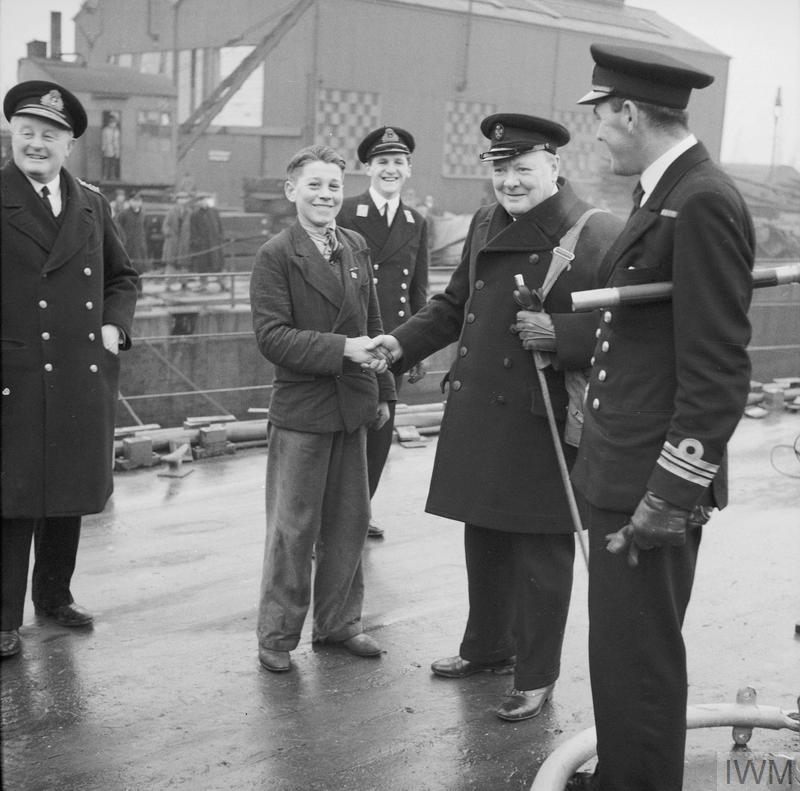
British Prime Minister Winston Churchill tours bomb damage at Southampton and gives a speech in which he summarizes the war situation, noting that the “offensive in the Middle East has succeeded beyond our dreams” and that “My one aim is to extirpate Hitlerism from Europe.”
Churchill sends a lengthy letter to Turkish President İsmet İnönü. In light of the “rapidly growing danger to Turkey,” Churchill writes, he would like to base “at least ten Squadrons of Fighter and Bomber aircraft” there. These would be followed by another five squadrons should Greece surrender to the Axis. One of the purposes of this would be to “bombard the Roumanian oilfields” — which is precisely what Hitler fears and perhaps the overriding reason why he is sending troops to the area at all. Another advantage, Churchill writes, would be to “restrain Russia from aiding Germany.”
Churchill continues to obsess over the regular radio broadcasts by socialist J.B. Priestley on the BBC. He sends a memo to Alfred Duff Cooper in which he demands that no payment be made for such “hampering criticism” and calls for equal time to be given to “Conservative opinion.” Churchill also sends another memo to Duff Cooper in which he expresses a desire for a “malicious lie” being told about him by isolationist sources — that Churchill supposedly once said that America should have stayed out of World War I — that should be countered by repudiations “as often as possible on the American radio.”
According to the diary of Minister of Information Sir John Reith, a fierce critic of Churchill, he has dinner today with Chief of the Imperial General Staff General John Dill. According to Reith, Dill is extremely uncomplimentary toward Churchill, claiming that the Prime Minister is “often unable to appreciate or understand major issues.” Churchill, according to Dill, wastes much time by forcing ministers to deal with “silly minutes from the PM” (a claim to some extent supported by the record, though of course one man’s “silly minutes” are another man’s vital communications of national importance).
Dill, according to Reith, equivocates when asked whether Churchill does more harm or good to the war effort in his present position. Needless to say, both men’s careers would be at hazard if Churchill ever found out about such opinions, but the two men obviously feel a kinship in their distaste for Churchill and his methods and safety in their mutual vulnerability to his potential wrath.
Hitler also is extremely interested in gaining favor with Turkey. However, the country remains steadfastly neutral, with its leaders knowing that it is in an extremely strategic, but also quite vulnerable, position — like Spain at the other end of the Mediterranean.
After consultations with army and army group staffs the German Army High Command has now prepared the first operational plans for the German invasion of the Soviet Union, Operation BARBAROSSA. The deployment plan for the forces is also ready.
The Nazi occupying authorities in Luxembourg issue an order requiring citizens to change their first and last names to Germanic variations, else the names will be changed for them.
Kriegsverwaltungsrat Tidemann Ulrich Lemberg, Kommissar für die Diamant-Wirtschaft in Belgien, occupied Belgium, takes a key step in an obscure turf war within the occupying authorities. Lemberg is in charge of overseeing the diamond markets centered in Antwerp. His official goal is to try to restore the diamond markets, completely disrupted by the invasion and occupation, to some semblance of normal. The Devisenschutzkommando (Foreign Currency Control Unit) — a subsidiary of the Reichssicherheitshauptamt — has been hindering Lemberg’s goal by basically stealing any diamonds they can find (for the Reich, of course). This, of course, is no secret and sends all the diamonds in private hands into basements and attics.
Today or around this date, Lemberg manages to make it a punishable offense for any German units to loot diamonds, with any violators prosecuted. The Germans in general, of course, plunder with glee. However, exactly who gets to plunder is a very, very sensitive issue, and sometimes, such as with issues like this, the German government concludes that plundering may be counterproductive to larger goals. Throughout the war, German officers who loot, but aren’t supposed to loot, are prosecuted. Others who are allowed to loot do so with impunity and even official assistance. Lemberg has powerful patrons within the Third Reich hierarchy, as Reichsmarschall Hermann Goering has a deep interest in the diamond and art markets centered in Holland and Belgium. So Lemberg can loot even as others are prosecuted for doing the same thing or even much less.
In Oslo, Reichsführer-SS Himmler accepted the oath of the first group of Norwegian enlistees in the Waffen-SS.
The German authorities uproot 3,000 Polish Jews from villages and send them to the Warsaw ghetto. They are the first of 70,000 Jews to face this fate within the next two months. The Warsaw ghetto is overcrowded and inadequately provisioned already.
Oberstleutnant Hans Korte stepped down as the commanding officer of the German Kampfgeschwader 55 wing.
The Spanish newspaper Alcazar unexpectedly spoke out tonight in favor of better Spanish-United States relations and said “an American president without false notions of racial superiority,” and a “powerful, respected, united Spain” were good bases for a campaign to effect increased understanding.
Confiscation of private property in Poland by the occupying Germans is made policy by a decree initiated today.
Details of the transfer of much of northern Rumania to Hungary continue to be determined via Arbitrage in Vienna. Today, 191,000 Jewish residents in Transylvania are transferred from Rumanian to Hungarian control. By one estimate, 58,000 of them survive the war.
Iranian Prime Minister Rashid Ali is succeeded by Taha al-Hashimi.
The Luftwaffe continues its random raids by fighter-bombers (Jabos). Today, the Jabos score hits on three London hospitals, apparently as a fluke. They also damage the Naval Gallery at the Imperial War Museum. RAF Bomber Command stays on the ground, and there are no attacks by either side after dark.
RAF Bomber Command dispatches 7 Blenheims to Holland during the day; all turned back.
The Luftwaffe (apparently Heinkel He 111s of II,/KG 26) bombs and damages 1290 ton Egyptian freighter Sollum near Sidi Barrani. (Some accounts say the captain saves the ship by beaching it.) The Sollum is transporting 250 Italian POWs.
The RAF bombs Tripoli during the night and causes harbor damage.
The Luftwaffe (apparently KG 26) hits and damages 9717 ton Royal Navy hospital ship HMS Dorsetshire in the Gulf of Sollum. Naturally, attacking hospital ships is against international law, and such ships always are clearly marked. Such attacks usually are the product of frustration imbued with sheer malevolence and is always (presumably) against orders. That this ship is hit again on 1 February suggests that this attack was not an accident.
The weather remains rough in the North Atlantic. It is so rough that German battlecruisers Scharnhorst and Gneisenau, on Operation BERLIN, remain unable to refuel from the tanker with which they have rendezvoused near Bear Island, delaying their breakout into the Atlantic through the Denmark Strait.
Destroyer HMS Zulu arrived at Scapa Flow at 1730 from Rosyth on completion of refitting.
Destroyer HMS Meynell departed Scapa Flow at 2300 on completion of working up. The destroyer arrived at Rosyth at 1100 on 1 February, en route to the Nore.
Italian submarine Dandolo sank British steamer Pizarro (1367grt) in 49-03N, 19-40W. Twenty three crew of a twenty nine man crew were missing.
British steamer Rowanbank (5159grt) was sunk by German bombing from convoy SL.62 in 57-00N, 16-30W.
Naval collier Botusk (3091grt) and Dutch steamer Emmaplein (5436grt) both in convoy HX.103 were sunk on British mines six miles northeast of North Rona Island. Three crewmen were killed and one was missing on the British ship. Corvette HMS Verbena rescued eleven survivors. Thirty four crewmen were rescued from the Dutch ship by cable ship HMS Ariel and two corvettes. German submarines were suspected and anti-submarine whalers HMS Buttermere and HMS Windermere were sent from Stornoway to investigate. Aircraft and later destroyers HMS Beagle and HMS Douglas, which departed Scapa Flow at 1515, were also involved in the search. The destroyers arrived back at 1800 when it was determined the ships had struck mines.
Dutch balloon barrage vessel Saturnus (200grt) was damaged in a mining. The vessel was abandoned and went ashore at Maughold Head. The Dutch ship was later refloated and arrived at Douglas.
British steamer Speybank (5154grt) was taken in prize in the Indian Ocean by German raider Atlantis. The steamer was sailed to Japan.
British Force H departed Gibraltar with battlecruiser HMS Renown, aircraft carrier HMS Ark Royal, light cruiser HMS Sheffield, and ten destroyers for Operations PICKET and RESULT. Group 1 was battlecruiser HMS Renown, battleship HMS Malaya, aircraft carrier HMS Ark Royal, and light cruiser HMS Sheffield. Group 2 was destroyers HMS Fearless (D.8), HMS Foxhound, HMS Foresight, HMS Fury, HMS Firedrake, and HMS Jersey. Group 3 was destroyers HMS Duncan (D.13), HMS Isis, HMS Encounter, and HMS Jupiter. Group 4 was tanker RFA Orangeleaf and anti-submarine trawlers HMS Arctic Ranger and HMS Haarlem.
Minesweeper HMS Huntley (Lt Cdr E. S. Cotsell RNR) was lost en route to Derna, thirty miles west of Mersa Matruh. Cotsell (dying of wounds on 2 February) and twelve crewmen were killed in the minesweeper. Five crewmen were missing. Twenty six crewmen were wounded.
British hospital ship Dorsetshire (9717grt) was damaged by German bombing in the Gulf of Sollum. The ship attacked again on 1 February.
Egyptian steamer Sollum (1290grt) was bombed near Sidi Barrani and was run aground.
Destroyers HMS Greyhound and HMS Griffin were ordered to depart Alexandria and proceed at 2200 to Port Said. The destroyers were then to continue to Aden for escort duties. While leaving harbor, destroyer Greyhound collided with battleship HMS Warspite. The destroyer was docked for the damage. She was replaced by destroyer HMS Juno. Battleship Warspite’s bulge was damaged. Emergency repairs were completed at Alexandria on 1 February.
British tanker Desmoulea (8120grt) was damaged by an Italian S boat in 35-20N, 25-34E. The tanker was towed to Suda Bay by destroyer HMS Dainty, arriving at 0800 on 1 February. The cargo was discharged into British tanker Eocene (4216grt). The tanker arrived at Suez on 6 May for use as a temporary storage vessel, pending repairs. Corvette HMS Peony with convoy AN.14 was missed by aircraft torpedoes forty miles from Suda Bay.
Italian tug Ursus (407grt), on passage from Lissa to Curzola, was sunk by Submarine HMS Rorqual gunfire. The tug was towing barge GM 239 which was also damaged. The barge was later towed into Dubrovnik.
Convoy OB.280 departed Liverpool, escorted by destroyers HMS Beverley and HMS Harvester, corvettes HMS Arbutus, HMS Camellia, and HMS Erica, anti-submarine yacht HMS Philante, and ocean boarding vessels HMS Cavina, HMS Corinthian, and HMS Crispin. The ocean boarding vessels were detached on 3 February and the remainder of the escort on 4 February when the convoy was dispersed.
Convoy FN.396 departed Southend, escorted by destroyers HMS Valorous and HMS Vimiera, and arrived at Methil on 2 February.
Convoy FN.397 did not sail.
Convoy FS.400 departed Methil, escorted by destroyers HMS Vanity and HMS Vortigern, and arrived at Southend on 2 February.
Convoy FS.401 departed Methil, and arrived at Southend on 2 February.
Convoy SC.21 departed Halifax, escorted by armed merchant cruiser HMS Montclare, which was detached on 13 February. On 13 February, corvettes HMS Fleur De Lys and HMS Tulip joined the convoy. On 14 February, destroyers HMS Caldwell, HMS Vanoc, and HMS Volunteer joined. Sloop HMS Aberdeen joined on 15 February. On 16 February destroyer Caldewell and sloop Aberdeen were detached and on 17 February, anti-submarine trawlers HMS Huddersfield Town and HMS York City joined. The escort was detached on 18 February, and the convoy arrived at Liverpool on 18 February.
In Washington, President Roosevelt said at his press conference today that the government was ready to commandeer if necessary any plant essential to the defense program. He also stated that the late Ambassador Dodd had quoted to him Senator Wheeler as saying that Nazi domination of Europe was inevitable. He sent to the Senate the nomination of Senator John E. Miller to be United States District Judge for the Western District of Arkansas, and received from Mayor La Guardia a preliminary report of the United States Conference of Mayors on plans for the defense of cities.
The Senate confirmed the nomination of Senator Miller and adjourned at 12:29 PM until noon on Monday. The Foreign Relations Committee heard Secretary Knox on the Lend-Lease bill, and the Appropriations Committee approved the bill for the construction of 200 cargo steamships.
The House passed the $1,404,329,838 Independent Offices Appropriation Bill and adjourned at 5 PM until noon on Monday. The Rules Committee approved a rule for the Lend-Lease bill, and the Military Affairs Committee heard Undersecretary of War Patterson on rearmament delays.
President Roosevelt said today he had been informed that Senator Wheeler, Montana Democrat, a leading opponent of his foreign policy and an advocate of a negotiated peace in Europe, had expressed the opinion in 1934 or 1935 that Nazi domination of Europe was inevitable. What, the president asked, after making this assertion at a press conference, does one do if he has made up his mind that something is inevitable? For his authority, Mr. Roosevelt cited the late William Dodd, former ambassador to Germany. Dodd, he said, had told him directly that he heard Wheeler make the statement. The president said Dodd told him that at the dinner in question Wheeler made the statement that Nazi domination of Europe was inevitable. He also quoted Dodd as having said there was talk that the safety of the United States lay in taking over Canada, Mexico and the five Central American countries. “Is it asserted here,” a reporter asked, “that Senator Wheeler advocated Nazi domination of Europe?” He (the senator) said it was inevitable, the president replied.
Wendell L. Willkie has received an urgent request from Secretary of State Cordell Hull to hurry back home and testify on behalf of the administration for the aid-to-Britain bill, it was reported reliably early today. Willkie was understood to be planning to fly to New York next Wednesday, cutting still shorter his visit to Britain to make a firsthand examination of the nation’s war effort. He had said earlier that he expected to leave for home Thursday. Hull was said to have stressed the urgency .of the Republican chieftain’s return to Washington “as soon as possible” to back up the bill taking the wraps off American aid to Britain.
Administration leaders in the House pushed forward today their plans to bring the Lend-Lease bill to the floor next week. They obtained, by unanimous vote of the Rules Committee, a grant of procedure whereby general debate will begin Monday, with a prospect of final passage by next Friday night. The special rule which will make H. R. 1776 the pending business of the House is known in Congressional parlance as “wide open.” Specifically, it waves all points of order, so that amendments may be offered, whether or not strictly germane to the measure. The general debate will occupy the first three days of the week, and the reading for amendment will start on Thursday. About two dozen amendments were offered and rejected during the executive sessions of the Foreign Affairs Committee. All of these and probably many more will be offered from the floor.
The House passed today the $1,404,329,838 Independent Offices Appropriation Bill, the first of the regular fund bills to be presented to Congress. It declined, however, to deal with the maritime labor problem in an appropriation bill by voting down, 73 to 51, an amendment by Representative Everett Dirksen of Illinois, which was described as designed to force open shops in the subsidized merchant marine. Supporters of the Dirksen proposal received assurance, however, that the question would be considered by the House Merchant Marine and Fisheries Committee, before which group is pending a bill by Mr. Dirksen which is virtually the same as the amendment he offered today to the Independent Office Bill.
Questioned today concerning contract difficulties between the Ford Motor Co. and the war department, President Roosevelt said the government was prepared to take over any factory in the country if that action became necessary for national defense. At the chief executive’s press conference, a reporter brought up yesterday’s disclosure that the Ford concern had been denied a $10,000,000 contract for army trucks because it took exception to certain labor clauses in the invitation for bids. The newsman asked whether the government was prepared to take over the company if such a step were essential to defense. Mr. Roosevelt replied that if the word Ford were left out and any plant substituted for it in the question, the answer would be yes.
A C.I.O. strike affecting $230,000,000 in national defense orders tied up production at the Elizabeth, New Jersey, plant of the Phelps Dodge Copper Products Corporation yesterday. With 1,400 workers idle and strike leaders threatening to extend the walkout to the company’s huge plants in Los Angeles, Fort Wayne and Yonkers, all of which are engaged in defense work, William F. Cann and Daniel Hurley, conciliators for the United States Labor Department, endeavored last night to effect a settlement of the dispute between the management and the United Electrical, Radio and Machine Workers, the C.I.O. union involved.
U.S. Navy Vice Admiral William S. Pye relieves Admiral Charles P. Snyder as Commander Battle Force.
U.S. Navy Vice Admiral Walter S. Anderson becomes Commander Battleships Battle Force.
West Base, U.S. Antarctic Service, is closed.
The first picture to star radio stars and comedy team Abbott and Costello, “Buck Privates,” is released. This is the beginning of a terrific film career for the two comedians. A big hit for Universal, “Buck Privates” later is remembered for the Andrews Sisters’ classic (and much imitated) rendition of “Boogie Woogie Bugle Boy” which some might consider being the first true music video (admittedly, there are many, many contenders for that title). The song, incidentally, is later nominated for an Academy Award for Best Original Song, but in one of the worst decisions in Academy history loses to “The Last Time I Saw Paris.” The Japanese, who apparently do not understand American humor very well, will use this film to deride the competence of US soldiers. Shemp Howard of the Three Stooges makes a brief appearance during his “solo career.”
Joe Louis retained the World Heavyweight Boxing Championship with a fifth-round knockout of Red Burman at Madison Square Garden.
Paul Waner, released by Pittsburgh in December 1940, signs with Brooklyn. He’ll play 11 games before moving onto the Braves, but he’ll return to Brooklyn in 1943.
Australian Prime Minister Robert Menzies continues his epic journey from Australia to London, flying out of Calcutta across India to Karachi.
German raider Atlantis seizes 5150-ton British freighter Speybank off the eastern coast of Africa. It later puts a prize crew on board and sends the undamaged ship to Bordeaux for conversion into an auxiliary minelayer.
A German supply ship, Tannenfels, departs from Kismayu in Italian Somaliland to service German raiders in the Indian Ocean.
New Zealand Division light cruiser HMS Leander departed Colombo on patrol.
The Japanese government arranged a truce in the Franco-Thai War aboard the Japanese cruiser HIJMS Natori. The cease fire is effective from 28 January 1941. The Thais get all of the territories that they sought in the Mekong Delta area.
Light cruiser HMS Dauntless arrived at Penang.
Japan is not thinking of war with the United States and wants a better understanding in its relations with America, but must abide by its tripartite pact with Germany and Italy, Admiral Kichisaburo Nomura, Japan’s new ambassador to the United States, said today on his arrival in Honolulu, Territory of Hawaii. Smiling and affable, Nomura stepped ashore on American soil for the first time from the Japanese liner Kamakura Maru, which was escorted into port by two U. S. destroyers and met at .the dock by hundreds of Hawaiian Japanese and American navy and army officials. Nomura will continue his trip to Washington, D.C.; when the Kamakura sails later tonight. Nomura emphasized that “I am Japanese and I am thinking of things from our viewpoint,” but served notice that he will work for peace between his country and the United States.
Dow Jones Industrial Average: 124.13 (+0.08)
Born:
Jessica Walter, American actress (“Play Misty For Me”, “Arrested Development”), in Brooklyn, New York, New York (d. 2021).
Richard Gephardt, American politician (Rep-D-Missouri, 1977-2005), in St. Louis, Missouri.
George S. Mickelson, American politician, Governor of South Dakota (1987-1993), in Mobridge, South Dakota (d. 1993).
Eugène Terre’Blanche, South African politician, white supremacist and leader of the far-right Afrikaner Weerstandsbeweging, in Ventersdorp, Transvaal Province, South Africa (d. 2010).
Len Chappell, NBA and ABA power forward, center, and small forward (NBA All-Star, 1964; Syracuse Nationals, Philadelphia 76ers, New York Knicks, Chicago Bulls, Cincinnati Royals, Detroit Pistons, Milwaukee Bucks, Cleveland Cavaliers, Atlanta Hawks; ABA: Dallas Chaparrals), in Portage, Pennsylvania (d. 2018).
Jerry Scheff, American session and touring bassist (Elvis Presley, 1969-1977), in Denver, Colorado.
Naval Construction:
The U.S. Navy Accentor-class coastal minesweeper Barbet (AMc-38) is laid down by W.A. Robinson Inc. (Ipswich, Massachusetts, U.S.A.).
The Royal Navy Bangor-class (VTE Reciprocating-engined) minesweeper HMCS Caraquet (J 38) is laid down by North Vancouver Ship Repairs Ltd. (Vancouver, British Columbia, Canada). Transferred to the Royal Canadian Navy upon completion, commissioning as the HMCS Caraquet (J 38).
The U.S. Navy Gar-class submarine USS Grayback (SS-208) was launched by the Electric Boat Co. (Groton, Connecticut, U.S.A.).
The Вое́нно-морско́й флот СССР (ВМФ) (Soviet Navy) Project 68 (Chapayev-class) light cruiser Kuybyshev (Куйбышев) is launched by Marti Yard (Nikolayev, U.S.S.R.) / Yard 198.
The Royal Navy Fairmile B-class motor launch HMS ML 140 is commissioned.
The U.S. Navy coastal minesweeper USS Nightingale (AMc-18) (converted from the yacht Majestic, launched 1934) is commissioned.
The Royal Australian Navy auxiliary minesweeper HMAS Terka (FY 98) [ex-coastal steamer Sir Dudley de Chair] is commissioned.
The U.S. Navy coastal patrol yacht USS Agate (PYc-4), ex-yacht Stella Polaris, is commissioned.
The Kriegsmarine (German Navy) Type VIIC U-boat U-751 is commissioned. Her first commanding officer is Kapitänleutnant Gerhard Bigalk.
The Nihon Kaigun (Imperial Japanese Navy) Type C (I-16 class) cruiser submarine I-18 is commissioned. Her first commanding officer is Commander Hatanaka Sumihiko.
The U.S. Navy Gleaves-class destroyer USS Edison (DD-439) is commissioned. Her first commanding officer is Lieutenant Commander Albert Christian Murdaugh, USN.
For the month of January 1941, German U-boats sank 15 Allied ships (99,050 tons).
All Allied Shipping Losses for January 1941:
74 Allied ships of 309,942 tons in Atlantic
2 Allied ships of 13,478 tons in other areas
There are:
126,782 tons sunk by U-boats
78,597 ton sunk by aircraft
80,796 tons sunk by warship/raider
17,107 tons sunk by mines
All figures are approximations only, as judging tonnage lost becomes art at the fringes (e.g., is a ship that is beached due to war damage part of the tonnage lost?). U-boat sinkings are down by almost half due to the weather, as are losses by mines. Losses due to aircraft, however, increase substantially from December 1940, as KG 40’s Focke-Wulf Fw 200 Condors are operating with great efficiency. Kriegsmarine surface warships also increase, as Admiral Scheer remains on the loose and the raiders scored some major successes (such as the capture of the Norwegian whaling fleet).
The Axis loses 8 ships of 23,129 tons, all in the Mediterranean. The Kriegsmarine loses no U-boats. There are 22 U-boats operational at the end of the month, of which typically 1/3 are on patrol (1/3 are in port and 1/3 transiting to/from patrol).
 History Diaries