The Iron Guard rebellion in Rumania continues into a second day. The Legionnaires remain in control of the media and many important public facilities such as police stations. Dictator Ion Antonescu remains holed up in his Bucharest palace, trying to coordinate a rescue with army troops based in other parts of the country.
The defining characteristic of the rebellion at this point is a vicious pogrom carried out against the country’s Jews, particularly those in two Jewish Bucharest boroughs (Dudeşti and Văcăreşti). One of the several causes of the rebellion was Antonescu’s preference to manage relations with Jewish citizens legally; the Iron Guard would have none of that. Instead, they loot and kill whoever they don’t like.
While the Legionnaires, by and large, have the run of the capital throughout the day, there are some soldiers and police who refuse to participate. They are put under arrest. Mircea Petrovicescu, son of the former minister of the interior deposed by Antonescu, is particularly vicious, not just killing Jews but also mutilating and torturing them. There are acts of unspeakable cruelty that appear directly tied to the resentment of Jewish life in general, with a heavy focus on looting Jewish property. It is an orgy of bloodletting that lasts throughout the day and into the 22nd.
There is a slaughter of Jews by the Iron Guard in Bucharest. Some were burnt to death in buildings set on fire by the rioting guards. Others were beaten senseless, robbed and then doused in petrol and set on fire. In the most horrific incident some 50 Jews had their throats cut in a barbarous parody of kosher butchering in the municipal slaughterhouse. Tiring of this sport, the guards beheaded scores more. In another incident 160 Jewish leaders who has been imprisoned at Jilava were taken into a field and shot.
Hitler begins to take notice of what is going on. He has many troops in the country preparing for the invasion of Greece (Operation MARITA). He has the Wehrmacht instruct them to support the Antonescu government, though without actively engaging in combat.
Telephone service between Belgrade and Bucharest was interrupted today and there was an unconfirmed report tonight that the Yugoslav-Rumanian frontier would be closed at midnight. Sources on the border reported German troops quartered in the Rumanian Banat were being sent to Bucharest to join the German garrison and Rumanian troops in the capital in suppressing street demonstrations and rioting.
Anti-Jewish legislation was passed by the Bulgarian parliament and signed by King Boris. These measures were modeled on the German Nuremberg Race Laws. The Bulgarian law stated that “the Jews are an evil and a foreign element among the Bulgarian People that acts against the State.” The new law banned internationalist and supra-nationalist groups and organizations such as the various Zionist organizations in Bulgaria and the B’nai B’rith (Hebrew, Sons of the Covenant) organization. Under the new law, Jews were banned from intermarrying with Bulgarians, Jewish economic activities were restricted, Jews were confined to their current residences, Jews could not be elected to public office and could not vote for such offices, and Jewish civil servants were forced to resign. The law also defined what was considered “anti-national” conduct by Jews and other foreign nationals in Bulgaria.
The second day of American Colonel William J. Donovan’s stay in Sofia was a very active one. In the morning he had a long interview with the Bulgarian Foreign Minister, Ivan Popoff, and in the afternoon he was received by the Premier, Bogdan Philoff.
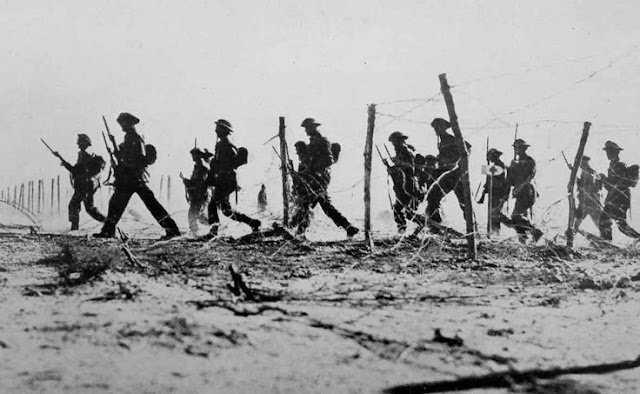
Operation COMPASS resumes. O’Connor’s Commonwealth force began attacking Tobruk, Libya, starting with an artillery barrage at 0540 hours. Australian engineers cleared a path for 18 British Matilda tanks and a few captured Italian tanks to pass through, leading infantrymen. The Australians reach their first objectives by midday; but then the Italians bring their coastal and AA guns into action and there are several hours of fierce fighting around and about the middle of the perimeter. The Italian 10th Army is a little more active in the defense than they were at Bardia earlier in the month. They have dug-in tanks and machine-gun posts at the key Bardia-El Adem crossroads right behind the line. The Australian troops try to bypass them on right and left, but are met by a counterattack on the left which includes seven tanks supported by infantry and artillery. The men on the right have little difficulty, and those on the left eventually break out after they bring up their own tanks. By dusk though, the Commonwealth forces are ranged along the edge of the escarpment overlooking the town, and the western and south-western portions of the perimeter are safely under control. Blenheim aircraft flew overhead throughout the day to provide support. 8,000 Italians were captured in overrun defensive positions, including General Petassi Manella. After nightfall, the headquarters of the Australian 19th Brigade offered Manella a ceasefire, but it was rejected, as the Italian general had orders from Benito Mussolini to fight until the last man. Overnight, Italian bombers attacked the British forward base; some bombs fell on the buildings holding prisoners of war, killing 50-300 Italians.
The RAF helps out throughout the day. The RAF sends Blenheim bombers to attack ground targets while Hurricanes and Gladiators provide cover. Royal Navy gunboats HMS Gnat, Ladybird and Terror along with three destroyers sit offshore and bombard the Italians throughout the day. Australian destroyer HMAS Vampire sinks 63-ton Italian schooner Diego west of Tobruk. The ten on board, undoubtedly fleeing the Australian attack, are taken as prisoners.
The Italians have warships in the harbor, including the beached armored cruiser San Giorgio, which provides effective covering fire until air attacks set it on fire. However, the Italians are hopelessly outmatched on the ground. While they continue fighting into the night, the Italians’ situation looks hopeless.
With the Greek refusal to accept British land forces, the Defence Committee switch the area of greatest importance back to North Africa, with the capture of Benghazi being now of prime importance. However, with the impending arrival of German forces in mainland Greece there is also a need to capture the islands of the Dodecanese, primary being Rhodes to preserve communications with Greece and Turkey.
While General Wavell succeeds in another wildly successful attack, British Prime Minister Winston Churchill once again appears to give him short shrift. He chooses today to broadcast a message to the people of Malta:
“I send you on behalf of the War Cabinet heartfelt congratulations upon the magnificent and ever memorable defence which your heroic garrison and citizens, assisted by the Navy and above all by the Royal Air Force, are making against the Italian and German attacks. The eyes of all Britain and indeed of the whole British Empire are watching Malta in her struggle day by day, and we are sure that success, as well as glory, will reward your efforts.”
Governor Dobbie also broadcasts a somewhat less ostentatious message to the people, noting that “We are living in stirring times.” After several furious raids in recent days by Fliegerkorps X, there are no attacks today.
While not yet attacking in full force on 21 January 1941, the Italians in Albania make some small advances near the Klisura Pass in the central sector of the front. This is the critical area right now, as further advances by Greek II Corps would threaten the Italian hold on their main supply port, Savona. A battle also develops near Berat, with the Greek 51st Infantry Regiment attacking the Italian 22nd Infantry Division “”Cacciatori delle Alpi,” or “Hunters of the Alps.” The RAF has been raiding key Italian bases in Albania, such as Valona and Elbasan, but activity is light today.
The official Turkish wireless announced tonight that the government “has gathered a great part of its army in Thrace (European Turkey), where it awaits any possible action.” Discussing the possibility of a German invasion across the Balkans, the radio said: “Those who attack our steel fortress of Thrace are doomed to fall in the attempt! Turkey fought on eight fronts in the last war no one should doubt her ability to fight on one front alone.”
Following his now-concluded discussions with Mussolini, during which he prevailed on his fellow director to induce Spain to enter the war, Hitler once again is feeling optimistic about the prospects of bringing Spain into the war on the Axis side. He has the Wehrmacht issue an order stating:
“Possible impending changes in political prerequisites render it necessary to amend earlier instructions and to maintain readiness for [Operation] FELIX in so far as still possible.”
As the tone of this order suggests, however, nothing is certain. Everything regarding Operation FELIX, the planned attack on the British fortress and naval base at Gibraltar, hinges on Francisco Franco — but he hasn’t indicated any change in his opposition to such a decision.
In London, Churchill expresses concern at the reduction of the weekly coal supply to London. Churchill inquiries into the status of coal deliveries to London, to see if there is any way to increase them during the worst of the winter. He learns that deliveries are down to 250,000 tons per week versus demand of 410,000 tons.
He also pushes the Ministry of Health to reduce the number of homeless people still in London rest centres and have them dispersed into more permanent accommodation. While people are grinning and bearing it, deep resentments are building up beneath the surface that someday will rise to the surface when people vote.
Home Secretary Herbert Morrison used Defence Regulation 2D to ban the Communist newspaper Daily Worker, on the grounds that it was attempting to hinder the British war effort.
Parliamentary Secretary to the Ministry of Food Robert Boothby submits his resignation to Winston Churchill (who accepts it immediately). The reason is a minor infraction of not declaring a personal interest in a matter relating to his official duties. He will join the Royal Air Force Volunteer Reserve and serve with RAF Bomber Command. Boothby is a fascinating character who much later becomes famous for various sexual escapades.
The last recorded charge by cavalry against a British battery occurred in Eritrea, Italian East Africa when a battery of the 144th (Surrey and Sussex Yeomanry) Field Regiment Royal Artillery was surprised by about sixty mounted Eritreans, led by an Italian officer, who came on at the gallop firing from the saddle and lobbing grenades as they charged; the Battery replied with shell and small arms fire, and the cavalry retired leaving about forty of their number killed or wounded on the field. Elsewhere, Indian 5th Infantry Division advanced 50 miles into Eritrea, capturing Aicota unopposed. Finally, Indian 10th Infantry Brigade and 2nd Battalion of the British Highland Light Infantry marched for Keru.
Brigadier William Slim is injured in the fighting and sent behind the lines.
Air operations in Northwestern Europe are light due to the weather. The Luftwaffe sends some bombers across, but they only reach the outskirts of London. RAF Bomber Command stays in its hangers after dark. Uffz. Gerhard Blum of 1./NJG 2 shoots down a Blenheim bomber before dawn for his first victory.
The RAF is active throughout East Africa, raiding Assab and Massawa, while the South African Air Force chips in with raids on Neghelli and Javello.
Destroyer HMS Intrepid and submarine HMS Sealion took part in a special exercise off Blyth. Following the exercise, destroyers HMS Intrepid and HMS Impulsive converted to minelayers and sailed to Scapa Flow to arrive on the 24th.
Destroyer HMS Douglas departed Scapa Flow at 1600 for Aberdeen to escort steamer Ben My Chree to Lerwick. The destroyer was recalled at 2100 was the steamer was delayed by bad weather. Destroyer Douglas arrived at Scapa Flow at 1030/22nd. The destroyer departed at 1445/23rd to meet the steamer. The steamer was delayed, but the destroyer was ordered to await her departure. The steamer was escorted to Lerwick. Destroyer Douglas was recalled to Scapa Flow at 1900 and arrived at 0230/26th.
Destroyer HMS Legion in a storm westward of Cava Island dragged anchors and fouled the Hoy Boom. With the aid of tugs, the destroyer was cleared and she was towed to an anchorage on the eastern side of the Flow.
Minesweeper HMS Tedworth was extensively damaged in a gale in the Clyde.
British steamer Temple Mead (4427grt) was sunk by German bombing 54-14N, 14-30W. Fourteen crewmen were lost.
Tug Englishman (487grt) was sunk by German bombing forty miles west of Tory Island. The crew of seventeen and one gunner were all lost.
German steamer Brechsee (688grt) was sunk on a mine off Malmo.
Light cruiser HMS Orion joined heavy cruiser HMS York at Piraeus. Light cruiser HMS Ajax and anti-aircraft cruiser HMS Bonaventure covered convoy AN.13 through the Kaso Straits during the night of 21/22 January. Heavy cruiser York and light cruiser Orion called at Suda Bay at 1600/22nd to oil. At 0800/23rd, heavy cruiser York and light cruisers Orion, Ajax, and Bonaventure and destroyers HMS Ilex and HMS Hero rendezvoused in 36-00N, 24-02E for operation MBD 2. Destroyers HMS Jervis, HMS Janus, HMS Juno, and HMS Greyhound departed Suda Bay for Malta during the evening of 21 January and arrived on the 22nd. The 1st Battle Squadron at Alexandria remained in harbor until 22 January.
A British attack on Tobruk was supported at sea by monitor HMS Terror, gunboats HMS Ladybird and HMS Gnat, and destroyers HMAS Stuart, HMAS Vampire, and HMAS Voyager.
During the night of 21/22 January, Australian destroyer HMAS Vampire sank Italian schooner Diego (63grt) west of Tobruk. The destroyer took the crew of ten prisoner.
Convoy FN.389 departed Southend, and arrived at Methil on 23 December.
Convoy HX.104 departed Halifax, escorted by armed merchant cruiser HMS Rajputana and corvettes HMS Arrowhead, HMS Eyebright, and HMS Spikenard. The armed merchant cruiser was detached on 21 February. On 3 February, destroyers HMS Arrow and HMS Churchill and corvettes HMS Aubretia and HMS Hollyhock joined the escort. Destroyer Churchill and corvette Aubretia were detached on 6 February and the remainder of the escort on 8 February, and arrived at Liverpool on 8 February.
Convoy BHX.104 departed Bermuda on the 21st escorted by ocean escort armed merchant cruiser HMS Alaunia. The convoy was routed direct to Liverpool. Battleship HMS King George V escorted the convoy from 31 January to 3 February. The armed merchant cruiser remained with the convoy until 4 February. On 5 February, destroyers HMS Havelock, HMS Hesperus, HMS Lincoln, HMS Shikari, and HMS Sabre, corvettes HMS Clarkia and HMS Gladiolus, and anti-submarine trawlers HMS Northern Wave and HMS Wellard joined. Destroyer Havelock and corvette Clarkia were detached on 7 February. Destroyers Hesperus, Lincoln, and Shikari were detached on 8 February. The remaining corvette and the two trawlers escorted the convoy into Liverpool arriving on 9 February. Anti-submarine trawler HMS Leeds United escorted the Milford Haven local section.
In Washington, President Roosevelt conferred with Josephus Daniels, Ambassador to Mexico, and with Postmaster General Walker. He sent to the Senate the name of Wendell Berge to be Assistant Attorney General.
Vice President Wallace presided over the Senate for the first time. The Senate confirmed the nomination of Charles Harwood as Governor of the Virgin Islands, heard Senator Barkley praise Vice President Wallace and adjourned at 12:55 PM until noon on Thursday.
The House passed the Vinson bill authorizing $300,000,000 for the strengthening of anti-aircraft defenses; heard the Lend-Lease bill discussed, held services for the late Representative Massingale of Oklahoma and adjourned at 3:45 PM until noon tomorrow. The Foreign Relations Committee questioned Ambassador Joseph P. Kennedy on the Aid-to-Britain Bill.
While Joseph P. Kennedy was telling a house committee that he opposed the administration’s aid-to-Britain bill “in its present form,” President Roosevelt today characterized certain objections raised by critics of the bill as “cow-jump-over-the-moon Old Mother Hubbard stuff.” The president referred to talk on Capitol Hill that the measure would permit the president to give away the navy or use it to convoy supplies to Britain. There was no indication that his remarks were aimed in particular at Kennedy, his retiring ambassador to England, although one of the suggested amendments that Kennedy approved was a prohibition against American convoys. Some supporters of “all out” aid to Britain have urged the convoying of supplies at least part way across the Atlantic in an attempt to free English fighting ships for use in other areas where they are needed and to help in cutting shipping losses. Opponents of the Administration Lend-Lease bill have used these suggestions as a lever in their fight against the measure, maintaining that the legislation gave the President power to provide convoys, the use of which would lead to the sinking of American ships and war. Sources close to the White House said it was obvious that if the United States Navy convoyed ships, either under the American or another flag, into a combat zone, shooting was pretty sure to result and shooting came “awfully close to war.”
Coincident with White House assurances that President Roosevelt contemplated no act so obviously warlike as the convoying of supply ships to England, Joseph P. Kennedy, retiring Ambassador to Great Britain and stanch non-interventionist, cast his lot today with those urging greater executive powers to enable President Roosevelt to aid the foes of the Axis in the interest of American defense. Mr. Kennedy questioned, however the administration assumption voiced previously by Secretaries Hull, Stimson and Knox and William S. Knudsen, director general of the Office of Production Management, that the international emergency was so grave as to warrant the broad powers extended by the lease-lend bill. Congress was warned by the Ambassador to keep itself in a place of coordinate authority with the Executive, whatever may happen. He opposed specifically the President’s bill as it now stands, couched in broad terms of delegation of power. Such were some of the views elicited from Mr. Kennedy by members of the House Foreign Affairs Committee during a five-hour session in which the businessman-diplomat offered himself for any and all questions.
A majority of voters (62%) throughout the country endorse in principle President Roosevelt’s proposal to lease or lend war materials to the British, a survey by the American Institute of Public Opinion has shown, according to Dr. George Gallup, its director.
The House passed without a dissenting vote today the bill to authorize the Navy to spend $300,000,000 for modern anti-aircraft defenses for the fleet. The speed with which the House acted to send the measure to the Senate drew commendation from President Roosevelt, who has urged that the fleet be put into first-class condition as quickly as possible. The Naval Affairs Committee will bring before the House tomorrow another bill authorizing $909,000,000 for auxiliary and motor torpedo boats, ordnance and ordnance plant expansion, and extension of private shipbuilding facilities. On Thursday, the Appropriations Committee is expected to present a bill appropriating $350,000,000 for the 200 cargo vessels requested last week by President Roosevelt to augment our tonnage.
The United States lifted the trade embargo on the Soviet Union that had been imposed during the Winter War. The “moral embargo” has run its course. The action was taken through a letter from Sumner Welles, Undersecretary of State, to Konstantin A. Oumansky, the Soviet Ambassador, in consequence of diplomatic conversations the two have been conducting since last Summer. In a friendly gesture designed to improve relations with Moscow, the United States tonight lifted a “moral embargo” on the export of airplanes and airplane equipment to Soviet Russia. Whether the move was part of an attempt to drive a wedge between Russia and the axis powers was not stated, but it has been known for some time that both Britain and the United States have been seeking better relations with the Soviet regime. Inasmuch as American plane production for a long time to come is virtually earmarked for Britain and the United States’ own needs, there was considerable doubt that tonight’s action would lead to any important shipments of planes to Russia.
President T. Claude Ryan of Ryan Aeronautical Co. entered discussions of a contract dispute between the firm and a C.I.O. union for the first time tonight, and close observers said an imminent settlement was indicated. Sources close to the conference said Ryan, before joining the conference, had conferred by telephone with Dr. John Steelman, national director of conciliation, and Phillip Murray, national president of the Congress for Industrial Organizations, in Washington.
Homelessness is an issue on both sides of the Atlantic. PM Daily reports today that there are several shelters in New York City, including two city shelters, one for men and one for women. Altogether, the shelters can accommodate 7000 people (with many laying on top of each other or sleeping seated on benches). The men at the Municipal Lodging House on East 25th Street are turned out at 5 AM, rain or shine, and then make their way to their “homes” in the Bowery. The Great Depression lingers, with few jobs to be had.
First commercial extraction of magnesium from seawater, at Freeport, Texas.
The U.S. Navy orders 108 Brewster F2A-3 Buffalo fighters, for delivery between July and December. Based on reports from Europe, armor protection was incorporated in the aircraft increasing it’s weight resulting in instability and handling difficulties.
RKO Studios announces today that Orson Welles’ “Citizen Kane” will be released as scheduled despite attempts to blacklist everyone involved in the film by William Randolph Hearst. RKO Pictures studio head George J. Schaefer has had his lawyers review the rough cut of the film, and they have asked Welles to cut three minutes of the film to avoid legal consequences. Despite his contract, which gives him complete control over the picture, Welles has agreed to make the cuts.
The heist film “High Sierra” starring Ida Lupino and Humphrey Bogart was released.
Bob Feller signed a new contract with the Cleveland Indians for $30,000, the highest annual salary for any pitcher in history at the time.
Many Luftwaffe and other prisoners are sent to Canada by the British for permanent housing (many never leave even after the war). Oberleutnant Franz Xaver Baron von Werra, an ace and propaganda hero (known for his pet tiger cub), captured on 5 September 1940, is one of them. Today, at 05:30, he is on a prison train heading from Montreal to the west when he jumps out of a window not far from Smith’s Falls, Ontario. He is about 30 miles from the St. Lawrence River, across which is the neutral United States. His plan is to make it across the seaway, continue heading south, and then find a passage back to Occupied France from South America.
Isolated actions continued today in the developing war between Thailand [Siam] and the French Far Eastern garrisons, with Thai forces reported to have gained footholds in two outposts within French territory. The most important military development was reported in Northern Cambodia, where a large force of Thai troops, supported by mechanized units, reached the city gates of Samrong, a point defended by a small body of French troops backed by a bomber squadron. The French military communiqué described the attack as “violent.” A pitched battle was reported across the border-marking Mekong River opposite the town of Pakse, with sizable losses admitted by both sides. A French announcement said that in the past week the French forces had destroyed three Thai tanks and anti-aircraft guns had shot down five Thai planes, bringing the total to forty-six.
The Thai [Siamese] High Command reported today heavy losses were inflicted on French Indo-Chinese forces that crossed the Mekong River, and thirty river craft were damaged in retaliatory raids by five Thai warplanes. Military objectives along much of the Indo-Chinese side of the border from Luang Prabong to the Gulf of Siam also were damaged by Thai raiders, the communiqué said.
Yosuke Matsuoka warns the U.S. against meddling in Asian affairs. Japanese Foreign Minister Matsuoka delivers a lengthy speech to the Japanese Diet in which he gives a review of the Pacific situation. He emphasizes that, under the terms of the Tripartite Pact with Germany and Italy (and now other European nations), Japan will lead the establish a “new order in greater East Asia.” He gives a preview of Japanese war aims by stating that “It is our avowed purpose to bring all the peoples in greater East Asia to revert to their innate and proper aspect….” He also makes clear that Japan views China, or at least Manchukuo (Mongolia) as “inseparable” with Japan. After reviewing relations with all of the other nations of the Pacific Rim, he finally turns to the United States, complaining that:
“The United States has evinced no adequate understanding of the fact that the establishment of a sphere of common prosperity throughout greater East Asia is truly a matter of vital concern to Japan. She apparently entertains an idea that her own first line of national defense lies along the mid-Atlantic to the East, but westward not only along the eastern Pacific-but even as far as China and the South Seas. If the United States assumes such an attitude, it would be, to say the least, a very one-sided contention on her part, to cast reflections on our superiority in the Western Pacific, by suggesting that it betokens ambitious designs. I, for one, believe that such a position assumed on the part of the United States would not be calculated to contribute toward the promotion of world peace.”
He concludes by noting that there is “confusion” throughout the world which could result in the “downfall of modern civilization,” and notes that it is the “responsibility” of the United States to maintain the peace.
What is particularly notable about this speech is how it attempts to absolve the Japanese military in advance for what might come next. Just as Hitler had opined that his own hands were clean once the British rejected his half-hearted attempts at negotiation in July 1940, Matsuoka goes to great pains to pin not only world peace but the survival of world civilization itself on the United States. This anticipatory blame-shifting is a clear harbinger of the coming war — for anyone who notices.
At the secret session, Prime Minister Konoye makes up his mind about something very important: he announces that Germany will win the war.
A British consular official’s advice to certain British residents to leave Japan “before the impending crisis in American-Japanese relations comes to a head” was disclosed by reliable informants today.
Dow Jones Industrial Average: 128.2 (-1.04)
Born:
Plácido Domingo [José Plácido Domingo Embil], Spanish operatic tenor, conductor and artistic director (Verdi’s “Otello”), in Madrid, Spain.
Richie Havens, American singer-songwriter, and guitarist who opened the Woodstock Festival (“Freedom”; “Here Comes the Sun”), in Bedford–Stuyvesant, Brooklyn, New York, New York (d. 2013).
Ray Mansfield, NFL center and defensive tackle (NFL Champions, Super Bowls IX and X-Steelers, 1974, 1975; Pittsburgh Steelers), in Bakersfield, California (d. 1996, from a heart attack).
Stathis Giallelis, Greek actor (“America America”), in Kalamata, Greece.
Naval Construction:
The U.S. Navy Accentor-class coastal minesweepers USS Accentor (AMc-36) and USS Bateleur (AMc-37) are laid down by W.A. Robinson Inc. (Ipswich, Massachusetts, U.S.A.).
The U.S. Navy Accentor-class coastal minesweeper USS Develin (AMc-45) is laid down by the Gibbs Gas Engine Co. (Jacksonville, Florida, U.S.A.)
The Kriegsmarine (German Navy) Type VIIC U-boat U-763 is laid down by Kriegsmarinewerft (KMW), Wilhelmshaven (werk 146).
The Royal Navy Fairmile B-class motor launch HMS ML 195 is commissioned.
The U.S. Navy coastal minesweeper USS Kestrel (AMc-5), formerly the yacht Chanco, is commissioned.
 History Diaries