The year 1940 now comes to a close, and it has been military successful for Germany. This is the best year-end position it ever will hold. Germany has the strategic initiative, its people are well-fed (from captured lands and stolen goods), and its allies, satellites, and dominions are docile. The Wehrmacht is busy increasing its forces, creating new divisions and solidifying control over conquered nations. Hitler is able to plan new invasions and operations without hindrance.
However, not everything is quite as rosy for Germany as the military status quo would make it appear. Germany’s military advantage already is dissipating. Great Britain remains unsubdued, and its backing by the United States has grown steadily throughout the year. In fact, just a couple of days ago, on 29 December, President Roosevelt basically announced during his “Arsenal of Democracy” speech that his goal — and that of the United States — was the defeat of Germany. That is not a good omen for Germany. While the full weight of the U.S. is not being felt yet, already it is proving to be Great Britain’s lifeline and the only thing still keeping it in the war (except, perhaps, for Hitler’s timidity about invading it). Indications are that U.S. public opinion is shifting dramatically in favor of Great Britain and against Germany.
The Luftwaffe remains ascendant, but the balance never has been so far in its favor as to say that it has aerial supremacy. At this stage, Germany essentially controls the daylight skies over Europe, but that is not stopping mounting RAF raids. The German shift to area bombing on 7 September 1940 has done nothing to improve its military position and has simply invited reprisal raids. It also may be a factor in changing U.S. opinion about the war, as daily Blitz broadcasts by reporters such as Edward R. Murrow paint the Germans as predators and killers (and no such broadcasts are made showing RAF attacks on Germany and France). The German change in bombing tactics right when the RAF was in trouble was a tremendous tactical error and a public relations disaster.
The Kriegsmarine has had a number of surprising successes and no giant failures to date. However, The Royal Navy controls the surface despite the slipperiness of numerous German raiders around the world. Possession of the French and Norwegian coasts makes further German U-boat gains likely, but Germany’s surface fleet remains hopelessly outclassed with no signs of parity within sight.
The German shift toward a peripheral strategy in the Mediterranean is proving to be a failure. It relies upon the Italians, and the Italians are weak. Italian troops are numerous, but they refuse to fight except when holding an overpowering advantage. Excepting the great success over the summer in British Somaliland, a victory accomplished with a relative handful of troops, every Italian military initiative during 1940 — the ludicrous tiny advance in southern France, the bizarre participation in the Luftwaffe’s assault on England, the ghastly reversals in Albania and North Africa — has been a colossal embarrassment. Hitler already is having to alter his strategy to support Italy, by moving Luftwaffe units to the Mediterranean and planning Operation MARITA, the invasion of Greece (and, ultimately, Yugoslavia as well). Looking over the entire span of the war, Italy’s failures in 1940 are the first nail in Germany’s coffin. Italy’s failures also are raising doubts in France and Spain that are limiting German possibilities. Rather than helping Germany, Italy already is becoming a drag on the war effort and giving the Allies successes that should never have occurred.
One concludes that Germany’s position is powerful but tenuous. Stalin continues to back Hitler, though he is trying to drive a hard bargain for military support. The U.S. remains on the sidelines militarily but holds the world balance of power. In Europe, Germany controls the land, while Great Britain controls the seas. Neither side can defeat the other — unless something dramatic changes.
Hitler issued a New Year’s Order of the Day to Germany’s armed forces, declaring:
“According to the will of the warmongering democrats, and of their capitalist and Jewish allies this war must be continued. The representatives of the crumbling world hope that in 1941 it may be perhaps possible to do that which was impossible in the past. We are ready. We find ourselves at the beginning of 1941, armed as never before. I know that each one of you will do his duty. God, great and powerful, does not abandon the man who is threatened by a world of enemies, and who is determined to defend himself with a firm and stout heart. Soldiers of the National Socialist Armed Forces of Greater Germany, the year 1941 will bring us, on the Western Front, the completion of the greatest victory of our history.”
As usual, Hitler casts the war as a defensive struggle, even as he plans to invade not one, but a handful of new countries.
A world at war quit a year of unparalleled conquest, devastation and sacrifice today and grimly heard its leaders’ promises of a “happy new year” of conquest, devastation and sacrifice. Reichsführer Adolf Hitler, successful in 1940 in conquering Norway, Denmark, Holland, Belgium and France and in consolidating his position in previously beaten countries, greeted Nazi party followers with a promise that in 1941 he would complete “the greatest victory in history.” British Prime Minister Winston Churchill, reviewing unprecedented destruction in London, scoffed at the idea of peace until “we have beaten them,” and he promised Germany “something back.” Premier Mussolini, experiencing military reverses on the Albanian and African fronts, maintained silence, but his controlled press continued its attacks on democracies. The United States, sobered by President Roosevelt’s determination to make his country “the arsenal of democracy” and confronted by the alliance of Japan, Germany and Italy, nevertheless woke up today with the same old headache from the same old causes. And thanked heaven it was nothing worse. With business beginning to boom under the nation’s insatiable hunger for defense materials, money and wine flowed copiously over the counters of the country. As the year started at peace the nation’s battle lust was centered in a half-dozen football games. And around the world with the sun from international date line to international date line rang an “auld lang syne” perhaps for happier years than 1941 promises to be.
Adolf Hitler promised his fighting men and the people of the Reich today that 1941 will bring them total victory as the German press released a torrent of caustic denunciation of President Roosevelt’s fireside talk on helping the British. The exploitive editorials were timed to coincide with two New Year’s messages from the Fuehrer, one to his soldiers and the other to all the Nazi Party. Referring to Germany’s traditional “Gott mitt uns” slogan, Hitler assured Germany that the Almighty is on their side and will stay there if the people keep their courage and faith.
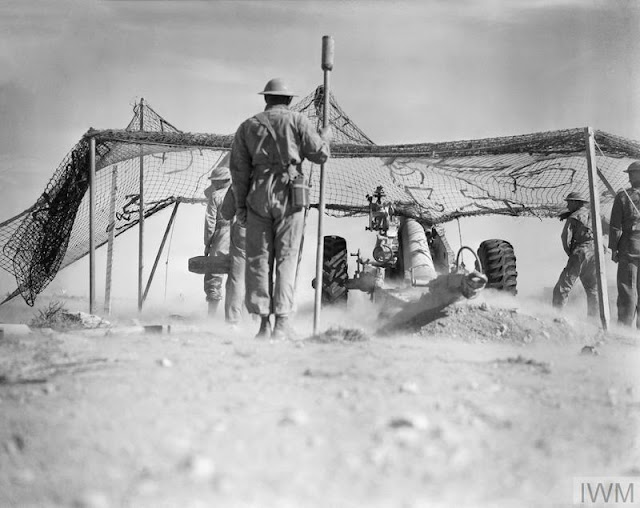
Australian 6th Division continues rehearsing its assault on Italian-held Bardia. Australian General Mackay has postponed the start of the assault by 24 hours, from the morning of the 2nd to the 3rd. This will give him more time to site artillery and bring up ammunition.
The major Greek counter-offensive is over by 31 December 1940. However, the Greeks continue minor actions to improve their positions. The Greek army pounced on enemy reinforcements and captured 500 prisoners in dislodging Italians town of Klisura, in central Albania, a spokesman declared tonight The reinforcements, the spokesman said, had been rushed to the Klisura sector to halt the Greek advance on that mountain junction of the road leading to Valona, the Adriatic port which is now the main objective of the Greek offensive. A general headquarters communique reported the repulse of a tank attack by the Italians on an undisclosed sector. One tank, eight guns and other material were taken, the communique said, and reported in addition that two Italian airplanes were shot down on Tuesday, in the coastal sector north of Chimara.
Hitler writes to Franco telling him that he is sorry that Spain decided not to join the Axis.
Replying to a letter from Joseph Stalin, Adolf Hitler writes Stalin a personal letter dated 30 December 1940. Addressed “Dear Mr. Stalin,” Hitler vows to “put an end to this rather drawn-out affair by seizing and occupying the heart of the British Empire — the British Isles.” He claims that German troops are only in Poland for “reorganization and training” and to keep them away from British bombers and intelligence. He promises that “beginning in approximately March” these troops will be “moved to the Channel coast and the western coast of Norway.” He also intends, he says, to use these troops to “force the British out of Greece” by moving them south through Romania and Bulgaria. You may read the letter here.
In his letter to Mussolini of today’s date, Hitler writes that “our present relations with the USSR are very good.” He lists a few reasons why, and concludes that there was “considerable hope that we can resolve in a very reasonable manner the remaining points at issue… and reach a solution which will avoid the worst….”
At least 200,000 ethnic Germans now living in countries outside Greater Germany are to be resettled within the Reich under agreements signed this year. Most will come from Rumania and Bulgaria, but there are also 50,000 Germans in Lithuania, Latvia and Estonia whose transfer has been agreed with Russia. So far, however, it has been easier to reach international agreements than to cope with the physical upheaval of so many people, and few have yet to arrive in their notional fatherland.
Captain Lindemann returned to the Bismarck from his Christmas leave and assumed command of the battleship.
Churchill sends a message to Petain via Dupuy. He offers to send six divisions to aid the defence of Morocco, Algiers and Tunis should the Vichy French government decide to cross to North Africa and resume the war against Germany and Italy. This is all well and good, but Churchill does not explain how he would stop the Germans from then occupying the rest of France itself.
Churchill’s memoir also references a letter from Hitler to Mussolini of today’s date. Hitler complains that, given the British advance in North Africa, Operation FELIX, the proposed assault on Gibraltar, is now no longer feasible because Spanish leader Franco has gotten cold feet. “Spain, profoundly troubled by the situation, which Franco thinks has deteriorated, has refused to collaborate.” Having Gibraltar, he whines, would have kept the French in northwest Africa from considering changing sides. Hitler, however, says that he “still had the hope, the slightest hope, that Franco will realize at the last minute the catastrophic consequences of his conduct.” However, he admits to Mussolini that Operation FELIX is indefinitely postponed, and the “German batteries which were to be sent to reinforce the Spanish islands and coast are not to be delivered.”
Sub-Lt. Francis Haffey Brooke-Smith (1918-52), RNR, working head down and by feel only, gagged the fuse of a bomb wedged aboard a fire-float on the Manchester Ship Canal, Lancashire, seconds before it was due to go off. For this he is awarded the George Cross.
Civilian casualties in Great Britain this month are 3,793 people killed and 5,244 injured.
The Royal Navy forms Submarine Flotilla 8 at Gibraltar. It will include HMS Olympus, Otus, and Pandora, which are all in the process of traveling there or already have made port.
Big Christmas party on board HMS Hood, as recounted by future U.S. Admiral Joseph Wellings. Everybody he encounters that night in the well-attended function, from the Admiral and Captain on down, will perish in May 1941, after he leaves the ship.
The Helsinki government terminates the Finland-Soviet Peace and Friendship Society.
The Luftwaffe sends a few solo raiders across during the day, one of which strafes a passenger train in Kent. The Luftwaffe does not attack after dark.
December 1940 has seen the widest dispersion of Luftwaffe attacks and with the greatest intensity. During the month, the following cities were targeted with concentrated attacks, meaning over 50 tons of high explosives:
London (3 attacks, 605 tons of high explosives, 4129 incendiaries);
Liverpool/Birkenhead (2 attacks, 485 HE, 1701 incendiaries);
Manchester (2 attacks, 467 HE, 1925 incendiaries);
Sheffield (2 attacks, 435 HE, 1057 incendiaries);
Birmingham (3 attacks, 409 HE, 1317 incendiaries);
Bristol (2 attacks, 198 HE, 773 incendiaries);
Southampton (1 attack, 147 HE, 586 incendiaries);
Portsmouth (1 attack, 88 HE, 148 incendiaries).
Total civilian casualties during December 1940: 3,793 deaths, 5,244 serious injuries.
RAF Bomber Command dispatches 22 Blenheims in daylight on single flights to Germany and Holland. 6 aircraft bombed various targets. 2 aircraft lost.
RAF bombers attacked Vlorë on the Greco-Italian front, Rotterdam and IJmuiden in the Nazi-occupied Netherlands, and the German cities of Emmerich am Rhein and Cologne.
U-38, commanded by Kapitänleutnant Heinrich Liebe, sank Swedish steamer Valparaiso (3760grt), a straggler from convoy HX.97, in 60‑01N, 23‑00W. At 0212 hours the Valparaiso, a straggler from convoy HX.97 since 29 December, was hit aft by one G7a torpedo from U-38 and sank by the stern. The master, 32 crew members and two passengers were lost. Included in the loss was a survivor from the British steamer Anglo Saxon. The 3,760-ton Valparaiso was carrying general cargo and was bound for Glasgow, Scotland.
U-65, commanded by Kapitänleutnant Hans-Gerrit von Stockhausen, damaged British tanker British Zeal (8532grt) at 15‑40N, 20‑43W. At 2300 hours the unescorted British Zeal (Master John Gossland Robson), dispersed on 19 December from convoy OB.260, was hit on the starboard side in the middle of #2 tank underneath the bridge by a stern torpedo from U-65 while steaming on a non-evasive course at 10.5 knots east of the Cape Verde Islands. The U-boat had chased the tanker for about eight hours and missed with a spread of two torpedoes of which one was a tube-runner at 1752 hours. A lookout had spotted a torpedo track and the helm was put hard to starboard, but it nevertheless struck and the crew (the ship was armed with one 4.7in, one 12pdr and two machine guns) immediately abandoned ship in the lifeboats in rough seas. The Germans could not use the deck gun in the darkness and a first coup de grâce missed due to a malfunction, but a second struck on the starboard side at the bulkhead between #3 and #4 tanks about 30 minutes after the first hit. They had observed how the crew abandoned ship in a well-disciplined manner and left the area without questioning the survivors, assuming that the tanker will sink. However, the crew spotted the still floating British Zeal at daylight, rowed towards her in heavy seas and reboarded the tanker about noon on 1 Jan 1941. Three tanks had been flooded through two large holes in the starboard side and the deck was torn open by the explosions, however the engine room was found intact. The crew raised up steam and tested the engines and steering, but then abandoned ship again for the night in case the U-boat was still nearby. At dawn the next day, the men quickly reboarded her and headed towards Bathurst at 5 knots. A few hours later HMS Encounter (H 10) (LtCdr E.V.St.J. Morgan, RN) arrived, offered assistance and departed shortly afterwards to search for the attacker. The tanker continued alone until joined by the rescue tug HMS Hudson (W 02) from Freetown on 4 January and was accompanied to that harbor, arriving four days later. On 16 July 1941, she left Freetown after temporary repairs to Baltimore for permanent repairs via Trinidad and New York, arriving on 18 August. The ship returned to service in February 1942. The 8,532-ton British Zeal was carrying water ballast and was bound for Freetown, Sierra Leone.
HMS Edinburgh arrived at Scapa Flow, Scotland, United Kingdom.
Anti-aircraft cruiser HMS Curacoa departed Scapa Flow at 1000 to escort convoy WN.61 from Pentland Firth until dark. The anti-aircraft cruiser arrived at Scapa Flow at 2300.
Destroyer HMS Whitshed departed the Nore at 1015 to work up at Scapa Flow.
Sgt D. A. Stockton, RAF, was killed when his Tiger Moth of 14 EFTS crashed near Hockley Heath. A/Leading Airman A. Armstrong, also in the aircraft, died of injuries on 1 January.
German steamer Porjus (764grt) was sunk in a collision near Brunsbuttel.
Heavy cruiser HMS Berwick, escorted by destroyers HMS Forester and HMS Fury, arrived at Gibraltar to land her wounded from the 25 December encounter with German heavy cruiser Admiral Hipper. Heavy cruiser Berwick arrived at Portsmouth on 17 January for repairs continuing until 10 May. She proceeded to Rosyth arriving on 11 May and completed repairs on 23 June.
Destroyers HMS Velox and HMS Vidette departed Gibraltar for Freetown.
Destroyers HMS Jaguar, HMS Foxhound, HMS Firedrake, HMS Duncan,and HMS Hero departed Gibraltar to intercept French ships entering the Straits of Morocco and bring them to Gibraltar for contraband control.
During the night of 31 December-1 January, destroyer HMS Dainty captured Italian schooners Tiberio (231grt) and Maria Giovanni (255grt) running between Bardia and Tobruk. Destroyer Dainty took the schooners to Sollom.
British Submarine Flotilla 8 was formed at Gibraltar with shore establishment HMS Pigmy.
Submarine HMS Olympus arrived at Gibraltar for operations on the 29th, HMS Otus on 4 January, and HMS Pandora on 14 January.
Light cruiser HMS Ajax and Australian light cruiser HMAS Perth departed Alexandria to take over Aegean duty and cover the passage of troopship Ulster Prince, which departed Port Said escorted by destroyer HMS Gallant.
Monitor HMS Terror and destroyer HMS Diamond arrived at Alexandria.
Gunboats HMS Aphis and HMS Ladybird, escorted by destroyer HMS Dainty, departed Alexandria for Sollum.
Submarine HMS Parthian attacked an Italian convoy off Spartivento, without success.
Greek submarine Katsonis (Lt Cdr Spanides, RHN) sank Italian tanker Quinto (531grt) with gunfire at Antivari in the Bay of Valona (Vlorë), Albania.
Repair ship HMS Vindictive and destroyers HMS Isis and HMS Encounter, which departed Gibraltar on the 25th, arrived at Freetown.
HMS Hermes sets sail for Simonstown, South Africa.
Convoy FN.372 departed Southend. The convoy arrived at Methil on 2 January.
Convoy FS.376 departed Methil. The convoy arrived at Southend on 2 January.
In the midst of a serious world situation, officials of the U.S. Government were able today to summarize these definite advances within a year toward the goal of total defense:
The Army has more than doubled its manpower and is on the eve of a second doubling. Some 600,000 officers and men are already in uniform, contrasted with 215,488, all regulars, in service at the end of 1939.
New tanks, rifles, motor vehicles and other arms and supplies are actually being received at a rate suggestive of the volume to come, although, like warplanes, they lag far behind the combined requirements of the United States and Great Britain.
The Navy in a year has expanded in personnel in uniform from 158,814 last January 1 to nearly 250,000 officers and men, including the Marines and the reservists called to active duty.
The fleet has been reinforced by twenty-one new warships and several score auxiliaries. Its commanders rate it the world’s strongest, although the transfer of fifty old destroyers to Britain reduced the number of combat vessels to 321. Not for four years is the projected two-ocean navy expected to be ready.
In air strength several hundred new war planes have been put into service within the year, as a prelude to the delivery of thousands which are on order.
The Army counts 500 as first line combat planes, aside from several times as many training craft and outmoded fighters and bombers. Exact numbers are confidential, A year ago virtually none was rated officially a match for the new war-tested Nazi and British craft, because of lack of such equipment as leak-proof fuel tanks and armor. The Navy and Marine Corps air forces numbered 2,145 planes in service a year ago. Eleven months later the total was up exactly 390. Twice as many youths as a year ago are in training as Army and Navy pilots.
Production of planes has almost doubled, although lagging behind schedules proved to have been too optimistic for the burdened industry.
Light tanks for the Army’s new armored divisions are rolling off assembly lines at the rate of four or more a day. Less than a year ago the War Department acknowledged possession of just ten of late design, aside from obsolescent models. Mass production of 25-ton medium tanks and monsters of 55 tons or more is in the make-ready stage.
President Roosevelt proposes a program of relief for unoccupied France and Spain. Specifically to send milk and vitamin concentrates for children along with some medical supplies. Roosevelt telegrams Churchill to allow the ship through the British blockade.
Churchill cables President Roosevelt in reference to the latter’s 29 December “Arsenal of Democracy” fireside chat:
“I thank you for testifying before all the world that the future safety and greatness of the American Union are intimately concerned with the upholding and the effective arming of that indomitable spirit…. All my heartiest good wishes to you in the New Year of storm that is opening upon us.”
Churchill also references the destroyers-for-bases deal of September 1940. The formerly US destroyers, the Royal Navy has found, are of limited value. The British crews despise them, and they require extensive refits before being useful. Of the 50 turned over to the British, only 9 are in service with the Royal Navy, the others undergoing various modifications and upgrades. Some are in such bad shape that the Admiralty doesn’t want them in normal service, but instead is trying to figure out ways to use them for such purposes as running them into German-held Channel ports and blowing them up. Churchill pointedly annexes a list of problems with the destroyers to his telegram, “in case you want to work up any of the destroyers lying in your yards.”
Of course, the real value of the destroyers-for-bases deal was not the destroyers themselves, which are almost incidental; it is getting US troops to take over defense of British bases in the Atlantic, freeing up British troops for other purposes, and cementing the relationship between the United States and Great Britain — or, more specifically, the relationship between Churchill and Roosevelt. In that latter sense, the deal has been phenomenally successful.
Roosevelt also sends Churchill a telegram today on another topic: humanitarian relief to occupied Europe. In a message drafted by Sumner Welles, Roosevelt proposes “for humanitarian and also political reasons” giving “limited quantities of milk and vitamin concentrates for children.” These will be shipped through the International Red Cross to Spain and Vichy France (not the parts occupied by Germany, which is the greater part of France). Spain long has been on Roosevelt’s mind, but this message adds unoccupied France to the list. Churchill would have to approve such a measure due to the British blockade of anything useful going to Europe. Churchill so far has been resistant to such shipments, figuring that it gives aid to the enemy. Roosevelt hints that aiding Spain and Vichy France might make them more susceptible to deserting Hitler, something that Churchill — likely unknown to Roosevelt — is actively working on today.
The possibility of receiving payment in raw materials for some of the war implements that may be lent or leased to Great Britain was raised today by President Roosevelt, as Congress squared away for a battle royal on the whole lease-lend program. At a press conference, Mr. Roosevelt said that rubber, tin and other commodities might prove acceptable payment for American fighting machines sent to England and destroyed beyond repair by Nazi bombs. The principal problem just now, he indicated, was drafting legislation which would assure the return of the implements or their equivalent in other goods. He thought it would prove particularly difficult to include language covering the details of future contingencies, and was inclined to believe that general provisions would prove the most workable. A little earlier the president’s secretary, Stephen T. Early, told reporters that Mr. Roosevelt probably would discuss the lending-leasing plan in his annual message to the new congress, to be delivered in person on Monday.
President Roosevelt, it was reported tonight, proposes to center in William S. Knudsen all the actual powers of the new office of production management for defense which has been called the “supreme command” of the defense program. A tentative draft of an executive order which Mr. Roosevelt was said to be considering would make Knudsen the administrator of the program, and give to the other three members of a four-man council only advisory powers. When the president announced his plan recently, he said it would be carried out through a council composed of Knudsen, Secretaries Stimson and Knox and Sidney Hillman, member of the defense commission in charge of labor. Knudsen is the defense commissioner in charge of production.
Verne Marshall, head of the No Foreign War committee, today called upon President Roosevelt and the state department to make public what he termed the “agenda” for a “sound, just, and honorable economic peace” which he said W. R. Davis delivered to the U.S. State Department in October, 1939.
The Ford Motor Company asked the Supreme Court today to decide whether an employer could legally discharge members of a union when that union was committed to a sit-down strike policy, “or whether he must sit idly by and permit the union to attempt the seizure of his plant by force and violence.”
The National Association for the Advancement of Colored People (NAACP) asks Attorney General Robert Jackson to investigate Memphis, Tennessee.
Film star Bette Davis married businessman Arthur Farnsworth in Rimrock, Arizona.
The thousands of bulbs and miles of neon lights in New York’s Times Square glittered and blinked down last night on one of the largest and most pleasure-bent crowds that ever greeted a new year. While the surging merrymakers in midtown jammed to a full stop at the breathless moment before midnight, millions of others, at hotels, restaurants and private homes throughout the city, were celebrating. And there was the note of solemnity, too, in the glowing Watch Night services in the city’s churches. It was suggested as well before countless firesides — or their city equivalents — as fathers, mothers and children ushered in 1941 according to their particular wont. For everywhere — even in the most hectic whirlpools of the downtown throng — there hovered the realization that London, Rome, and Berlin were blacked out; that smoke still rose from the ruins of British buildings; that there were more dark days ahead for countless human beings in other countries, even if this one was fortunate enough to continue at peace.
General Chiang Kai-shek and other Chinese leaders, in New Year addresses broadcast last night, praised President Roosevelt and the United States for assistance to China in her “war of resistance” against Japan and pledged they would not fail those nations that had given assistance.
Gloom and uncertainty about what 1941 will bring predominates in Japanese statesmen’s New Year messages. Ordinarily these messages are bromides written by secretaries. This year’s messages have an individual note, particularly Foreign Minister Yosuke Matsuoka’s, which bears the unmistakable stamp of his personality. “As a New Year greeting it may sound unlucky, but in my innermost heart I fear the coming year will prove a most tragic and unfortunate one for all mankind,” said Mr. Matsuoka. “I pray that God and all God-fearing people will cooperate with me in saving 1941 from being the first year of the decline and fall of modern civilization.
Authorities reported tonight after a truce along the Mekong frontier serious fighting had been resumed between the forces of French Indo-China and Thailand [Siam], mainly along the northern frontier of Cambodia, where the regular Thai army was engaged. The government published a communiqué based on military reports from Admiral Jean Decoux, Governor General of Indo-China. It said the Thai forces had suffered heavy losses and were repulsed in two engagements on border terrain northeast of Poipet in the region west of Mekong. Thailand claims the territory, but the French say it was transferred to Cambodia by successive treaties. The heaviest fighting was said to have taken place the day after Christmas. Cambodian forces charged with defending the border threw back Thai troops after a pitched battle in which the latter suffered fifteen casualties, including two officers. The only casualty on the French side was one person slightly wounded. Thai regulars attacked again the next day and the Cambodians were able to withdraw without losses. Enemy planes flew over the French bank of the Mekong River several times on December 27 and 28, dropping propaganda leaflets, the communiqué said.
The Thai [Siamese] High Command said today that French guerrillas had fired on several Thai villages from a boat, bringing a fresh outbreak of fighting after a lull on the border of Thailand and French Indo-China. Thai gendarmes sank the boat, the communiqué said, reporting that many of the guerrillas drowned and some swam ashore.
Five hundred men, women and children landed by German commercial raiders December 21 on the Emarau Island of the Bismarck Archipelago have been rescued by an Australian ship and taken to Australia, it was announced officially today. The rescued persons included British, French and Norwegian nationalities. There were 70 women and seven children in the group. Admiral Sir Geoffrey Layton, commander-in-chief of Britain’s China station, said the situation was not as alarming as it first appeared as the survivors came ashore.
The Dow-Jones Industrial Average finishes the year of 1940 at 131.13, down 12.72% on the year. Investor sentiment about the US economy remains in the doldrums: the Dow Jones Industrial Average concludes the year at 131.13, completing a 12.72% loss for 1940. The Great Depression remains in force, despite some upswings at various points during the 1930s.
Dow Jones Industrial Average: 131.13 (+0.09)
Born:
Princess Elisabeth, first born daughter of Count Carl Ludwig Douglas and Ottora Maria Haas-Heye, later Duchess in Bavaria, in Stockholm, Sweden.
Tim Considine, American actor (“Spin & Marty”; “My Three Sons”), and photographer, in Los Angeles, California (d. 2022)
Bobby Notkoff, American rock and blues violinist (Crazy Horse; The Rockets), in New York, New York (d. 2018).
Oleg Anatolyevich Yakovlev, Russian cosmonaut (Cosmonaut Training Group 3; never flew), in Leningrad, Russian SFSR, Soviet Union.
Naval Construction:
The U.S. Navy PC-461-class (173-foot steel hull) submarine chaser USS PC-483 is laid down by the Consolidated Shipbuilding Corp. (Morris Heights, New York, U.S.A.)
The Royal Navy “S”-class (Third Group) submarines HMS Sea Dog (P 216) and HMS Sibyl (P 217) are laid down by the Cammell Laird Shipyard (Birkenhead, U.K.).
The Вое́нно-морско́й флот СССР (ВМФ) (Soviet Navy) “S” (Stalinec)-class (3rd group, Type IX-modified-2) submarine S-27 is laid down by Krasnoye Sormovo (Gorkiy, U.S.S.R) / Yard 112.
The U.S. Navy Woban-class district harbor tug USS Hoga (YT-146) is launched by the Consolidated Shipbuilding Corporation (Morris Heights, New York).
The Вое́нно-морско́й флот СССР (ВМФ) (Soviet Navy) “M” (Malyutka)-class (3rd group, Type XII) submarines M-111, M-112, and M-113 are launched by Krasnoye Sormovo (Gorkiy, U.S.S.R) / Yard 112.
The Kriegsmarine (German Navy) Type VIIC U-boat U-126 is launched by Nordseewerke, Emden (werk 203).
The Вое́нно-морско́й флот СССР (ВМФ) (Soviet Navy) Project 68 (Chapayev-class) light cruiser Frunze (Фрунзе) is launched by Marti Yard (Nikolayev, U.S.S.R.) / Yard 198.
The Royal Navy British Power Boat 70-foot-class motor anti-submarine boat HMS MA/SB 62 is commissioned.
The Royal Canadian Navy patrol vessel HMCS Raccoon (S 14), ex-yacht Halonia, is commissioned. Her first commander is Lieutenant F. Roberts, RCNR.
The Вое́нно-морско́й флот СССР (ВМФ) (Soviet Navy) “M” (Malyutka)-class (3rd group, Type XII) submarine M-34 is commissioned.
The Вое́нно-морско́й флот СССР (ВМФ) (Soviet Navy) “S” (Stalinec)-class (3rd group, Type IX-modified-2) submarine S-54 is commissioned.
For the month of December, 1940, the German U-boats have sunk 41 ships (total of 234,707 tons) and damaged 9 more ships (another 73,141 tons).
Allied shipping losses for December 1940 to the listed causes (amounts vary by sources, so any figures are approximate):
U-boats: 76 ships, 212,590 tons
Luftwaffe: 14,890 tons
Surface Raiders: 55,728 tons
Mines: 54,331 tons
No U-boats lost in December. However, the Axis loses 11 ships of 55,138 tons in the Mediterranean.
Total losses for 1940:
Allies: 1,059 ships 4,055,706 tons
Axis: 22 U-boats, 20 Italian submarines
Allied merchant shipping sunk by German submarines worldwide in the year of 1940 was 567 ships, totaling 2,771,483 gross tons. 24 German submarines were lost in the same time period.
The Germans end the year with 27 U-boats available for service in the Atlantic. Typically, at any particular time, 1/3 are on station, 1/3 are traveling to or from their station, and 1/3 are in port. The Italian submarines, while numerically much greater than the U-boats, are spread out throughout the Mediterranean and in the vicinity of the Azores and have a much lower success rate than the U-boats. The Royal Navy lost 9 submarines in the Mediterranean during the year, and they sank only 10 Italian merchant ships totaling 45,000 tons. However, they have proven quite useful at times in ferrying supplies to Malta.
 History Diaries